
Urinalysis Market
Global Industry analysis, Size, Share, Growth, Trends, and Forecast 2026-2031
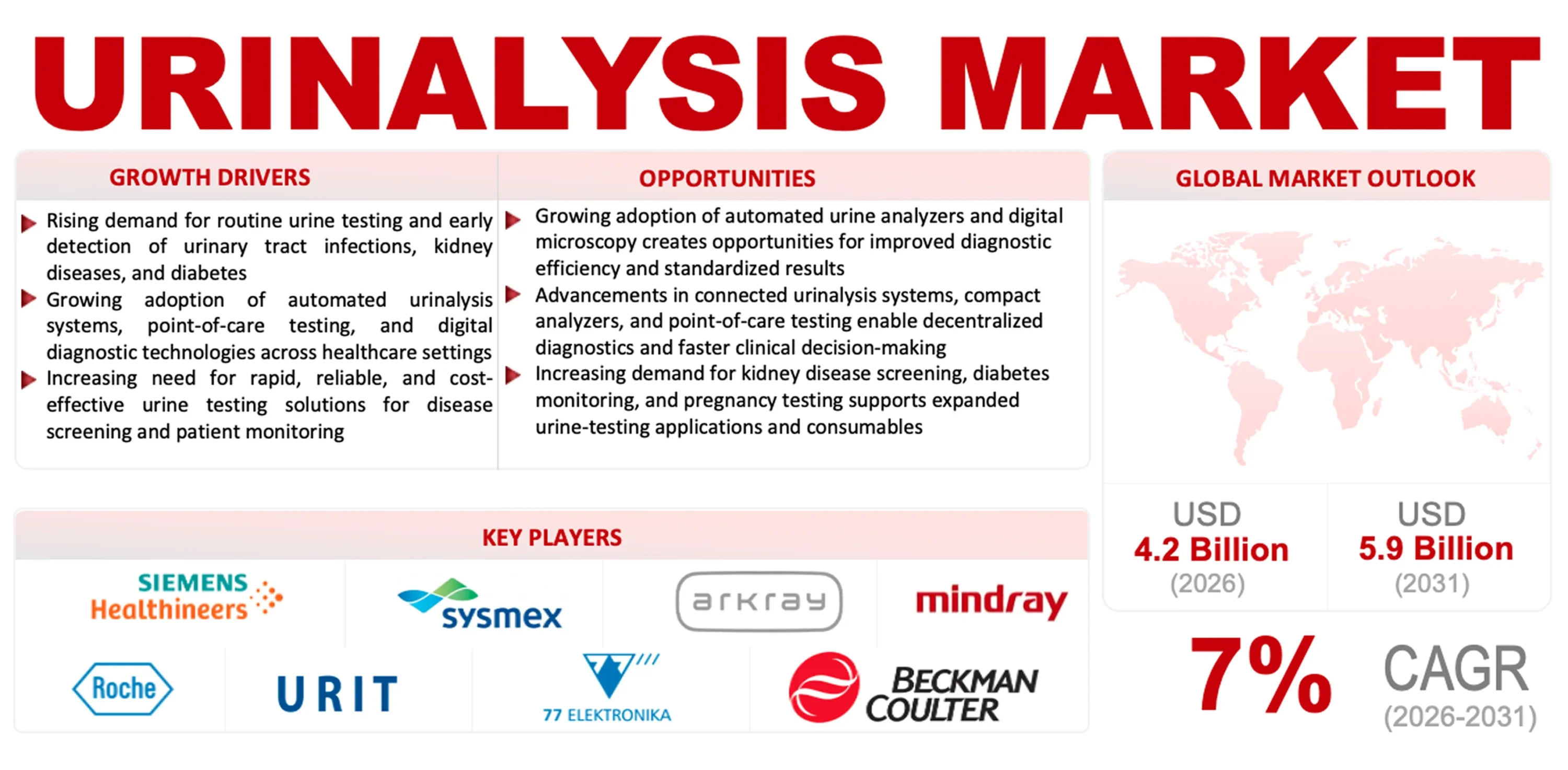
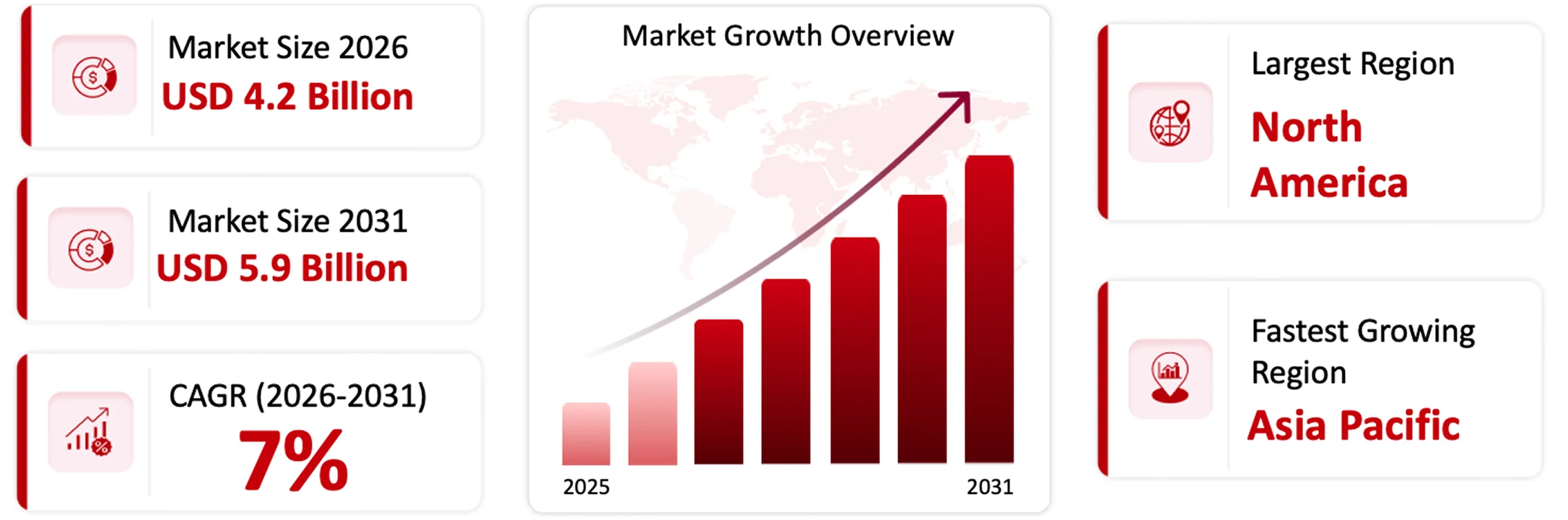
The global urinalysis market is projected to reach USD 5.9 billion by 2031, growing at a CAGR of 7% during the forecast period.
| Market Size (2026): | Forecast (2031): | CAGR (2026–2031): | Leading Region: | Fastest Growing Region: |
|---|---|---|---|---|
| $ 4.2 Billion | $ 5.9 Billion | 7 % | North America | Asia Pacific |
Summarize this report with:



Market Overview
“The urinalysis market encompasses diagnostic products that analyze urine specimens that help detect, diagnose, and monitor urinary tract infections, kidney disorders, diabetes, and other illnesses. The market is composed of consumables, instruments, and other diagnostic equipment which use chemical, microscopic, and automated testing techniques. The demand for the market is contributed by an increase in chronic diseases, rise in healthcare spending, increase in demand for routine health checks, and enhancement of healthcare laboratories. Furthermore, advancements in technology in automated analyzers, digital microscopy, and point-of-care testing helps enhance the diagnostics process. Hospitals, clinics, and laboratories are the global end-users of this market.
– Mayur Jain, Research Consultant, Wissen Research
The market is estimated to be USD 4.2 billion in 2026 and is projected to reach USD 5.9 billion by 2031, growing at a CAGR of 7 % during the forecast period (2026-2031).
Technology Overview
The global market for urinalysis employs techniques such as chemical analysis, microscopic examination, and automation to analyze urine to detect and monitor various medical conditions. The chemical urinalysis uses reagent strips for the detection of several parameters including glucose, protein, blood, ketones, and pH levels, making it a common choice for routine examinations. The microscopic urinalysis is focused on testing urine sediments to determine the presence of red and white blood cells, bacteria, crystals, and casts. This process is highly beneficial for the diagnosis of urinary tract infections and kidney disorders. Automated urinalysis uses analysers and digital images to ensure fast results of tests. The growth of diagnostic tests and desire for rapid results drive the use of automated urinalysis at various hospitals and diagnostic laboratories. Along with the newer point-of-care systems, digital images, and checks on the analytical inputs of the lab data are also resulting in better efficiency of the procedure.
Key Growth Drivers
- Urinalysis serves as a conventional procedure for identifying situations like urinary tract infection as the emerging urinary problems like kidney related complications, diabetic complications and metabolic disorders and aids in early assessment and medical intervention.
- The testing for urine albumin and urine proteins is vital when determining the kidney problems and thus many tests are currently being used in person having diabetes and developed kidney conditions.
- Urinalysis strips and complete automated sediment processes make possible fast determination of leukocytes, nitrites and blood in urine assisting in investigation of urinary tract infection.
- Large-scale laboratories are moving towards automated urine analysers in order to avoid manual microscopy, standardize and process samples efficiently and increase testing capacity and manage the growing workloads of routine testing.
- The design of compact urine analysers allows healthcare specialists as well as personnel at clinics and emergency clinics to conduct tests on-site without depending on laboratory for initial assessment of patients.
- Hospitals use urine tests to examine the possibility of infections, assess renal function and find possible abnormalities in the course of the diagnostic procedures in preoperative and in-patient settings, thus sustaining the need for consumables for each hospital.
Urinalysis Market Key Highlights
Need deeper insights on this market?
Get full report access with detailed forecasts, competitive analysis, and segmentation.
Urinalysis Market Trends
Different trends are now emerging in the global urinalysis market such as the rise of fully automated urine analyzers, the merging of chemical and microscopic analysis, and the growing use of digital microscopy in urine sediment analysis. Artificial intelligence and image-recognition technologies enhance the identification and classification of particles in the automation process. Moreover, labs today start using connected testing systems which cooperate with laboratory information systems (LIS) and electronic medical records (EMR) to streamline their routine processes and results. Nevertheless, the growing needs for compact analyzers occur now in small labs, medical centers, and at the point of care. Furthermore, the advancements in reagent strip analyzers, integrated diagnostics systems, and the use of automated quality control systems also play their role in testing standardization.
Increasing Adoption of Fully Automated and Integrated Urinalysis Systems
- Clinical laboratories are increasingly shifting toward automated urinalysis systems that combine urine chemistry and particle analysis to reduce manual handling, improve workflow consistency, and process larger sample volumes. This shift is particularly relevant for hospitals and diagnostic laboratories managing high routine-testing workloads.
- According to Beckman Coulter Diagnostics, approximately one in three U.S. emergency department visits includes a urine test, while nearly half of hospital admissions involve urinalysis. These figures illustrate the substantial testing workload that laboratories must accommodate.
- On July 23, 2026, Beckman Coulter launched its DxU 1800 System in the United States, integrating the DxU 1800c chemistry analyzer with the DxU Iris microscopy analyzer. The chemistry analyzer can process up to 300 samples per hour, and the integrated solution reduces manual microscopic review rates to less than 3%, according to the company.
- Similarly, Sysmex Corporation offers the UF-1500 automated urine particle analyzer, which processes up to 60 samples per hour and is approximately 30% smaller than its UF-5000 model. This supports automation adoption among smaller laboratories with limited space.
Growing Integration of Digital Imaging and Connected Urinalysis Workflows
- Urinalysis is increasingly incorporating digital particle imaging, automated classification, and connectivity with laboratory information systems and electronic medical records. These technologies help standardize urine sediment assessment, reduce manual result transcription, and improve the management of test results across centralized laboratories and point-of-care settings.
- Sysmex Corporation provides the UD-10 digital imaging device, which captures microscope-quality urine particle images and classifies particles into up to eight categories. The device can process up to 50 samples per hour in normal mode, generating 40 images per sample; its precise mode produces 80 images per sample at up to 30 samples per hour.
- Meanwhile, Siemens Healthineers offers the CLINITEK Status Connect system, which connects point-of-care urinalysis devices to laboratory information systems, hospital information systems, and electronic medical records through wireless, Ethernet, or serial connections. It supports HL7 and POCT1-A2 communication protocols and includes operator controls and quality-control functions.
- These developments support demand for digital imaging analyzers, connectivity-enabled readers, data-management software, and compatible consumables. However, the product specifications demonstrate technological development rather than independently measured market-wide adoption.
Key Players in the Urinalysis Market
Leading companies in the urinalysis market are focusing on automated diagnostic systems, advanced urine chemistry and sediment analysis, digital imaging technologies, product innovation, and expansion across hospitals, diagnostic laboratories, clinics, and point-of-care testing settings.








Strategic Activities Within the Urinalysis Market
Beckman Coulter Diagnostics (U.S.) launched its DxU 1800 fully automated urinalysis system in July 2026. The platform integrated urine chemistry analysis and microscopy, reducing manual microscopic review rates to below 3%. Its chemistry analyzer processed up to 300 samples per hour, improving laboratory throughput and workflow standardization. Beckman Coulter Diagnostics is headquartered in Brea, California.
Siemens Healthineers AG (Germany) expanded access to point-of-care urinalysis with its Atellica LumIQ Analyser on March 25, 2026. Manufactured in Sudbury, United Kingdom, the analyser automates reagent-strip interpretation, supports urine and hCG pregnancy testing, and enables connected, near-patient testing to facilitate earlier kidney disease detection and faster clinical decision-making.
Urinalysis Market Insights
The demand for urine reagent strips, reagents, controls and diagnostic equipment in hospitals, clinical laboratories and outpatient medical facilities drives the global urinalysis market. Medical consumables differ from one-off purchases of testing equipment in that they foster repeat orders through regular testing and constant patient monitoring. The main indicators of market performance include testing volumes for illnesses associated with the urinary tract, kidney disorders, diabetes and other diseases where urine tests are needed. Automating the process is bringing further opportunities for manufacturers of analyzers, whereas decentralized tests become available through portable equipment.
The use of urinalysis has various clinical purposes, such as assessing urinary tract infections, screening for kidney diseases, monitoring diabetes-related kidney health, conducting general health checks, and performing pregnancy tests. Urine reagent strips can detect irregularities in protein, glucose, blood, ketone levels, and other parameters, which can help practitioners know whether further testing is required. This is why the case of kidney pathology is very relevant since the presence of albumin in urine may indicate kidney injury, especially when conversing patients with diabetes or high blood pressure. Furthermore, urinalysis plays an important role in diagnosis of urinary infections, but the interpretation should always be done with respect to symptoms or, in some cases, urine culture. Different testing methods are used by hospitals, laboratories, clinics, and point-of-care facilities according to situation and availability of resources.
The market of urinalysis shows potential in areas such as automation of laboratories, decentralization of tests, digital microscopy, and advanced analysis of urine chemistry. Companies can manufacture small analyzers for laboratory and small clinic use, which ensure quicker results without the need to invest in expensive laboratory equipment. Connectivity will allow urine testing devices to work with laboratory information systems and e-health records. There is also a possibility of developing urine albumin-to-creatinine ratio testing solutions for kidney function assessment for diabetic and hypertensive patients. Emerging markets in the healthcare sector might provide opportunities for inexpensive reagent strips, locally produced analyzers, and diagnosis systems requiring less assistance.
The urinalysis market faces many issues due to inconsistent test results, the way the specimen is handled, diagnostic constraints, high costs, and laboratory infrastructure. The use of manual interpretation of test results can lead to variations in results due to several environmental factors like lighting, day, and operator skills; and sample contamination leads to erroneous test interpretation as well. Overall, urinalysis is not sufficient for a conclusive diagnosis, as sometimes additional clinical tests or cultures are needed for cases with suspected UTIs. Automated analyzers are cost prohibitive, as they require high initial investments, ongoing maintenance, investments into staff training, and continuous procurement of reagents and other consumables. Smaller healthcare facilities struggle to cover the associated expenses or maintain the reliability of the supply chain. Lastly, manufacturers need to comply with relevant regulations and prove the equipment’s validity.
The Asia Pacific region has emerged as one of the fastest-growing markets for urinalysis, propelled by the evolving landscape in the field of diagnostics, affording to patients’ better access to primary healthcare and an increasing need for measuring chronic health conditions. Countries like India, China, Indonesia, and Thailand present an opportunity for manufacturers of diagnostics in search of establishing laboratory networks and offering cheaper automated diagnostics solutions to various healthcare establishments. It should be noted that the World Health Organization’s 2026 report on diabetes treatment in Southeast Asia has documented the improvement of diabetes treatment systems across India, Bangladesh, Indonesia, Sri Lanka, Nepal, Timor-Leste, and Thailand, which would help to address the issues of improving treatment accessibility, enhancing the quality of early diagnostics, and encouraging the use of integrated primary health care systems by the patients.
Urinalysis Market Dynamics
Drivers: Increasing Adoption of Automated Urinalysis Systems
- High routine testing workloads: Urinalysis is frequently used in hospital and laboratory workflows. Laboratories have an incentive to automate sample processing and reduce repetitive manual microscopy as testing volumes increase.
- Measurable efficiency improvement: Beckman Coulter Diagnostics reports that its DxU 1800 integrated urinalysis system reduces manual microscopic review rates to less than 3%, supporting more efficient laboratory workflows.
- High-throughput processing: The DxU 1800c urine chemistry analyzer is designed to process up to 300 samples per hour, demonstrating how automated systems can address high-volume laboratory requirements.
- Operational benefits: Automation can standardize routine analysis, reduce manual handling, and help laboratories allocate staff time to abnormal samples requiring further review. The commercial opportunity extends to analyzers, compatible reagents, quality-control materials, and recurring consumables.
- Market implication: Laboratories seeking higher throughput and consistent workflows create demand for automated chemistry analyzers, sediment analyzers, and integrated platforms. The cited specifications demonstrate the technology’s capabilities, rather than proving market-wide adoption rates.
Opportunities Expanding Urine Albumin Testing for Early Kidney Disease Detection
- Substantial clinical need: On April 20, 2026, the World Health Organization reported that an estimated 674 million people worldwide have chronic kidney disease (CKD). WHO identifies urine albumin testing and blood-based kidney-function assessment as important tools for early detection.
- Guideline-supported testing demand: The American Diabetes Association recommends assessing both urine albumin-to-creatinine ratio (UACR) and estimated glomerular filtration rate in all people with type 2 diabetes, and in people with type 1 diabetes after at least five years of disease. Patients with established CKD may require monitoring 1–4 times annually, depending on disease stage.
- Recent expert recommendations: In May 2025, the National Kidney Foundation reported that an expert workshop recommended urinary albumin measurement as the preferred method for CKD screening and monitoring in high-risk adults.
- Commercial opportunity: These clinical requirements create opportunities for manufacturers of quantitative urine albumin assays, creatinine tests, UACR-capable analyzers, reagent systems, and quality-control materials. Repeated monitoring can also generate recurring consumables demand.
- Market implication: Manufacturers can target diabetes clinics, hospitals, primary-care facilities, and diagnostic laboratories with affordable quantitative testing solutions. The opportunity is specifically supported by clinical testing recommendations and disease burden—not by assuming that every person with CKD requires the same urine test.
Challenges: Limitations of Reagent-Strip Accuracy and Confirmatory Testing
- Semi-quantitative results: Conventional reagent strips provide qualitative or semi-quantitative readings, which can be affected by urine concentration, sample conditions, and analytical interference. This can produce misleading results and create a need for confirmatory testing.
- Evidence from clinical practice: A study published in Urology in September 2025 examined 37,300 patients across 109 U.S. health systems with positive urine dipstick results. It found that 31% did not receive confirmatory microscopic urinalysis, despite the 2025 American Urological Association guideline requiring confirmation of dipstick-positive macrohematuria.
- Risk of unnecessary investigations: In the same study, downstream imaging or cystoscopy occurred in 7.5% of patients who received dipstick testing without microscopy, highlighting potential inefficiencies when diagnostic pathways are not followed appropriately.
- Technical and financial barriers: More accurate quantitative assays and automated microscopy can require additional equipment, trained personnel, maintenance, and compatible consumables. These requirements may limit adoption in smaller or resource-constrained laboratories.
- Market implication: Manufacturers must balance analytical performance with affordability, ease of use, and compatibility with confirmatory testing workflows. Improving accuracy and clinical confidence is important, but advanced systems must demonstrate sufficient value to justify their additional costs.
Technology and Market Insights
The global urinalysis market is evolving through automation, digital microscopy, and integrated diagnostic technologies. Chemical urinalysis using reagent strips remains important for routine screening, while automated analyzers combine urine chemistry and sediment analysis to improve laboratory efficiency. Digital imaging and image-recognition software are supporting standardized particle identification and reducing manual microscopy requirements. Compact analyzers and connected urine-testing systems are expanding testing capabilities across clinics and smaller laboratories. Market demand is driven by routine infection assessment, kidney disease screening, diabetes-related monitoring, and preventive healthcare. Manufacturers are focusing on improving testing throughput, analytical consistency, connectivity, and affordability, while consumables and reagent strips continue to generate recurring demand across healthcare settings.
Technology Scope and Products
Urinalysis Market Segmentation
Want detailed insights from this report?
Competitive Landscape and Market Segments Insights
- Competition is shifting toward integrated automated systems: On July 23, 2026, Beckman Coulter Diagnostics launched its DxU 1800 System in the U.S., combining urine chemistry and microscopy to reduce manual review and streamline high-volume laboratory workflows.
- Manufacturers are differentiating through analyzer throughput: Beckman Coulter’s DxU 1800c processes up to 300 samples per hour, while Siemens Healthineers AG reports throughput of up to 240 samples per hour for its CLINITEK Novus urine chemistry analyzer. These specifications illustrate competition around laboratory productivity.
- Compact systems are strengthening competition in smaller laboratories: Sysmex Corporation offers the UF-1500, a urine particle analyzer approximately 30% smaller than its UF-5000 flagship model, with throughput of up to 60 samples per hour. This addresses laboratories with limited space and moderate testing volumes.
- Digital imaging and automated classification are key differentiators: Beckman Coulter uses Digital Flow Morphology and Auto-Particle Recognition, while Siemens offers high-resolution digital imaging and automated urine sediment classification. These technologies help reduce manual microscopy and standardize particle assessment.
- Product portfolios increasingly span multiple testing settings: Sysmex offers modular laboratory systems, semi-automated chemistry analyzers, automated particle analyzers, and digital imaging devices. Siemens offers both laboratory analyzers and point-of-care testing products, allowing suppliers to address different customer needs and laboratory sizes.
- Regulatory presence and product availability remain competitive factors: The U.S. FDA’s device database lists ACON Laboratories’ Mission U500 Urine Analyzer as an automated urinalysis system. Manufacturers must also address country-specific registration, distribution, service support, and consumable availability to compete effectively across markets.
Urinalysis consumables generated recurring demand across clinical testing workflows: Sysmex Corporation (Japan) reported urinalysis sales of ¥40.838 billion in fiscal 2025, compared with ¥39.031 billion in fiscal 2024, reflecting continued commercial activity in its urinalysis business.
-
Urine reagent strips continued to receive regulatory clearances: In December 2025, the U.S. Food and Drug Administration cleared Healgen Scientific’s URS Test Strips through its 510(k) pathway, demonstrating continued commercial activity in urine-testing consumables.
-
Multiple urine chemistry parameters support consumable demand: Urinalysis reagent strips measure parameters including glucose, protein, blood, ketones, nitrites, and pH, supporting routine screening and assessment across multiple clinical applications.
-
Kidney disease assessment supports demand for urine-testing materials: The World Health Organization identifies urine albumin testing as an important method for detecting kidney damage, supporting the clinical use of urine dipsticks and associated testing products.
-
Recurring testing sustains consumable requirements: Reagent strips, liquid reagents, calibrators, and quality-control materials are used across repeated urinalysis procedures, generating ongoing requirements alongside installed urine analyzers.
Routine urine chemistry supports broad clinical use: Urine reagent strips measure glucose, protein, blood, ketones, nitrites, and pH, supporting screening for urinary, renal, and metabolic abnormalities.
-
Kidney disease screening supports biochemical testing demand: In May 2025, the National Kidney Foundation recommended urinary albumin measurement as the preferred approach for chronic kidney disease screening and monitoring in high-risk adults.
-
Urine albumin testing remains underused: The National Kidney Foundation reported in May 2025 that urinary albumin testing remains underused partly because of limited awareness and higher costs, identifying an opportunity to expand testing.
-
Regulatory activity continued for urine chemistry tests: In October 2025, the U.S. FDA granted a 510(k) clearance to Hangzhou AllTest Biotech’s Urinary Tract Infection Test, which detects urinary leukocytes and nitrites.
-
Point-of-care testing supports biochemical test availability: The WHO’s essential diagnostics resources include urine albumin dipsticks for kidney disease detection and monitoring in primary-care settings without laboratory infrastructure.
Extensive laboratory testing infrastructure supports diagnostic demand: On November 17, 2025, the U.S. Centers for Disease Control and Prevention reported that healthcare professionals order more than 14 billion laboratory tests annually in the United States.
-
A broad network of certified laboratories supports testing access: The CDC reported that approximately 266,000 CLIA-certified laboratories operated across the United States, providing infrastructure for clinical diagnostic services.
-
Laboratory oversight supports reliable diagnostic testing: The Centers for Medicare & Medicaid Services maintained quarterly clinical laboratory datasets in 2025, documenting facility demographics and the types of testing services provided.
-
Urine-testing products continued receiving U.S. regulatory clearances: In December 2025, the U.S. FDA cleared Healgen Scientific’s URS Test Strips through the 510(k) pathway for qualitative detection of urinary leukocytes and nitrites.
-
Kidney disease creates a substantial testing need: In May 2025, the National Kidney Foundation reported that more than 35 million U.S. adults were estimated to have chronic kidney disease, supporting the relevance of urine albumin testing.
What This Report Covers-
This report provides a comprehensive analysis of the urinalysis market, offering insights into key trends, growth drivers, challenges, and future opportunities. It is designed to support strategic decision-making through a combination of quantitative data and qualitative analysis.
Specifically, the report covers:

Market Overview & Definition:
Overview of the market scope, structure, and key terminology

Market Size & Forecast:
Historical data and future projections across key segments and regions

Key Market Trends:
Insights into emerging trends, technological advancements, and evolving demand patterns

Drivers, Restraints & Opportunities:
Analysis of key factors influencing urinalysis market growth

Competitive Landscape:
Overview of major players, their strategies, and recent developments

Detailed Patent Analysis:
This includes, top assignees, geography focus of top assignees, legal status, technology evolution, key patents and patent trends and innovations

Segmentation Analysis:
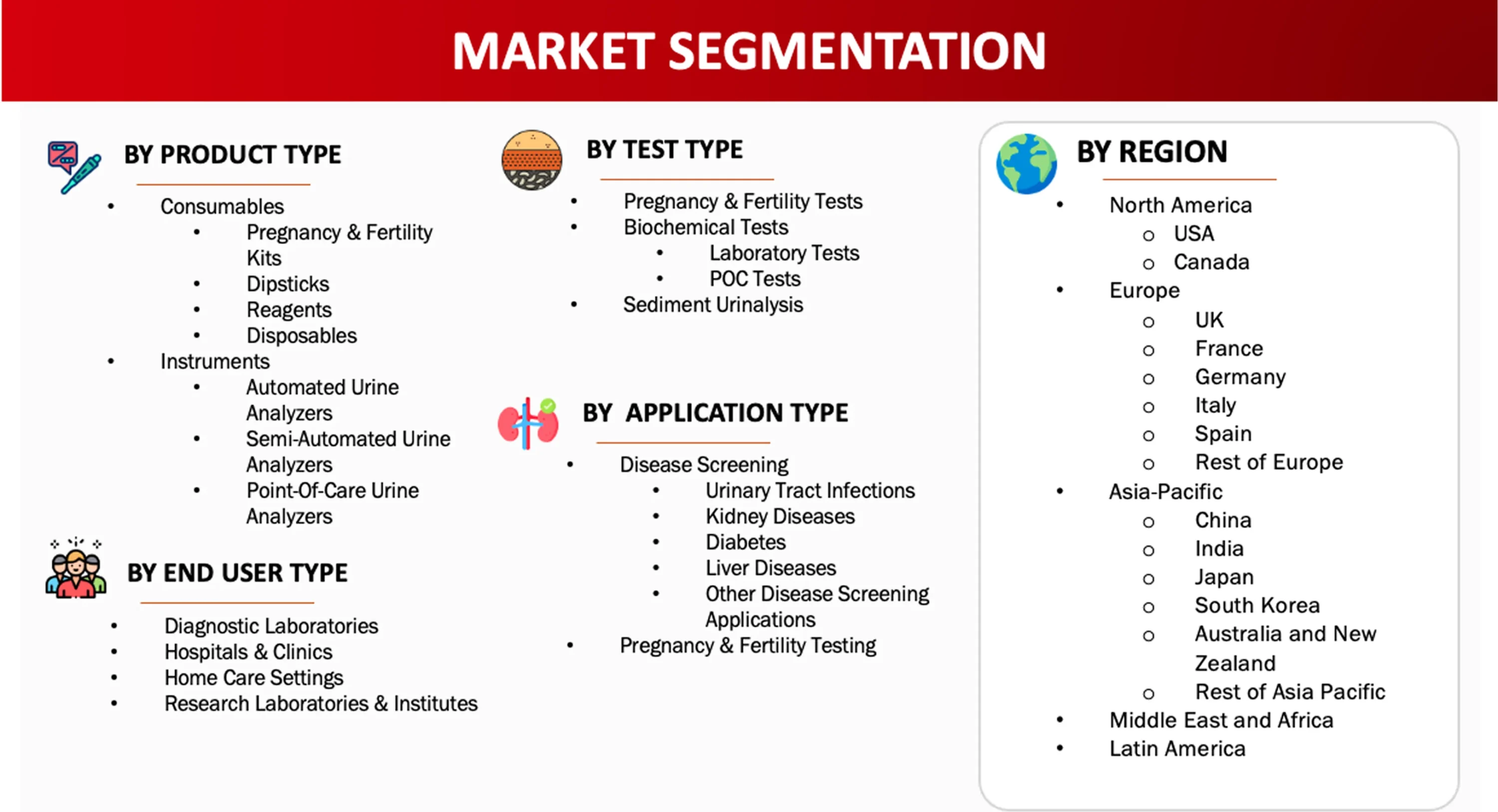
Breakdown by product type, by test type, by application type, by end users type, and region

Regional Insights:
Key regional trends and growth opportunities

Future Outlook:
Strategic insights and future market direction
Research Methodology
The study of the urinalysis market is based on a combination of primary and secondary research methodologies, supported by data validation, diagnostic product and technology mapping, urine testing volume and adoption analysis, company revenue and product-portfolio assessment, analyzer installed-base evaluation, consumables demand analysis, clinical application assessment, regulatory and commercialization analysis, healthcare infrastructure evaluation, pricing and procurement analysis, competitive benchmarking, and analytical modelling to ensure accuracy and reliability.
Market Definition: Urinalysis Market
The urinalysis market comprises diagnostic products and consumables used to analyze urine samples for screening, diagnosis, and monitoring of medical conditions. The market covers products including urine reagent strips and dipsticks, reagents, pregnancy and fertility testing kits, disposable testing materials, automated urine analyzers, semi-automated urine analyzers, and point-of-care urine analyzers.
The market includes chemical urinalysis, microscopic and sediment urinalysis, automated urine analysis, biochemical testing, and pregnancy and fertility testing performed using urine-based diagnostic products. Product categories include integrated urine analyzers, sediment urine analyzers, biochemical urine analyzers, and other applicable urine-testing instruments. Applications comprise urinary tract infection assessment, kidney disease screening and monitoring, diabetes-related testing, liver disease assessment, other disease-screening applications, and pregnancy and fertility testing. End users include diagnostic laboratories, hospitals and clinics, home-care settings, and research laboratories and institutes. Blood-based diagnostic tests, non-urine-based pregnancy tests, unrelated laboratory diagnostics, and general laboratory equipment not specifically intended for urinalysis are excluded from the market unless explicitly included in the study scope.
Key Stakeholders
The urinalysis market involves a broad ecosystem of stakeholders:
- Urinalysis Instrument Manufacturers
- Urine Reagent Strip and Dipstick Manufacturers
- Urinalysis Reagent and Consumables Manufacturers
- Automated Urine Analyzer Manufacturers
- Pregnancy and Fertility Test Manufacturers
- Point-of-Care Diagnostic Device Manufacturers
- Diagnostic Laboratories
- Hospitals and Clinics
- Home-Care Testing Providers
- Research Laboratories and Institutes
- Diagnostic Product Distributors and Suppliers
- Healthcare Procurement and Purchasing Departments
- Regulatory Authorities and Clinical Laboratory Organizations
- Laboratory Information System and Diagnostic Connectivity Providers
Key Objectives of the Study
- To define, describe, analyze, segment, and forecast the urinalysis market by product type, by test type, by application type, by end users type.
- To describe and forecast the market for four key regions: North America, Europe, Asia Pacific, and Rest of the World
- To provide detailed information regarding key drivers, restraints, opportunities, and challenges influencing market growth
- To strategically analyze the micro indicators with respect to individual growth trends, prospects, and contributions to the overall market size
- To analyze opportunities for stakeholders in the urinalysis industry and emphasize on competitive landscape of the market
- To develop competitive benchmarking of the key market players based on technology specifications and end user
- To strategically profile key players and comprehensively analyze their product portfolio offerings, and core competencies
- To analyze competitive developments, such as launches and approvals, agreements, mergers and acquisitions, partnerships, joint ventures, investments and expansions, and collaborations, urinalysis domain
Need deeper insights on this market?
Get full report access with detailed forecasts, competitive analysis, and segmentation.
Research Approach
This research employs a systematic approach by using primary research along with secondary research to achieve full coverage and accuracy of information about the urinalysis sector. Through this approach, the current market trends in terms of consumer behaviour, technological developments, and competitive environment can be analysed thoroughly.
Secondary Research
Secondary research involves the collection of data from reliable sources such as industry databases, company annual reports, investor presentations, and regulatory filings. This process helps in understanding market trends, identifying key players, and gathering technical and commercial insights.
A comprehensive database of leading companies and market participants is developed through secondary research to support further analysis.
Primary Research
Primary research is conducted to validate findings from secondary research and to gain deeper insights into market dynamics. Interviews are carried out with industry stakeholders across both demand and supply sides, including executives such as CXOs, Vice Presidents, and Directors from business development, marketing, and product teams.
Data is collected through structured questionnaires, email interactions, and telephonic interviews across key regions including North America, Europe, Asia-Pacific, and Rest of the World.
Market Size Estimation
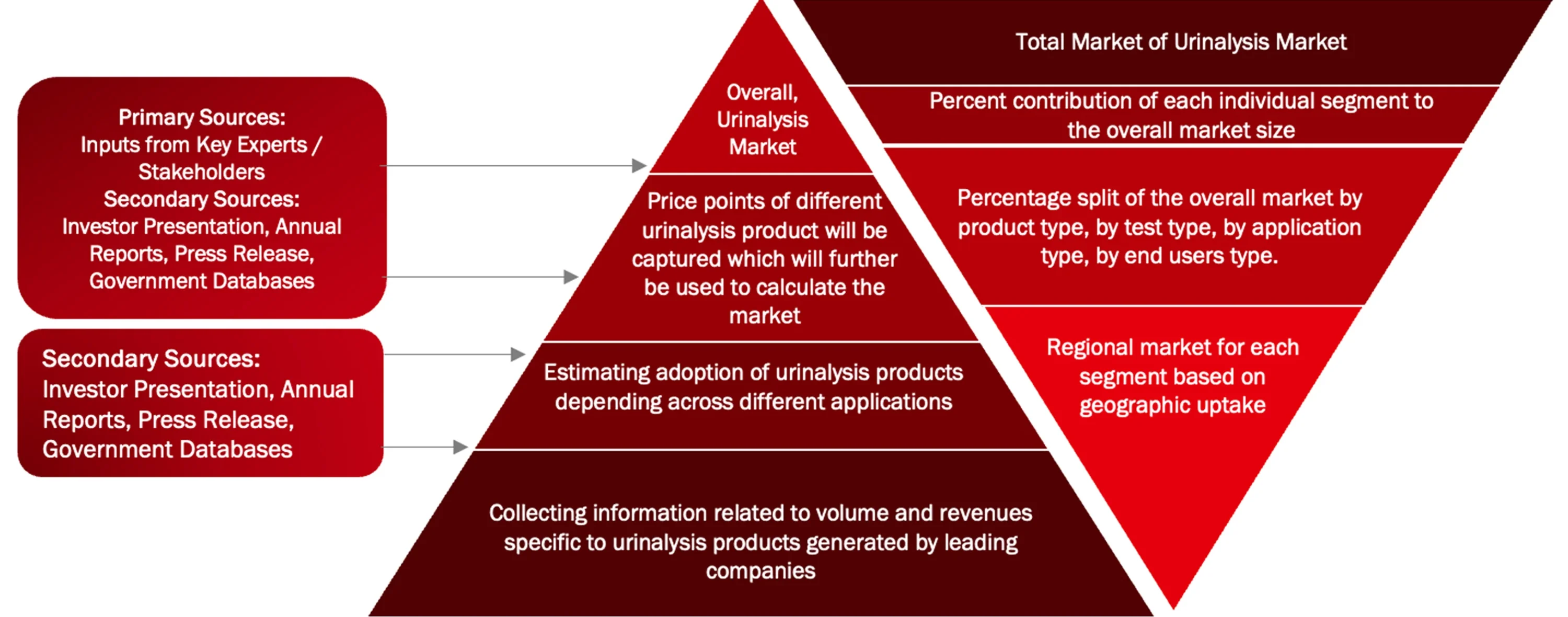
Market size estimation is performed using both top-down and bottom-up approaches. Key market players are identified, and their revenues are analysed to estimate the overall market size.
The market is further segmented based on:
- Product and service mapping across regions
- Adoption patterns across key application segments
- Insights gathered through primary and secondary research
Data Validation and Research Design
After estimating the overall market size, the data is validated using triangulation methods and market breakdown techniques to ensure accuracy and consistency. Both demand-side and supply-side factors are considered to refine the analysis.
The final data is validated through multiple sources to ensure reliability and to provide accurate insights across all market segments and regions.
Assumptions of the Study
The analysis of the urinalysis market is based on the following key assumptions:
- Trends in the industry are drawn from historical data and current information within the sector
- The future outlook is underpinned by constant economic conditions in the absence of shocks to the market
- The rate of adoption for urinalysis will rise steadily in all important regions
- The income statement and market share figures are estimated using available information from the industry and publicly available data
- The exchange rate and price trends will not be greatly affected during the forecast period
Scope and Limitations
Scope of the Study
This report offers an exhaustive overview of the global urinalysis market and includes the following components:
- Summary of market size, growth trends, and projections
- Carefully segmented market based by product type, by test type, by application type, by end users type and geography
- Discussion of primary factors influencing the market
- Competitor analysis
- Insights into regional and national market performance
Limitations of the Study
Despite the best efforts being made to keep the results accurate, the study does suffer from some limitations:
- It has been done using both primary and secondary data that come with their own constraints
- Rapid developments in technology might affect the future course of market dynamics
- Some figures are only approximations due to lack of public disclosure
- The report is not an insurance against any disruptions in macroeconomics and geopolitics
- Future forecasts are indicative and subject to change due to altered industry dynamics
Data Triangulation and Market Breakdown
Data triangulation involved the combination of primary research, secondary research, and the Wissen Research analysis. Once the data points were sourced from the secondary market research, we sanitized the data points to make the market sizing and growth forecast more accurate by developing our own assumptions based on the inputs and insights we gather through the primary interviews with the industry experts. Once the data was thoroughly validated through primary interviews from both, demand and supply side of the market, our team of analyst and other team members involved finalized the market sizing and growth forecast.
Data Triangulation Methodology
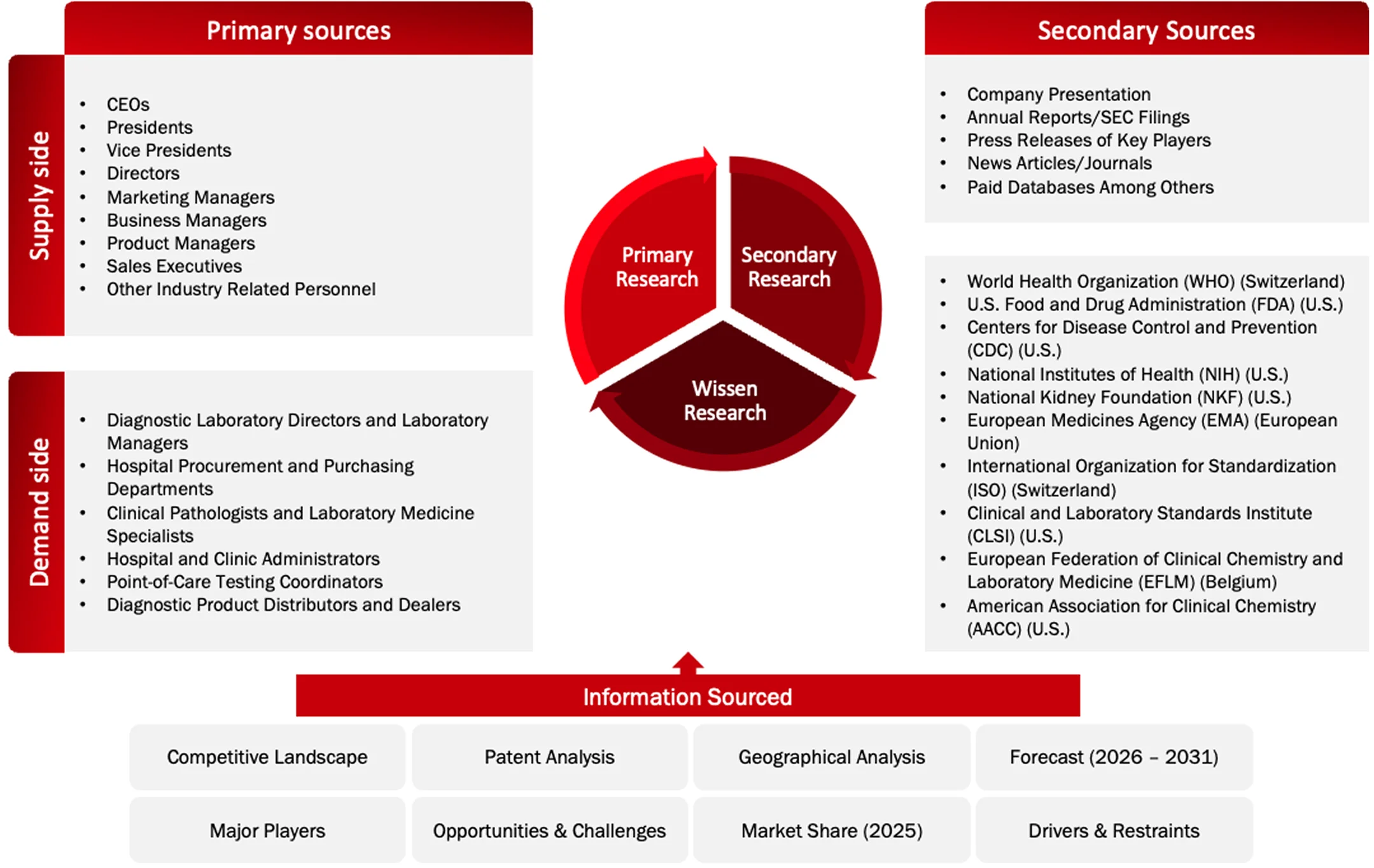
World Health Organization (WHO), U.S. Food and Drug Administration (FDA), Centers for Disease Control and Prevention (CDC), National Institutes of Health (NIH), National Kidney Foundation (NKF), European Medicines Agency (EMA), International Organization for Standardization (ISO), Clinical and Laboratory Standards Institute (CLSI), European Federation of Clinical Chemistry and Laboratory Medicine (EFLM), American Association for Clinical Chemistry (AACC), Company Websites, Press Releases, Annual Reports, Regulatory Filings, Peer-Reviewed Scientific Publications, Clinical Guidelines, and Wissen Research Analysis.
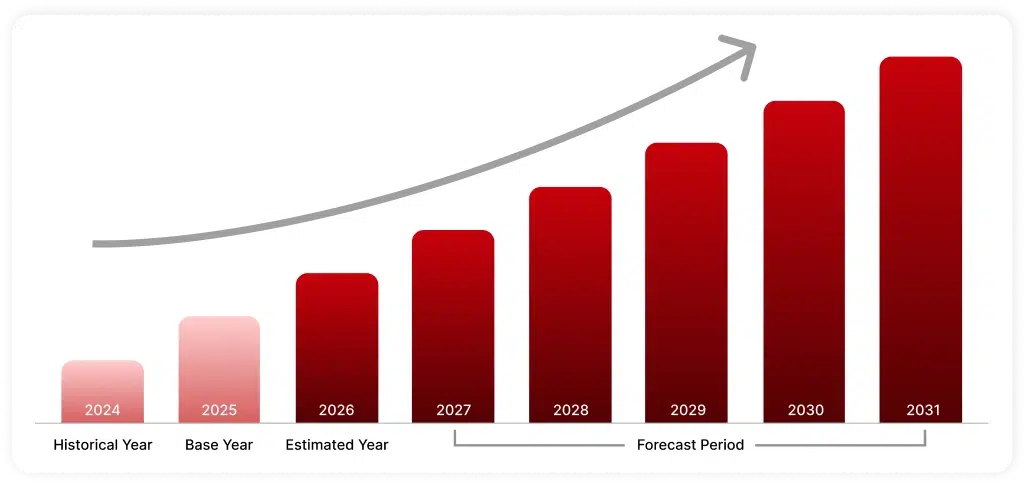
Years Framework
Bottom-Up Approach (Demand Side) And Top-Down Approach (Supply Side)
Bottom-Up Approach (Demand-Side Approach):
Determining the market size through the consolidation of demand among end-users, sectors, and geographic areas, which are calculated according to real-world demand conditions.
Top-Down Approach (Supply-Side Approach):
Calculating the market size through revenue and performance of the industry and its important companies, allocating the market size among various sectors.
Want detailed insights from this report?
Buy this Report
Choose the option that best fits your needs