
Summarize this report with:



Executive Summary
The rise of GLP-1 therapies is not merely a healthcare phenomenon, it is a consumer transformation. Notably, nearly half of all GLP-1 users are taking these therapies primarily for weight loss, underscoring their growing role in shaping consumer health and dietary behaviours. By influencing appetite, purchasing behaviour, and lifestyle choices, these therapies are reshaping demand across multiple sectors. This shift is expected to redefine food demand, placing greater emphasis on nutrient-dense products that maximize nutritional value, satiety, and functional benefits within smaller portions. As portion sizes shrink, the risk of nutritional deficiencies increases, elevating the importance of compact, nutrient-dense products enriched with protein, fibre, and essential micronutrients. As the industry is approaching a transformative, once-in-a-generation inflection point, many brands are only beginning to assess the implications for their products, customer base, and future growth trajectory.
To better understand the pace of GLP-1 adoption and its potential implications for the food industry, EY-Parthenon surveyed 1,700 consumers, including both current GLP-1 users and non-users. The findings suggest that uptake of these therapies is likely to be both rapid and sustained, driven by growing societal acceptance of medically assisted weight management and increasing pressure on insurers from consumers and pharmaceutical companies to expand coverage and reimbursement. Moreover, the introduction of oral GLP-1 therapies is expected to unlock a significant new user segment, particularly among consumers who prefer non-injectable treatment options.
-
Every CPG playbook for the last 100 years was built on selling more. GLP-1 just broke that model, Permanently, not temporarily. The same companies that helped cause the obesity crisis are now selling the food that helps you live with the drug that treats it.
-
GLP-1 use is rising, with many users losing appetite for fried, sweet, and fatty foods thereby posing a major challenge for snack markets.
-
The Pill That Changes Everything: Oral GLP-1 Has Arrived.
-
GLP-1-Friendly vs. GLP-1-Active: The Distinction Reshaping the Industry.
-
Patents for GLP-1 medications are set to lapse in several of the world’s largest pharmaceutical markets including China, India, Brazil, Canada, and Turkey.
-
Many established food companies have successfully reformulated products to address the nutritional needs of GLP-1 users, only a small number of organizations possess proprietary technologies capable of directly influencing the GLP-1 pathway.
Research Methodology
The research methodology adopted for this study was designed to ensure comprehensive, multi-dimensional coverage of the GLP-1 technology landscape, competitive dynamics, and consumer behaviour. The approach combined systematic review of primary scientific literature, patent and intellectual property records, regulatory developments, and commercial intelligence inputs, structured across three distinct but interrelated research streams that together form the evidentiary foundation of this report.
- Scientific & Clinical Literature Review:
The scientific foundation of this report was built on direct review of the biological mechanism of GLP-1 secretion and signalling, drawing on peer-reviewed literature to establish how specific dietary patterns, ingredients, and engineered molecules interact with the pathway. This stream enabled an evidence-based Technology Readiness Level assessment across core technology categories — from commercially mature solutions such as prebiotics and low-glycaemic carbohydrates to early-stage bioactive peptide platforms — grounded in clinical evidence rather than supplier marketing claims.
- Patent & Intellectual Property Verification:
The competitive landscape and patent-to-product mapping were built on direct review of patent records, verifying assignee ownership and grant status directly against primary sources rather than relying on secondary supplier characterisation. This stream was specifically designed to distinguish companies with genuine, company-specific evidence of GLP-1 pathway engagement from those using GLP-1-adjacent language without a verifiable mechanism behind the claim.
- Commercial & Market Intelligence Research:
This stream encompassed systematic review of company disclosures, regulatory filings, and industry intelligence from sources including J.P. Morgan Research, Circana, Morgan Stanley, EY-Parthenon, IFF etc. Competitive intelligence was further gathered through trade publications and direct company statements across food, biotechnology, and pharmaceutical sectors.
TECHNOLOGY LANDSCAPE
METRIC | DATA POINT |
|---|---|
US adults currently on GLP-1 | |
Projected US GLP-1 users by 2030 | |
Share of US F&B sales by 2030 | |
Projected Global Market by 2035 | |
Snack & confectionery decline | 85% of GLP-1 consumers reported aversions to fatty foods, fried items, sweets, coffee etc (IFF) |
$12 billion Hit for the snacks market | a potential $7 billion hit for salty snacks and $5 billion for sweet snack products (EY Parthenon) |
Americans on GLP-1 treatment by 2030 |
Table 1: The scale of GLP-1 disruption by numbers.
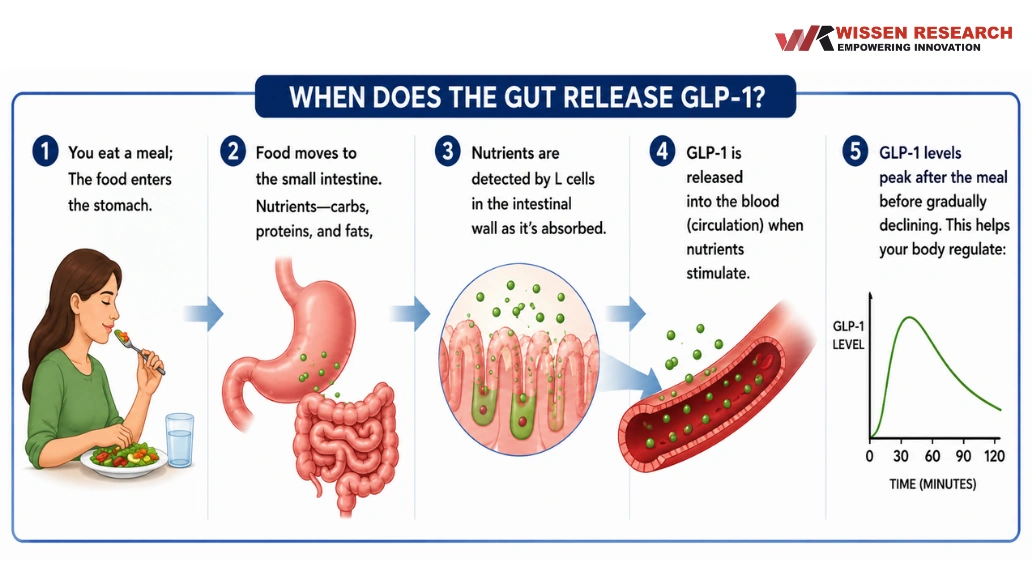
Understanding how GLP-1 works (Figure 1) naturally and what dietary patterns support or suppress its secretion has become one of the most commercially relevant questions in both the pharmaceutical and consumer packaged goods industries today.
GLP-1 (glucagon-like peptide-1) is a naturally occurring incretin hormone produced by specialised L-cells in the small intestine in response to food intake. Secretion begins within minutes of eating and varies significantly with meal composition — protein, healthy fats, and dietary fibre are the strongest natural stimulators, while refined carbohydrates and added sugars produce a weaker, shorter-lived response. Once released, GLP-1 acts across multiple systems: it stimulates glucose-dependent insulin secretion, suppresses glucagon, slows gastric emptying, and signals the hypothalamus to reduce hunger, placing it at the intersection of blood sugar regulation, appetite control, and metabolic balance.
Natural GLP-1’s half-life in the body is just 2–3 minutes, rapidly degraded by the enzyme DPP-4. This biological brevity is precisely what makes GLP-1 receptor agonist drugs so clinically significant: semaglutide and tirzepatide are engineered to replicate GLP-1’s effects while resisting enzymatic degradation, sustaining the hormone’s action for days rather than minutes, making them effective for obesity and type 2 diabetes (T2D) management. The rapid adoption of GLP-1 therapies is poised to reshape consumer food consumption patterns and disrupt traditional growth assumptions across the food and beverage industry. By reducing appetite, increasing satiety, and encouraging healthier eating habits, these medications are driving a measurable shift away from calorie-dense snacks and toward protein-rich, nutrient-dense foods. As GLP-1 usage expands beyond diabetes management into weight-loss applications, consumers are becoming more selective about what they eat, placing greater emphasis on nutritional value, calorie content, and health benefits.
Oral GLP-1: The Next Wave of Market Growth
Despite the intense commercial and cultural attention surrounding GLP-1 medications, global penetration remains remarkably low. Only an estimated 7% of diagnosed diabetes patients and 2% of the obese population currently use these therapies , figures that suggest the market is still in its early stages relative to its addressable population. Two structural developments, however, are positioned to materially expand both supply and demand over the coming years:
Arrival of oral GLP-1 formulations: Novo Nordisk’s oral GLP-1 pill became widely available in early January 2026, while Eli Lilly’s oral candidate, Orforglipron, is expected to follow shortly after. Beyond convenience, oral pills eliminate the need for cold-chain logistics, the continuous refrigeration injectables require opening a realistic path to regions that could never economically support injectable-only distribution.
Patent expiry: Patents for GLP-1 medications are set to lapse in several of the world’s largest pharmaceutical markets including China, India, Brazil, Canada, and Turkey. These jurisdictions together account for approximately 40% of the global population and roughly a third of the world’s obese adults. The entry of generic and biosimilar manufacturers into these markets could meaningfully lower prices and accelerate adoption.
Injectable GLP-1 therapies, while clinically transformative, carry a set of frictions (Figure 2) that have quietly capped their reach. Weekly self-administered injections demand a tolerance for needles that a meaningful share of patients simply do not have, and the requirement for refrigerated cold-chain storage and distribution has confined access largely to wealthier markets with the logistics infrastructure to support it. Add to this the gastrointestinal side effects, the visible stigma some patients associate with injectable treatment, and a price point that puts the drugs out of reach for a substantial portion of the population that needs them, and the result is a therapy class whose clinical promise has consistently outpaced its practical accessibility.
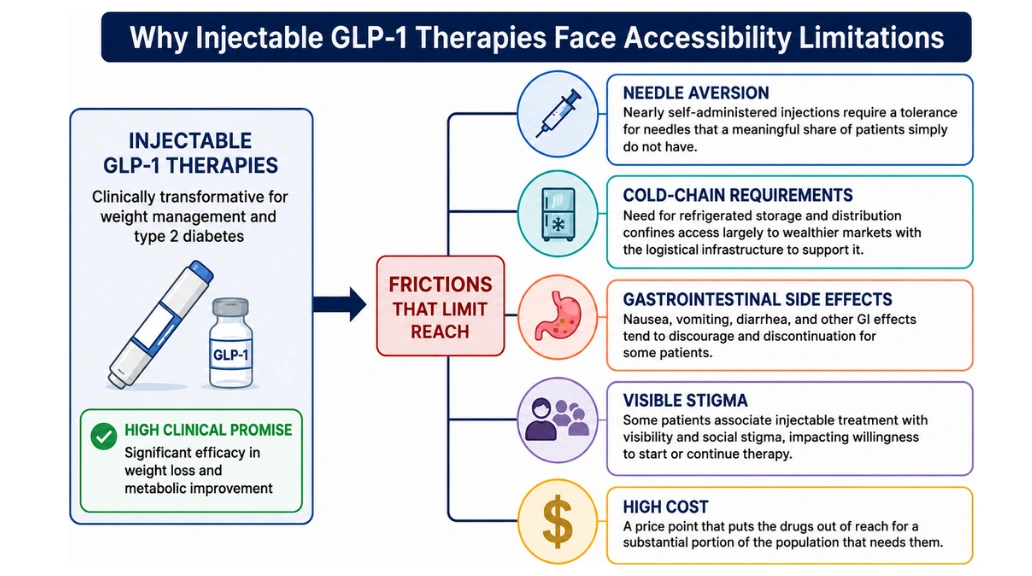
Oral GLP-1 formulations dismantle each of these barriers in turn: no needle, no cold chain, and in the case of newer small-molecule agonists like Orforglipron, no food or water restrictions either. As manufacturing scales and prices fall, the path of least resistance for both patients and prescribers point unmistakably toward the pill , not because it is a better molecule, but because it is a fundamentally easier one to live with. That ease is precisely what will make oral GLP-1 the format that captures the next wave of market growth, even as injectables remain entrenched among existing users already comfortable with the routine.
The GLP-1 nutrition landscape has progressed through three distinct phases.
The first, and still by far the most common, is reformulation: existing products nudged toward higher protein and fibre, or simply relabelled to foreground macros they already possessed.
The second, now emerging, involves dedicated functional ingredients — patented peptides, postbiotics, and probiotic strains engineered specifically to support satiety and digestive tolerance in this consumer group.
The third and most advanced phase, only barely underway, is true GLP-1-active formulation: ingredients and engineered molecules designed not merely to be compatible with the GLP-1 user, but to stimulate the GLP-1 pathway itself, closing the gap between “friendly” and “active.”
“As GLP-1 therapies gain widespread adoption, an increasing number of food products are being marketed as “GLP-1 Friendly.” However, the term currently has no standardized regulatory definition. There are no FDA-established criteria governing its use, including minimum requirements for protein, fibre, or other nutritional attributes. While some manufacturers have voluntarily disclosed nutrient content to support such claims, there is no formal certification or consistent industry standard. This creates a disconnect between highly regulated GLP-1 medications and comparatively unregulated food products marketed alongside them”
In this evolving landscape, the most effective way to evaluate future opportunities is not through individual products or brands, but through the underlying technologies that enable innovation (Table 2). These technologies form the foundation of next-generation food, beverage, and nutritional solutions designed to support weight management, metabolic health, and the unique needs of GLP-1 users. As they can be deployed across multiple product categories, licensed to different manufacturers, and scaled over time, they provide a more reliable indicator of long-term market potential, competitive differentiation, and investment attractiveness than standalone product launches.
Technology | Key Application Area | Benefits | Example Ingredients / Solutions | Commercial Adoption | TRL |
|---|---|---|---|---|---|
Prebiotics & Postbiotics | enhance satiety, gut health, and metabolic wellness. | Supports immune health, enhances calcium absorption and bone health, promotes healthy blood glucose response | Chicory root fibre (BENEO) | High | 9 |
Low-Glycaemic Carbohydrates | Support blood glucose management and sustained energy levels. | Enhanced fat burning, steady rise in blood sugar without the spikes and crashes of traditional sugars, leads to prolonged satiety | Isomaltulose (Palatinose™), pulse-based carbohydrates | High | 9 |
Protein Enrichment | Provides protein and texture functionality in a single clean-label ingredient, enabling simpler formulations and shorter ingredient lists. | Supports muscle preservation and nutritional adequacy during weight loss. | Whey protein isolate, pea protein | High | 9 |
Protein Microencapsulation | Improves taste, texture, stability, and consumer acceptance of high-protein products. | Improves digestive tolerance, enables sustained amino acid delivery, Enhances protein stability and protection. | Encapsulated whey proteins, lipid-coated protein particles. | Medium | 7 |
Microbiome-Based Solutions | Support appetite regulation and metabolic health | helps prevent “leaky gut” and reduces GI discomfort, gas, and bloating | Pendulum Akkermansia | Medium | 6 |
Bioactive Peptides | Potentially stimulate satiety hormones and metabolic pathways naturally. | Enhances insulin sensitivity, supports lipid metabolism, reduces inflammation, and protects against oxidative stress. | Nextida GC, Lembas peptides | Low-Medium | 4-7 |
Table 2: Core Technologies Driving GLP-1 Food Innovation
Patent to Product Feature Mapping
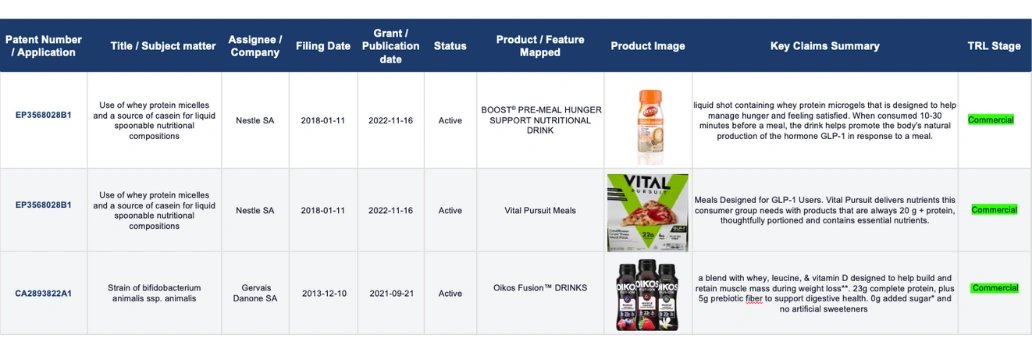
Patent-to-product mapping provides a clear view of how proprietary scientific innovations are translated into commercial offerings. By linking patented technologies to market-facing products, it highlights how companies are leveraging intellectual property to address emerging consumer needs, create competitive differentiation, and capture opportunities arising from the growing GLP-1-driven shift toward nutrient-dense, high-satiety nutrition (Table 3).
COMPETITIVE LANDSCAPE
The GLP-1 wave has triggered one of the fastest repositioning sprints the food industry has seen in years. The GLP-1 food and nutrition landscape encompasses a diverse range of companies, from global CPG manufacturers and ingredient suppliers to emerging startups. However, not all players contribute to the market in the same way. While some have developed proprietary ingredients or technologies that directly engage the GLP-1 pathway, others primarily offer nutritional products designed to complement GLP-1 therapies (Figure 3).
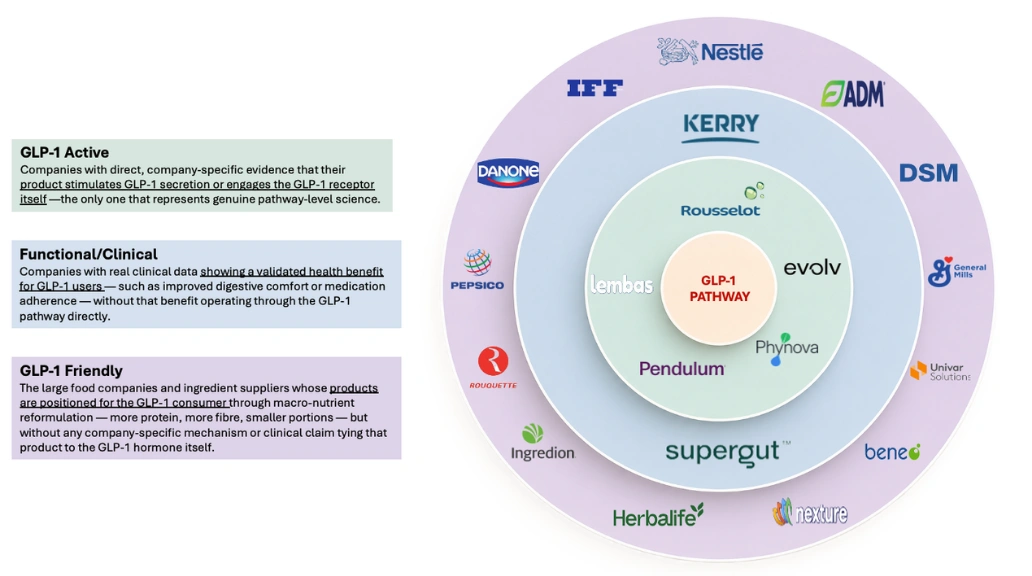
The landscape reveals a clear distinction between GLP-1-friendly nutrition and GLP-1-active innovation. While many established food companies have successfully reformulated products to address the nutritional needs of GLP-1 users, only a small number of organisations possess proprietary technologies capable of directly influencing the GLP-1 pathway. This map provides an evidence-based view by classifying companies according to the strength of their scientific association with the GLP-1 pathway.
As the GLP-1 market continues to expand, a new generation of startups is emerging to address the evolving needs of consumers seeking better appetite management, metabolic health, muscle preservation, and nutrient-dense nutrition. These companies are developing innovative solutions across protein, gut health, microbiome science, and functional nutrition, positioning themselves as attractive acquisition targets for established food and beverage players looking to strengthen their presence in the rapidly growing GLP-1 ecosystem.
THE GLP-1 PARADOX — STATED PLAINLY
The brands that will win the GLP-1 era are not the ones that reformulate fastest. They are the ones that make the most credible case that they are genuinely on the consumer’s side. Clinical transparency, ingredient honesty, micronutrient completeness, and genuine medical understanding of what many people are going through — these are the brand values that convert GLP-1 users into the most loyal consumer segment in CPG. By 2030, GLP-1 medication users will represent 35% of US food and beverage sales. That is not a niche. That is the mainstream. Brands that treat this as a marketing opportunity will get a short-term sales bump. Brands that treat it as a genuine responsibility will own the next decade.
TREND ANALYSIS
The Segmentation Gap: Who the GLP-1 Consumer Actually Is vs. Who Brands Think They Are
Understanding the GLP-1 consumer requires more than tracking who is on medication. It requires recognising that GLP-1 adoption is not a static state — it is a journey, and consumers at different points along that journey have fundamentally different physiological needs, purchasing motivations, and product expectations (Table 4). A consumer actively on weekly semaglutide injections is navigating a completely different nutritional reality from one who has recently discontinued therapy, or one who has never accessed the drug but is actively seeking its metabolic benefits through diet. Treating these three populations as a single addressable market produces strategies that are, at best, partially effective and, at worst, entirely misaligned with the consumer they claim to serve.
The segmentation that follows identifies three distinct GLP-1 consumer cohorts — each defined not by demographics, but by their relationship with the drug, the body, and the food system at a specific point in their health journey. The product implications, ingredient priorities, and commercial opportunities differ materially across all three.
COHORT | PROFILE | UNMET NEED | PRODUCT TYPE | SIZE |
|---|---|---|---|---|
Active User Currently on injection or oral GLP-1. | Appetite suppressed, taste altered, muscle loss risk, high health engagement. | Dense nutrition in small formats. Clinical credibility. Muscle loss prevention. Micronutrient replenishment. | Small-format high-density meals, protein RTDs, fortified snacks | |
Off-Ramp Stopped the drug due to cost, side effects, or availability. | Trying to maintain results. High rebound-eating risk. Highly motivated. | Natural GLP-1 support. Satiety maintenance without the drug. Behavioural habit reinforcement. | Natural secretagogue foods, satiety-engineered snacks, metabolic support products | |
Aspirant Wants GLP-1-like results without a prescription | Cost, needle aversion, or access barriers. Broad demographic, lower income skew. | Natural endogenous GLP-1 boosting through diet. Satiety, blood sugar management, weight control without pharma. | Berberine supplements, beta-glucan foods, high-protein everyday formats |
Table 4: The GLP-1 Consumer Segmentation
THE OFF-RAMP CONSUMER — THE BIGGEST OPPORTUNITY NOBODY IS BUILDING FOR
50% of previous GLP-1 users are likely to use the medications again in the future (Circana), indicating sustained impact as consumers move in and out of active medication use but retain health-conscious behaviours. When GLP-1 users stop their medication, appetite returns — sometimes rapidly and intensely. The CPG brand that builds a dedicated ‘transition nutrition’ range for this cohort is addressing a population currently without any product support and desperately seeking it.
The Partnership Ecosystem Shaping GLP-1 Nutrition
The emergence of GLP-1 therapies is reshaping the traditional boundaries between the food, biotechnology, and pharmaceutical industries, creating opportunities for a collaborative innovation ecosystem. Rather than operating independently, companies across these sectors are increasingly expected to form strategic partnerships to develop scientifically validated nutrition solutions that complement GLP-1 therapies.
Food and beverage companies contribute formulation expertise, large-scale manufacturing, established brands, and extensive retail distribution. Biotechnology companies provide innovative functional ingredients, including bioactive peptides, microbiome-based solutions, precision fermentation technologies, and other novel compounds that support metabolic health. Pharmaceutical companies bring clinical expertise, regulatory knowledge, and a deep understanding of patient needs throughout the GLP-1 treatment journey. Such collaborations accelerate product development, strengthen scientific credibility through clinical validation, and enable the creation of integrated nutrition solutions tailored to different stages of GLP-1 therapy. Beyond product innovation, partnerships also create opportunities for co-development, ingredient licensing, clinical research, and personalized nutrition platforms that combine food, supplements, digital health, and pharmaceutical care.
As the market matures, cross-sector partnerships are likely to become a key competitive differentiator, enabling companies to transition from offering generic “GLP-1-friendly” products to delivering evidence-based nutritional solutions that provide measurable health benefits.
SWOT & RISK ANALYSIS
– Explosive, measurable demand signal GLP-1-positioned products grew ~10x in 12 months (38 → 388 products), rising demand for high-protein, nutrient-dense, and functional foods.
– Premium pricing power — 80% of GLP-1 users say they’ll pay more for tailored products, turning a health crisis into a margin opportunity.
–Encourages collaboration between food manufacturers, ingredient suppliers, and healthcare companies.
–Accelerates innovation in functional nutrition, metabolic health, and personalized nutrition.
–Reduced overall food consumption may negatively impact sales volumes, particularly in indulgent categories.
–Reformulating products and developing GLP-1-friendly portfolios require significant R&D investment.
-Claims chaos: Lack of standardized regulatory guidelines for GLP-1-related food labelling. Most current products are “GLP-1-friendly” rather than scientifically proven to influence the GLP-1 pathway.
–Product adoption depends on the growth and affordability of GLP-1 therapies.
–Reformulating products with higher protein and fiber while maintaining taste and affordability remains challenging.
– Invest in bioactive peptides, prebiotics, functional fibres, and other next-generation ingredients that support metabolic health.
-Micronutrient deficiency white space (folate, choline, B12) created by reduced food intake is barely addressed — functional fortification angle is wide open
– With GLP-1 drug patents expiring in major markets will sharply widen access and affordability — CPGs that establish companion-food positioning now will own category leadership before the user base scales by an order of magnitude.
-Partner with biotechnology firms and ingredient innovators to develop scientifically differentiated products.
–Leverage AI and precision nutrition to create individualized dietary solutions. Develop personalized nutrition platforms tailored to different stages of GLP-1 therapy (initiation, weight loss, maintenance, discontinuation).
–Develop products that manage gastrointestinal side effects, including tailored fiber blends, probiotics, postbiotics, digestive enzymes, and hydration-support ingredients.
–Innovate high-protein, leucine-rich formulations to preserve lean muscle mass during rapid weight loss.
-Drug discontinuation rates are high within a year — CPGs may be over-building permanent infrastructure for a transient, churning user base.
–Pharmaceutical companies may expand into nutrition, increasing competition for traditional food manufacturers.
–As lawsuits and FDA scrutiny mount over unregulated ‘GLP-1 friendly’ claims, today’s marketing badge could become tomorrow’s class-action exhibit — brands are racing to label products faster than regulators are racing to define what the label even means.
–As GLP-1 drugs succeed at their actual job — making people eat less — the total addressable market for companion foods shrinks by definition; the better the drug works, the smaller the snack.
–Increasing regulatory scrutiny of GLP-1-related marketing and health claims may restrict product positioning.
-Supply chain constraints for high-quality protein and specialty functional ingredients could increase costs and limit scalability.
–Dependence on GLP-1 adoption rates and reimbursement policies could affect long-term market demand.
STRATEGIC RECOMMENDATIONS
| ·Expand GLP-1-friendly product portfolios by prioritizing high-protein, high-fibre, nutrient-dense, and portion-controlled offerings.
· Reformulate existing products to improve nutritional quality while maintaining taste and affordability. ·Adopt transparent product labelling, clearly communicating protein, fibre, calorie, and micronutrient content rather than relying solely on “GLP-1-friendly” claims. · Educate consumers through evidence-based nutritional guidance tailored to the needs of GLP-1 users. · Monitor emerging regulations to ensure compliance with evolving standards for health and nutrition claims. |
| ·Invest in functional ingredients such as bioactive peptides, prebiotics, functional fibers, and controlled-digestion technologies that support satiety and metabolic health. ·Establish strategic partnerships with ingredient suppliers, biotechnology companies, and academic institutions to accelerate innovation. ·Generate clinical evidence to validate product benefits and strengthen consumer trust through science-backed claims. ·Develop personalized nutrition solutions tailored to different stages of GLP-1 therapy and individual metabolic needs. ·Leverage digital health platforms to integrate nutrition guidance with GLP-1 treatment journeys. |
| ·Build a “GLP-1 off-ramp” maintenance portfolio for the large cohort who discontinue treatment within a year — an underbuilt category that extends brand relevance beyond active drug use. ·Transition from “GLP-1-friendly” products to metabolically targeted nutrition, focusing on scientifically validated solutions that actively support metabolic health. ·Pursue acquisitions or licensing agreements with companies developing GLP-1-active ingredients, bioactive peptides, or microbiome-based technologies. ·Establish integrated metabolic health ecosystems, combining food, supplements, digital health, and personalized nutrition services. ·Collaborate with regulators and industry bodies to help define evidence-based standards for GLP-1-related food claims and labeling. ·Develop future-ready innovation platforms capable of supporting the next generation of obesity, diabetes, and metabolic health therapies beyond GLP-1. |
APPENDIX
•https://www.foodingredientsfirst.com/news/glp-1-beneo-carbery-cosun-sensus-frieslandcampina-tate-lyle.html
•https://www.tastetech.com/updates/how-glp-1-is-changing-food-formulation-and-what-it-means-for-manufacturers/
•https://www.americaninternationalfoods.com/2025/10/20/glp-1-medication-effect/
•https://www.ey.com/en_us/insights/strategy/use-of-glp-1-drugs-by-dieters-may-impact-snack-brands
•https://think.ing.com/articles/transformative-or-overhyped-the-impact-of-weight-loss-drugs-on-european-food-demand1/
•https://www.jpmorgan.com/insights/global-research/current-events/obesity-drugs
•https://www.circana.com/post/glp-1-medication-users-to-represent-35-percent-of-u-s-food-and-beverage-sales-by-2030
•https://news.gallup.com/poll/696599/obesity-rate-declining.aspx
•https://www.mdpi.com/2673-5318/7/3/130
•https://www.iff.com/media/stories/how-glp-1-medications-are-rewiring-taste-palates-and-what-it-means-for-fb-innovation/
•https://www.alixpartners.com/insights/102mndi/glp-1-and-the-snack-sector-disruptive-trend-not-existential-threat/
•https://www.jpmorgan.com/insights/global-research/current-events/obesity-drugs
•Natural Products Targeting GLP-1: Insights into Herbal Therapy for Insulin Resistance and Beta-Cell Function