
Ready-to-Drink (RTD) Tea Market
Global Industry analysis, Size, Share, Growth, Trends, and Forecast 2026-2031
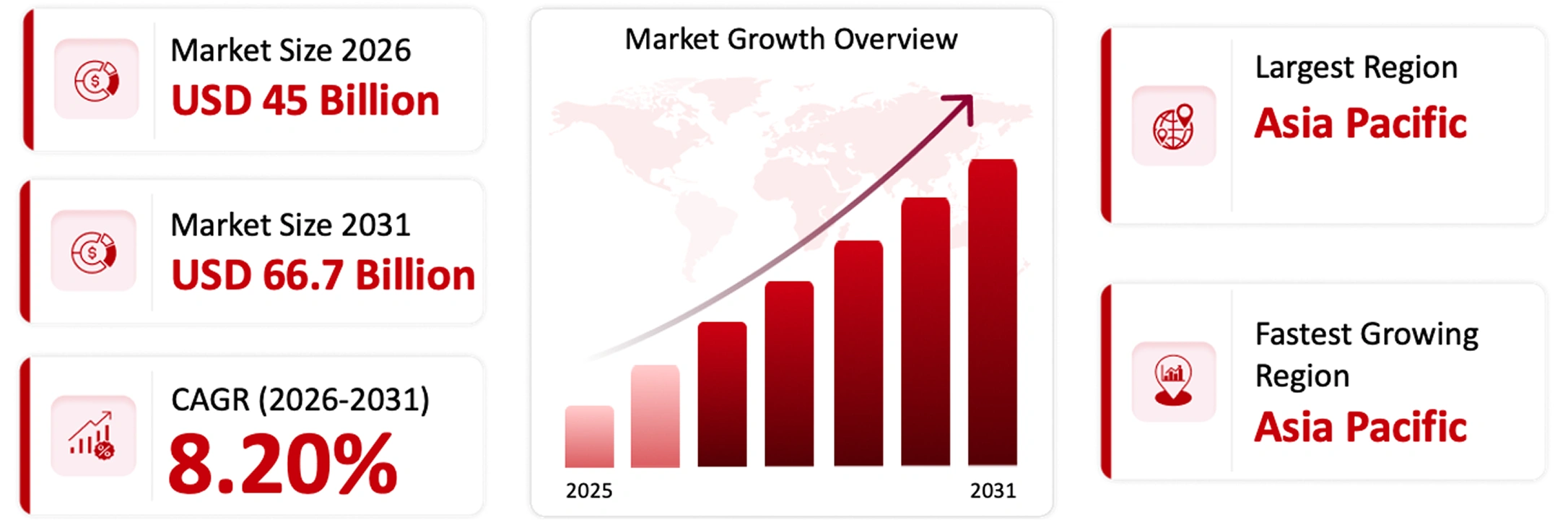
The global ready-to-drink (RTD) tea market is projected to reach USD 66.7 billion by 2031, growing at a CAGR of 8.2% during the forecast period.
| Estimated Market Size (2026): | Forecast Market Size (2031): | CAGR (2026–2031): | Leading Region: | Fastest Growing Region: |
|---|---|---|---|---|
| $ 45.0 Billion | $ 66.7 Billion | 8.2% | Asia Pacific | Asia Pacific |
Summarize this report with:



Market Overview
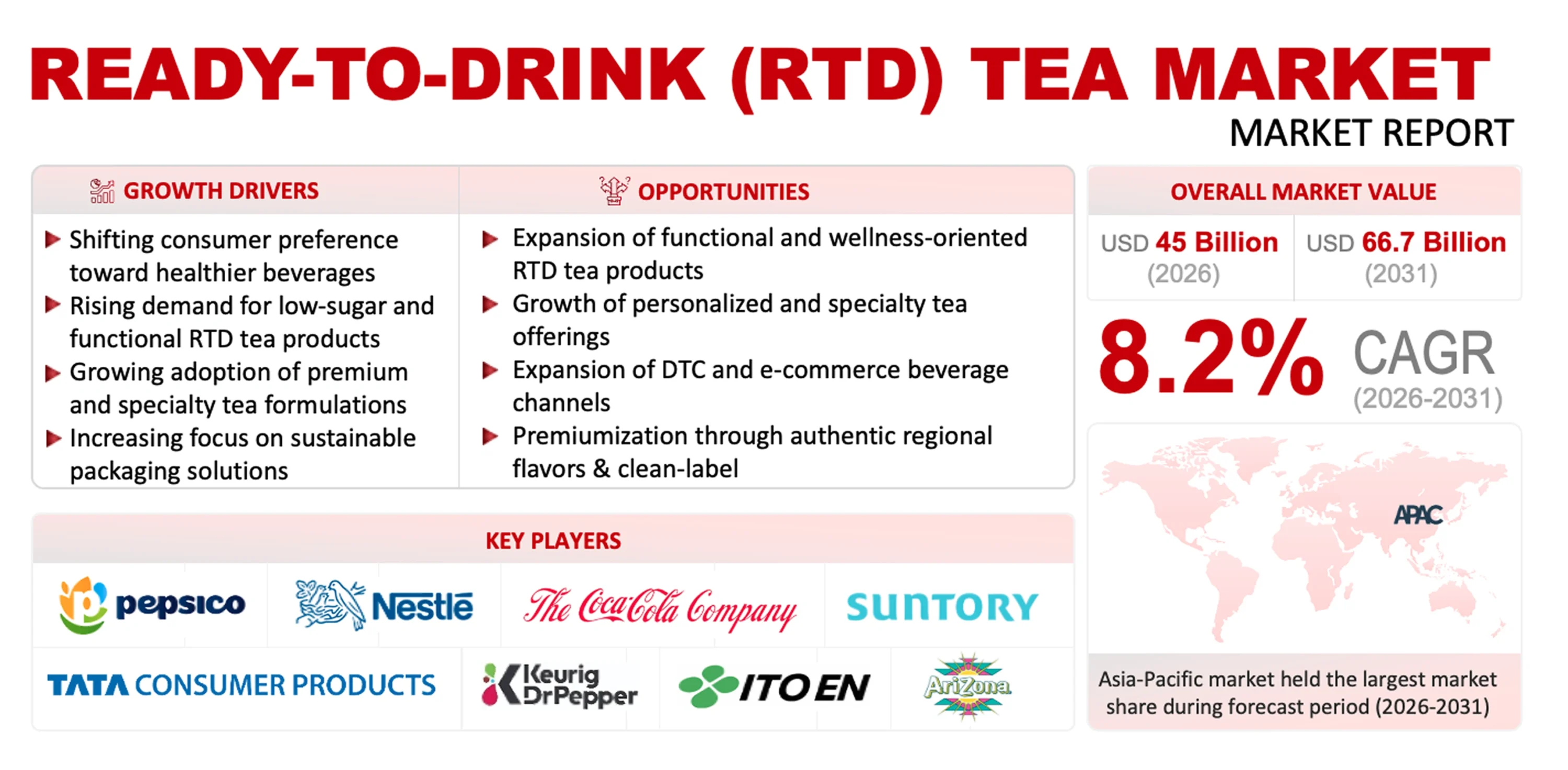
The global ready-to-drink (RTD) tea market is growing due to increasing consumer preference for beverages that are believed to be natural, rich in antioxidants and lower in calories, as opposed to carbonated soft drinks and high in sugar content. A large number of drink makers are rebranding their existing sweet tea ranges with clean label formulations, functional ingredients (adaptogens, prebiotics, botanicals, clean caffeine) and zero sugar offerings so as to protect themselves from regulatory pressure and competition from disruptive startups. This is being driven by increasing regulatory efforts targeting sugar consumption, with RTD tea tax treatment varying across countries and jurisdictions applying sugar-based taxes based on product formulation and sugar content.
A combination of e-commerce/D2C, direct store delivery, and vending machines has contributed to RTD tea distribution across supermarket chains, convenience stores, food service outlets, and online retailers. The market is projected to grow from USD 45 billion in 2026 to USD 66.7 billion by 2031, registering a CAGR of 8.2%.
Technology Overview
Ready-to-Drink (RTD) Tea refers to ready-to-drink beverages made from black, green, oolong, white, herbal, or fruit-infused teas that are bottled, canned, or packaged for convenient consumption without preparation. Some typical formats of the product include sweetened iced tea, functional tea, organic tea, or a premium single-origin variety. At the production level, growing attention is being paid to the processes of cold-brew extraction and aseptic processing since these methods allow for preserving flavour and maintaining RTD tea product stability as well as for extending shelf life without the use of large quantities of preservatives. A wide variety of RTD tea drinks is made available through supermarkets and hypermarkets, vending machines, convenience stores, foodservice or on-trade establishments, and the emerging D2C or e-commerce sales channels. One of the most important trends in the market development is the increasing popularity of “better-for-you” drinks in which the focus is on reformulating existing recipes through using low- or no-sugar recipes, emphasizing organic ingredients, adding specialty ingredients and/or upgrading the packaging.
Key Growth Drivers
- Consumers, especially Gen Z and millennials, are increasingly shifting from carbonated soft drinks (CSDs) toward RTD tea due to preferences for shorter ingredient lists and functional beverage benefits.
- Increasing sugar-tax regulations globally have accelerated product reformulation while also creating a more favorable tax position for many lower-sugar and zero-sugar RTD tea products. As more than 116 countries have implemented taxes on sugar-sweetened beverages in line with WHO recommendations to reduce free sugar intake, manufacturers are reformulating products to reduce sugar content and improve their tax position.
- Premium and functional positioning – adaptogens, prebiotics, clean caffeine, and botanicals – are attracting young, wellness-oriented consumers to the category and enabling higher pricing, as products leveraging adaptogens, prebiotic fiber, or botanical ingredients are becoming increasingly popular among health-conscious consumers.
- Modern distribution networks and vending operations are expanding points of sale for RTD tea, as regional companies are strengthening their market presence through localized supply chains, expanded retail networks, and digital vending solutions.
- E-commerce and direct-to-consumer sales channels are reducing entry barriers for challenger brands, enabling them to achieve national reach without first having to secure traditional retail distribution, as emerging startups leverage the digital sales channel to avoid slotting fees.
- Strategic licensing arrangements involving RTD tea companies and well-known lifestyle brands and/or candy brands are instrumental in driving innovation in the product line and increasing product adoption through the use of brand identity in addition to unique beverages. For example, The Ryl Company teamed up with The Hershey Company to introduce iced teas that were inspired by the zero sugar Jolly Rancher candies.
- Growing concern about sustainable packaging, clean label products, and environment-friendly manufacturing processes is helping brands differentiate themselves.
Ready-to-Drink (RTD) Tea Market Key Highlights
Need deeper insights on this market?
Get full report access with detailed forecasts, competitive analysis, and segmentation.
Ready-to-Drink (RTD) Tea Market Trends
The Ready-to-Drink (RTD) tea market is evolving as beverage manufacturers increasingly focus on premiumization, functional formulations, and differentiated consumer experiences. The traditional tea beverages are evolving into value-added products with the inclusion of botanical extracts, special tea types, and other ingredients marketed for wellness-oriented positioning.
One of the prevailing trends in the industry is the increasing demand for functional and specialty ready-to-drink tea products, which include cold-brew teas, organic teas, sparkling teas, and plant- and adaptogen-infused beverages. Manufacturers are going beyond the traditional products by formulating products that meet specific consumer requirements such as energy-support beverages, relaxation-focused beverages, hydration drinks, and beverages positioned around immune wellness.
The other emerging trend is the growing emphasis on clean-label formulations and ingredient transparency, with consumers increasingly seeking products made with natural ingredients and fewer artificial additives. In addition, beverage manufacturers are incorporating the use of sustainable packaging in their products to enhance their brand image and to address consumers’ growing environmental concerns. Companies are leveraging digital platforms, direct-to-consumer channels, and personalized marketing strategies to improve consumer engagement and expand their market presence.
Moreover, the sustainability efforts now extend beyond recyclable packaging and includes not only recyclable packaging but also responsibly sourced tea leaves, carbon emissions reduction, efficient water usage, and circular packaging.
Premiumization of Ready-to-Drink (RTD) Tea Products
The rising popularity of differentiated beverage experiences is driving the producers away from standard tea-based products to develop premium RTD tea products featuring new flavours, unique tea types, and new innovative formulas. Businesses are diversifying their product range by introducing various cold tea products, organic teas, special green teas, and fruit teas.
This trend is further promoted by the changes in consumption attitudes, interest in natural components, and demand for high-quality healthy beverages. Companies are adopting innovative packaging formats, emphasize ingredient transparency, and communicate their brand stories to make their products stand out and get consumers interested in them.
Growing Adoption of Functional and Wellness-Oriented Ready-to-Drink (RTD) Tea
Increasing consumer focus on health and wellness, which has resulted in an upsurge in demand for ready-to-drink (RTD) tea products that go beyond traditional refreshment benefits. Beverage drinkers are now looking for ready-to-drink beverages formulated with natural ingredients, tea extracts, antioxidants, and other herbal components, in line with their pursuit of healthier lifestyles. The World Health Organization (WHO) has issued guidelines regarding healthy eating patterns that encourage less consumption of foods and drinks that are high in free sugars, which has contributed to increasing consumer interest in lower-sugar and “better-for-you” beverages.
To support this trend, companies are expanding the ready-to-drink tea category. Thus, ready-to-drink beverages are being reformulated to reduce sugar content while maintaining flavour and taste. Specifically, beverage manufacturers are producing ready-to-drink products from natural ingredients to align with consumer taste preferences.
Key Players in the Ready-to-Drink (RTD) Tea Market
Major players in the RTD Tea market are concentrating on innovation in products, diversification in product range, sustainable packaging, forming alliances, and geographic expansion to build their presence in the market.








Strategic Activities Within the Ready-to-Drink (RTD) Tea Market
Wipeout Beverages (US) launched its functional RTD tea brand nationally in aluminium cans, debuting three core flavours combining real brewed tea with clean caffeine sourcing.
The Ryl Company (US) has raised $20 million in its Series C funding round to accelerate the growth of the innovative tea segment after a successful direct store delivery strategy over the previous two years and a multi-year partnership with The Hershey Company (US) involving the launch of a range of iced teas based on the zero-calorie Jolly Rancher brand. The strategic partnership and investment will support Ryl’s expansion strategy through the use of functional formulations, well-known consumer brands, and opportunities to expand into new markets within the RTD tea segment.
PepsiCo, Inc. / Unilever PLC (Pepsi-Lipton International joint venture) (US) introduced Pure Leaf Mental Focus, a functional ready-to-drink tea under its Pepsi Lipton Tea Partnership, featuring real brewed black tea with naturally occurring caffeine and added L-theanine to support focus and mental performance. This highlights the companies’ strategy to expand beyond traditional tea beverages by developing wellness-oriented RTD tea products that align with increasing consumer interest in functional beverages and lifestyle-focused nutrition.
The Coca-Cola Company (US) expanded its beverage portfolio through the launch and continued development of ready-to-drink tea offerings under its Fuze Tea brand, focusing on fruit-infused tea beverages and expanding availability across international markets to address growing consumer demand for refreshing and differentiated tea-based beverages.
Ready-to-Drink (RTD) Tea Market Insights
Ready-to-Drink (RTD) tea consumption is growing worldwide because consumers are shifting from carbonated drinks to beverages that are considered healthier and naturally rich in antioxidants and lower sugar content. Companies within the sector are updating traditional sweet tea brands using clean-label formulas, functional ingredients, and zero-sugar products amid the strict regulations imposed in the form of increased sugar taxes on beverages in many countries. Distribution channels have expanded significantly: e-commerce, direct store delivery (DSD), and vending machines, especially in the Asia-Pacific region, have continued to increase distribution channels for supermarkets, convenience stores, food service and e-commerce retail. The value of the market has been valued at USD 45.0 billion in 2026 and forecast to reach USD 66.7 billion in 2031 at a CAGR of 8.2%.
Black tea continues to be the top-selling product type both in terms of volume and value based on flavour familiarity, production efficiency, and being the core product within the portfolios of nearly all major beverage companies, while herbal and functional teas have been experiencing the highest growth rates in light of the search for stress relief, gut health, and immunity support.
Consumption occasions include on-the-go refreshment, workplace consumption, and post-workout hydration. Alcoholic RTD tea (hard tea) beverages represent an adjacent category within the broader ready-to-drink beverage market.
Many opportunities lie within the organic and functional RTD tea space, from sustainability-led packaging to expansion into new markets. There seems to be a robust momentum among organic and functional products, particularly driven by the rising consumer interest in health and well-being. Online retail is developing as another key distribution channel, allowing digitally oriented businesses to expand within the direct-to-consumer market and grow into brick-and-mortar sales. Collaborating with reputable candy and lifestyle brands provides another means of differentiation and cost-effective customer acquisition while increasing investments in marketing, distribution, and product innovation fuel expansion of the market. The premiumization of RTD tea products and development of differentiated formulations across new markets reveal a sizeable potential for growth, as premium RTD beverages become increasingly popular due to growing disposable incomes and the development of modern trade.
Manufacturers today face regulatory tightening as one of their biggest challenges in most of their markets at the same time. In the UK, on 25 November 2025, the government stated that it would decrease the threshold for the Soft Drinks Industry Levy from 5g to 4.5g of sugar per 100ml of product and apply the tax on pre-packaged milk-based and milk alternatives, giving the business till 1 January 2028 to reformulate products. In India, during the GST Council’s 56th meeting on 3 September 2025, the tax on carbonated and caffeinated non-alcoholic beverages was increased from 28% to 40%. Packaged sweetened tea or coffee drinks with caffeine come under this 40% group, which directly impacts the pricing for sweetened RTD tea in one of the biggest consumption markets for this beverage. In addition to regulatory threats, manufacturers of RTD tea are faced with price instability of tea leaves and fierce competition from private labels since several of the major supermarkets are increasing their range of their own brand RTD tea.
It is forecasted that the RTD tea market in the Asia-Pacific region will robustly expand as a result of strong traditions in tea consumption, the increased demand for convenient beverages in packaged form, and changes in consumer preferences towards healthier drink alternatives. The region has been moving away from traditional tea consumption methods and towards ready-to-drink formats of RTD tea products that may include low-sugar, organic, premium, and functional segments. In addition to changing interest and tradition, the growth of RTD tea consumption is connected to lifestyle changes, urbanization, and health awareness among consumers that influence this transformation.
The expansion of the modern retail infrastructure comprising supermarkets, convenience stores, foodservice channels, vending machines, and e-commerce has also increased the availability of RTD tea products in the region. The increase in disposable income, willingness to buy premium tea beverages, as well as the fact that people are increasingly interested in specialty tea types support further development of the market. Major tea-growing countries such as China, India, and Japan contribute to this positive change due to product innovations, stable tea supply chains, and more investments in the packaged beverage segment. The enhancement of sustainable packaging solutions, digital commerce channels, and differentiated RTD tea offerings is expected to accelerate the growth of the Asia-Pacific RTD tea market during the forecast period.
Ready-to-Drink (RTD) Tea Market Dynamics
Drivers: Consumer Shift Away from Sugary Carbonated Beverages Amid Tightening Sugar Policy.
The RTD tea market is benefiting from an international regulatory movement against sugar-sweetened beverages, which shifts beverage expenditure towards tea, as RTD tea is still charged lower taxes compared to soft drinks. The UK has confirmed the reduction of its Soft Drinks Industry Levy threshold to 4.5g from 5g sugar per 100ml starting from January 2028 and continued the implementation of the tax system, which already influenced the beverage industry due to its introduction in 2018.
At the same time, the consumer substitution is intensifying the impact of regulations. Especially young consumers are the driving forces of the reformulation and experimentation of products. According to Keurig Dr Pepper’s State of Beverages report, Gen Z consumers try new beverages every month.
Opportunities: Functional Innovation and Cross-Category Licensing Partnerships
RTD tea featuring functional and adaptogenic ingredients is expected to offer the maximum potential for growth in the sector. Brands that utilize clean caffeine, botanicals, and B-vitamin fortification have entered the market with premium-priced products that are designed to enable them to charge more on the shelf compared to previous iced tea products. Instead of relying only on internal R&D funds, they have also raised external investment from private equity firms.
The licensing partnerships such as that between RYL and Hershey are turning out to be a good, cost-effective way of going national for emerging tea brands, and are being adopted in other categories of functional drinks as well.
Challenges: Regulatory Reformulation Costs, Input Volatility, and Private-Label Pressure
The changing regulation landscape presents an evolving challenge for manufacturers, who must reformulate their products to meet ever lower sugar content requirements in mature markets, despite having already gone through prior reformulation cycles, at a tangible cost in terms of R&D and packaging investment; the lowering of the levy threshold from 5g to 4.5g of sugar per 100ml in the UK means more beverage formats will now be subject to taxation before its implementation in 2028, though companies will have until 2028 to develop new formulas for the products. The impact of tax reform in emerging markets cannot be overlooked either, as demonstrated by the rapid rise of GST in India, which in September 2025 increased the tax on sugary and caffeinated beverages from the current rate to 40%.
In addition to these challenges, there is the need for brands to account for fluctuations in commodity prices for tea, the vagaries of freight costs – especially when it comes to Middle Eastern routes – as well as growing private label competition, which sees retailers launch low-cost RTD teas in mature Western markets.
Technology and Market Insights
Packaged Ready-to-Drink (RTD) tea is one of the most rapidly developing beverage categories, as functional formulation, clean-label reformulation, and digitally native distribution models are converging to reshape competition. Cold brew and aseptic extraction technologies continue improving flavour preservation without excessive preservatives use, and the addition of functional ingredients such as clean caffeine, botanicals, prebiotic fiber, adaptogens, and electrolytes is turning tea into a wellness drink that could be priced premium. The development in cold brewing, aseptic processing, and packaging technology advancements allow reducing production costs, increasing consistency, prolonging shelf life, and preserving taste naturally without relying heavily on artificial preservatives. The developments in packaging come due to the combination of sustainability goals and premium positioning strategy, with sustainable packaging formats, including recyclable glass, aluminium, and lightweight plastics, are gaining attention among beverage manufacturers. The direct-store-delivery model has become an increasingly valued competitive moat for investors once the challenger brand establishes one.
Technology Scope and Products
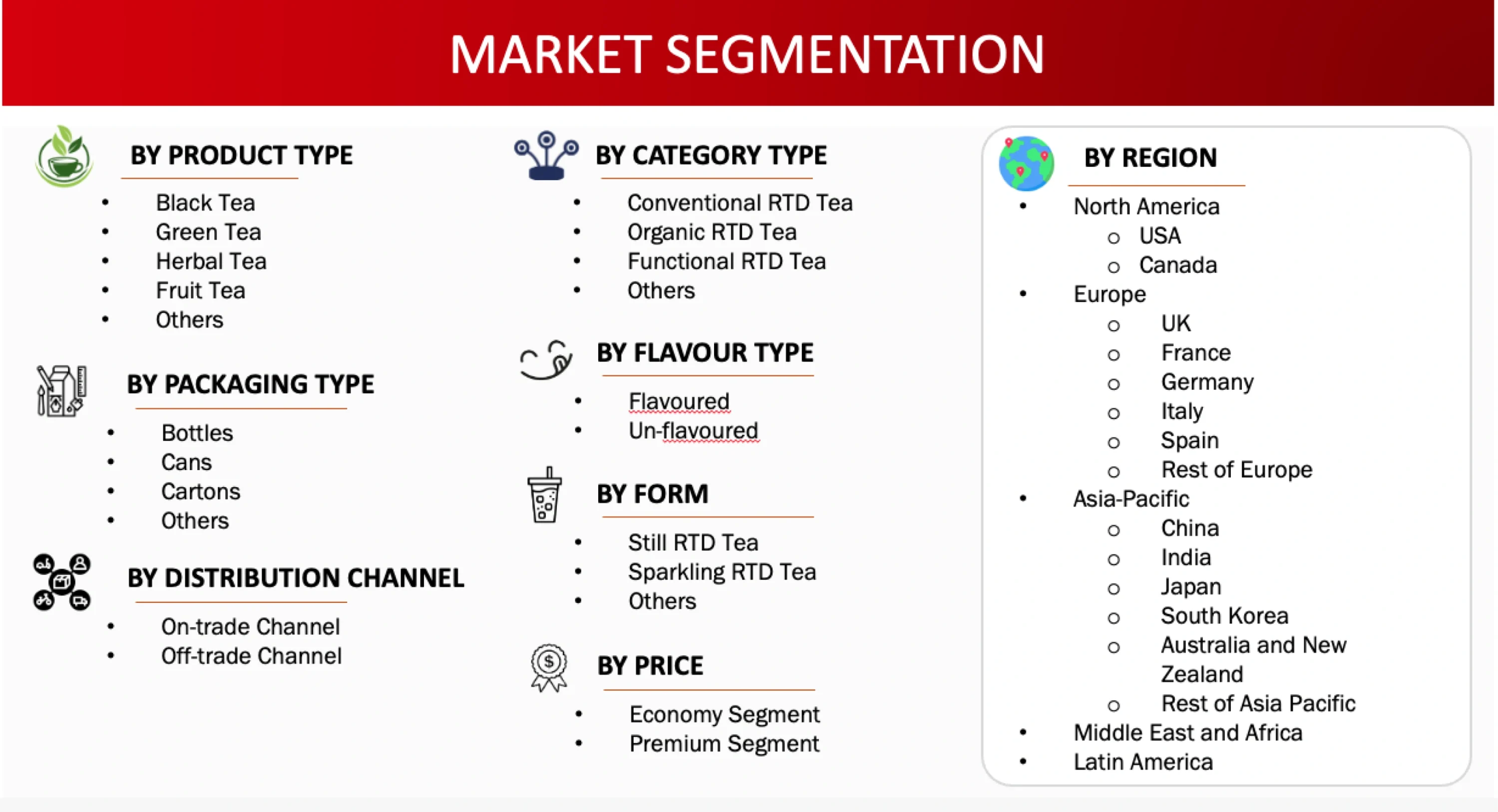
Ready-to-Drink (RTD) tea Market Segmentation
Want detailed insights from this report?
Industry Developments and Competitive Landscape
Three concurrent elements are pushing forward the development of the RTD tea market: pressure from the regulation regarding sugar content, introduction of functional ingredients, and the emergence of digital-native startups disrupting established beverage companies. Legacy companies are focused on protecting their market positions by launching novel flavours, using eco-friendly packaging, and licensing their products rather than competing on pricing. Meanwhile, emerging brands are leveraging D2C channels while expanding DSD networks and developing new product categories such as functional, sparkling, and premium RTD tea formats. The categories of functional beverages continue to be the most dynamic area of product innovation within the industry.
In terms of product type, black tea was the leading product category in the RTD tea market in 2025, primarily due to its popularity among consumers, established global supply chain, and strong presence in the portfolios of major beverage manufacturers. Black tea has always been a top choice with manufacturers, mainly because of its familiar flavour and versatility in sweetened, unsweetened, flavoured, and reduced-sugar types of tea. Moreover, the segment benefits from the existence of an already established supply chain and production capacity. Besides, black tea is a base for traditional iced tea products and for a number of new premium RTD tea innovations offered by the companies.
-
The mature ecosystem of black tea cultivation and processing provides reliable supply and facilitates mass production of RTD tea.
-
Considerable flexibility of black tea enables companies to create a variety of products, such as classic iced tea, flavoured drinks, and low-sugar beverages.
-
Major beverage companies continue to keep black tea in their portfolios because it is a well-known category with a strong presence in retail.
-
Herbal and functional tea segments are becoming more popular among consumers preferring beverages with health-related properties and botanical ingredients.
Ready-to-Drink (RTD) tea products that are functional and wellness oriented have become more popular among consumers seeking beverages that fit healthy lifestyles. Producers are increasing their product lines with tea products that include botanical extracts, antioxidants, vitamins, and other healthy ingredients. The industry benefits from a general move toward functional drinks whereby consumers are becoming choosier regarding the quality, nutritional values, and health benefits of the beverages they consume. As beverage producers continue investing in innovations in formulations of drinks, functional RTD tea products are expected to offer some possibilities for premium products.
-
A rise in consumer awareness about health-related beverage options has prompted manufacturers to create ready-to-drink (RTD) teas based on functional positioning.
-
Cleaner label, less-sugar, and naturally-sourced beverage options are emerging as major differentiating factors for beverage brands.
-
Developing functional RTD tea options helps brands to stand out in the wellness beverage market while maintaining the core tea-based identity.
-
The increasing preference for personalized and lifestyle-based beverages is boosting development of specialty RTD teas.
The Asia Pacific region is the primary market for RTD tea because of the strong tea-drinking tradition, capability to produce tea, and increased consumption of packaged beverages in the region. Historical trends show that countries like Japan and India have an established tea culture that creates a conducive market for bottled teas. Japan is considered the world leader when it comes to developing premium bottled teas while China and India are seen as major players in the RTD market with vast populations and growing retail facilities. In addition, it is worth noting that the demand for other varieties of tea such as unsweetened tea and specialty tea is also growing in the market.
-
Strong tea consumption traditions in countries like China and Japan, as well as in India, offer a major base for boosting RTD tea market growth.
-
The rise in urbanization and changes in lifestyles are accelerating the demand for ready-to-drink tea products.
-
The growth of supermarkets, convenience stores, and online shopping will make it easier for people to find RTD tea products.
-
Major businesses like ITO EN, Suntory, and Tata Consumer Products are actively establishing themselves by innovating their products and geographic expansion.
What This Report Covers-
This report provides a comprehensive analysis of the ready-to-drink (RTD) tea market, offering insights into key trends, growth drivers, challenges, and future opportunities. It is designed to support strategic decision-making through a combination of quantitative data and qualitative analysis.
Specifically, the report covers:

Market Overview & Definition:
Overview of the market scope, structure, and key terminology

Market Size & Forecast:
Historical data and future projections across key segments and regions.

Key Market Trends:
Insights into emerging trends, technological advancements, and evolving demand patterns

Drivers, Restraints & Opportunities:
Analysis of key factors influencing ready-to-drink tea market growth

Competitive Landscape:
Overview of major players, their strategies, and recent developments

Detailed Patent Analysis:
This includes, top assignees, geography focus of top assignees, legal status, technology evolution, key patents and patent trends and innovations

Segmentation Analysis:
Breakdown by product, by category, by flavour, by form, by packaging type, by price segment, by distribution channel, by end users and region

Regional Insights:
Key regional trends and growth opportunities

Future Outlook:
Strategic insights and future market direction
Research Methodology
The study of the ready-to-drink tea market is based on a combination of primary and secondary research methodologies, supported by data validation and analytical modeling to ensure accuracy and reliability.
Market Definition: Ready-to-Drink Tea Market
Ready to Drink (RTD) Tea Market is defined as commercially prepared tea-based beverages available for immediate consumption without further preparation. The market comprises of ready to drink tea beverages offered in different pack sizes including bottles, cans, cartons, and other forms of ready-to-drink packaging.
Scope covers non-alcoholic RTD tea drinks such as black tea, green tea, herbal tea, fruit tea, functional tea, organic tea, and other tea based beverages. These can be in both sweetened, unsweetened, reduced sugar and flavored forms.
Key Stakeholders
The RTD Tea market involves a diverse ecosystem of stakeholders:
- Tea Beverage Manufacturers and Brand Owners (global and regional beverage companies involved in RTD tea production, formulation development, branding, and commercialization)
- Raw Material Suppliers (tea estates, botanical/functional ingredient suppliers, sweetener and flavor houses)
- Packaging Manufacturers (producers of PET bottles, glass bottles, aluminum cans, steel cans, cartons, and sustainable packaging solutions used for RTD tea products)
- Distribution & Retail Channels (supermarkets/hypermarkets, convenience stores, vending operators, foodservice, and e-commerce/DTC platforms)
- Contract Manufacturers and Co-Packers (companies providing beverage production, filling, packaging, and private-label manufacturing services)
- Research Institutions and Trade Bodies (beverage industry associations, agricultural research bodies, sustainability standards organizations)
- Consumers/End Users (individual consumers purchasing RTD tea for personal consumption across retail, foodservice, and online channels)
Key Objectives of the Study
- To define, describe, analyze, segment, and forecast the ready-to-drink (RTD) tea market by product, by category, by flavor, by form, by packaging type, by price segment, by distribution channel, and by end users.
- To describe and forecast the market for four key regions: North America, Europe, Asia Pacific, and Rest of the World.
- To provide detailed information regarding key drivers, restraints, opportunities, and challenges influencing market growth
- To evaluate consumer preferences, product innovation trends, and changing consumption patterns influencing market expansion.
- To analyze competitive positioning, business strategies, product portfolios, and market presence of key RTD tea manufacturers.
- To strategically analyze the micro indicators with respect to individual growth trends, prospects, and contributions to the overall market size
- To analyze competitive developments, such as launches, agreements, mergers and acquisitions, licensing partnerships, joint ventures, investments and expansions, and collaborations in the RTD tea market.
Need deeper insights on this market?
Get full report access with detailed forecasts, competitive analysis, and segmentation.
Research Approach
This research employs a structured approach combining primary and secondary research methodologies to provide comprehensive insights into the global RTD tea industry. The approach enables evaluation of market size, consumer behavior, product innovation, competitive landscape, supply chain dynamics, and regional market trends.
Secondary Research
Secondary research involves the collection of data from reliable sources such as industry databases, company annual reports, press releases, industry articles, investor presentations, and government trade statistics. This process helps in understanding market trends, identifying key players, and gathering technical and commercial insights.
A comprehensive database of leading companies and market participants is developed through secondary research to support further analysis.
Primary Research
Primary research is conducted to validate findings from secondary research and to gain deeper insights into market dynamics. Interviews are carried out with industry stakeholders across both demand and supply sides, including executives from beverage manufacturers, ingredient suppliers, and stakeholders from business development, marketing, and product teams.
Data is collected through structured questionnaires, email interactions, and telephonic interviews across key regions including North America, Europe, Asia-Pacific, and Rest of the World.
Market Size Estimation
Market size estimation is performed using both top-down and bottom-up approaches. Key market players are identified, and their revenues are analyzed to estimate the overall market size.
The market is further segmented based on:
- Product portfolio mapping across regions
- Adoption patterns across consumer segments
- Insights gathered through primary and secondary research
Data Validation and Research Design
After estimating the overall market size, the data is validated using triangulation methods and market breakdown techniques to ensure accuracy and consistency. Both demand-side and supply-side factors are considered to refine the analysis.
The final data is validated through multiple sources to ensure reliability and to provide accurate insights across all market segments and regions.
Assumptions of the Study
The analysis of the RTD Tea Market is based on the following assumptions:
- Trends in the industry are drawn from historical data and current information within the sector
- The future outlook is underpinned by constant economic conditions in the absence of shocks to the market
- Consumer adoption of packaged beverages and healthier beverage alternatives is expected to continue increasing across key markets
- Product innovation, premiumization, functional beverage development, and sustainable packaging adoption will remain important growth contributors.
- The income statement and market share figures are estimated using available information from the industry and publicly available data
- The exchange rate and price trends will not be greatly affected during the forecast period
Scope and Limitations
Scope of the Study
This report offers an exhaustive overview of the international RTD tea market and includes the following components:
- Summary of market size, growth trends, and projections
- Carefully segmented market based on product, category, flavor, form, packaging type, price segment, distribution channel, end users, and geography
- Discussion of primary factors influencing the market
- Competitor analysis
- Insights into regional and national market performance
Limitations of the Study
Despite the best efforts being made to keep the results accurate, the study does suffer from some limitations:
- It has been done using both primary and secondary data that come with their own constraints
- Rapid developments in technology might affect the future course of market dynamics
- Some figures are only approximations due to lack of public disclosure
- The report is not an insurance against any disruptions in macroeconomics and geopolitics
- Future forecasts are indicative and subject to change due to altered industry dynamics
Data Triangulation and Market Breakdown
Data triangulation involved the combination of primary research, secondary research, and the Wissen Research analysis. Once the data points were sourced from the secondary market research, we sanitized the data points to make the market sizing and growth forecast more accurate by developing our own assumptions based on the inputs and insights we gather through the primary interviews with the industry experts. Once the data was thoroughly validated through primary interviews from both, demand and supply side of the market, our team of analyst and other team members involved finalized the market sizing and growth forecast.
Data Triangulation Methodology
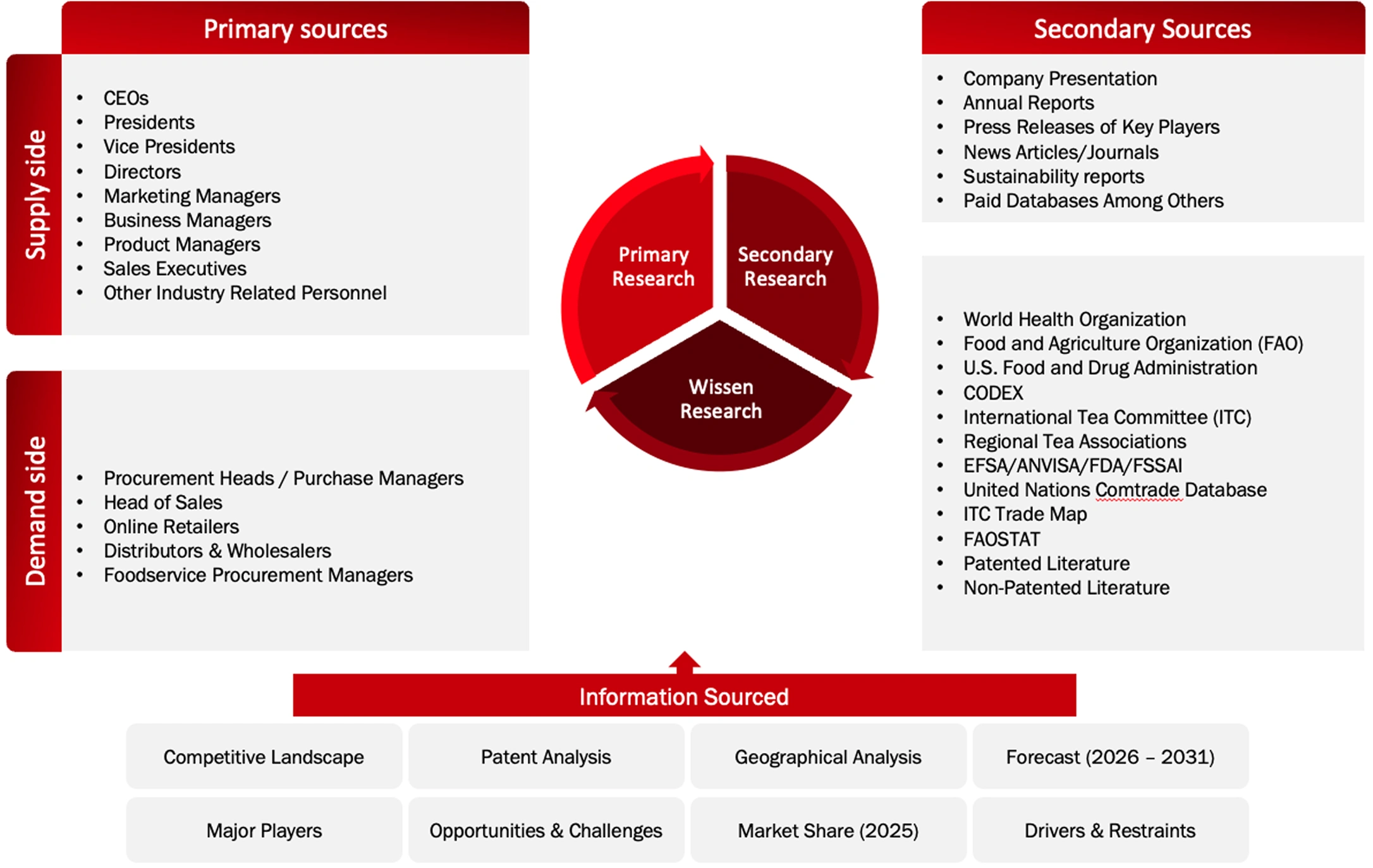
Sources: Food and Agriculture Organization (FAO), UN Comtrade Database, FAOSTAT, International Tea Committee, Regional Tea Associations (Tea Board of India, Kenya Tea Board, Sri Lanka Tea Board), Food Safety and Standards Authority of India (FSSAI), U.S. Food and Drug Administration (FDA), European Food Safety Authority (EFSA), European Commission Food Safety Database, Company Websites, Annual Reports, Sustainability Reports, Product Launch Announcements, Beverage Industry Publications, Paid Data Sources, and Wissen Research Analysis.
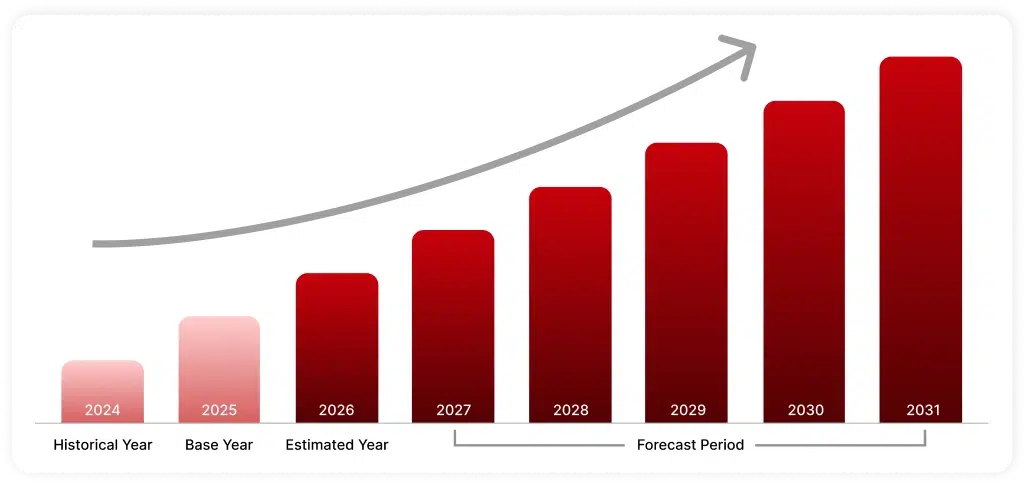
Year Framework
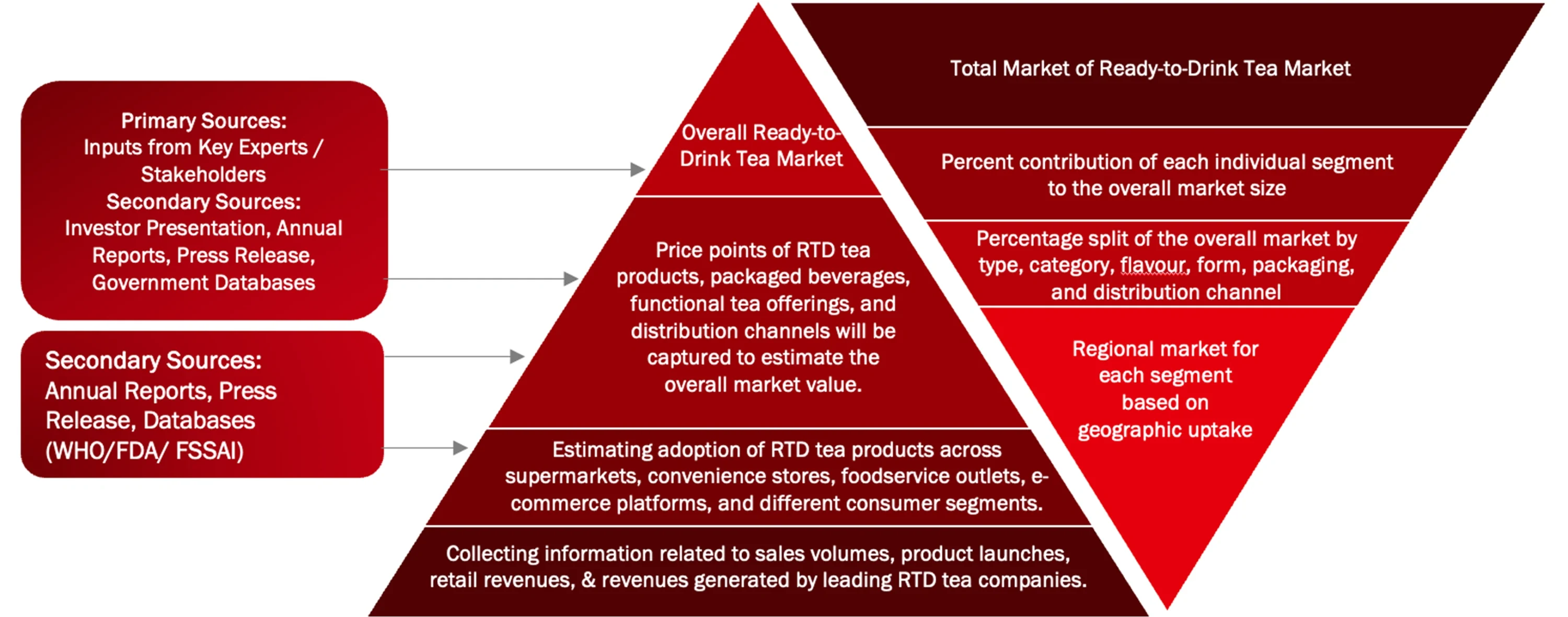
Bottom-Up Approach (Demand Side) And Top-Down Approach Supply Side)
Bottom-Up Approach (Demand-Side Approach):
Determining the market size through the consolidation of demand among end-users, sectors, and geographic areas, which are calculated according to real-world demand conditions.
Top-Down Approach (Supply-Side Approach):
Calculating the market size through revenue and performance of the industry and its important companies, allocating the market size among various sectors.
Want detailed insights from this report?
Buy this Report
Choose the option that best fits your needs