
Animal Feed Market
Global Industry analysis, Size, Share, Growth, Trends, and Forecast 2026-2031
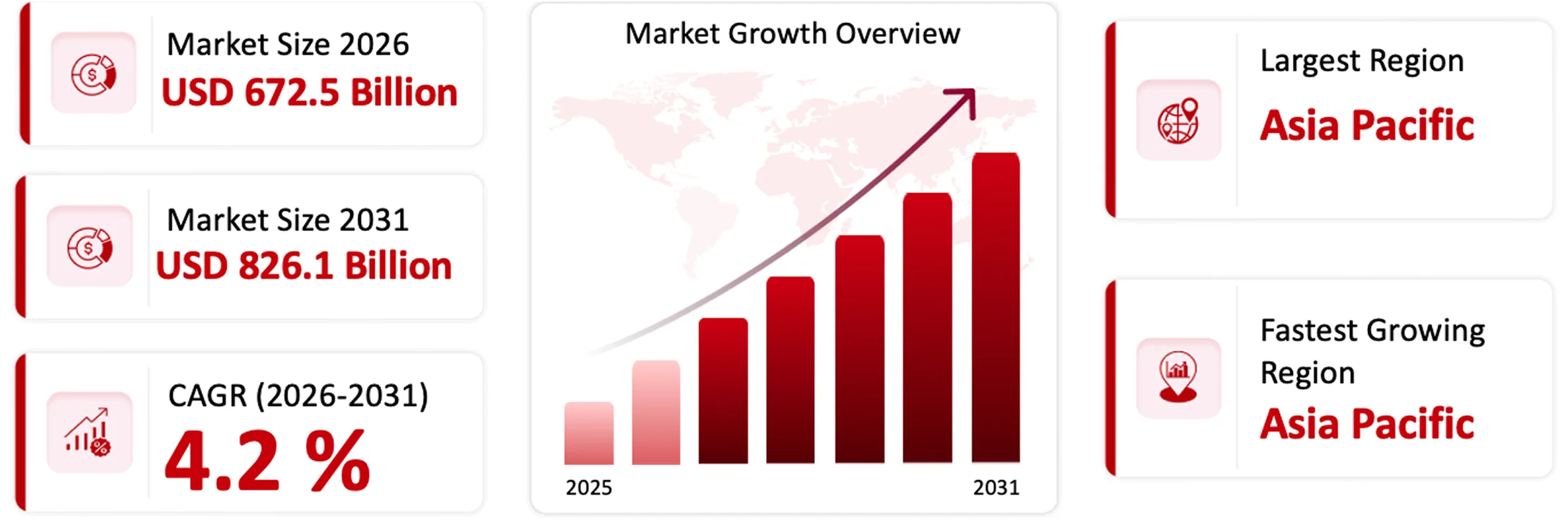
The global animal feed market is projected to reach USD 826.1 billion by 2031, growing at a CAGR of 4.2 % during the forecast period.
| Market Size (2026): | Forecast (2031): | CAGR (2026–2031): | Leading Region: | Fastest Growing Region: |
|---|---|---|---|---|
| $ 672.5 Billion | $ 826.1 Billion | 4.2 % | Asia Pacific | Asia Pacific |
Summarize this report with:



Market Overview
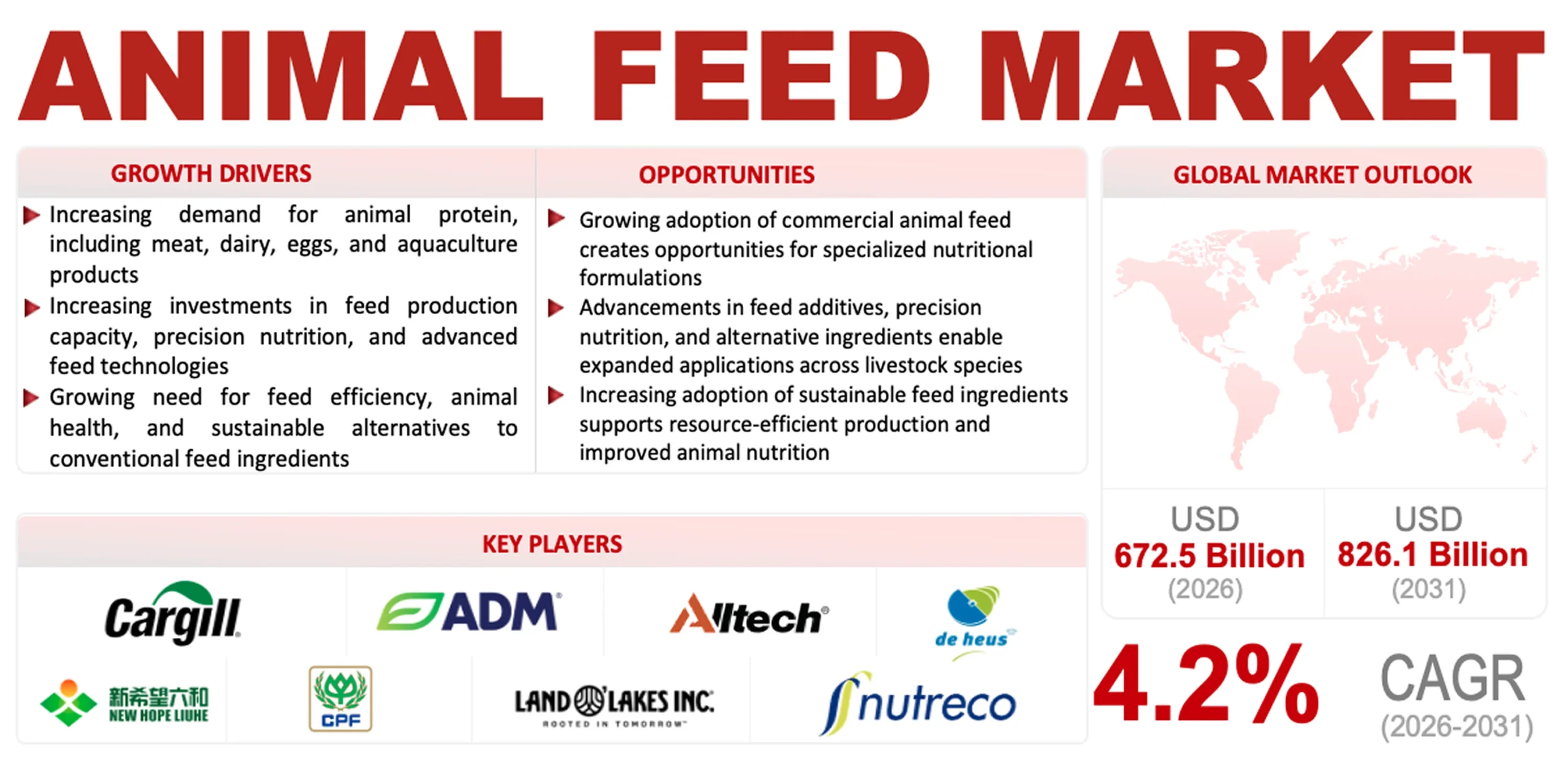
The animal feed market is experiencing sustained demand as livestock producers increasingly rely on scientifically formulated feed to improve animal health, productivity, feed conversion, and production efficiency. Animal feed comprises nutritionally formulated products provided to livestock, poultry, aquaculture species, and other animals, using ingredients such as cereals, oilseed meals, forage, animal-derived ingredients, vitamins, minerals, enzymes, probiotics, and other nutritional additives. The market serves major production systems including poultry, swine, cattle, dairy, aquaculture, and other livestock sectors. The market is supported by increasing global demand for meat, milk, eggs, and aquaculture products, the industrialization of livestock farming, the transition from farm-mixed to commercial feed, growing emphasis on feed efficiency and animal health, and advancements in precision nutrition and feed formulation. The market is estimated to be USD 672.5 billion in 2026 and is projected to reach USD 826.1 billion by 2031, growing at a CAGR of 4.2 % during the forecast period (2026-2031).
Technology Overview
Animal feed production combines ingredient processing, nutritional formulation, feed manufacturing, quality control, and increasingly sophisticated precision-nutrition technologies. The conventional production process typically includes raw-material receiving and testing, grinding, batching, mixing, conditioning, pelleting or extrusion, cooling, crumbling where required, coating, and packaging. Feed manufacturers formulate products according to animal species, age, production stage, nutritional requirements, and desired production outcomes.
Technology has advanced from conventional grain-based feed manufacturing toward precision nutrition and increasingly specialized feed formulations. Near-infrared spectroscopy (NIR), automated batching and dosing systems, digital feed-management platforms, enzyme technologies, probiotics, organic minerals, phytogenics, and other functional feed additives are being increasingly integrated into commercial feed production. These technologies enable manufacturers to optimize nutrient utilization, improve feed conversion, reduce nutrient losses, and address animal-health requirements.
Key Growth Drivers
- Rising demand for animal protein is increasing feed consumption as population growth, urbanization, and changing diets support higher production of meat, milk, eggs, and seafood. Livestock provides approximately 34% of global food protein supply, while livestock systems remain an important component of global food production.
- The industrialization of livestock production is accelerating the shift from traditional farm-mixed rations toward commercially manufactured compound feed. Producers increasingly use formulated feed to achieve consistent nutritional quality, improve feed conversion, and support predictable animal performance. The transition toward commercial feed is particularly visible across emerging Asian markets.
- Growth in poultry and aquaculture production is supporting demand for specialized feed because these sectors rely heavily on commercially manufactured nutrition products. In 2025, global feed production included approximately 400.4 million tons of broiler feed, 380.9 million tons of pig feed, and 55.5 million tons of aquaculture feed.
- Increasing focus on feed efficiency and animal health is encouraging the adoption of enzymes, probiotics, phytogenics, amino acids, organic minerals, and other functional ingredients. These solutions are being used to improve nutrient utilization, gut health, animal performance, and production economics while helping producers respond to restrictions on antibiotic use.
- Expansion of commercial feed production capacity is improving access to formulated feed across developing markets. Asia remains the largest feed-producing region, with approximately 559.3 million tons of feed production in 2025. China alone produced approximately 330.1 million tons, while India produced approximately 57.7 million tons.
Animal Feed Market Key Highlights
Need deeper insights on this market?
Get full report access with detailed forecasts, competitive analysis, and segmentation.
Animal Feed Market Trends
The animal feed sector is transitioning from conventional commodity-based feed manufacturing toward a more technology-driven animal nutrition industry. Feed manufacturers are increasingly focusing on precision nutrition, functional additives, feed efficiency, animal health, sustainability, alternative feed ingredients, and species-specific formulations. At the same time, increasing commercialization of livestock production and the expansion of aquaculture are creating demand for higher-performance feeds.
Increasing Focus on Sustainable Feed and Alternative Ingredients
The animal feed industry is increasingly exploring alternative ingredients to reduce dependence on conventional feed commodities and improve the sustainability of livestock production. Insect protein, algae, single-cell proteins, fermentation-derived ingredients, agricultural by-products, and other novel feed materials are being evaluated for their nutritional and environmental characteristics.
The development of alternative feed ingredients is particularly relevant to aquaculture, poultry, and premium animal-nutrition applications. For example, the global edible-insect-for-animal-feed market is projected to expand rapidly through 2031, supported by regulatory development, investment in black soldier fly production, and growing interest in alternative protein sources.
At the same time, feed manufacturers are increasing attention to ingredient traceability, resource efficiency, nutrient utilization, and emissions reduction. FAO emphasizes the importance of producing animal feed that is safe, nutritious, and sustainably produced, while noting that livestock consume approximately 6 billion tons of feed dry matter annually, about half of which is grass.
Expansion of Aquaculture and Specialized Feed
The aquaculture industry is growing at a fast pace with seafood demand on the rise as well as the strain on wild fish stocks and the quest for sustainable source of protein. With this growth comes a demand for specialized feeds tailored for every species, growth phase, farming practice, and nutritional need. Feed producers are working to identify the right amounts of proteins, fats/oils, amino acids, vitamins, and minerals in their mixes. There is a trend toward the use of extruded and pelleted feeds as those forms ensure better feed performance in the aspects of nutrient supply, buoyancy control, and water stability. Shrimp, salmon, tilapia, carp, and other important aquaculture species require different formulations, thus creating spaces for specialty nutrition products. Additionally, the use of enzymes, probiotics, prebiotics, and other functional ingredients allows for greater efficiency in feed utilization and disease-related loss reduction. Moreover, alternative protein sources and local raw materials are becoming more popular as the industry aims for feed sustainability, supply, and economics.
Key Players in the Animal Feed Market
Leading companies in the animal feed market are focusing on feed-production capacity expansion, precision nutrition, feed additives, animal health, alternative ingredients, aquaculture nutrition, digital feed-management technologies, and geographic expansion across emerging livestock markets.








Strategic Activities Within the Animal Feed Market
De Heus Animal Nutrition B.V. (the Netherlands) expanded its aquaculture feed capabilities by opening a 168,000-tonne-per-year marine and cold-water fish feed mill in Vietnam. The facility produced specialized feed for species including sea bass and barramundi, supporting regional and export markets while incorporating advanced production technology and sustainability-focused operations.
Archer-Daniels-Midland Company (U.S.) opened a new premix and feed additives production facility in Apucarana, Brazil, with an annual capacity of approximately 40,000 tons. The facility incorporated advanced automation, mixing precision, traceability, and segregation technologies to support customized formulations, quality control, and improved operational efficiency across Brazil’s animal nutrition market.
Animal Feed Market Insights
The animal feed market is a fundamental component of the global food and agriculture industry, supporting the production of meat, milk, eggs, and farmed aquatic products. Animal feed includes compound feeds, feed materials, concentrates, premixes, and other formulated products designed to provide animals with the energy, protein, vitamins, minerals, and other nutrients required for growth, reproduction, health, and productivity. The global commercial feed industry produces more than 1 billion tonnes of feed annually and generates approximately USD 400 billion in commercial turnover. Alltech estimated global feed production at around 1.396 billion metric tons in 2024, representing a 1.2% increase from 2023.
Market growth is supported by rising consumption of animal-derived foods, expansion of commercial livestock and poultry production, increasing aquaculture production, improvements in animal genetics, and the transition from traditional or backyard farming systems toward more intensive and professionally managed production. The OECD-FAO Agricultural Outlook 2026–2035 projects global feed protein consumption to increase by 13.5% over the coming decade, supported by herd expansion and greater feeding intensity, particularly in middle-income economies.
Animal feed is primarily used across poultry, swine, ruminants, aquaculture, and other livestock production systems, with feed formulations varying according to animal species, production stage, nutritional requirements, and production objectives. Poultry feed represents a major application because of the expansion of broiler and layer production and the relatively efficient conversion of feed into meat and eggs. Swine feed is widely used in commercial pork production, while cattle and other ruminant feeds support dairy production, beef production, and intensive or semi-intensive livestock systems.
Aquaculture is another important application area as fish and shrimp farming become increasingly significant sources of aquatic animal protein. The OECD-FAO Agricultural Outlook projects aquaculture to remain the primary source of growth in global fisheries and aquaculture production through 2034, increasing its importance for formulated aquatic feeds.
The increasing global demand for meat, dairy products, eggs, and aquaculture products is a major driver of animal feed consumption. Population growth, rising incomes, urbanization, and changing dietary preferences are supporting demand for animal-source foods, particularly in emerging and middle-income economies. OECD-FAO projections indicate that expanding livestock production and more intensive feeding practices will increase global feed consumption, while productivity improvements will allow producers to generate more animal protein from feed inputs. The commercialization and intensification of livestock production is another important growth factor. Producers are increasingly shifting toward formulated diets that provide consistent nutrient profiles and improve animal growth, reproduction, health, and feed conversion. Growing adoption of precision nutrition, improved genetics, disease-management practices, and specialized feed formulations is further supporting demand for higher-value feed products.
The animal feed market is increasingly moving toward precision nutrition, functional feed additives, improved feed efficiency, alternative ingredients, and sustainable feed production. Feed manufacturers are developing formulations designed to improve nutrient utilization, gut health, animal resilience, and production performance while reducing nutrient losses and the environmental footprint of livestock production. Innovations include probiotics, prebiotics, phytogenic ingredients, enzymes, organic acids, specialty amino acids, and other functional nutritional solutions.
Sustainability is also becoming a stronger focus across the feed value chain. Manufacturers and livestock producers are examining alternative protein sources, agricultural by-products, circular feed ingredients, optimized feed formulations, and precision feeding approaches to reduce resource use and improve feed conversion. At the same time, feed producers face challenges related to volatility in the prices and availability of corn, wheat, soybean meal, fishmeal, oils, and other major feed ingredients.
Asia Pacific represents the largest regional feed-producing market globally. Alltech estimated feed production in Asia Pacific at approximately 533.1 million metric tons in 2024, making the region the largest contributor to global feed production. China remains a major feed-producing country, while India, Southeast Asia, and other Asian markets are supported by expanding poultry, dairy, swine, and aquaculture production. The region’s growth is supported by population growth, urbanization, rising incomes, increasing consumption of animal protein, expansion of commercial livestock production, and increasing adoption of formulated feeds. China alone produced approximately 315 million tonnes of industrial feed in 2024, while poultry, swine, ruminant, and aquaculture feeds represented major components of the country’s feed industry.
Animal Feed Market Dynamics
Drivers: Rising Demand for Animal Protein and Intensification of Livestock Production
Growing consumption of meat, milk, eggs, and aquatic foods is increasing the requirement for efficient and nutritionally balanced animal diets. Population growth, urbanization, rising incomes, and changing dietary preferences are supporting expansion of animal-source food production, particularly across emerging markets.
The transition from traditional and backyard production toward commercial livestock, poultry, and aquaculture operations is further increasing reliance on compound feed. Commercially manufactured feeds provide more consistent nutrient composition and enable producers to formulate diets according to animal species, age, production stage, and performance requirements. OECD-FAO projections indicate that increasing herd sizes and greater production intensity will contribute to a 13.5% increase in global feed protein consumption through 2035.
Opportunities Precision Nutrition, Functional Feeds, Alternative Ingredients, and Sustainable Feed Systems
The animal feed market presents opportunities through the development of precision nutrition and functional feed products that improve nutrient utilization, animal health, feed conversion, and production efficiency. Enzymes, probiotics, prebiotics, phytogenic compounds, organic acids, specialty amino acids, and other functional ingredients can be incorporated into species- and production-stage-specific formulations.
Alternative feed ingredients also represent an important opportunity as manufacturers seek to reduce dependence on conventional protein and energy sources. Insects, algae, single-cell proteins, fermentation-derived ingredients, agricultural by-products, and other circular feed resources are being investigated as potential components of future feed systems.
Challenges: Ingredient Cost Volatility, Feed Safety, Regulatory Requirements, and Sustainability Pressure
Animal feed manufacturers face continuing pressure from fluctuations in the prices and availability of major ingredients such as corn, wheat, soybean meal, fishmeal, oils, and other protein and energy sources. Weather conditions, crop yields, geopolitical developments, trade restrictions, transportation costs, and competition between food, feed, and industrial uses can affect ingredient economics.
Feed safety is another major challenge because contaminated or nutritionally inadequate feed can affect animal health, productivity, food safety, and international trade. Mycotoxins, chemical residues, pathogens, and other undesirable substances require effective testing, quality assurance, traceability, and risk-management systems.
Technology and Market Insights
The animal feed industry is advancing toward more precise, functional, species-specific, and sustainable nutrition systems. Manufacturers are investing in feed formulation software, precision nutrition, enzyme technologies, probiotics and other microbiome-focused solutions, improved feed processing, alternative proteins, and technologies that increase nutrient digestibility and feed efficiency. Feed manufacturing is also becoming increasingly data-driven. Digital formulation tools, farm-management systems, sensors, automated feeding equipment, and data analytics are enabling producers to monitor animal performance and adjust diets according to growth, health, environmental conditions, and production targets.
At the same time, the industry is moving beyond conventional nutrient supply toward integrated animal-health and sustainability solutions. Feed manufacturers are increasingly evaluating the interaction between nutrition, gut health, immunity, animal welfare, disease resilience, emissions, and resource efficiency. FAO and the international feed industry increasingly emphasize safe, sustainable, nutritious, and affordable feed as an integrated part of the food system.
Technology Scope and Products
Animal Feed Market Segmentation
Want detailed insights from this report?
Industry Developments and Competitive Landscape
The competitive environment in the animal feed industry is evolving through the integration of agricultural commodities, feed formulation technologies, nutritional science, feed additives, animal-health solutions, processing technologies, and sustainable ingredient systems. Large feed manufacturers and animal nutrition companies are expanding production capabilities while developing specialized formulations for poultry, ruminants, swine, aquaculture, and other production animals. Companies operating across the feed value chain increasingly combine commodity ingredients such as cereals and oilseed meals with higher-value additives, premixes, enzymes, amino acids, probiotics, and other functional nutritional products. Competitiveness in the industry is largely determined by ingredient sourcing capabilities, production scale, formulation expertise, feed quality and safety, distribution networks, animal-specific product portfolios, and the ability to manage fluctuations in raw-material costs.
In 2025, cereals emerged as the leading ingredient category in the global animal feed market. Cereals such as corn, wheat, barley, and sorghum provide the primary energy component in many compound feed formulations and are consumed in large volumes across poultry, swine, cattle, and other livestock production systems. Corn/maize is a major feed grain because of its high energy content, digestibility, broad availability, and suitability for poultry and livestock formulations.
-
Wheat and barley provide alternative cereal energy sources and are incorporated according to regional availability, nutritional characteristics, animal requirements, and relative prices.
-
Cereal ingredients can be combined with oilseed meals and other protein sources to create balanced formulations that meet specific energy and nutrient requirements.
-
Oilseed meals, particularly soybean meal, represent another major ingredient category because they provide concentrated protein and essential amino acids required for animal growth and production.
-
Milling by-products and other agricultural co-products provide additional sources of energy, protein, fiber, and other nutrients while helping feed manufacturers manage formulation costs.
-
Alternative ingredients, including insect proteins, algae, fermentation-derived proteins, and selected agricultural by-products, are gaining attention as manufacturers seek to diversify feed-ingredient supply and improve resource efficiency.
In 2025, amino acids represented the leading product category within the global animal feed additives market. Amino acids are widely incorporated into commercial diets because they help balance dietary protein and improve nutrient utilization, allowing manufacturers to formulate diets around specific nutritional requirements while managing the quantity and cost of protein sources. Amino acids such as methionine, lysine, threonine, and tryptophan are extensively used in poultry, swine, aquaculture, and other animal diets to balance essential amino-acid requirements.
-
Vitamins and minerals remain fundamental components of commercial feed formulations because they support metabolism, skeletal development, reproduction, immunity, and overall animal health.
-
Feed enzymes are increasingly used to improve nutrient digestibility and feed efficiency, particularly where enzymes can increase the availability of nutrients from cereals and other feed ingredients.
-
Probiotics and prebiotics are gaining attention as producers place greater emphasis on gut health, intestinal function, immune response, and alternatives to routine antibiotic use.
-
Acidifiers, antioxidants, and preservatives support feed quality, storage stability, microbial management, and protection against oxidation.
-
Mycotoxin detoxifiers and binders are increasingly important in regions where contamination of grains and other feed ingredients creates risks to animal health and productivity.
-
Phytogenics and other specialty additives are being developed for applications involving gut health, feed efficiency, animal resilience, palatability, and production performance.
Asia Pacific was the largest regional market for animal feed in 2025, supported by its large livestock and poultry production base, expanding aquaculture industry, substantial feed-manufacturing capacity, and high consumption of animal-derived foods. China is a major contributor to regional production, while India and Southeast Asian markets are supported by expanding poultry, dairy, swine, and aquaculture sectors.
-
China represents the largest feed-producing market in Asia Pacific, supported by extensive poultry, swine, aquaculture, and livestock production and a large network of commercial feed manufacturers.
-
India is an important emerging market, with commercial feed production concentrated particularly in poultry, aquaculture, and dairy cattle. Commercial feed accounts for approximately 60% of India’s total animal feed market, with poultry representing about 75–78% of commercial feed demand.
-
Japan and South Korea have mature commercial feed industries supported by intensive livestock production, sophisticated feed manufacturing capabilities, and demand for high-quality animal nutrition products.
-
Southeast Asia is becoming increasingly important because of expanding poultry, swine, aquaculture, and livestock production, together with rising demand for commercial feed and functional nutrition products.
-
Asia Pacific’s large agricultural base provides access to major feed inputs including corn, rice, wheat, cassava, soybean meal, rice bran, and other agricultural by-products, although the degree of domestic availability varies substantially between countries.
What This Report Covers-
This report provides a comprehensive analysis of the animal feed market, offering insights into key trends, growth drivers, challenges, and future opportunities. It is designed to support strategic decision-making through a combination of quantitative data and qualitative analysis.
Specifically, the report covers:

Market Overview & Definition:
Overview of the market scope, structure, and key terminology

Market Size & Forecast:
Historical data and future projections across key segments and regions

Key Market Trends:
Insights into emerging trends, technological advancements, and evolving demand patterns

Drivers, Restraints & Opportunities:
Analysis of key factors influencing animal feed market growth

Competitive Landscape:
Overview of major players, their strategies, and recent developments

Detailed Patent Analysis:
This includes, top assignees, geography focus of top assignees, legal status, technology evolution, key patents and patent trends and innovations

Segmentation Analysis:
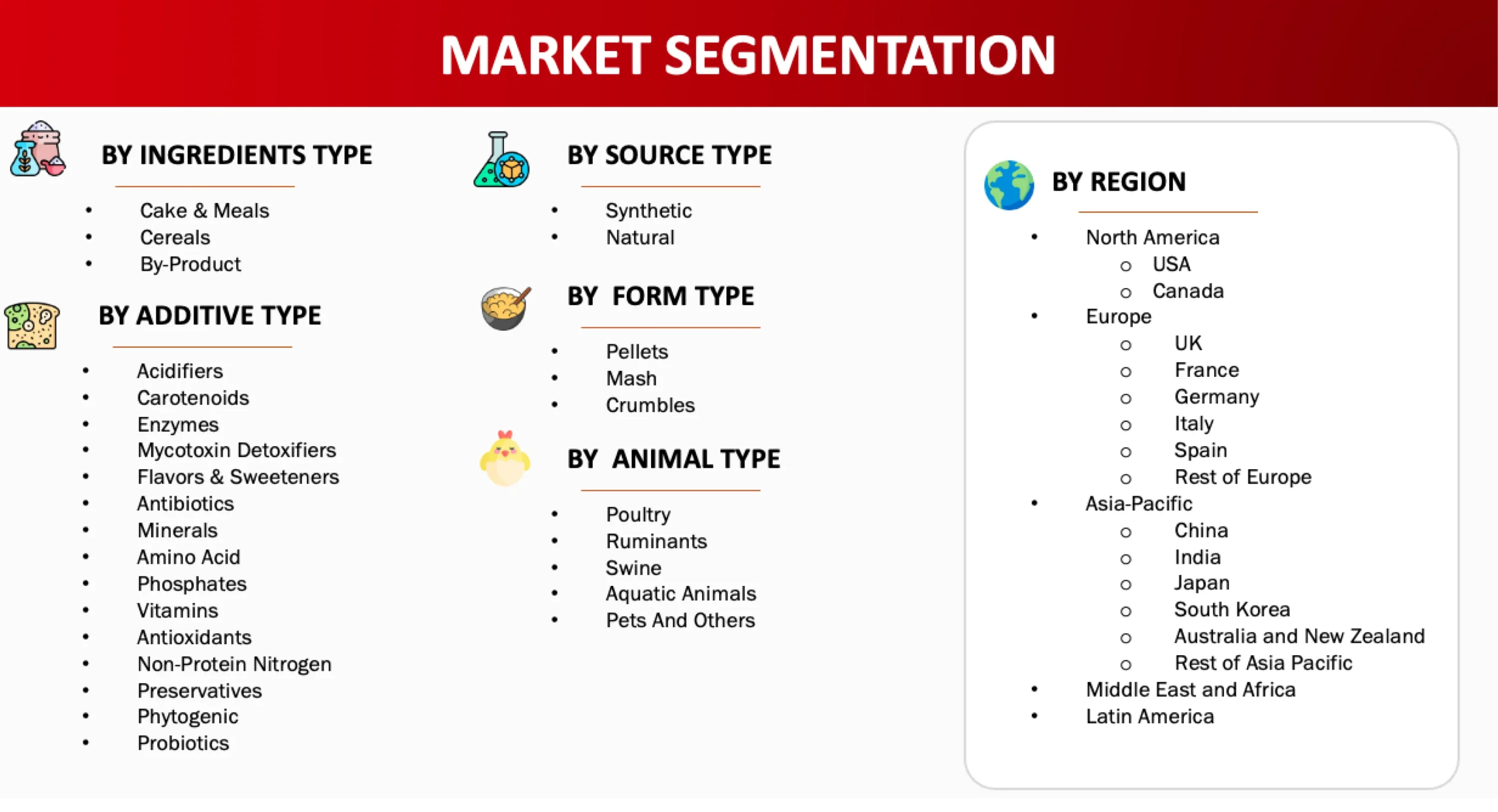
Breakdown by ingredients type, by animal type, by form type, by source type, by animal type, and region

Regional Insights:
Key regional trends and growth opportunities

Future Outlook:
Strategic insights and future market direction
Research Methodology
The study of the animal feed market is based on a combination of primary and secondary research methodologies, supported by data validation, feed-production and consumption analysis, ingredient supply-demand assessment, production-capacity analysis, price analysis, and analytical modelling to ensure accuracy and reliability.
Market Definition: Animal Feed Market
Animal feed refers to feed products formulated and supplied to livestock, poultry, aquaculture species, and other production animals to provide energy, protein, amino acids, vitamins, minerals, and other nutrients required for growth, maintenance, reproduction, health, and production. Animal feed can be manufactured from cereals, oilseed meals, protein meals, grains, agricultural by-products, animal-derived ingredients, and other feed materials, with formulations varying according to animal species, production stage, nutritional requirements, and production objectives.
The market includes complete feed, compound feed, concentrates, supplementary feed, specialty feed, and other formulated animal-feed products supplied for poultry, ruminants, swine, aquaculture, and other livestock applications. Feed products may be supplied in forms including pellets, mash, crumbles, extruded feed, flakes, cubes, and other processed formats.
Key animal-feed applications include broiler and layer poultry, dairy and beef cattle, calves, sheep and goats, swine, farmed fish, shrimp, and other aquaculture species. Feed formulations may include cereals and grains as energy sources, soybean meal and other protein meals, oils and fats, vitamins, minerals, amino acids, enzymes, probiotics, prebiotics, organic acids, antioxidants, and other functional feed additives.
Key Stakeholders
The animal feed market involves a broad ecosystem of stakeholders:
- Feed Manufacturers & Compound Feed Producers (Complete feeds, compound feeds, concentrates, specialty feeds, pellets, mash, crumbles, and other formulated products)
- Feed Ingredient Suppliers (Corn, wheat, barley, sorghum, soybean meal, rapeseed/canola meal, sunflower meal, fishmeal, oils, fats, agricultural by-products, and other feed materials)
- Feed Additive Manufacturers (Amino acids, vitamins, minerals, enzymes, probiotics, prebiotics, organic acids, antioxidants, phytogenics, mycotoxin-management products, and other functional additives)
- Feed Distributors & Channel Partners (Feed distributors, agricultural cooperatives, dealers, wholesalers, logistics providers, and technical-sales networks)
- Animal Health & Veterinary Companies (Veterinary products, animal-health solutions, disease-management products, nutritional health products, and integrated animal-health programs)
- Regulatory & Standards Organizations (Feed safety regulations, ingredient approvals, additive authorization, labeling requirements, manufacturing standards, animal-health regulations, and environmental requirements)
- Testing, Inspection & Certification (TIC) Companies (Feed-quality testing, nutritional analysis, contaminant testing, mycotoxin testing, microbiological testing, ingredient authentication, and feed-safety certification)
- Feed Safety & Quality Organizations (Hazard control, traceability, quality assurance, contamination monitoring, laboratory testing, and feed-safety management systems)
- End-Use Industries & Animal-Protein Producers (Poultry, dairy, beef, pork, aquaculture, egg, and other animal-protein industries purchasing commercial feed products)
- Investors (Private equity firms, strategic investors, agricultural investors, food and feed companies, venture capital firms, and investors focused on animal nutrition, alternative proteins, and sustainable agriculture)
Key Objectives of the Study
- To define, describe, analyze, segment, and forecast the animal feed by ingredients type, by animal type, by form type, by source type, by animal type.
- To describe and forecast the market for four key regions: North America, Europe, Asia Pacific, and Rest of the World
- To provide detailed information regarding key drivers, restraints, opportunities, and challenges influencing market growth
- To strategically analyze the micro indicators with respect to individual growth trends, prospects, and contributions to the overall market size
- To analyze opportunities for stakeholders in the animal feed industry and emphasize on competitive landscape of the market
- To develop competitive benchmarking of the key market players based on technology specifications and end user
- To strategically profile key players and comprehensively analyze their product portfolio offerings, and core competencies
- To analyze competitive developments, such as launches and approvals, agreements, mergers and acquisitions, partnerships, joint ventures, investments and expansions, and collaborations, animal feed domain
Need deeper insights on this market?
Get full report access with detailed forecasts, competitive analysis, and segmentation.
Research Approach
This research employs a systematic approach by using primary research along with secondary research to achieve full coverage and accuracy of information about the animal feed sector. Through this approach, the current market trends in terms of consumer behavior, technological developments, and competitive environment can be analyzed thoroughly.
Secondary Research
Secondary research involves the collection of data from reliable sources such as industry databases, company annual reports, investor presentations, and regulatory filings. This process helps in understanding market trends, identifying key players, and gathering technical and commercial insights.
A comprehensive database of leading companies and market participants is developed through secondary research to support further analysis.
Primary Research
Primary research is conducted to validate findings from secondary research and to gain deeper insights into market dynamics. Interviews are carried out with industry stakeholders across both demand and supply sides, including executives such as CXOs, Vice Presidents, and Directors from business development, marketing, and product teams.
Data is collected through structured questionnaires, email interactions, and telephonic interviews across key regions including North America, Europe, Asia-Pacific, and Rest of the World.
Market Size Estimation
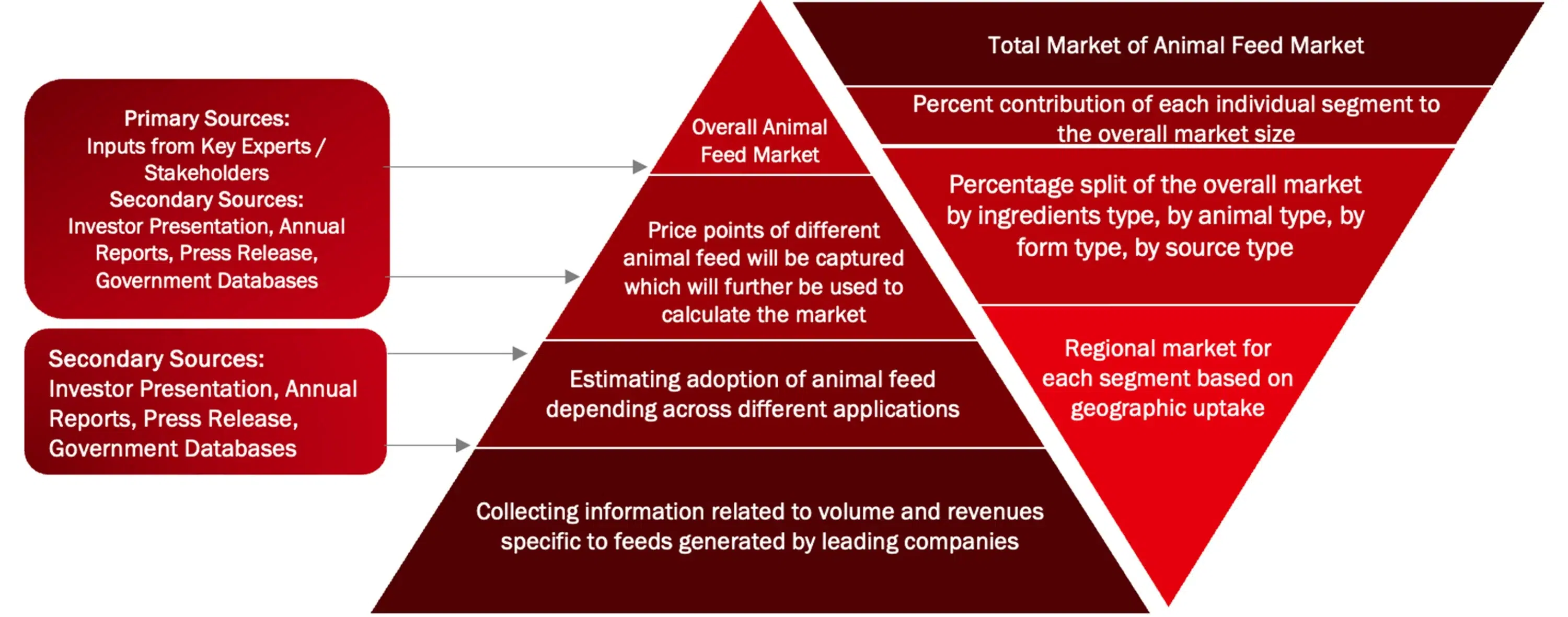
Market size estimation is performed using both top-down and bottom-up approaches. Key market players are identified, and their revenues are analysed to estimate the overall market size.
The market is further segmented based on:
- Product and service mapping across regions
- Adoption patterns across key application segments
- Insights gathered through primary and secondary research
Data Validation and Research Design
After estimating the overall market size, the data is validated using triangulation methods and market breakdown techniques to ensure accuracy and consistency. Both demand-side and supply-side factors are considered to refine the analysis.
The final data is validated through multiple sources to ensure reliability and to provide accurate insights across all market segments and regions.
Assumptions of the Study
The analysis of the animal feed market is based on the following key assumptions:
- Trends in the industry are drawn from historical data and current information within the sector
- The future outlook is underpinned by constant economic conditions in the absence of shocks to the market
- The rate of adoption for animal feed will rise steadily in all important regions
- The income statement and market share figures are estimated using available information from the industry and publicly available data
- The exchange rate and price trends will not be greatly affected during the forecast period
Scope and Limitations
Scope of the Study
This report offers an exhaustive overview of the international animal feed market and includes the following components:
- Summary of market size, growth trends, and projections
- Carefully segmented market based on products, platform, sample, end users, by mode of acquiring and geography
- Discussion of primary factors influencing the market
- Competitor analysis
- Insights into regional and national market performance
Limitations of the Study
Despite the best efforts being made to keep the results accurate, the study does suffer from some limitations:
- It has been done using both primary and secondary data that come with their own constraints
- Rapid developments in technology might affect the future course of market dynamics
- Some figures are only approximations due to lack of public disclosure
- The report is not an insurance against any disruptions in macroeconomics and geopolitics
- Future forecasts are indicative and subject to change due to altered industry dynamics
Data Triangulation and Market Breakdown
Data triangulation involved the combination of primary research, secondary research, and the Wissen Research analysis. Once the data points were sourced from the secondary market research, we sanitized the data points to make the market sizing and growth forecast more accurate by developing our own assumptions based on the inputs and insights we gather through the primary interviews with the industry experts. Once the data was thoroughly validated through primary interviews from both, demand and supply side of the market, our team of analyst and other team members involved finalized the market sizing and growth forecast.
Data Triangulation Methodology
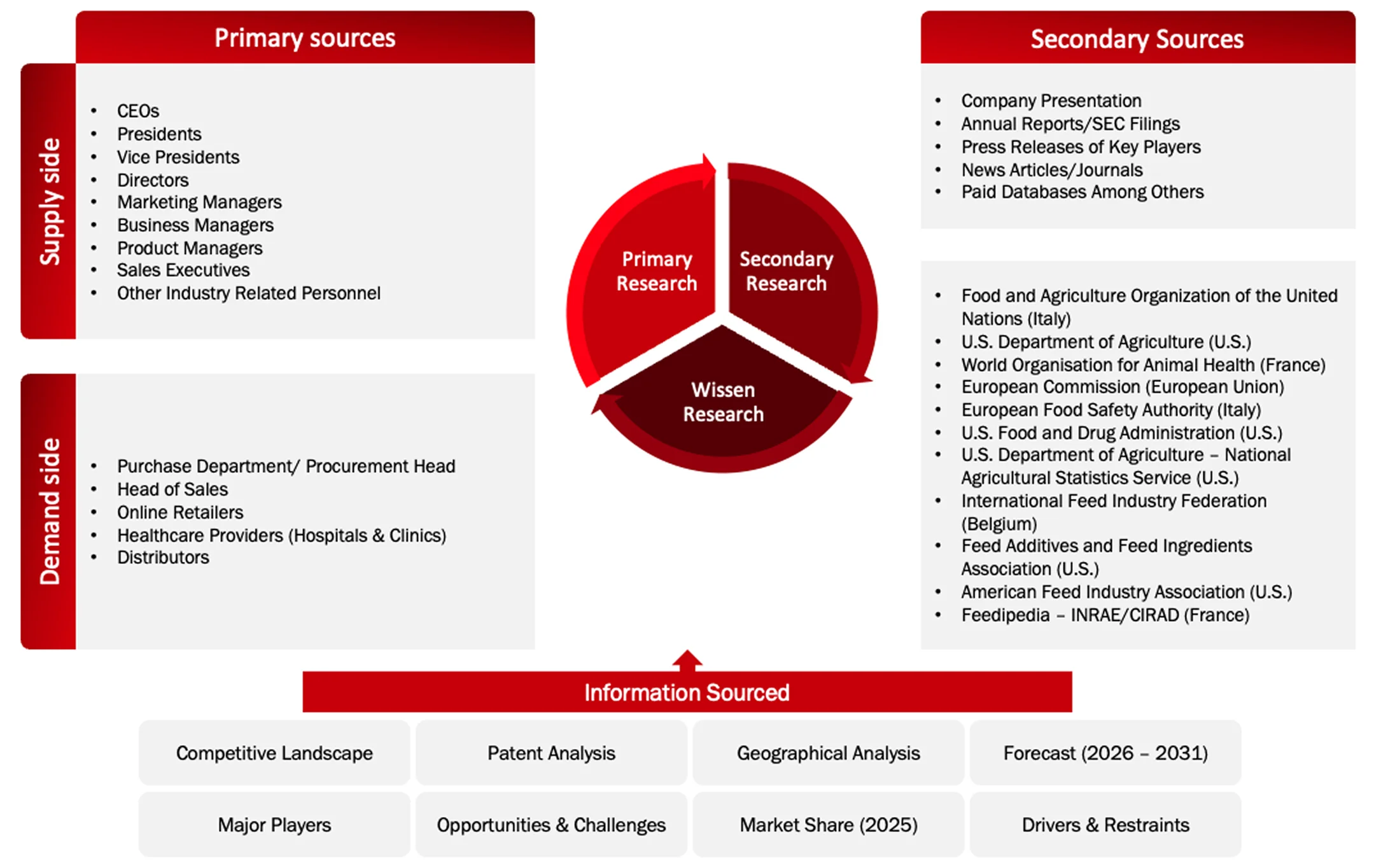
Sources: U.S. Food and Drug Administration, National Institutes of Health, National Cancer Institute, Centers for Medicare & Medicaid Services, Radiological Society of North America, American College of Radiology, Society for Imaging Informatics in Medicine, European Society of Radiology, European Association of Nuclear Medicine, World Health Organization, International Organization for Standardization, International Electrotechnical Commission, Company Websites, Press Releases, Annual Reports, Paid Data Sources, and Wissen Research Analysis.
Years Framework
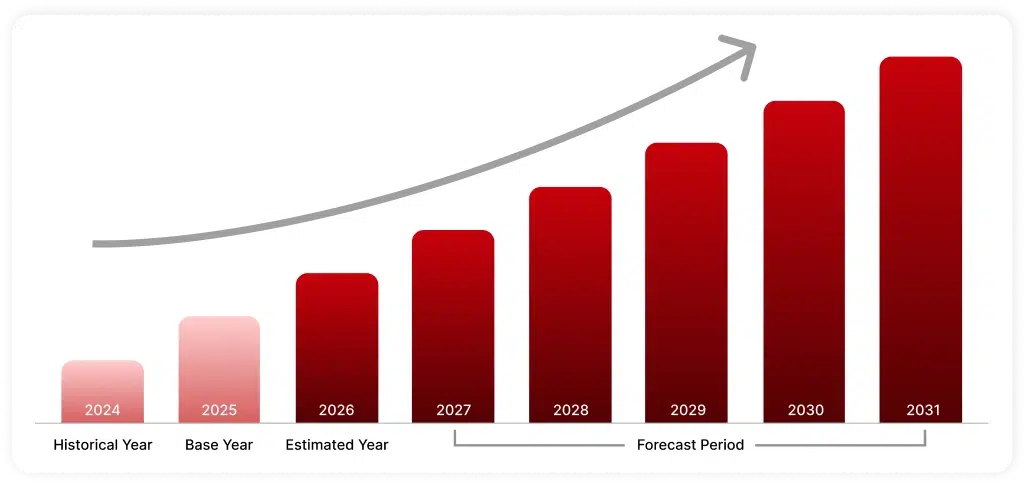
Bottom-Up Approach (Demand Side) And Top-Down Approach (Supply Side)
Bottom-Up Approach (Demand-Side Approach):
Determining the market size through the consolidation of demand among end-users, sectors, and geographic areas, which are calculated according to real-world demand conditions.
Top-Down Approach (Supply-Side Approach):
Calculating the market size through revenue and performance of the industry and its important companies, allocating the market size among various sectors.
Want detailed insights from this report?
Buy this Report
Choose the option that best fits your needs