
Global Animal Parasiticides Market
Global Industry analysis, Size, Share, Growth, Trends, and Forecast 2026-2031
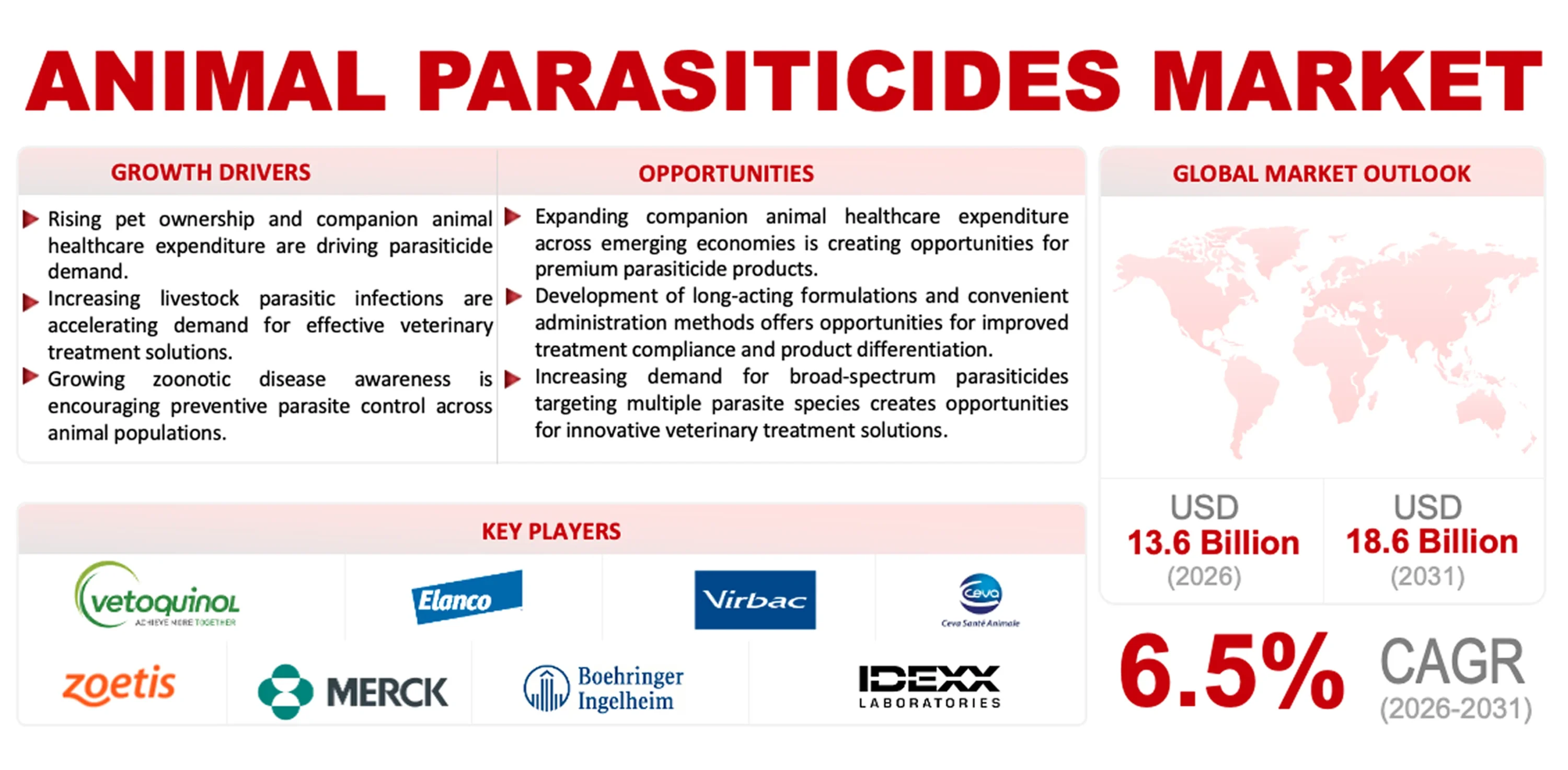
The market is projected to reach USD 18.6 billion by 2031, growing at a CAGR of 6.5 % during the forecast period (2026-2031).
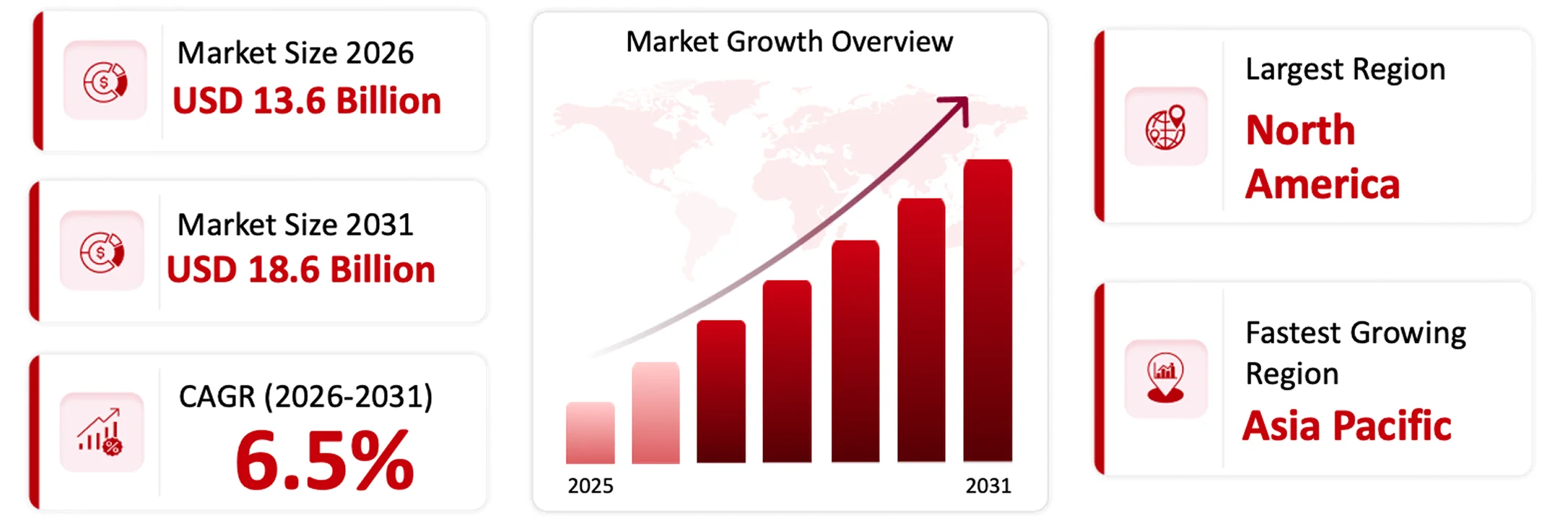
| Market Size (2026) | Forecast (2031) | CAGR (2026–2031) | Leading Region | Fastest Growing Region |
|---|---|---|---|---|
| USD 13.6 Billion | USD 18.6 Billion | 6.5% | North America | Asia Pacific |
Summarize this report with:



Global Animal Parasiticides Market Overview
“In my view the animal parasiticides market is evolving from conventional parasite treatment toward preventive, broad-spectrum, and long-acting animal healthcare solutions. Increasing pet ownership, rising expenditure on companion animal healthcare, and growing emphasis on routine veterinary care are strengthening demand for advanced flea, tick, mite, and worm control products. In livestock production, the need to maintain animal health, productivity, and food safety is encouraging greater adoption of parasite prevention and treatment programs. Manufacturers are increasingly focusing on combination therapies, novel active ingredients, extended-duration formulations, and convenient administration formats, including oral chewable, topical treatments, injectables, and collars. At the same time, growing concerns regarding parasite resistance, zoonotic diseases, and treatment effectiveness are driving research into alternative modes of action and improved parasite control technologies. Competition is also intensifying through product launches, veterinary partnerships, portfolio acquisitions, and expansion into emerging animal healthcare markets.”
– Mayur Jain, Research Consultant, Wissen Research
The market is estimated to be USD 13.6 Billion in 2026 and is projected to reach USD 18.6 billion by 2031, growing at a CAGR of 6.5 % during the forecast period (2026-2031).
Technology Overview
The animal parasiticides market is witnessing continuous technological advancements in active ingredient development, formulation science, drug delivery, and parasite control solutions. Advanced formulation technologies, including extended-release systems, microencapsulation, and combination formulations, are improving active ingredient stability, treatment duration, administration convenience, and parasite control effectiveness. Innovations in topical delivery systems, oral chewables, injectable formulations, and long-acting products are enabling more convenient parasite prevention and treatment across companion and livestock animals. Research into novel chemical compounds, biological agents, and alternative modes of action is also gaining importance in addressing parasite resistance and improving treatment efficacy. Additionally, advancements in molecular diagnostics and parasite identification are supporting more targeted treatment selection and parasite surveillance. Digital veterinary platforms and animal health monitoring technologies are further improving treatment management, preventive care, and veterinary decision-making.
Key Growth Drivers
- Increasing Pet Ownership and Companion Animal Healthcare Expenditure: Growing pet ownership and increasing expenditure on veterinary healthcare, preventive treatments, and routine parasite protection encourage demand for animal parasiticides across companion animal categories.
- Rising Livestock Production and Animal Health Management Requirements: Increasing demand for animal-derived food products and the need to maintain livestock productivity encourage farmers to adopt parasite prevention and treatment solutions to protect animal health and production efficiency.
- Growing Awareness of Zoonotic Diseases and Parasite-Related Health Risks: Increasing awareness of parasites that transmit diseases between animals and humans strengthens the importance of routine parasite control, veterinary monitoring, and preventive treatment programs.
- Technological Advancements in Animal Parasiticide Formulations: Innovations in long-acting formulations, combination therapies, novel active ingredients, and alternative delivery systems improve treatment convenience, protection duration, and parasite control effectiveness.
- Increasing Veterinary Healthcare Access and Preventive Treatment Adoption: Expansion of veterinary services, animal healthcare infrastructure, and preventive healthcare programs improves access to parasiticides and encourages regular parasite prevention among companion animal owners and livestock producers.
Animal Parasiticides Market Key Highlights
Need deeper insights on this market?
Get full report access with detailed forecasts, competitive analysis, and segmentation.
Animal Parasiticides Market Trends
The animal parasiticides market is witnessing a shift toward long-acting formulations, combination therapies, and broader parasite protection across companion and livestock animals. Growing concerns regarding flea- and tick-borne diseases, parasite resistance, and zoonotic infections are increasing the importance of preventive parasite control. Innovation in oral chewables, topical treatments, injectables, and extended-duration products is improving treatment convenience and protection. Additionally, advances in veterinary diagnostics, novel active ingredients, and combination therapies are supporting more targeted parasite management. The growing humanization of pets, increasing livestock health management requirements, and expansion of veterinary healthcare services are further influencing product development and competitive strategies.
Long-Acting Formulations and Broad-Spectrum Parasite Protection
Extended-duration parasite protection: On July 10, 2025, the U.S. FDA approved Merck Animal Health’s BRAVECTO QUANTUM (fluralaner) extended-release injectable suspension, the first FDA-approved treatment providing dogs with 8–12 months of flea and tick protection. The approval highlights the shift toward long-acting veterinary parasiticides that reduce treatment frequency and improve preventive care compliance.
Expansion of convenient preventive treatments: On April 9, 2026, Elanco launched Advantage Collar for Dogs, providing four months of continuous protection against fleas and ticks and repelling mosquitoes. Its time-release formulation and availability through pet specialty, grocery, and mass retail channels demonstrate increasing emphasis on convenient, accessible parasite prevention.
Development of combination parasiticides: On May 6, 2026, Elanco reported the expansion of its Credelio Quattro business, including its launch in Australia and approval in Canada during April 2026. The product combines lotilaner, moxidectin, pyrantel, and praziquantel to address multiple external and internal parasites, illustrating growing interest in broad-spectrum treatment solutions.
Expansion of parasite protection indications: On September 10, 2026, the European Medicines Agency’s Committee for Veterinary Medicinal Products adopted a positive opinion recommending an extension of Felpreva’s authorised indications to include additional tick species in cats. The development reflects continued efforts to expand the parasite coverage of established veterinary formulations.
Increasing demand for year-round parasite prevention: On September 15, 2026, Elanco highlighted the extension of flea, tick, and allergy-related pest seasons, reporting that parasite control requirements are increasingly shifting toward year-round protection. The company also identified growing adoption of home delivery and automatic replenishment services, reflecting the importance of treatment continuity and convenient product access.
Targeted Livestock Parasite Control and Resistance Management
Development of targeted solutions for emerging livestock parasites: On September 30, 2025, Zoetis received conditional FDA approval for Dectomax-CA1 (doramectin injection) for the prevention and treatment of New World screwworm infestations in cattle, including prevention of reinfestation for 21 days. The approval highlights demand for targeted parasiticides addressing economically significant livestock parasites.
Introduction of novel ectoparasiticides for cattle: On December 4, 2025, Merck Animal Health received conditional FDA approval for EXZOLT CATTLE-CA1 (fluralaner topical solution), an isoxazoline-based parasiticide for the prevention and treatment of New World screwworm infestations and control of cattle fever ticks. The product represents the introduction of a new active ingredient class for cattle ectoparasite management.
Expansion of emergency parasite control measures: On February 5, 2026, the U.S. FDA issued an Emergency Use Authorization for Boehringer Ingelheim’s Ivomec (ivermectin injection) to prevent New World screwworm infestations in cattle. The authorization reflects the importance of rapid veterinary pharmaceutical responses to emerging livestock parasite threats and animal health emergencies.
Expansion of parasiticide availability for livestock species: On April 29, 2026, the U.S. FDA approved the first generic moxidectin oral drench for sheep, providing treatment and control of several internal parasites. The approval expands access to established anthelmintic treatments and illustrates the continued development of veterinary parasiticide options for livestock species.
Growing emphasis on sustainable parasite resistance management: On February 5, 2026, the FDA specifically encouraged cattle producers to use antiparasitic drugs only when medically necessary and as part of comprehensive parasite management strategies to reduce resistance risks. This guidance highlights the importance of responsible dosing, veterinary oversight, and integrated parasite control practices in maintaining long-term treatment effectiveness.
Key Players in the Animal Parasiticides Market
Leading animal parasiticides companies are focusing on new product development, novel active ingredients, long-acting formulations, broad-spectrum parasite protection, research and development, strategic acquisitions, regulatory approvals, and expansion across companion and livestock animal healthcare markets.








Strategic Activities Within the Animal Parasiticides Market
Merck & Co., Inc. (United States): Merck Animal Health received Emergency Use Authorization (EUA) from the U.S. FDA for BRAVECTO (fluralaner) chewable tablets for the treatment of New World screwworm infestations in dogs and puppies. The authorization expands the application of its established ectoparasiticide portfolio to address emerging parasitic threats in companion animals.
Elanco Animal Health Incorporated (United States): Elanco highlighted the growing shift toward year-round flea and tick prevention, driven by extended parasite seasons and increasing pet owner demand for preventive healthcare. The company also reported increased adoption of home delivery and automatic replenishment services, reflecting changes in companion animal parasiticide purchasing behaviour.
MSD Animal Health (United States): MSD Animal Health received approval from Mexico’s SADER for BRAVECTO (fluralaner) chewable tablets to treat New World screwworm infestations in dogs. The approval expands the geographical availability and therapeutic applications of its established fluralaner-based parasiticide portfolio.
Zoetis Inc. (United States): Zoetis received Emergency Use Authorization from the U.S. FDA for Simparica Trio (sarolaner, moxidectin, and pyrantel chewable tablets) for the treatment of New World screwworm infestations in dogs and puppies. The authorization expands the product’s applications and strengthens its role in broad-spectrum companion animal parasite management.
Animal Parasiticides Market Insights
The animal parasiticides market comprises products used to prevent, control, and treat parasitic infestations in companion and livestock animals. The market covers three main product groups: Ectoparasiticides, Endoparasiticides, and Endectocides. These categories include products targeting external parasites such as fleas, ticks, mites, and lice, as well as internal parasites such as roundworms, tapeworms, and flukes. Product formulations include oral tablets, chewables, topical solutions, pour-ons, injectables, sprays, and collars. Market development is influenced by increasing pet ownership, livestock health management, veterinary healthcare expenditure, parasite resistance, and growing awareness of zoonotic diseases. Manufacturers are increasingly investing in novel active ingredients, combination therapies, long-acting formulations, and broad-spectrum parasite protection. Regulatory approvals and the development of targeted treatments for emerging parasite threats are also influencing product innovation and competitive strategies.
Animal parasiticides are widely used across companion animals and livestock animals to prevent and control internal and external parasite infestations. Companion animal applications primarily include dogs and cats, where parasiticides are used to control fleas, ticks, mites, heartworms, intestinal worms, and other parasites. Products include oral chewables, topical spot-on treatments, collars, and injectable formulations. Livestock applications include cattle, sheep, goats, pigs, and poultry, where parasite control supports animal health, productivity, and herd management. Treatments address external parasites such as ticks, lice, and mites, alongside internal parasites, including gastrointestinal worms and liver flukes. Parasiticides are administered through oral drenches, injectables, topical pour-ons, sprays, and medicated formulations, depending on the animal species and parasite being targeted.
The animal parasiticides market is driven by increasing pet ownership and rising expenditure on companion animal healthcare, encouraging regular parasite prevention and veterinary treatment. Growing livestock production and the need to maintain animal health, productivity, and food safety are supporting demand for effective parasite control solutions. Increasing awareness of zoonotic diseases and parasite-transmitted infections is further strengthening the importance of preventive veterinary healthcare. Technological advancements in long-acting formulations, combination therapies, novel active ingredients, and broad-spectrum parasiticides are improving treatment effectiveness and administration convenience. Additionally, expanding veterinary healthcare infrastructure, increasing access to animal healthcare services, and growing adoption of preventive treatment programs are supporting market expansion. Rising concerns regarding parasite resistance are also encouraging research into alternative modes of action and improved parasite management solutions.
The animal parasiticides market is witnessing increasing demand for long-acting formulations, broad-spectrum treatments, combination therapies, and convenient administration formats. Manufacturers are developing oral chewables, extended-release injectables, topical solutions, and collars to improve treatment convenience and protection duration. Growing concerns regarding New World screwworm infestations, tick-borne diseases, and parasite resistance are also encouraging the development of targeted livestock and companion animal treatments. Additionally, advancements in veterinary diagnostics and parasite identification are supporting more informed treatment decisions. However, the market faces challenges related to increasing parasite resistance, stringent veterinary drug approval requirements, and product safety assessments. High research and development costs, regulatory differences across countries, fluctuating raw material prices, and competition from generic veterinary medicines also create operational pressures. Furthermore, incorrect dosing, treatment non-compliance, and concerns regarding drug residues in food-producing animals can affect treatment effectiveness and market adoption.
Asia Pacific is expected to register the fastest growth in the animal parasiticides market, supported by expanding companion animal populations, rising awareness of veterinary healthcare, and increasing demand for livestock health management. Countries such as China, India, Japan, and Australia are important regional markets, with demand driven by parasite prevention, treatment of livestock infestations, and improving access to veterinary services. Growth in commercial livestock farming and the need to control parasites that affect animal health, productivity, and food safety are encouraging greater adoption of ectoparasiticides, Endoparasiticides, and endectocides. Additionally, improving veterinary healthcare infrastructure, expanding distribution networks, and increasing availability of modern formulations are supporting market development. The growing presence of international animal health companies and regional manufacturers is further improving product accessibility across the region.
Animal Parasiticides Market Dynamics
Drivers: Veterinary Healthcare Expansion, Livestock Protection and Product Innovation
- Increasing expenditure on companion animal healthcare supports demand for routine parasite prevention and treatment. On July 10, 2025, Merck Animal Health received FDA approval for BRAVECTO QUANTUM (fluralaner) extended-release injectable suspension, providing dogs with 8–12 months of flea and tick protection. The development demonstrates continued innovation in preventive companion animal parasiticides.
- Growing livestock health concerns and emerging parasite threats strengthen demand for targeted veterinary treatments. On September 30, 2025, Zoetis received conditional FDA approval for Dectomax-CA1 (doramectin injection) for the prevention and treatment of New World screwworm infestations in cattle, highlighting the importance of livestock parasite management.
- Technological advancements in parasiticide formulations support improved treatment convenience and protection duration. On December 4, 2025, Merck Animal Health received conditional FDA approval for EXZOLT CATTLE-CA1 (fluralaner topical solution), expanding the application of isoxazoline-based treatments to cattle parasite control.
- Expansion of broad-spectrum treatments supports demand for convenient companion animal parasite protection. In April 2026, Elanco expanded its Credelio Quattro business through launches and regulatory approvals in Australia and Canada. The combination formulation addresses multiple internal and external parasites through a single oral treatment.
- Emergency veterinary authorizations strengthen access to treatments for emerging livestock parasite threats. On February 5, 2026, the U.S. FDA issued an Emergency Use Authorization for Boehringer Ingelheim’s Ivomec (ivermectin injection) to prevent New World screwworm infestations in cattle.
Opportunities: Long-Acting Treatments, Novel Active Ingredients and Preventive Parasite Control
- Long-acting formulations provide opportunities to improve treatment compliance and reduce administration frequency. In July 2025, Merck Animal Health received FDA approval for BRAVECTO QUANTUM, offering 8–12 months of flea and tick protection in dogs through an extended-release injectable formulation.
- Novel active ingredients create opportunities to address emerging livestock parasite threats. In December 2025, Merck Animal Health received conditional FDA approval for EXZOLT CATTLE-CA1, introducing fluralaner-based topical treatment for New World screwworm infestations and cattle fever ticks.
- Combination parasiticides provide opportunities to address multiple parasite categories through simplified treatment regimens. In April 2026, Elanco expanded the availability of Credelio Quattro, which combines lotilaner, moxidectin, pyrantel, and praziquantel for broad-spectrum parasite protection in dogs.
- Expansion of livestock parasiticide applications provides opportunities to address parasite threats across different animal species. In August 2026, Elanco received Emergency Use Authorization for CLiK Extra (dicyclanil topical suspension) to prevent New World screwworm infestations across multiple livestock and other animal species.
- Increasing demand for convenient parasite prevention creates opportunities for alternative administration formats. On April 9, 2026, Elanco launched Advantage Collar for Dogs, providing four months of continuous flea and tick protection while repelling mosquitoes.
Challenges: Parasite Resistance, Regulatory Complexity and Treatment Effectiveness
- Increasing parasite resistance creates challenges for maintaining the long-term effectiveness of established parasiticides. Repeated exposure to anthelmintic compounds and inappropriate treatment practices can reduce treatment effectiveness, encouraging manufacturers and veterinarians to consider alternative active ingredients and resistance-management strategies.
- Stringent veterinary drug approval requirements increase product development and regulatory compliance responsibilities. The U.S. FDA’s Center for Veterinary Medicine regulates animal drugs, requiring appropriate safety, effectiveness, manufacturing, and labelling assessments before products receive standard marketing approval.
- Emerging parasite threats increase pressure on veterinary pharmaceutical manufacturers to develop targeted treatments. New World screwworm infestations have prompted multiple emergency regulatory authorizations in the United States during 2025 and 2026, demonstrating the need for rapid treatment development and regulatory responses.
- Food safety and drug residue requirements create additional challenges for livestock parasiticide manufacturers. Veterinary medicines used in food-producing animals must comply with applicable maximum residue limits and withdrawal periods to ensure that animal-derived food products meet regulatory safety requirements.
- International regulatory differences complicate product registration and geographical expansion. Veterinary parasiticides must satisfy different approval, labelling, manufacturing, and pharmacovigilance requirements across markets, increasing the regulatory complexity associated with launching and commercialising products internationally.
Technology and Market Insights
Technological innovation in the animal parasiticides market is increasingly focused on novel active ingredients, long-acting formulations, broad-spectrum parasite control, and advanced drug delivery systems. Key developments include isoxazoline-based compounds, macrocyclic lactones, combination therapies, extended-release injectables, topical delivery systems, and oral chewable formulations that improve treatment convenience and protection duration. Patent activity reflects innovation across new chemical entities, synergistic active ingredient combinations, sustained-release compositions, parasite-specific treatment methods, and formulations designed for different animal species. Companies are also exploring improved modes of action, alternative delivery mechanisms, and targeted parasite control solutions to address increasing concerns regarding drug resistance. Intellectual property protection increasingly covers active ingredient compositions, formulation technologies, dosing regimens, and methods of preventing or treating parasitic infestations. These developments are strengthening product differentiation, supporting research commercialization, and creating competitive advantages for manufacturers investing in proprietary veterinary pharmaceutical technologies.
Technology Scope and Products
Animal Parasiticides Market Segmentation
Want detailed insights from this report?
Competitive Landscape and Market Segments Insights
- Parasiticide Revenue Concentration Strengthens the Position of Established Pharmaceutical Companies: Zoetis reported USD 2,341 million in parasiticide revenue in 2025, up from USD 2,153 million in 2024, representing approximately 25% of its total revenue. Merck’s BRAVECTO product line generated USD 1.1 billion in 2025. These disclosures demonstrate the scale of established parasiticide franchises and the competitive advantage of companies with commercially established brands.
- Broad-Spectrum Combination Products Are Becoming an Important Competitive Differentiator: Manufacturers are competing through products that address multiple internal and external parasites in a single treatment. Elanco’s Credelio Quattro combines four active ingredients: lotilaner, moxidectin, praziquantel, and pyrantel. In September 2025, Elanco announced that the product had achieved USD 100 million in net sales, becoming its fastest pet health blockbuster. This highlights the commercial potential of multi-parasite protection products.
- Extended-Duration Protection Is Increasing Competition Around Treatment Convenience: Companies are differentiating their portfolios through longer protection periods and less frequent administration. Merck Animal Health received FDA approval for BRAVECTO QUANTUM in July 2025, an extended-release injectable providing dogs with 8–12 months of flea and tick protection. This creates a distinct competitive proposition against conventional monthly oral and topical treatments.
- Companies Are Strengthening Competitive Positions Through Portfolio Expansion and Geographic Launches: Manufacturers are extending established parasiticide brands into additional markets and animal categories rather than relying exclusively on new product development. Boehringer Ingelheim introduced NexGard SPECTRA for dogs in India in April 2026, expanding access to its combination parasite-control portfolio. Virbac also launched Prevexto, a long-lasting parasite protection collar for dogs and cats, in Europe during 2025.
- Prescription and Over-the-Counter Portfolios Are Creating Multiple Routes to Market: Elanco operates across both veterinary-prescribed and retail-accessible parasiticides. Its prescription portfolio includes the Credelio family, while its Advantage and Seresto brands provide over-the-counter flea and tick protection. This dual-channel positioning enables manufacturers to address veterinary-led treatment decisions as well as direct pet-owner purchasing, broadening customer access and distribution opportunities.
- Livestock Parasite Threats Are Creating Competition Around Targeted Treatment Development: Manufacturers are competing to develop and secure regulatory authorisations for treatments addressing economically significant and emerging livestock parasites. Zoetis received conditional FDA approval for Dectomax-CA1 in 2025, while Merck received conditional approval for EXZOLT CATTLE-CA1. Elanco also reported securing emergency and conditional authorisations for products addressing New World screwworm. These developments highlight the strategic importance of livestock-specific innovation and rapid regulatory execution.
Ectoparasiticides represent an important product category in the animal parasiticides market, supported by the widespread occurrence of fleas, ticks, mites, and lice across companion and livestock animals. Regular preventive treatment, growing awareness of vector-borne diseases, and increasing availability of long-acting formulations support demand for external parasite control products.
-
Established commercial portfolios supported external parasite protection: Zoetis reported USD 2,341 million in parasiticide revenue in 2025 across its portfolio, which includes products addressing external and internal parasites. This demonstrates the commercial significance of parasiticides within a major animal health company.
-
Long-acting formulations strengthened flea and tick prevention: On July 10, 2025, Merck Animal Health received FDA approval for BRAVECTO QUANTUM (fluralaner) extended-release injectable suspension, providing dogs with 8–12 months of flea and tick protection.
-
New active ingredients expanded livestock ectoparasite control: On December 4, 2025, Merck Animal Health received conditional FDA approval for EXZOLT CATTLE-CA1 (fluralaner topical solution), targeting New World screwworm infestations and cattle fever ticks.
-
Expanded treatment applications supported external parasite management: In 2026, the FDA issued additional emergency authorisations for animal drugs addressing New World screwworm infestations, reflecting the need for targeted ectoparasite prevention and treatment across animal species..
Companion animals represent an important demand segment, supported by increasing pet ownership, rising veterinary healthcare expenditure, and growing adoption of routine flea, tick, heartworm, and intestinal parasite prevention. The development of convenient oral chewables, topical treatments, and extended-duration injectable products further supports demand across dogs and cats.
-
Substantial companion animal business exposure supported market participation: Zoetis reported companion animal revenue of USD 6,587 million in 2025, compared with USD 2,764 million from livestock. This reflects the company’s substantial commercial presence in companion animal healthcare.
-
Long-duration treatments supported preventive parasite management: Merck Animal Health received FDA approval for BRAVECTO QUANTUM in July 2025, offering dogs 8–12 months of flea and tick protection through an extended-release injectable formulation.
-
Combination therapies expanded parasite coverage: Elanco’s Credelio Quattro combines lotilaner, moxidectin, praziquantel, and pyrantel to address multiple external and internal parasites in dogs, supporting demand for broad-spectrum preventive treatments.
-
Emergency authorisations expanded treatment availability: As of November 3, 2026, the U.S. FDA had issued multiple emergency authorisations for animal drugs addressing New World screwworm, including treatments applicable to companion animals.
North America represents an important regional market for animal parasiticides, supported by established veterinary healthcare infrastructure, significant companion animal healthcare expenditure, livestock production, and the presence of major animal health pharmaceutical manufacturers. The United States is particularly important due to its established veterinary pharmaceutical industry and regulatory framework.
-
Strong commercial presence of animal health manufacturers: Zoetis reported USD 5,097 million in U.S. revenue in 2025, compared with USD 4,254 million in international revenue, demonstrating its substantial domestic commercial presence.
-
Regulatory authorisations supported product availability: As of November 3, 2026, the U.S. FDA had issued 16 Emergency Use Authorizations and three conditional approvals for animal drugs addressing New World screwworm, demonstrating regulatory activity in livestock and companion animal parasite management.
-
Companion animal healthcare supported regional demand: Zoetis reported that dogs and cats generated USD 6,283 million in revenue in 2025, highlighting the commercial importance of companion animal healthcare within a major U.S.-based animal health manufacturer.
-
Livestock parasite management supported regional product development: FDA authorisations for doramectin, fluralaner, ivermectin, and other veterinary treatments addressing New World screwworm demonstrate the importance of livestock parasite control in North America.
What This Report Covers-
This report provides a comprehensive analysis of the animal parasiticides market, offering insights into key trends, growth drivers, challenges, and future opportunities. It is designed to support strategic decision-making through a combination of quantitative data and qualitative analysis.
Specifically, the report covers:

Market Overview & Definition:
Overview of the market scope, structure, and key terminology

Market Size & Forecast
Historical data and future projections across key segments and regions

Key Market Trends:
Insights into emerging trends, technological advancements, and evolving demand patterns

Drivers, Restraints & Opportunities:
Analysis of key factors influencing animal parasiticides market growth

Competitive Landscape:
Overview of major players, their strategies, and recent developments

Detailed Patent Analysis:
This includes, top assignees, geography focus of top assignees, legal status, technology evolution, key patents and patent trends and innovations
Segmentation Analysis:
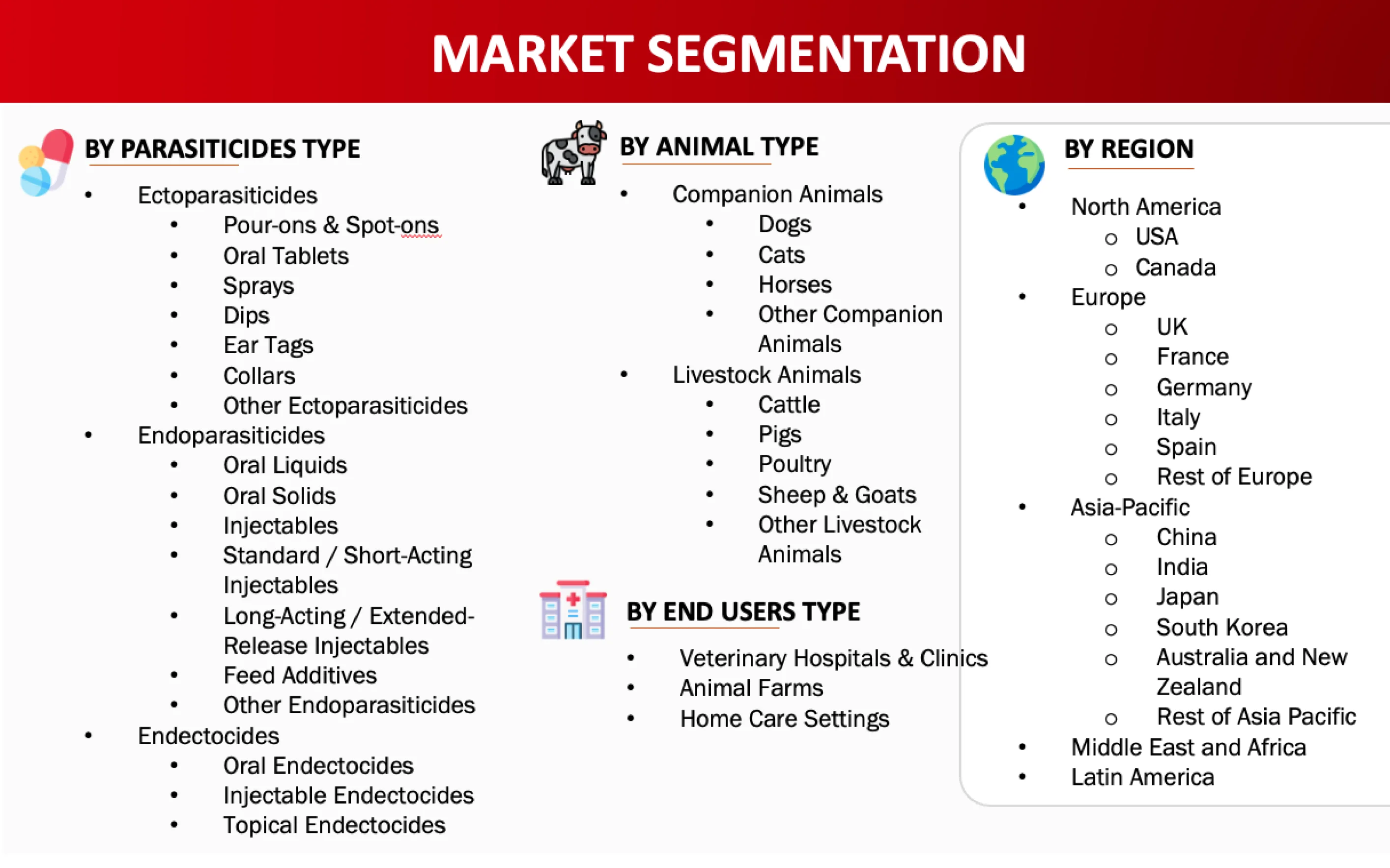
Breakdown by parasiticides type, by animals type, by end users type, by region.

Regional Insights:
Key regional trends and growth opportunities

Future Outlook:
Strategic insights and future market direction
Research Methodology
The study of the Animal Parasiticides Market is based on primary and secondary research, supported by data validation, parasiticide type and active ingredient mapping, formulation and drug delivery assessment, raw material and active pharmaceutical ingredient (API) sourcing analysis, manufacturing and supply chain evaluation, company revenue and product portfolio analysis, veterinary drug approval and product registration assessment, animal population and end-use demand analysis, trade-flow analysis, competitive landscape evaluation, and regional market assessment to ensure accuracy and reliability.
Market Definition: Animal Parasiticides Market
The Animal Parasiticides Market covers veterinary pharmaceutical products formulated to prevent, control, or treat parasitic infestations in companion and livestock animals. The market includes products targeting external parasites, such as fleas, ticks, mites, and lice, as well as internal parasites, including roundworms, tapeworms, hookworms, heartworms, lungworms, and liver flukes. Based on their target parasites and spectrum of activity, these products are classified into ectoparasiticides, endoparasiticides, and endectocides.
The market encompasses parasiticide formulations developed for companion animals, including dogs and cats, and livestock animals, including cattle, sheep, goats, pigs, and poultry. Products are commercially available in various formulations and delivery formats, including oral tablets and chewables, topical spot-on treatments, pour-on formulations, injectables, oral liquids and suspensions, and medicated collars. These products are distributed and administered through veterinary hospitals and clinics, animal farms, and home care settings.
Key Stakeholders
The Animal Parasiticides Market involves stakeholders across the veterinary pharmaceutical supply chain, including active ingredient development, formulation manufacturing, regulatory approval, distribution, veterinary healthcare, and animal production.
- Veterinary Active Pharmaceutical Ingredient (API) Manufacturers
- Companion Animal Owners and Home Care Purchasers
- Livestock Farms and Animal Production Companies
- Veterinary Hospitals and Clinics
- Veterinary Pharmaceutical Distributors and Wholesalers
- Veterinary Pharmaceutical Regulatory and Registration Authorities
- Veterinary Drug Testing and Clinical Research Laboratories
- Contract Development and Manufacturing Organizations (CDMOs)
- Animal Parasiticide Manufacturers
- Veterinary Pharmaceutical Formulation Developers
- Raw Material and Pharmaceutical Intermediate Suppliers
- Specialty Chemical and Excipient Suppliers
Key Objectives of the Study
- To define, describe, analyze, segment, and forecast the animal parasiticides market by parasiticides type, by animal type, by end users type.
- To describe and forecast the market for five key regions: North America, Europe, Asia Pacific, Latin America, Middle-East & Africa
- To provide detailed information regarding key drivers, restraints, opportunities, and challenges influencing market growth
- To strategically analyze the micro indicators with respect to individual growth trends, prospects, and contributions to the overall market size
- To analyze opportunities for stakeholders in the animal parasiticides industry and emphasize on competitive landscape of the market
- To develop competitive benchmarking of the key market players based on technology specifications and end user
- To strategically profile key players and comprehensively analyze their product portfolio offerings, and core competencies
- To analyze competitive developments, such as launches and approvals, agreements, mergers and acquisitions, partnerships, joint ventures, investments and expansions, and collaborations, animal parasiticides domain
Need deeper insights on this market?
Get full report access with detailed forecasts, competitive analysis, and segmentation.
Research Approach
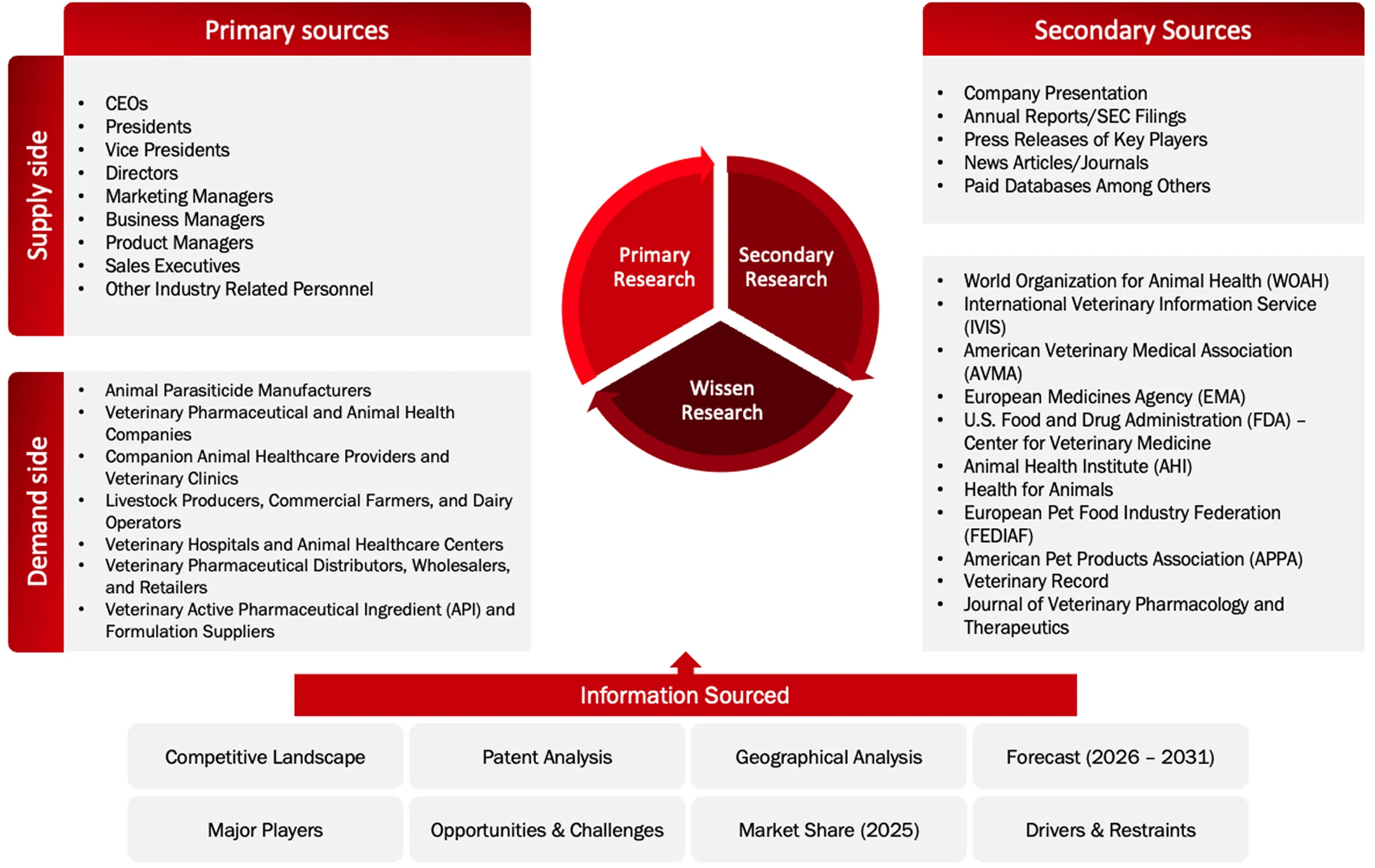
This research employs a systematic approach by using primary research along with secondary research to achieve full coverage and accuracy of information about the animal parasiticides sector. Through this approach, the current market trends in terms of consumer behaviour, technological developments, and competitive environment can be analysed thoroughly.
Secondary Research
Secondary research involves the collection of data from reliable sources such as industry databases, company annual reports, investor presentations, and regulatory filings. This process helps in understanding market trends, identifying key players, and gathering technical and commercial insights.
A comprehensive database of leading companies and market participants is developed through secondary research to support further analysis.
Primary Research
Primary research is conducted to validate findings from secondary research and to gain deeper insights into market dynamics. Interviews are carried out with industry stakeholders across both demand and supply sides, including executives such as CXOs, Vice Presidents, and Directors from business development, marketing, and product teams.
Data is collected through structured questionnaires, email interactions, and telephonic interviews across key regions including North America, Europe, Asia-Pacific, and Rest of the World.
Market Size Estimation
Market size estimation is performed using both top-down and bottom-up approaches. Key market players are identified, and their revenues are analysed to estimate the overall market size.
The market is further segmented based on:
- Product and service mapping across regions
- Adoption patterns across key application segments
- Insights gathered through primary and secondary research
Data Validation and Research Design
After estimating the overall market size, the data is validated using triangulation methods and market breakdown techniques to ensure accuracy and consistency. Both demand-side and supply-side factors are considered to refine the analysis.
The final data is validated through multiple sources to ensure reliability and to provide accurate insights across all market segments and regions.
Assumptions of the Study
The analysis of the animal parasiticides market is based on the following key assumptions:
- Trends in the industry are drawn from historical data and current information within the sector
- The future outlook is underpinned by constant economic conditions in the absence of shocks to the market
- The rate of adoption for animal parasiticides will rise steadily in all important regions
- The income statement and market share figures are estimated using available information from the industry and publicly available data
- The exchange rate and price trends will not be greatly affected during the forecast period
Scope and Limitations
Scope of the Study
This report offers an exhaustive overview of the international animal parasiticides market and includes the following components:
- Summary of market size, growth trends, and projections
- Carefully segmented market based on by parasiticides type, by animal type, by end users type.
- Discussion of primary factors influencing the market
- Competitor analysis
- Insights into regional and national market performance
Limitations of the Study
Despite the best efforts being made to keep the results accurate, the study does suffer from some limitations:
- It has been done using both primary and secondary data that come with their own constraints
- Rapid developments in technology might affect the future course of market dynamics
- Some figures are only approximations due to lack of public disclosure
- The report is not an insurance against any disruptions in macroeconomics and geopolitics
- Future forecasts are indicative and subject to change due to altered industry dynamics
Data Triangulation and Market Breakdown
Data triangulation involved the combination of primary research, secondary research, and the Wissen Research analysis. Once the data points were sourced from the secondary market research, we sanitized the data points to make the market sizing and growth forecast more accurate by developing our own assumptions based on the inputs and insights we gather through the primary interviews with the industry experts. Once the data was thoroughly validated through primary interviews from both, demand and supply side of the market, our team of analyst and other team members involved finalized the market sizing and growth forecast.
Data Triangulation Methodology
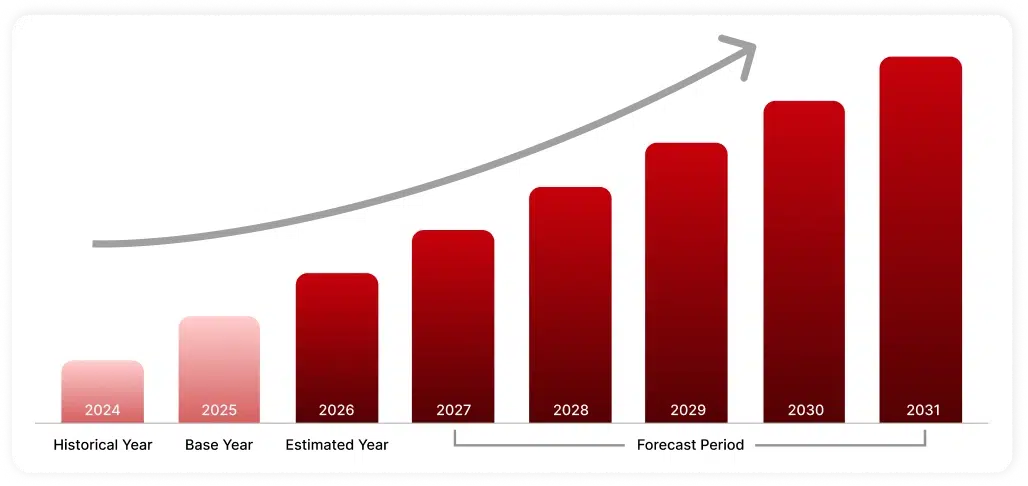
Year Framework
Bottom-Up Approach (Demand Side) And Top-Down Approach (Supply Side)
Bottom-Up Approach (Demand-Side Approach)
Determining the market size through the consolidation of demand among end-users, sectors, and geographic areas, which are calculated according to real-world demand conditions.
Top-Down Approach (Supply-Side Approach)
Calculating the market size through revenue and performance of the industry and its important companies, allocating the market size among various sectors.
Want detailed insights from this report?
Buy this Report
Choose the option that best fits your needs