
Global Dental Equipment Market
Global Industry analysis, Size, Share, Growth, Trends, and Forecast 2026-2031
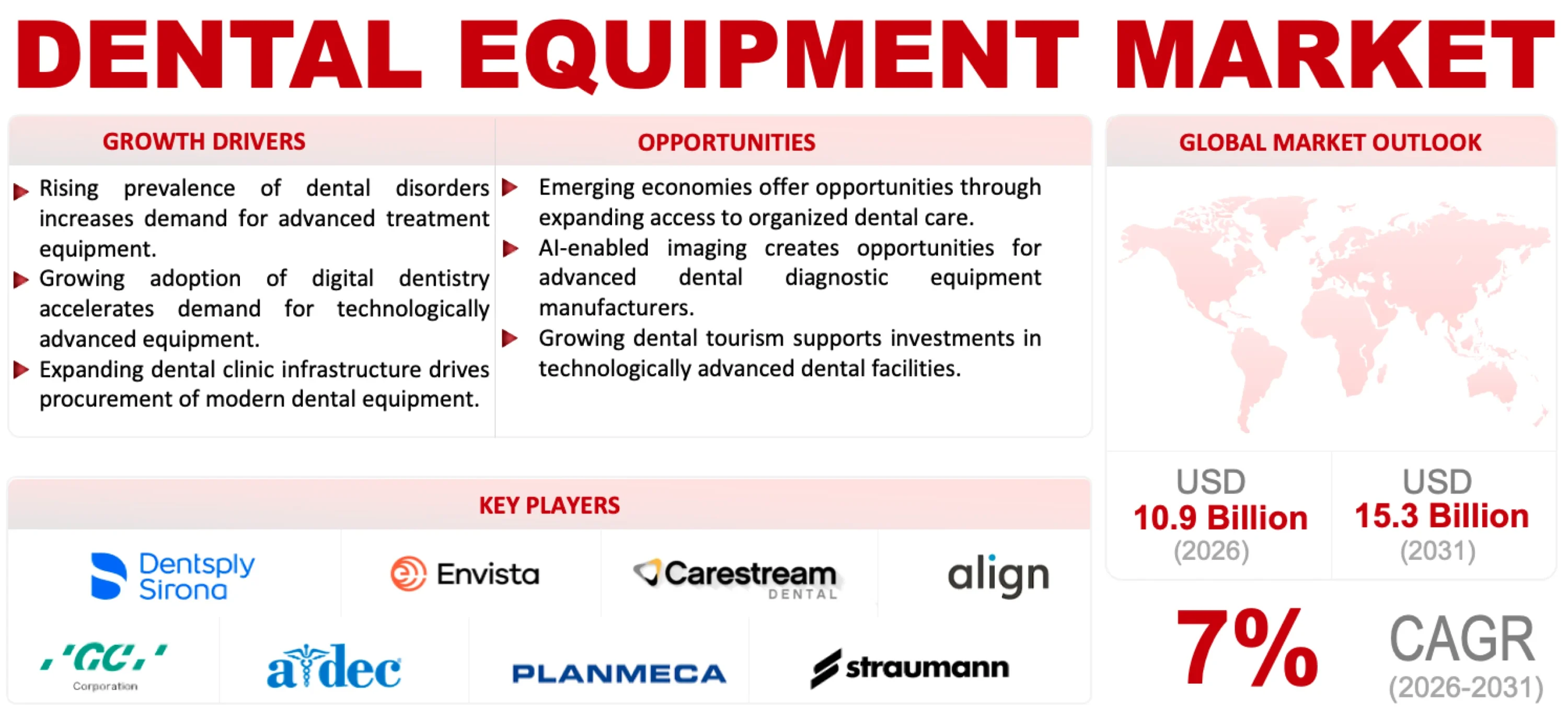
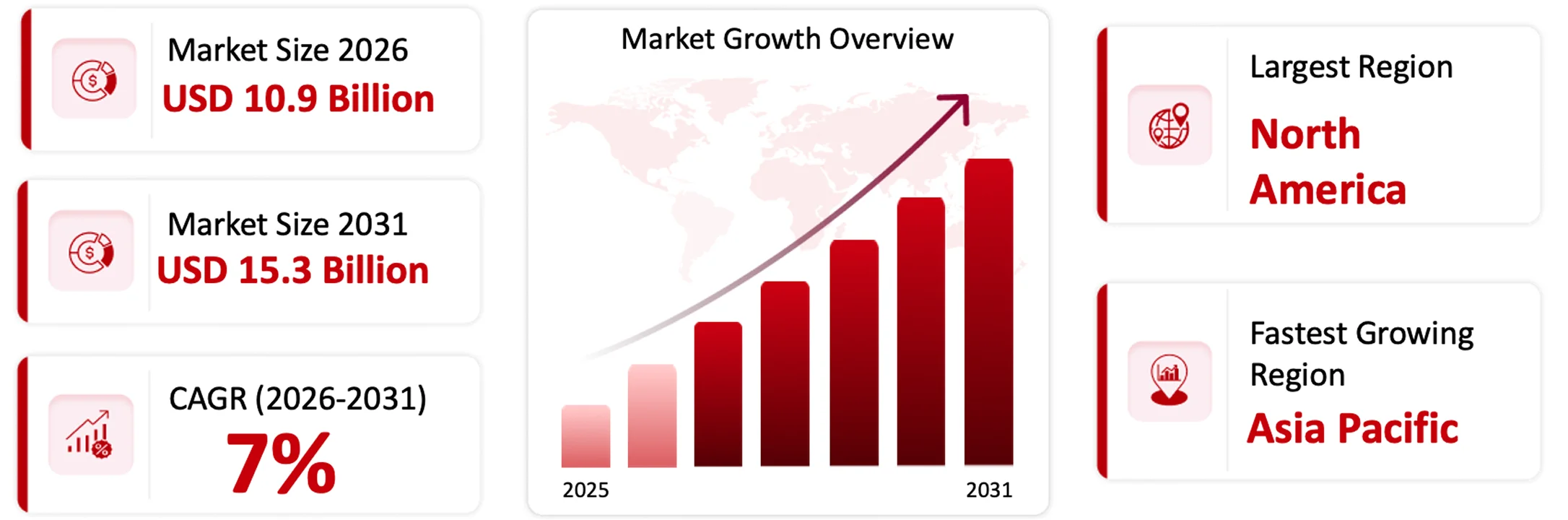
The market is projected to reach USD 15.3 billion by 2031, growing at a CAGR of 7 % during the forecast period (2026-2031).
| Market Size (2026) | Forecast (2031) | CAGR (2026–2031) | Leading Region | Fastest Growing Region |
|---|---|---|---|---|
| USD 10.9 Billion | USD 15.3 Billion | 7% | North America | Asia Pacific |
Summarize this report with:



Global Dental Equipment Market Overview
“In my view the global dental equipment market is evolving beyond conventional infection-control products toward advanced formulations that combine broad-spectrum antimicrobial efficacy, shorter contact times, improved surface compatibility, and reduced chemical exposure. Increasing emphasis on preventing healthcare-associated infections (HAIs), particularly in hospitals, surgical facilities, and diagnostic laboratories, is driving the adoption of ready-to-use disinfectants and pre-saturated wipes that simplify routine cleaning and improve operational efficiency. Product innovation is also shifting toward hydrogen peroxide-based and non-bleach formulations that provide effective pathogen control while reducing concerns associated with repeated chemical exposure and surface deterioration. In parallel, sustainability considerations are encouraging manufacturers to develop plastic-free, biodegradable wipe substrates and environmentally preferable formulations. These developments are expanding product differentiation and strengthening demand for high-performance surface disinfection solutions across healthcare and institutional environments.”
– Mayur Jain, Research Consultant, Wissen Research
The market is estimated to be USD 10.9 Billion in 2026 and is projected to reach USD 15.3 billion by 2031, growing at a CAGR of 7 % during the forecast period (2026-2031).
Technology Overview
Dental equipment technology is transitioning from conventional mechanical systems toward digitally integrated and precision-driven solutions. Intraoral scanners and cone-beam computed tomography (CBCT) systems enable detailed oral imaging and more accurate treatment planning, while CAD/CAM technology supports computer-aided design and manufacturing of dental restorations. Three-dimensional (3D) printing is expanding customized production of crowns, bridges, dentures, orthodontic appliances, and surgical guides. Additionally, AI-enabled imaging and diagnostic software are emerging to support image interpretation, caries detection, and clinical decision-making. Laser-assisted dental systems are also advancing minimally invasive procedures. Together, these technologies are reshaping clinical workflows, improving customization, and increasing demand for technologically advanced dental equipment.
Key Growth Drivers
- High Global Burden of Oral Diseases: Nearly 3.7 billion people worldwide are affected by oral diseases, including dental caries and periodontal conditions, creating sustained requirements for diagnostic, restorative, surgical, and preventive dental equipment.
- Rising Demand for Restorative and Tooth Replacement Procedures: Untreated dental caries and severe periodontal disease contribute to tooth damage and tooth loss, increasing clinical requirements for dental handpieces, imaging systems, implant equipment, and prosthetic restoration technologies.
- Growing Geriatric Population Requiring Complex Dental Treatment: Increasing life expectancy and population ageing are expanding the number of older adults requiring dentures, crowns, implants, periodontal treatment, and restorative procedures, supporting demand for specialized dental equipment.
- Increasing Adoption of Digital Dentistry in Clinical Workflows: Dental practices are investing in intraoral scanners, CAD/CAM systems, and 3D printers to reduce laboratory dependence, improve restoration production efficiency, and integrate digital treatment planning into routine procedures.
- Expansion of Dental Care Access and Treatment Infrastructure: Persistent gaps in dental service availability, particularly across low- and middle-income countries, are creating requirements for additional dental facilities, diagnostic systems, treatment chairs, sterilization equipment, and basic clinical instruments.
- Increasing Utilization of Dental Services Through Insurance Coverage: Dental insurance influences treatment utilization, with 53% of privately insured U.S. adults aged 19–64 visiting a dentist in 2024, compared with 17% of uninsured adults, supporting equipment utilization.
Dental Equipment Market Key Highlights
Need deeper insights on this market?
Get full report access with detailed forecasts, competitive analysis, and segmentation.
Dental Equipment Market Trends
The global dental equipment market is witnessing a shift toward digitally integrated, precision-based, and technology-enabled dental care. Dental clinics and laboratories are increasingly incorporating intraoral scanners, CAD/CAM systems, 3D printers, and advanced imaging equipment to improve treatment planning and restoration workflows. Another notable trend is the integration of artificial intelligence (AI) into dental imaging for automated image analysis, caries detection, and diagnostic support. Demand for minimally invasive procedures is also encouraging the adoption of laser-based equipment and advanced surgical systems. Additionally, dental laboratories are moving toward automated manufacturing, while clinics are increasingly prioritizing connected equipment and streamlined chairside treatment capabilities.
Transition Toward Integrated Digital Dentistry and Automated Manufacturing
- Dental practices and laboratories are increasingly shifting from conventional impression-taking and manual restoration manufacturing toward integrated digital workflows. Intraoral scanners, CAD/CAM milling systems, and 3D printers are being incorporated into restorative dentistry, implant planning, orthodontics, and prosthetic manufacturing.
- A 2025 systematic review identified 372 dental 3D printer models developed by 115 manufacturers across 26 countries, demonstrating the international expansion of additive manufacturing technologies in dentistry.
- According to the National Association of Dental Laboratories (NADL), 68% of surveyed U.S. dental laboratories used 3D printers in 2024, compared with 11% in 2014, highlighting the substantial adoption of additive manufacturing over the decade.
- The same NADL survey found that laboratories receiving more than 50% of their cases through intraoral scans increased from 12% in 2019 to 39% in 2024, indicating greater integration between digital impressions and laboratory production.
- The German Association of Dental Industry (VDDI) also identifies fully digitized and automated production, interconnected workflows, and open-system compatibility as important developments in dental technology.
- Market implication: This transition is creating equipment opportunities across intraoral scanners, laboratory scanners, milling machines, 3D printers, and associated digital production systems
Integration of Artificial Intelligence into Dental Imaging and Diagnostic Equipment
- Dental imaging is gradually evolving from conventional radiographic interpretation toward AI-assisted diagnostic workflows. Equipment manufacturers and software developers are incorporating machine learning and deep learning capabilities into digital radiography, panoramic imaging, CBCT, and intraoral imaging systems. These technologies support automated identification of dental structures, detection of abnormalities, image segmentation, and treatment-planning assistance.
- A 2026 systematic review and meta-analysis covering 27 studies and 60,857 radiographic images reported pooled AI diagnostic sensitivity of 85% and specificity of 94%, demonstrating the potential of AI-assisted dental image interpretation.
- A 2024 systematic review published in Oral Surgery, Oral Medicine, Oral Pathology and Oral Radiology examined AI applications across dent maxillofacial imaging modalities, including panoramic radiography and CBCT, highlighting their potential in automated diagnostic assessment.
- AI applications are expanding beyond basic image detection to include tooth segmentation, periodontal bone-loss assessment, impacted third-molar evaluation, root-fracture identification, and treatment-planning support.
- Market implication: AI integration is increasing the technological value of digital dental imaging equipment and creating opportunities for manufacturers offering AI-enabled radiography, CBCT systems, and connected diagnostic platforms.
Key Players in the Dental Equipment Market
Leading companies in the global dental equipment market are focusing on digital dentistry, advanced diagnostic and imaging technologies, CAD/CAM systems, AI-enabled solutions, treatment equipment innovation, and integrated clinical workflows to strengthen their product portfolios and expand across dental hospitals, clinics, and laboratories.








Strategic Activities Within the Dental Equipment Market
- Dentsply Sirona Inc. (U.S.) announced an expanded distribution agreement with Midwest Dental Equipment & Supply to broaden access to its dental technology portfolio in the United States. Effective November 1, 2026, Midwest Dental began offering Dentsply Sirona’s CEREC chairside CAD/CAM systems, Primescan and Primescan 2 intraoral scanners, and Axeos and Orthophos extraoral imaging systems. The agreement extends their longstanding relationship beyond dental consumables and strengthens Dentsply Sirona’s distribution reach for digital dentistry solutions.
- Straumann Group (Switzerland) introduced new digitally powered implant treatment solutions under its Straumann F.A.S.T. workflow, including the SIRIOS APS (Arch Positioning System) for full-arch scanning. The system uses reference components on iEXCEL implants to digitally capture implant positions, enabling clinicians and dental laboratories to collaborate on shared digital cases. The workflow is designed to streamline full-arch treatment planning and restoration while reducing reliance on conventional impressions and additional specialized scanning equipment.
- Envista Holdings Corporation (U.S.), through its Kerr Dental business, launched the ZenFlex™ RT Rotary Retreatment File System, a four-file rotary system developed for endodontic retreatment procedures. The product is designed to support endodontists and general practitioners in managing complex retreatment cases with improved procedural control and efficiency. The launch expands Kerr Dental’s endodontic instrument portfolio and strengthens Envista’s presence in specialized dental treatment equipment and instruments.
- Align Technology, Inc. (U.S.) introduced new innovations across its Align™ Digital Platform to enhance Invisalign treatment planning and patient engagement. The updates include AI-powered diagnostic integration through Align X-ray Insights, gumline visualization, enhanced Invisalign Outcome Simulator Pro features, and improvements to iTero Design Suite for AI-supported crown, bridge, and splint design. These developments expand the company’s digital dentistry capabilities by connecting diagnostic visualization, orthodontic treatment planning, and restorative workflows.
Dental Equipment Market Insights
The global dental equipment market is supported by the increasing burden of oral diseases, rising demand for restorative procedures, and modernization of dental care infrastructure. According to the WHO, nearly 3.7 billion people worldwide are affected by oral diseases, creating substantial requirements for diagnostic, therapeutic, and surgical dental equipment.
Market development is increasingly influenced by the replacement of conventional equipment with digital imaging, CAD/CAM systems, intraoral scanners, and automated manufacturing technologies. Growing investments in private dental clinics, specialty practices, and dental laboratories are further supporting equipment procurement. The market’s expansion is therefore linked to both increasing treatment volumes and technological upgrades.
Dental equipment is used across several clinical applications, including restorative dentistry, orthodontics, endodontics, periodontics, implantology, oral surgery, and diagnostic imaging. Restorative dentistry requires treatment units, handpieces, curing lights, and CAD/CAM systems for procedures involving damaged or missing teeth. Orthodontics increasingly uses intraoral scanners and digital imaging for treatment planning and appliance production. Implantology and oral surgery depend on CBCT scanners, surgical motors, implant systems, and specialized instruments. Endodontic procedures utilize apex locators, endodontic motors, and imaging equipment, while periodontal treatment requires ultrasonic scalers and laser systems. Dental laboratories also use milling machines, scanners, and 3D printers to manufacture customized restorations and prosthetic devices.
Expansion of public dental healthcare infrastructure in emerging economies presents opportunities for dental equipment manufacturers, particularly suppliers of treatment units, diagnostic imaging systems, sterilization equipment, and basic clinical instruments. India’s National Oral Health Programme targets increasing dental care units at district hospitals and below from 9,587 in FY2024–25 to 10,087 in FY2025–26, creating additional institutional procurement requirements.
Other opportunities include affordable digital dentistry solutions for smaller clinics, AI-enabled diagnostic systems, portable dental equipment for underserved communities, and 3D printing technologies for customized prosthetics. The ageing population also creates opportunities in implantology and restorative treatment equipment.
The global dental equipment market faces challenges related to high equipment acquisition costs, unequal access to dental infrastructure, and shortages of trained professionals. Advanced CBCT scanners, CAD/CAM systems, digital imaging platforms, and dental lasers require substantial initial investments, limiting adoption among smaller practices and facilities in developing economies. The WHO identifies expensive, high-technology equipment and limited integration of oral healthcare into primary healthcare systems as important barriers to service accessibility. Additionally, manufacturers must comply with medical device and radiation safety requirements, particularly for diagnostic imaging systems. Equipment maintenance, software upgrades, and specialist training further increase ownership costs.
Asia-Pacific is positioned for strong growth in the global dental equipment market, supported by expanding dental infrastructure, increasing healthcare investments, and unmet oral healthcare requirements across emerging economies. India is expanding public dental infrastructure under its National Oral Health Programme, targeting 500 additional dental care units during FY2025–26. China also had approximately 398,000 clinics and 1.092 million medical and health institutions across its healthcare system at the end of 2024, providing a substantial institutional base for healthcare equipment demand. Growing adoption of digital dentistry, rising restorative treatment requirements, and expanding private dental practices further support regional opportunities.
Dental Equipment Market Dynamics
Drivers: Increasing Burden of Untreated Dental Diseases and Demand for Restorative Procedures
- WHO estimates that untreated dental caries in permanent teeth affects approximately 2 billion people globally, sustaining demand for restorative equipment, dental handpieces, curing lights, and treatment units.
- Severe periodontal disease affects approximately 1 billion people worldwide, creating clinical requirements for ultrasonic scalers, periodontal surgical instruments, imaging systems, and related treatment equipment.
- WHO identifies untreated dental caries as the most common health condition globally, highlighting a substantial continuing need for diagnostic equipment and restorative treatment capabilities.
- Dental caries, severe gum disease, and tooth loss require different treatment pathways, supporting demand across restorative, endodontic, periodontal, implantology, and surgical equipment categories.
- The scale of untreated oral disease creates opportunities for manufacturers supplying both advanced dental systems and affordable equipment suitable for high-volume general dental practices.
Opportunities: Expansion of Organized Dental Practice Networks and Multi-Clinic Procurement
- S. dental service organization (DSO) affiliation increased from 8.8% of dentists in 2017 to 13% in 2022, indicating consolidation of dental practice ownership and management.
- Among dentists graduating within five years, 27% were DSO-affiliated, indicating stronger participation of younger practitioners in organized dental networks.
- Approximately 24% of dentists graduating within the previous decade worked in practices operating across 10 or more locations, creating opportunities for standardized equipment procurement.
- Multi-location dental groups offer equipment manufacturers opportunities to supply standardized treatment units, digital radiography, sterilization systems, and imaging equipment through centralized purchasing arrangements.
- Expansion of organized practices creates opportunities for long-term equipment servicing, maintenance contracts, software integration, and replacement programs across geographically distributed dental facilities.
Challenges: High Acquisition Costs and Limited Technical Readiness for Digital Equipment
- A 2025 study of 90 Jordanian dental professionals found that 61.5% identified cost as a barrier to adopting milling and 3D printing technologies.
- The same study found that 62% of dental technicians reported insufficient training, restricting effective utilization of digital manufacturing equipment and associated software.
- Approximately 52% of surveyed technicians reported material unavailability, highlighting supply-chain constraints affecting the utilization of dental 3D printing systems.
- The study found that 43.3% of dentists had received no predoctoral digital dentistry training, indicating gaps in workforce readiness for advanced equipment adoption.
- Public-sector adoption remained constrained: 53.3% of public-sector dentists reported no digital dentistry adoption, compared with higher adoption among private clinics in the surveyed sample.
Technology and Market Insights
Technological innovation in the dental equipment market is concentrated around digital imaging, intraoral scanning, CAD/CAM manufacturing, 3D printing, and AI-assisted diagnostics. Patent activity reflects increasing emphasis on image processing, motion-artifact correction, automated reconstruction, and precision scanning. A 2025 patent analysis identified 706 patent records related to dental CBCT machines, with the U.S. representing the largest filing jurisdiction, followed by Europe and China.Separately, a global dental implant patent analysis covering 8,587 records identified substantial activity in diagnostic technologies, surgical instruments, biomaterials, and image processing.These developments indicate a shift toward integrated, precision-driven dental systems.
Technology Scope and Products
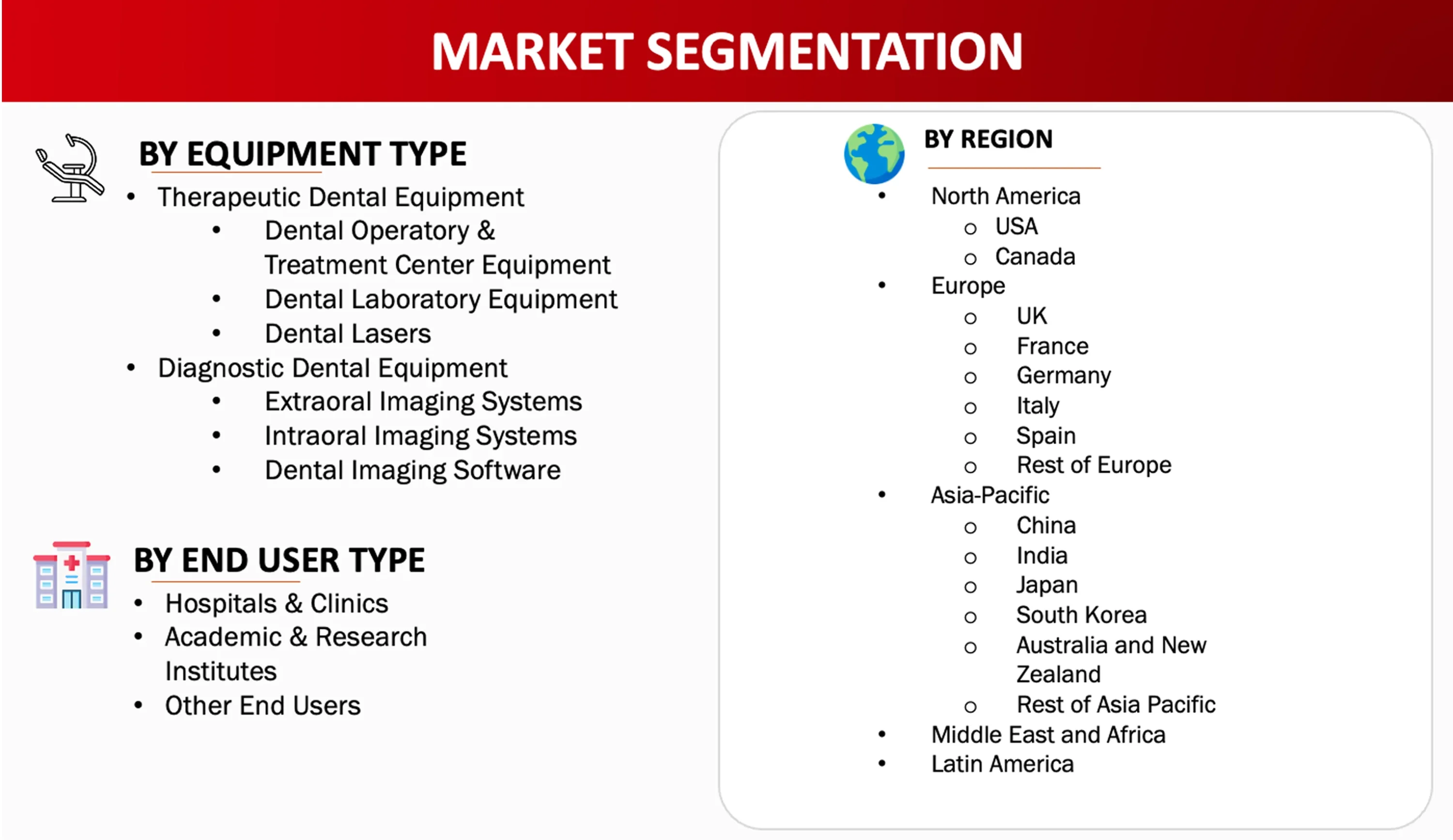
Dental Equipment Market Segmentation
Want detailed insights from this report?
Competitive Landscape and Market Segments Insights
- Increasing Competition Around Integrated Digital Dentistry Ecosystems: Competition is shifting from individual equipment sales toward connected workflows combining intraoral scanners, imaging, treatment-planning software, CAD/CAM manufacturing, and clinical services. Dentsply Sirona is expanding distribution partnerships to increase access to its CEREC systems, Primescan scanners, and extraoral imaging portfolio through established U.S. distributors, including Burkhart Dental Supply in February 2026.
- Straumann’s Expansion Beyond Implantology into Digital and Chairside Manufacturing: Straumann Group is broadening its competitive positioning through digital scanning, AI-supported planning, and in-clinic prosthetic manufacturing. In 2025, it launched the SIRIOS X3 intraoral scanner and Straumann Signature MIDAS chairside 3D printing solution, developed with SprintRay, extending its offering into same-visit restoration workflows.
- Strategic Distribution Partnerships Are Becoming Important for Market Penetration: Manufacturers are strengthening relationships with regional distributors to improve equipment accessibility, installation, technical servicing, and customer acquisition. Dentsply Sirona expanded its U.S. distribution network in 2026 through partnerships with Burkhart Dental Supply, Benco Dental, Patterson Dental, and Nashville Dental, supporting broader commercialization of its connected dental technology portfolio.
- Intensifying Competition in Digital Orthodontics and Scanning Technologies: Align Technology is strengthening its position through scanner innovation and digitally connected orthodontic workflows. At the 2026 American Association of Orthodontists Annual Session, it showcased the iTero Lumina scanner with a three-times-larger field of capture, alongside advancements in ClinCheck treatment planning and 3D-printed orthodontic attachments.
- Manufacturing Localization and Regional Capacity Expansion: Straumann Group is strengthening its manufacturing footprint to improve regional supply resilience and respond to local market requirements. In 2025, the company announced investments of CHF 60–80 million over five years at its Villeret facility in Switzerland and opened a new manufacturing campus in Shanghai, China, supporting local production and competitiveness.
- Competition Is Increasing Through AI-Enabled Imaging and Diagnostic Platforms: Equipment manufacturers are integrating AI into imaging portfolios to differentiate products beyond conventional radiography. Dentsply Sirona launched Smart View-Detect in May 2026, an FDA-cleared and CE-marked AI diagnostic aid for identifying teeth with periapical radiolucencies in CBCT scans. This creates competitive pressure on imaging manufacturers to develop clinically integrated diagnostic capabilities
Therapeutic dental equipment held the leading position by type in 2025: Its position is supported by the extensive use of treatment equipment across restorative dentistry, endodontics, periodontics, implantology, and oral surgery, alongside recurring requirements for clinical equipment and instrument replacement.
-
Strong dental equipment sales supported treatment-equipment demand: Henry Schein, Inc. (U.S.) reported global dental equipment sales growth of 12.2% in Q4 2025, with traditional equipment sales contributing substantially to U.S. growth.
-
Diversified treatment portfolios support commercial equipment sales: Envista Holdings Corporation (U.S.) reported USD 966.7 million in 2025 Equipment & Consumables sales, including restorative, endodontic, and other dental treatment products.
-
International equipment procurement demonstrated continued demand: Henry Schein reported 7.5% growth in international dental equipment sales during Q4 2025, with Germany, Brazil, Canada, and Australia recording particularly strong performance.
-
Integrated treatment portfolios strengthen equipment commercialization: Envista’s product portfolio includes restorative systems, endodontic equipment, infection-prevention products, and associated clinical solutions, supporting equipment requirements across multiple dental procedures.
Hospitals and clinics held the leading position by end user in 2025: These facilities represent the primary locations for routine dental consultations, diagnostic examinations, restorative procedures, surgical interventions, and specialized treatments, creating broad requirements for dental equipment.
-
Japan has an extensive base of dental treatment facilities: Japan’s Ministry of Health, Labour and Welfare reported 66,818 dental clinics in October 2023, representing a substantial institutional customer base for dental equipment manufacturers.
-
The U.S. has a large number of dental practice establishments: U.S. Census Bureau data identified 135,665 dental practice establishments in 2023, highlighting the scale of the clinical equipment procurement market.
-
A substantial professional workforce supports clinical equipment utilization: The American Dental Association reported 205,088 professionally active dentists in the U.S. in 2025, supporting demand for diagnostic and therapeutic equipment.
-
Dental care expenditure demonstrates the commercial scale of clinical services: U.S. national dental expenditure reached USD 189 billion in 2024, reflecting substantial economic activity across dental practices and treatment facilities.
North America held the leading regional position in 2025: The region benefits from established dental infrastructure, substantial dental care expenditure, advanced technology adoption, organized distribution networks, and recurring investment in modern clinical equipment.
-
Company revenue distribution demonstrates North America’s commercial importance: Envista Holdings Corporation reported that North America contributed 70% of its 2025 Equipment & Consumables segment sales, highlighting the region’s importance in its dental business.
-
Dental expenditure supports regional equipment investment: U.S. national dental expenditure reached USD 189 billion in 2024, demonstrating the scale of the underlying dental care economy.
-
Regional equipment sales recorded strong growth: Henry Schein reported 10.6% growth in U.S. dental equipment sales during Q4 2025, with traditional equipment contributing substantially to the increase.
-
Established distribution channels support market penetration: Envista reported that approximately 89% of its 2025 Equipment & Consumables segment sales were generated through channel partners, demonstrating the importance of established distribution networks.
What This Report Covers-
This report provides a comprehensive analysis of the dental equipment market, offering insights into key trends, growth drivers, challenges, and future opportunities. It is designed to support strategic decision-making through a combination of quantitative data and qualitative analysis.
Specifically, the report covers:

Market Overview & Definition:
Overview of the market scope, structure, and key terminology

Market Size & Forecast
Historical data and future projections across key segments and regions

Key Market Trends:
Insights into emerging trends, technological advancements, and evolving demand patterns

Drivers, Restraints & Opportunities:
Analysis of key factors influencing dental equipment market growth

Competitive Landscape:
Overview of major players, their strategies, and recent developments

Detailed Patent Analysis:
This includes, top assignees, geography focus of top assignees, legal status, technology evolution, key patents and patent trends and innovations

Segmentation Analysis:
Breakdown by equipment type, by end users type, by region.

Regional Insights:
Key regional trends and growth opportunities

Future Outlook:
Strategic insights and future market direction
Research Methodology
The study of the global dental equipment market is based on a combination of primary and secondary research methodologies, supported by data validation, dental equipment and technology mapping, product portfolio analysis, manufacturing capacity assessment, company revenue and segment performance analysis, dental care infrastructure evaluation, dental procedure and treatment volume assessment, regulatory and product approval analysis, end-user demand assessment, distribution channel evaluation, installed-base analysis, competitive benchmarking, trade-flow assessment, and analytical modelling to ensure accuracy and reliability.
Market Definition: Dental Equipment Market
The dental equipment market comprises devices, instruments, and systems used by dental professionals and healthcare providers for the diagnosis, prevention, treatment, and management of oral diseases and dental conditions. The market covers therapeutic dental equipment, including dental chairs and delivery systems, dental handpieces, operating lights, dental lasers, curing lights, ultrasonic scalers, implantology equipment, endodontic equipment, orthodontic equipment, and other instruments used in dental procedures. It also includes diagnostic dental equipment, such as dental imaging systems, including intraoral and extraoral X-ray systems, cone-beam computed tomography (CBCT) scanners, intraoral cameras, dental diagnostic lasers, and other examination and diagnostic devices.
The market covers equipment used across hospitals and dental clinics, academic and research institutes, and other end users, including dental laboratories and specialized healthcare facilities where applicable. It includes conventional and digitally enabled equipment, such as CAD/CAM systems, intraoral scanners, digital radiography systems, and computer-assisted dental technologies. Dental consumables, implants, prosthetic materials, orthodontic supplies, general medical equipment, and standalone dental practice management software are excluded unless explicitly included within the study scope.
Key Stakeholders
The dental equipment market involves a broad ecosystem of stakeholders:
- Dental Equipment Manufacturers
- Dental Imaging and Diagnostic Equipment Manufacturers
- Dental Chair and Delivery System Manufacturers
- Dental Handpiece and Instrument Manufacturers
- Dental CAD/CAM and Digital Dentistry Solution Provider
- Dental Laser and Advanced Treatment Equipment Manufacturers
- Dental Hospitals and Clinics
- Academic and Research Institutes
- Dental Laboratories
- Dental Service Organizations (DSOs) and Dental Clinic Networks
- Dental Equipment Distributors and Dealers
- Dental Regulatory and Standards Organizations
Key Objectives of the Study
- To define, describe, analyze, segment, and forecast the dental equipment market by equipment type, by end users type.
- To describe and forecast the market for five key regions: North America, Europe, Asia Pacific, Latin America, Middle-East & Africa
- To provide detailed information regarding key drivers, restraints, opportunities, and challenges influencing market growth
- To strategically analyze the micro indicators with respect to individual growth trends, prospects, and contributions to the overall market size
- To analyze opportunities for stakeholders in the dental equipment industry and emphasize on competitive landscape of the market
- To develop competitive benchmarking of the key market players based on technology specifications and end user
- To strategically profile key players and comprehensively analyze their product portfolio offerings, and core competencies
- To analyze competitive developments, such as launches and approvals, agreements, mergers and acquisitions, partnerships, joint ventures, investments and expansions, and collaborations, dental equipment domain
Need deeper insights on this market?
Get full report access with detailed forecasts, competitive analysis, and segmentation.
Research Approach
This research employs a systematic approach by using primary research along with secondary research to achieve full coverage and accuracy of information about the dental equipment sector. Through this approach, the current market trends in terms of consumer behaviour, technological developments, and competitive environment can be analysed thoroughly.
Secondary Research
Secondary research involves the collection of data from reliable sources such as industry databases, company annual reports, investor presentations, and regulatory filings. This process helps in understanding market trends, identifying key players, and gathering technical and commercial insights.
A comprehensive database of leading companies and market participants is developed through secondary research to support further analysis.
Primary Research
Primary research is conducted to validate findings from secondary research and to gain deeper insights into market dynamics. Interviews are carried out with industry stakeholders across both demand and supply sides, including executives such as CXOs, Vice Presidents, and Directors from business development, marketing, and product teams.
Data is collected through structured questionnaires, email interactions, and telephonic interviews across key regions including North America, Europe, Asia-Pacific, and Rest of the World.
Market Size Estimation
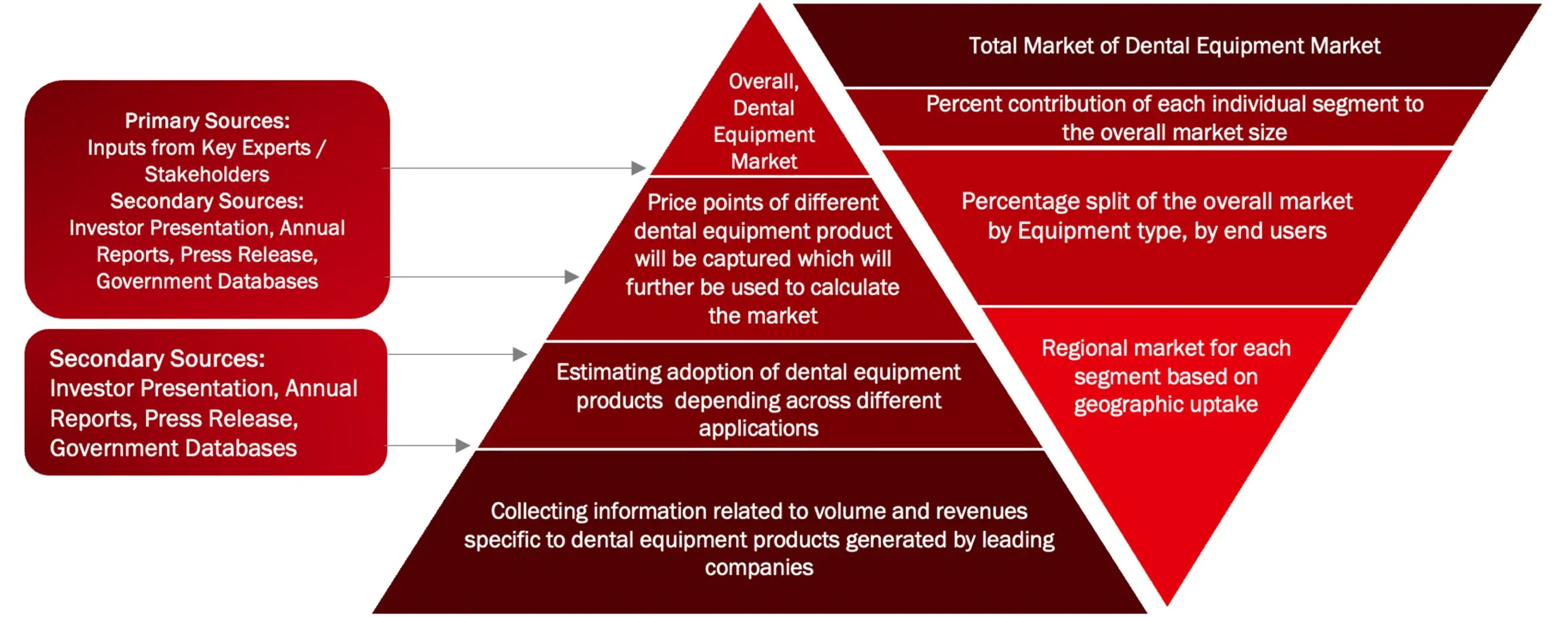
Market size estimation is performed using both top-down and bottom-up approaches. Key market players are identified, and their revenues are analysed to estimate the overall market size.
The market is further segmented based on:
- Product and service mapping across regions
- Adoption patterns across key application segments
- Insights gathered through primary and secondary research
Data Validation and Research Design
After estimating the overall market size, the data is validated using triangulation methods and market breakdown techniques to ensure accuracy and consistency. Both demand-side and supply-side factors are considered to refine the analysis.
The final data is validated through multiple sources to ensure reliability and to provide accurate insights across all market segments and regions.
Assumptions of the Study
The analysis of the dental equipment market is based on the following key assumptions:
- Trends in the industry are drawn from historical data and current information within the sector
- The future outlook is underpinned by constant economic conditions in the absence of shocks to the market
- The rate of adoption for dental equipment will rise steadily in all important regions
- The income statement and market share figures are estimated using available information from the industry and publicly available data
- The exchange rate and price trends will not be greatly affected during the forecast period
Scope and Limitations
This report offers an exhaustive overview of the international dental equipment market and includes the following components:
This report offers an exhaustive overview of the international dental equipment market and includes the following components:
- Summary of market size, growth trends, and projections
- Carefully segmented market based on by equipment type, by end users type.
- Discussion of primary factors influencing the market
- Competitor analysis
- Insights into regional and national market performance
Limitations of the Study
Despite the best efforts being made to keep the results accurate, the study does suffer from some limitations:
- It has been done using both primary and secondary data that come with their own constraints
- Rapid developments in technology might affect the future course of market dynamics
- Some figures are only approximations due to lack of public disclosure
- The report is not an insurance against any disruptions in macroeconomics and geopolitics
- Future forecasts are indicative and subject to change due to altered industry dynamics
Data Triangulation and Market Breakdown
Data triangulation involved the combination of primary research, secondary research, and the Wissen Research analysis. Once the data points were sourced from the secondary market research, we sanitized the data points to make the market sizing and growth forecast more accurate by developing our own assumptions based on the inputs and insights we gather through the primary interviews with the industry experts. Once the data was thoroughly validated through primary interviews from both, demand and supply side of the market, our team of analyst and other team members involved finalized the market sizing and growth forecast.
Data Triangulation Methodology
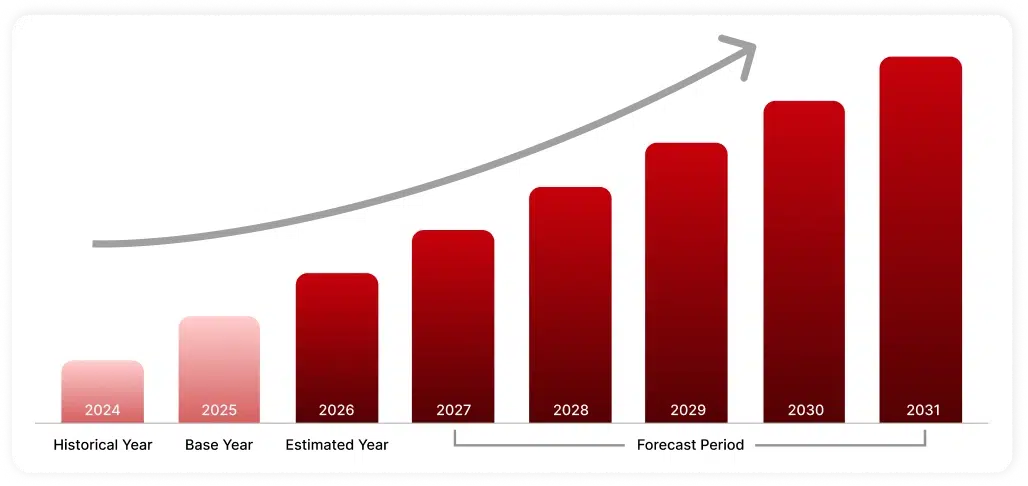
Year Framework
Bottom-Up Approach (Demand Side) And Top-Down Approach (Supply Side)
Bottom-Up Approach (Demand-Side Approach)
Determining the market size through the consolidation of demand among end-users, sectors, and geographic areas, which are calculated according to real-world demand conditions.
Top-Down Approach (Supply-Side Approach)
Calculating the market size through revenue and performance of the industry and its important companies, allocating the market size among various sectors.
Want detailed insights from this report?
Buy this Report
Choose the option that best fits your needs