
Digital Diabetes Management Market
Global Industry analysis, Size, Share, Growth, Trends, and Forecast 2026-2031
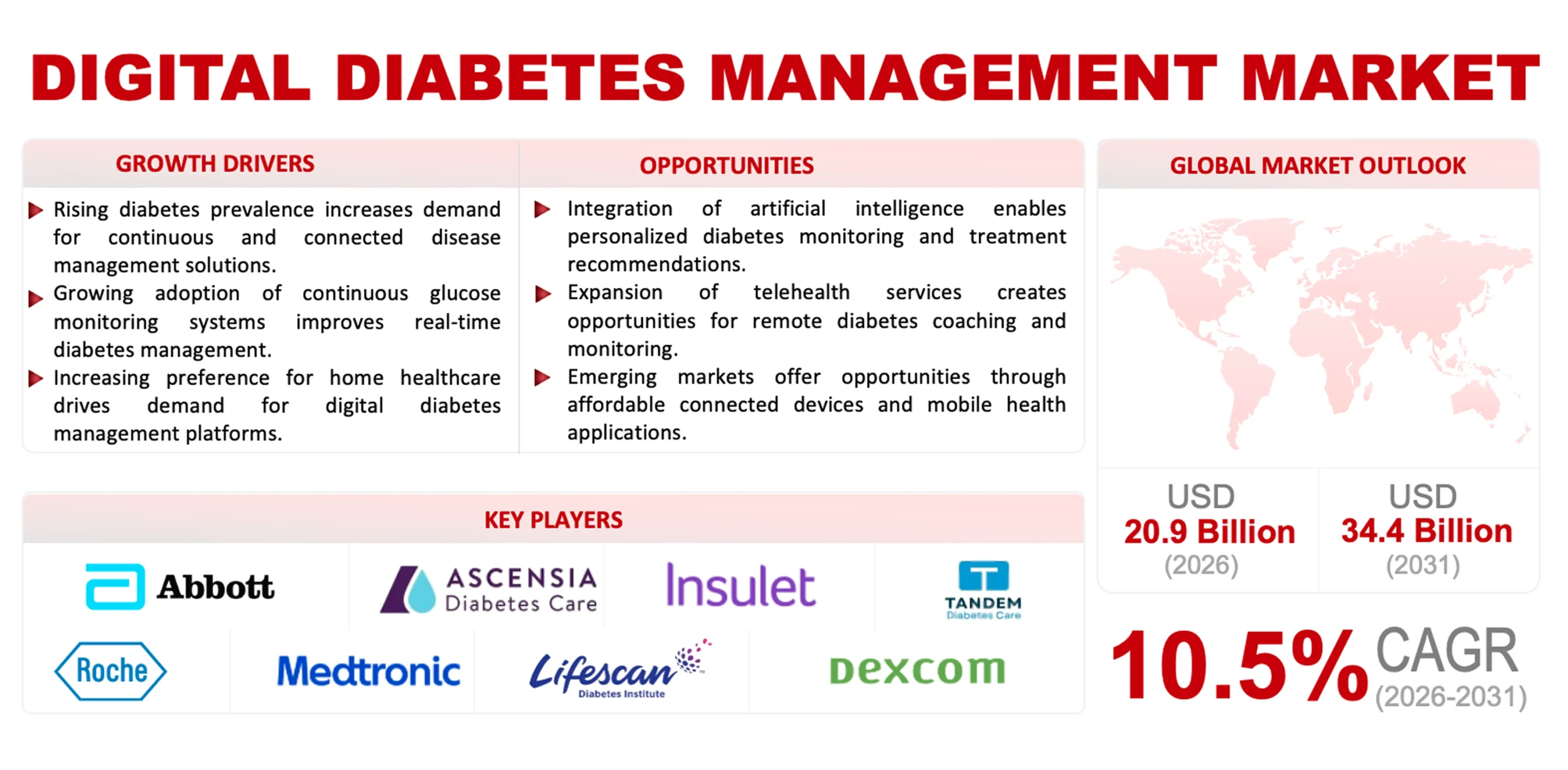
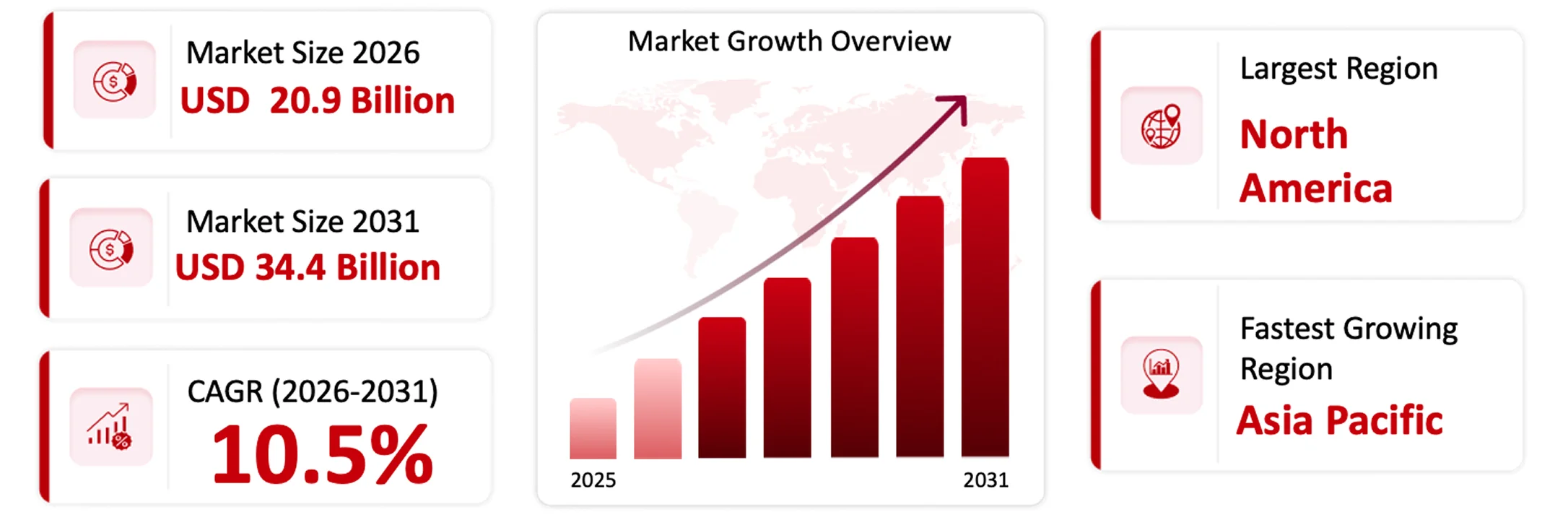
The market is estimated to be USD 20.9 Billion in 2026 and is projected to reach USD 34.4 billion by 2031, growing at a CAGR of 10.5 % during the forecast period (2026-2031).
| Market Size (2026) | Forecast (2031) | CAGR (2026–2031) | Leading Region | Fastest Growing Region |
|---|---|---|---|---|
| USD 20.9 Billion | USD 34.4 Billion | 10.5 % | North America | Asia Pacific |
Summarize this report with:



Global Digital Diabetes Management Market Overview
“In my view the global digital diabetes management market is evolving from conventional glucose monitoring toward connected, data-driven diabetes care. Increasing adoption of continuous glucose monitoring (CGM), smart insulin delivery devices, and mobile-based diabetes applications is enabling patients to track glucose levels and manage treatment more consistently outside clinical settings. The growing integration of cloud-based platforms, artificial intelligence, and remote patient monitoring is also changing how healthcare professionals assess patient data and adjust treatment. According to Glooko’s 2025 Global Diabetes Report, remote diabetes data uploads surpassed in-clinic uploads in early 2024, reflecting a shift toward home-based monitoring. These developments are strengthening the role of digital solutions in routine diabetes management.”
– Mayur Jain, Research Consultant, Wissen Research
The market is estimated to be USD 20.9 Billion in 2026 and is projected to reach USD 34.4 billion by 2031, growing at a CAGR of 10.5 % during the forecast period (2026-2031).
Technology Overview
Digital diabetes management technology combines connected medical devices, software platforms, and data analytics to support continuous glucose monitoring and personalized treatment. Key technologies include continuous glucose monitoring (CGM), automated insulin delivery (AID), smart insulin pens, and cloud-based diabetes management platforms. AID systems integrate CGM sensors, insulin pumps, and control algorithms to automate insulin delivery based on glucose readings. Mobile applications and remote monitoring platforms enable patients and healthcare professionals to review glucose trends, track medication adherence, and adjust treatment. Artificial intelligence is increasingly being incorporated into predictive analytics and clinical decision-support tools, supporting more personalized and proactive diabetes management.
Key Growth Drivers
- Increasing adoption of continuous glucose monitoring (CGM) is shifting diabetes management from periodic finger-prick testing toward real-time glucose tracking, enabling patients and clinicians to identify glucose fluctuations and make timely treatment adjustments.
- Expansion of automated insulin delivery systems is driving demand for connected diabetes technologies by integrating glucose sensors, insulin pumps, and dosing algorithms to reduce manual insulin calculations and daily treatment burden.
- Growing use of digital diabetes solutions among insulin-treated Type 2 diabetes patients is expanding the addressable user base as CGM and connected insulin delivery technologies become relevant beyond traditional Type 1 diabetes management.
- Increasing reimbursement coverage for diabetes monitoring devices is improving affordability and adoption, particularly as insurers and public healthcare programs extend coverage to patients requiring insulin therapy or experiencing problematic hypoglycemia.
- Rising demand for remote diabetes monitoring is encouraging healthcare providers to adopt connected platforms that allow clinicians to review glucose records, identify deteriorating glycemic control, and adjust treatment without frequent in-person consultations.
- Integration of CGM data with smartphones, electronic health records, and connected insulin devices is increasing the practical value of digital platforms by consolidating fragmented patient information into more accessible treatment-management systems.
Digital Diabetes Management Market Key Highlights
Need deeper insights on this market?
Get full report access with detailed forecasts, competitive analysis, and segmentation.
Digital Diabetes Management Market Trends
The global digital diabetes management market is witnessing a shift toward continuous, connected, and personalized diabetes care. Traditional blood glucose monitoring is increasingly complemented by continuous glucose monitoring (CGM), automated insulin delivery, and cloud-connected platforms. Healthcare providers are increasingly using remote patient monitoring to review glucose data and support treatment adjustments between consultations. Another notable trend is the expansion of digital diabetes technologies beyond Type 1 diabetes patients toward insulin-treated and non-insulin-treated Type 2 diabetes populations. Additionally, artificial intelligence, smartphone integration, and interoperable medical devices are improving data accessibility, treatment personalization, and the automation of routine diabetes management.
Shift Toward Remote Diabetes Monitoring and Cloud-Connected Care
Diabetes management is increasingly moving from clinic-dependent data collection toward continuous remote monitoring, supported by connected glucose sensors, smartphone applications, and cloud-based platforms. Patients can share glucose readings with healthcare professionals without requiring physical device downloads during clinic visits.
• Glooko’s 2025 Global Diabetes Report found that remote diabetes data uploads surpassed in-clinic uploads in early 2024, demonstrating a shift toward home-based data sharing.
• By the end of 2024, remote uploads were approximately 1.5 times higher than in-clinic uploads, according to Glooko’s analysis.
• The report tracked diabetes device synchronization across North America and Europe, Middle East and Africa (EMEA), covering the period from June 2020 to June 2025.
• Cloud-connected CGM devices and mobile applications are enabling healthcare professionals to review glucose patterns, assess time-in-range, and identify recurring glucose fluctuations between scheduled appointments.
Expansion of CGM and Automated Insulin Delivery into Type 2 Diabetes Management
Digital diabetes technologies are increasingly extending beyond traditional Type 1 diabetes applications into Type 2 diabetes management. CGM manufacturers and insulin delivery companies are developing products and expanding regulatory indications to serve a broader patient population, including individuals who do not follow intensive insulin therapy.
• The International Diabetes Federation (IDF) estimated that 589 million adults were living with diabetes globally in 2024, with the number projected to reach 853 million by 2050, creating a substantial long-term population requiring diabetes management solutions.
• In August 2024, the U.S. FDA expanded the indication for Insulet’s SmartAdjust automated insulin delivery technology to include adults with Type 2 diabetes, extending its application beyond Type 1 diabetes.
• Dexcom’s 2026 State of Type 2 Diabetes Report, based on surveys across eight countries, found that 58% of surveyed Type 2 diabetes patients using GLP-1 medications also used CGM, compared with 27% of Type 2 diabetes patients not using insulin.
• The same survey found that 89% of surveyed healthcare professionals believed CGM helped them assess treatment adherence between appointments, highlighting its growing relevance in routine Type 2 diabetes care.
Key Players in the Digital Diabetes Management Market
Leading companies in the global digital diabetes management market are focusing on continuous glucose monitoring (CGM), automated insulin delivery systems, connected insulin pens, cloud-based diabetes management platforms, and AI-enabled glucose analytics. Companies are also expanding product indications, strengthening device interoperability, improving sensor accuracy, and extending geographic reach through distribution partnerships and regulatory approvals.








Strategic Activities Within the Digital Diabetes Management Market
Tandem Diabetes Care, Inc. (U.S.) received multiple Health Canada approvals for its t:slim X2 insulin pump with Control-IQ+ automated insulin delivery technology. The approvals include compatibility with Abbott’s FreeStyle Libre 3 Plus sensor and expanded indications for adults with Type 2 diabetes and individuals with Type 1 diabetes during pregnancy. The development strengthens Tandem’s interoperable insulin delivery portfolio and expands its potential patient population in Canada. Commercial availability of the expanded indications and sensor compatibility is expected in the second quarter of 2027.
DexCom, Inc. (U.S.) announced the Canadian launch of its Dexcom G7 15 Day Continuous Glucose Monitoring System, offering up to 15.5 days of sensor wear with an overall mean absolute relative difference (MARD) of 8.0%. The company also announced public reimbursement for eligible individuals with Type 1 and Type 2 diabetes beginning in November 2026, alongside coverage through participating private health plans. The launch strengthens Dexcom’s Canadian market presence while addressing sensor replacement frequency and affordability barriers.
Insulet Corporation (U.S.) announced the full U.S. market release of Omnipod Discover, a web-based diabetes data management platform for Omnipod 5 users, caregivers, and healthcare professionals. The platform provides personalized glucose and insulin delivery reports, visualizes therapy patterns, and supports clinical decision-making through integrated glucose and insulin delivery information. During its limited market release, the platform had already been adopted by more than 15,000 Omnipod 5 users and 1,800 healthcare professionals, demonstrating demand for connected diabetes data management solutions.
Abbott Laboratories (U.S.) announced a multi-year strategic partnership with Google Health to integrate glucose insights from Abbott’s Lingo over-the-counter continuous glucose monitoring (CGM) system with Google’s AI-powered health technology. The collaboration includes a large-scale research study to improve AI-based health coaching and develop personalized metabolic insights by combining glucose readings with information on nutrition, physical activity, sleep, and stress. The partnership strengthens Abbott’s digital health ecosystem and expands the application of CGM data beyond conventional diabetes monitoring.
Digital Diabetes Management Market Insights
The global digital diabetes management market is expanding as healthcare systems increasingly adopt connected technologies for glucose monitoring, insulin delivery, and long-term disease management. The growing diabetic population, increasing use of continuous glucose monitoring (CGM), and integration of digital health platforms into routine clinical care are expanding demand. According to the International Diabetes Federation (IDF), approximately 589 million adults aged 20–79 years were living with diabetes in 2024, with the number projected to reach 853 million by 2050. The increasing need for continuous disease monitoring, personalized treatment, and remote patient management is creating sustained opportunities for device manufacturers and digital healthcare providers.
Digital diabetes management technologies are primarily used for blood glucose monitoring, insulin delivery, diabetes data management, and remote patient monitoring. CGM systems support real-time glucose tracking and help patients identify glucose fluctuations, while smart insulin pens and automated insulin delivery systems improve insulin administration and treatment management. Mobile applications enable users to record glucose readings, monitor medication adherence, and track lifestyle factors, including nutrition and physical activity. Healthcare providers also use cloud-based platforms to review patient glucose records, assess time-in-range, and support treatment adjustments. These applications serve Type 1 diabetes, insulin-treated Type 2 diabetes, gestational diabetes monitoring, and broader diabetes self-management.
Expansion of digital diabetes management into emerging economies presents significant opportunities for device manufacturers and healthcare technology providers. Low- and middle-income countries represent an important opportunity because 81% of adults living with diabetes globally reside in these economies, according to the IDF. Companies can address unmet demand through affordable CGM systems, smartphone-based monitoring applications, localized digital platforms, and subscription-based services. Additional opportunities exist in integrating diabetes management software with electronic health records, telemedicine platforms, and hospital information systems. Development of AI-enabled glucose prediction, automated insulin delivery, and personalized treatment solutions also offers opportunities to expand product portfolios and strengthen recurring revenue streams.
The global digital diabetes management market faces challenges related to device affordability, reimbursement limitations, data interoperability, and unequal access to digital healthcare infrastructure. CGM sensors, insulin pumps, and associated consumables involve recurring costs, restricting adoption among patients without adequate insurance coverage. In developing economies, limited reimbursement frameworks and out-of-pocket healthcare expenditure can further constrain access. Integration between devices from different manufacturers also remains challenging because of differences in data formats and software compatibility. Additionally, patient data privacy, cybersecurity risks, inconsistent internet connectivity, and limited digital health literacy can affect the implementation of connected diabetes management platforms across healthcare systems.
Asia-Pacific is positioned for strong growth in the global digital diabetes management market, supported by its substantial diabetic population, increasing healthcare digitization, and growing demand for accessible chronic disease monitoring. According to the IDF Diabetes Atlas 2025, the Western Pacific region alone accounted for approximately 215.4 million adults living with diabetes in 2024, while South-East Asia accounted for another 106.9 million. The number of adults with diabetes in South-East Asia is projected to increase by 73%, reaching 184.5 million by 2050. China, India, Indonesia, and Japan offer substantial opportunities for CGM manufacturers, connected insulin delivery providers, and digital health platforms.
Digital Diabetes Management Market Dynamics
Drivers: Increasing Clinical Adoption of Continuous Glucose Monitoring (CGM)
- A 2025 randomized controlled trial involving 72 adults with Type 2 diabetes not taking insulin found that CGM users increased time-in-range from 46% to 72% over six months.
- The same trial reported a 1.3-percentage-point reduction in HbA1c over six months, demonstrating the clinical value of CGM beyond conventional insulin-treated patient populations.
- A 2024 clinical study involving 47 non-insulin-treated Type 2 diabetes patients recorded an improvement in time-in-range from 57.8% to 82.8% following CGM use.
- The 2024 study also reported a reduction in average glucose levels from 184.0 mg/dL to 147.2 mg/dL, supporting CGM’s role in treatment monitoring.
- These clinical outcomes are encouraging healthcare providers to incorporate connected glucose monitoring into treatment pathways, expanding demand beyond traditional intensive insulin management.
Challenges: High Recurring Costs and Limited Affordability of Digital Glucose Monitoring Devices
- A 2025 study examining six low- and middle-income countries found that continuous or flash glucose monitoring sensors were available primarily through online channels.
- The same study reported CGM sensor prices of approximately USD 88–107 per sensor, creating affordability barriers in price-sensitive healthcare markets.
- Purchasing one month’s supply of continuous or flash glucose monitoring sensors required approximately 15–65 days of wages across the countries examined.
- Public-sector availability of conventional blood glucose meters ranged from 0% to 57%, while test-strip availability ranged from 0% to 53%, indicating broader monitoring-access limitations.
- In the U.S., Medicare CGM coverage remains conditional on insulin treatment or documented problematic hypoglycemia, limiting reimbursement eligibility for some other diabetes populations.
Opportunities: Expansion of CGM Applications into Non-Insulin-Treated Diabetes Populations
- In March 2024, the U.S. FDA cleared Dexcom’s Stelo, the first over-the-counter CGM system, for adults aged 18 years and older who do not use insulin.
- Stelo supports sensor wear for up to 15 days and provides glucose readings every 15 minutes through a connected smartphone application.
- In May 2024, the FDA cleared Abbott’s Lingo glucose monitoring system for over-the-counter use, creating another commercial entry into non-prescription glucose monitoring.
- In June 2024, the FDA also cleared Abbott’s Libre Rio CGM system, specifically designed for adults with Type 2 diabetes who do not use insulin.
- In June 2026, the FDA extended Stelo’s OTC clearance to children aged two years and older who do not use insulin, opening an additional pediatric application segment.
Technology and Market Insights
Digital diabetes management is advancing through the integration of continuous glucose monitoring (CGM), automated insulin delivery (AID), smart insulin pens, and AI-enabled analytics. Interoperable systems that connect glucose sensors with insulin pumps and smartphone applications are improving treatment automation and data accessibility. Manufacturers are increasingly developing systems that combine real-time glucose readings with predictive algorithms to support insulin dosing decisions, identify glucose fluctuations, and reduce manual intervention. Expansion of over-the-counter CGM devices is also extending digital monitoring technologies to non-insulin-treated populations.
Technology Scope and Products
Digital Diabetes Management Market Segmentation
Want detailed insights from this report?
Competitive Landscape and Market Segments Insights
Strategic partnerships are strengthening integrated diabetes management ecosystems: Medtronic and Abbott expanded their collaboration through the integration of Abbott’s Instinct CGM sensor with Medtronic’s MiniMed 780G and MiniMed Go systems, combining glucose sensing with insulin delivery and connected dosing applications.
Competition is shifting toward smart insulin delivery beyond traditional pump users: In January 2026, Medtronic received FDA clearance for MiniMed Go, integrating its InPen smart insulin pen with Abbott’s Instinct sensor to serve patients using multiple daily insulin injections.
Geographic expansion is becoming an important competitive strategy: In July 2026, Insulet launched Omnipod 5 in Spain, making the automated insulin delivery system available in 20 countries and expanding its European commercial footprint.
Companies are increasingly competing through software and data-management capabilities: Insulet introduced Omnipod Discover in Spain in July 2026, providing web-based diabetes analytics and reporting for patients, caregivers, and healthcare professionals alongside its insulin delivery portfolio.
Product innovation is moving toward fully automated insulin delivery: During 2026, Insulet, MiniMed, and Tandem pursued fully closed-loop systems designed to reduce or eliminate manual meal announcements and insulin bolus inputs, representing an important competitive technology frontier.
Regulatory compliance and manufacturing quality are becoming critical competitive differentiators: In February 2026, the FDA issued a warning letter to Abbott concerning FreeStyle Libre manufacturing and performance testing, highlighting the importance of quality assurance and regulatory compliance in CGM competition.
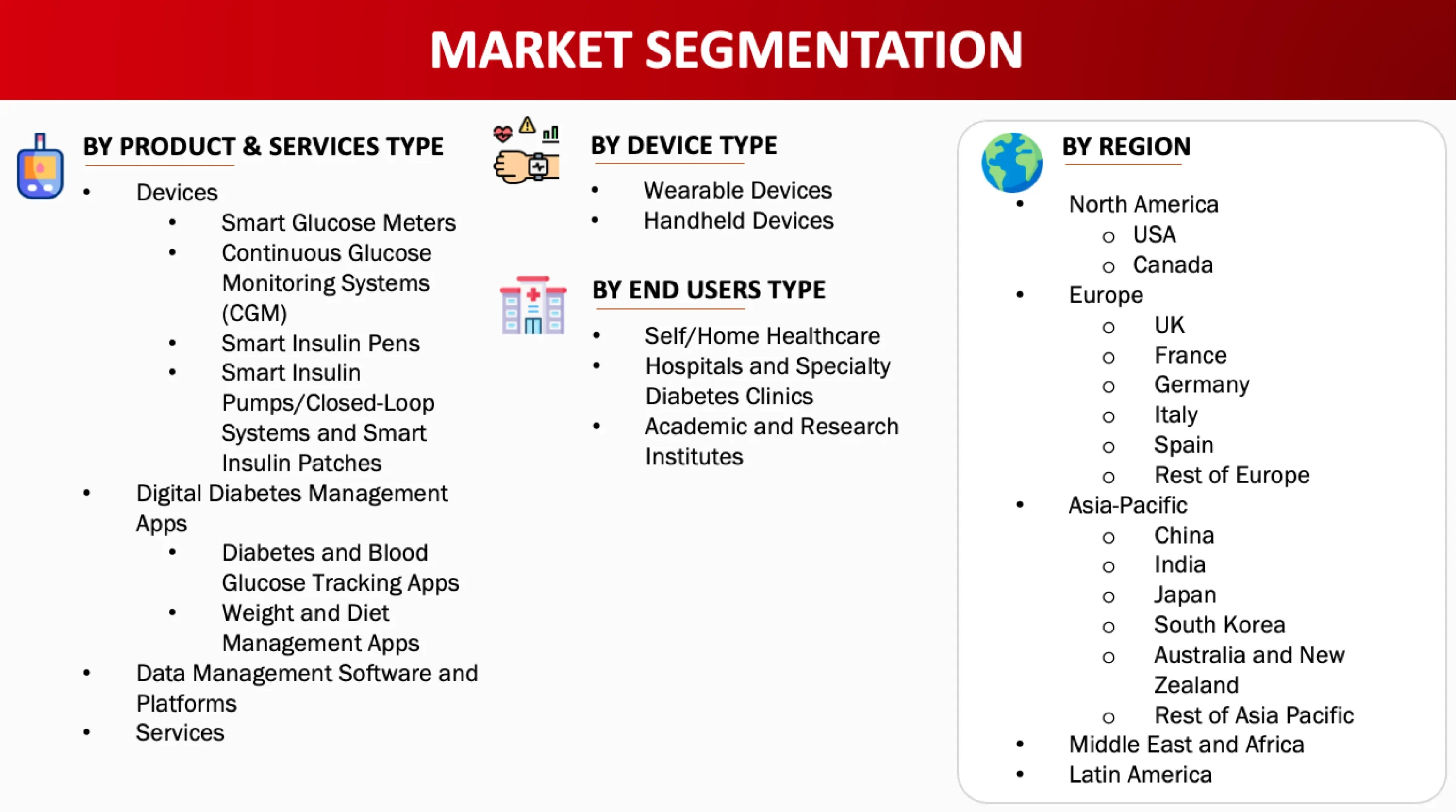
Devices held a leading position in 2025, supported by strong commercial adoption of continuous glucose monitoring (CGM) systems, insulin pumps, and connected glucose-monitoring technologies. These products generate recurring demand through sensor replacements, disposable insulin delivery components, and associated consumables.
-
CGM systems generate substantial commercial revenue: Abbott Laboratories (U.S.) reported USD 7.6 billion in CGM sales in 2025, representing 17.4% growth compared with USD 6.4 billion in 2024, demonstrating the commercial scale of connected glucose-monitoring devices.
-
Wearable glucose-monitoring devices have achieved substantial user penetration: Abbott’s 2025 Annual Report reported that its FreeStyle Libre portfolio supported more than 8 million users worldwide, highlighting the adoption of wearable glucose-monitoring technologies.
-
Connected insulin delivery devices are generating significant recurring revenue: Insulet Corporation (U.S.) reported USD 2.67 billion in Omnipod product revenue in 2025, representing 31.6% growth over 2024, reflecting demand for wearable insulin delivery systems.
-
CGM manufacturers continue to expand their global customer base: Dexcom, Inc. (U.S.) reported USD 4.66 billion in revenue in 2025, representing 16% annual growth, supported by broader coverage, customer-base expansion, and increasing global CGM adoption.
Wearable devices held a leading position within the device category in 2025, driven by increasing adoption of skin-worn CGM sensors, patch-based insulin pumps, and automated insulin delivery systems. Their ability to provide continuous monitoring and support ongoing treatment without repeated manual measurements strengthens their clinical and commercial relevance.
-
Large-scale CGM adoption supports wearable device demand: Abbott reported that more than 8 million people worldwide used its FreeStyle Libre portfolio in its 2025 Annual Report, demonstrating the substantial installed user base of wearable glucose sensors.
-
Wearable insulin delivery systems are expanding internationally: Insulet reported more than 600,000 estimated active Omnipod users globally at the end of 2025, reflecting adoption of its tubeless, wearable insulin pump technology.
-
CGM adoption is generating substantial device revenue: Dexcom reported USD 4.66 billion in 2025 revenue, with U.S. revenue growing 15% and international revenue increasing 16%, reflecting demand for wearable glucose-monitoring systems.
-
Wearable device portfolios are expanding through sensor interoperability: Insulet expanded Omnipod 5 integration with Dexcom G7 across five additional countries during 2025 and introduced integration with Abbott’s FreeStyle Libre 2 Plus in Australia, strengthening its connected wearable-device ecosystem.
North America held a leading position in 2025, supported by established CGM adoption, comparatively developed reimbursement infrastructure, strong medical-device commercialization, and the presence of major digital diabetes management manufacturers. The United States remains a major commercial market for connected glucose monitoring and insulin delivery technologies.
-
The United States represents a major CGM revenue market: Abbott reported USD 7.6 billion in global CGM sales in 2025, supported by continued growth in both U.S. and international markets, demonstrating the commercial scale of its glucose-monitoring portfolio.
-
Major manufacturers generate substantial revenue from the U.S. market: Insulet reported USD 1.92 billion in U.S. Omnipod revenue in 2025, compared with USD 754.3 million internationally, highlighting the importance of North America to connected insulin delivery sales.
-
CGM manufacturers continue to expand their U.S. commercial coverage: Dexcom reported 15% U.S. revenue growth in 2025, supported by broader insurance coverage and increasing adoption of its continuous glucose monitoring portfolio.
-
Regulatory developments are expanding the addressable consumer population: The U.S. FDA cleared Dexcom’s Stelo in March 2024 as the first over-the-counter CGM system, opening a new commercial channel for eligible adults with diabetes who do not use insulin.
What This Report Covers-
This report provides a comprehensive analysis of the digital diabetes management market, offering insights into key trends, growth drivers, challenges, and future opportunities. It is designed to support strategic decision-making through a combination of quantitative data and qualitative analysis.
Specifically, the report covers:

Market Overview & Definition:
Overview of the market scope, structure, and key terminology

Market Size & Forecast
Historical data and future projections across key segments and regions

Key Market Trends:
Insights into emerging trends, technological advancements, and evolving demand patterns

Drivers, Restraints & Opportunities:
Analysis of key factors influencing digital diabetes management market growth

Competitive Landscape:
Overview of major players, their strategies, and recent developments

Detailed Patent Analysis:
This includes, top assignees, geography focus of top assignees, legal status, technology evolution, key patents and patent trends and innovations

Segmentation Analysis:
Breakdown by product & services type, by devices type, by end users type, by region.

Regional Insights:
Key regional trends and growth opportunities

Future Outlook:
Strategic insights and future market direction
Research Methodology
The study of the global digital diabetes management market is based on a combination of primary and secondary research methodologies, supported by data validation, device and technology mapping, diabetes patient population analysis, CGM and insulin delivery adoption assessment, company revenue and product portfolio analysis, regulatory approval and reimbursement assessment, digital health platform evaluation, end-user demand analysis, installed device base assessment, competitive benchmarking, regional adoption analysis, and analytical modelling to ensure accuracy and reliability.
Market Definition: Digital Diabetes Management Market
The digital diabetes management market comprises connected medical devices, software applications, data management platforms, and digital healthcare services used to monitor, manage, and support diabetes treatment through digital technologies. The market covers devices such as continuous glucose monitoring (CGM) systems, flash glucose monitoring systems, connected blood glucose meters, insulin pumps, automated insulin delivery systems, and smart insulin pens.
The market includes digital diabetes management applications, cloud-based data management platforms, remote patient monitoring software, glucose data analytics, AI-enabled predictive monitoring, clinical decision-support solutions, and connected patient engagement services. These solutions support glucose monitoring, insulin administration, treatment adherence, diabetes self-management, and remote clinical monitoring. End users include self/home healthcare, hospitals and specialty diabetes clinics, and academic and research institutes. The market excludes conventional non-connected glucose monitoring devices, standalone pharmaceutical products, insulin and other diabetes medications, general-purpose fitness applications, and medical devices without digital diabetes management functionality unless explicitly included in the study scope.
Key Stakeholders
The digital diabetes management market involves a broad ecosystem of stakeholders
- Continuous Glucose Monitoring (CGM) Device Manufacturers
- Blood Glucose Monitoring Device Manufacturers
- Insulin Pump and Automated Insulin Delivery Manufacturers
- Smart Insulin Pen Manufacturers
- Digital Diabetes Management Application Providers
- Diabetes Data Management Software and Platform Providers
- Remote Patient Monitoring and Telehealth Providers
- Hospitals and Specialty Diabetes Clinics
- Endocrinologists and Diabetes Care Professionals
- Health Insurance Companies and Reimbursement Providers
- Academic and Clinical Research Institutes
- Regulatory Authorities and Medical Device Approval Organizations
Key Objectives of the Study
- To define, describe, analyze, segment, and forecast the digital diabetes management market by product & services , by device type, by end users
- To describe and forecast the market for five key regions: North America, Europe, Asia Pacific, Latin America, Middle-East & Africa
- To provide detailed information regarding key drivers, restraints, opportunities, and challenges influencing market growth
- To strategically analyze the micro indicators with respect to individual growth trends, prospects, and contributions to the overall market size
- To analyze opportunities for stakeholders in the digital diabetes management industry and emphasize on competitive landscape of the market
- To develop competitive benchmarking of the key market players based on technology specifications and end user
- To strategically profile key players and comprehensively analyze their product portfolio offerings, and core competencies
- To analyze competitive developments, such as launches and approvals, agreements, mergers and acquisitions, partnerships, joint ventures, investments and expansions, and collaborations, digital diabetes management domain
Need deeper insights on this market?
Get full report access with detailed forecasts, competitive analysis, and segmentation.
Research Approach
This research employs a systematic approach by using primary research along with secondary research to achieve full coverage and accuracy of information about the digital diabetes management sector. Through this approach, the current market trends in terms of consumer behaviour, technological developments, and competitive environment can be analysed thoroughly.
Secondary Research
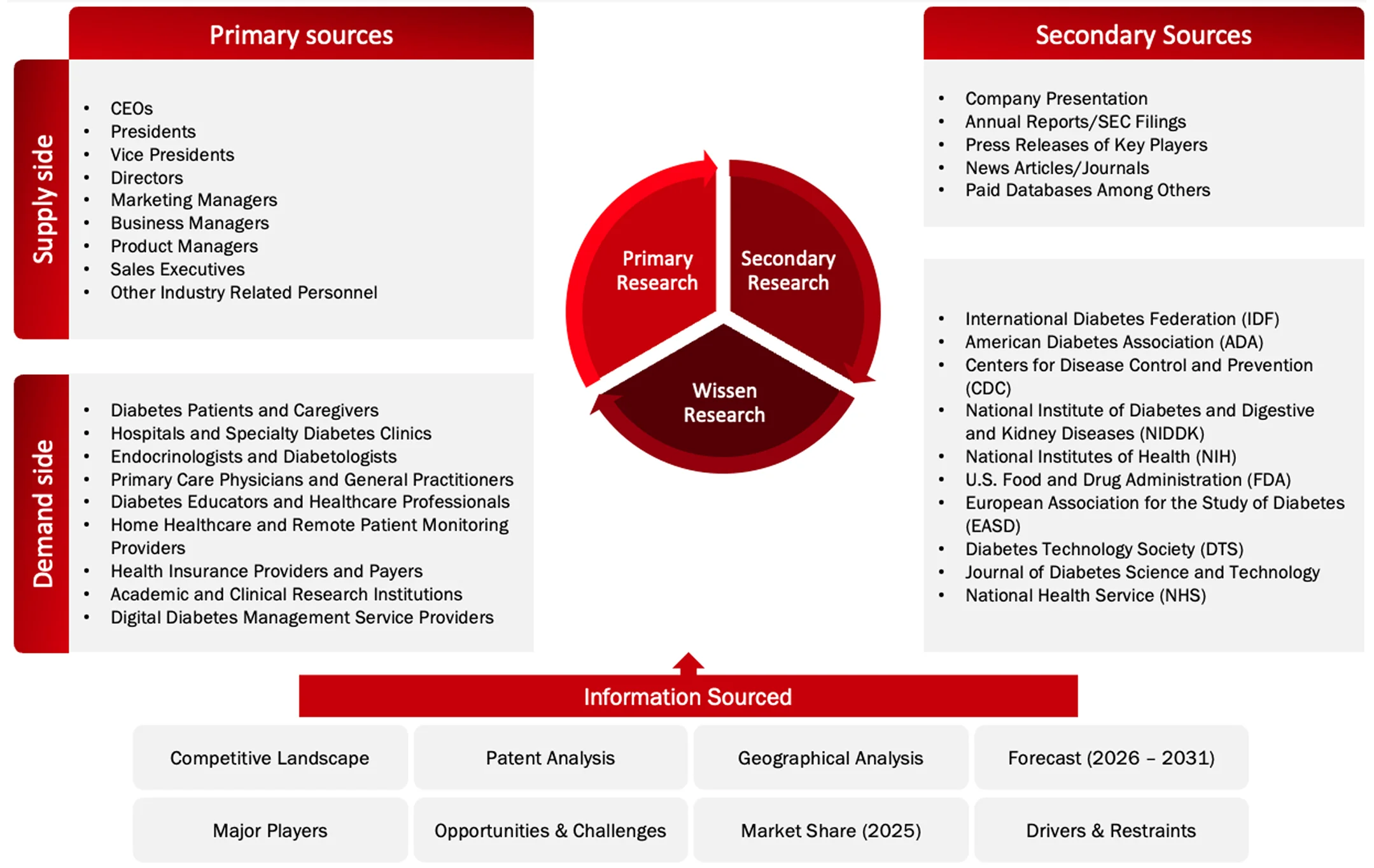
Secondary research involves the collection of data from reliable sources such as industry databases, company annual reports, investor presentations, and regulatory filings. This process helps in understanding market trends, identifying key players, and gathering technical and commercial insights.
A comprehensive database of leading companies and market participants is developed through secondary research to support further analysis.
Primary Research
Primary research is conducted to validate findings from secondary research and to gain deeper insights into market dynamics. Interviews are carried out with industry stakeholders across both demand and supply sides, including executives such as CXOs, Vice Presidents, and Directors from business development, marketing, and product teams.
Data is collected through structured questionnaires, email interactions, and telephonic interviews across key regions including North America, Europe, Asia-Pacific, and Rest of the World.
Market Size Estimation
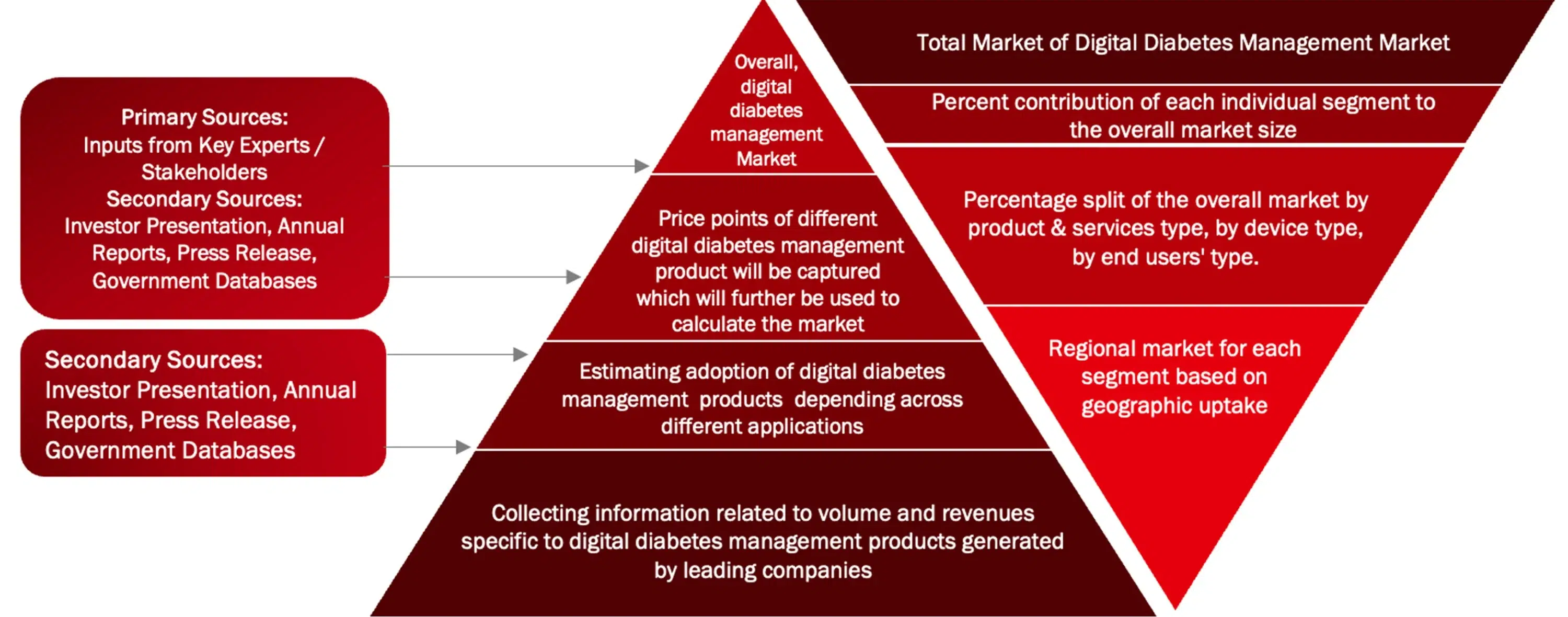
Market size estimation is performed using both top-down and bottom-up approaches. Key market players are identified, and their revenues are analysed to estimate the overall market size.
The market is further segmented based on:
- Product and service mapping across regions
- Adoption patterns across key application segments
- Insights gathered through primary and secondary research
Data Validation and Research Design
After estimating the overall market size, the data is validated using triangulation methods and market breakdown techniques to ensure accuracy and consistency. Both demand-side and supply-side factors are considered to refine the analysis.
The final data is validated through multiple sources to ensure reliability and to provide accurate insights across all market segments and regions.
Assumptions of the Study
The analysis of the digital diabetes management market is based on the following key assumptions:
- Trends in the industry are drawn from historical data and current information within the sector
- The future outlook is underpinned by constant economic conditions in the absence of shocks to the market
- The rate of adoption for digital diabetes management will rise steadily in all important regions
- The income statement and market share figures are estimated using available information from the industry and publicly available data
- The exchange rate and price trends will not be greatly affected during the forecast period
Scope and Limitations
Scope of the Study
This report offers an exhaustive overview of the international digital diabetes management market and includes the following components
- Summary of market size, growth trends, and projections
- Carefully segmented market based on by product & services, by device type, by end users
- Discussion of primary factors influencing the market
- Competitor analysis
- Insights into regional and national market performance
Limitations of the Study
Despite the best efforts being made to keep the results accurate, the study does suffer from some limitations:
- It has been done using both primary and secondary data that come with their own constraints
- Rapid developments in technology might affect the future course of market dynamics
- Some figures are only approximations due to lack of public disclosure
- The report is not an insurance against any disruptions in macroeconomics and geopolitics
- Future forecasts are indicative and subject to change due to altered industry dynamics
Data Triangulation and Market Breakdown
Data triangulation involved the combination of primary research, secondary research, and the Wissen Research analysis. Once the data points were sourced from the secondary market research, we sanitized the data points to make the market sizing and growth forecast more accurate by developing our own assumptions based on the inputs and insights we gather through the primary interviews with the industry experts. Once the data was thoroughly validated through primary interviews from both, demand and supply side of the market, our team of analyst and other team members involved finalized the market sizing and growth forecast.
Data Triangulation Methodology
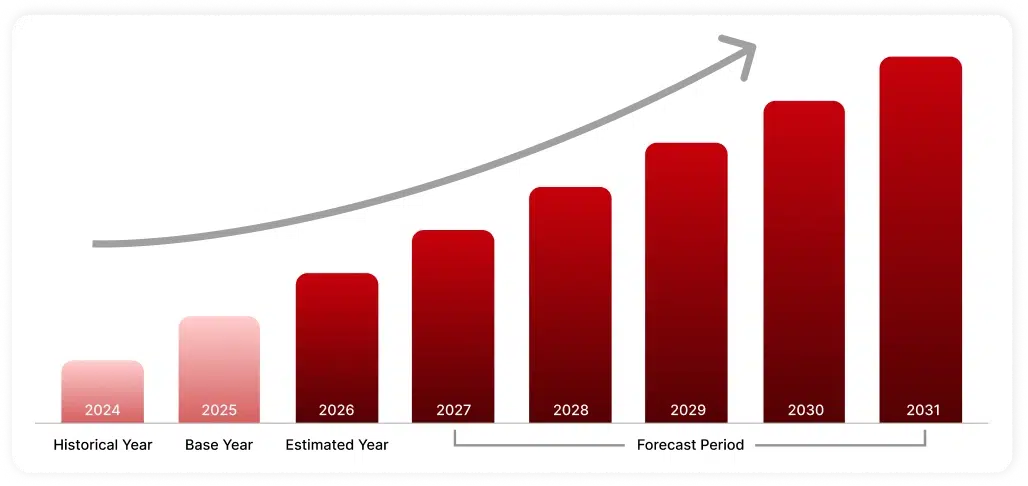
Year Framework
Bottom-Up Approach (Demand Side) And Top-Down Approach (Supply Side)
Bottom-Up Approach (Demand-Side Approach)
Determining the market size through the consolidation of demand among end-users, sectors, and geographic areas, which are calculated according to real-world demand conditions.
Top-Down Approach (Supply-Side Approach)
Calculating the market size through revenue and performance of the industry and its important companies, allocating the market size among various sectors.
Want detailed insights from this report?
Buy this Report
Choose the option that best fits your needs