
Food & Beverage Processing Equipment Market
Global Industry Analysis, Size, Share, Growth, Trends, and Forecast 2026-2031
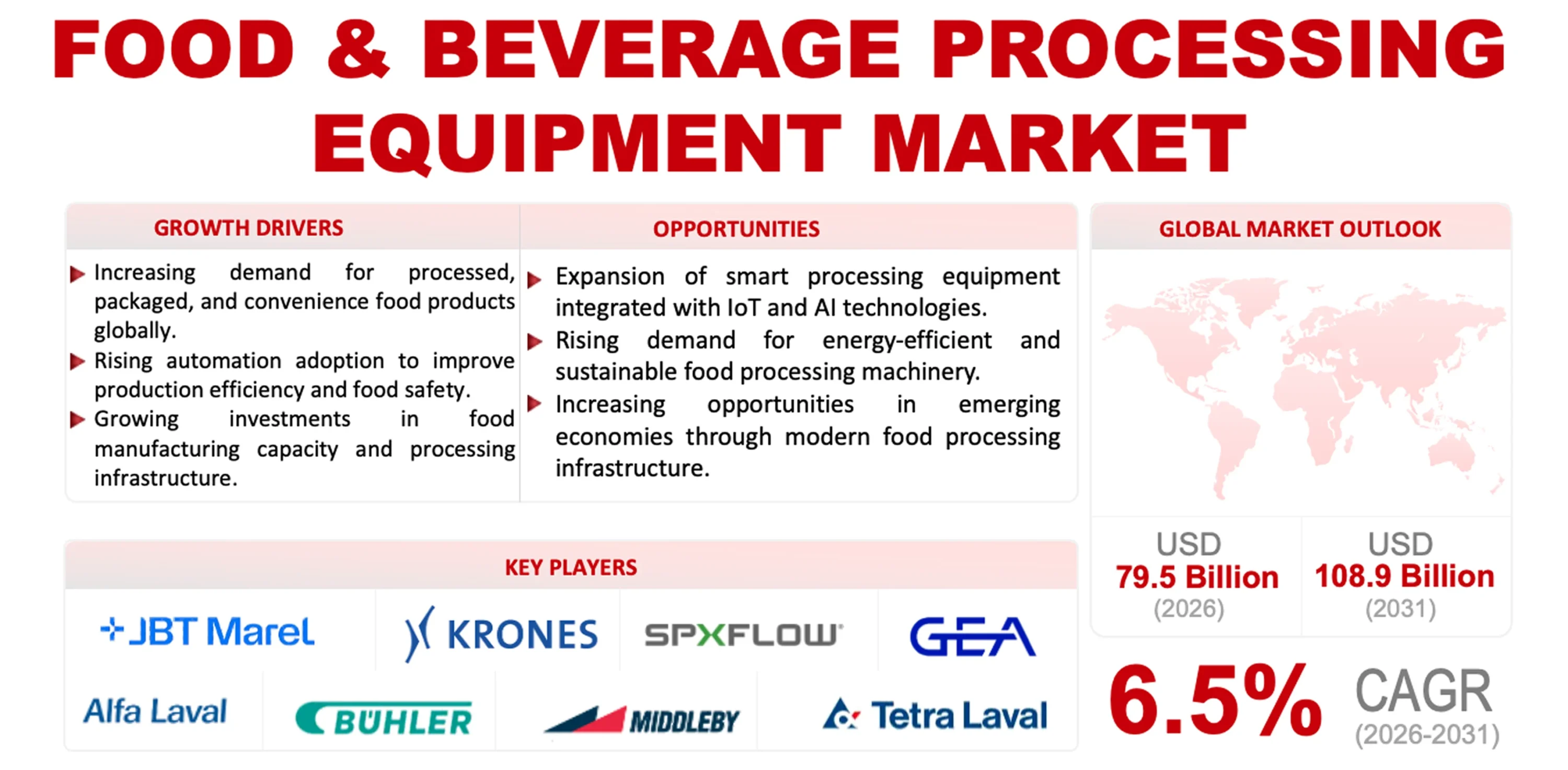
The market is projected to reach USD 108.9 billion by 2031, growing at a CAGR of 6.5 % during the forecast period (2026-2031).
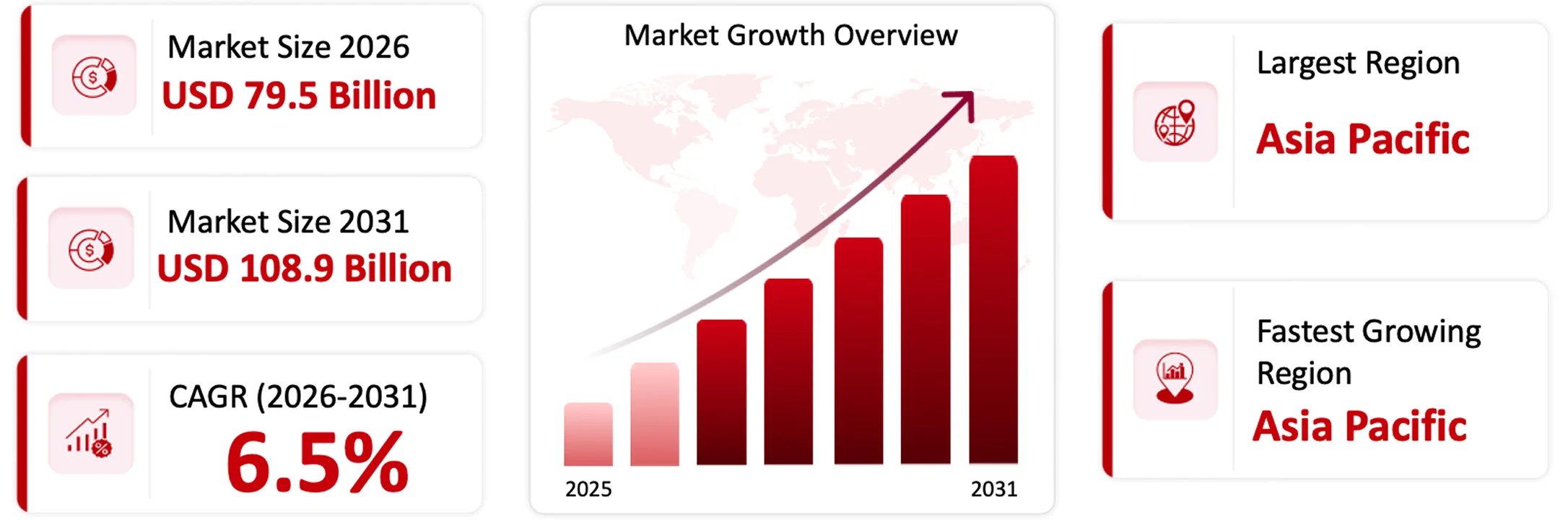
| Market Size (2026) | Forecast (2031) | CAGR (2026–2031) | Leading Region | Fastest Growing Region |
|---|---|---|---|---|
| USD 79.5 Billion | USD 108.9 Billion | 6.5 % | Asia Pacific | Asia Pacific |
Summarize this report with:



Global Food & Beverage Processing Equipment Market Overview
“In my view the global food and beverage processing equipment market is evolving as manufacturers modernize production systems to improve throughput, product consistency, food safety, and resource efficiency. Demand is increasingly shaped by the need to process diverse product formats, accommodate frequent production changeovers, and maintain hygienic operations across solid, liquid, and semi-solid food categories. Equipment investment is also shifting toward automated and digitally monitored systems that support process control, inspection, and operational reliability amid workforce constraints. Manufacturers are placing greater emphasis on sanitation-oriented machine design, water and energy efficiency, and integrated processing lines. These priorities are influencing equipment selection, plant upgrades, and technology adoption across established and emerging food-processing market.”
– Mayur Jain, Research Consultant, Wissen Research
The market is estimated to be USD 79.5 Billion in 2026 and is projected to reach USD 108.9 billion by 2031, growing at a CAGR of 6.5 % during the forecast period (2026-2031).
Technology Overview
Technology in the global food and beverage processing equipment market is advancing toward automated, digitally controlled, and hygienically designed production systems. Programmable logic controllers (PLCs), industrial sensors, machine vision, and robotics are increasingly integrated into equipment to improve process accuracy, product consistency, and quality inspection. Advanced thermal processing, high-pressure processing, membrane filtration, and automated cleaning-in-place (CIP) systems are also improving preservation, separation, and sanitation operations. Digital monitoring enables manufacturers to track critical parameters such as temperature, pressure, flow, and processing time, supporting better process control and food safety. Equipment development is increasingly focused on flexible automation, energy-efficient operations, and reduced contamination risks.
Key Growth Drivers
- Rising Labour Shortages and Increasing Dependence on Automated Processing: Food manufacturers are investing in automated mixing, cutting, sorting, filling, and material-handling equipment to maintain production volumes while reducing dependence on manual labour and repetitive operations.
- Increasing Need for Hygienic Processing and Cross-Contamination Prevention: Stringent sanitation requirements and contamination risks are encouraging manufacturers to replace conventional machinery with stainless-steel equipment, clean-in-place systems, and designs that eliminate moisture-trapping areas.
- Expansion of Prepared and Ready-to-Eat Food Manufacturing: Growing production of prepared meals, frozen foods, and convenience products is increasing demand for industrial cooking, mixing, forming, freezing, and portioning equipment capable of handling high-volume production.
- Increasing Complexity of Food Formulations and Product Diversification: Manufacturers developing high-protein, plant-based, fortified, and specialized food products require adaptable processing equipment to accommodate different ingredient properties, viscosity levels, mixing requirements, and production parameters.
- Growing Requirements for Automated Quality Inspection and Process Control: Food safety incidents, allergen-related recalls, and product consistency requirements are driving investments in machine vision, automated inspection, metal detection, and sensor-based monitoring systems.
- Rising Pressure to Reduce Water, Energy Consumption and Processing Waste: High utility costs and resource-intensive operations are encouraging food processors to adopt energy-efficient thermal systems, optimized cleaning equipment, water-recovery technologies, and processing solutions that minimize raw-material losses.
Food & Beverage Processing Equipment Market Key Highlights
Need deeper insights on this market?
Get full report access with detailed forecasts, competitive analysis, and segmentation.
Food & Beverage Processing Equipment Market Trends
The global food and beverage processing equipment market is witnessing a shift toward intelligent automation, resource-efficient machinery, and flexible production technologies. Manufacturers are increasingly upgrading conventional processing lines to improve production accuracy, reduce manual intervention, minimize raw-material losses, and maintain consistent product quality. The adoption of robotics, machine vision, automated inspection, and digitally monitored equipment is expanding across processing and packaging operations. Simultaneously, growing attention to food waste, energy consumption, and water efficiency is influencing equipment design and procurement decisions. Processing equipment manufacturers are therefore focusing on integrated production systems that combine automation, hygienic design, operational flexibility, and resource optimization to meet evolving manufacturing requirements.
Increasing Integration of Robotics and Intelligent Automation in Food Processing
Food and beverage manufacturers are increasingly integrating robotics, automated material handling, machine vision, and sensor-based process controls into production lines. Automation is expanding beyond packaging and palletizing into sorting, cutting, portioning, mixing, inspection, and other processing operations. This shift is particularly relevant for manufacturers handling high-volume production, repetitive tasks, variable product sizes, and strict hygiene requirements. Equipment suppliers are consequently developing food-grade robotic systems and integrated automation solutions that improve throughput, reduce manual handling, and support consistent processing quality.
Global industrial robot installations: The food industry accounted for approximately 18,000 industrial robot installations worldwide in 2024, compared with 15,000 in 2023, representing approximately 20% year-on-year growth.
Increasing industrial automation adoption: The global operational stock of industrial robots reached 4,281,585 units in 2023, increasing by 10% compared with 2022. This reflects the expanding industrial automation infrastructure supporting automated manufacturing operations.
Food-industry adoption evidence: A 2023 survey by the German Agricultural Society (DLG) found that 49% of surveyed food-industry companies were already using robots in their operations. Improving working conditions, increasing efficiency, and reducing personnel requirements were identified as important adoption motivations.
Market implication: Increasing automation adoption is creating opportunities for suppliers of robotic processing equipment, automated inspection systems, integrated production lines, and intelligent material-handling solutions.
Growing Emphasis on Energy-Efficient Processing and Food Loss Reduction
Food processors are increasingly prioritizing equipment that reduces energy consumption, water usage, and raw-material losses throughout manufacturing operations. Energy-intensive activities such as thermal processing, drying, refrigeration, evaporation, and cleaning are encouraging manufacturers to adopt heat-recovery systems, efficient heating technologies, optimized refrigeration, and automated cleaning solutions. At the same time, improved process control and precision equipment help reduce overprocessing, spillage, product rejection, and material losses. Consequently, equipment purchasing decisions are increasingly influenced by lifecycle operating costs and resource efficiency alongside production capacity.
Global food loss levels: According to the Food and Agriculture Organization (FAO), approximately 13.3% of food was lost globally in 2023 between post-harvest production and retail stages. The measurement includes losses across storage, transportation, wholesale, and processing, highlighting the need for improved handling and processing efficiency.
Energy consumption in food manufacturing: The U.S. Department of Energy reports that approximately two-thirds of the energy consumed by food and beverage manufacturing plants is used in manufacturing processes, including process heating. This creates opportunities for efficient steam generation, waste-heat recovery, electrified heating, and optimized thermal processing equipment.
Industrial energy optimization: The International Energy Agency (IEA) identifies process optimization, improved motor-system efficiency, electrification of low-temperature heat, and digitalization-enabled energy management as important measures for improving industrial energy efficiency.
Market implication: This trend is increasing the relevance of energy-efficient thermal processing equipment, heat-recovery systems, precision-controlled machinery, efficient refrigeration, and automated cleaning-in-place solutions
Key Players in the Food & Beverage Processing Equipment Market
Leading companies in the global food and beverage processing equipment market are focusing on expanding processing equipment portfolios, developing automated and energy-efficient technologies, strengthening integrated production-line capabilities, and improving hygienic processing solutions. Competition is shaped by specialized expertise across dairy, beverages, bakery, confectionery, meat, poultry, seafood, grain, and packaged food processing applications.








Strategic Activities Within the Food & Beverage Processing Equipment Market
Krones AG (Germany) introduced EquiTherm Power through its brewing technology subsidiary Steinecker, a new process-heat electrification solution using heat pumps and steam compressors. The system can achieve a combined coefficient of performance of up to 8 and supports heat recovery, reduced fossil-fuel consumption, and energy-efficient brewery operations.
Tetra Pak International S.A. (Switzerland) announced new powder mixing and automated air-jet cleaning trial capabilities at its Winsted, Minnesota facility. The system combines the Powder Mixer B with an Air Jet Cleaning System, reducing mixing time from 15–20 minutes to as little as 1–2 minutes while supporting faster equipment changeovers and reduced product losses.
JBT Marel Corporation (U.S.) introduced expanded end-to-end meat preparation and portioning line solutions covering precision dicing, strip cutting, inline marination, portion control, and final tray sealing. The integrated equipment offering is designed to improve production efficiency, reduce manual handling, enhance product consistency, and minimize processing losses for meat manufacturers.
GEA Group AG (Germany) announced a USD 25 million investment to expand its Janesville campus in Wisconsin, U.S., adding approximately 70,000 square feet of manufacturing, research, testing, and training space. The expansion is intended to strengthen its production and application capabilities for food, beverage, and nutrition processing customers across North America.
Food & Beverage Processing Equipment Market Insights
The global food and beverage processing equipment market is expanding as food manufacturers increase investments in production capacity, automation, and modern processing infrastructure. Market expansion is supported by the growing need to convert agricultural commodities into higher-value processed products, improve manufacturing productivity, and reduce post-harvest losses. Equipment demand spans primary processing, including cleaning, grading, and sorting, as well as secondary operations such as mixing, cooking, pasteurization, freezing, and filling. Investment in food-processing facilities across emerging economies is creating additional demand for industrial machinery. Equipment replacement, modernization of existing plants, and adoption of automated production lines are further supporting long-term market expansion.
Food and beverage processing equipment is widely used across bakery and confectionery, meat and poultry, dairy, beverages, fruits and vegetables, seafood, and grain-processing industries. Bakery manufacturers require industrial mixers, dough processing systems, ovens, and cooling equipment, while meat and poultry processors depend on cutting, deboning, grinding, and portioning machinery. Dairy applications involve pasteurization, homogenization, separation, and filling systems. Beverage manufacturers use blending, filtration, carbonation, and bottling equipment. Fruit and vegetable processors require washing, peeling, grading, pulping, and freezing machinery. These applications create demand for specialized equipment designed around product characteristics, hygiene requirements, processing temperatures, and production volumes.
Significant opportunities exist in automated processing lines, advanced thermal technologies, and energy-efficient equipment. Food manufacturers are increasingly seeking integrated machinery that combines processing, inspection, material handling, and quality monitoring to improve production efficiency. Emerging opportunities include high-pressure processing, membrane filtration, precision fermentation equipment, and advanced freezing technologies for specialized food applications. Developing economies offer opportunities through new processing facilities, cold-chain infrastructure, and modernization of small and medium-sized food manufacturers. Equipment suppliers can also benefit from demand for flexible production systems capable of handling multiple formulations, product sizes, and processing requirements without extensive equipment replacement or prolonged changeover periods.
High initial equipment costs remain a significant challenge, particularly for small and medium-sized food manufacturers investing in automated processing lines, advanced inspection systems, and integrated production facilities. Equipment installation frequently requires additional expenditure on plant modifications, utilities, operator training, and maintenance infrastructure. Different food categories also require specialized machinery to address product-specific hygiene, temperature, and contamination-control requirements, increasing procurement complexity. Frequent equipment cleaning, component replacement, and production downtime can further affect operating economics. Additionally, manufacturers must comply with stringent food safety and machinery standards across different markets, creating technical and regulatory requirements for equipment suppliers.
Asia-Pacific is expected to represent the fastest-growing regional market for food and beverage processing equipment, supported by expanding food manufacturing industries, increasing processed food exports, and investments in processing infrastructure. India recorded food-processing sector GVA growth from ₹1.34 lakh crore in 2014–15 to ₹2.24 lakh crore in 2023–24, alongside USD 7.33 billion in FDI inflows during April 2014–March 2025.China’s food manufacturing industry also recorded growth of 4.1% in value added during 2024. These developments support regional demand for automated, high-capacity, and specialized processing machinery.
Food & Beverage Processing Equipment Market Dynamics
Drivers: Increasing Adoption of Automation and Robotics in Food Processing
Food manufacturers are increasingly investing in automated processing equipment to improve production throughput, reduce manual handling, maintain consistent product quality, and address labour constraints. Automation is extending beyond packaging into sorting, cutting, portioning, inspection, mixing, and material handling. This is creating demand for integrated robotic systems, automated conveyors, machine vision, and sensor-controlled machinery.
Global industrial robot installations: Factories worldwide installed 542,000 industrial robots in 2024, more than double the annual installations recorded a decade earlier, demonstrating the expanding industrial automation ecosystem.
Increasing automation infrastructure: The global operational stock of industrial robots reached 4.66 million units in 2024, increasing 9% year-on-year and expanding the installed base for automated manufacturing.
Food-industry automation adoption: In the United States, food-industry robot installations increased 30% in 2025, reaching approximately 3,000 units, highlighting growing automation investment within food manufacturing.
Automation across food-processing operations: India’s Ministry of Food Processing Industries reported that approximately 40% of surveyed companies had automation levels exceeding 70%, demonstrating substantial machinery integration in processing facilities.
Opportunities: Reducing Food Losses Through Advanced Processing and Preservation Equipment
Significant opportunities exist in equipment that improves raw-material handling, processing yields, preservation, and product shelf life. Food losses during harvesting, storage, transportation, and processing create commercial demand for improved sorting, grading, washing, freezing, drying, and temperature-controlled processing systems. Manufacturers capable of developing equipment that preserves product quality while reducing material losses can address an important operational requirement across global food supply chains.
Global food losses: FAO estimated that 13.3% of food was lost globally between post-harvest production and retail in 2023, highlighting opportunities for improved handling, storage, and processing infrastructure.
Fruit and vegetable losses: FAO reported that fruits and vegetables experienced the highest global food-loss rate at 25.4%, creating opportunities for improved sorting, grading, freezing, drying, and preservation equipment.
Substantial volume of lost food: Global food losses amounted to approximately 1.31 billion tonnes in 2023, indicating considerable potential for machinery that improves processing yields and product preservation.
Meat-processing efficiency: Global meat and animal-product losses reached approximately 14%, supporting demand for improved refrigeration, hygienic handling, temperature monitoring, and preservation equipment across meat-processing supply chains.
Challenges: High Energy Consumption and Operating Costs of Processing Equipment
Food and beverage processing operations involve energy-intensive activities such as heating, drying, pasteurization, refrigeration, freezing, and cleaning. Rising energy expenses can increase the total cost of equipment ownership, particularly for manufacturers operating continuous production lines. Equipment suppliers must balance processing capacity, thermal performance, sanitation requirements, and energy efficiency while maintaining commercially viable machinery prices.
Energy cost exposure: Australia’s Department of Climate Change, Energy, the Environment and Water reports that energy accounts for at least 15% of total operating costs in food and beverage manufacturing businesses.
Industrial energy consumption: Eurostat reported that Europe’s food, beverages, and tobacco industry consumed 1,134 petajoules of energy in 2024, representing 12.8% of total industrial energy consumption.
Dependence on natural gas: Natural gas represented 46.3% of the European food, beverages, and tobacco industry’s energy consumption in 2024, exposing processing operations to fuel-price fluctuations.
Electricity-intensive processing requirements: Electricity accounted for 35.3% of the European food, beverages, and tobacco industry’s energy consumption in 2024, reflecting substantial demand from motors, refrigeration, and production systems.
Technology and patent Insights
Technology development in the global food and beverage processing equipment market is increasingly focused on non-thermal processing, robotic automation, intelligent process control, and hygienic equipment design. High-pressure processing (HPP), pulsed electric fields (PEF), and ultrasonic technologies are gaining commercial relevance as alternatives to conventional heat treatment. Patent activity reflects innovation in continuous aseptic processing, robotic control, high-pressure systems, and microbial-growth prevention. WIPO identifies food technology as a significant agrifood innovation domain, with 153,127 international patent families identified in its agrifood patent landscape assessment. Recent patent publications also highlight improvements in processing throughput, equipment sanitation, and product preservation.
Technology Scope and Products
Food & Beverage Processing Equipment Market Segmentation
Want detailed insights from this report?
Competitive Landscape and Market Segments Insights
Acquisition-Led Portfolio Expansion: JBT Marel Corporation (U.S.) completed its acquisition of Marel in January 2025, combining complementary food-processing technologies across meat, poultry, seafood, and prepared foods. The transaction strengthened its integrated equipment portfolio and expanded its capabilities to serve multiple food-processing applications.
Expansion of Regional Manufacturing Capabilities: GEA Group AG (Germany) announced a USD 25 million investment in September 2026 to expand its Wisconsin campus by approximately 70,000 square feet, strengthening manufacturing, research, testing, and customer training capabilities.
Digitalization and Smart Factory Solutions: Tetra Pak International S.A. (Switzerland) launched Factory OS in November 2025, an automation and digitalization portfolio for food and beverage factories. Its comparative study reported 20% higher equipment effectiveness and 45% lower product waste in highly automated factories.
Development of Energy-Efficient Processing Technologies: Tetra Pak International S.A. (Switzerland) introduced an Integrated Heat Pump system in November 2025 for pasteurization applications, reporting potential energy savings of up to 77% through combined heating and cooling operations.
Diversification into Alternative Protein Processing: Tetra Pak International S.A. (Switzerland) acquired Bioreactors.net in December 2025, expanding its capabilities in bioreactor manufacturing for biomass and precision fermentation. This strengthens its position in emerging alternative protein processing technologies.
Investment in Customer Application Development: Tetra Pak International S.A. (Switzerland) announced an expanded Product Development Center in Denton, Texas, in March 2026, adding dedicated innovation and testing facilities to support food formulation, processing validation, and commercial-scale product development.
Automatic processing equipment benefits from manufacturers’ requirements for higher production throughput, consistent product quality, reduced manual intervention, and continuous production. Its adoption extends across mixing, sorting, cutting, thermal processing, filling, and material handling operations.
-
–Record global industrial robot installations: The International Federation of Robotics reported that 603,307 industrial robots were installed worldwide in 2025, representing an 11% increase over 2024 and reflecting continued investment in automated manufacturing systems.
-
Expansion of industrial automation infrastructure: The global operational stock of industrial robots reached approximately 5 million units in 2025, increasing by 9% year over year and strengthening the installed base supporting automated production operations.
-
Automation adoption in food manufacturing: The 2025 State of Food Manufacturing survey found that 28% of food and beverage manufacturers had fully automated production-line controls, while 37% used a combination of digital and manual controls, indicating substantial automation adoption across production facilities.
-
Automation across food-processing operations: India’s Ministry of Food Processing Industries has assessed automation adoption and machinery requirements across food-processing companies, highlighting the relevance of automation technologies to both large-scale manufacturers and smaller processing units.
Dairy processing requires extensive equipment across milk reception, separation, homogenization, pasteurization, evaporation, drying, fermentation, and filling operations. Large-scale milk production and the conversion of raw milk into multiple processed products support demand for specialized processing machinery.
-
Expansion of global milk production: The OECD–FAO Agricultural Outlook 2026 reported that global milk production increased by 2.1% in 2025 to approximately 1,005 million tonnes, reflecting a substantial raw-material base for industrial dairy processing.
-
India’s large dairy production base: India’s Basic Animal Husbandry Statistics 2025 reported milk production of 247.87 million tonnes during 2024–25, an increase of 3.58% over the previous year, supporting demand for milk-processing, chilling, separation, and pasteurization equipment.
-
India’s position in global milk production: India remained the world’s largest milk-producing country in 2025, with production reaching approximately 247.87 million tonnes in 2024–25, reinforcing the country’s importance as a major market for dairy-processing infrastructure.
-
Growth in dairy-product manufacturing requirements: The OECD–FAO outlook reported that global milk production growth in 2025 was accompanied by changes in dairy-product markets, including higher demand and production activity for butter, cheese, and whole milk powder, supporting the need for processing and product-conversion equipment.
What This Report Covers-
This report provides a comprehensive analysis of the food & beverage processing equipment market, offering insights into key trends, growth drivers, challenges, and future opportunities. It is designed to support strategic decision-making through a combination of quantitative data and qualitative analysis.
Specifically, the report covers:

Market Overview & Definition:
Overview of the market scope, structure, and key terminology

Market Size & Forecast
Historical data and future projections across key segments and regions

Key Market Trends:
Insights into emerging trends, technological advancements, and evolving demand patterns

Drivers, Restraints & Opportunities:
Analysis of key factors influencing food & beverage processing equipment market growth

Competitive Landscape:
Overview of major players, their strategies, and recent developments

Detailed Patent Analysis:
This includes, top assignees, geography focus of top assignees, legal status, technology evolution, key patents and patent trends and innovations

Segmentation Analysis:
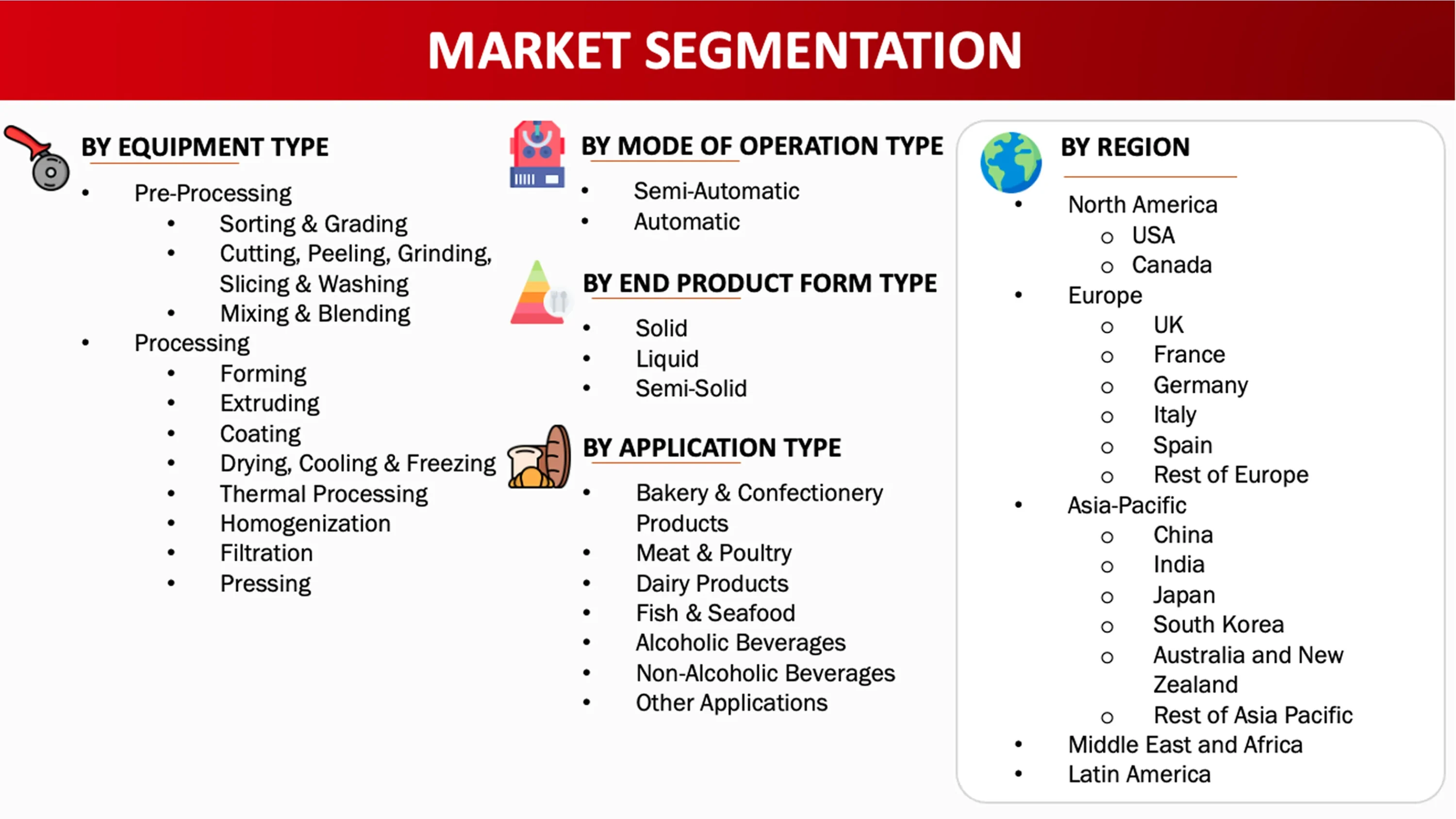
Breakdown by mode of operation, by equipment type, by end product form type, by application type, by region.

Regional Insights:
Key regional trends and growth opportunities

Future Outlook:
Strategic insights and future market direction
Research Methodology
The study of the global food & beverage processing equipment market is based on a combination of primary and secondary research methodologies, supported by data validation, equipment category mapping, processing technology assessment, food manufacturing capacity analysis, equipment production and installation assessment, company revenue and product-portfolio analysis, automation adoption evaluation, food safety and regulatory requirement assessment, end-use industry demand analysis, manufacturing investment assessment, trade-flow analysis, and analytical modelling to ensure accuracy and reliability.
Market Definition: Food & Beverage Processing Equipment Market
The global food & beverage processing equipment market comprises industrial machinery and equipment used for the preparation, transformation, processing, preservation, and handling of food and beverage products across commercial manufacturing facilities. The market covers equipment used in bakery and confectionery, meat and poultry, dairy products, fish and seafood, alcoholic beverages, non-alcoholic beverages, and other food-processing applications.
The market includes equipment such as mixing and blending machinery, cutting and slicing equipment, grinding and milling systems, sorting and grading machinery, washing and cleaning equipment, cooking and thermal processing systems, pasteurization and sterilization equipment, homogenizers, filtration and separation systems, drying and dehydration machinery, freezing equipment, and filling and dosing systems. Equipment is classified by mode of operation into semi-automatic and automatic systems. The market also covers processing machinery incorporating conventional and advanced processing technologies, automation, and integrated process-control capabilities. Standalone food packaging machinery, agricultural production machinery, foodservice equipment, and household food-processing appliances are excluded unless explicitly integrated into industrial food and beverage processing operations within the study scope.
Key Stakeholders
The global food & beverage processing equipment market involves a broad ecosystem of stakeholders:
- Food & Beverage Processing Equipment Manufacturers
- Bakery and Confectionery Processing Companies
- Meat and Poultry Processing Companies
- Dairy Processing Companies
- Fish and Seafood Processing Companies
- Alcoholic and Non-Alcoholic Beverage Manufacturers
- Food and Beverage Manufacturing Companies
- Food Processing Plant Operators
- Industrial Automation and Robotics Providers
- Processing Technology and Equipment Component Suppliers
- Equipment Installation, Maintenance, and Aftermarket Service Providers
- Food Safety, Testing, and Regulatory Organizations
- Food Processing Engineering and Plant Infrastructure Providers
Key Objectives of the Study
- To define, describe, analyze, segment, and forecast the food & beverage processing equipment market by mode of operation, by equipment type, by end product form type, by application type.
- To describe and forecast the market for five key regions: North America, Europe, Asia Pacific, Latin America, Middle-East & Africa
- To provide detailed information regarding key drivers, restraints, opportunities, and challenges influencing market growth
- To strategically analyze the micro indicators with respect to individual growth trends, prospects, and contributions to the overall market size
- To analyze opportunities for stakeholders in the food & beverage processing equipment industry and emphasize on competitive landscape of the market
- To develop competitive benchmarking of the key market players based on technology specifications and end user
- To strategically profile key players and comprehensively analyze their product portfolio offerings, and core competencies
- To strategically profile key players and comprehensively analyze their product portfolio offerings, and core competencies
Need deeper insights on this market?
Get full report access with detailed forecasts, competitive analysis, and segmentation.
Research Approach
This research employs a systematic approach by using primary research along with secondary research to achieve full coverage and accuracy of information about the food & beverage processing equipment sector. Through this approach, the current market trends in terms of consumer behaviour, technological developments, and competitive environment can be analysed thoroughly.
Secondary Research
Secondary research involves the collection of data from reliable sources such as industry databases, company annual reports, investor presentations, and regulatory filings. This process helps in understanding market trends, identifying key players, and gathering technical and commercial insights.
A comprehensive database of leading companies and market participants is developed through secondary research to support further analysis.
Primary Research
Primary research is conducted to validate findings from secondary research and to gain deeper insights into market dynamics. Interviews are carried out with industry stakeholders across both demand and supply sides, including executives such as CXOs, Vice Presidents, and Directors from business development, marketing, and product teams.
Data is collected through structured questionnaires, email interactions, and telephonic interviews across key regions including North America, Europe, Asia-Pacific, and Rest of the World.
Market Size Estimation
Market size estimation is performed using both top-down and bottom-up approaches. Key market players are identified, and their revenues are analysed to estimate the overall market size.
The market is further segmented based on:
- Product and service mapping across regions
- Adoption patterns across key application segments
- Insights gathered through primary and secondary research
Data Validation and Research Design
After estimating the overall market size, the data is validated using triangulation methods and market breakdown techniques to ensure accuracy and consistency. Both demand-side and supply-side factors are considered to refine the analysis.
The final data is validated through multiple sources to ensure reliability and to provide accurate insights across all market segments and regions.
Assumptions of the Study
The analysis of the food & beverage processing equipment market is based on the following key assumptions:
- Trends in the industry are drawn from historical data and current information within the sector
- The future outlook is underpinned by constant economic conditions in the absence of shocks to the market
- The rate of adoption for food & beverage processing equipment will rise steadily in all important regions
- income statement and market share figures are estimated using available information from the industry and publicly available data
- The exchange rate and price trends will not be greatly affected during the forecast period
Scope and Limitations
Scope of the Study
This report offers an exhaustive overview of the international food & beverage processing equipment market and includes the following components:
- Summary of market size, growth trends, and projections
- Carefully segmented market based on by mode of operation, by equipment type, by end product form type, by application type.
- Discussion of primary factors influencing the market
- Competitor analysis
- Insights into regional and national market performance
Limitations of the Study
Despite the best efforts being made to keep the results accurate, the study does suffer from some limitations:
- It has been done using both primary and secondary data that come with their own constraints
- Rapid developments in technology might affect the future course of market dynamics
- Some figures are only approximations due to lack of public disclosure
- The report is not an insurance against any disruptions in macroeconomics and geopolitics
- Future forecasts are indicative and subject to change due to altered industry dynamics
Data Triangulation and Market Breakdown
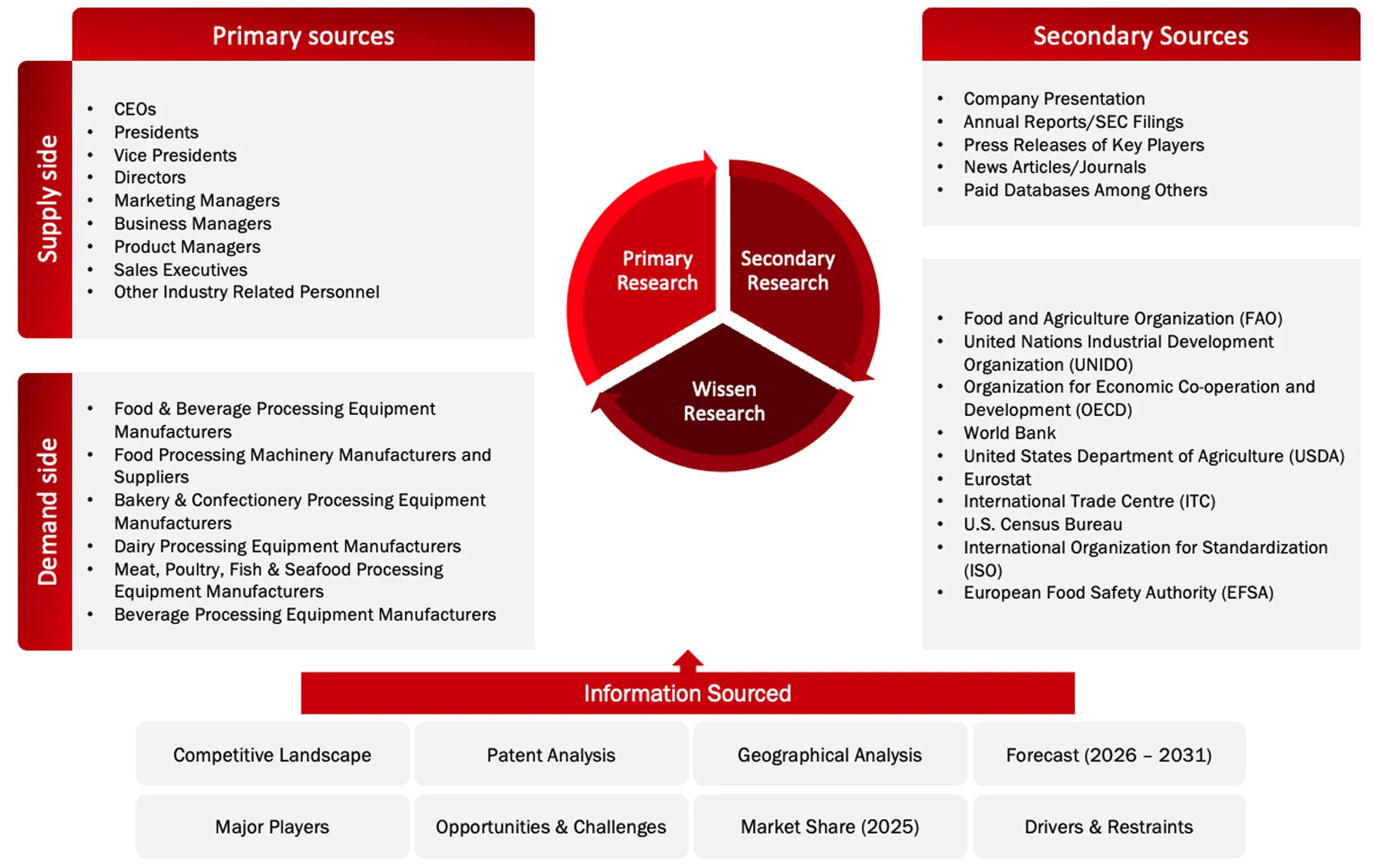
Data triangulation involved the combination of primary research, secondary research, and the Wissen Research analysis. Once the data points were sourced from the secondary market research, we sanitized the data points to make the market sizing and growth forecast more accurate by developing our own assumptions based on the inputs and insights we gather through the primary interviews with the industry experts. Once the data was thoroughly validated through primary interviews from both, demand and supply side of the market, our team of analyst and other team members involved finalized the market sizing and growth forecast.
Data Triangulation Methodology
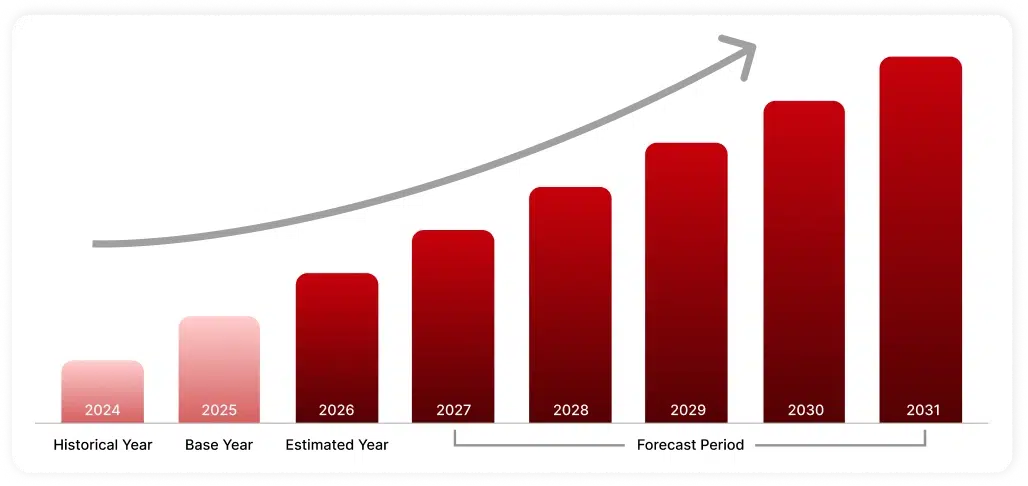
Year Framework
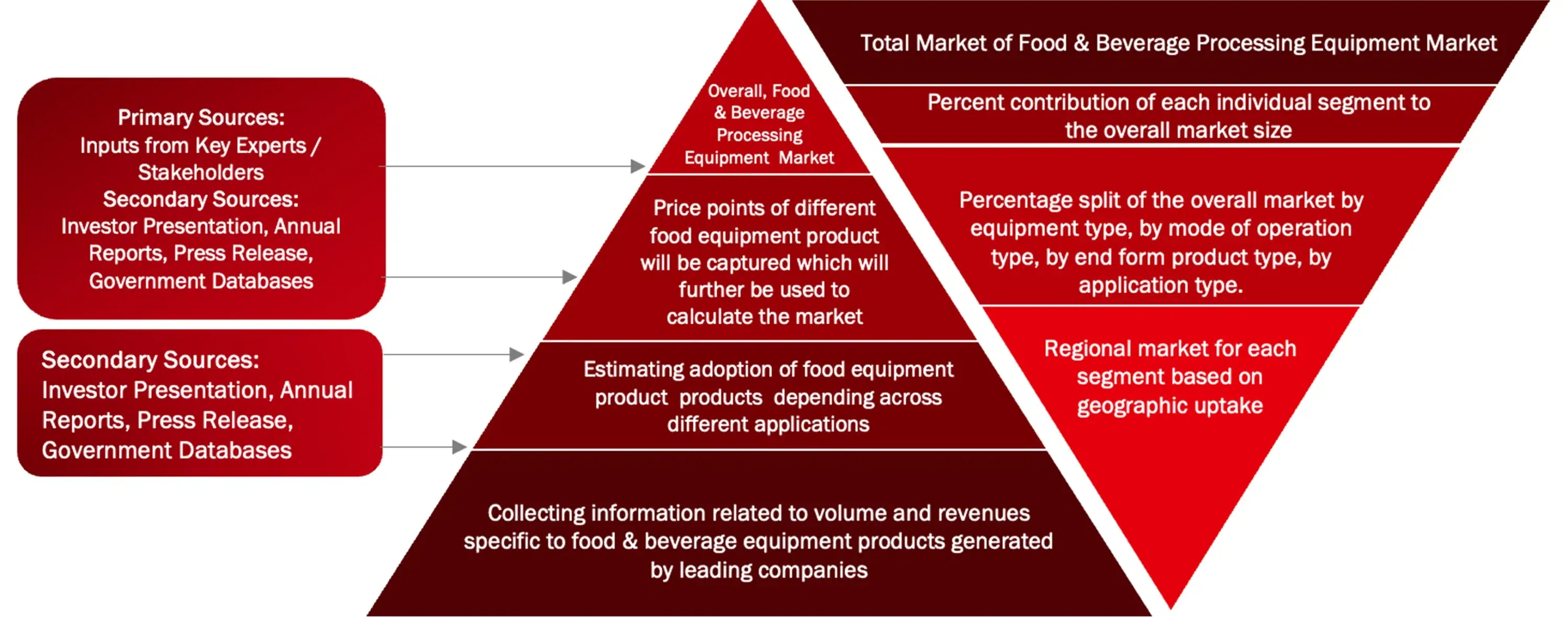
Bottom-Up Approach (Demand Side) And Top-Down Approach (Supply Side)
Bottom-Up Approach (Demand-Side Approach):
Determining the market size through the consolidation of demand among end-users, sectors, and geographic areas, which are calculated according to real-world demand conditions.
Top-Down Approach (Supply-Side Approach):
Calculating the market size through revenue and performance of the industry and its important companies, allocating the market size among various sectors.
Want detailed insights from this report?
Buy this Report
Choose the option that best fits your needs