
Blood Gas and Electrolyte Analyzer Market
Global Industry analysis, Size, Share, Growth, Trends, and Forecast 2026-2031
The global blood gas and electrolyte analyzer market is projected to reach USD 4.13 billion by 2031, growing at a CAGR of 4.6% during the forecast period.
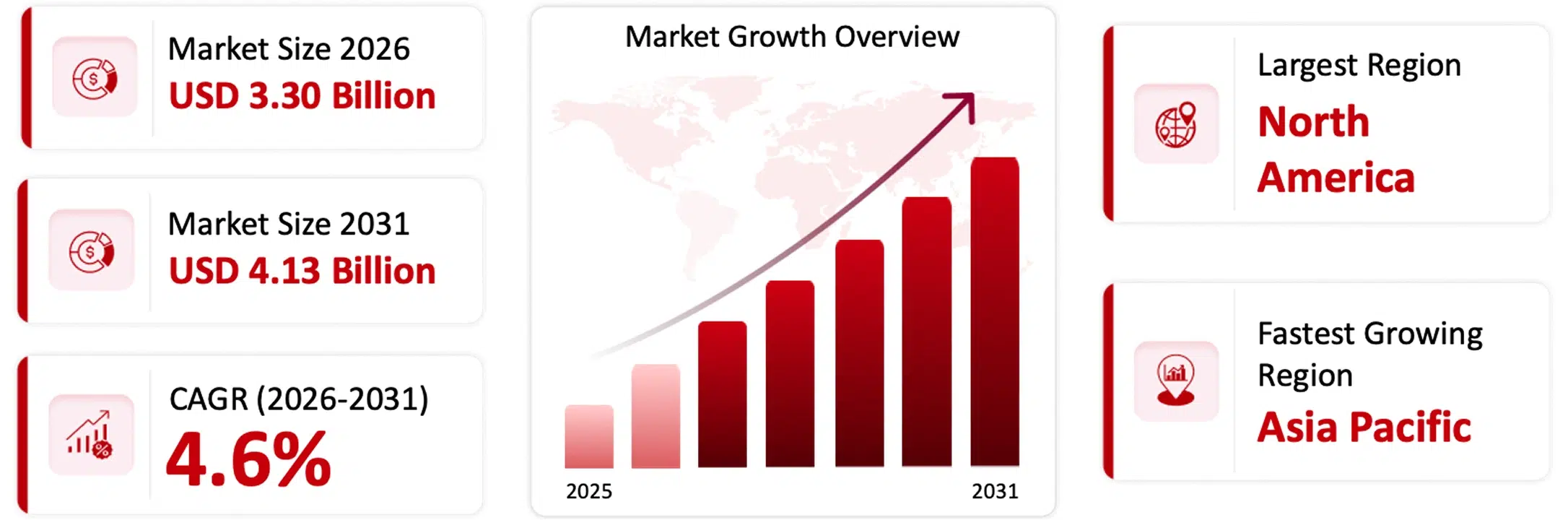
| Market Size (2026): | Forecast (2031): | CAGR (2026–2031): | Leading Region: | Fastest Growing Region: |
|---|---|---|---|---|
| $ 3.30 Billion | $ 4.13 Billion | 4.6 % | North America | Asia Pacific |
Summarize this report with:



Market Overview
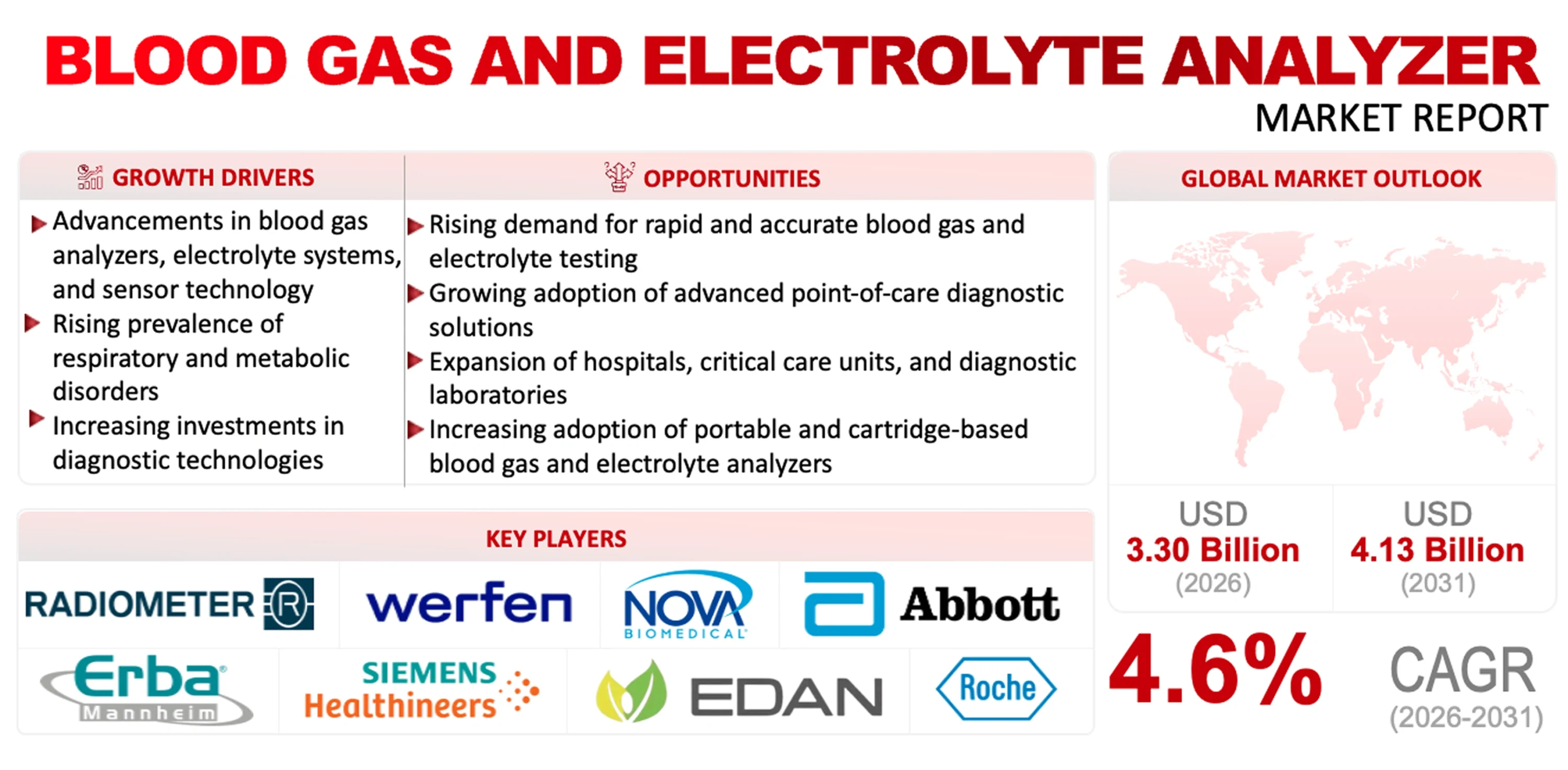
The blood gas and electrolyte analyzer market is witnessing steady growth, driven by rising demand for rapid and accurate diagnostic testing across hospitals, diagnostic laboratories, emergency medical services, and point-of-care settings. Increasing prevalence of critical illnesses, growing adoption of portable analyzers, and advancements in cartridge-based, electrochemical, and optical technologies are improving testing efficiency, accuracy, and accessibility, supporting overall market expansion. The market is estimated to be USD 3.30 billion in 2026 and is projected to reach USD 4.13 billion by 2031, growing at a CAGR of 4.60 % during the forecast period (2026-2031).
Technology Overview
Blood gas and electrolyte analysis is an essential diagnostic process used to assess acid-base balance, oxygenation, carbon dioxide levels, and electrolyte concentrations in blood for critical care, emergency medicine, diagnostic, and monitoring applications. It involves various analyzer technologies, including cartridge-based systems, electrochemical sensors, and optical technologies, selected based on testing requirements, accuracy, speed, and clinical application. Advancements in portable analyzers, sensor technologies, automated systems, and integrated testing platforms are improving testing efficiency, accuracy, reliability, and ease of use. The growing demand for rapid diagnosis and continuous monitoring in hospitals, point-of-care settings, emergency medical services, diagnostic laboratories, and home healthcare is further supporting the adoption of advanced blood gas and electrolyte analyzers.
Key Growth Drivers
- Increasing demand for rapid and accurate blood gas and electrolyte testing across healthcare settings
- Rising prevalence of critical illnesses requiring continuous monitoring of blood gases and electrolytes
- Growing adoption of point-of-care testing in hospitals and emergency care settings
- Increasing use of portable and cartridge-based blood gas and electrolyte analyzers
- Rising emphasis on rapid diagnosis, critical care monitoring, and improved patient outcomes
- Growing demand for blood gas and electrolyte analyzers across hospitals, diagnostic laboratories, clinics, and emergency medical services
- Increasing technological advancements in electrochemical sensors, optical technologies, automation, and integrated analyzer systems
Blood Gas and Electrolyte Analyzer Key Highlights
Need deeper insights on this market?
Get full report access with detailed forecasts, competitive analysis, and segmentation.
Blood Gas and Electrolyte Analyzer Market Trends
The blood gas and electrolyte analyzer market is witnessing steady growth due to increasing demand for rapid, accurate, and reliable diagnostic solutions across hospitals, emergency care, diagnostic laboratories, clinics, and point-of-care settings. The growing need for timely assessment of blood pH, oxygen, carbon dioxide, and electrolyte levels is supporting market expansion. Advancements in portable analyzers, cartridge-based systems, electrochemical sensors, and optical technologies are improving testing speed, accuracy, reliability, and ease of use.
The rising adoption of blood gas and electrolyte analyzers in critical care, emergency medicine, and point-of-care testing is creating new opportunities for manufacturers. In addition, increasing healthcare expenditure, growing prevalence of critical illnesses, and rising emphasis on rapid diagnosis and patient monitoring are encouraging investments in innovative analyzer technologies and integrated testing solutions.
Increasing Demand for Rapid and Accurate Blood Gas and Electrolyte Testing
The growing volume of critical care, emergency, and diagnostic testing is increasing demand for rapid and accurate blood gas and electrolyte analysis. These analyzers enable timely assessment of acid-base balance, oxygenation, carbon dioxide levels, and electrolyte concentrations. Advancements in sensor technologies, automation, and integrated analyzer systems are further helping manufacturers develop efficient, reliable, and user-friendly solutions for diverse clinical applications.
Growing Adoption of Point-of-Care and Portable Analyzer Technologies
Advanced analyzer technologies are improving clinical workflows by enabling faster testing and real-time monitoring at or near the patient. Developments in cartridge-based systems, electrochemical sensors, optical technologies, and portable analyzers are improving testing efficiency, accuracy, and operational convenience. These advancements are supporting the deployment of blood gas and electrolyte analyzers across hospitals, emergency medical services, diagnostic laboratories, clinics, and other healthcare settings.
Key Players in the Blood Gas and Electrolyte Analyzer Market
Leading companies in the blood gas and electrolyte analyzer market are focusing on product innovation, technological advancements, strategic partnerships, research and development, product launches, and geographic expansion to strengthen their market presence.








Strategic Activities Within the Blood Gas and Electrolyte Analyzer Market
EDAN Instruments, Inc. showcased its i500 blood gas and chemistry analyzer as part of its point-of-care testing portfolio during its 2025 global events. The i500 provides benchtop blood gas and chemistry testing in a compact platform, supporting EDAN’s expansion of integrated point-of-care diagnostic solutions.
Werfen (US) introduced the GEM® Premier™ 7000 with iQM®3, a new blood gas testing system featuring point-of-care hemolysis detection and Intelligent Quality Management. The technology is designed to identify hemolysis-related issues during blood gas testing and improve the reliability of potassium and other test results, strengthening Werfen’s position in specialized acute care diagnostics.
Radiometer Medical ApS (Denmark) entered into a commercial partnership with Etiometry, a clinical decision-support software company, to integrate Radiometer’s acute care diagnostic solutions with Etiometry’s platform. The collaboration enables clinicians to view blood gas results, physiological parameters, clinical data, and AI-based patient risk analytics on a single screen, supporting faster decision-making in critical care settings.
Blood Gas and Electrolyte Analyzer Market Insights
The blood gas and electrolyte analyzer market is experiencing steady growth due to increasing demand for rapid, accurate, and reliable diagnostic testing across hospitals, emergency care, diagnostic laboratories, and point-of-care settings. Rising prevalence of critical illnesses, growing need for real-time patient monitoring, and increasing adoption of advanced diagnostic technologies are supporting market expansion. Technological advancements in portable analyzers, cartridge-based systems, electrochemical sensors, and integrated testing platforms are further creating growth opportunities for manufacturers worldwide.
Blood gas and electrolyte analyzers are widely used across hospitals, point-of-care testing within hospitals, ambulance and emergency medical services, diagnostic laboratories and clinics, and home healthcare settings. In hospitals and critical care units, these analyzers are used to assess blood pH, oxygen, carbon dioxide, and electrolyte levels for timely clinical decision-making. Emergency medical services utilize portable analyzers for rapid testing, while diagnostic laboratories and clinics use them for routine and specialized blood gas and electrolyte analysis.
The increasing demand for rapid diagnosis and continuous monitoring of critically ill patients is a major factor driving the blood gas and electrolyte analyzer market. Rising prevalence of respiratory disorders, cardiovascular conditions, metabolic disorders, and other critical illnesses is increasing the need for timely blood gas and electrolyte testing. Growing adoption of point-of-care testing and portable analyzers is further supporting market growth. Advances in sensor technologies, automation, cartridge-based systems, and integrated analyzers are also improving testing speed, accuracy, reliability, and ease of use.
Key trends in the blood gas and electrolyte analyzer market include increasing adoption of portable analyzers, cartridge-based testing systems, electrochemical sensors, optical technologies, and integrated point-of-care solutions. Growing demand for faster testing, automated workflows, and compact analyzers is creating new opportunities for manufacturers. Increasing use of analyzers in emergency and critical care settings is also supporting adoption. However, the market faces challenges such as high equipment and consumable costs, complex maintenance requirements, calibration needs, and the need for consistent testing accuracy. Ensuring reliability, ease of operation, and cost efficiency remains important for manufacturers.
The Asia Pacific is expected to witness strong growth in the blood gas and electrolyte analyzer market due to increasing healthcare expenditure, expanding hospital infrastructure, rising prevalence of chronic and critical diseases, and growing adoption of point-of-care diagnostics. China, India, Japan, South Korea, and other emerging Asian markets are contributing to regional growth through investments in healthcare facilities, diagnostic laboratories, emergency care, and advanced medical technologies. Increasing demand for rapid diagnostic testing and critical patient monitoring is expected to further strengthen the adoption of blood gas and electrolyte analyzers across the region.
Blood Gas and Electrolyte Analyzer Market Dynamics
Drivers: Demand for Rapid and Accurate Critical Care Diagnostics
The major driver of the blood gas and electrolyte analyzer market is the growing demand for rapid and reliable diagnostic testing across hospitals, emergency care, diagnostic laboratories, and point-of-care settings. Increasing prevalence of respiratory, cardiovascular, and metabolic disorders, along with the rising need for continuous monitoring of critically ill patients, is boosting the adoption of blood gas and electrolyte analyzers. In addition, these analyzers provide rapid assessment of blood pH, oxygen, carbon dioxide, and electrolyte levels, supporting timely clinical decision-making. Advancements in portable analyzers, cartridge-based systems, electrochemical sensors, and automated testing platforms are further improving testing efficiency and accessibility.
Opportunities: Expansion of Point-of-Care Testing and Critical Care Diagnostics
The increasing use of blood gas and electrolyte analyzers in intensive care units, emergency departments, ambulance services, diagnostic laboratories, and other point-of-care settings is creating significant opportunities for market participants. Rising demand for portable, compact, and easy-to-use analyzers is encouraging manufacturers to develop advanced testing solutions. In addition, growing investments in healthcare infrastructure, emergency medical services, critical care facilities, and decentralized diagnostics are expanding the application scope of blood gas and electrolyte analysis.
Challenges: High Equipment Costs, Maintenance Requirements, and Testing Accuracy
Despite strong growth potential, the blood gas and electrolyte analyzer market faces challenges such as high equipment and consumable costs, calibration requirements, maintenance needs, and the need for skilled operation. Testing accuracy can be affected by factors such as sample handling, temperature, calibration, sensor performance, and storage conditions. Manufacturers also need to maintain consistent accuracy, reliability, and operational efficiency while reducing costs and meeting increasingly stringent clinical and regulatory requirements.
Technology and Market Insights
From a market perspective, the blood gas and electrolyte analyzer market is witnessing steady growth due to increasing demand for rapid blood gas analysis, electrolyte measurement, critical care monitoring, and point-of-care diagnostic solutions. The growing adoption of blood gas and electrolyte analyzers across hospitals, emergency departments, diagnostic laboratories, clinics, ambulance services, and other healthcare settings is driving investments in advanced analyzer technologies and manufacturing capabilities.
Continuous developments in portable analyzers, cartridge-based systems, electrochemical sensors, optical technologies, and integrated testing platforms are improving testing speed, accuracy, reliability, and ease of use. These innovations are enabling manufacturers to develop high-performance, compact, and application-specific analyzer solutions while supporting wider adoption across diverse clinical and point-of-care environments.
Technology Scope and Products
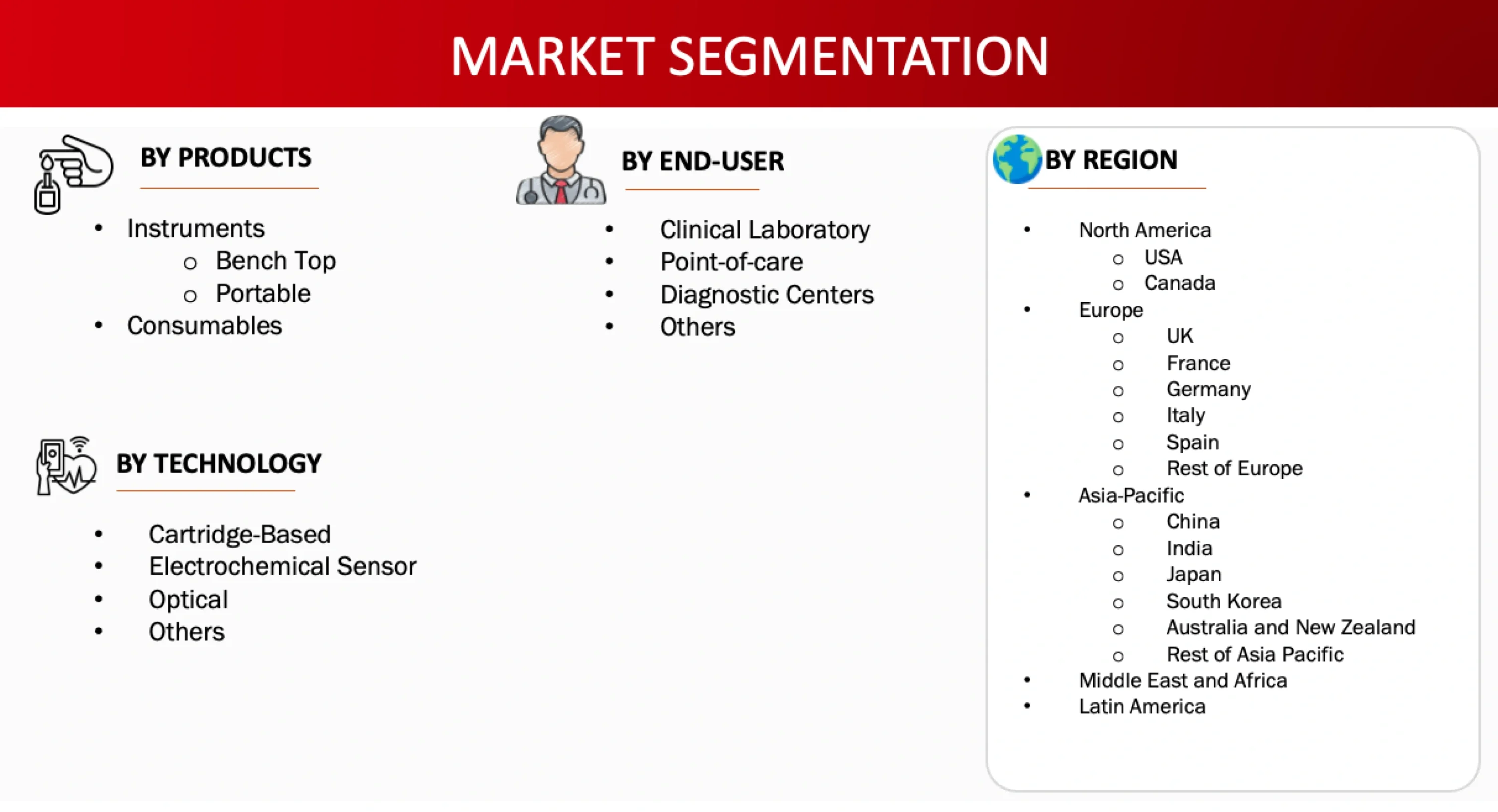
Blood Gas and Electrolyte Analyzers Market Segmentation
Want detailed insights from this report?
Industry Developments and Competitive Landscape
The blood gas and electrolyte analyzer market is witnessing continuous technological advancements driven by growing demand for rapid, accurate, and reliable diagnostic solutions across hospitals, critical care units, emergency departments, diagnostic laboratories, and point-of-care settings. Blood gas and electrolyte analyzer companies are investing in advanced sensor technologies, cartridge-based systems, portable analyzers, optical detection, electrochemical sensing, and integrated testing platforms to improve testing accuracy, speed, reliability, and workflow efficiency. The integration of automation, connectivity, miniaturization, and advanced data-management capabilities is further supporting market growth by enabling faster, more precise, and convenient testing while meeting the evolving requirements of critical care, emergency medicine, and decentralized diagnostic applications.
The consumables segment dominated the blood gas and electrolyte analyzer market with a revenue share of 66% in 2025, driven by the recurring need for cartridges, sensors, electrodes, reagents, and other consumable components required for blood gas and electrolyte testing. The increasing volume of diagnostic testing across hospitals, critical care units, emergency departments, and point-of-care settings contributes to consistent demand for these products. Growing adoption of cartridge-based and automated testing systems, along with the rising need for rapid and reliable diagnostic results, is expected to further support the demand for consumables.
Clinical laboratory segment dominated the blood gas and electrolyte analyzer market with a revenue share of 46% in 2025, supported by the increasing volume of diagnostic testing and growing demand for accurate assessment of blood gases, pH, and electrolyte levels. Clinical laboratories play an important role in diagnostic testing and patient monitoring, particularly for respiratory, cardiovascular, metabolic, and critical care conditions. Rising healthcare expenditure, increasing laboratory testing volumes, and continued adoption of advanced blood gas and electrolyte analyzer technologies are expected to support segment growth.
North America accounted for the largest revenue share of 45% in 2025, driven by well-established healthcare infrastructure, high adoption of advanced diagnostic technologies, and increasing demand for rapid testing in hospitals and clinical laboratories. The United States represents a major contributor due to its extensive network of hospitals, critical care facilities, diagnostic laboratories, and point-of-care testing centers. In addition, rising healthcare expenditure, increasing prevalence of critical and chronic diseases, and growing adoption of advanced blood gas and electrolyte analyzers are expected to maintain North America’s leading position in the market.
What This Report Covers-
This report provides a comprehensive analysis of the blood gas and electrolyte analyzer market, offering insights into key trends, growth drivers, challenges, and future opportunities. It is designed to support strategic decision-making through a combination of quantitative data and qualitative analysis.
Specifically, the report covers:

Market Overview & Definition:
Overview of the market scope, structure, and key terminology

Market Size & Forecast:
Historical data and future projections across key segments and regions

Key Market Trends:
Insights into emerging trends, technological advancements, and evolving demand patterns

Drivers, Restraints & Opportunities:
Analysis of key factors influencing blood gas and electrolyte analyzer market growth

Competitive Landscape: Overview of major players, their strategies, and recent developments

Detailed Patent Analysis: This includes, top assignees, geography focus of top assignees, legal status, technology evolution, key patents and patent trends and innovations

Segmentation Analysis: Breakdown of the market by product, technology, end user, and region

Regional Insights:
Key regional trends and growth opportunities

Future Outlook:
Strategic insights and future market direction
Research Methodology
The analysis of the blood gas and electrolyte analyzer market is based on a combination of primary and secondary research approaches, complemented by data validation and analytical assessment to ensure the accuracy, consistency, and reliability of market findings.
Market Definition: Blood Gas And Electrolyte Analyzer Market
The blood gas and electrolyte analyzer market refers to the development, production, and supply of diagnostic instruments and consumable systems used to measure blood gases, pH, and electrolyte levels in clinical settings. Blood gas and electrolyte analyzers are widely used across hospitals, clinical laboratories, emergency departments, critical care units, point-of-care testing facilities, and ambulance and emergency medical services.
Modern blood gas and electrolyte analyzer technologies incorporate advanced electrochemical sensors, optical detection systems, cartridge-based testing, automated calibration, and integrated data-management capabilities to improve testing speed, accuracy, reliability, and workflow efficiency. Key product categories include instruments, consumables, bench-top analyzers, and portable analyzers. Major technologies include cartridge-based systems, electrochemical sensors, optical technologies, and other advanced detection methods, supporting applications such as critical care monitoring, emergency diagnostics, respiratory assessment, electrolyte testing, and point-of-care testing.
Key Stakeholders
The blood gas and electrolyte analyzer market involves a diverse ecosystem of stakeholders:
- Blood Gas and Electrolyte Analyzer Manufacturers
- Diagnostic Equipment and Medical Device Manufacturers
- Sensor and Detection Technology Manufacturers
- Analyzer Consumables and Cartridge Manufacturers
- Hospitals and Clinical Laboratories
- Critical Care and Emergency Departments
- Point-of-Care Testing Centers
- Diagnostic Laboratories and Clinics
- Ambulance and Emergency Medical Services
- Home Healthcare Providers
- Healthcare Distributors and Medical Equipment Suppliers
- Healthcare Technology and Laboratory Automation Providers
- Contract Research and Diagnostic Service Organizations
- Regulatory and Industry Standards Organizations
- Investors and Healthcare Industry Associations
Key Objectives of the Study
- To define, describe, analyze, segment, and forecast the blood gas and electrolyte analyzer market by product, technology, end user
- To describe and forecast the market for four key regions: North America, Europe, Asia Pacific, and Rest of the World
- To provide detailed information regarding key drivers, restraints, opportunities, and challenges influencing market growth
- To strategically analyze the micro indicators with respect to individual growth trends, prospects, and contributions to the overall market size
- To analyze opportunities for stakeholders in the blood gas and electrolyte analyzer industry and assess the competitive landscape of the market
- To develop competitive benchmarking of key market players based on technology specifications, product offerings, and end-user applications
- To strategically profile key players and comprehensively analyze their product portfolio offerings, technological capabilities, and core competencies
- To analyze competitive developments, such as product launches, agreements, mergers and acquisitions, partnerships, joint ventures, investments, expansions, and collaborations in the blood gas and electrolyte analyzer domain
Need deeper insights on this market?
Get full report access with detailed forecasts, competitive analysis, and segmentation.
Research Approach
This research employs a systematic approach by using primary research along with secondary research to achieve full coverage and accuracy of information about the blood gas and electrolyte analyzer sector. Through this approach, the current market trends in terms of consumer behavior, technological developments, and competitive environment can be analyzed thoroughly.
Secondary Research
Secondary research involves the collection of data from reliable sources such as industry databases, company annual reports, investor presentations, and regulatory filings. This process helps in understanding market trends, identifying key players, and gathering technical and commercial insights.
A comprehensive database of leading companies and market participants is developed through secondary research to support further analysis.
Primary Research
Primary research is conducted to validate findings from secondary research and to gain deeper insights into market dynamics. Interviews are carried out with industry stakeholders across both demand and supply sides, including executives such as CXOs, Vice Presidents, and Directors from business development, marketing, and product teams.
Data is collected through structured questionnaires, email interactions, and telephonic interviews across key regions including North America, Europe, Asia-Pacific, and Rest of the World.
Market Size Estimation
Market size estimation is performed using both top-down and bottom-up approaches. Key market players are identified, and their revenues are analyzed to estimate the overall market size.
The market is further segmented based on:
- Product and service mapping across regions
- Adoption patterns across key application segments
- Insights gathered through primary and secondary research
Data Validation and Research Design
After estimating the overall market size, the data is validated using triangulation methods and market breakdown techniques to ensure accuracy and consistency. Both demand-side and supply-side factors are considered to refine the analysis.
The final data is validated through multiple sources to ensure reliability and to provide accurate insights across all market segments and regions.
Assumptions of the Study
The analysis of the blood gas and electrolyte analyzer market is based on the following key assumptions:
- Trends in the industry are drawn from historical data and current information within the blood gas and electrolyte analyzer sector
- The future outlook is underpinned by constant economic conditions in the absence of major shocks to the market
- The rate of adoption for blood gas and electrolyte analyzers will rise steadily across all important regions
- Advancements in cartridge-based systems, electrochemical sensors, optical technologies, portable analyzers, and automated testing platforms will continue to support growth in the blood gas and electrolyte analyzer market
- Market size and market share figures are estimated using available information from the industry and publicly available data
- Exchange rates and pricing trends for blood gas and electrolyte analyzers, consumables, cartridges, and related diagnostic products are not expected to experience significant disruptions during the forecast period
Scope and Limitations
Scope of the Study
This report offers an exhaustive overview of the international blood gas and electrolyte analyzer market and includes the following components:
- Summary of market size, growth trends, and projections
- Carefully segmented market based on product, technology, end user, and geography
- Discussion of primary factors influencing the market
- Competitor analysis
- Insights into regional and national market performance
Limitations of the Study
Despite the best efforts being made to keep the results accurate, the study does suffer from some limitations:
- It has been done using both primary and secondary data that come with their own constraints
- Rapid developments in technology might affect the future course of market dynamics
- Some figures are only approximations due to lack of public disclosure
- The report is not an insurance against any disruptions in macroeconomics and geopolitics
- Future forecasts are indicative and subject to change due to altered industry dynamics
Data Triangulation and Market Breakdown
Data triangulation involved the combination of primary research, secondary research, and the Wissen Research analysis. Once the data points were sourced from the secondary market research, we sanitized the data points to make the market sizing and growth forecast more accurate by developing our own assumptions based on the inputs and insights we gather through the primary interviews with the industry experts. Once the data was thoroughly validated through primary interviews from both, demand and supply side of the market, our team of analyst and other team members involved finalized the market sizing and growth forecast.
Data Triangulation Methodology
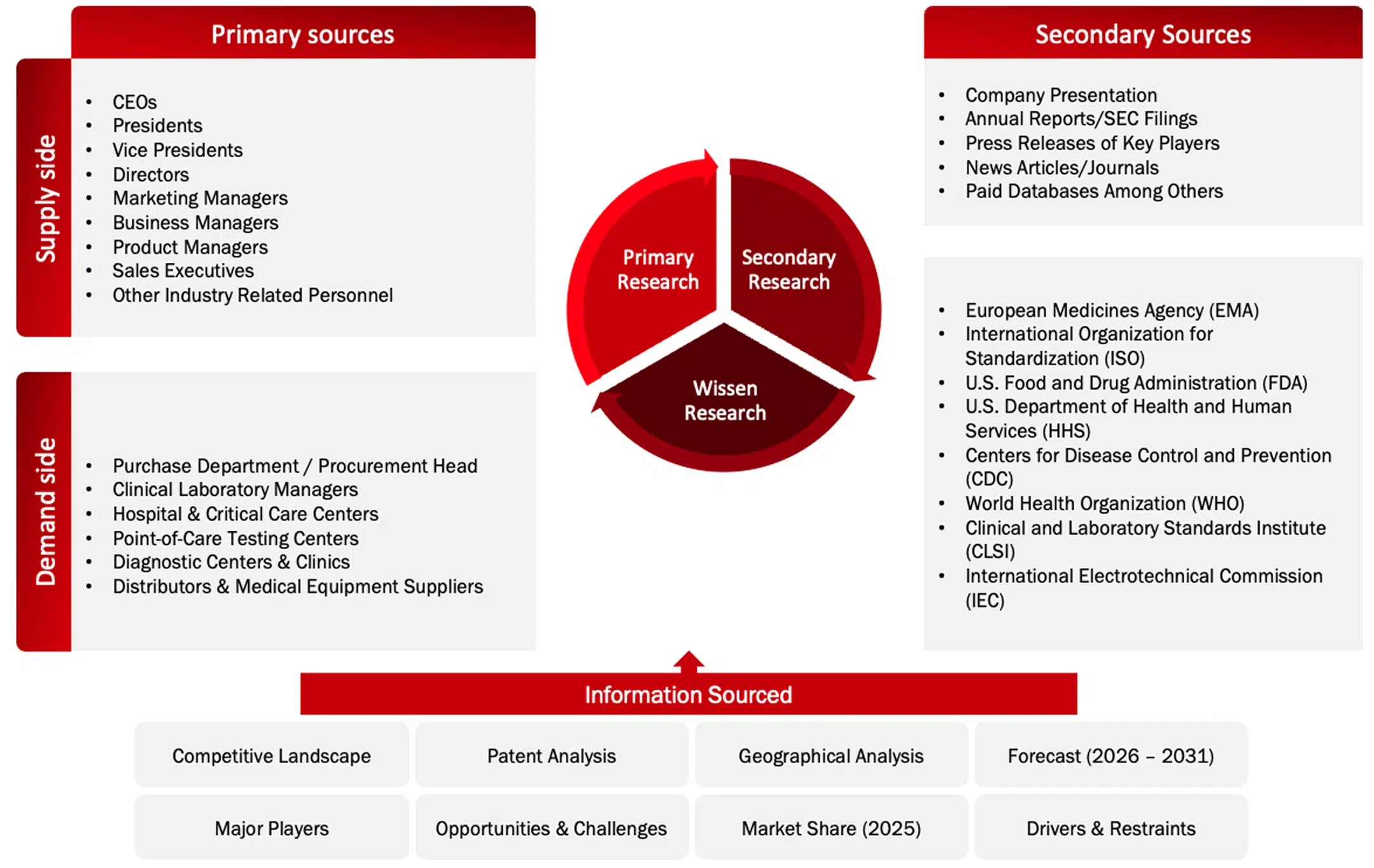
Sources: U.S. Food and Drug Administration, European Medicines Agency, National Institute of Standards and Technology, International Organization for Standardization, International Electrotechnical Commission, Federal Communications Commission, Occupational Safety and Health Administration, American National Standards Institute, Device Coordination Group, Company Website, Press Releases, Annual Reports, Paid Data Sources, and Wissen Research Analysis.
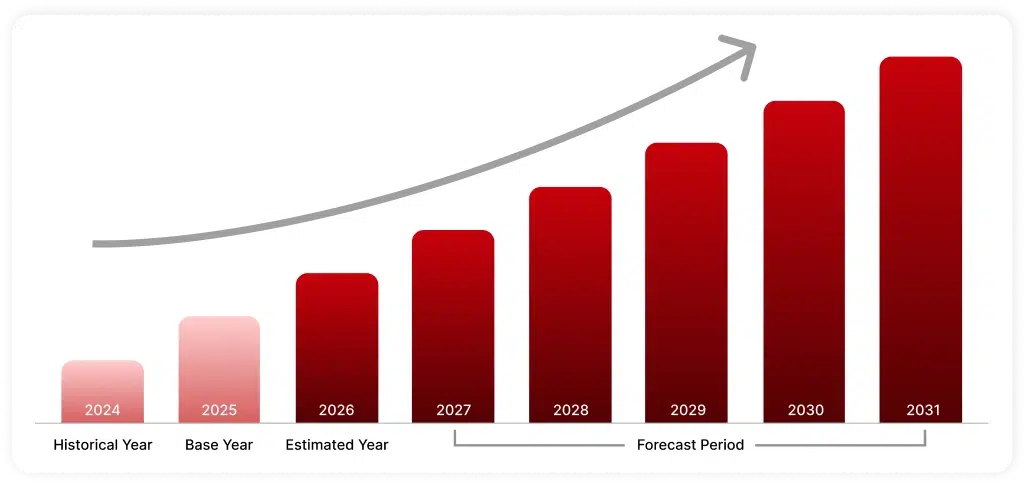
Year Framework
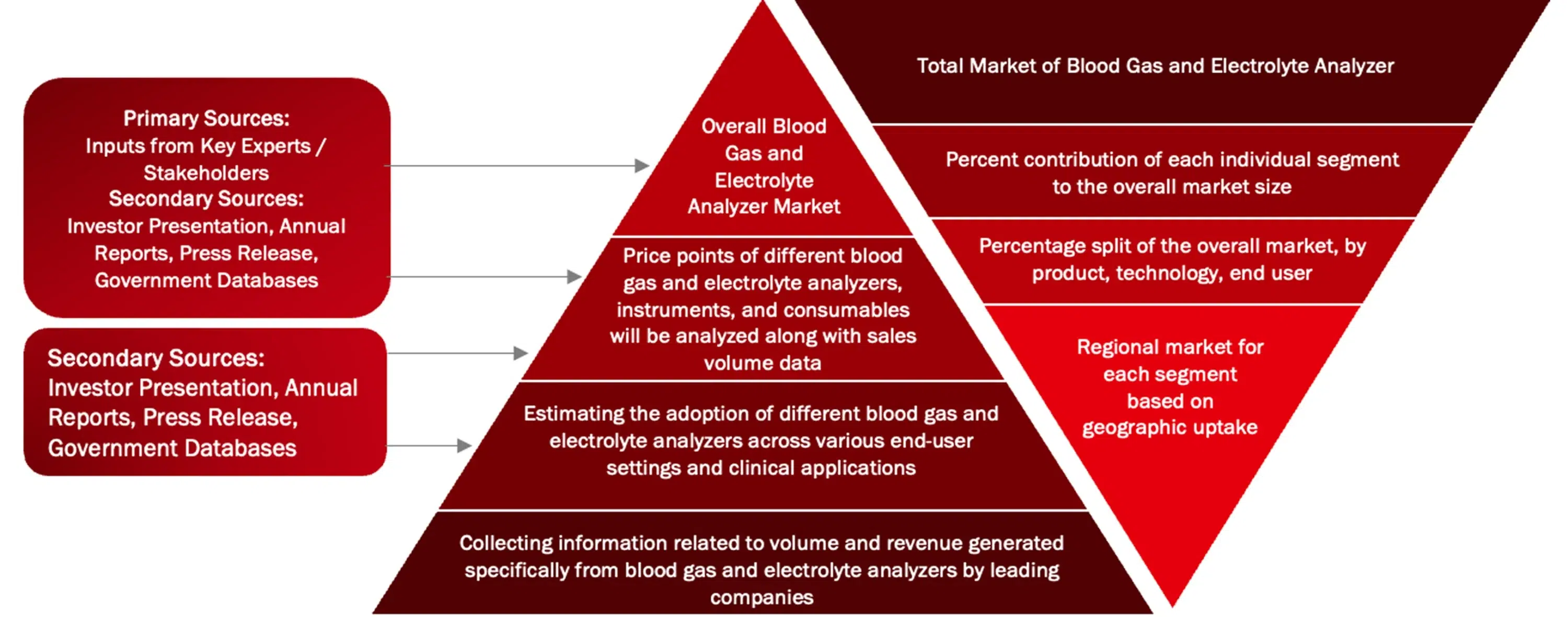
Bottom-Up Approach (Demand-Side Approach) and Top-Down Approach (Supply-Side Approach)
Bottom-Up Approach (Demand-Side Approach):
Determining the market size through the consolidation of demand among end-users, sectors, and geographic areas, which are calculated according to real-world demand conditions.
Top-Down Approach (Supply-Side Approach):
Calculating the market size through revenue and performance of the industry and its important companies, allocating the market size among various sectors.
Want detailed insights from this report?
Buy this Report
Choose the option that best fits your needs


