
Decaffeinated Coffee Market
Global Industry analysis, Size, Share, Growth, Trends, and Forecast 2026-2031
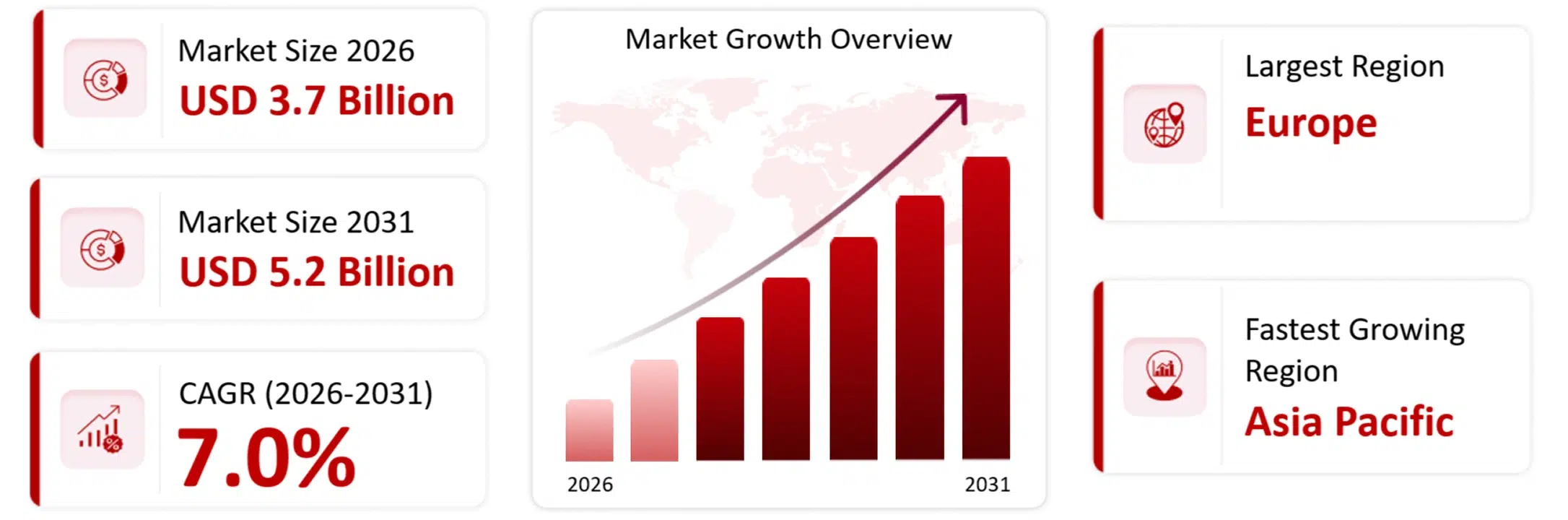
The global decaffeinated coffee market is projected to reach USD 5.2 billion by 2031, growing at a CAGR of 7.0% during the forecast period.
| Market Size 2026 | Market Size 2031 | CAGR (2026-2031) | Largest Region | Fastest Growing Region: |
|---|---|---|---|---|
| $ 3.7 Billion | $ 5.2 Billion | 7.0% | Europe | Asia Pacific |
Summarize this report with:



Market Overview
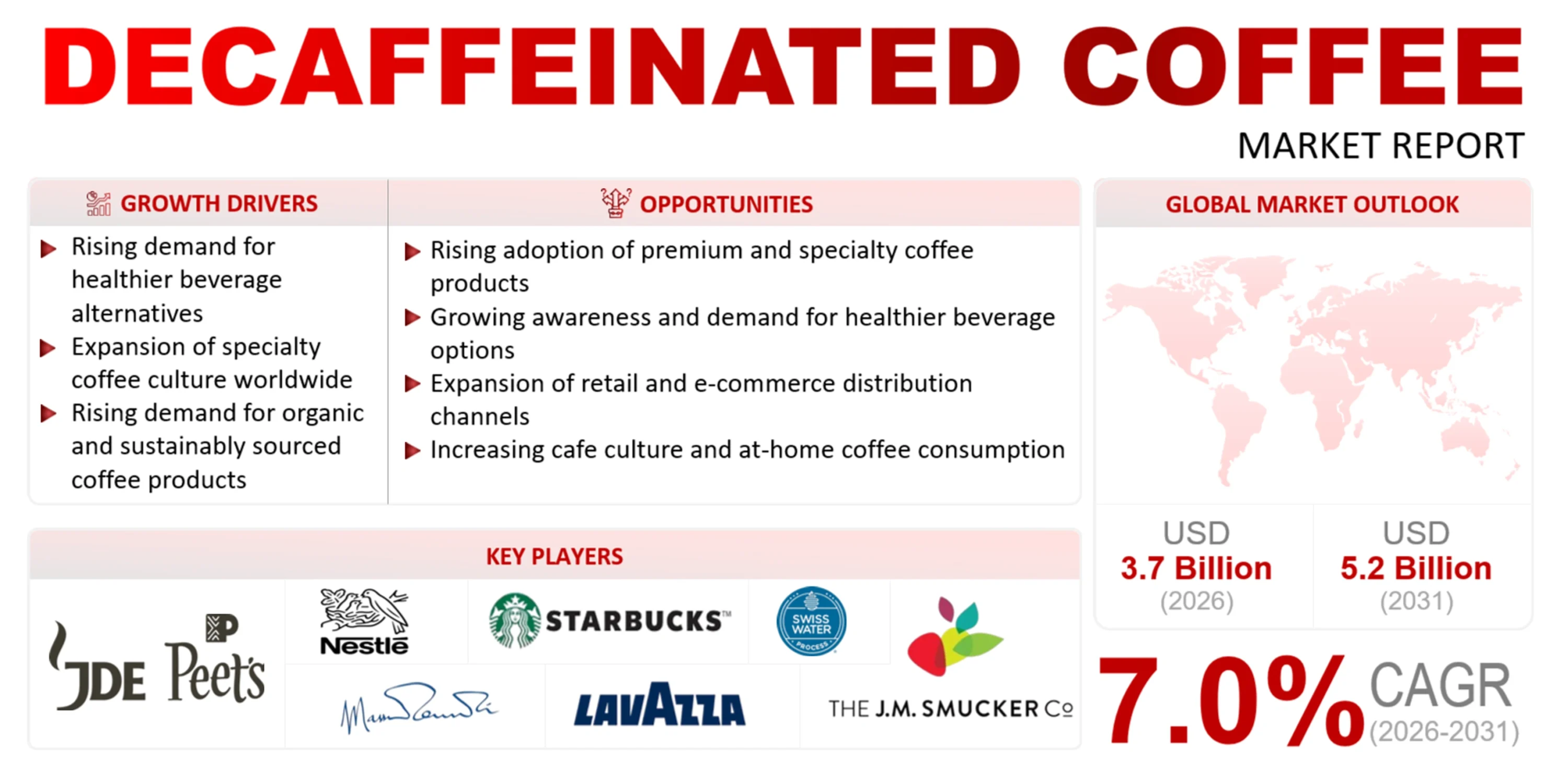
The global decaffeinated coffee market is expanding steadily. This growth is driven by rising consumer preference for healthier beverage choices, increasing awareness of caffeine-related health concerns, continuous advancements in decaffeination technologies that preserve flavor and aroma, growing availability of premium and specialty decaffeinated coffee products, and expanding consumption across retail, foodservice, e-commerce, and at-home brewing applications. The market is estimated to be USD 3.7 billion in 2026 and is projected to reach USD 5.2 billion by 2031, growing at a CAGR of 7.0% during the forecast period (2026-2031).
Technology Overview
With continuous advancements in decaffeination technologies, including the Swiss Water Process, supercritical carbon dioxide (CO₂) extraction, and solvent-based methods, manufacturers can effectively remove caffeine while preserving the coffee’s original flavor, aroma, and quality. Increased demand for high-quality beverages has contributed to the increased use of eco-friendly decaffeination technologies that do not require any chemicals. In addition, the advances made in the areas of roasting technology, flavoring and packing, as well as more automation in the process of coffee manufacturing, allow producers to improve product quality and extend its shelf life.
Key Growth Drivers
- Rising consumer awareness of the health effects associated with excessive caffeine consumption, including sleep disturbances, anxiety, and increased sensitivity to caffeine, is driving demand for decaffeinated coffee among health-conscious consumers seeking alternative beverage options.
- Innovative efforts of coffee companies towards new product development, such as specialty instant decaf coffee, traceable single-origin decaf offerings, and premium micro-lot decaf products, sustainable processes, and advanced extraction technologies, such as the Swiss Water Process, are improving the quality and taste of decaffeinated coffee and making them more available to consumers.
- The growing popularity of specialty coffee and organic coffee products is motivating companies to diversify their range of decaffeinated coffee products, thus opening up new possibilities for growth.
- The rapid growth of e-commerce sites and direct-to-consumer coffee brands, as well as the increasing trend of at-home coffee brewing, are improving accessibility and driving increased global consumption of decaf coffee products.
- The demand among pregnant women, elderly people, those sensitive to caffeine, and consumers of healthier lifestyles is widening the pool of decaffeinated coffee consumers, and cafés and restaurants are providing more decaf options.
Decaffeinated Coffee Market Key Highlights
Need deeper insights on this market?
Get full report access with detailed forecasts, competitive analysis, and segmentation.
Decaffeinated Coffee Market Trends
With increasing consumer preference for healthier beverage alternatives, reduced caffeine intake, and functional lifestyle choices, the decaffeinated coffee market is witnessing rising investments in product innovation, advanced processing technologies, and premium coffee offerings. The introduction of new trends in the industry is expected to create significant opportunities across areas such as organic and specialty decaffeinated coffee, sustainable decaffeination methods, ready-to-drink beverages, e-commerce distribution, and personalized coffee consumption. Key players in the decaffeinated coffee market, including JDE Peet’s, Nestlé S.A., Starbucks Coffee Company, Swiss Water Decaffeinated Coffee Inc., and The J.M. Smucker Co., are focusing on expanding their product portfolios, improving flavor retention technologies, and developing sustainable solutions to meet evolving consumer preferences.
Decaffeinated Coffee Industry Trends- Advancements in Decaffeination Technologies
Advancements in decaffeination technologies are transforming the quality and acceptance of decaffeinated coffee products. Modern processes such as the Swiss Water Process, carbon dioxide (CO₂) extraction, and improved solvent-based methods enable manufacturers to remove caffeine while maintaining the natural flavor, aroma, and characteristics of coffee beans. Increasing demand for clean-label and chemical-free products is encouraging companies to invest in sustainable and environmentally friendly decaffeination techniques. Leading coffee manufacturers are focusing on improving processing efficiency, enhancing taste profiles, and developing premium decaffeinated coffee varieties to attract consumers who seek both quality and reduced caffeine consumption.
Asia-Pacific Decaffeinated Coffee Market Trends Insights
The Asia-Pacific decaffeinated coffee market is experiencing increasing growth due to rising urbanization, expanding coffee consumption, growing awareness of health and wellness trends, and the increasing adoption of premium coffee products. Countries such as China, Japan, India, South Korea, and Australia are witnessing higher demand as consumers become more familiar with specialty coffee and alternative beverage options. Additionally, the expansion of cafés, international coffee chains, online retail platforms, and home brewing culture is creating new opportunities for decaffeinated coffee manufacturers. Growing investments by global and regional coffee companies in product launches, sustainable sourcing, and distribution expansion are expected to further support market growth across the Asia-Pacific region.
Key Players in the Decaffeinated Coffee
Leading companies in the decaffeinated coffee market are focusing on product innovation, sustainable sourcing, advanced decaffeination technologies, strategic partnerships, and expansion of premium coffee offerings to strengthen their market position.







Strategic Activities Within the Decaffeinated Coffee Market
Nestlé S.A. and Starbucks Coffee Company expanded their Global Coffee Alliance by launching new Starbucks Coffee Craft concentrated coffee products. The collaboration leverages Starbucks’ coffee expertise and Nestlé’s global manufacturing and distribution capabilities to expand premium at-home coffee offerings across international markets. The partnership supports product innovation and strengthens both companies’ positions in the growing premium coffee segment, including demand for convenient and customized coffee formats
STORYLINE Co., Ltd. and Ogawa Coffee Co., Ltd. collaborated to commercialize next-generation decaffeination technology. Through this partnership, the companies introduced coffee produced using the ZEN Craft Decaf Process™, a new decaffeination technology developed with Tohoku University, focusing on improved flavor retention and high-quality decaffeinated coffee experiences.
Nestlé S.A. (Switzerland) launched the Nescafé Espresso Concentrated Decaf variant in the UK and Ireland, expanding its ready-to-drink and at-home coffee portfolio to meet growing consumer demand for convenient decaffeinated coffee options. The product was developed using Nestlé’s coffee roasting and brewing expertise to deliver a barista-style coffee experience at home.
Decaffeinated Coffee Market Insights
The growing consumer demand for healthy drinks, decrease in caffeine intake, and premium coffee is contributing to the growth of the decaffeinated coffee market. Increased consciousness about caffeine sensitivity, sleep problems, and lifestyle health concerns is making consumers opt for decaffeinated coffee instead of regular coffee. The increasing availability of decaffeinated coffees through café outlets, retail grocery stores, specialized stores, and online channels, together with the development of coffee processing technology, is aiding in the growth of the market.
Decaffeinated coffee is increasingly consumed across various settings, including households, cafés, restaurants, workplaces, and hospitality establishments. The product is gaining popularity among consumers seeking lower-caffeine beverage options, including individuals sensitive to caffeine, older consumers, and those looking to reduce daily caffeine intake. Decaffeinated coffee is available in multiple formats such as roasted beans, ground coffee, instant coffee, capsules, and ready-to-drink beverages, supporting its adoption across different consumption occasions.
Growing preference for healthy beverages, awareness about the impact of caffeine, and interest in premium and specialty coffee are some of the major drivers of the decaffeinated coffee market. Advancements in technology used in the decaffeination process such as Swiss water process, carbon dioxide method, and other advanced processing technologies have made it possible for coffee manufacturers to retain the flavor and quality of coffee with less amount of caffeine. Growth in e-commerce websites, growing café culture, and home consumption are some of the other trends favoring the decaffeinated coffee industry.
The decaffeinated coffee market is being shaped by trends such as clean-label products, organic and sustainably sourced coffee, premium specialty decaf offerings, and innovations in flavor preservation technologies. Manufacturers are increasingly focusing on environmentally friendly decaffeination processes and transparent sourcing practices to meet evolving consumer expectations. However, challenges such as higher production costs, consumer perception regarding taste differences compared with regular coffee, and the complexity of maintaining flavor quality during caffeine removal may limit market growth.
The Asia-Pacific decaffeinated coffee market is expected to witness significant growth due to rising coffee consumption, increasing urbanization, expanding café culture, and growing awareness of health and wellness trends. Countries such as China, India, Japan, South Korea, and Australia are contributing to regional growth through increasing demand for premium coffee products and the expansion of online retail channels. Furthermore, growing investments by global coffee companies in product launches, distribution networks, and specialty coffee segments are supporting the adoption of decaffeinated coffee across the region.
Decaffeinated Coffee Market Dynamics
Drivers: Rising consumer preference for healthier and lower-caffeine beverage options is fueling the adoption of decaffeinated coffee.
Increased knowledge about the consequences of excessive caffeine consumption has prompted the shift towards decaffeinated coffee among health-conscious consumers. Growing consumer concern about caffeine sensitivity and insomnia issues, coupled with the increase in health consciousness and aging populations, has resulted in an increased shift towards decaffeinated coffee. Furthermore, the rise in the premium coffee culture along with higher quality decaffeinated products is contributing towards market growth.
Opportunities: Growth opportunities exist in premium, specialty, and sustainable decaffeinated coffee products
The rising trend of specialty coffee and clean-label beverages is presenting numerous opportunities for the global market of decaffeinated coffee. Consumers demonstrate growing preferences for organic, ethically sourced, and sustainable coffee products, prompting manufacturers to produce premium decaf varieties. In addition, the development of the online retailing channels, coffee subscription programs, and the home coffee brewing trend contributes to improved accessibility of decaf coffee products. Innovation in the ready-to-drink formats, coffee capsules, and single-origin decaf varieties is anticipated to bring further market opportunities.
Challenges: Higher production costs and maintaining flavor quality remain key challenges in the decaffeinated coffee market.
The decaffeination process requires additional processing steps, specialized technologies, and quality control measures, which can increase production costs compared with regular coffee. Maintaining the original aroma, taste, and characteristics of coffee beans after caffeine removal remains a technical challenge for manufacturers. Additionally, some consumers continue to perceive decaffeinated coffee as having inferior flavor compared with regular coffee, which may affect adoption. Companies must continue investing in advanced decaffeination technologies, product innovation, and consumer education to overcome these challenges and strengthen market acceptance.
Technology and Market Insights
There have been significant developments in the global decaffeinated coffee market, supported by increasing consumer demand for healthier beverage alternatives, reduced caffeine intake, and premium coffee experiences. This growth is driven by advancements in decaffeination technologies that enable manufacturers to remove caffeine while preserving the original taste, aroma, and quality of coffee. Other factors supporting market expansion include the rising popularity of specialty coffee, increasing availability through cafés and e-commerce platforms, growing demand for organic and sustainably sourced products, and innovations in ready-to-drink and single-serve coffee formats.
Technology Scope and Products
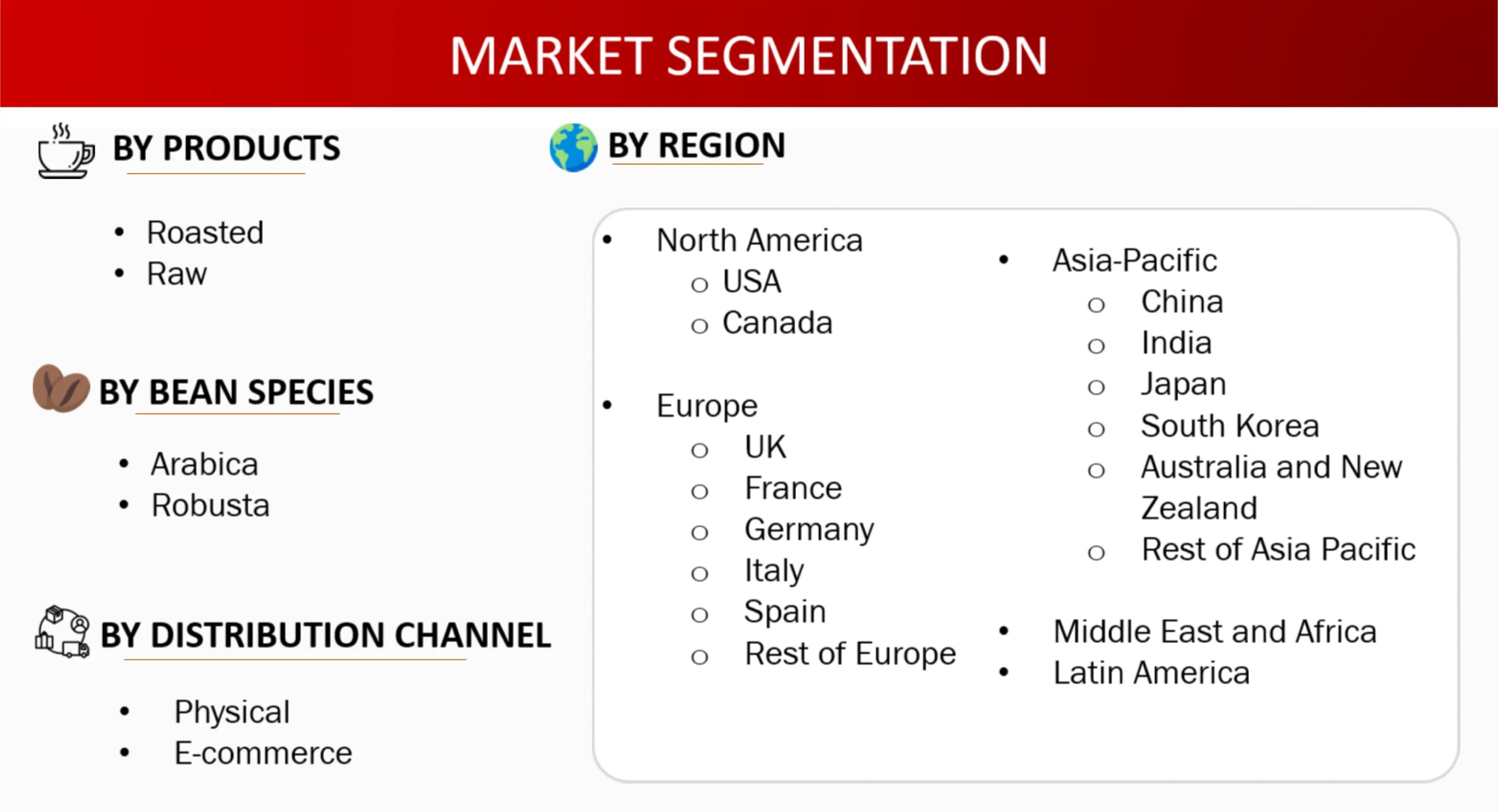
Decaffeinated Coffee Market Segmentation
Want detailed insights from this report?
Industry Developments and Competitive Landscape
The decaffeinated coffee market is experiencing continuous transformation due to advancements in decaffeination technologies, increasing demand for premium coffee products, and growing consumer preference for healthier beverage options. Major companies such as JDE Peet’s, Nestlé S.A., Starbucks Coffee Company, Swiss Water Decaffeinated Coffee Inc., and The J.M. Smucker Co. are investing in product innovation, sustainable coffee processing methods, and expansion of their decaffeinated coffee portfolios. Many companies are strengthening their market presence through strategic partnerships, acquisitions, brand expansions, and entry into emerging markets with rising coffee consumption. In addition, the growing adoption of e-commerce platforms, specialty coffee trends, and clean-label product offerings is supporting increased competition and driving continuous innovation in the decaffeinated coffee market.
The decaffeinated coffee market is segmented into various product types, including roasted decaffeinated coffee, instant decaffeinated coffee, and ready-to-drink decaffeinated coffee. In 2025, the roasted decaffeinated coffee segment accounted for the largest revenue share of over ~85% of the global market.
The dominance of this segment is attributed to increasing consumer preference for freshly brewed coffee experiences, premium coffee quality, and convenient at-home brewing formats. Roasted decaffeinated coffee provides consumers with a rich aroma and flavor profile similar to regular coffee, making it highly preferred among health-conscious coffee drinkers seeking reduced caffeine intake without compromising taste. Furthermore, growing demand from cafés, specialty coffee shops, and household consumers, along with advancements in roasting and decaffeination technologies, is supporting the continued growth of roasted decaf coffee products. For example, Starbucks offers its Decaf Pike Place® Roast and Decaf Espresso Roast, while Nestlé markets NESCAFÉ Gold Decaf and Nescafé Taster’s Choice Decaf. JDE Peet’s (L’OR, Kenco, Jacobs) and The J.M. Smucker Co. (Folgers Decaf) have also expanded their roasted decaffeinated coffee portfolios to meet growing consumer demand.
The decaffeinated coffee market is categorized by coffee bean type into Arabica and Robusta varieties. In 2025, the Arabica decaffeinated coffee segment dominated the market, accounting for around 58% of the total revenue share.
The strong position of Arabica decaffeinated coffee is driven by its superior taste profile, smooth texture, lower bitterness, and strong consumer preference within premium and specialty coffee segments. Arabica beans are widely preferred by specialty roasters and coffee brands due to their ability to retain desirable flavour characteristics after the decaffeination process. In addition, increasing demand for high-quality coffee products across cafés, online platforms, and specialty stores is supporting the adoption of Arabica-based decaffeinated coffee. Advancements in gentle decaffeination methods are further helping manufacturers preserve the delicate flavour notes of Arabica beans, strengthening their appeal among premium coffee consumers. For instance, Lifeboost Coffee, Volcanica Coffee, Kicking Horse Coffee, and No Fun Jo Coffee primarily offer premium decaffeinated coffee made from high-quality Arabica beans. Likewise, Starbucks, Lavazza, and illycaffè rely heavily on Arabica beans for many of their premium decaffeinated coffee offerings, reinforcing the segment’s leadership in the global market.
The global decaffeinated coffee market is analysed across major regions, including North America, Europe, Asia-Pacific, Latin America, and the Middle East & Africa. In 2025, Europe accounted for the largest revenue share of over 40% of the global decaffeinated coffee market.
Europe’s leading position is supported by strong coffee consumption culture, rising health awareness, and increasing demand for premium and sustainable coffee products. Countries across Western and Central Europe have witnessed growing adoption of low-caffeine beverages among consumers seeking healthier lifestyle choices while maintaining coffee consumption habits. The presence of established coffee brands, specialty coffee roasters, and advanced retail networks further supports market growth in the region.
What This Report Covers-
This report provides a comprehensive analysis of the decaffeinated coffee market, offering insights into key trends, growth drivers, challenges, and future opportunities. It is designed to support strategic decision-making through a combination of quantitative data and qualitative analysis.
Specifically, the report covers:

Overview of the market scope, structure, and key terminology.

Historical data and future projections across key segments and regions.

Insights into emerging trends, technological advancements, and evolving demand patterns.

Analysis of key factors influencing decaffeinated coffee market growth.

Overview of major players, their strategies, and recent developments.

Detailed Patent Analysis which includes, top assignees, geography focus of top assignees, legal status, technology evolution, key patents and patent trends and innovations

Breakdown by product, bean species, distribution channel and region.

Key regional trends and growth opportunities.

Strategic insights and future market direction.
Research Methodology
The study of the decaffeinated coffee market is based on a combination of primary and secondary research methodologies, supported by data validation and analytical modeling to ensure accuracy and reliability.
Market Definition: Decaffeinated Coffee Market
The decaffeinated coffee market encompasses the production, processing, distribution, and sale of coffee products with reduced caffeine content. The market includes various product categories such as roasted decaffeinated coffee, instant decaffeinated coffee, coffee capsules and pods, ground decaf coffee, and ready-to-drink decaffeinated beverages. Decaffeinated coffee provides consumers with an alternative beverage option for those seeking to reduce caffeine intake while continuing to enjoy the taste, aroma, and overall coffee experience.
Decaffeinated coffee products are widely consumed across various applications, including households, cafés, restaurants, workplaces, and hospitality establishments. The market is driven by increasing health awareness, growing demand for premium and specialty coffee products, rising preference for low-caffeine beverage options, and expanding availability through retail and online distribution channels. Decaffeinated coffee enables manufacturers to address changing consumer preferences by offering diverse product choices while expanding their presence across global coffee markets.
Key Stakeholders
The decaffeinated coffee market involves a diverse ecosystem of stakeholders:
- Coffee Manufacturers and Roasters (decaffeinated coffee producers, specialty roasters, and branded coffee companies)
- Coffee Bean Suppliers and Growers (coffee farmers, plantations, and suppliers providing Arabica and Robusta coffee beans)
- Decaffeination Service Providers (companies involved in caffeine removal processing and specialized decaffeination services)
- Coffee Processing and Packaging Companies (organizations involved in roasting, grinding, packaging, and product preservation)
- Specialty Coffee Companies and Independent Roasters (premium coffee brands offering organic, single-origin, and specialty decaffeinated products)
- Retailers and Distribution Networks (supermarkets, hypermarkets, specialty stores, cafés, e-commerce platforms, and online marketplaces)
- Foodservice Providers (cafés, restaurants, hotels, workplaces, and hospitality establishments offering decaffeinated coffee beverages)
- Coffee Equipment Manufacturers (companies providing coffee machines, brewing systems, and related equipment for commercial and household use)
- Certification and Sustainability Organizations (organizations supporting organic certification, fair trade practices, and sustainable coffee sourcing)
- Regulatory Authorities and Food Safety Organizations (government bodies responsible for food quality standards, labeling requirements, and safety regulations)
- Research and Development Institutions (organizations involved in coffee science, processing innovation, and product development)
- Investors and Financial Institutions (venture capital firms, private equity investors, and strategic investors supporting coffee companies and market expansion)
- Consumers and End Users (household consumers, health-conscious individuals, coffee enthusiasts, and specialty coffee buyers)
Key Objectives of the Study
- To define, describe, analyze, segment, and forecast the decaffeinated coffee market by products, by distribution channel and by bean species
- To describe and forecast the market for four key regions: North America, Europe, Asia Pacific, and Rest of the World.
- To provide detailed information regarding key drivers, restraints, opportunities, and challenges influencing market growth
- To strategically analyze the micro indicators with respect to individual growth trends, prospects, and contributions to the overall market size
- To analyze opportunities for stakeholders in the decaffeinated coffee industry and emphasize on competitive landscape of the market
- To develop competitive benchmarking of the key market players based on technology specifications and end users.
- To strategically profile key players and comprehensively analyze their product portfolio offerings, and core competencies
- To analyze competitive developments, such as launches and approvals, agreements, mergers and acquisitions, partnerships, joint ventures, investments and expansions, and collaborations, decaffeinated coffee domain.
Need deeper insights on this market?
Get full report access with detailed forecasts, competitive analysis, and segmentation.
Research Approach
This research employs a systematic approach by using primary research along with secondary research to achieve full coverage and accuracy of information about the decaffeinated coffee market sector. Through this approach, the current market trends in terms of consumer behavior, technological developments, and competitive environment can be analyzed thoroughly.
Secondary Research
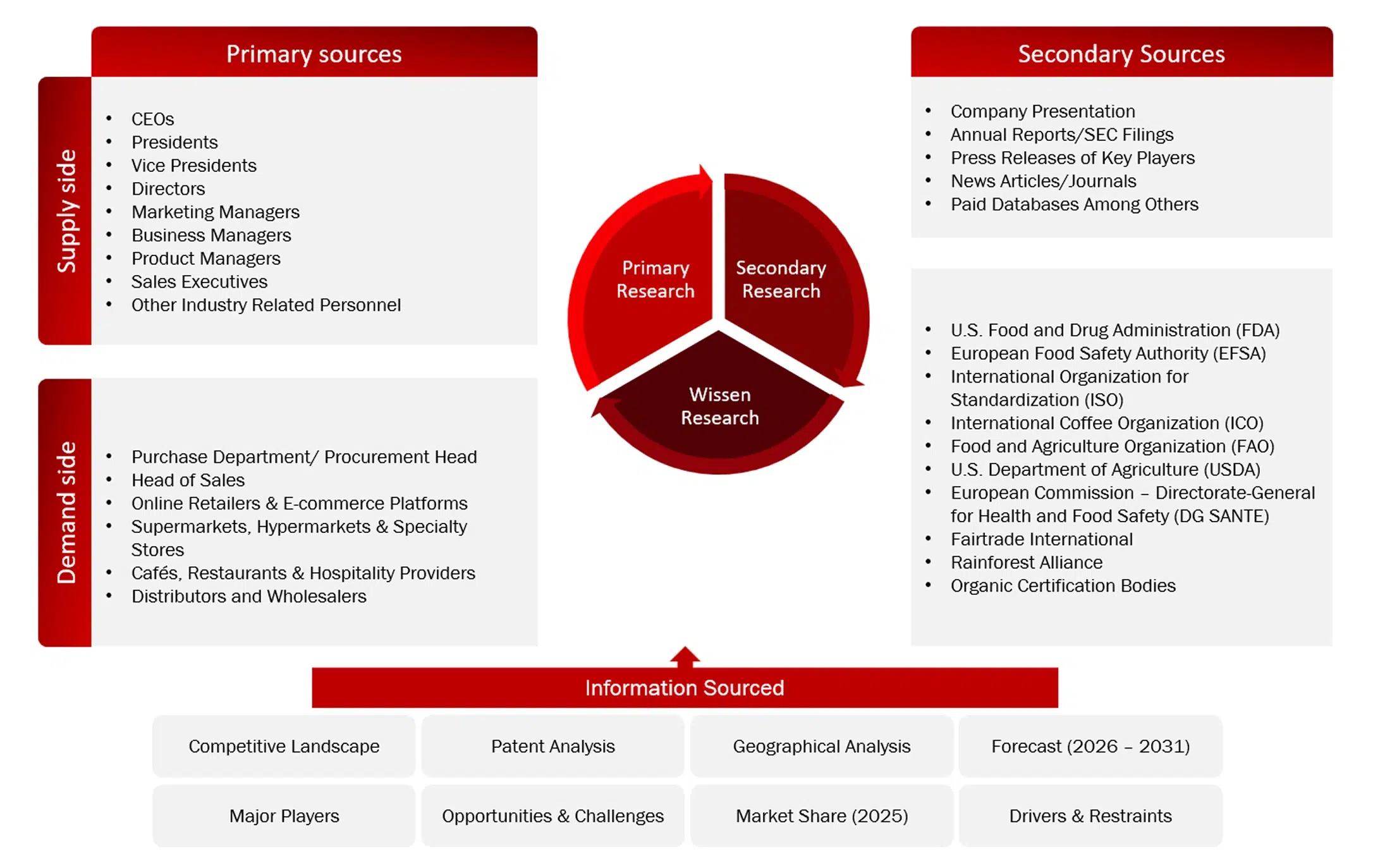
Secondary research involves the collection of data from reliable sources such as industry databases, company annual reports, investor presentations, and regulatory filings. This process helps in understanding market trends, identifying key players, and gathering technical and commercial insights.
A comprehensive database of leading companies and market participants is developed through secondary research to support further analysis.
Primary Research
Primary research is conducted to validate findings from secondary research and to gain deeper insights into market dynamics. Interviews are carried out with industry stakeholders across both demand and supply sides, including executives such as CXOs, Vice Presidents, and Directors from business development, marketing, and product teams.
Data is collected through structured questionnaires, email interactions, and telephonic interviews across key regions including North America, Europe, Asia-Pacific, and Rest of the World.
Market Size Estimation
Market size estimation is performed using both top-down and bottom-up approaches. Key market players are identified, and their revenues are analyzed to estimate the overall market size.
The market is further segmented based on:
- Product and service mapping across regions
- Adoption patterns across key application segments
- Insights gathered through primary and secondary research
Data Validation and Research Design
After estimating the overall market size, the data is validated using triangulation methods and market breakdown techniques to ensure accuracy and consistency. Both demand-side and supply-side factors are considered to refine the analysis.
The final data is validated through multiple sources to ensure reliability and to provide accurate insights across all market segments and regions.
Assumptions of the Study
The analysis of the decaffeinated coffee market is based on the following key assumptions:
- Trends in the industry are drawn from historical data and current information within the sector
- The future outlook is underpinned by constant economic conditions in the absence of shocks to the market
- The rate of adoption for decaffeinated coffee products will rise steadily in all important regions
- Advancements in coffee processing, product innovation, sustainable sourcing practices, and premium coffee offerings are expected to continue supporting growth in the decaffeinated coffee market
- The income statement and market share figures are estimated using available information from the industry and publicly available data
- The exchange rate and price trends will not be greatly affected during the forecast period
Scope and Limitations
Scope of the Study
This report offers an exhaustive overview of the international decaffeinated coffee market and includes the following components:
- Summary of market size, growth trends, and projections
- Carefully segmented market based on products, distribution channel, bean species and geography
- Discussion of primary factors influencing the market
- Competitor analysis
- Insights into regional and national market performance
Limitations of the Study
Despite the best efforts being made to keep the results accurate, the study does suffer from some limitations:
- It has been done using both primary and secondary data that come with their own constraints
- Rapid developments in technology might affect the future course of market dynamics
- Some figures are only approximations due to lack of public disclosure
- The report is not an insurance against any disruptions in macroeconomics and geopolitics
- Future forecasts are indicative and subject to change due to altered industry dynamics
Data Triangulation and Market Breakdown
Data triangulation involved the combination of primary research, secondary research, and the Wissen Research analysis. Once the data points were sourced from the secondary market research, we sanitized the data points to make the market sizing and growth forecast more accurate by developing our own assumptions based on the inputs and insights we gather through the primary interviews with the industry experts. Once the data was thoroughly validated through primary interviews from both, demand and supply side of the market, our team of analyst and other team members involved finalized the market sizing and growth forecast.
Data Triangulation Methodology
Sources: U.S. Food and Drug Administration, European Medicines Agency, National Institute of Standards and Technology, International Organization for Standardization, International Electrotechnical Commission, Federal Communications Commission, Occupational Safety and Health Administration, American National Standards Institute, Device Coordination Group, Company Website, Press Releases, Annual Reports, Paid Data Sources, and Wissen Research Analysis.
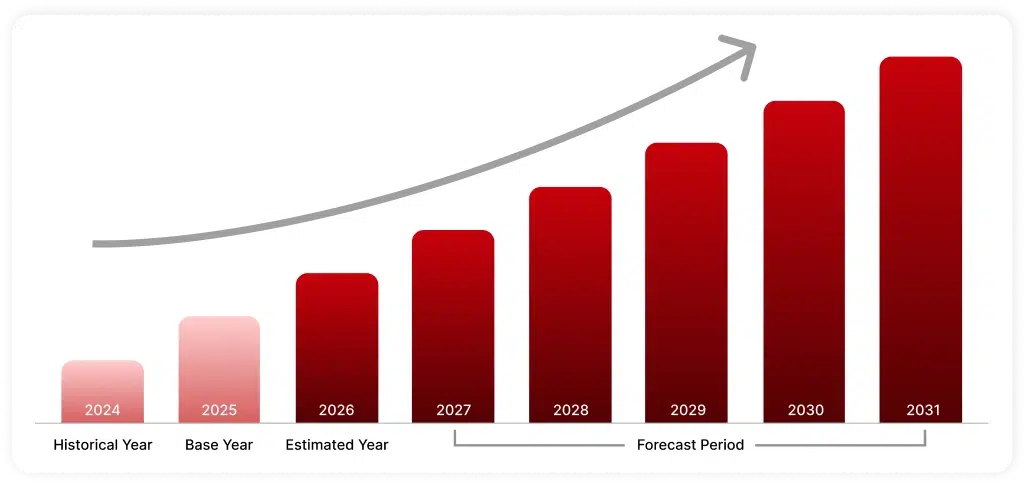
Years Framework
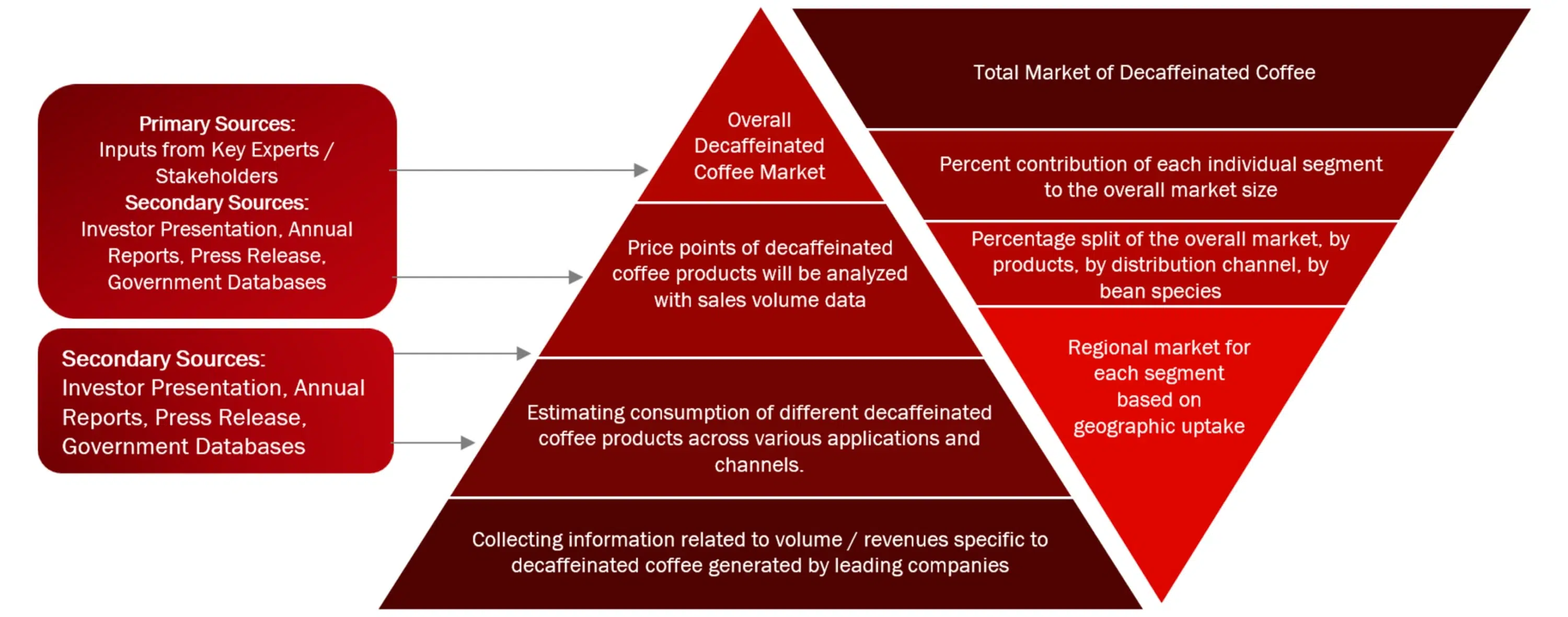
Bottom-Up Approach (Demand-Side Approach) and Top-Down Approach (Supply-Side Approach)
Bottom-Up Approach (Demand-Side Approach):
Determining the market size through the consolidation of demand among end-users, sectors, and geographic areas, which are calculated according to real-world demand conditions.
Top-Down Approach (Supply-Side Approach):
Calculating the market size through revenue and performance of the industry and its important companies, allocating the market size among various sectors.
Want detailed insights from this report?
Buy this Report
Choose the option that best fits your needs