
Drug Delivery Device Market
Global Industry analysis, Size, Share, Growth, Trends, and Forecast 2026-2031
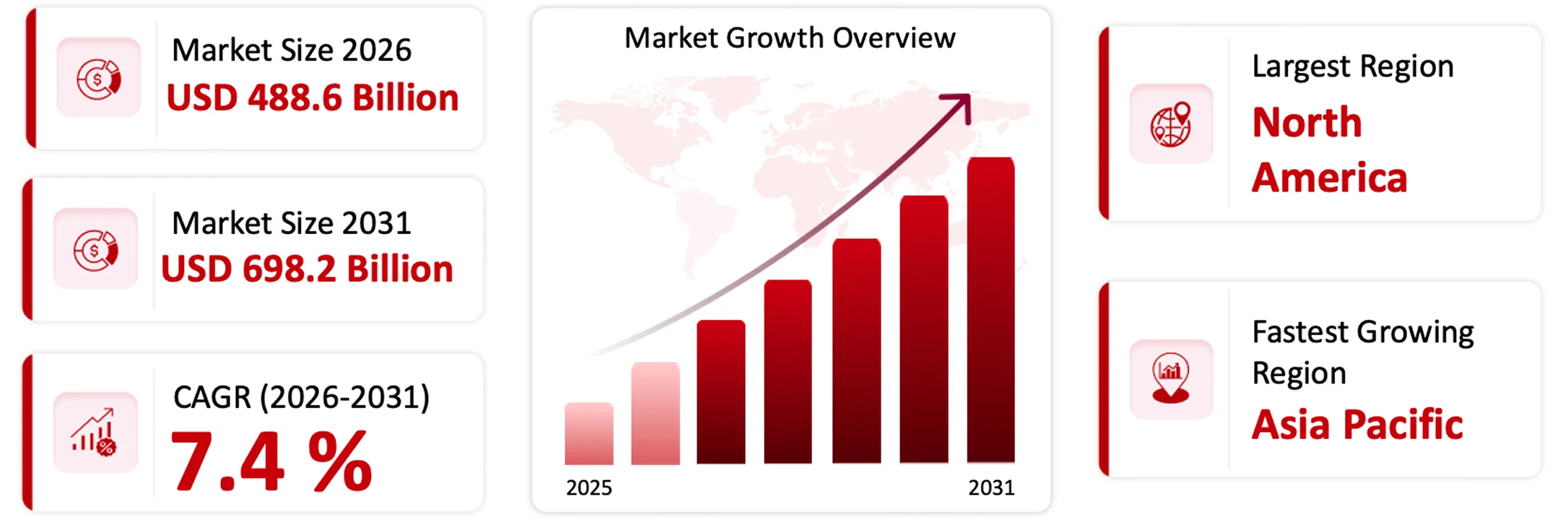
The global drug delivery device market is projected to reach USD 698.2 billion by 2031, growing at a CAGR of 7.4% during the forecast period.
| Market Size (2026): | Forecast (2031): | CAGR (2026–2031): | Leading Region: | Fastest Growing Region: |
|---|---|---|---|---|
| $ 488.6 Billion | $ 698.2 Billion | 7.4 % | North America | Asia Pacific |
Summarize this report with:



Market Overview
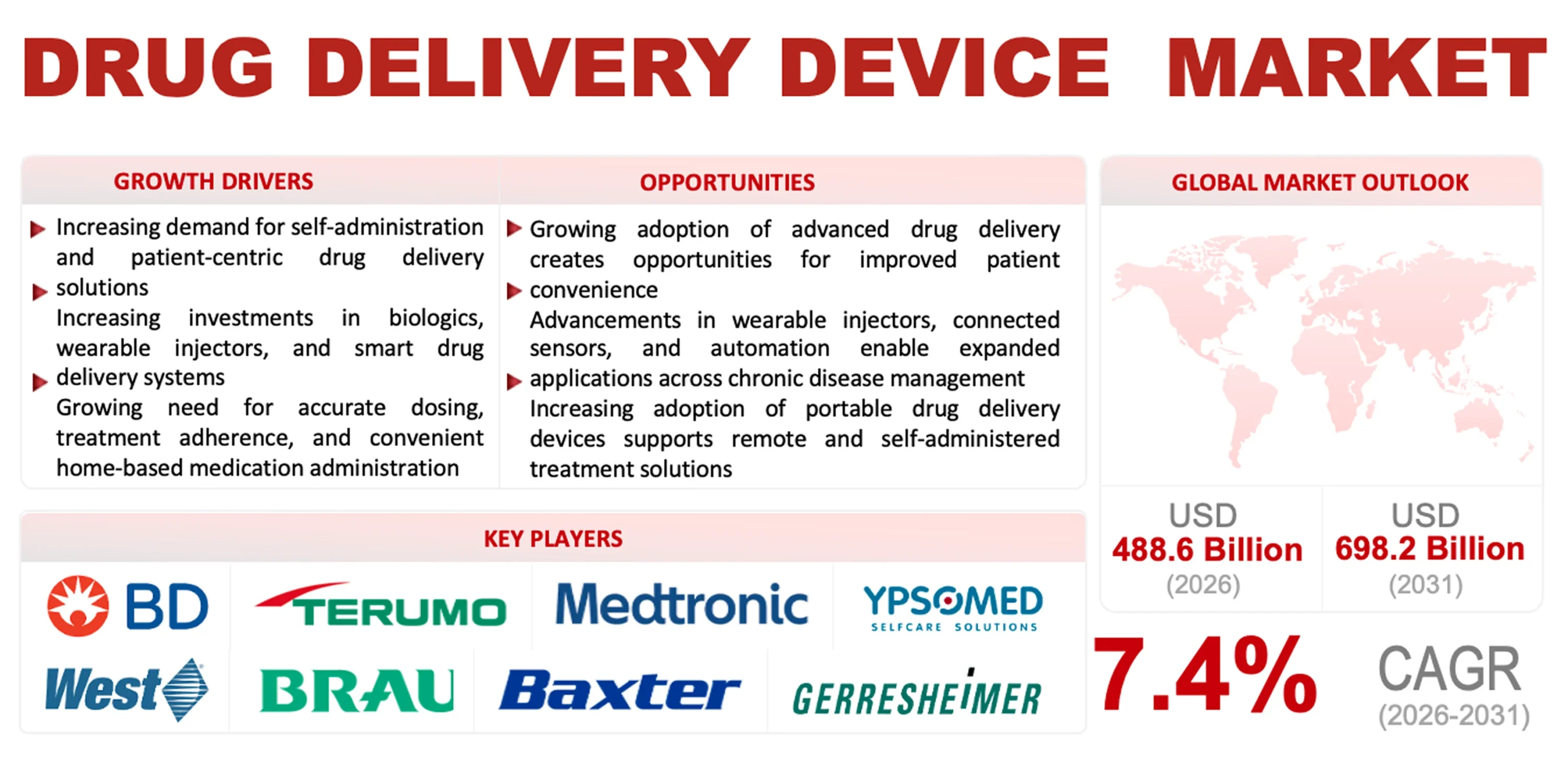
The drug delivery devices industry is witnessing a constant increase in the demand for improvements in drug administration that are highly targeted, controlled, and user-friendly. The drug delivery technologies have improved the medication adherence and made it possible for patients to administer their medicines themselves. In addition, drug delivery technologies help in the administration of biologics, insulin, and other complicated medications. Moreover, within the field of medicine, drug delivery devices help improve the efficiency of treatments by enhancing dosing precision, reducing problems caused by medication delivery, and enabling treatment at home. The market is estimated to be USD 488.6 billion in 2026 and is projected to reach USD 698.2 billion by 2031, growing at a CAGR of 7.4 % during the forecast period (2026-2031).
Technology Overview
Medications delivery devices allow medicines to be given through precise, reliable, and individualized administration systems. This way, medicines are delivered to the parts of the body they are intended for. These devices can be used in several ways: injection, orally, by inhalation, or through a patch or implant. Among their numerous uses, we can mention diabetes treatment, respiratory disorders treatment, cancer treatment, cardiovascular treatment, and management of ongoing illnesses. Advanced medications delivery devices give patients much better dosing precision, higher comfort, and the possibility of delivering medicine from the comfort of their home or even self-administration compared to standard medications administration methods.
Key Growth Drivers
- The rise of chronic diseases like diabetes, cardiovascular ailments, and respiratory illnesses means medical drug administration devices will become more important because they can achieve success through continuous treatment.
- The rising popularity of biologics and peptides as well as other complex therapies offers many opportunities for developing specialized administering devices and innovative systems for drug distribution.
- The growing preference for home healthcare methods and self-administering treatments leads to an increase in the demand for simple, effective, and portable devices.
- The growing focus on adherence to treatment and accurate dosing pushes the development of new connected and smart distributing devices.
- The development of technologies related to minimally invasive treatments and targeted drug administration is favoring the creation of devices that engage in drug distribution.
Drug Delivery Device Market Key Highlights
Need deeper insights on this market?
Get full report access with detailed forecasts, competitive analysis, and segmentation.
Drug Delivery Device Market Trends
The field of drug delivery device industry is witnessing rapid change as innovative drug administration technologies enter into therapeutic niches and patient environments that had previously depended on traditional delivery technologies. The surge is due to increased demand for self-administered treatment, targeted medication administration, better compliance, and regulated release of medication which is resulting in the growing adoption of devices in diabetes treatment, cancer treatment, respiratory care, and chronic conditions treatment. One of the trends noticed in the area of drug delivery device manufacture is the growing use of smart technologies such as artificial intelligence, Internet of Things, connected sensors, which help producers turn drug delivery devices from merely the means of drug delivery into intelligent ones. The increasing trend towards home care and making treatment personal leads to having more demand for devices that provide facilitation for a patient, proper dosing, and monitoring treatment process.
Integration of AI-Based Technology and Connected Digital Platforms into Drug Delivery Device Systems
The combination of AI-integrated technology together with digital systems provides an important improvement that will affect the way in which patients and health care practitioners administer drugs in the future. Traditionally, drug delivery products were simply performing the task of delivering a specific number of doses of a certain type of drug, while all of the information about how the drug is being used, whether it is executed correctly, or what the results of the treatment are received from the patients. It is often difficult to see and check whether the doses are missed or not delivered in cases when patients treat their chronic diseases all by themselves at home. Thus, the recent trend is to explore the various technologies that could assist in medication monitoring in order to collect more useful information.
In present drug delivery devices make use of modern technologies like sensors, digital interfaces, and special software that could help people in tracking the amount of medication taken by them. Different devices provide similar functions in collecting data about missing doses and informing patients when it is time for their next dose. Nevertheless, all of the above-mentioned capabilities depend upon type of the device used
Expansion of Wearable and On-Body Drug Delivery Systems in Chronic Disease Management
The shift towards the use of portable and wearable drug delivery systems is a key factor in driving the advancement of drug delivery devices, especially in the field of chronic disease treatment and biologic drug therapy. The benefits that portable drug delivery systems have compared to conventional delivery methods are that specific drugs can be administered through a mobile device that is either worn or attached to the patient, allowing for large volume doses or prolonged administration of treatments under settings which are less than conventional due to the influence of both drug composition and device structure. The importance of these devices in treating chronic diseases and biologic drugs is increased due to the growing prevalence of these medical conditions.
Wearable injectors, on-body systems of drug delivery, and autonomous infusion systems are already contributing to clinical areas such as diabetes treatment, immunotherapy, oncology, and others. A major reason for further implementation is the ability to decrease the burden of drug delivery. Apart from this, actual development of specialized biologics that require specialized administration makes many opportunities for improved delivery systems.
Key Players in the Drug Delivery Device Market
Leading companies in the drug delivery device market are focusing on innovation, strategic partnerships, and expansion of health-centric features to strengthen their market position.







Strategic Activities Within the Drug Delivery Device Market
Medtronic plc (Dublin, Ireland)’s MiniMed advanced its drug delivery portfolio with the FDA submission of the MiniMed Fit™ patch pump and CE Mark approval for MiniMed Flex™. The company also progressed its next-generation extended-wear sensor and Vivera™ fully closed-loop insulin delivery system.
Linear Health Sciences (Oklahoma City, Oklahoma, U.S.) partnered with Nipro Corporation (Osaka, Japan) to distribute the Orchid Safety Release Valve in Japan. The medical device is designed to prevent IV catheter dislodgement by safely disconnecting infusion lines when excessive force is applied, supporting safer infusion delivery.
Becton, Dickinson and Company (U.S.) and EMS S.A. (Brazil) collaborated to launch semaglutide therapy in Brazil using BD’s Vystra™ Injection Pen platform. The partnership combined pharmaceutical and drug delivery expertise to expand access to GLP-1 treatments while supporting reliable dosing and self-injection usability.
Drug Delivery Device Market Insights
The market for drug delivery devices has been witnessing steady growth due to increased utilization of sophisticated drug dispensing technology in healthcare applications such as diabetes management, oncology, respiratory care, and treatment of chronic illnesses. Unlike traditional medical dispensing techniques, drug delivery devices have unique features such as precise and consistent drug delivery through devices like injection pumps, infusion devices, inhalers, and portable injectors. Drug delivery devices play a significant role in improving medication compliance, providing self-administration assistance, and allowing efficient or controlled release of drugs. The increasing use of biologics, insulin delivery systems, and home health care has created a substantial demand for innovative drug delivery solutions. Apparatus miniaturization, interlinked systems, and modern sensors have facilitated the emergence of more efficient and user-friendly delivery methods.
Different therapeutic avenues utilize drug delivery systems for their purposes. In diabetes therapy, insulin delivery methods including insulin pens, pumps, and continuous delivery systems enable the proper administration of medication and management of the disease over time. Their application in healthcare ranges from delivering biologics and vaccine treatment to conventional drugs by means of injection, infusion, and special delivery systems. In the pharmaceutical industry, manufacturers utilize such delivery devices as auto-injectors and prefilled syringes and wearable injectors to improve patient convenience, and advancement of self-administration of medicine. Inhalation devices allow users to administer medicines effectively in the case of certain diseases of respiratory system, like asthma and Chronic Obstructive Pulmonary Disease (COPD).
The rise in the incidence of chronic illnesses, along with the demand for drug delivery solutions that are better, simpler, and more patient-centered are leading factors contributing to the expansion of drug delivery device market. Besides, the drivers behind the market development is the increasing utilization of biologics, peptide, and other intricate therapeutic medicines that generate the need for the special devices for injectable treatment, wearable drug delivery, and advanced drug delivery technologies. The advent of self-administering methods has also been encouraged by the expansion of home health care, as well as the need to diminish constant hospital and clinic visits. In addition to this the introduction of the combination of connected sensors, digital technologies, and smart devices with drug delivery devices enhances drug distribution process. Moreover, the advancements in miniaturization and manufacturing technologies ensure a rise in the availability of compact and easy-to-use devices. Additionally, the investment in biologics, personalized medicine, and patient-centered healthcare indicates that market growth will continue.
The drug delivery device market is seeing key trends such as the emergence of wearable injectors as well as smart connected devices and technologies for self-administration rate and advanced delivery systems for biologics. Moreover, digital connectivity and smart monitoring technology is delivering benefits such as better tracking of medications, medication reminders, and better treatment management when regular administration is needed. However, drug delivery devices face barriers such as high cost of development and production, complex regulatory procedures, incompatibility of drugs with delivery systems, and patient usability. In addition, many advanced delivery technologies have special infrastructure requirements and clinical verification which results in higher timelines and costs of commercialization. Furthermore, you have to deal with reimbursement issues, safety requirements, and reliability of the device among healthcare systems.
The use of rapidly developing healthcare infrastructure, growing production of medicines, and the ever-increasing share of chronic diseases are contributing to the rapid growth of the drug delivery device market in the Asia-Pacific region. Countries such as China, India, Japan, and South Korea are witnessing the demand for drug delivery devices due to greater spending on healthcare, greater medical access, and increased use of superior pharmaceutical innovations. The growing use of injected drugs, insulin delivery systems, inhalation devices, and self-injection technologies is opening up new opportunities for the expansion of the market in this area. In addition, local production capabilities in the sphere of pharmaceuticals and medical devices together with numerous investments in healthcare and biologics production will greatly simplify the access to superior drug delivery technologies.
Drug Delivery Device Market Dynamics
Drivers: Increasing Adoption of Intelligent, Automated, and Patient-Centric Drug Delivery Systems.
The major reasons for the growth of the devices market are the increased adoption of advanced therapeutics, automation, connectivity, and ease of administration. The current generation of drug delivery devices ensures greater accuracy of doses, automated delivery, medication tracking, and self-administration, thus facilitating treatment in a number of areas. Biologics and medications for diabetes control, chronic diseases, and respiratory conditions are just some of the areas in which drug delivery systems are widely used to guarantee convenient and dependable medication administration. The possibility of integrating the devices with digital health and monitoring systems provides new opportunities for managing medication adherence and treatment processes effectively. Growing demand for home treatments, minimally invasive delivery, and specialized administration techniques leads to increased adoption of drug delivery devices in various health markets worldwide.
Opportunities: Expansion into Decentralized Healthcare and Integration Across Multifunctional Platforms
The field of drug delivery devices is flourishing with possibilities resulting from the surge in popularity of portable, wearable, and small-sized devices that have been introduced in decentralized healthcare solutions. On-body injectors, wearable infusers, and interconnected injection devices are among the products being produced to facilitate administration of drugs at home, in outpatient facilities, and in remote healthcare facilities. Multifunctional innovative platforms are merging drug delivery systems with other means of healthcare technology such as connectivity, digital interface, monitoring systems to offer users innovative tools to manage their treatment in many fields of medicine including oncology, diabetes, immunology, and chronic diseases. Thanks to an ever-increasing preference given to self-treatment, better adherence to medication, and less administrative burden in the healthcare environment, prospects for their wider application keep emerging. In the meantime, the uptick of investments in biologics, home healthcare and pharmaceutical manufacturing and digital health infrastructures produces new opportunities as advancements in device design and usability make them more accessible to patients and healthcare practitioners alike.
Challenges: High Development Costs, Technical Complexity, and Regulatory Limitations
The drug delivery device sector is witnessing substantial advancements in technology in light of healthcare practitioners and pharmaceutical companies’ increased focus on convenient treatment, precise delivery, and patient engagement. Nonetheless, this industry encounters various challenges that impede the adoption of modern delivery systems.
The complexity and cost of development and manufacture of sophisticated devices like connected delivery platforms, automated infusion system, and wearable injectors may deter smaller manufacturers and healthcare companies from manufacturing the devices. Also, pharmaceutical formulations must be compatible with the drug deliver system, particularly for specialized formulations and biologics. Moreover, the usability of devices and the requirement for appropriate training for patients may present additional challenges even though new technologies will help tackle some of the challenges in the future.
Some technical aspects like drug stability, drug viscosity, dose requirements, and level of device reliability can cause operational troubles. In addition, various regulatory requirements such as trials, regulation of combination products, and quality of manufacture may substantially extend the time required for product development. Additionally, the specifics of the healthcare industry in a certain country may limit the access to drugs.
Technology and Market Insights
From a market perspective, the drug delivery device sector is undergoing progressive developments as health care systems and pharmaceutical manufacturers put focus on treatment adherence, patient convenience, and superior drug delivery. This is because the ability of drug delivery devices to ensure controlled, effective, and convenient administration of medication boosts the interest of health care providers as well as pharmaceutical companies to utilize advanced drug delivery technologies in diabetes management, oncology, respiratory care, and chronic disease treatment.
Technology Scope and Products
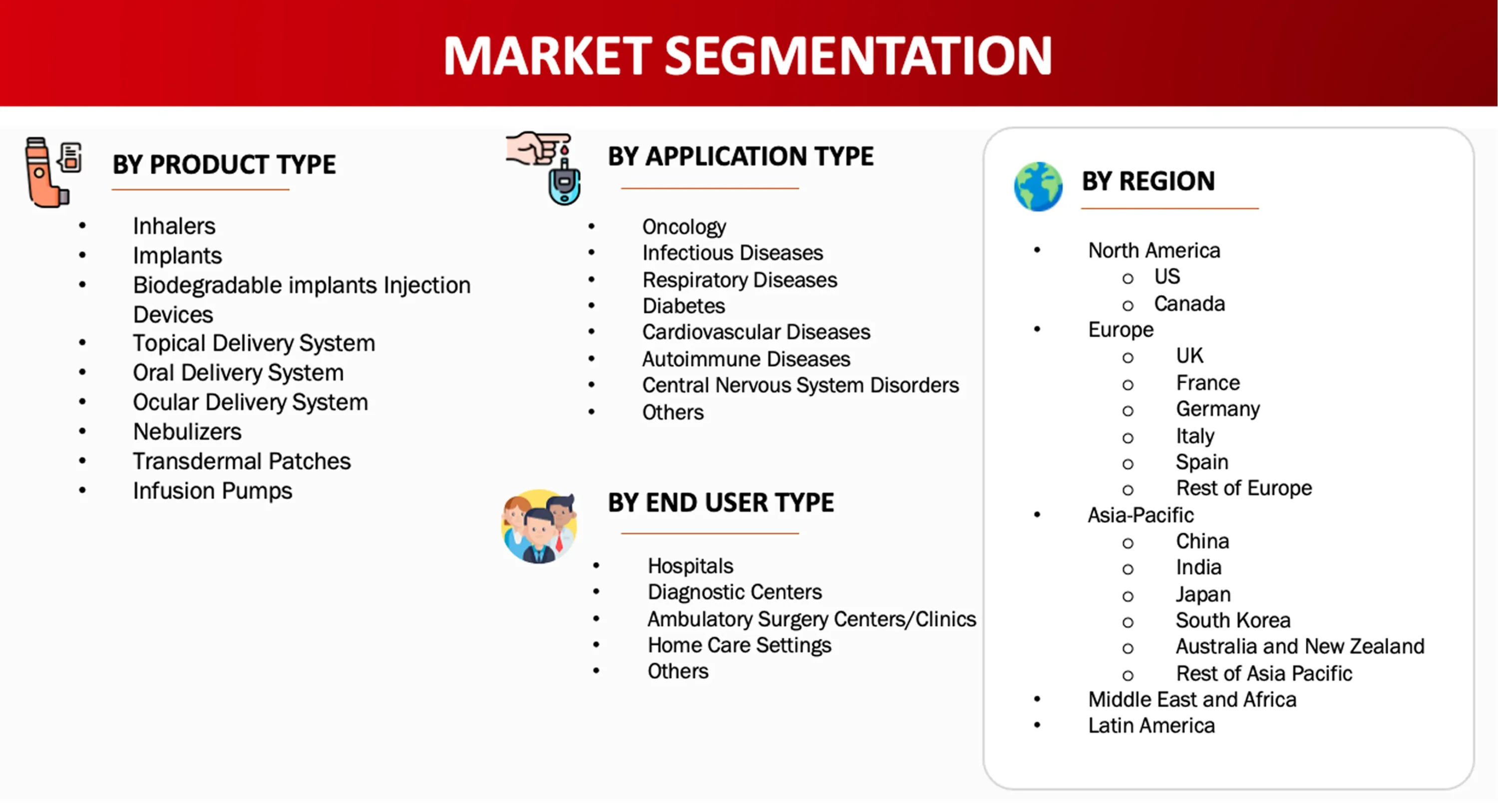
Drug Delivery Device Market Segmentation
Want detailed insights from this report?
Industry Developments and Competitive Landscape
A revolution in the drug delivery device industry is being brought by the merger of digital healthcare and biological drug development. Manufacturers are incorporating components such as sensors, Bluetooth, or app tracking into commonplace devices to create inhalers and insulin pumps that no longer work simply as mechanical devices. The increasing dominance of chronic diseases in the world such as respiratory diseases, diabetes, and cancer together with the growing trend of care being administered at home, has triggered the development of devices that have user-friendly solutions.
Inhalers took the leading position in the product type segment during the year 2025, grabbing around 24% of the market share, mainly due to the growing incidence of asthma and COPD and a series of industry-wide mergers and acquisitions that enabled manufacturers to enhance devices’ functionality.
-
With the completion of acquiring the Vectura Group from Philip Morris International in January 2025, Molex’s Phillips-Medisize will significantly improve its production capabilities, adding dry powder inhalers, metered-dose inhalers, nasal inhalers, nebulizers, and their variants, Gyrohaler and Fox device.
-
Established pharmaceutical companies like GSK, AstraZeneca, Boehringer Ingelheim, Chiesi, and Novartis combined their respiratory products with their own special sensor systems to preserve their brands and control the quality of the treatment.
-
AptarGroup partnered with Propeller Health to create new connected inhalers that can be compatible with different ways of treatment and allow switching from mechanical devices to information-based health tools.
The application sections of diabetes led the way in the year 2025, thanks largely to an estimated diabetic population in the USA of approximately 38.4 million people which roughly equals 11.6% of the population, leading to a continued need for insulin products such as IV pumps, syringes or continuous monitors aiding in monitoring. Insulet Corporation, well-known for its Omnipod pump, closed with the revenue of $783.8 million in the fourth quarter of 2025 that is about 31% increase year-over-year which means the tenth continuous year of constant FX growth of more than 20%.
-
The system created by Medtronic is still the only one which combines the automated insulin treatment with the continuous glucose monitoring data even though the company went through some challenges and managed to conduct a strategic review of its operations in diabetes.
-
The competition in the field of the automated insulin delivery has become even tougher due to the introduction of t:slim X2 with Control-IQ by Tandem Diabetes Care and the platforms developed by Abbott.
-
The iLet Bionic Pancreas system which received the FDA approval in the year 2025 is using iLet ACE pump with built-in CGMs for the automated insulin treatment of type 1 diabetes patients aged six years
North America led the drug delivery device market in 2025, commanding roughly a third or more of global revenue, underpinned by advanced healthcare infrastructure, concentrated biologics R&D, and the world’s highest per-capita spending on chronic disease management
-
The US accounted for most of North America’s revenue owing to its advanced pharmaceutical market and early uptake of smart drug delivery systems.
-
The noteworthy rise in the sales of GLP-1 medications for weight loss and diabetes medications including Novo Nordisk’s Wegovy and Eli Lilly’s Zepbound contributed to the increased demand for injector-pen solutions in the region, as the revenues from GLP-1 drugs were expected to grow from approximately 40 billion dollars in 2023 to 53 billion dollars in 2024.
-
Novo Holdings’ acquisition of Catalent for 16.5 billion dollars brought about major change in the fill-finish capacity and the injection manufacturing capacity in North America, which caused the supply to drop for industry prefilled syringes and injectors.
-
Increased investment in R&D as well the positive regulatory climate for combined drug-device products ensured that North America was ahead of Europe and APAC, although the APAC should grow much faster in the drug delivery market.
What This Report Covers-
This report provides a comprehensive analysis of the drug delivery device market, offering insights into key trends, growth drivers, challenges, and future opportunities. It is designed to support strategic decision-making through a combination of quantitative data and qualitative analysis.
Specifically, the report covers:

Market Overview & Definition:
Overview of the market scope, structure, and key terminology

Market Size & Forecast:
Historical data and future projections across key segments and regions

Key Market Trends:
Insights into emerging trends, technological advancements, and evolving demand patterns

Drivers, Restraints & Opportunities:
Analysis of key factors influencing drug delivery device market growth

Competitive Landscape:
Overview of major players, their strategies, and recent developments

Detailed Patent Analysis:
This includes, top assignees, geography focus of top assignees, legal status, technology evolution, key patents and patent trends and innovations

Segmentation Analysis:
Breakdown by product type, application type, end user, and region

Regional Insights:
Key regional trends and growth opportunities

Future Outlook:
Strategic insights and future market direction
Research Methodology
The study of the drug delivery device market is based on a combination of primary and secondary research methodologies, supported by data validation and analytical modelling to ensure accuracy and reliability.
Market Definition: Drug Delivery Device Market
Drug delivery devices have been developed to administer pharmaceutical formulations through controlled, accurate, and patient-friendly delivery mechanisms, enabling medication to reach its intended site of action. These systems incorporate technologies such as automated injection mechanisms, infusion pumps, wearable delivery platforms, and specialized drug-device interfaces to support reliable administration and treatment monitoring. Users can employ drug delivery devices to administer medications, manage chronic conditions, improve adherence, and support home-based treatment across applications including diabetes management, oncology, respiratory care, and immunology.
Key product examples of drug delivery technology include autoinjectors, prefilled syringes, insulin pens, infusion pumps, and wearable injectors. In addition, inhalers, nebulizers, transdermal patches, implantable delivery systems, and connected software platforms for dose tracking and treatment monitoring are included within selected product categories. Across healthcare settings, including hospitals, clinics, home healthcare, and outpatient facilities, drug delivery technology is used to improve dosing accuracy, enhance patient convenience, reduce administration burden, and support treatment efficiency.
Key Stakeholders
The drug delivery device market involves a diverse ecosystem of stakeholders:
- Drug Delivery Device Manufacturers (Auto injectors, prefilled syringes, insulin pens, infusion pumps, wearable injectors)
- Pharmaceutical and Biopharmaceutical Companies (Drug formulations, biologics, combination products, and delivery-device development)
- Device Component and Technology Providers (Needles, cartridges, pumps, sensors, electronic components, and specialized materials)
- Drug Delivery Software & Digital Health Providers (Connected device platforms, adherence monitoring, dose tracking, and analytics)
- Contract Development & Manufacturing Organizations (CDMOs) (Device development, combination product manufacturing, and assembly services)
- Healthcare Providers (Hospitals, clinics, outpatient centers, and home healthcare providers)
- Patients and Caregivers (Self-administration, medication management, and treatment adherence)
- Distributors and Channel Partners (Medical supply distributors, pharmaceutical wholesalers, and healthcare equipment suppliers)
- Regulatory & Standards Organizations (Drug-device combination product approval, safety, quality, and performance standards)
- Testing, Inspection & Certification (TIC) Companies (Device testing, validation, quality assurance, and regulatory compliance)
- Research Institutions and Academic Organizations (Drug delivery research, device engineering, and clinical development)
- Technology Partners (AI, IoT, sensor technology, connectivity, and cloud-based healthcare platforms)
- Investors (Venture capital firms, private equity investors, and strategic healthcare stakeholders)
Key Objectives of the Study
- To define, describe, analyze, segment, and forecast the drug delivery device by product type, by application type, by end user
- To describe and forecast the market for four key regions: North America, Europe, Asia Pacific, and Rest of the World
- To provide detailed information regarding key drivers, restraints, opportunities, and challenges influencing market growth
- To strategically analyze the micro indicators with respect to individual growth trends, prospects, and contributions to the overall market size
- To analyze opportunities for stakeholders in the drug delivery device industry and emphasize on competitive landscape of the market
- To develop competitive benchmarking of the key market players based on technology specifications and end user
- To strategically profile key players and comprehensively analyze their product portfolio offerings, and core competencies
- To analyze competitive developments, such as launches and approvals, agreements, mergers and acquisitions, partnerships, joint ventures, investments and expansions, and collaborations, drug delivery device domain
Need deeper insights on this market?
Get full report access with detailed forecasts, competitive analysis, and segmentation.
Research Approach
This research employs a systematic approach by using primary research along with secondary research to achieve full coverage and accuracy of information about the drug delivery device sector. Through this approach, the current market trends in terms of consumer behaviour, technological developments, and competitive environment can be analysed thoroughly.
Secondary Research
Secondary research involves the collection of data from reliable sources such as industry databases, company annual reports, investor presentations, and regulatory filings. This process helps in understanding market trends, identifying key players, and gathering technical and commercial insights.
A comprehensive database of leading companies and market participants is developed through secondary research to support further analysis.
Primary Research
Primary research is conducted to validate findings from secondary research and to gain deeper insights into market dynamics. Interviews are carried out with industry stakeholders across both demand and supply sides, including executives such as CXOs, Vice Presidents, and Directors from business development, marketing, and product teams.
Data is collected through structured questionnaires, email interactions, and telephonic interviews across key regions including North America, Europe, Asia-Pacific, and Rest of the World.
Market Size Estimation
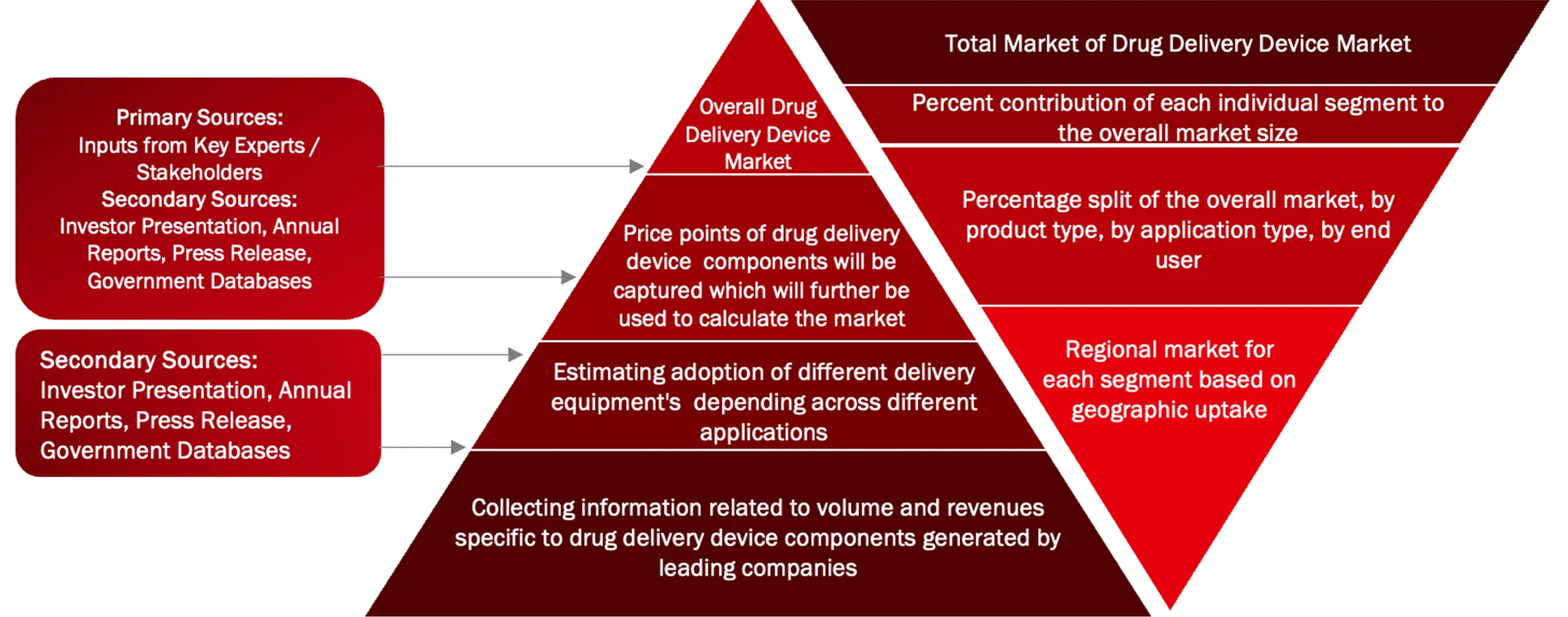
Market size estimation is performed using both top-down and bottom-up approaches. Key market players are identified, and their revenues are analysed to estimate the overall market size.
The market is further segmented based on:
- Product and service mapping across regions
- Adoption patterns across key application segments
- Insights gathered through primary and secondary research
Data Validation and Research Design
After estimating the overall market size, the data is validated using triangulation methods and market breakdown techniques to ensure accuracy and consistency. Both demand-side and supply-side factors are considered to refine the analysis.
The final data is validated through multiple sources to ensure reliability and to provide accurate insights across all market segments and regions.
Assumptions of the Study
The analysis of the drug delivery device market is based on the following key assumptions:
- Trends in the industry are drawn from historical data and current information within the sector
- The future outlook is underpinned by constant economic conditions in the absence of shocks to the market
- The rate of adoption for drug delivery device will rise steadily in all important regions
- The income statement and market share figures are estimated using available information from the industry and publicly available data
- The exchange rate and price trends will not be greatly affected during the forecast period
Scope and Limitations
Scope of the Study
This report offers an exhaustive overview of the international drug delivery device market and includes the following components:
- Summary of market size, growth trends, and projections
- Carefully segmented market based on products, platform, sample, end users, by mode of acquiring and geography
- Discussion of primary factors influencing the market
- Competitor analysis
- Insights into regional and national market performance
Limitations of the Study
Despite the best efforts being made to keep the results accurate, the study does suffer from some limitations:
- It has been done using both primary and secondary data that come with their own constraints
- Rapid developments in technology might affect the future course of market dynamics
- Some figures are only approximations due to lack of public disclosure
- The report is not an insurance against any disruptions in macroeconomics and geopolitics
- Future forecasts are indicative and subject to change due to altered industry dynamics
Data Triangulation and Market Breakdown
Data triangulation involved the combination of primary research, secondary research, and the Wissen Research analysis. Once the data points were sourced from the secondary market research, we sanitized the data points to make the market sizing and growth forecast more accurate by developing our own assumptions based on the inputs and insights we gather through the primary interviews with the industry experts. Once the data was thoroughly validated through primary interviews from both, demand and supply side of the market, our team of analyst and other team members involved finalized the market sizing and growth forecast.
Data Triangulation Methodology
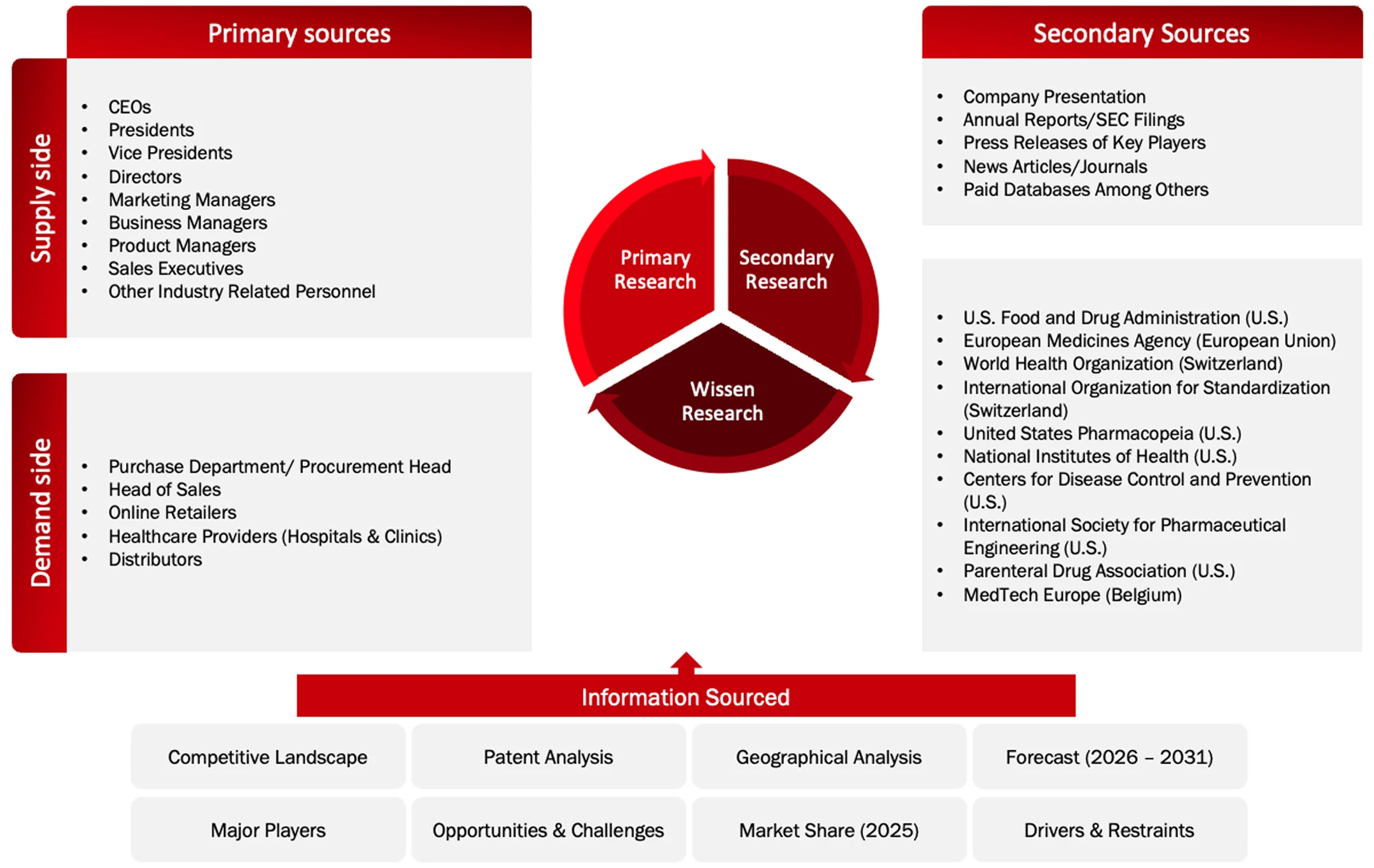
Sources: U.S. Food and Drug Administration, European Medicines Agency, National Institute of Standards and Technology, International Organization for Standardization, International Electrotechnical Commission, Federal Communications Commission, Occupational Safety and Health Administration, American National Standards Institute, Device Coordination Group, Company Website, Press Releases, Annual Reports, Paid Data Sources, and Wissen Research Analysis.
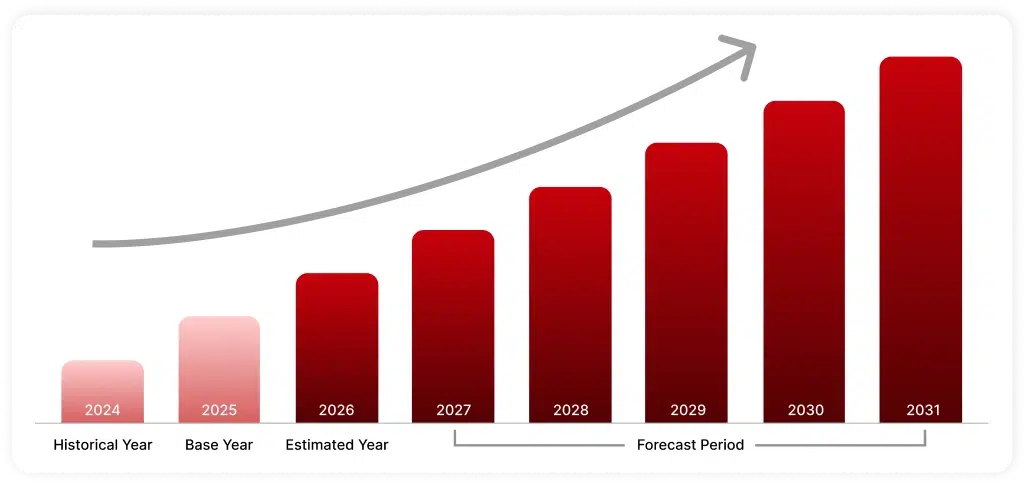
Year Framework
Bottom-Up Approach (Demand Side) And Top-Down Approach (Supply Side)
Bottom-Up Approach (Demand-Side Approach):
Determining the market size through the consolidation of demand among end-users, sectors, and geographic areas, which are calculated according to real-world demand conditions.
Top-Down Approach (Supply-Side Approach):
Calculating the market size through revenue and performance of the industry and its important companies, allocating the market size among various sectors.
Want detailed insights from this report?
Buy this Report
Choose the option that best fits your needs