
Global Cosmetics Market
Global Industry analysis, Size, Share, Growth, Trends, and Forecast 2026-2031
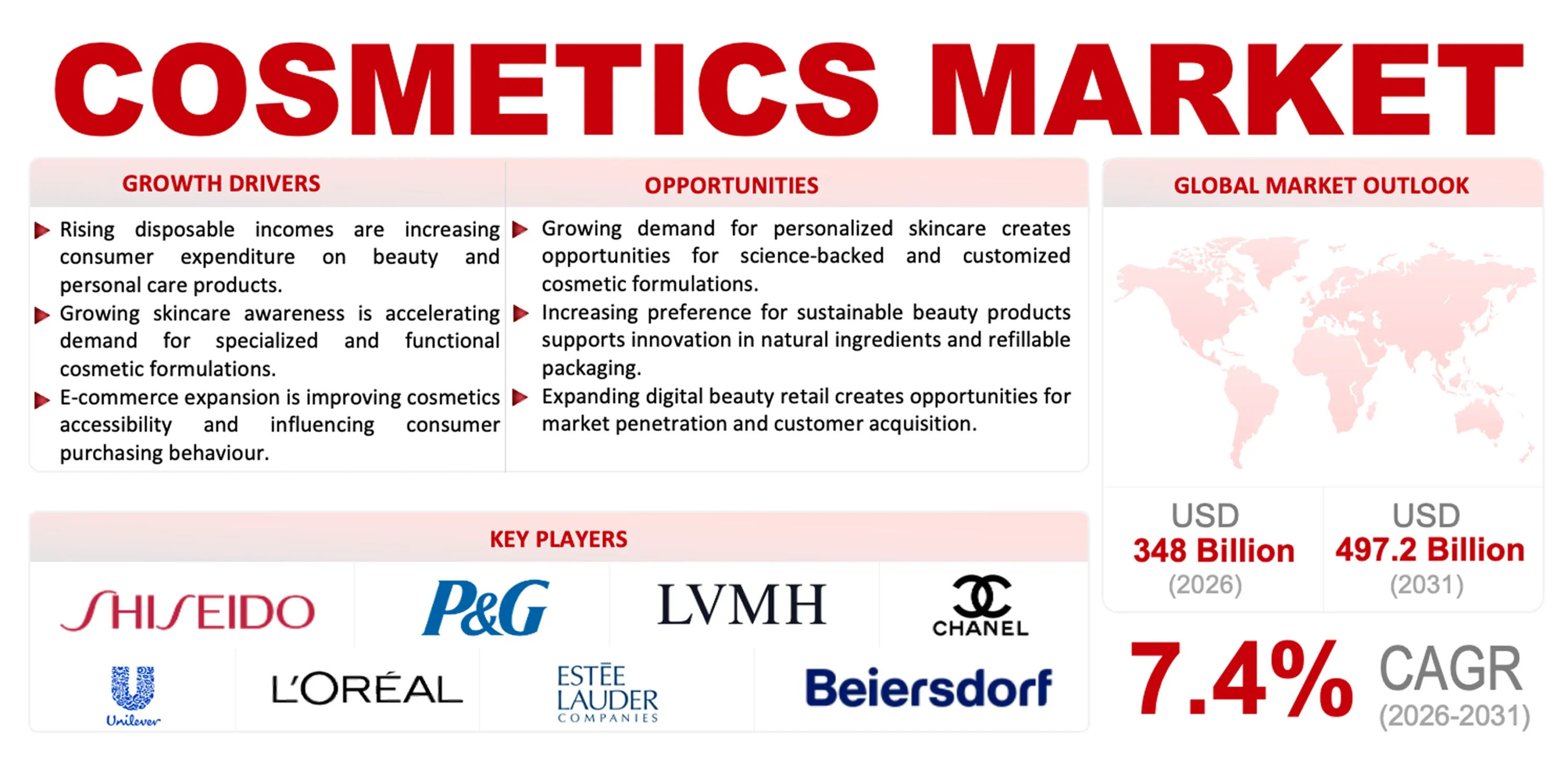
The market is projected to reach USD 497.2 Billion by 2031, growing at a CAGR of 7.4 % during the forecast period (2026-2031).
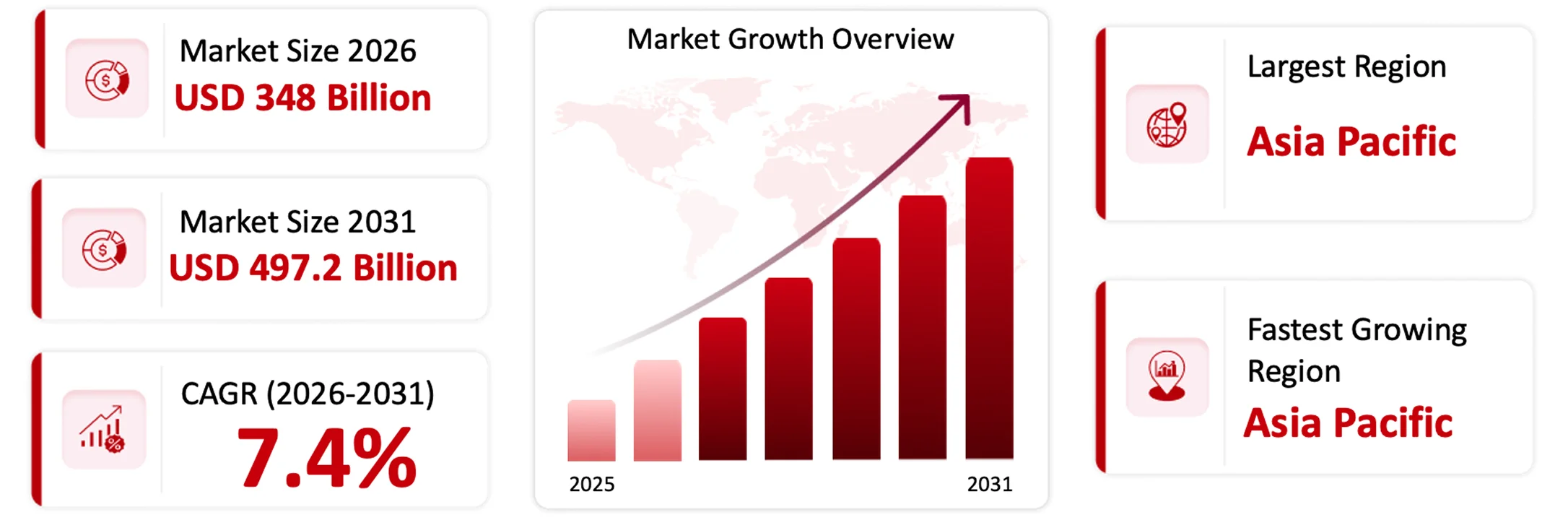
| Market Size (2026) | Forecast (2031) | CAGR (2026–2031) | Leading Region | Fastest Growing Region |
|---|---|---|---|---|
| USD 348 Billion | USD 497.2 Billion | 7.4% | Asia Pacific | Asia Pacific |
Summarize this report with:



Global Cosmetics Market Overview
“In my view the cosmetics industry is seeing steady growth bolstered by rising consumer spending on personal grooming items, increased awareness of the cosmetics category, and issuance of relevant goods specifically fulfilling beauty and hygiene needs. The growing popularity of specialized skincare products, anti-ageing creams, sun blockers, haircare items, and premium beauty goods among consumers is pushing manufacturers to widen their product range and opt for more expensive offerings. Moreover, growing number of men relying on skincare, haircare, and grooming products expands the target market. The expansion of such sales channels as e-commerce and social media, emergence of beauty influencers, as well as development of technology, all these things help to let customers find and buy beauty items faster and easier.”
– Mayur Jain, Research Consultant, Wissen Research
The market is estimated to be USD 348 Billion in 2026 and is projected to reach USD 497.2 Billion by 2031, growing at a CAGR of 7.4 % during the forecast period (2026-2031).
Technology Overview
The cosmetics market is witnessing continuous technological advancements in formulation science, ingredient processing, product delivery, and personalized beauty solutions. Advanced formulation technologies, including microencapsulation, nano emulsions, liposomal delivery, and controlled-release systems, are improving ingredient stability, skin absorption, product efficacy, and shelf life. Biotechnology is also gaining importance through the development of bio-based active ingredients, peptides, fermented extracts, and sustainable alternatives to conventional cosmetic ingredients. Artificial intelligence (AI), machine learning, and skin-analysis technologies are enabling personalized product recommendations, virtual try-on applications, and customized skincare formulations. Additionally, innovations in polymer science, waterless formulations, and biodegradable ingredients are supporting the development of sustainable cosmetics. Automation and precision manufacturing are further improving formulation consistency, production efficiency, and quality control.
Key Growth Drivers
- Increasing Beauty, Skincare, and Personal Care Awareness: Growing awareness of skin health, personal grooming, sun protection, and anti-ageing benefits encourages consumers to adopt regular beauty routines and purchase specialized cosmetics addressing specific personal care requirements.
- Stringent Cosmetic Regulations and Product Safety Requirements: Regulatory requirements concerning ingredient safety, product registration, labelling, and manufacturing practices encourage manufacturers to improve formulation quality, strengthen compliance processes, and develop safer cosmetic products.
- Technological Advancements in Cosmetic Formulations: Advances in biotechnology, microencapsulation, molecular simulation, and microbiome research enable manufacturers to develop innovative formulations with improved ingredient stability, targeted delivery, and differentiated skincare benefits.
- Premiumization and Growing Demand for Specialized Cosmetic Products: Increasing consumer interest in premium ingredients, dermatologically tested formulations, personalized skincare, and specialized beauty products supports higher-value purchases and expands opportunities across premium cosmetics categories.
- Expansion of E-commerce and Digital Beauty Retail Channels: Growing adoption of online shopping, social commerce, virtual product trials, and digital beauty consultations improves product accessibility, strengthens consumer engagement, and expands cosmetics distribution across geographical markets.
Cosmetics Market Key Highlights
Need deeper insights on this market?
Get full report access with detailed forecasts, competitive analysis, and segmentation.
Cosmetics Market Trends
The cosmetics market is witnessing a shift toward science-backed formulations, ingredient transparency, and multifunctional beauty products that combine skincare benefits with cosmetic applications. Personalized beauty solutions, supported by artificial intelligence, skin diagnostics, and virtual try-on technologies, are transforming product discovery and consumer engagement. The growing influence of Korean beauty is encouraging demand for innovative ingredients, affordable premium skincare, and simplified beauty routines. Additionally, premiumization is progressing alongside value-oriented purchasing, with consumers prioritizing demonstrable product performance. Sustainability initiatives are driving interest in refillable packaging, cruelty-free formulations, and responsibly sourced ingredients, while e-commerce and social commerce are reshaping beauty product discovery and purchasing behaviour.
Ingredient-Led Formulations and Scientific Beauty Innovation
- Epigenetic and cellular skincare: Beiersdorf introduced EPICELLINE in its NIVEA Cellular Epigenetics Rejuvenating Serum on August 13, 2025. The ingredient reflects research into epigenetic approaches to skincare and skin ageing, illustrating the development of formulations based on specific biological processes rather than relying exclusively on conventional moisturising and cleansing applications.
- Microbiome-based skincare: On September 1, 2026, Beiersdorf introduced Eucerin DERMOPURE CLINICAL PROBIOM8, incorporating viable skin-native probiotics for acne-prone skin. The development demonstrates the application of microbiome-related research in dermatological skincare and the use of specific biological ingredients to address skin-related requirements.
- AI-supported ingredient discovery: In 2026, L’Oréal and NVIDIA announced a collaboration using predictive AI and molecular simulation to accelerate beauty discovery. The collaboration includes research applications in photoprotection and skin-tone management, demonstrating how computational methods are being incorporated into ingredient research and formulation development.
- Personalised skin analysis: L’Oréal introduced Cell BioPrint in January 2025, using proteomics and protein biomarkers to assess skin ageing. The company subsequently announced a pilot launch of Lancôme Cell BioPrint in March 2026, incorporating microfluidic technology for biological skin diagnosis. These developments indicate increasing integration of analytical technologies into personalised skincare applications.
- Research and regulatory constraints: Ingredient innovation requires alignment with regulatory restrictions and product safety requirements. Regulation (EU) 2024/996, adopted on April 3, 2024, amended restrictions involving Vitamin A, Alpha-Arbutin, and Arbutin, while Regulation (EU) 2025/877, adopted on May 12, 2025, addressed substances classified as carcinogenic, mutagenic, or toxic for reproduction. These requirements influence ingredient selection and formulation development.
AI Integration and Strategic Beauty Portfolio Expansion
- AI-enabled consumer engagement: On June 17, 2026, L’Oréal and OpenAI announced a collaboration involving AI-powered consumer journeys and agentic commerce. The announcement also included plans for Maybelline New York virtual makeup try-on within ChatGPT using ModiFace technology, demonstrating the integration of generative AI into cosmetics discovery and consumer engagement.
- Digital brand visibility: The Estée Lauder Companies announced a global partnership with Profound on September 14, 2026, to monitor and optimise brand representation across generative AI platforms. On October 27, 2026, Coty announced a partnership with Brandlight to strengthen brand discovery across AI assistants and generative AI search platforms, reflecting increased attention to AI-driven brand visibility.
- Portfolio expansion through acquisitions: On June 18, 2026, L’Oréal announced an agreement to acquire a majority stake in Innovist, the Indian personal care company behind Bare Anatomy and Chemist at Play. On March 5, 2026, The Estée Lauder Companies announced an agreement to acquire the remaining interests in Forest Essentials, strengthening its involvement in luxury Ayurveda-based beauty products.
- Strategic partnerships and product development: In September 2026, L’Oréal and COSMAX signed an MOU covering raw materials, active ingredients, product design, and sensory characteristics. In 2026, L’Oréal also announced a collaboration with NVIDIA involving predictive AI and molecular simulation. These partnerships demonstrate the importance of research collaboration and technology integration in product development.
- Portfolio restructuring and regulatory challenges: On July 7, 2026, Coty agreed to transition its Gucci Beauty licence back to Kering for approximately $400 million, while continuing to operate the brand through at least June 30, 2027. Separately, the US Modernization of Cosmetics Regulation Act (MoCRA), introduced in 2022, established facility registration and product-listing requirements. Portfolio restructuring and regulatory compliance therefore remain important considerations for cosmetics companies.
Key Players in the Cosmetics Market
Leading cosmetics companies are focusing on brand portfolio expansion, research and development, ingredient and formulation innovation, product quality, strategic partnerships and acquisitions, AI-enabled consumer engagement, and expansion across product categories and international markets.







Strategic Activities Within the Cosmetics Market
Coty Inc. (United States): Coty announced a partnership with Brand light to strengthen brand visibility and discovery across AI assistants and generative AI search platforms. The collaboration focuses on digital brand representation and consumer discovery across its beauty and fragrance portfolio.
Beiersdorf AG (Germany): Beiersdorf announced a five-year partnership between NIVEA SUN and the Tour de France, starting in 2027. The partnership focuses on promoting sun protection and increasing consumer engagement around sunscreen and sun-care products.
Beiersdorf AG (Germany): Beiersdorf introduced Eucerin DERMOPURE CLINICAL PROBIOM8, incorporating viable skin-native probiotics for acne-prone skin. The development applies microbiome-related research to dermatological skincare formulations.
L’Oréal S.A. (France): L’Oréal and COSMAX signed an MOU to collaborate on next-generation beauty innovations, covering raw materials, active ingredients, product design, and sensory characteristics. The collaboration supports research and product development across cosmetics formulations.
Cosmetics Market Insights
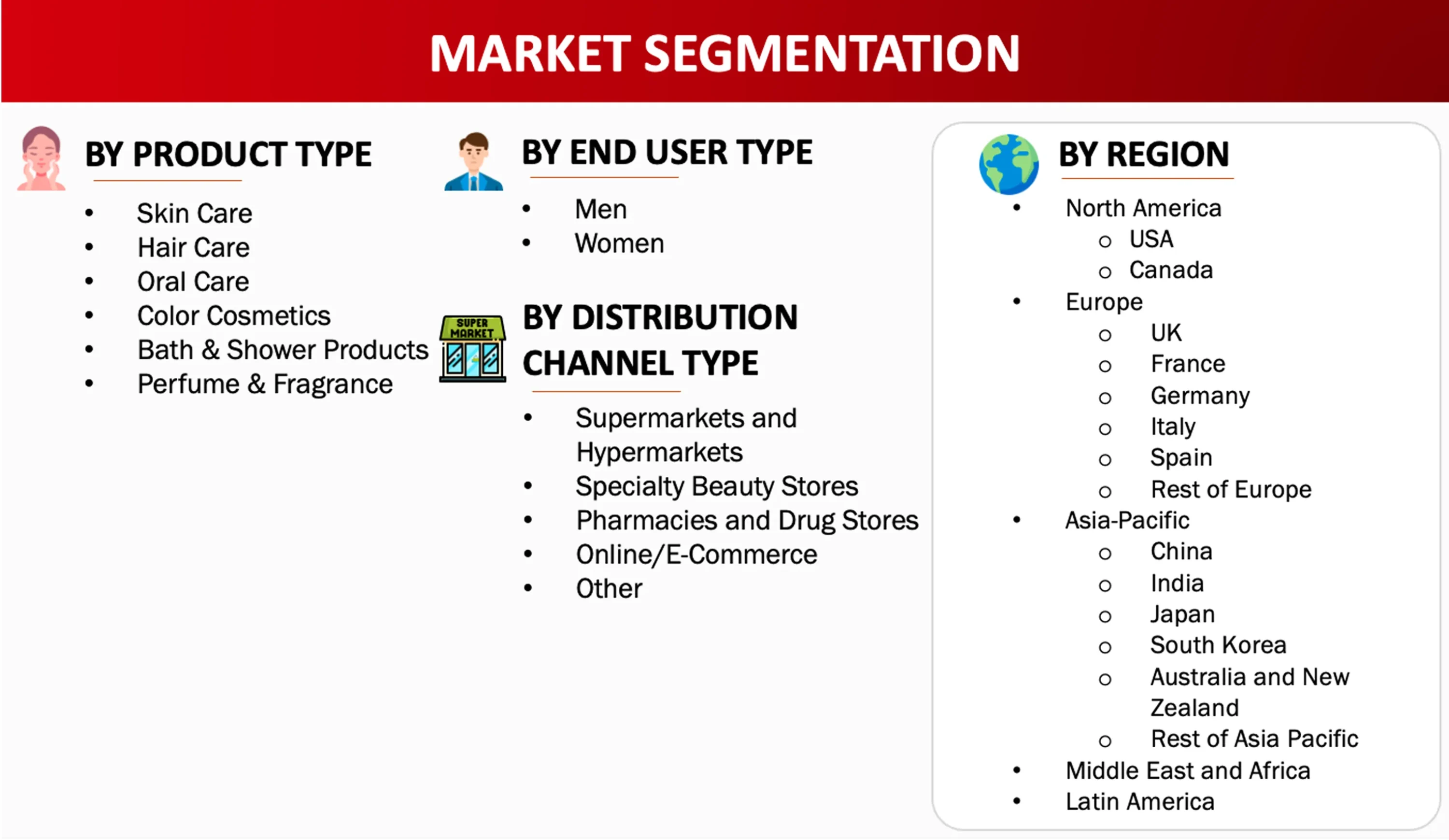
The cosmetics market comprises products used for personal care, appearance, hygiene, and fragrance applications. Its ingredients include raw materials and active ingredients investigated through research collaborations, alongside epigenetic ingredients and skin-native probiotics used in specialised skincare formulations. The market covers six main product groups: Skin Care, Hair Care, Oral Care, Color Cosmetics, Bath & Shower Products, and Perfume & Fragrance. These categories include moisturisers, facial serums, shampoos, conditioners, toothpaste, makeup, body washes, and fine fragrances. Market development is influenced by ingredient research, formulation innovation, product quality, regulatory requirements, and changing consumer preferences. Companies are also incorporating molecular simulation, proteomics-based skin analysis, microbiome research, and artificial intelligence into product development and consumer engagement.
Cosmetic products are widely used across skincare, haircare, oral care, color cosmetics, bath and shower, and fragrance applications. Skincare products, including moisturizers, cleansers, sunscreens, serums, and anti-ageing creams, support skin cleansing, protection, and appearance enhancement. Haircare applications include shampoos, conditioners, hair oils, styling products, and hair colorants for cleansing, conditioning, and grooming. Oral care cosmetics, such as whitening products and breath-freshening solutions, support oral hygiene and appearance. Color cosmetics, including foundations, lipsticks, mascaras, and eyeliners, enhance facial appearance, while bath products and fragrances support personal cleansing, grooming, and individual expression.
The cosmetics market is driven by rising disposable incomes and increasing consumer expenditure on beauty and personal care products. Growing awareness of skincare, personal grooming, sun protection, and anti-ageing solutions is encouraging regular cosmetic product adoption. Premiumization and demand for specialized formulations, including dermatologically tested, multifunctional, and personalized beauty products, are supporting higher-value consumption. Technological advancements in biotechnology, ingredient delivery systems, and microbiome research enable manufacturers to introduce innovative products with differentiated benefits. Additionally, the rapid expansion of e-commerce, social commerce, and influencer-led marketing is improving product accessibility and influencing purchasing decisions. Growing consumer preference for natural ingredients, cruelty-free formulations, and sustainable packaging is further encouraging product innovation and expanding opportunities across skincare, haircare, fragrances, and color cosmetics.
The cosmetics market is witnessing growing demand for science-backed formulations, personalized beauty solutions, multifunctional products, and premium skincare offerings. Artificial intelligence, virtual try-on technologies, and digital skin analysis are transforming product recommendations and consumer engagement. Sustainability is also gaining importance, encouraging manufacturers to adopt refillable packaging, responsibly sourced ingredients, and cruelty-free formulations. The growing influence of social commerce and beauty influencers is further reshaping product discovery and purchasing behaviour. However, the market faces challenges related to stringent regulatory requirements, ingredient safety assessments, and increasing compliance costs across different countries. Fluctuating raw material prices, supply chain disruptions, intense competition, and changing consumer preferences also create operational pressures. Additionally, counterfeit products and concerns regarding misleading product claims can undermine consumer confidence and brand reputation.
Asia-Pacific is expected to be the fastest-growing region in the cosmetics market, supported by rising disposable incomes, expanding middle-class populations, and increasing expenditure on beauty and personal care products. China, India, Japan, and South Korea are important markets, driven by growing skincare awareness, premium beauty consumption, and demand for innovative formulations. The popularity of K-beauty and J-beauty products is also influencing regional and international consumer preferences. Additionally, rapid e-commerce adoption, social commerce, influencer marketing, and digital beauty platforms are improving product accessibility and consumer engagement. These factors collectively support expanding cosmetics demand across mass-market and premium product categories.
Market Dynamics
Drivers: Regulatory Compliance, Scientific Innovation and Brand Investment
- Increasing emphasis on cosmetic product safety and regulatory compliance supports demand for quality-focused products. The US Modernization of Cosmetics Regulation Act (MoCRA), introduced in 2022, requires cosmetic facility registration and product listing. These requirements encourage manufacturers to strengthen product documentation, registration procedures, and safety-related processes.
- Ingredient research and scientific formulation innovation support the development of differentiated skincare products. On August 13, 2025, Beiersdorf introduced EPICELLINE in its NIVEA Cellular Epigenetics Rejuvenating Serum. The development demonstrates the application of epigenetic research in skincare formulations and products addressing skin-ageing requirements.
- Artificial intelligence and molecular simulation are expanding research capabilities in cosmetics development. In 2026, L’Oréal and NVIDIA announced a collaboration using predictive AI and molecular simulation to accelerate beauty discovery. The research includes applications in photoprotection and skin-tone management, supporting technology-led ingredient and formulation development.
- Corporate investment and strategic collaborations strengthen product development and market participation. On June 17, 2026, L’Oréal and OpenAI announced a collaboration covering AI-powered consumer journeys, agentic commerce, research, science, and marketing. Such collaborations support the integration of digital technologies into beauty discovery and consumer engagement.
Opportunities: Personalised Beauty, Ingredient Innovation and Digital Expansion
- Personalised skincare technologies provide opportunities to develop products around individual skin characteristics. L’Oréal introduced Cell BioPrint on January 6, 2025, using proteomics and protein biomarkers to assess skin ageing. The company subsequently announced a pilot launch of Lancôme Cell BioPrint in March 2026, incorporating microfluidic technology for biological skin diagnosis.
- Microbiome research creates opportunities for specialised dermatological skincare formulations. On September 1, 2026, Beiersdorf introduced Eucerin DERMOPURE CLINICAL PROBIOM8, incorporating viable skin-native probiotics for acne-prone skin. This development provides an application for microbiome-related research in products targeting specific skincare requirements.
- Digital beauty discovery offers opportunities to strengthen consumer engagement and product selection. On June 17, 2026, L’Oréal and OpenAI announced plans involving AI-powered consumer journeys and Maybelline New York virtual makeup try-on within ChatGPT using ModiFace technology. This collaboration enables digital product discovery and virtual beauty experiences.
- Expansion into digital-first personal care brands provides opportunities to reach additional consumer segments. On June 18, 2026, L’Oréal announced an agreement to acquire a majority stake in Innovist, the Indian company behind Bare Anatomy and Chemist at Play. The acquisition provides access to established personal care brands and their existing market presence.
- Research partnerships provide opportunities to advance ingredient development and formulation design. On September 9, 2026, L’Oréal and COSMAX signed an MOU covering raw materials, active ingredients, product design, and sensory characteristics. The collaboration creates opportunities for joint research and the development of next-generation cosmetic formulations.
Challenges: Regulatory Complexity, Formulation Compliance and Competitive Pressures
- Changing ingredient restrictions create formulation and compliance challenges for cosmetics manufacturers. Regulation (EU) 2024/996, adopted on April 3, 2024, amended restrictions involving Vitamin A, Alpha-Arbutin, and Arbutin. Manufacturers must consider these requirements when selecting ingredients and developing formulations intended for European markets.
- Product registration and documentation requirements increase regulatory responsibilities for manufacturers. The US Modernization of Cosmetics Regulation Act (MoCRA), introduced in 2022, requires facility registration and product listing, with facility registrations renewed every two years. These requirements create additional administrative and compliance responsibilities for cosmetic businesses.
- Restrictions involving nanomaterials can affect ingredient selection and product development. Regulation (EU) 2024/858, adopted on March 14, 2024, amended cosmetic restrictions concerning nanomaterials, including copper, colloidal gold, platinum, and colloidal silver. Such restrictions require manufacturers to assess ingredient compliance when developing products for the European market.
- International regulatory differences complicate manufacturing and market-entry planning. China’s NMPA introduced a three-year action plan for improving cosmetics production quality-management systems for 2026–2028. Combined with US MoCRA requirements and European ingredient restrictions, these frameworks require manufacturers to address different regulatory and quality-management expectations across markets.
- Portfolio restructuring and changing brand agreements create strategic challenges for cosmetics companies. On July 7, 2026, Coty agreed to transition its Gucci Beauty licence back to Kering for approximately $400 million, while continuing to operate the brand through at least June 30, 2027. Such changes affect brand portfolios and licensing arrangements.
Technology and Patent Insight
Technological innovation in the cosmetics market is increasingly focused on advanced formulation systems, biotechnology-derived ingredients, and personalized beauty applications. Key developments include microencapsulation, liposomal delivery, nano emulsions, and lipid-based carriers that improve ingredient stability and controlled delivery. Patent activity reflects innovation across sustainable ingredients, microbiome-based formulations, fermented actives, plant-derived compounds, and advanced cosmetic manufacturing processes. Companies are also exploring artificial intelligence for formulation optimization, skin analysis, and customized product development. Intellectual property protection increasingly covers novel ingredient compositions, delivery mechanisms, manufacturing techniques, and sustainable packaging materials. These developments are strengthening product differentiation, supporting research commercialization, and creating competitive advantages for manufacturers investing in proprietary cosmetic technologies.
Technology Scope and Products
Cosmetics Market Segmentation
Want detailed insights from this report?
Competitive Landscape and Market Segments Insights
The market includes multinational beauty groups, diversified consumer goods companies, and specialised cosmetics businesses. L’Oréal S.A., The Estée Lauder Companies Inc., LVMH Moët Hennessy Louis Vuitton SE, Chanel Limited, Coty Inc., and Puig S.L. represent major beauty and luxury portfolios, while Unilever PLC and Procter & Gamble Co. participate across broader personal care categories.
Portfolio restructuring and licensing transitions are changing individual companies’ brand positions. Coty Inc. agreed on July 7, 2026, to transition its Gucci Beauty licence back to Kering for approximately $400 million, while continuing operations through at least June 30, 2027.
Established companies maintain substantial business scale through diversified product portfolios. L’Oréal S.A. reported consolidated sales of €44,052 million in 2025, including €16,089.7 million from Consumer Products and €15,595.1 million from L’Oréal Luxe, demonstrating its presence across mass-market and premium beauty categories.
Some companies are expanding through acquisitions and partnerships, while others are restructuring portfolios. L’Oréal announced its agreement to acquire a majority stake in Innovist on June 18, 2026, while The Estée Lauder Companies Inc. announced an agreement to acquire the remaining interests in Forest Essentials on March 5, 2026. Coty Inc. agreed to transition its Gucci Beauty licence back to Kering.
Regional operations span established beauty markets and expanding international portfolios. L’Oréal reported 2025 sales across Europe, North America, North Asia, SAPMENA-SSA, and Latin America. Its acquisition agreement involving Innovist in India and The Estée Lauder Companies’ Forest Essentials transaction demonstrate strategic activity in the Indian beauty market.
Skin care accounted for the largest share of the cosmetics market in 2025, supported by consistent consumer demand for daily skincare routines, growing awareness of skin health and ageing prevention, and continuous innovation in active ingredients, specialised formulations, and dermatological products.
-
Established skincare portfolios generated substantial reported company sales: The Estée Lauder Companies Inc. reported skincare net sales of USD 6,962 million in FY2025, highlighting the significant commercial contribution of skincare within a major global beauty company’s portfolio.
-
Scientific ingredient development supported skincare product innovation: On August 13, 2025, Beiersdorf introduced EPICELLINE in its NIVEA Cellular Epigenetics Rejuvenating Serum, demonstrating the integration of epigenetic research into formulations targeting skin ageing.
-
Regional business operations supported international market reach: L’Oréal reported 2025 sales of €14,864.5 million in Europe, €11,718.1 million in North America, and €10,075.2 million in North Asia, reflecting its extensive commercial presence across major beauty markets.
-
Microbiome research enabled specialised dermatological skincare launches: On September 1, 2026, Beiersdorf introduced Eucerin DERMOPURE CLINICAL PROBIOM8, incorporating viable skin-native probiotics into products targeting acne-prone skin, illustrating innovation in specialised skincare formulations.
Online/E-commerce represented an important distribution channel in 2025, supported by the growing adoption of digital shopping, convenient product accessibility, personalised product discovery, virtual try-on technologies, and increasing investments by cosmetics companies in digital consumer engagement.
-
Digital-first acquisitions strengthened access to online beauty consumers: L’Oréal announced an agreement to acquire a majority stake in Innovist on June 18, 2026, covering Bare Anatomy and Chemist at Play. The transaction reflects strategic interest in digitally established personal care brands in India.
-
AI-powered product discovery expanded digital consumer engagement: L’Oréal and OpenAI announced a collaboration on June 17, 2026, involving AI-powered consumer journeys and Maybelline New York virtual makeup try-on within ChatGPT, demonstrating investment in technology-enabled beauty discovery.
-
Generative AI visibility became a focus of digital brand distribution: The Estée Lauder Companies announced a global partnership with Profound on September 14, 2026, to monitor and optimise brand representation across generative AI platforms, supporting digital brand discoverability.
-
Brand visibility partnerships supported online beauty discovery: Coty announced a partnership with Brandlight on October 27, 2026, to strengthen brand discovery across AI assistants and generative AI search platforms, reflecting the growing importance of digital consumer touchpoints.
Asia Pacific maintained a significant position in the cosmetics market in 2025, supported by its large consumer base, established beauty and personal care manufacturing ecosystem, strong domestic and international brand presence, and increasing investments in product innovation and manufacturing quality.
-
India attracted strategic investment from international beauty companies: L’Oréal announced an agreement to acquire a majority stake in Innovist on June 18, 2026, covering Bare Anatomy and Chemist at Play, reflecting international investment interest in India’s expanding personal care industry.
-
China strengthened its cosmetics manufacturing quality framework: China’s NMPA introduced a three-year action plan covering 2026–2028 to improve cosmetics production quality-management systems, reinforcing regulatory oversight and manufacturing standards.
-
South Korea strengthened its position in international cosmetics research collaboration: L’Oréal and COSMAX signed an MOU on September 9, 2026, covering raw materials, active ingredients, product design, and sensory characteristics, highlighting the region’s role in cosmetics formulation research and development.
What This Report Covers-
This report provides a comprehensive analysis of the graphene market, offering insights into key trends, growth drivers, challenges, and future opportunities. It is designed to support strategic decision-making through a combination of quantitative data and qualitative analysis.
Specifically, the report covers:

Market Overview & Definition:
Overview of the market scope, structure, and key terminology

Market Size & Forecast:
Historical data and future projections across key segments and regions

Key Market Trends:
Insights into emerging trends, technological advancements, and evolving demand patterns

Drivers, Restraints & Opportunities:
Analysis of key factors influencing graphene market growth

Competitive Landscape:
Overview of major players, their strategies, and recent developments

Detailed Patent Analysis:
This includes, top assignees, geography focus of top assignees, legal status, technology evolution, key patents and patent trends and innovations

Segmentation Analysis:
Breakdown by product type, by form type, by source type, by application type, by region.

Regional Insights:
Key regional trends and growth opportunities

Future Outlook:
Strategic insights and future market direction
Research Methodology
The study of the cosmetics market is based on primary and secondary research, supported by data validation, including product and formulation mapping, ingredient and packaging supply assessment, company revenue and brand portfolio analysis, regulatory assessment across north America, Europe, and Asia pacific, patent analysis, end-use demand analysis, distribution channel analysis, pricing analysis, and regional market assessment, to ensure accuracy and reliability.
Market Definition: Cosmetics Market
The Cosmetics Market covers products intended for cleansing, beautifying, protecting, maintaining, and improving the appearance of the skin, hair, teeth, nails, and body. It includes Skin Care, Hair Care, Oral Care, Color Cosmetics, Bath & Shower Products, and Perfume & Fragrance. Products include creams, lotions, moisturizers, cleansers, serums, sunscreens, shampoos, conditioners, oral hygiene products, makeup, soaps, body washes, fragrances, and related cosmetic formulations.
The market is analysed by end use, covering Men and Women, and by distribution channel, including Supermarkets and Hypermarkets, Specialty Beauty Stores, Pharmacies and Drug Stores, Online/E-Commerce, and Other. The scope includes cosmetic products sold through these channels across the regions and countries identified in this report. Pharmaceutical products, professional salon services, manufacturing equipment, and substitute products outside the defined cosmetic categories are excluded.
Key Stakeholders
The Cosmetics Market value chain includes stakeholders involved in ingredient development, product formulation, manufacturing, distribution, retailing, and consumption.
- Raw material and ingredient suppliers
- Active ingredient manufacturers
- Fragrance and flavour suppliers
- Packaging material suppliers
- Cosmetic formulation developers
- Contract manufacturers
- Cosmetics brand owners
- Wholesalers and distributors
- Online retail platforms
- End consumers
Key Objectives of the Study
- To define, describe, analyze, segment, and forecast the cosmetics market by product type, by distribution channel, by end users.
- To describe and forecast the market for five key regions: North America, Europe, Asia Pacific, Latin America, Middle-East & Africa
- To provide detailed information regarding key drivers, restraints, opportunities, and challenges influencing market growth
- To strategically analyze the micro indicators with respect to individual growth trends, prospects, and contributions to the overall market size
- To analyze opportunities for stakeholders in the cosmetics industry and emphasize on competitive landscape of the market
- To develop competitive benchmarking of the key market players based on technology specifications and end user
- To strategically profile key players and comprehensively analyze their product portfolio offerings, and core competencies
- To analyze competitive developments, such as launches and approvals, agreements, mergers and acquisitions, partnerships, joint ventures, investments and expansions, and collaborations, cosmetics domain
Need deeper insights on this market?
Get full report access with detailed forecasts, competitive analysis, and segmentation.
Research Approach
This research employs a systematic approach by using primary research along with secondary research to achieve full coverage and accuracy of information about the cosmetics sector. Through this approach, the current market trends in terms of consumer behaviour, technological developments, and competitive environment can be analysed thoroughly.
Secondary Research
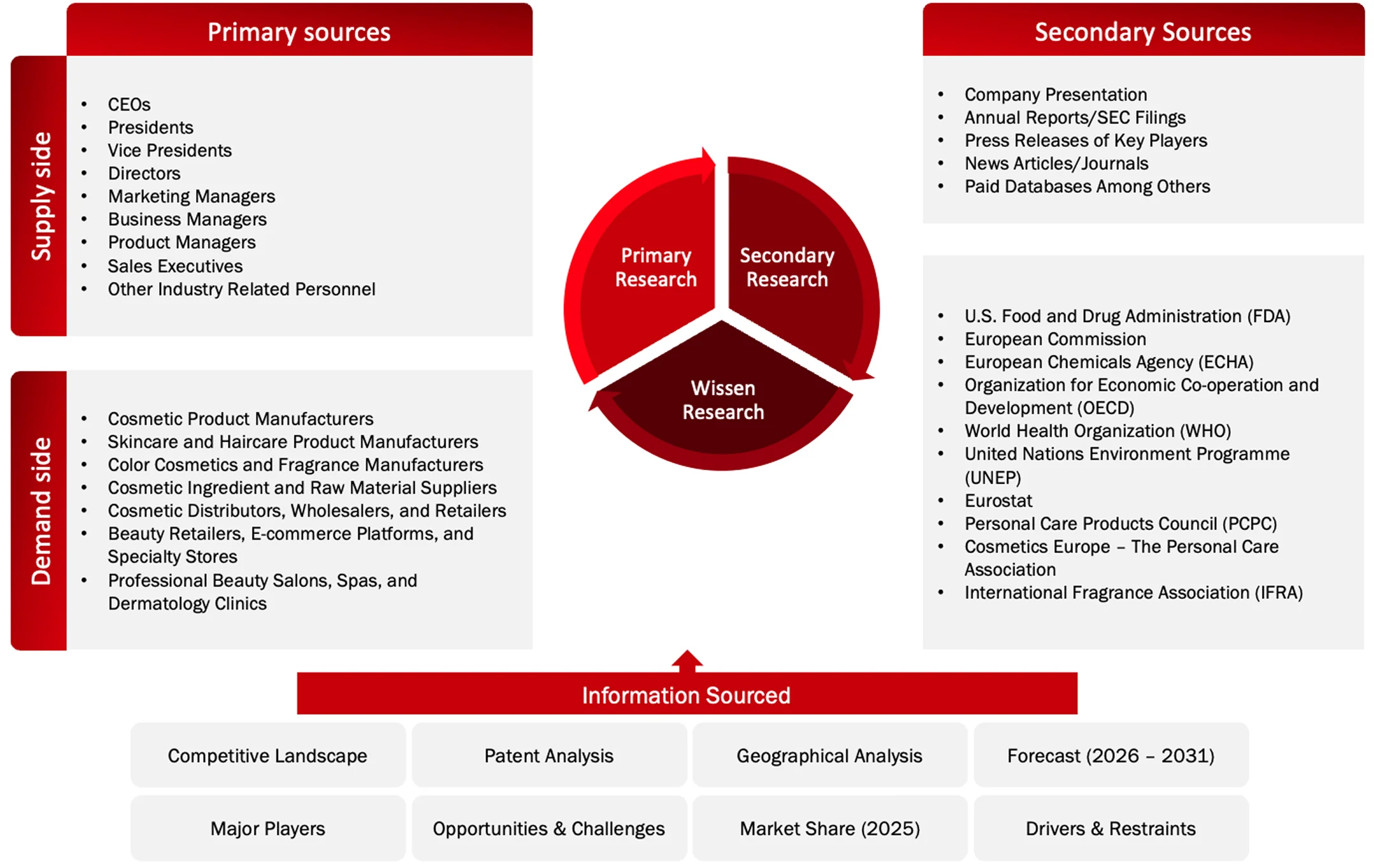
Secondary research involves the collection of data from reliable sources such as industry databases, company annual reports, investor presentations, and regulatory filings. This process helps in understanding market trends, identifying key players, and gathering technical and commercial insights.
A comprehensive database of leading companies and market participants is developed through secondary research to support further analysis.
Primary Research
Primary research is conducted to validate findings from secondary research and to gain deeper insights into market dynamics. Interviews are carried out with industry stakeholders across both demand and supply sides, including executives such as CXOs, Vice Presidents, and Directors from business development, marketing, and product teams.
Data is collected through structured questionnaires, email interactions, and telephonic interviews across key regions including North America, Europe, Asia-Pacific, and Rest of the World.
Market Size Estimation
Market size estimation is performed using both top-down and bottom-up approaches. Key market players are identified, and their revenues are analysed to estimate the overall market size.
The market is further segmented based on
- Product and service mapping across regions
- Adoption patterns across key application segments
- Insights gathered through primary and secondary research
Data Validation and Research Design
After estimating the overall market size, the data is validated using triangulation methods and market breakdown techniques to ensure accuracy and consistency. Both demand-side and supply-side factors are considered to refine the analysis.
The final data is validated through multiple sources to ensure reliability and to provide accurate insights across all market segments and regions.
Assumptions of the Study
The analysis of the cosmetics market is based on the following key assumptions:
- Trends in the industry are drawn from historical data and current information within the sector
- The future outlook is underpinned by constant economic conditions in the absence of shocks to the market
- The rate of adoption for cosmetics will rise steadily in all important regions
- The income statement and market share figures are estimated using available information from the industry and publicly available data
- The exchange rate and price trends will not be greatly affected during the forecast period
Scope and Limitations
Scope of the Study
This report offers an exhaustive overview of the international cosmetics market and includes the following components:
- Summary of market size, growth trends, and projections
- Carefully segmented market based on by product type, by distribution channel, by end users.
- Discussion of primary factors influencing the market
- Competitor analysis
- Insights into regional and national market performance
Limitations of the Study
Despite the best efforts being made to keep the results accurate, the study does suffer from some limitations:
- It has been done using both primary and secondary data that come with their own constraints
- Rapid developments in technology might affect the future course of market dynamics
- Some figures are only approximations due to lack of public disclosure
- The report is not an insurance against any disruptions in macroeconomics and geopolitics
- Future forecasts are indicative and subject to change due to altered industry dynamics
Data Triangulation and Market Breakdown
Data triangulation involved the combination of primary research, secondary research, and the Wissen Research analysis. Once the data points were sourced from the secondary market research, we sanitized the data points to make the market sizing and growth forecast more accurate by developing our own assumptions based on the inputs and insights we gather through the primary interviews with the industry experts. Once the data was thoroughly validated through primary interviews from both, demand and supply side of the market, our team of analyst and other team members involved finalized the market sizing and growth forecast.
Data Triangulation Methodology
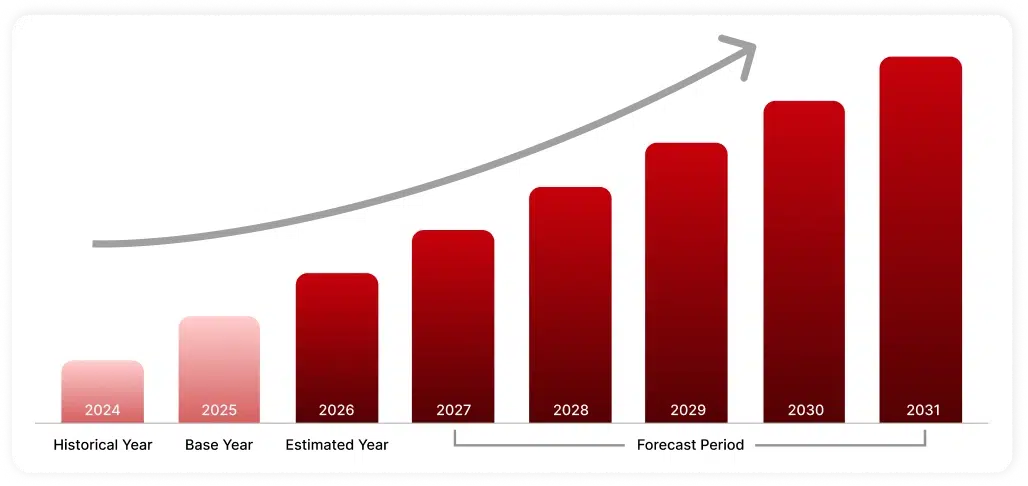
Year Framework
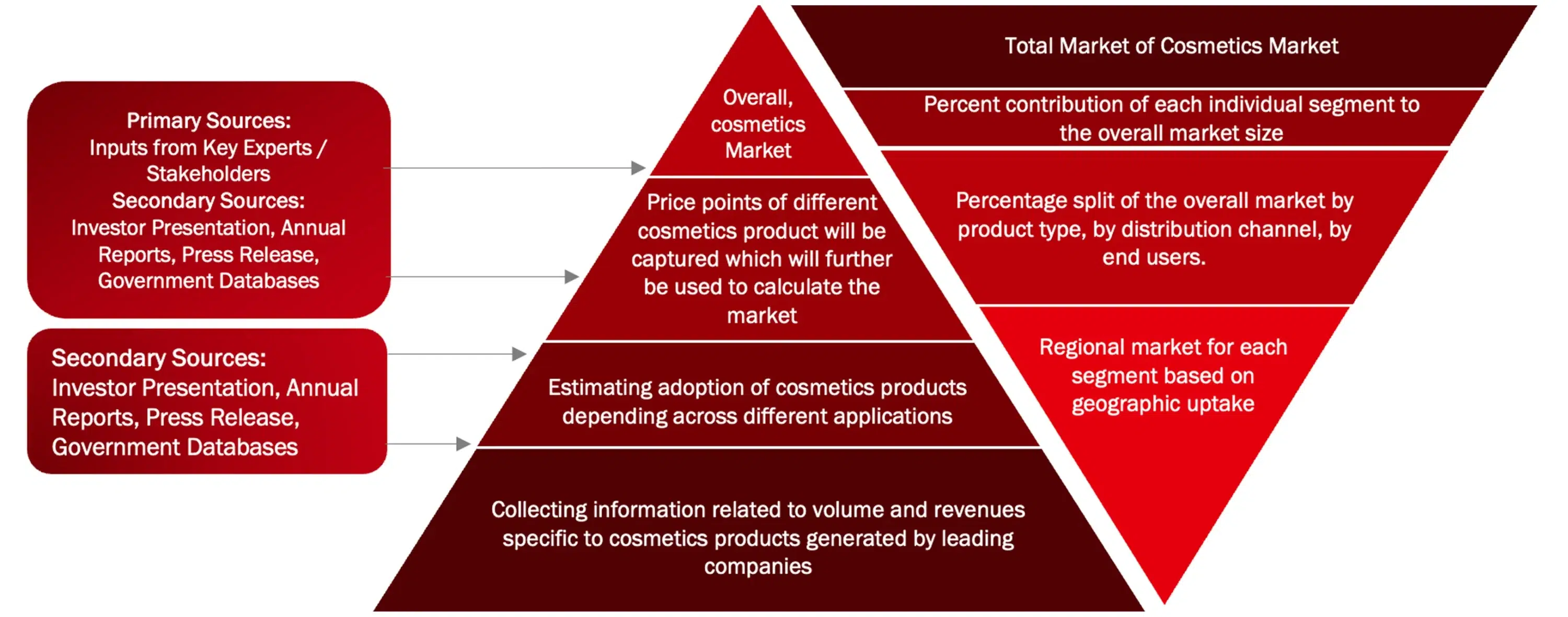
Bottom-Up Approach (Demand Side) And Top-Down Approach (Supply Side)
Bottom-Up Approach (Demand-Side Approach):
Determining the market size through the consolidation of demand among end-users, sectors, and geographic areas, which are calculated according to real-world demand conditions.
Top-Down Approach (Supply-Side Approach)
Calculating the market size through revenue and performance of the industry and its important companies, allocating the market size among various sectors.
Want detailed insights from this report?
Buy this Report
Choose the option that best fits your needs