
Hearing Aids Market
Global Industry analysis, Size, Share, Growth, Trends, and Forecast 2026-2031
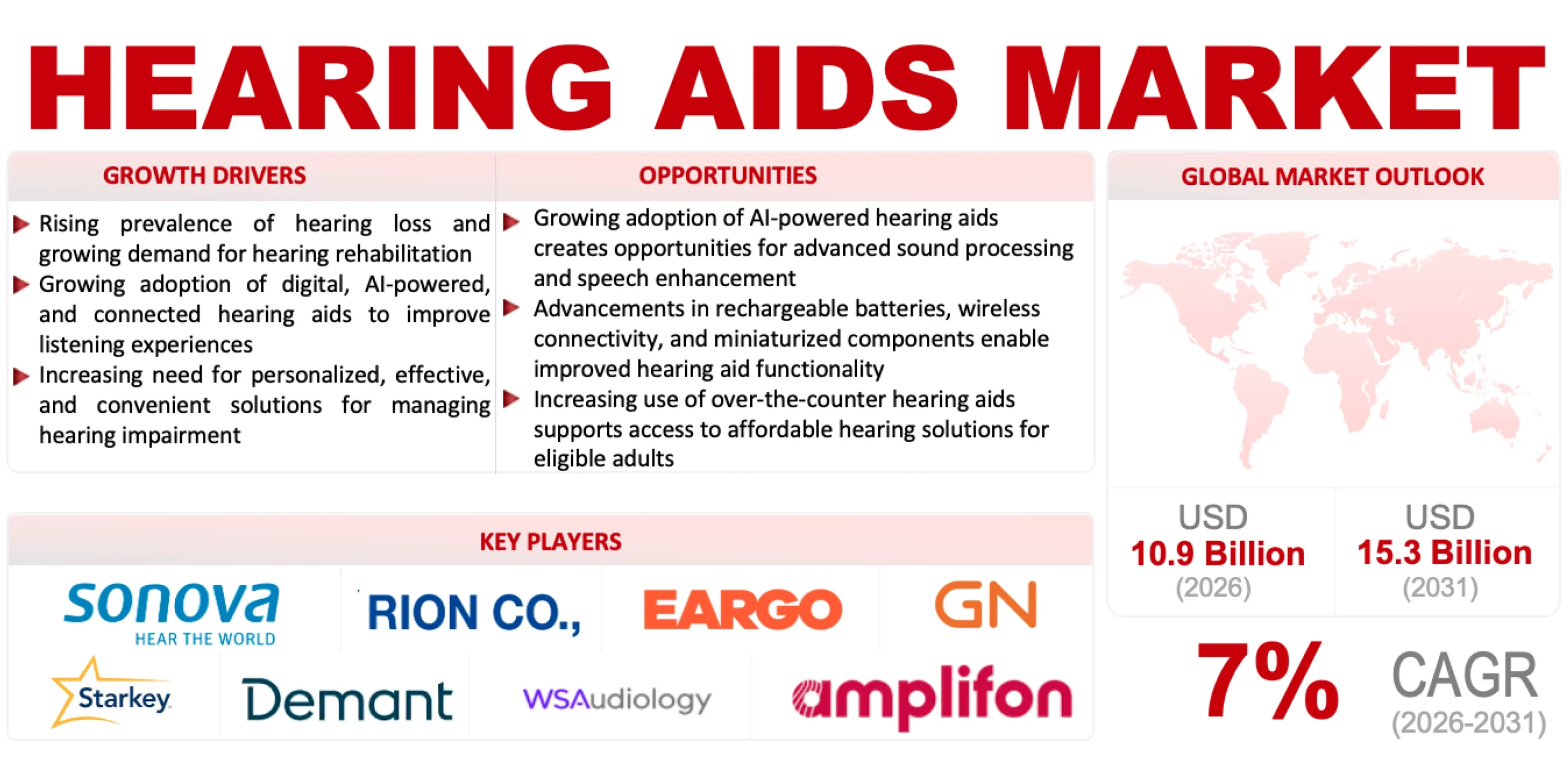
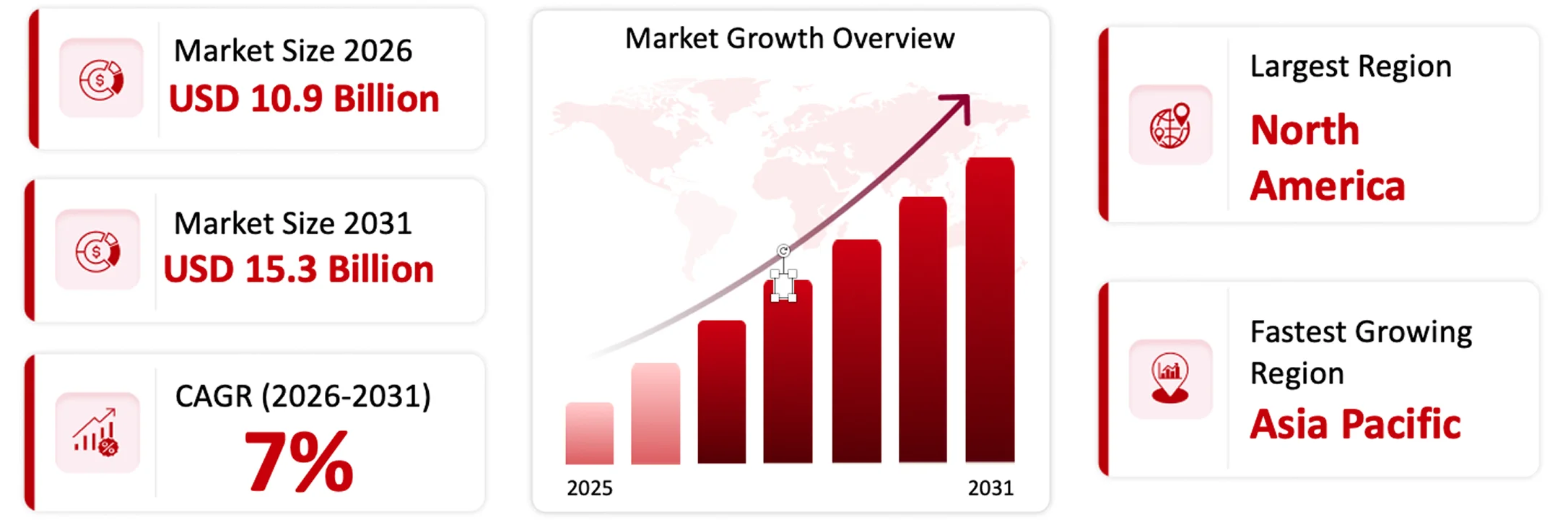
The global hearing aids market is projected to reach USD 15.3 billion by 2031, growing at a CAGR of 7% during the forecast period.
| Market Size (2026): | Forecast (2031): | CAGR (2026–2031): | Leading Region: | Fastest Growing Region: |
|---|---|---|---|---|
| $ 10.9 Billion | $ 15.3 Billion | 7 % | North America | Asia Pacific |
Summarize this report with:



Market Overview
“In my view, the growth of the global ear devices industry has resulted from the awareness of hearing handicap. Hearing apparatus is an electronic device which is created in order to help people hearing difficulties. There are various advanced technologies including digital, noise-free, and automatic hearing devices. Hearing instruments are available in a different design such as behind-the-ear (BTE), receiver-in-canal (RIC), in-the-ear (ITE), in-the-canal (ITC), and completely-in-canal (CIC) hearing aids. Also, the population suffering from age-related hearing loss including those who are really young has been increasing. The majority of the population has various hearing problems and suffers from bad hearing. According to WHO, there are over 1.5 billion people worldwide suffering from at least minor hearing disability and approximately 430 million people who need reconstruction treatment for ear problems. The number of people with hearing disorders will reach 2.5 billion by 2050.”
– Mayur Jain, Research Consultant, Wissen Research
The market is estimated to be USD 10.9 billion in 2026 and is projected to reach USD 15.3 billion by 2031, growing at a CAGR of 7 % during the forecast period (2026-2031).
Technology Overview
Hearing aids are assembled of microphones, digital signal processors, amplifiers, receivers, batteries, and acoustic devices to provide better hearing. Choosing the device is determined by the person’s indicator of disorder, ear structure, dexterity, lifestyle, listening environment, and medical needs. Among the most famous technologies it is worth mentioning: digital processing, directional microphones, feedback cancellation, noise cancellation, Bluetooth connectivity, rechargeable battery systems, and adaptive sound processing. Digital hearing aids are capable of converting audio received in the digital form and adjusted to frequencies, while directional microphones give priority to sounds coming from certain directions. Rechargeable systems help decrease the use of ordinary batteries and the wireless connection enables hearing devices to process sound coming from smartphones and other electronic gadgets. Today, technological advances unfold from mere sound amplification to an individualized listening, connection, and automatic adjusting based on various acoustic situations. Modern hearing devices increasingly provide the opportunity to use smartphone applications, remote debugging, teleaudiology service, and specially designed algorithms to improve speech intelligibility in difficult conditions.
Key Growth Drivers
- The increasing rate of hearing loss is boosting the potential user market for hearing aids especially with the aging population as well as due to the influence of workplace and recreational noise exposure which contribute to hearing difficulties.
- Rising awareness of hearing care is paving the way for early evaluation and intervention as both consumers and health professionals are beginning to recognize the effects of hearing loss on an individual’s communication ability, social life, and quality of life.
- Technological improvements in hearing aids are continuing to help improve sound quality personalization, directionality, noise-cancelling, feedback control, and adaptability of hearing devices to particular hearing environments which makes it easier for users to process sound signals.
- Rapid adoption of rechargeable and smart devices is making life easier by making battery change unnecessary, allowing for mobile phone compatibility, enabling wireless audio streaming and easy bunching of devices.
- Supply and distribution channels are becoming available and supporting the use of audiology clinics, specialized shops, online shops and OTC hearing devices in countries where the laws and regulations allow it.
- Increasing demand for customized hearing goods is making producers create various styles, types, and technologies of hearing devices.
Hearing Aids Market Key Highlights
Need deeper insights on this market?
Get full report access with detailed forecasts, competitive analysis, and segmentation.
Hearing Aids Market Trends
The hearing aids industry is today undergoing a shift from traditional amplification appliances to smarter, rechargeable and digitally customized hearing solutions. Among functions of new devices, emphasis is on enhancing speech, treating background noise, using wireless technologies, and assuring comfort. Conventional behind-the-ear and receiver-in-canal products are still being produced, while smaller in-ear models are gaining popularity with consumers. The trend towards recharging batteries, smartphones, and remote fitting devices is telling on design technologies. Besides, over-the-counter (OTC) devices have made hearing aids more accessible to consumers in the USA.
Increasing Adoption of Connected and AI-Enabled Hearing Aids
Manufacturers of hearing aids are increasingly including both digital connectivity and adaptive sound processing in their devices for improved listening experience in all surroundings. Bluetooth connectivity allows for easy streaming of sound and calls onto compatible devices, whereas mobile applications facilitate adjustment of volume, listening preferences, and device settings. Development in the methods of processing helps automatically differentiate sounds generated by speech, and background noise enabling smart devices to adapt the amplification ratio in accordance with acoustic conditions.
One of the most common situations where this technology found application is communications in crowded settings. Indeed, background conversations and environmental noise make it harder for people to perceive speech. Modern hearing aids use directional microphones and computerized systems for detecting noise, but it is important to note that the efficiency of this technology depends on various factors such as equipment design. Modern solutions like teleaudiology are also playing an important role in the life of people of hearing difficulties.
Expansion of Rechargeable, OTC, and Consumer-Oriented Hearing Solutions
An upward shift in consumer” demand for convenience has triggered developments such as rechargeable hearing aids, more user-friendly controls, and products created with different budgets and specifications in mind. By utilizing rechargeable devices, consumers will dodge constant trips to the store to buy disposable batteries. Compact devices which connect into the internet allow for even greater ease-of-use. The type of device specifications would be especially beneficial for older customers and people who want to simplify their device usage.
Another crucial development is the emergence of OTC hearing aids in the US market. Now, the U.S. Food and Drug Administration (FDA) has defined the category of OTC hearing aids for consumers older than 18 who have mild to moderate degrees of hearing impairments so that they can purchase this kind of device without a prescription. OTC devices, however, may not be appropriate for all instances of hearing loss and the development is still important for children and people requiring specific assessment or hearing aid fitting.
Apart from these developments, manufacturers are also focusing on creating smaller devices with upgraded battery performance and personalized sound processing.
Key Players in the Hearing Aids Market
Leading companies in the hearing aids market are focusing on digital signal processing, rechargeable devices, wireless connectivity, personalized fitting, speech enhancement, and expansion across professional and consumer-oriented distribution channels.








Strategic Activities Within the Hearing Aids Market
Sonova Holding AG (Switzerland) launched its Phonak EON hearing-aid platform in August 2026, featuring real-time artificial intelligence to improve speech understanding and reduce listening effort. The company positioned the smaller, lighter device in the premium segment, initially launching in the U.S., followed by Australia and key European markets
Demant A/S (Denmark) introduced Oticon Reveal, a hearing-aid platform featuring Dual AI technology that processed speech and contextual sounds simultaneously in real time. The platform also incorporated improved feedback control and enhanced wireless connectivity, aiming to improve speech understanding and deliver a more natural listening experience.
WS Audiology A/S (Denmark) introduced Signia’s Multi-adaptive Xperience (MaX) hearing-aid platform in August 2026, integrating four deep neural networks to process speech, background noise, environmental sounds, and the wearer’s voice simultaneously. The platform featured enhanced group-conversation processing, improved computing power, rechargeable functionality, and expanded Bluetooth and Auracast connectivity.
Hearing Aids Market Insights
The hearing aids market has emerged as a key part of the hearing healthcare industry to meet the demand for better hearing and communication among people with hearing impairment. Hearing aids are electronic devices that capture, process, amplify, and transmit sound, making it audible to people with various hearing loss degrees and types. The dominant product types include behind-the-ear (BTE), receiver-in-canal (RIC), in-the-ear (ITE), in-the-canal (ITC) and completely-in-canal (CIC) hearing aids. The market also includes digital hearing aids, rechargeable hearing aids, Bluetooth-enabled devices, and AI-enabled hearing aids. The key drivers of demand include age-related hearing loss, noise-related hearing loss, awareness of hearing health, advances in digital sound processing technology and accessibility of hearing testing and rehabilitation services. According to the WHO, over 1.5 billion people across the globe suffer from hearing loss, and about 430 million require rehabilitation for disabling hearing loss.
Hearing aids are commonly utilized in various groups of individuals, such as seniors suffering from age-related hearing loss, employed individuals with noise-induced hearing loss, adults with congenital/acquired hearing impairments, and also people who have difficulties of hearing that need to be amplified in certain cases. Age-related hearing loss is an important area of application, which is justified by the fact that the decrease in hearing acuity appears with age; consequently, many people can experience difficulties with conversation in everyday life. Moreover, hearing aids can be useful to people who cannot comprehend what’s being said to them during conversations in the workplace and different settings. Choosing the kind of device depends on hearing test results, ear structure, degree of losing hearing, manual skills, needs for hearing, and experts’ recommendations. There are models of hearing aids that can be positioned behind the ear or have a receiver in the ear canal. Model selection also depends on whether a person needs a compact device.
The rise in hearing problems contributes greatly to the rising demand for hearing aids. Ageing populations result in growing cases of hearing loss due to age. Noisy work and leisure environments lead to hearing problems among younger people and the workforce. According to WHO, untreated hearing loss is a serious public health issue since it restricts communication, educational opportunities, work, and social life. The development of digital hearing aid technologies also encourages the market growth, as advanced features such as directional microphones, feedback cancellation, adaptive noise reduction, and personalized sound processing, make listening experience much better. The increasingly popular rechargeable hearing aids, wireless devices, smartphone apps, and remote fittings support demand as well. Furthermore, rise in the awareness of the needs for hearing tests and rehabilitation provides prospects for improving the access to hearing solutions through the introduction of OTC aids in the suitable markets based on the expansion of availability offered by clinics, shops, and online platforms.
The market for hearing aids is seeing considerable growth with the ongoing advancement in digital sound processing, wireless technology, rechargeable features, miniaturization, and a move towards customized hearing solutions. The market has transitioned from conventional amplification technology to connected devices that use combinations of microphones, digital processors, mobile apps, and sophisticated sound management features. There is ongoing work on the introduction of artificial intelligence-assisted processing and automatic adjustment of sounds for making sounds easy to understand in complicated acoustic conditions. The development and implementation of rechargeability along with Bluetooth technologies are becoming more important for the market. The market is faced with a number of issues, including affordability, limited awareness, stigma, fitting, and limited access to audioprosthesis specialists and hearing services. Effectiveness of the appliances depends on hearing loss degree, anatomy of a person, listening conditions, and being motivated. Manufacturers face the need to solve numerous issues connected with legislation, reliability, battery performance, data privacy, and compatibility with other connected devices.
The hearing aids market is projected to grow exponentially thanks to Asia Pacific region’s population, ageing citizens, and rising awareness for hearing health along with the gradual increase of healthcare infrastructure. The market in countries like China, India and Japan focuses on further development due to their large population and high demand for hearing care services which is caused by the increase of the age-related hearing loss. The World Health Organization stresses that hearing loss should be categorized as an important public health issue that should push forward accessibility in diagnosis, treatment and assistive technologies. The research claimed that the local market benefits from the improvements in digital and wireless hearing aids, charged devices, while the variety of different types of devices helps to satisfy every need of consumers. Besides that, there is a need in growth of specialized hearing clinics and hospitals. However, there are some drawbacks which could interfere with the people’s capabilities in accessing hearing aids.
Hearing Aids Market Dynamics
Drivers: Rising Prevalence of Hearing Loss and Increasing Adoption of Digital Hearing Solutions
The increasing global burden of hearing loss plays a major role in the development of the hearing aids industry. This is due to the aging factor and noise exposure affecting people of all age groups. According to WHO’s statistics, there are about 1.5 billion people with hearing loss in the world, and about 430 million people need rehabilitation due to severe hearing loss. As a result, there is a growing need to conduct hearings tests and supply the patients with the necessary hearing devices. Present-day technologies offer various solutions with better digital signal processing, directional microphones, and feedback cancellation. Due to the development of batteries, Bluetooth, mobile apps and remote fitting, people are now able to personalize their hearing aids. Furthermore, the understanding of the negative effects of having difficulties in hearing on communication motivates many people to seek help. The introduction of OTC hearing aids in the USA is another opportunity to get hearing aid devices, as they can be purchased easily.
Opportunities: Expansion of OTC Hearing Aids, Connected Devices, and Emerging Consumer-Oriented Solutions
The growth of hearing aids contributes considerably to the growth of the hearing aids industry as manufacturers work towards reaching customers who have affordability, access or fitting issues. In America, OTC hearing aids allow qualified adults with perceived mild to moderate hearing impairment to acquire the necessary devices through a store or online without prescription or fitting requirements. This creates a framework for the development of self-fitting technology, easier to use devices, cheaper products, and consumer-oriented distribution. Connected hearing aids also allow for using Bluetooth audio streaming, features based on smartphones, remote adjustments, and other devices. Additional technologies and features such as rechargeable batteries, smaller elements, directional microphones, and adaptive signal processing algorithms allow reaching a higher comfort level and sound quality.
Challenges: Affordability, Limited Access to Hearing Care, and Variability in User Outcomes
One of the primary obstacles in hearing aid market is the discrepancy between the number of individuals suffering from hearing loss and those who use appropriate devices and treatments. High costs of devices and fitting, poor government coverage, low user awareness and stigma can slow down adoption. The effectiveness of hearing aids varies across subjects’ hearing characteristics and the type of device they select, the fitting method used as well as the background environment. Noises and unwanted conversations may still impede the listening process even with advanced technology. Furthermore, some people may suffer from pain, trouble using small devices, maintaining them, or adapting to amplification. Although OTC devices promise better availability to the qualified audience, they do not work for all levels and types of hearing loss. The importance of prescription devices and professional diagnostics for kids or other groups requiring specialized diagnosis and treatment remains undeniable. Manufacturers have to balance product reliability and pricing, battery life, wireless technology, cybersecurity, safety and compliance.
Technology and Market Insights
There has been advancement in hearing aid technology that results in small-size and connectable devices. Hearing aid makers are finding improved digital signal processors, directional microphone arrays, adaptive noise silencing, feedback cancellation, rechargeable batteries, Bluetooth connection and control interface from smartphone. Artificially intelligent sound processing and environmental classification are incorporated into some hearing aid products to facilitate human listening. The main areas of application include hearing problems like age-related hearing loss, noise-induced hearing loss and other conditions that require amplification of sound. Hearing aid forms include behind-the-ear devices and receiver-in-canal devices as well as in-ear devices and completely-in-canal devices.
Technology Scope and Products
Hearing Aids Market Segmentation
Want detailed insights from this report?
Industry Developments and Competitive Landscape
The hearing aids market is developing through innovations in digital sound processing, rechargeable systems, wireless technologies, and custom hearing solutions. The manufacturers are broadening their range of products with hearing aids such as the BTE, RIC, and ITE devices, and new technology features like Bluetooth connection, adaptive noise cancelling, feedback elimination, and artificial intelligence-based sound processing. The competition is determined by the sound quality, comfort, battery duration, connectivity, the accuracy of fitting, price of the products, availability through distribution channels, and support of consumer services. Companies widen access to products via hearing specialists, e-commerce and OTC markets.
In 2025, hearing devices emerged as the leading category in sales within the hearing aids market, as they perform external sound amplification and digital sound processing. These devices consist of behind-the-ear hearing aids, receiver-in-the-canal devices, in-the-ear devices, in-the-canal devices, and completely-in-canal devices. Modern advances like digital signal processing, rechargeability, Bluetooth, directional microphones, and adaptive noise reduction have enabled manufacturers to boost their devices’ functionality and ease of use. Manufacturers are now focusing on sound quality, comfort, individualized fitting, quality connectivity, and affordability to satisfy different levels of hearing loss and various consumer needs.
-
Hearing implants constitute the other product category, which consists of implantable instruments such as cochlear implants and bone conduction hearing implants. These technologies are useful to specific patients who do not experience enough benefit from traditional hearing aids. The use of hearing implants is determined by factors such as qualification, medical assessment, surgical procedure, rehabilitation, and reimbursement.
-
Competition in these product categories is determined by technological performance, clinical results, device reliability, availability, and access to professional hearing care services.
Digital hearing aids represent the number one technology in the current hearing aids industry because they are the first to process sound electronically and allow personalized amplification with regard to different frequencies. Thanks to digital signal processing, manufacturers can add features, such as feedback cancellation, directional microphones, adaptive noise reduction, etc. which help them meet different requirements of various hearing profiles and listening settings.
-
In addition, the use of rechargeable technology and wireless connectivity has also influenced the industry. The use of rechargeable hearing aids means that the need for disposal batteries has been minimized, while Bluetooth-enabled devices make it possible to stream audio with the help of smartphones and other gadgets. Selected products feature AI-based processing and automated sound adjustment technology for better comprehension of speech in different acoustic settings. Although analog devices are used less often nowadays, they differ from digital ones as far as the sound-processing method is concerned. Additionally, competition is becoming tougher with regard to sound quality, usability, connectivity, battery life, as well as the provision of personalized listening experience.
The hearing aids market in Asia Pacific region is predicted to grow considerably due to high population, aged demographics, growing consciousness about hearing impairment, and gradual increase of hearing care facilities in the region. China, India, and Japan can be considered the most crucial national markets that showcase a different level of accessibility to healthcare, purchasing power, tendency to adopt certain devices, and availability of audiological facilities in general.
-
Being aware of the suggestion that age-related hearing loss requires good rehabilitation services can help manufacturers to expand their market reach.
-
Such technological innovations as digital hearing aids or their functionality improvements, rechargeable devices creation, compact size, and wireless connectivity enable product development in the region. Availability of specialized hearing care clinics, hospitals, retailers, or even online channels can help to create accessibility for consumers.
-
At the same time, high costs, low awareness of the population, limited access to specialists, and differences in reimbursement forms lead to further problems with adoption of hearing aids in North America and Europe, even though these regions are equipped with developed hearing care infrastructure, specialized distribution channels and advanced hearing technologies.
What This Report Covers-
This report provides a comprehensive analysis of the hearing aids market, offering insights into key trends, growth drivers, challenges, and future opportunities. It is designed to support strategic decision-making through a combination of quantitative data and qualitative analysis.
Specifically, the report covers:

Market Overview & Definition:
Overview of the market scope, structure, and key terminology

Market Size & Forecast:
Historical data and future projections across key segments and regions

Key Market Trends:
Insights into emerging trends, technological advancements, and evolving demand patterns

Drivers, Restraints & Opportunities:
Analysis of key factors influencing hearing aids market growth

Competitive Landscape:
Overview of major players, their strategies, and recent developments

Detailed Patent Analysis:
This includes, top assignees, geography focus of top assignees, legal status, technology evolution, key patents and patent trends and innovations

Segmentation Analysis:
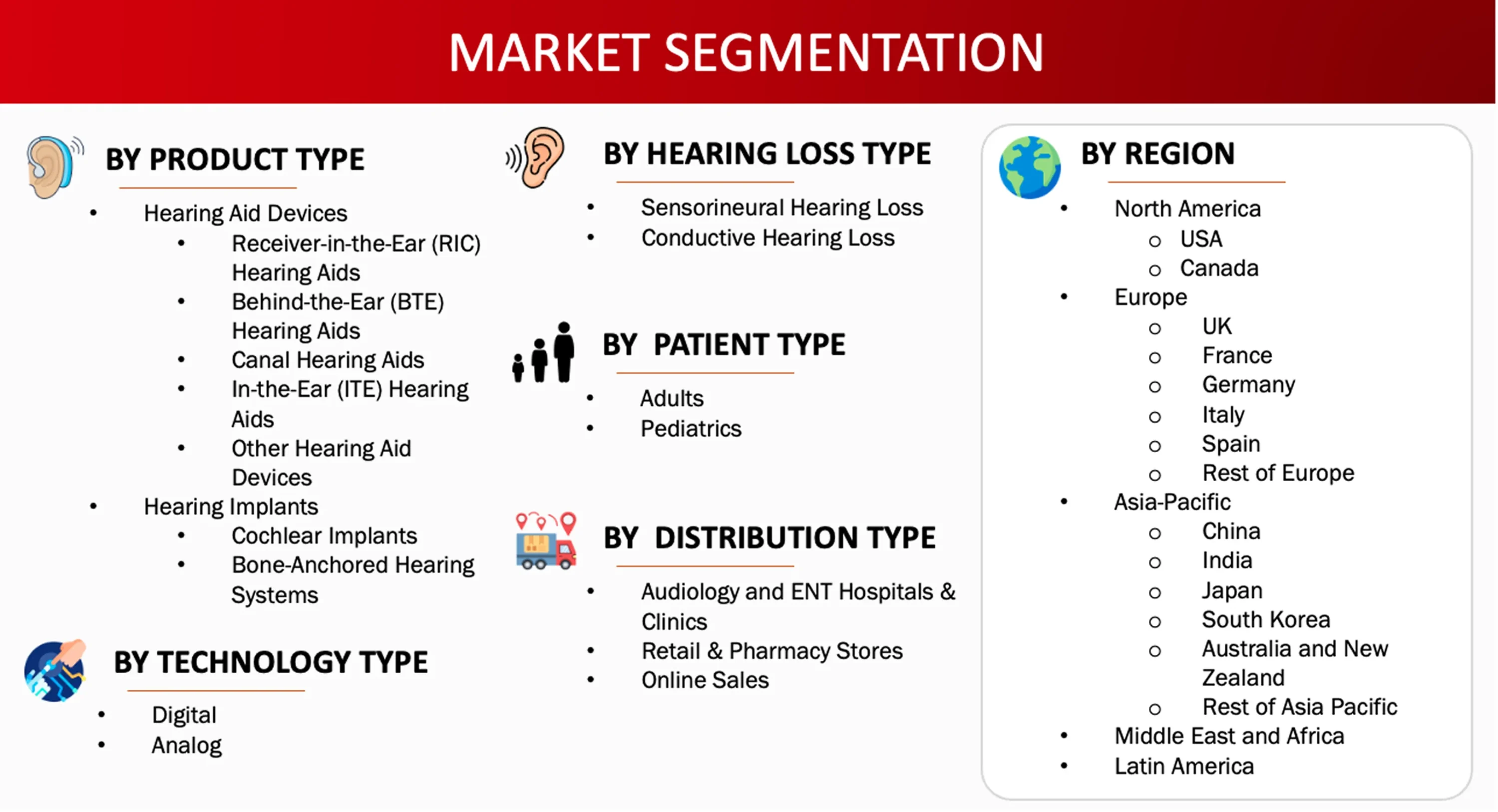
Breakdown by product type, by patient type, by technology type, by hearing loss type, by distribution type, and region

Regional Insights:
Key regional trends and growth opportunities

Future Outlook:
Strategic insights and future market direction
Research Methodology
The study of the hearing aids market is based on a combination of primary and secondary research methodologies, supported by data validation, product and technology mapping, device sales and adoption analysis, company revenue and product-portfolio assessment, regulatory and commercialization analysis, application-level demand assessment, hearing healthcare infrastructure analysis, distribution-channel evaluation, and analytical modelling to ensure accuracy and reliability.
Market Definition: Hearing Aids Market
The hearing aids market comprises devices and associated technologies designed to improve hearing and communication among individuals with hearing impairment. The market covers conventional external hearing devices that capture, process, amplify, and deliver sound, as well as implantable hearing solutions intended for patients who meet the relevant clinical criteria.
The market includes commercially available hearing devices, hearing implants, digital signal-processing technologies, microphones, receivers, amplifiers, batteries, wireless connectivity components, fitting software, and associated products used to support hearing rehabilitation. Conventional hearing aids may be positioned behind the ear, within the ear, or within the ear canal. Hearing implants include cochlear implants and bone-conduction hearing implants, which use different mechanisms to provide auditory input and may require surgical implantation.
Key Stakeholders
The hearing aids market involves a broad ecosystem of stakeholders:
- Hearing Aid Manufacturers and Medical Device Companies (Behind-the-ear hearing aids, receiver-in-canal devices, in-the-ear hearing aids, in-the-canal devices, completely-in-canal devices, digital hearing aids, and rechargeable hearing aids)
- Hearing Implant Manufacturers (Cochlear implants, bone-conduction hearing implants, implantable sound processors, external sound processors, implant accessories, and related hearing rehabilitation technologies)
- Hearing Aid Component Manufacturers (Microphones, receivers, digital signal processors, amplifiers, batteries, rechargeable power systems, acoustic components, and wireless connectivity modules)
- Hearing Technology and Software Providers (Digital sound processing, AI-assisted sound enhancement, directional microphone algorithms, feedback cancellation, adaptive noise reduction, Bluetooth connectivity, and device-control applications)
- Hospitals and Healthcare Providers (Hospitals, ENT departments, audiology clinics, specialist hearing centers, rehabilitation facilities, and other healthcare organizations providing hearing assessment and treatment)
- Audiologists, ENT Specialists and Hearing-Care Professionals (Audiologists, otolaryngologists, hearing instrument specialists, speech and hearing professionals, and other qualified practitioners involved in hearing assessment, device selection, fitting, and follow-up care)
- Hearing Diagnostic and Testing Providers (Audiometry centers, diagnostic laboratories, hearing assessment facilities, and healthcare organizations supporting hearing-loss identification, evaluation, and rehabilitation planning)
- Distributors, Specialist Retailers and Online Retailers (Hearing aid distributors, authorized dealers, specialist hearing-care retailers, e-commerce platforms, and direct-to-consumer sales channels)
- Regulatory and Standards Organizations (Medical-device approvals, hearing aid classification, product safety, manufacturing requirements, quality systems, clinical requirements, and regulatory compliance)
- Testing, Inspection and Certification (TIC) Companies (Electrical safety testing, acoustic performance assessment, electromagnetic compatibility testing, biocompatibility assessment, wireless connectivity testing, battery safety evaluation, and product reliability testing)
- Research Institutions and Technology Developers (Universities, audiology research centers, hearing science laboratories, medical research institutions, and organizations developing advanced hearing technologies)
- Healthcare Payers and Reimbursement Stakeholders (Public and private insurers, government healthcare programs, reimbursement organizations, employee benefit programs, and other stakeholders influencing device affordability and adoption)
- Patients, Caregivers and End Users (Individuals with age-related hearing loss, noise-induced hearing impairment, congenital or acquired hearing difficulties, and patients requiring conventional hearing aids or implantable hearing solutions)
- Investors and Strategic Partners (Private equity firms, venture capital firms, medical-device companies, healthcare investors, technology investors, and strategic partners focused on audiology, hearing rehabilitation, assistive technologies, and medical devices)
Key Objectives of the Study
- To define, describe, analyze, segment, and forecast the hearing aids by product type, by patient type, by technology type, by hearing loss type, by distribution type.
- To define, describe, analyze, segment, and forecast the hearing aids by product type, by patient type, by technology type, by hearing loss type, by distribution type.
- To provide detailed information regarding key drivers, restraints, opportunities, and challenges influencing market growth
- To strategically analyze the micro indicators with respect to individual growth trends, prospects, and contributions to the overall market size
- To analyze opportunities for stakeholders in the hearing aids industry and emphasize on competitive landscape of the market
- To develop competitive benchmarking of the key market players based on technology specifications and end user
- To strategically profile key players and comprehensively analyze their product portfolio offerings, and core competencies
- To analyze competitive developments, such as launches and approvals, agreements, mergers and acquisitions, partnerships, joint ventures, investments and expansions, and collaborations, hearing aids domain
Need deeper insights on this market?
Get full report access with detailed forecasts, competitive analysis, and segmentation.
Research Approach
This research employs a systematic approach by using primary research along with secondary research to achieve full coverage and accuracy of information about the hearing aids sector. Through this approach, the current market trends in terms of consumer behaviour, technological developments, and competitive environment can be analysed thoroughly.
Secondary Research
Secondary research involves the collection of data from reliable sources such as industry databases, company annual reports, investor presentations, and regulatory filings. This process helps in understanding market trends, identifying key players, and gathering technical and commercial insights.
A comprehensive database of leading companies and market participants is developed through secondary research to support further analysis.
Primary Research
Primary research is conducted to validate findings from secondary research and to gain deeper insights into market dynamics. Interviews are carried out with industry stakeholders across both demand and supply sides, including executives such as CXOs, Vice Presidents, and Directors from business development, marketing, and product teams.
Data is collected through structured questionnaires, email interactions, and telephonic interviews across key regions including North America, Europe, Asia-Pacific, and Rest of the World.
Market Size Estimation
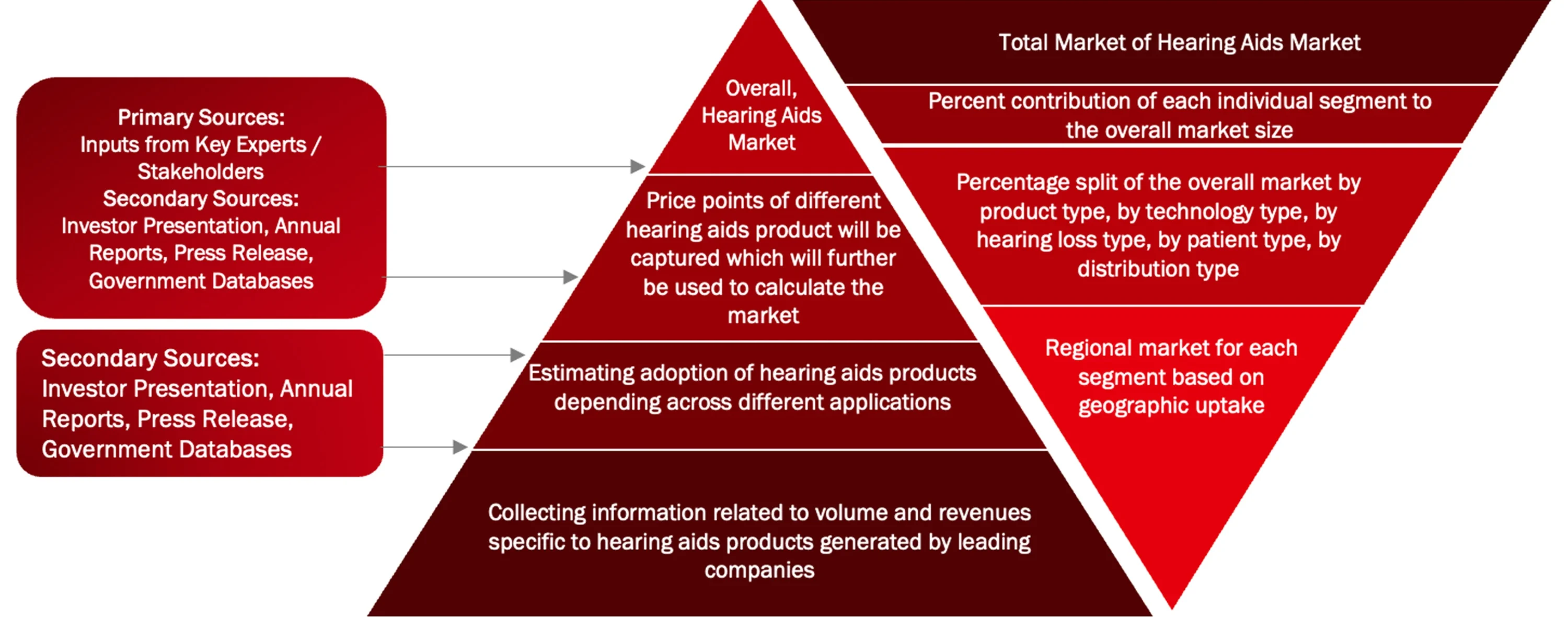
Market size estimation is performed using both top-down and bottom-up approaches. Key market players are identified, and their revenues are analysed to estimate the overall market size.
The market is further segmented based on:
- Product and service mapping across regions
- Adoption patterns across key application segments
- Insights gathered through primary and secondary research
Data Validation and Research Design
After estimating the overall market size, the data is validated using triangulation methods and market breakdown techniques to ensure accuracy and consistency. Both demand-side and supply-side factors are considered to refine the analysis.
The final data is validated through multiple sources to ensure reliability and to provide accurate insights across all market segments and regions.
Assumptions of the Study
The analysis of the hearing aids market is based on the following key assumptions:
- Trends in the industry are drawn from historical data and current information within the sector
- The future outlook is underpinned by constant economic conditions in the absence of shocks to the market
- The rate of adoption for hearing aids will rise steadily in all important regions
- The income statement and market share figures are estimated using available information from the industry and publicly available data
- The exchange rate and price trends will not be greatly affected during the forecast period
Scope and Limitations
Scope of the Study
This report offers an exhaustive overview of the international hearing aids market and includes the following components:This report offers an exhaustive overview of the international hearing aids market and includes the following components:
- Summary of market size, growth trends, and projections
- Carefully segmented market based on by product type, by patient type, by technology type, by hearing loss type, by distribution type. and geography
- Discussion of primary factors influencing the market
- Competitor analysis
- Insights into regional and national market performance
Limitations of the Study
Despite the best efforts being made to keep the results accurate, the study does suffer from some limitations:
- Despite the best efforts being made to keep the results accurate, the study does suffer from some limitations:
- Rapid developments in technology might affect the future course of market dynamics
- Some figures are only approximations due to lack of public disclosure
- The report is not an insurance against any disruptions in macroeconomics and geopolitics
- Future forecasts are indicative and subject to change due to altered industry dynamics
Data Triangulation and Market Breakdown
Data triangulation involved the combination of primary research, secondary research, and the Wissen Research analysis. Once the data points were sourced from the secondary market research, we sanitized the data points to make the market sizing and growth forecast more accurate by developing our own assumptions based on the inputs and insights we gather through the primary interviews with the industry experts. Once the data was thoroughly validated through primary interviews from both, demand and supply side of the market, our team of analyst and other team members involved finalized the market sizing and growth forecast.
Data Triangulation Methodology
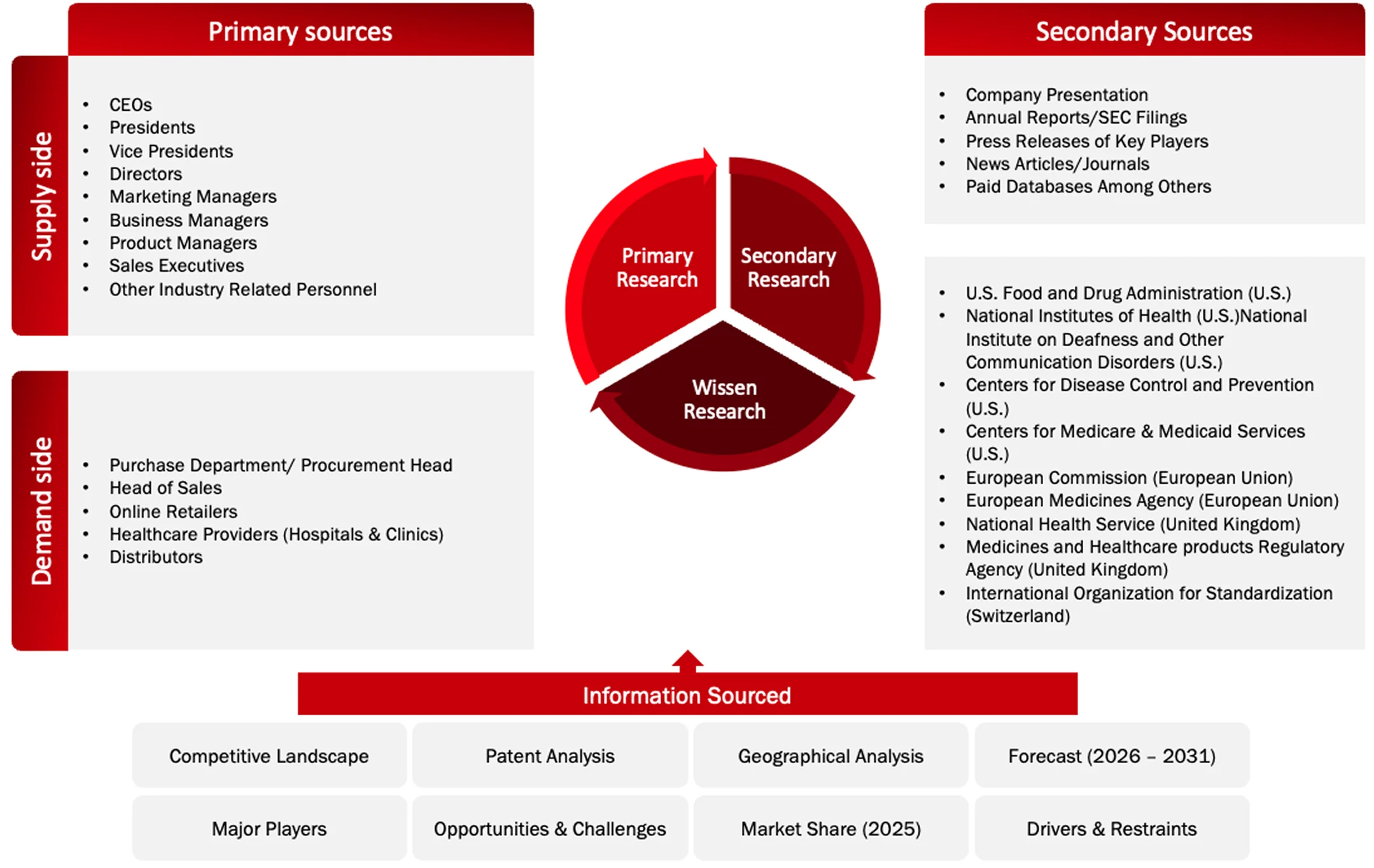
U.S. Food and Drug Administration, National Institutes of Health, National Institute on Deafness and Other Communication Disorders, Centers for Disease Control and Prevention, World Health Organization, European Commission, International Organization for Standardization, International Electrotechnical Commission, American Academy of Audiology, American Speech-Language-Hearing Association, British Society of Audiology, European Association of Hearing Aid Professionals, Company Websites, Press Releases, Annual Reports, Clinical Trial Registries, Peer-Reviewed Scientific Publications, Paid Data Sources, and Wissen Research Analysis.
Years Framework
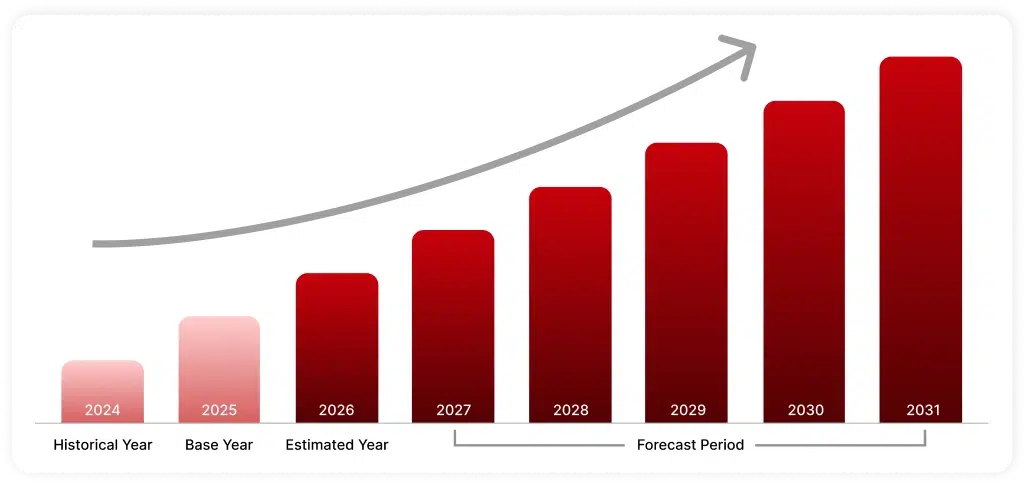
Bottom-Up Approach (Demand Side) And Top-Down Approach (Supply Side)
Bottom-Up Approach (Demand-Side Approach):
Determining the market size through the consolidation of demand among end-users, sectors, and geographic areas, which are calculated according to real-world demand conditions.
Top-Down Approach (Supply-Side Approach):
Calculating the market size through revenue and performance of the industry and its important companies, allocating the market size among various sectors.
Want detailed insights from this report?
Buy this Report
Choose the option that best fits your needs