
Infection Control Market
Global Industry analysis, Size, Share, Growth, Trends, and Forecast 2026-2031
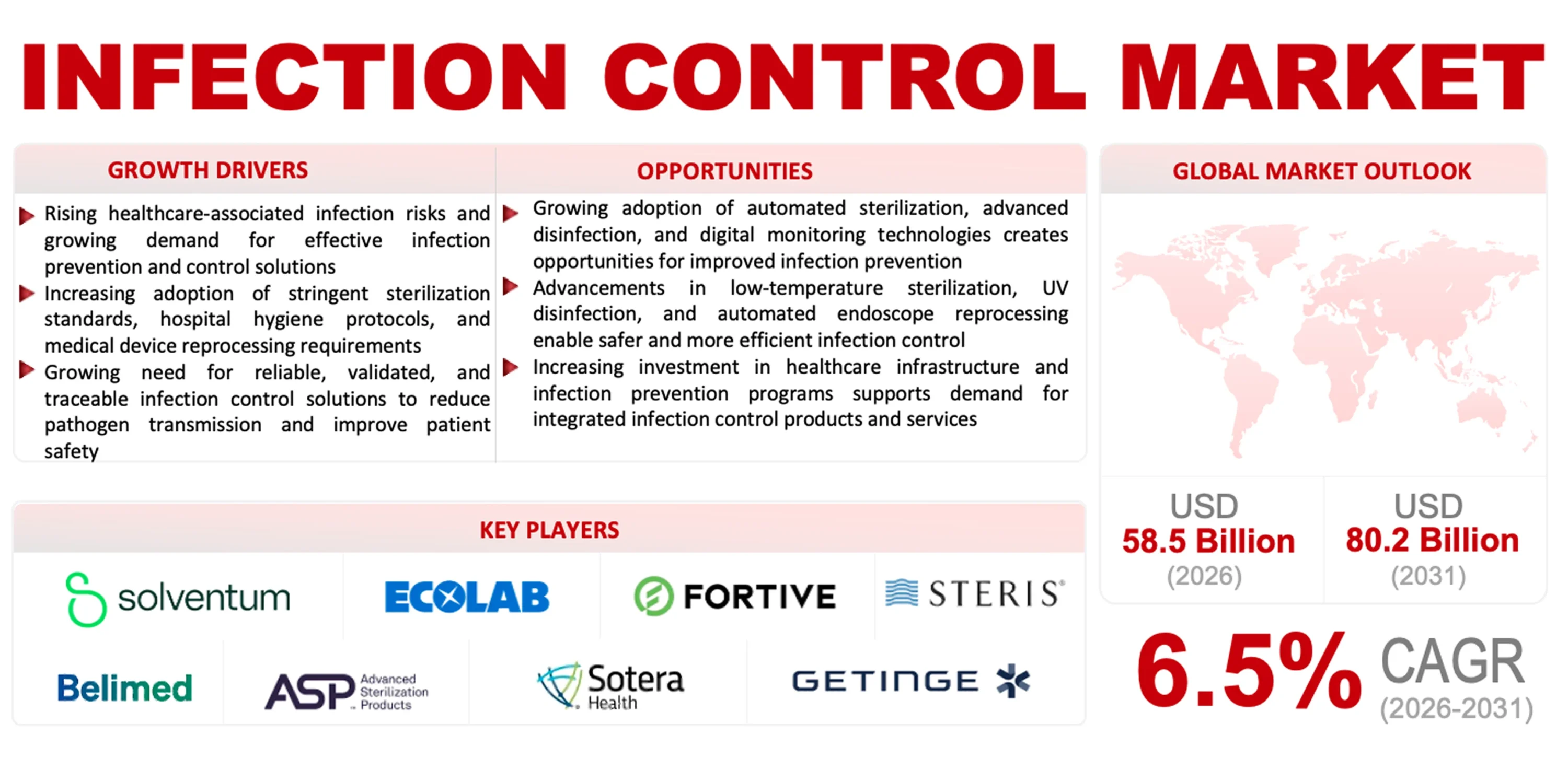
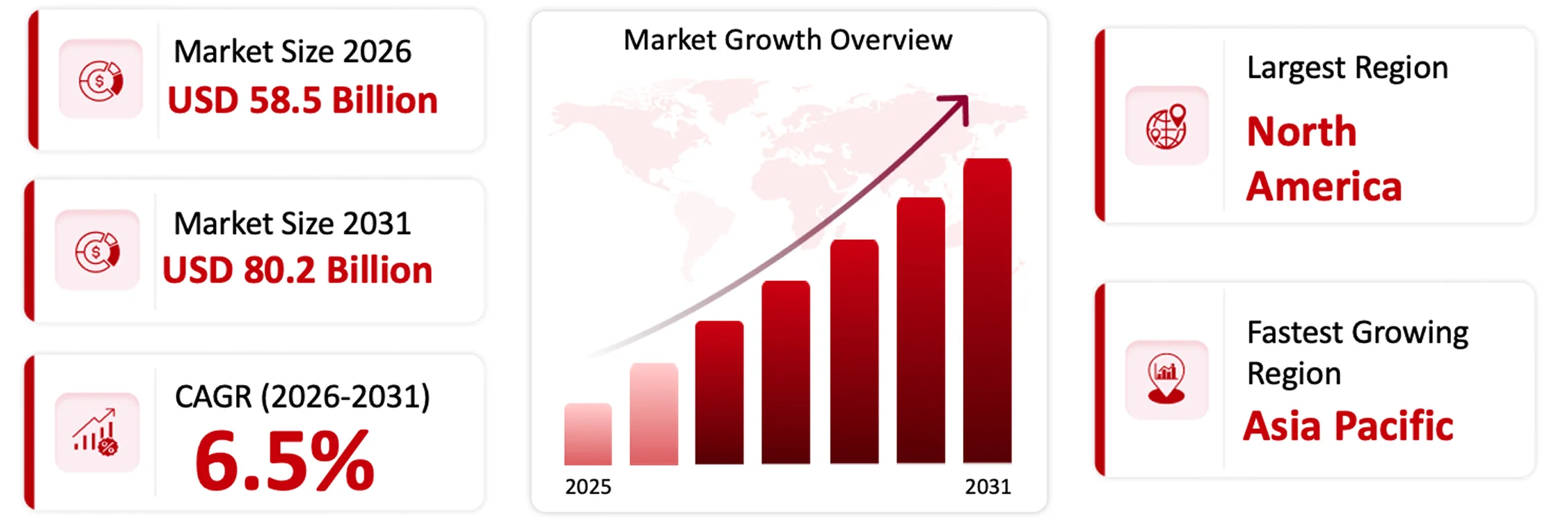
The global infection control market is projected to reach USD 80.2 billion by 2031, growing at a CAGR of 6.5% during the forecast period.
| Market Size (2026): | Forecast (2031): | CAGR (2026–2031): | Leading Region: | Fastest Growing Region: |
|---|---|---|---|---|
| $ 58.5 Billion | $ 80.2 Billion | 6.5 % | North America | Asia Pacific |
Summarize this report with:



Market Overview
“The market for infection control around the world consists of items and services meant to stop infections that relate to medical care and to minimize the mere spread of infectious agents. The most important items here are disinfectants, sterilization equipment, protective gear, and tools for infection monitoring. The level of demand is dictated by the well-established rules of preventing infections in hospitals, as well as the number of surgical operations held, and by hospitals’ regulatory specifications of hygiene. The main consumers are hospitals, which need to stem any risk of infection, disinfect surfaces, and have the necessary protective supplies. Industry opportunities are affected by the tightening infection regulations and implementation of new technologies in disinfection processes within the whole healthcare sector.”
– Mayur Jain, Research Consultant, Wissen Research
The market is estimated to be USD 58.5 billion in 2026 and is projected to reach USD 80.2 billion by 2031, growing at a CAGR of 6.5 % during the forecast period (2026-2031).
Technology Overview
Modes of infection control include chemical methods, physical methods, and automation. Technologies involved in infection control comprise steam sterilization, low-temperature sterilization using hydrogen peroxide, ultraviolet-C (UV-C) disinfection, chemical disinfection, and automated endoscope reprocessing. Steam sterilization is widely used in sterilizing heat-stable instruments. Low-temperature systems are used in process of items sensitive to heat and moisture. UV-C systems together with automated techniques for disinfection are useful for disinfecting the environment. The choice of a particular technology depends on the requirements of the particular pathogen involved in the procedure, materials that should be processed, duration of infection control procedures, and regulations that should be followed. In addition, using automation and digital control systems increases the efficiency of data collection and reduces the chance of different mistakes occurring during the processing of materials.
Key Growth Drivers
- High Burden of Healthcare-Associated Infections (HAIs): The outbreak of HAIs during treatment in medical facilities makes it necessary for medical institutions to adopt more effective disinfection, sterilization, and hygiene techniques in order to stop patient complications.
- Increasing Reprocessing Requirements for Reusable Medical Devices: The need for validated cleaning, disinfection, and sterilization of surgical instruments, endoscopes, and other reusable instruments leads to the continuous demand for various reprocessing materials.
- Expansion of Surgical and Invasive Procedures: Increasing use of various procedures involving instruments entering sterile tissues, and blood enables hospitals to have a more demanding sterilization capacity available.
- Antimicrobial Resistance and Infection Prevention Priorities: The relation of HAIs to the emergence of antimicrobial resistance leads medical institutions to pay more attention to infection-prevention programs, such as environmental cleanliness, use of protective equipment, and the prevention of pathogen spreading.
- Stricter Infection-Control Protocols in Healthcare Facilities: The clinical recommendations provide medical institutions with a need to buy the right disinfectants, sterilizers, and other equipment for sterilization of critical instruments and high-level disinfection of semi-critical instruments.
Infection Control Market Key Highlights
Need deeper insights on this market?
Get full report access with detailed forecasts, competitive analysis, and segmentation.
Infection Control Market Trends
The global infection control market is developing toward more efficient infection surveillance, universal reprocessing of medical instruments, as well as increased utilization of advanced disinfection solutions. Hospitals and medical institutions pay more attention to infection prevention indicators, following legal regulations, and ensuring proper sterilization processes. According to the World Health Organization (WHO), there are serious problems with the implementation of infection prevention and control (IPC) in the health care organizations. At the same time, health care institutions try to implement automated decontamination technologies and devices for monitoring processes.
Increasing Adoption of Infection Surveillance and Digital Compliance Monitoring
- Infection surveillance in healthcare facilities is becoming more systematic, and there is a greater emphasis on verifying cleaning procedures and compliance with standards. This trend is paving the way for the introduction of solutions for monitoring cleaning processes, as well as tools for electronic reporting and holistic infection prevention services.
- The global implementation of IPC practices is inadequate with only 15.8% of healthcare clinics from the WHO’s 2024 global report having achieved the minimum standards in IPC, which demonstrates the need for a more serious approach to infection-related processes.
- From the facility level perspective, the WHO noted that 78% of secondary and tertiary healthcare institutions surveyed have IPC monitoring systems in place, which leaves room for enhancing the current measurement and reporting practices in healthcare.
- From the commercial perspective, Ecolab has introduced an environmental hygiene monitoring system that enables checking cleaning efficiency and facilitates compliance with the necessary standards. This indicates the movement towards more precise practice rather than just implementing cleaning standards.
- From the business perspective, market players that offer monitoring-based hygiene services are positioned to meet the customers’ demand in terms of proving and improving IPC.
Greater Emphasis on Integrated Environmental Hygiene and Water Safety
- To achieve infection control, more emphasis was placed on the coordinated efforts in environmental cleaning, hand hygiene, water safety, and waste management instead of merely relying on disinfection products. The lack of basic infrastructure has resulted in both the need for infection-control products and hygiene systems.
- The world water-service gap: According to WHO and UNICEF, 78% of health facilities can access basic water services while only 57% have access to basic hygiene services according to the latest global estimations as of 2022. These gaps showcase the ongoing need to have infrastructure to ensure the prevention of infections. • Prevention beyond disinfection of surfaces: According to WHO’s global IPC report of 2024, it is important to integrate infection prevention with services on water, sanitation, hygiene, and waste management, therefore, setting a broader scope of requirements within the healthcare facilities.
- A broad range of solutions: For example, the company Ecolab provides solutions for environmental hygiene in hospitals and additional water-disinfection options showing that the purchasing of infection control can be broader than just cleaning a patient’s room or managing risks in water supply systems.
- Market implication: Providers with complementary disinfection chemicals, hygiene products, water-safety technologies, and implementation services can serve multiple infection-prevention needs within the same healthcare facility.
Key Players in the Infection Control Market
Leading companies in the global infection control market are focusing on advanced sterilization technologies, healthcare disinfection solutions, infection-prevention consumables, automated medical-device reprocessing, and expansion of sterilization services across hospitals, clinics, laboratories, and life sciences facilities.








Strategic Activities Within the Infection Control Market
STERIS plc (Ireland) agreed to acquire Xodus Medical, a specialty surgical products manufacturer, for $2.1 billion. The acquisition expanded STERIS’s healthcare consumables portfolio with patient-positioning systems and operating-room safety products, complementing its existing hospital infection-prevention and sterilization business.
Reckitt Benckiser Group plc (United Kingdom) announced an investment of up to $600 million in its U.S. operations, including a science and innovation centre focused on disinfection, microbiology and surface care. The investment aimed to strengthen research and development capabilities and accelerate innovation across its germ-protection portfolio, including Lysol products.
Getinge AB (Sweden) launched the Aquadis Endo 110 automated endoscope reprocessor to improve endoscope cleaning and high-level disinfection in healthcare facilities. The system increased processing throughput by up to 36%, offered a standard 20-minute cycle, and incorporated automated program selection and traceability features to support infection-prevention workflows.
Advanced Sterilization Products (ASP) (U.S.) acquired a majority stake in UV Smart, a Dutch provider of UV-C high-level disinfection technology for specialty medical equipment, including transesophageal echocardiography probes. The acquisition expanded ASP’s infection-prevention portfolio and strengthened its capabilities in faster, more efficient disinfection and medical-device reprocessing.
Infection Control Market Insights
The infection control market is made up of sterilizers and other sterilization equipment, disinfectants, medical device reprocessing systems, consumables for infection control, and relevant services. The demand from the market is driven by infection prevention regulations, increased use of reusable medical instruments, and the need to guarantee the proper application of approved decontamination processes in hospitals and healthcare facilities. Additionally, pharmaceutical producers, biotechnologists, medical device producents, and laboratories also have to employ contamination control techniques to protect their products and processes. The conditions of purchase in healthcare depend on the effectiveness of sterilization, compatibility with medical instruments, time of the process, adherence to regulations, and lifecycle cost. A reasonable size of the global market should be formed based on a well-defined size of the market and real data rather than estimates of competing research firms
The global infection control market caters to several organizations such as hospitals, clinics, pharmaceutical and biotechnology firms, medical device industry, diagnostic laboratories, and other healthcare entities. The hospital is an important market as surgical tools, endoscopes, areas used for administering treatment to patients, and reusable health equipment need the relevant process of either cleaning, disinfecting, or sterilizing. The Food and Drug Administration (FDA) in the U.S. lists some examples of the reusable medical devices needing some form of reprocessing, such as surgical tweezers, endoscopes, and laryngoscopes.
This market area makes use of precautions against contamination at the pharmaceutical and biotechnology enterprises. Other entities also needing disinfection include diagnostic laboratories needing decontaminated working surfaces and sterilization machines, among others, and the producers of the medical devices.
The worldwide infection control market presents prospects in the areas of low-temperature sterilization, automated medical device reprocessing, environmental disinfection, and infection prevention monitoring. Low-temperature systems are capable of addressing sterilization needs for heat-sensitive medical instruments that would not be able to withstand the traditional steam processing method. Automated washer-disinfectors and endoscope reprocessing systems can help to decrease the workload in labor-heavy operations and normalize the process. Incorporating automated solutions for monitoring and cleaning verification can be another useful prospect in terms of documentation and level of understanding of the possible gaps in infection prevention measures. Infrastructure development is another source of prospects, as the WHO and UNICEF found out that only 57% of healthcare institutions around the world had access to basic hygiene services in 2022.
The challenges experienced in the global infection control market are due to factors such as the investment in the equipment, operating expenses, workforce requirements, and complexities pertaining to the reprocessing of medical equipment. The sterilizers and automatic reprocessing systems need installation and maintenance, as well as training of the employees and appropriate infrastructure. It is also important that the disinfectants and sterilization techniques are compatible with the materials of the equipment. According to the FDH, the complications faced while reprocessing due to the intricacies of the design of the reusable medical device require the manufacturers to give the right details on the procedure needed for reprocessing. It is very difficult to perform proper infection control in the facilities that do not have sufficient supply of water, hygiene infrastructure, or trained personnel, which may result in delays that will come at a price of increased cost of upkeep of the infection control compliance.
Asia Pacific possesses a region of considerable growth prospects: development of health systems and clinical services, as well as the need to enhance infection prevention. Hospitals and outpatient clinics require sterilization equipment, disinfectants, safety gear, and reprocessing solutions due to the expansion of healthcare delivery. Data from WHO and UNICEF shows that in 2021, the availability of basic water sources in the region was at 90% in the healthcare centers, while globally, it was only at 78%. However, although the indicator of infrastructure can signify the market growth, it does not indicate a proper rank of market growth by regions.
Infection Control Market Dynamics
Drivers: Persistent Burden of Healthcare-Associated Infections and Gaps in Infection Prevention
- Infection burden: The U.S. Centers for Disease Control and Prevention (CDC) estimates that 1 in 31 hospital patients has at least one healthcare-associated infection on any given day, illustrating continuing demand for prevention measures.
- Global implementation gap: WHO’s 2024 global report found that only 15.8% of 4,183 assessed healthcare facilities met all minimum infection prevention and control requirements, highlighting substantial room for improvement.
- Persistent device-associated risks: CDC reported that U.S. acute-care hospitals reduced central line-associated bloodstream infections by 9% between 2023 and 2024, but continued surveillance and prevention remain necessary.
- Recurring product requirements: Surgical instruments and reusable endoscopes require cleaning followed by appropriate disinfection or sterilization between patients, supporting recurring demand for reprocessing equipment and consumables.
- Commercial implication: Suppliers can address these needs through integrated sterilization systems, disinfectants, hygiene products, and monitoring solutions aligned with hospitals’ infection-prevention procedures and compliance priorities.
Opportunities: Expansion of Infection-Prevention Infrastructure and Monitoring Solutions
- Unmet hygiene requirements: WHO and UNICEF estimated that 57% of healthcare facilities worldwide had basic hygiene services in 2022, leaving 43% without this service level and indicating infrastructure improvement needs.
- Monitoring-system adoption gap: WHO’s 2024 report found that only 15.8% of assessed facilities met all minimum IPC requirements, creating opportunities for solutions supporting standardized procedures, compliance, and performance monitoring.
- Investment in fragile settings: In 2023, 54% of healthcare facilities in fragile contexts lacked basic hygiene services, highlighting potential demand for hand-hygiene stations, dispensers, and essential infection-prevention supplies.
- Advanced reprocessing solutions: The FDA identifies complex reusable devices as particularly challenging to clean effectively, creating opportunities for compatible automated reprocessing equipment, specialized cleaning accessories, and validated workflows.
- Commercial implication: Manufacturers can develop tiered offerings combining essential hygiene products, sterilization equipment, staff training, and monitoring services to address different facility budgets and infrastructure capabilities.
Challenges: Complex Reprocessing Requirements and Operational Costs
- Complex device designs: The U.S. FDA identifies narrow internal channels, valves, hinges, and inaccessible surfaces as features that can retain biological debris and complicate effective cleaning and sterilization.
- Labor-intensive workflows: The FDA identifies reusable medical-device reprocessing as detailed, time-consuming, and prone to errors, increasing the need for trained staff, appropriate equipment, and standardized procedures.
- Device-specific validation: Manufacturers must validate reprocessing instructions to demonstrate consistent cleaning, disinfection, or sterilization, creating technical documentation and testing requirements before compliant processes can be implemented.
- Infrastructure constraints: In 2023, 37% of healthcare facilities in fragile contexts lacked basic water services, restricting the infrastructure available to support effective cleaning and infection-prevention procedures.
- Commercial implication: Suppliers face pressure to demonstrate device compatibility, processing reliability, manageable operating costs, and simpler workflows, particularly when selling advanced systems to resource-constrained healthcare facilities.
Technology and Market Insights
The global infection control market is shifting toward automated sterilization, low-temperature processing, and technology-enabled infection-prevention monitoring. Hydrogen peroxide-based systems support sterilization of heat-sensitive medical devices, while automated washer-disinfectors improve the consistency of instrument reprocessing. UV-C technologies provide additional options for environmental disinfection. The World Health Organization’s 2024 global report highlights persistent gaps in infection-prevention implementation, reinforcing the need for effective procedures, staff training, and monitoring.
For suppliers, commercial differentiation increasingly depends on validated pathogen reduction, device compatibility, process traceability, and manageable lifecycle costs rather than technology novelty alone.
Technology Scope and Products
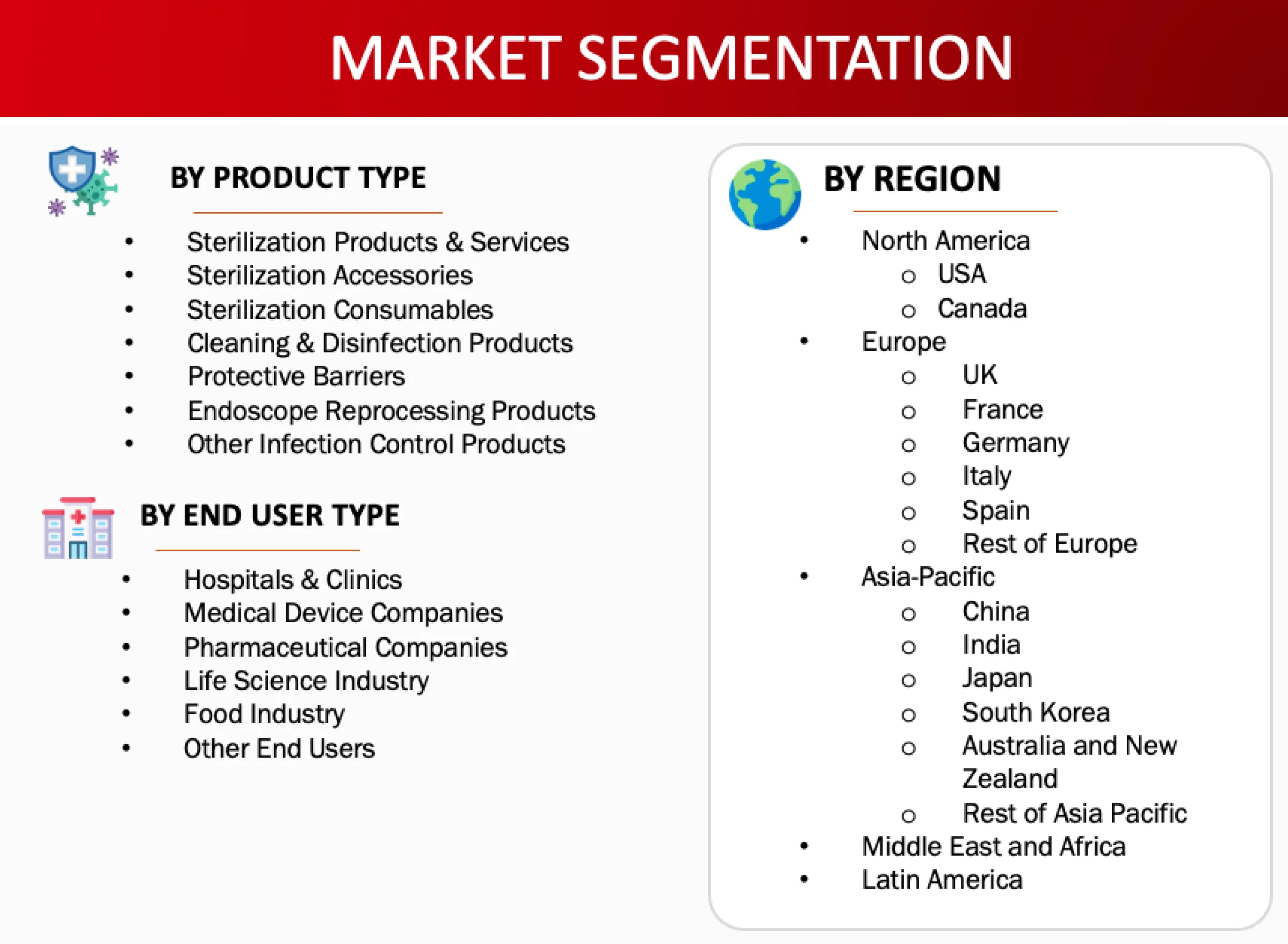
Infection Control Market Segmentation
Want detailed insights from this report?
Company Websites and Wissen Research Analysis
- Portfolio expansion through acquisitions: On October 12, 2026, STERIS plc (Ireland) announced an agreement to acquire Xodus Medical, Inc. (U.S.) for USD 2.1 billion. Xodus Medical’s projected 2026 revenue is approximately USD 245 million, illustrating the strategic value placed on expanding into surgical safety products and operating-room consumables. The transaction is subject to regulatory approvals and closing conditions.
- Automation is becoming a competitive differentiator: In December 2025, Getinge AB (Sweden) introduced its Automatiq range of sterile-reprocessing automation solutions, combining mobile robotics, intelligent conveyors, automated loading and unloading, and workflow software. This positions workflow efficiency, reduced manual handling, and traceability as differentiators beyond sterilizer performance alone.
- Sterilization consumables support recurring customer relationships: Getinge AB (Sweden) offers cleaning detergents, sterilization packaging, sealers, monitoring products, and indicators alongside sterilization equipment. This integrated portfolio allows suppliers to address multiple stages of instrument reprocessing and compete for recurring consumables purchases in addition to equipment sales.
- Digital monitoring strengthens service-based competition: Ecolab Inc. (U.S.) combines healthcare cleaning products, standardized hygiene workflows, staff training, and digital dashboards. Its approach demonstrates how suppliers can differentiate through implementation support and performance monitoring rather than competing solely on disinfectant pricing.
- Sterilization assurance creates opportunities for independent product differentiation: Solventum Corporation (U.S.) offers biological and chemical indicators, process challenge devices, and its Attest sterilization assurance portfolio. The company highlights independent BSI Kitemark certification for its indicators, providing a verifiable quality-assurance attribute for healthcare procurement teams evaluating monitoring products.
- Companies are targeting different parts of the infection-control workflow: STERIS plc (Ireland) is expanding its surgical consumables portfolio, Getinge AB (Sweden) is developing automated reprocessing workflows, and Ecolab Inc. (U.S.) emphasizes environmental hygiene programs and analytics. For clients, this differentiation matters when assessing supplier selection, bundling potential, and opportunities to consolidate purchasing across infection-control categories.
Reusable medical devices require repeated reprocessing: The U.S. Food and Drug Administration (FDA) identifies surgical forceps, endoscopes, and laryngoscopes as reusable devices requiring cleaning followed by appropriate disinfection or sterilization to prevent infection transmission.
-
Sterilization remains essential for medical-device manufacturing: Medical-device manufacturers must ensure that products designated sterile undergo validated sterilization processes. The FDA’s regulatory framework for medical devices supports continued demand for sterilization equipment, monitoring products, and specialized processing services.
-
Contract sterilization supports manufacturers without dedicated capacity: The FDA recognizes standalone reprocessing service facilities as part of the medical-device reprocessing ecosystem. This supports the relevance of external processing providers for organizations requiring specialized sterilization capabilities.
-
Industrial investment reinforces the commercial importance of sterilization: In October 2026, STERIS plc (Ireland) announced a USD 600 million manufacturing and distribution investment in North Carolina, including facilities serving healthcare and pharmaceutical sterilization and disinfection chemical markets.
-
Process verification creates additional demand beyond equipment: Biological and chemical indicators help verify sterilization-cycle performance, while packaging and related accessories support instrument handling and storage. These complementary requirements create opportunities for suppliers to serve recurring consumables demand alongside equipment purchases
Healthcare-associated infections create recurring prevention requirements: The U.S. Centers for Disease Control and Prevention (CDC) estimated approximately 518,000 healthcare-associated infections in U.S. acute-care hospitals in 2023, demonstrating the scale of the hospital infection-prevention challenge.
-
Recent surveillance shows that prevention remains an ongoing priority: In 2024, U.S. acute-care hospitals recorded year-over-year reductions in central line-associated bloodstream infections (9%), catheter-associated urinary tract infections (10%), and C. difficile infections (11%). Continued monitoring and prevention remain important despite this progress.
-
Hospital reprocessing involves multiple recurring product requirements: The FDA describes reusable-device reprocessing as a multistep process involving initial decontamination, thorough cleaning, and subsequent disinfection or sterilization. This supports demand for cleaning solutions, reprocessing equipment, and sterilization consumables.
-
Digital surveillance is established across healthcare facilities: The CDC’s National Healthcare Safety Network (NHSN) receives data from more than 70,000 hospitals, long-term-care facilities, and other healthcare facilities, supporting surveillance and targeted infection-prevention initiatives.
-
Infection-control needs extend beyond large hospitals: The FDA identifies small inpatient and outpatient facilities, medical-office suites, and ambulatory surgery centers among settings where reusable devices are reprocessed. This broadens the potential customer base for appropriately scaled infection-control solutions.
Substantial healthcare expenditure: The U.S. healthcare system’s high expenditure reflects significant resources devoted to healthcare delivery, supporting the region’s capacity to purchase infection-control products and services. Use official national health expenditure data to quantify this point in the final report.
-
Established infection surveillance infrastructure: The CDC’s NHSN receives data from more than 70,000 healthcare facilities, supporting structured surveillance and infection-prevention activities across the United States.
-
Detailed medical-device reprocessing requirements: FDA guidance on reusable medical-device reprocessing establishes requirements for appropriate cleaning, disinfection, sterilization, and validated instructions, supporting demand for compliant infection-control solutions.
-
Continuing need for hospital infection prevention: CDC surveillance for 2024 showed that infection trends varied by infection type, with some measures improving while abdominal hysterectomy surgical-site infections increased by 8%. This supports continued investment in targeted prevention practices.
-
Supplier investment in U.S. manufacturing: STERIS plc (Ireland) announced a USD 600 million North Carolina manufacturing and distribution investment in October 2026, demonstrating continued investment in sterilization and disinfection chemical supply infrastructure.
What This Report Covers-
This report provides a comprehensive analysis of the infection control market, offering insights into key trends, growth drivers, challenges, and future opportunities. It is designed to support strategic decision-making through a combination of quantitative data and qualitative analysis.
Specifically, the report covers:

Market Overview & Definition:
Overview of the market scope, structure, and key terminology

Market Size & Forecast:
Historical data and future projections across key segments and regions

Key Market Trends:
Insights into emerging trends, technological advancements, and evolving demand patterns

Drivers, Restraints & Opportunities:
Analysis of key factors influencing infection control market growth

Competitive Landscape:
Overview of major players, their strategies, and recent developments

Detailed Patent Analysis:
This includes, top assignees, geography focus of top assignees, legal status, technology evolution, key patents and patent trends and innovations

Segmentation Analysis:
Breakdown by products type, by end users type, and region

Regional Insights:
Key regional trends and growth opportunities

Future Outlook:
Strategic insights and future market direction
Research Methodology
The study of the infection control market is based on a combination of primary and secondary research methodologies, supported by data validation, product and technology mapping, sterilization and disinfection procedure analysis, infection prevention and control (IPC) guideline assessment, company revenue and product-portfolio analysis, regulatory and compliance assessment, healthcare facility demand analysis, medical device reprocessing requirements, installed equipment and consumables assessment, end-user adoption analysis, competitive benchmarking, and analytical modelling to ensure accuracy and reliability.
Market Definition: Infection Control Market
The infection control industry consists of different types of products and services which help avoid infections in healthcare operations and minimize the spread of the infectious agents within healthcare facilities, manufacturing sector, and pharmaceutical industry. The market covers sterilization products and services, sterilization accessories, sterilization consumables, cleaning and disinfection products, protective barriers, as well as endoscope reprocessing products and other products associated with infection control.
Sterilization products and services comprise heat and low-temperature sterilization equipment, radiation sterilizers, and medical sterilization services including ethylene oxide (EtO), gamma, electron beam, and steam sterilizations. Accessories involve chemical and biological indicators, sterilization pouches, lubricants, and other associated products. Cleaning and disinfection products consist of disinfectants, washer-disinfectors and flushers-disinfectors, UV disinfection systems, ultrasonic cleaners, cleaning solutions, and cleaning accessories. Protective barriers contain medical non-wovens, masks, surgical gowns and drapes, covers and closures, goggles, and gloves. Endoscope reprocessing products constitute consumables, automated endoscope reprocessing machines, drying and storing systems, transportation systems, and tracing solutions.
Key Stakeholders
The infection control market involves a broad ecosystem of stakeholders:
- Sterilization Equipment Manufacturers
- Contract Sterilization Service Providers
- Cleaning and Disinfection Product Manufacturers
- Sterilization Indicator and Consumables Manufacturers
- Medical Protective Barrier Manufacturers
- Endoscope Reprocessing Equipment Manufacturers
- Infection Control Technology and Monitoring Solution Providers
- Hospitals and Clinics
- Medical Device Manufacturers
- Pharmaceutical and Biotechnology Companies
- Life Sciences and Diagnostic Laboratories
- Food Processing and Manufacturing Companies
- Healthcare Distributors and Medical Supply Suppliers
- Hospital Procurement and Infection Prevention Departments
- Regulatory and Healthcare Standards Organizations
Key Objectives of the Study
- To define, describe, analyze, segment, and forecast the infection control market by products type, and by end users type.
- To describe and forecast the market for four key regions: North America, Europe, Asia Pacific, and Rest of the World
- To provide detailed information regarding key drivers, restraints, opportunities, and challenges influencing market growth
- To strategically analyze the micro indicators with respect to individual growth trends, prospects, and contributions to the overall market size
- To analyze opportunities for stakeholders in the infection control industry and emphasize on competitive landscape of the market
- To develop competitive benchmarking of the key market players based on technology specifications and end user
- To strategically profile key players and comprehensively analyze their product portfolio offerings, and core competencies
- To analyze competitive developments, such as launches and approvals, agreements, mergers and acquisitions, partnerships, joint ventures, investments and expansions, and collaborations, infection control domain
Need deeper insights on this market?
Get full report access with detailed forecasts, competitive analysis, and segmentation.
Research Approach
This research employs a systematic approach by using primary research along with secondary research to achieve full coverage and accuracy of information about the infection control sector. Through this approach, the current market trends in terms of consumer behaviour, technological developments, and competitive environment can be analysed thoroughly.
Secondary Research
Secondary research involves the collection of data from reliable sources such as industry databases, company annual reports, investor presentations, and regulatory filings. This process helps in understanding market trends, identifying key players, and gathering technical and commercial insights.
A comprehensive database of leading companies and market participants is developed through secondary research to support further analysis.
Primary Research
Primary research is conducted to validate findings from secondary research and to gain deeper insights into market dynamics. Interviews are carried out with industry stakeholders across both demand and supply sides, including executives such as CXOs, Vice Presidents, and Directors from business development, marketing, and product teams.
Data is collected through structured questionnaires, email interactions, and telephonic interviews across key regions including North America, Europe, Asia-Pacific, and Rest of the World.
Market Size Estimation
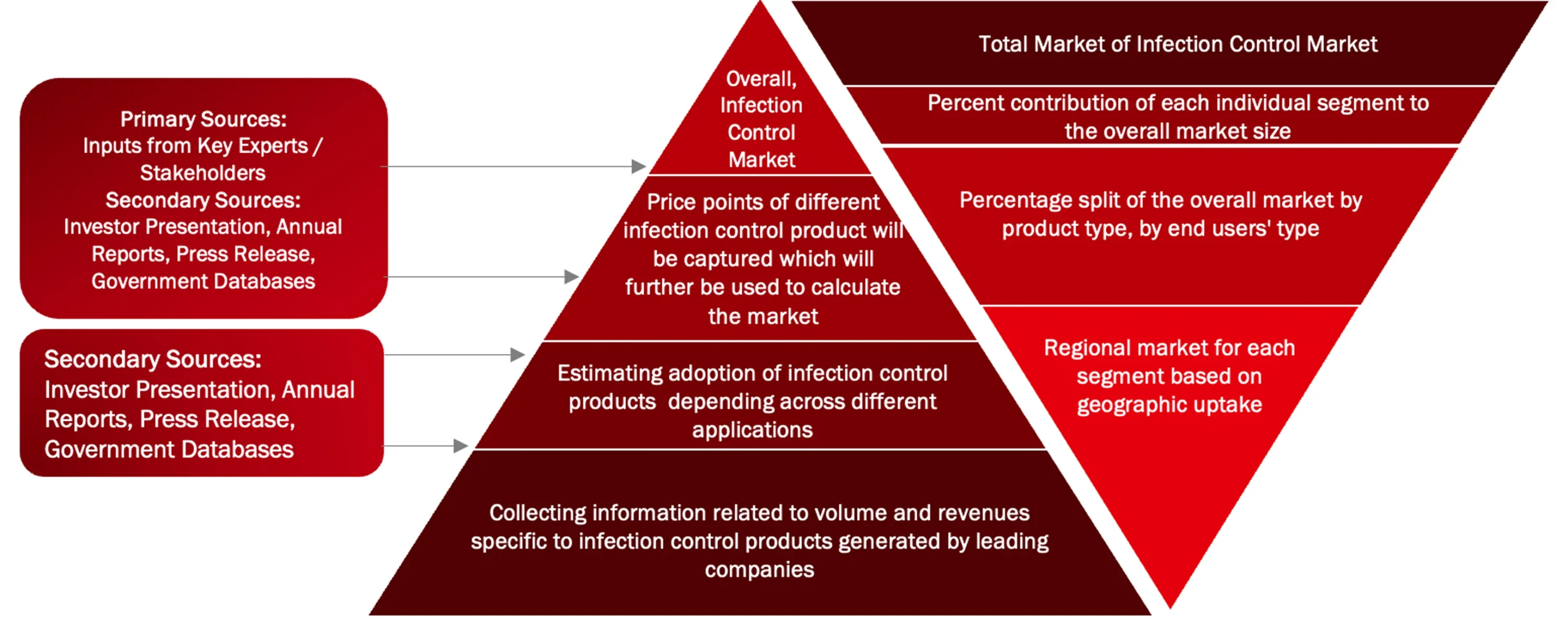
Market size estimation is performed using both top-down and bottom-up approaches. Key market players are identified, and their revenues are analysed to estimate the overall market size.
The market is further segmented based on:
- Product and service mapping across regions
- Adoption patterns across key application segments
- Insights gathered through primary and secondary research
Data Validation and Research Design
After estimating the overall market size, the data is validated using triangulation methods and market breakdown techniques to ensure accuracy and consistency. Both demand-side and supply-side factors are considered to refine the analysis.
The final data is validated through multiple sources to ensure reliability and to provide accurate insights across all market segments and regions.
Assumptions of the Study
The analysis of the infection control market is based on the following key assumptions:
- Trends in the industry are drawn from historical data and current information within the sector
- The future outlook is underpinned by constant economic conditions in the absence of shocks to the market
- The rate of adoption for infection control will rise steadily in all important regions
- The income statement and market share figures are estimated using available information from the industry and publicly available data
- The exchange rate and price trends will not be greatly affected during the forecast period
Scope and Limitations
Scope of the Study
This report offers an exhaustive overview of the global infection control market and includes the following components:
- Summary of market size, growth trends, and projections
- Carefully segmented market based on by products type, by end users’ type. and by geography
- Discussion of primary factors influencing the market
- Competitor analysis
- Insights into regional and national market performance
Limitations of the Study
Despite the best efforts being made to keep the results accurate, the study does suffer from some limitations:
- It has been done using both primary and secondary data that come with their own constraints
- Rapid developments in technology might affect the future course of market dynamics
- Some figures are only approximations due to lack of public disclosure
- The report is not an insurance against any disruptions in macroeconomics and geopolitics
- Future forecasts are indicative and subject to change due to altered industry dynamics
Data Triangulation and Market Breakdown
Data triangulation involved the combination of primary research, secondary research, and the Wissen Research analysis. Once the data points were sourced from the secondary market research, we sanitized the data points to make the market sizing and growth forecast more accurate by developing our own assumptions based on the inputs and insights we gather through the primary interviews with the industry experts. Once the data was thoroughly validated through primary interviews from both, demand and supply side of the market, our team of analyst and other team members involved finalized the market sizing and growth forecast.
Data Triangulation Methodology
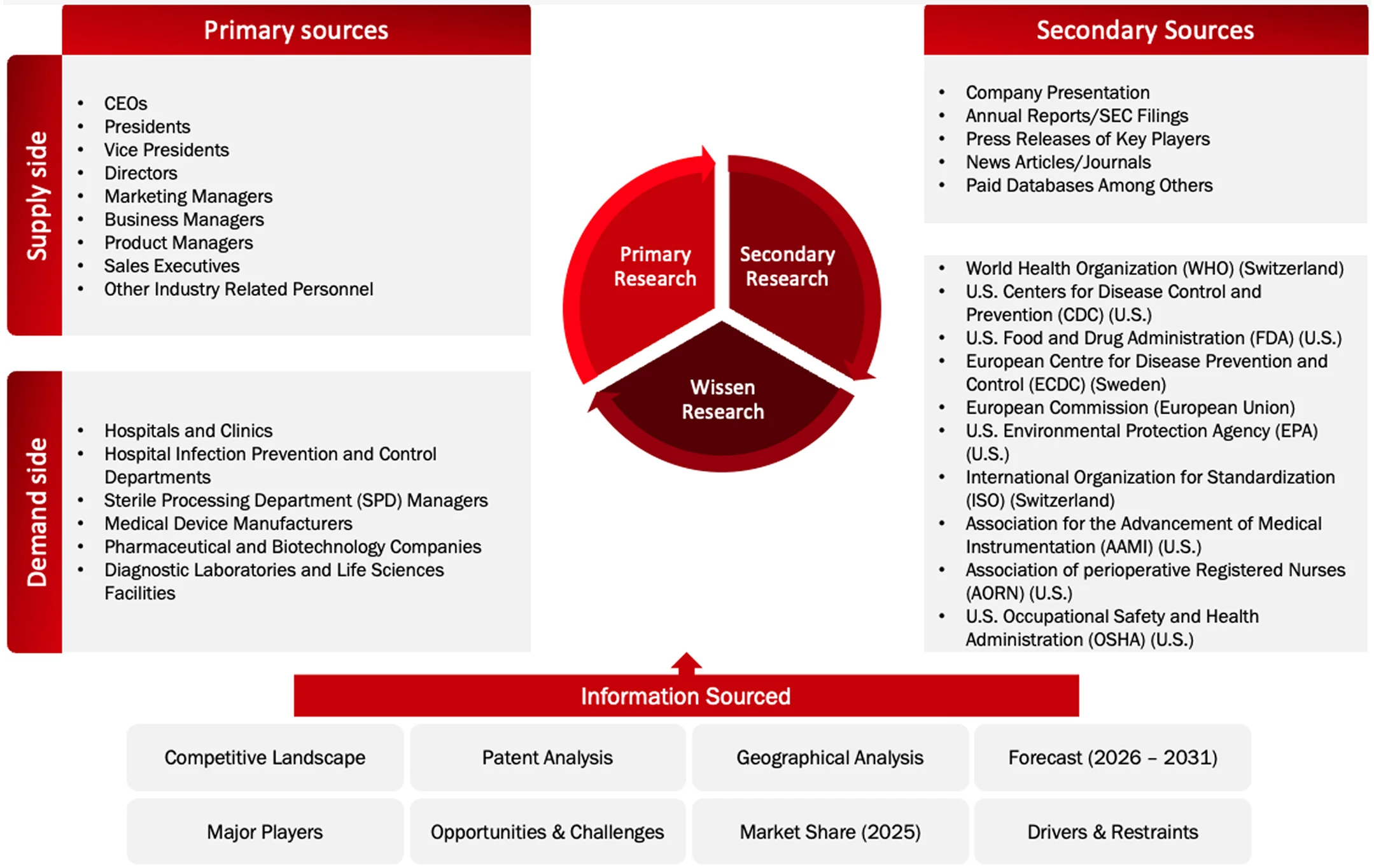
U.S. Environmental Protection Agency, U.S. Department of Energy, European Commission, European Environment Agency, Organisation for Economic Co-operation and Development, United Nations Environment Programme, International Organization for Standardization, Plastics Europe, Association of Plastic Recyclers, European Plastics Recyclers, British Plastics Federation, American Chemistry Council, Company Websites, Press Releases, Annual Reports, Sustainability Reports, Regulatory Filings, Peer-Reviewed Scientific Publications, Paid Data Sources, and Wissen Research Analysis.
Years Framework
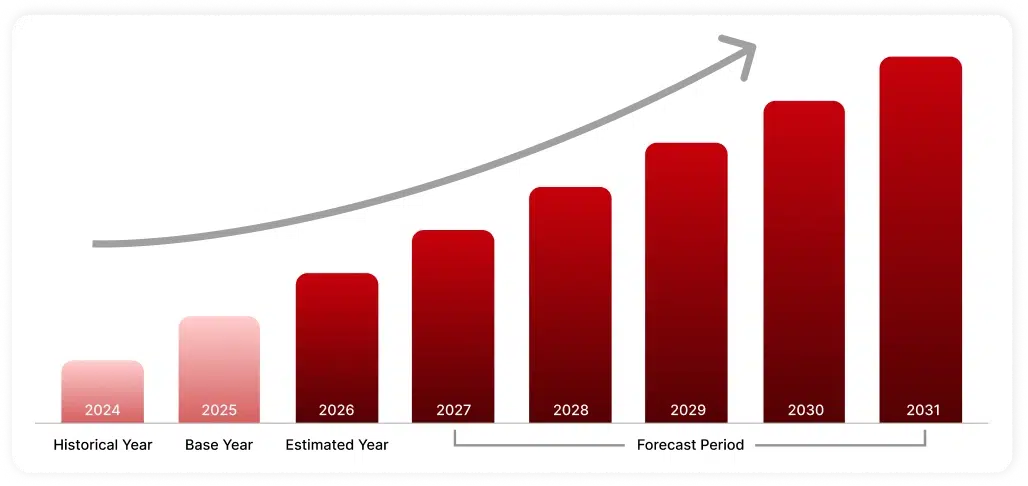
Bottom-Up Approach (Demand Side) And Top-Down Approach (Supply Side)
Bottom-Up Approach (Demand-Side Approach):
Determining the market size through the consolidation of demand among end-users, sectors, and geographic areas, which are calculated according to real-world demand conditions.
Top-Down Approach (Supply-Side Approach):
Calculating the market size through revenue and performance of the industry and its important companies, allocating the market size among various sectors.
Want detailed insights from this report?
Buy this Report
Choose the option that best fits your needs