
IVD Quality Control Market
Global Industry analysis, Size, Share, Growth, Trends, and Forecast 2026-2031
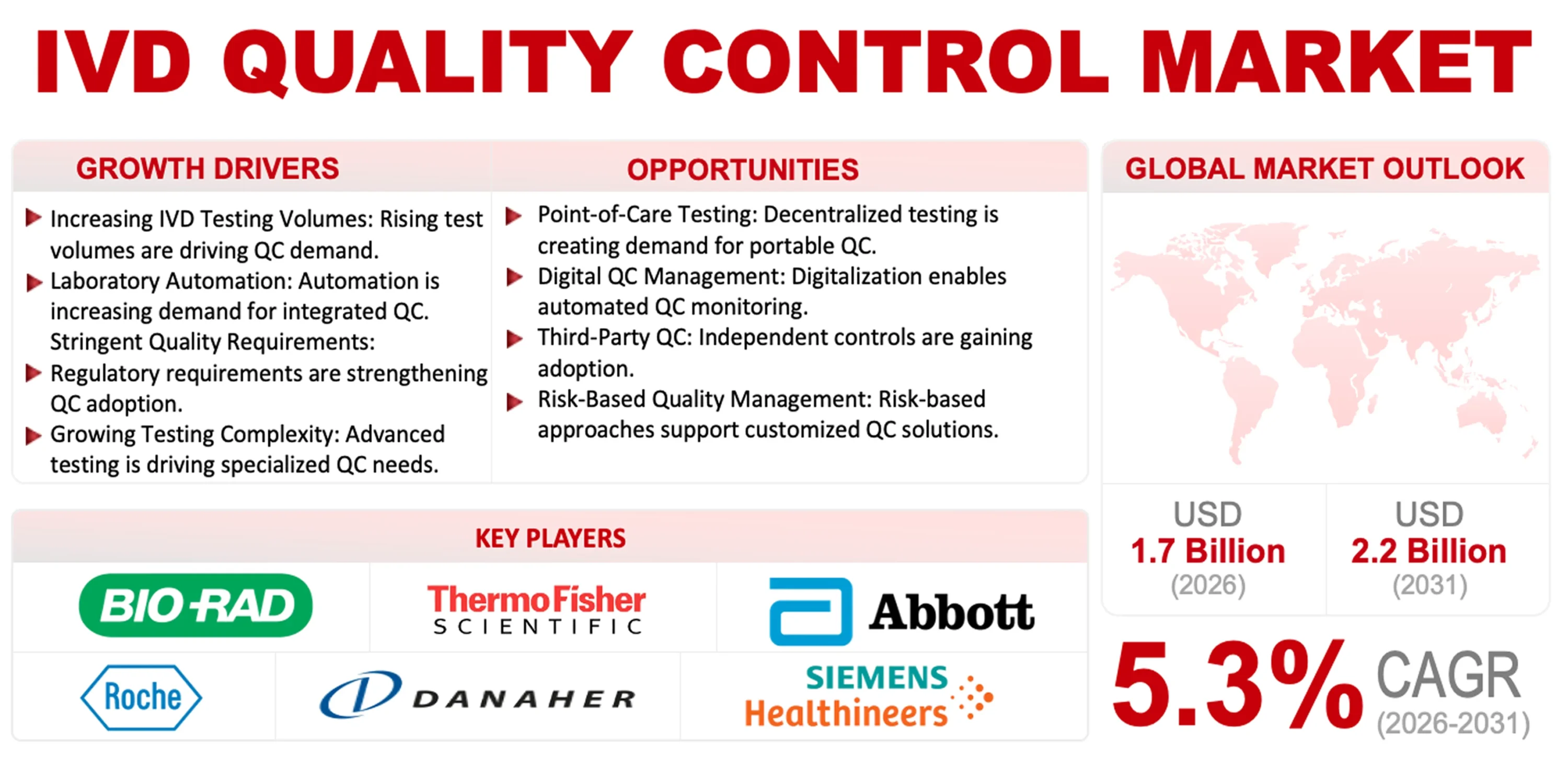
The global IVD quality control market is projected to reach USD 2.2 billion by 2031, growing at a CAGR of 5.3% during the forecast period.
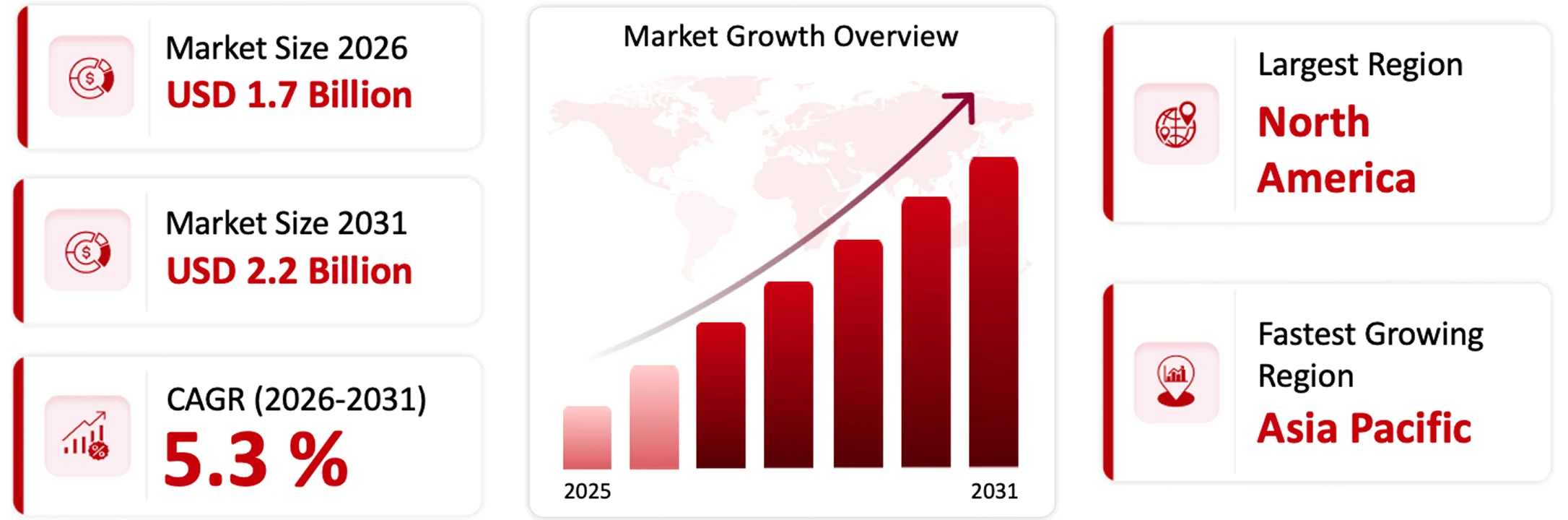
| Market Size (2026): | Forecast (2031): | CAGR (2026–2031): | Leading Region: | Fastest Growing Region: |
|---|---|---|---|---|
| $ 1.7 Billion | $ 2.2 Billion | 5.3 % | North America | Asia Pacific |
Summarize this report with:



Market Overview
The IVD quality control market is fueled by the increasing need for assuring the precision and accuracy of test results in clinical laboratories, hospitals, and decentralized laboratories. Quality control materials and systems aid laboratories in ensuring the proper functioning of IVD tests, reagents, equipment, and test process to detect potential problems with the analysis results. According to WHO, quality control samples and external quality assessment are indispensable parts of laboratory quality assurance.
The market is also influenced by rising complexity and automatization of IVD testing, the expanding range of molecular and immunological diagnostics, and the rising importance of laboratory quality and performance regulation. Increasing implementation of internal quality controls, third-party control materials, proficiency testing, and external quality assessment systems in laboratory routine becomes an important trend in laboratory testing.
The market is estimated to be USD 1.7 billion in 2026 and is projected to reach USD 2.2 billion by 2031, growing at a CAGR of 5.3% during the forecast period (2026-2031).
Technology Overview
IVD quality control technologies consist of control materials, analytical monitoring techniques, and quality assessment methods employed to ascertain the precision and accuracy of the diagnostic assays, reagents, instrumentation, and test procedures. The internal quality control is carried out using known control materials to check the performance of the assay. On the other hand, external quality assessment (EQA) and proficiency testing involve the comparison of laboratory results to assigned values or peer group values.
Main technologies include manufacturer controls, third-party controls, positive controls, negative controls, multiple-level quantitative controls, as well as specific controls for chemistry, immunoassay, hematology, molecular diagnostics, and microbiology. Contemporary quality control processes also employ the use of statistics and electronic data analysis to detect any analytical shifts or errors caused by reagents and instrumentation.
Key Growth Drivers
- There is an increasing need for quality control materials and testing due to increasing volumes and complexities of IVD tests. The regulatory and quality requirement of IVD test is one of the factors that is encouraging the implementation of internal quality control, proficiency testing and external quality assessment. Regulatory framework like CLIA requires quality control and assurance procedures for the tests done in clinical laboratories.
- The growing number of automated and high throughput diagnostic systems is increasing the need for automatic monitoring of quality control, statistical analysis and digital quality management procedures. Increased complexities of molecular, immuno-diagnostic and multiplex IVD test are encouraging the development of special control reagents which will be able to monitor various analytical parameters and platforms.
- Development of point-of-care and decentralized diagnostics is encouraging the need of easy-to-use quality control products that will be able to verify the performance of test results at the decentralized locations like hospitals, physician office and community settings.
- The increased need for laboratory standardization and quality management is encouraging the utilization of third party control reagents, external quality assessment and proficiency testing.
IVD Quality Control Market Key Highlights
Need deeper insights on this market?
Get full report access with detailed forecasts, competitive analysis, and segmentation.
IVD Quality Control Market Trends
There are significant transformations in the quality control processes of IVDs in recent years, with many laboratories adopting automated solutions for quality management as they have to deal with increasingly sophisticated workflows. The contemporary QC solutions are changing the focus from manual quality management toward automated quality control, i.e., from just checking the compliance of the test results toward active monitoring, statistics, alerts, and seamless integration with LIMS and middleware. As a result, labs detect discrepancies in testing much faster and improve traceability and standardization.
Increasing Adoption of Automated and Digital QC Workflows
Laboratories are increasingly integrating QC management with analyzers, laboratory middleware, and information systems to reduce manual data entry and accelerate identification of QC failures. Commercial platforms such as Roche navify Lab Operations provide integrated QC management, configurable QC rules, Levey–Jennings charting, third-party QC integration, and automated stopping of result transmission when QC issues are detected. This illustrates the shift toward QC systems that are directly embedded within laboratory workflows rather than managed as standalone processes.
Growing Use of Patient-Based Real-Time Quality Monitoring
Patient-based approaches are emerging as a complementary layer to conventional QC materials, allowing laboratories to monitor analytical performance between routine QC events. Roche’s navify Lab Operations, for example, includes an Average of Normals function that uses results from normal patient populations to identify shifts and trends in analyzer performance continuously. Such approaches can provide earlier indication of analytical changes, although they do not replace conventional QC procedures.
Increasing Adoption of Third-Party QC Materials
Third-party QC materials are gaining importance as laboratories seek independent assessment of assay and instrument performance. Their use can provide an additional level of monitoring beyond manufacturer-supplied controls and support comparison of performance across different systems. This trend is particularly relevant as laboratories operate multiple analyzers, reagent systems, and diagnostic platforms within increasingly standardized workflows.
Expansion of Risk-Based and Individualized Quality Control
Quality control is increasingly being designed around the specific testing process, technology, and laboratory environment, rather than relying solely on fixed QC frequencies. In the US, the CDC’s Individualized Quality Control Plan (IQCP) provides laboratories with a risk-based framework for meeting CLIA QC requirements, considering the complete testing process and the laboratory’s specific testing environment. This reflects a broader movement toward flexible, risk-based approaches to IVD quality management.
Greater QC Integration Across Point-of-Care Testing
The expansion of decentralized and point-of-care IVD testing is increasing the need for centralized oversight, standardized QC procedures, electronic records, and remote monitoring. Roche’s navify POC Operations, for instance, provides QC review, audit trails, trend identification, and configurable alerts for point-of-care environments. Such solutions address the challenge of maintaining consistent quality when testing is performed across multiple locations and by users with varying levels of laboratory expertise.
Key Players in the IVD Quality Control Market
Leading companies in the IVD quality control market are focusing on innovation, strategic partnerships, and expansion of health-centric features to strengthen their market position.








Strategic Activities Within the IVD Quality Control Market
RealBio (China) signed a strategic agreement with Thermo Fisher Scientific (US) to collaborate on comprehensive quality control solutions for in vitro diagnostics. The partnership aims to combine Thermo Fisher’s global standards and technical depth with RealBio’s strengths in local translation, regulatory support, and IVD raw material development.
Siemens Healthineers AG (Germany) achieved a sustainability milestone by becoming the first IVD manufacturer to earn the My Green Lab ACT Ecolabel for both its Atellica analyzers and over 150 reagents. This certification provides transparent environmental impact data, evaluating factors like energy use and waste.
IVD Quality Control Market Insights
The IVD quality control market is expanding as clinical laboratories, hospitals, and decentralized testing sites place greater emphasis on the accuracy, precision, and reliability of diagnostic results. Quality control samples, internal QC procedures, proficiency testing, and external quality assessment are key components of laboratory quality management and are used to identify analytical errors and verify test performance.
Growth is further supported by the increasing volume and complexity of IVD testing across clinical chemistry, immunoassays, hematology, molecular diagnostics, and multiplex platforms. The shift toward automated analyzers and digital QC management is also enabling laboratories to automate QC data capture, monitor trends, and identify performance deviations more efficiently.
IVD quality control solutions are widely used across clinical chemistry, immunoassay, hematology, molecular diagnostics, microbiology, coagulation, and point-of-care testing. QC materials and procedures help verify assay and instrument performance, monitor analytical precision, and identify shifts or errors before unreliable results are reported.
External quality assessment and proficiency testing provide an additional layer of performance monitoring by comparing laboratory results with peer laboratories or reference values. These approaches are particularly important as testing expands across decentralized and point-of-care settings, where laboratories need consistent quality practices across different operators and locations.
The increasing volume and complexity of diagnostic testing is a major market driver. The expansion of molecular diagnostics, immunodiagnostics, multiplex testing, and high-throughput laboratory systems is increasing the need for specialized QC materials and more comprehensive performance monitoring.
Regulatory requirements are also supporting adoption. For example, CLIA requires laboratories to maintain QC procedures for monitoring the accuracy and precision of the testing process, while the Individualized Quality Control Plan (IQCP) allows laboratories to tailor QC approaches to their specific testing environment and patient needs.
Increasing laboratory automation and the expansion of point-of-care testing are further creating demand for digital QC monitoring, standardized procedures, and remote oversight. These capabilities help laboratories manage larger testing volumes while maintaining consistent quality across multiple instruments and testing locations.
The IVD quality control market is shifting from manually managed QC toward automated and digitally connected quality monitoring. Laboratories are increasingly using digital systems for QC data capture, statistical analysis, trend monitoring, and documentation, particularly as testing volumes and instrument networks expand.
Another important trend is the growing use of third-party QC and risk-based quality management. WHO recognizes both internal and external/third-party QC as components of quality oversight, while the CDC’s IQCP framework supports customized QC based on the specific test system and testing environment.
However, implementation remains challenging because laboratories may operate multiple instruments, assays, control materials, and QC rules. Smaller laboratories and decentralized testing sites can also face constraints related to cost, training, data management, and quality-system implementation.
Asia Pacific is emerging as a high-growth market for IVD quality control, supported by expanding diagnostic infrastructure, increasing testing volumes, laboratory automation, and greater emphasis on standardized quality practices. China, India, Japan, and South Korea represent important markets due to their expanding healthcare and diagnostic capabilities.
The growing use of molecular diagnostics, immunoassays, clinical chemistry, and automated laboratory systems is increasing the need for internal QC, third-party controls, and proficiency testing. At the same time, expansion of decentralized testing is creating demand for simplified QC and quality-management systems suited to non-laboratory settings. WHO specifically highlights internal QC, third-party QC, EQA, and continuous quality improvement for such testing environments.
IVD Quality Control Market Dynamics
Drivers: Increasing IVD Testing Volumes, Automation, and Regulatory Emphasis on Quality
The growing volume and complexity of IVD testing is increasing the need for reliable quality control to verify the accuracy, precision, and consistency of diagnostic results. The expansion of molecular diagnostics, immunoassays, clinical chemistry, hematology, and multiplex testing increases the number of analytical parameters that laboratories need to monitor, supporting demand for specialized QC materials and quality-management solutions. WHO identifies QC samples and external quality assessment as important components of laboratory quality management.
Increasing laboratory automation and high-throughput testing are further driving demand for integrated QC workflows. Automated analyzers and digital QC systems can support continuous monitoring, statistical analysis, trend identification, and documentation while reducing manual QC activities. In addition, regulatory requirements are strengthening adoption; for example, CLIA requires laboratories to maintain QC procedures for monitoring the accuracy and precision of the testing process.
Opportunities: Expansion of Point-of-Care Testing, Third-Party QC, and Risk-Based Quality Management
The expansion of decentralized and point-of-care testing is creating opportunities for QC solutions designed for diverse testing locations and operators. As diagnostic testing moves beyond centralized laboratories, there is increasing need for standardized internal QC, external or third-party controls, proficiency testing, and quality monitoring across distributed testing environments. WHO specifically recognizes internal and external/third-party QC as components of quality oversight for non-laboratory testing.
Another opportunity lies in the adoption of risk-based and individualized QC approaches. The CDC’s Individualized Quality Control Plan (IQCP) allows laboratories to develop QC plans based on their specific test systems, testing environment, and potential sources of error rather than relying solely on fixed QC procedures. This creates opportunities for digital QC platforms that integrate risk assessment, QC data, trend analysis, and quality assessment into a unified workflow.
Challenges: QC Complexity, Standardization Issues, and Implementation Costs
The IVD quality control market faces challenges associated with the increasing diversity of assays, instruments, control materials, and testing environments. Laboratories operating multiple platforms may need to manage different QC requirements, acceptance criteria, calibration procedures, and control materials, making standardization and cross-platform performance comparison more difficult.
Implementation costs and operational complexity can also limit adoption of advanced QC solutions, particularly among smaller laboratories and decentralized testing sites. Beyond the cost of QC materials, laboratories may need investment in digital QC systems, staff training, data management, and external quality assessment. Moreover, QC alone cannot guarantee accurate patient results; WHO emphasizes that QC should form part of a broader quality-management system incorporating training, standard operating procedures, and proficiency testing.
Technology and Market Insights
From technological and market viewpoints, the IVD quality control market is evolving towards increased automation, digitalization, and real-time monitoring. Advances in QC materials, statistical analysis, and digital quality-management systems enable laboratories to monitor the accuracy, precision, and consistency of increasingly complex diagnostic testing workflows. This is particularly relevant as laboratories adopt high-throughput, molecular, multiplex, and automated IVD platforms.
Moreover, the market is moving beyond conventional manufacturer-provided controls towards third-party QC, multi-analyte controls, external quality assessment, and risk-based quality management. Digital QC platforms and analyzer-integrated systems facilitate automated QC evaluation, trend monitoring, and identification of analytical deviations, while decentralized testing is creating demand for simpler and standardized QC approaches.
In terms of commercialization, the market is increasingly focused on integrating accuracy, automation, traceability, and standardization rather than relying solely on traditional control materials. Technological advancement is expanding the scope of IVD quality control from routine assay verification towards integrated quality-management solutions across centralized laboratories, molecular diagnostics, and point-of-care testing
Technology Scope and Products
IVD Quality Control Market Segmentation
Want detailed insights from this report?
Industry Developments and Competitive Landscape
Continuous innovations are taking place in the IVD quality control market as advancements in control materials, automation, statistical analysis, digital QC management, and external quality assessment improve the monitoring of diagnostic testing performance. The development of multi-analyte and third-party controls, automated QC workflows, and real-time monitoring solutions is enabling laboratories to identify analytical deviations more efficiently and strengthen standardization across testing platforms.
The competitive environment includes established diagnostic and laboratory quality providers expanding their portfolios through specialized QC materials, digital quality-management platforms, and integrated laboratory solutions, alongside companies focused on third-party controls and external quality assessment services. New product launches, technology integration, strategic partnerships, and acquisitions remain important competitive strategies as laboratories increasingly seek automated, connected, and standardized quality control solutions.
Immunoassay/immunochemistry held a dominant position in the IVD quality control market in 2025, supported by the widespread use of automated immunochemistry systems and the high volume of testing for hormones, tumor markers, cardiac markers, infectious diseases, and therapeutic drug monitoring. The broad assay menu and need to continuously monitor precision, calibration, reagent performance, and analytical shifts generate recurring demand for dedicated QC materials.
The extensive use of third-party controls further supports the segment. A survey of 21 large academic medical centers found widespread use of third-party QC materials for immunochemistry, demonstrating demand for independent monitoring alongside manufacturer-provided controls. Roche’s PreciControl materials, used with its immunoassay systems, provide an example of dedicated QC solutions designed to verify assay performance across immunochemistry testing.
The hospitals segment is set to be the dominating player in the IVD quality control market in 2025 because of the huge number and diverse range of tests carried out in the laboratories of the hospitals. There are clinical chemistry, immunoassay, hematology, microbiology, and molecular tests in the hospitals, thus there is the need for constant internal QC, calibration, and external quality assurance. QC is identified as one of the important parts of quality management in laboratories by WHO to ensure accuracy of results of patients.
Further development and adoption of automated and high throughput laboratory instruments will continue to increase the need for QC in hospitals. In a multicenter study across 13 hospitals in China, it was observed that using automated QC not only decreased processing time of the QC process from 30 minutes to 10 minutes, but also yielded low out-of-control rate compared to manual QC for both biochemical and immunoassay tests.
Large hospitals are also beginning to incorporate QC in the automation process in laboratories. For example, Kokilaben Dhirubhai Ambani Hospital in India validated almost 250 biochemical and immunoassay tests in an automated laboratory instrument.
North America held the largest share of the IVD quality control market in 2025, supported by its well-established clinical laboratory infrastructure, high adoption of automated IVD systems, and stringent laboratory quality requirements. In the US, CLIA establishes federal quality standards for facilities performing human diagnostic testing, including requirements related to quality control, proficiency testing, and quality assessment.
The region also has strong adoption of third-party QC and digital QC management solutions. For example, Bio-Rad’s Unity QC platform provides interlaboratory comparison and QC data management, while its controls are available across major US diagnostic platforms including Abbott Alinity and ARCHITECT systems. The scale of the US laboratory testing environment further supports demand; CDC notes that more than 14 billion laboratory tests are performed annually in the US, reinforcing the need for standardized quality monitoring and reliable diagnostic results.
What This Report Covers-
This report provides a comprehensive analysis of the IVD quality control market, offering insights into key trends, growth drivers, challenges, and future opportunities. It is designed to support strategic decision-making through a combination of quantitative data and qualitative analysis.
Specifically, the report covers:

Market Overview & Definition:
Overview of the market scope, structure, and key terminology

Market Size & Forecast:
Historical data and future projections across key segments and regions

Key Market Trends:
Insights into emerging trends, technological advancements, and evolving demand patterns

Drivers, Restraints & Opportunities:
Analysis of key factors influencing IVD quality control market growth

Competitive Landscape:
Overview of major players, their strategies, and recent developments

Detailed Patent Analysis:
This includes, top assignees, geography focus of top assignees, legal status, technology evolution, key patents and patent trends and innovations

Segmentation Analysis:
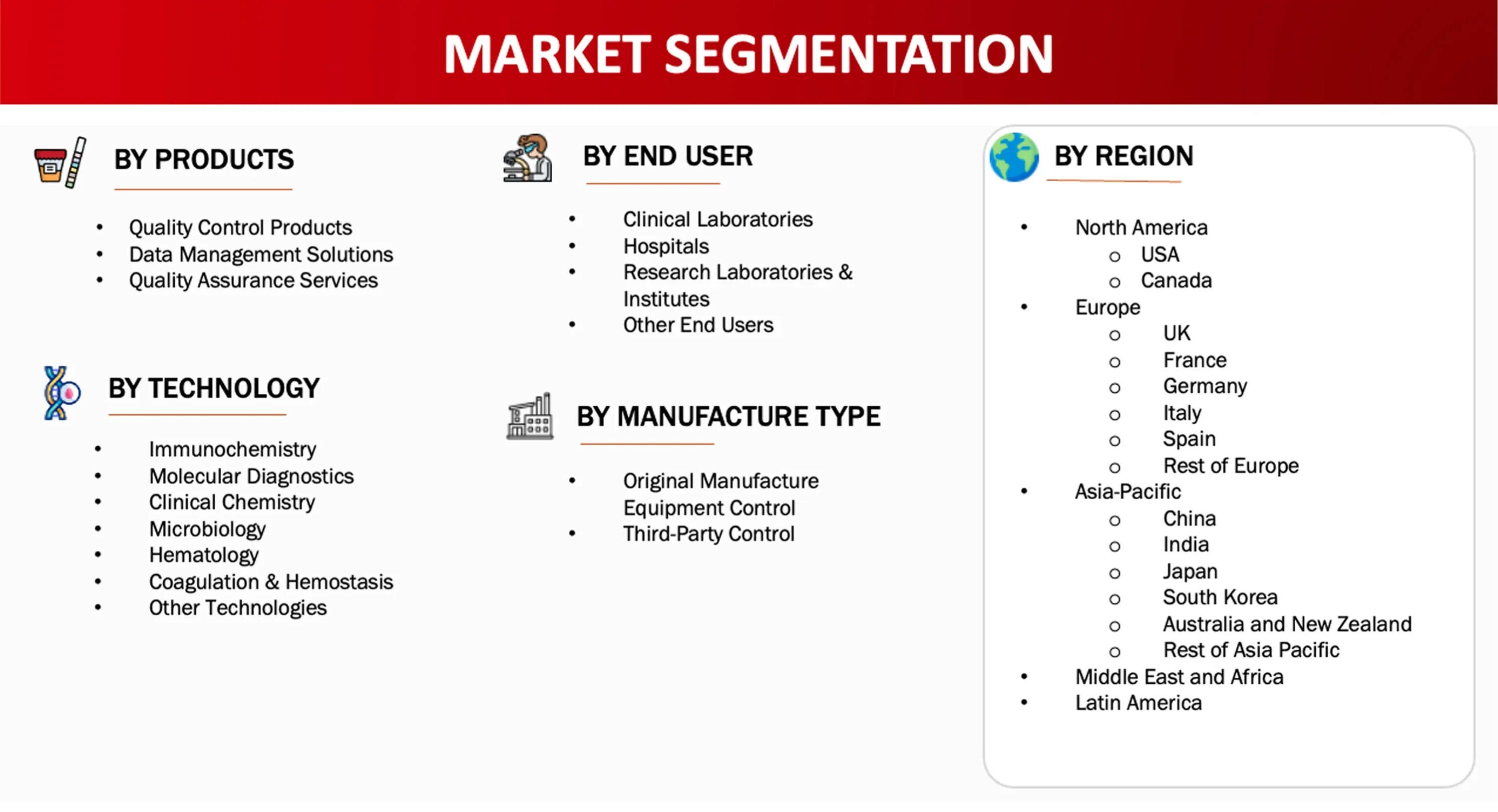
Breakdown by product, technology, manufacture type, end user, and region

Regional Insights:
Key regional trends and growth opportunities

Future Outlook:
Strategic insights and future market direction
Research Methodology
The study of the IVD quality control market is based on a combination of primary and secondary research methodologies, supported by data validation and analytical modelling to ensure accuracy and reliability.
Market Definition: IVD Quality Control Market
IVD quality control refers to the materials, procedures, and systems used to monitor and verify the accuracy, precision, reliability, and consistency of in vitro diagnostic testing. Quality control solutions help laboratories identify analytical errors, monitor assay and instrument performance, and ensure the reliability of patient test results.
The IVD quality control market includes manufacturer and third-party control materials, QC reagents, external quality assessment and proficiency testing services, and digital QC management solutions used across clinical chemistry, immunoassay, hematology, molecular diagnostics, microbiology, coagulation, and point-of-care testing.
Key Stakeholders
The IVD quality control market involves a diverse ecosystem of stakeholders:
- IVD Manufacturers & Diagnostic Companies (IVD analyzers, reagents, assay systems, and manufacturer-specific QC solutions)
- QC Material & Reagent Manufacturers (third-party controls, calibrators, multi-analyte controls, and specialized QC materials)
- External Quality Assessment & Proficiency Testing Providers (laboratory performance assessment, proficiency testing, and interlaboratory comparison programs)
- Healthcare Providers & Hospitals (hospital laboratories, diagnostic departments, and point-of-care testing facilities)
- Clinical & Reference Laboratories (independent laboratories, reference laboratories, and diagnostic centers)
- Laboratory Automation & Software Providers (QC management platforms, laboratory information systems, workflow automation, and data analytics)
- Regulatory & Standards Organizations (bodies overseeing IVD quality, laboratory performance, testing standards, and compliance)
- Distributors & Channel Partners (laboratory suppliers, diagnostic distributors, and regional channel partners)
- Academic & Research Institutions (laboratory quality research, assay validation, analytical performance, and QC methodology development)
- Professional & Laboratory Associations (organizations supporting laboratory standards, quality practices, education, and accreditation)
- Contract Testing & Research Organizations (assay validation, analytical testing, clinical testing, and laboratory services)
- Investors & Strategic Partners (corporate investors, private equity, venture capital, and technology partners)
Key Objectives of the Study
- To define, describe, analyze, segment, and forecast the IVD quality control market by product, by technology, by manufacture type, and by end user.
- To describe and forecast the market for four key regions: North America, Europe, Asia Pacific, and Rest of the World
- To provide detailed information regarding key drivers, restraints, opportunities, and challenges influencing market growth
- To strategically analyze the micro indicators with respect to individual growth trends, prospects, and contributions to the overall market size
- To analyze opportunities for stakeholders in the IVD quality control industry and emphasize on competitive landscape of the market
- To develop competitive benchmarking of the key market players based on technology specifications and end user
- To strategically profile key players and comprehensively analyze their product portfolio offerings, and core competencies
- To analyze competitive developments, such as launches and approvals, agreements, mergers and acquisitions, partnerships, joint ventures, investments and expansions, and collaborations, IVD quality control domain.
Need deeper insights on this market?
Get full report access with detailed forecasts, competitive analysis, and segmentation.
Research Approach
This research employs a systematic approach by using primary research along with secondary research to achieve full coverage and accuracy of information about the IVD quality control sector. Through this approach, the current market trends in terms of consumer behaviour, technological developments, and competitive environment can be analyzed thoroughly.
Secondary Research
Secondary research involves the collection of data from reliable sources such as industry databases, company annual reports, investor presentations, and regulatory filings. This process helps in understanding market trends, identifying key players, and gathering technical and commercial insights.
A comprehensive database of leading companies and market participants is developed through secondary research to support further analysis.
Primary Research
Primary research is conducted to validate findings from secondary research and to gain deeper insights into market dynamics. Interviews are carried out with industry stakeholders across both demand and supply sides, including executives such as CXOs, Vice Presidents, and Directors from business development, marketing, and product teams.
Data is collected through structured questionnaires, email interactions, and telephonic interviews across key regions including North America, Europe, Asia Pacific, and Rest of the World.
Market Size Estimation
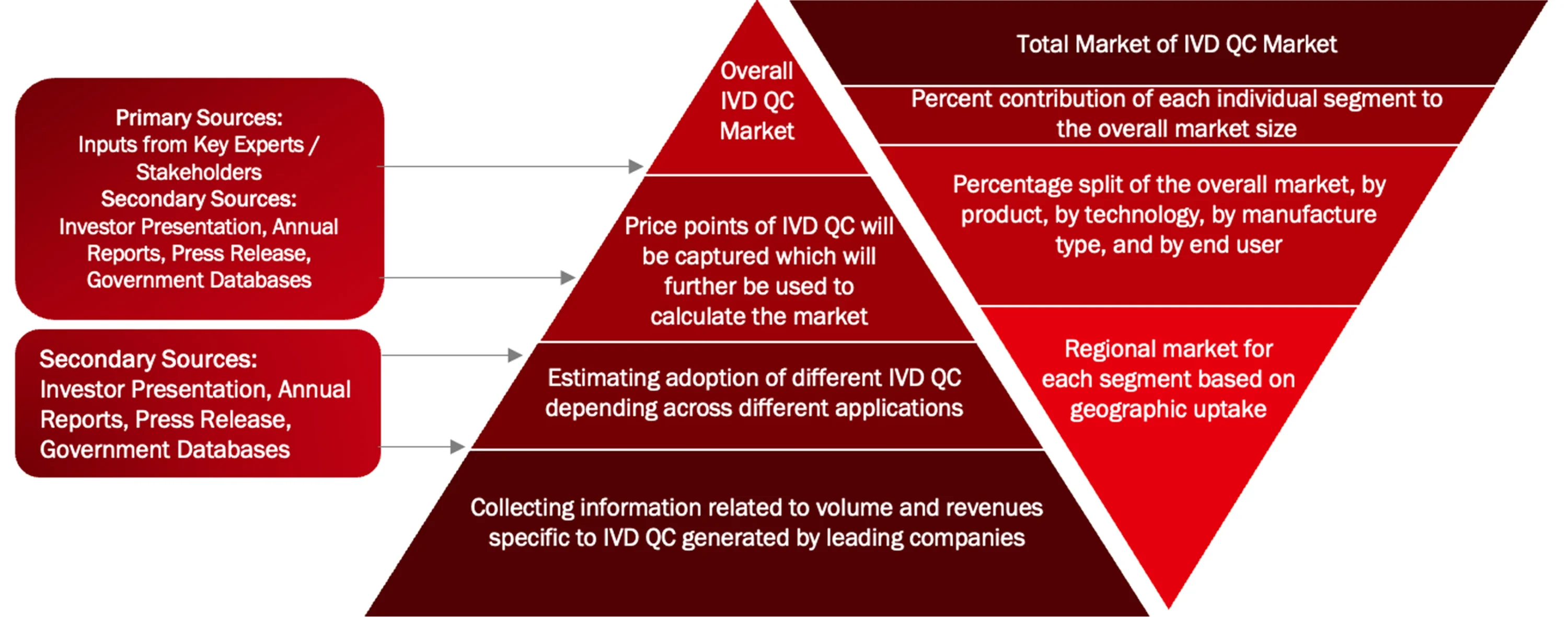
Market size estimation is performed using both top-down and bottom-up approaches. Key market players are identified, and their revenues are analyzed to estimate the overall market size.
The market is further segmented based on:
- Product and service mapping across regions
- Adoption patterns across key application segments
- Insights gathered through primary and secondary research
Data Validation and Research Design
After estimating the overall market size, the data is validated using triangulation methods and market breakdown techniques to ensure accuracy and consistency. Both demand-side and supply-side factors are considered to refine the analysis.
The final data is validated through multiple sources to ensure reliability and to provide accurate insights across all market segments and regions.
Assumptions of the Study
The analysis of the IVD quality control market is based on the following key assumptions:
- Trends in the industry are drawn from historical data and current information within the sector
- The future outlook is underpinned by constant economic conditions in the absence of shocks to the market
- The rate of adoption for IVD quality control will rise steadily in all important regions
- Advancements in QC automation will continue to drive growth in the IVD quality control market
- The income statement and market share figures are estimated using available information from the industry and publicly available data
- The exchange rate and price trends will not be greatly affected during the forecast period
Scope and Limitations
Scope of the Study
This report offers an exhaustive overview of the global IVD quality control market and includes the following components:
- Summary of market size, growth trends, and projections
- Carefully segmented market based on product, manufacture type, technology, end user and geography
- Discussion of primary factors influencing the market
- Competitor analysis
- Insights into regional and national market performance
Limitations of the Study
Despite the best efforts being made to keep the results accurate, the study does suffer from some limitations:
- It has been done using both primary and secondary data that come with their own constraints
- Rapid developments in technology might affect the future course of market dynamics
- Some figures are only approximations due to lack of public disclosure
- The report is not an insurance against any disruptions in macroeconomics and geopolitics
- Future forecasts are indicative and subject to change due to altered industry dynamics
Data Triangulation and Market Breakdown
Data triangulation involved the combination of primary research, secondary research, and the Wissen Research analysis. Once the data points were sourced from the secondary market research, we sanitized the data points to make the market sizing and growth forecast more accurate by developing our own assumptions based on the inputs and insights we gather through the primary interviews with the industry experts. Once the data was thoroughly validated through primary interviews from both, demand and supply side of the market, our team of analyst and other team members involved finalized the market sizing and growth forecast.
Data Triangulation Methodology
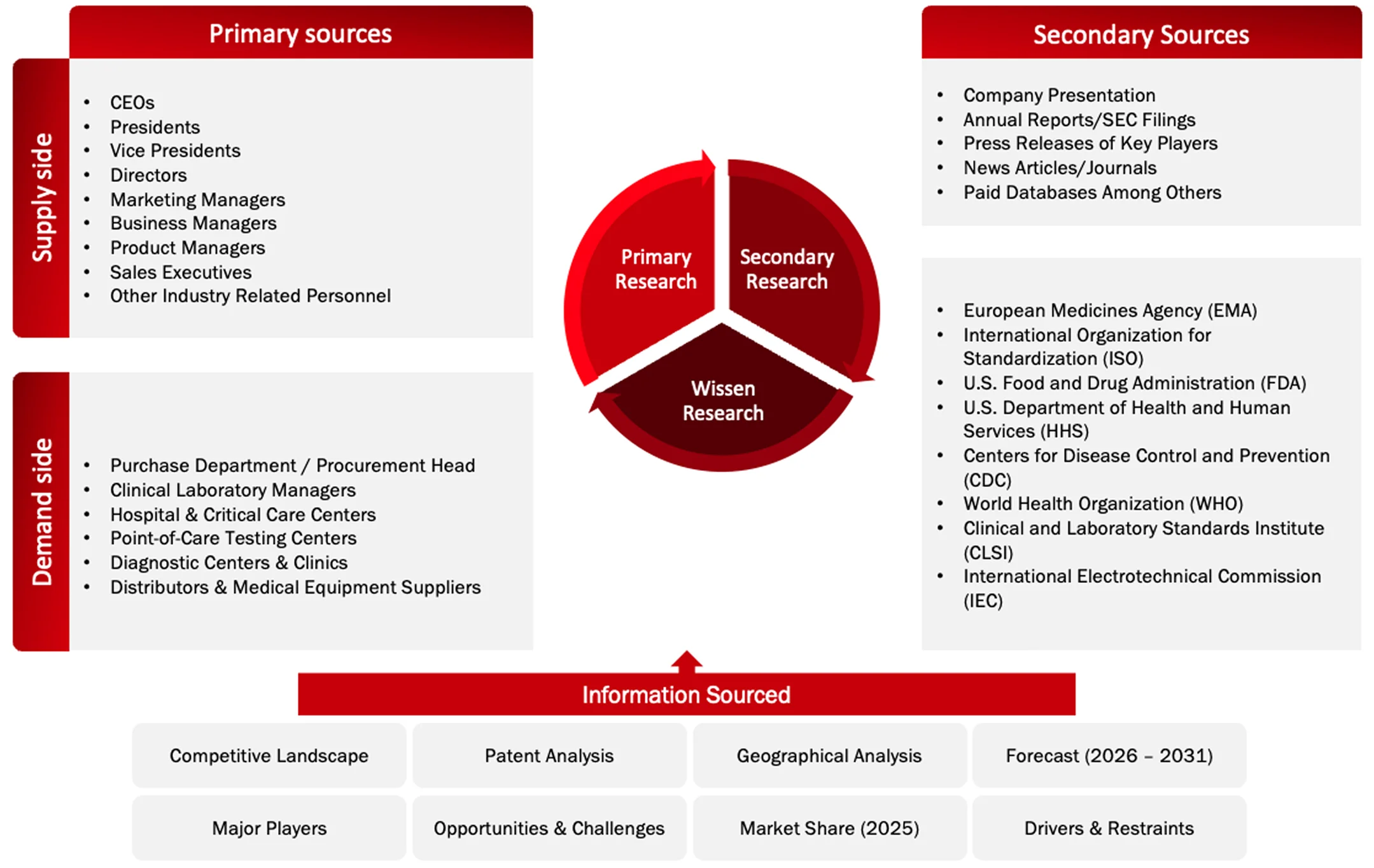
Sources: U.S. Food and Drug Administration, European Medicines Agency, National Institute of Standards and Technology, International Organization for Standardization, International Electrotechnical Commission, Federal Communications Commission, Occupational Safety and Health Administration, American National Standards Institute, Device Coordination Group, Company Website, Press Releases, Annual Reports, Paid Data Sources, and Wissen Research Analysis.
Year Framework
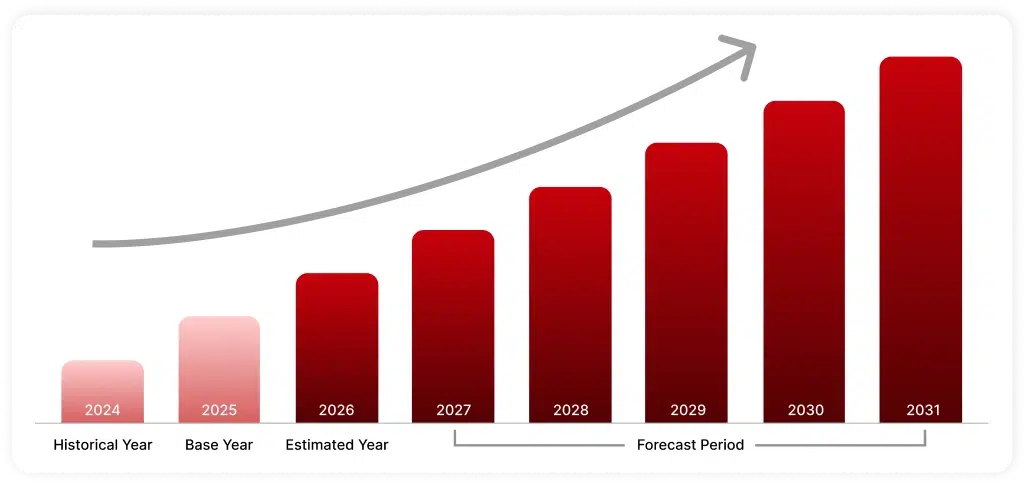
Bottom-Up Approach (Demand Side) And Top-Down Approach (Supply Side)
Bottom-Up Approach (Demand-Side Approach):
Determining the market size through the consolidation of demand among end-users, sectors, and geographic areas, which are calculated according to real-world demand conditions.
Top-Down Approach (Supply-Side Approach):
Calculating the market size through revenue and performance of the industry and its important companies, allocating the market size among various sectors.
Want detailed insights from this report?
Buy this Report
Choose the option that best fits your needs