
Lithium-Ion Battery Market
Global Industry analysis, Size, Share, Growth, Trends, and Forecast 2026-2031
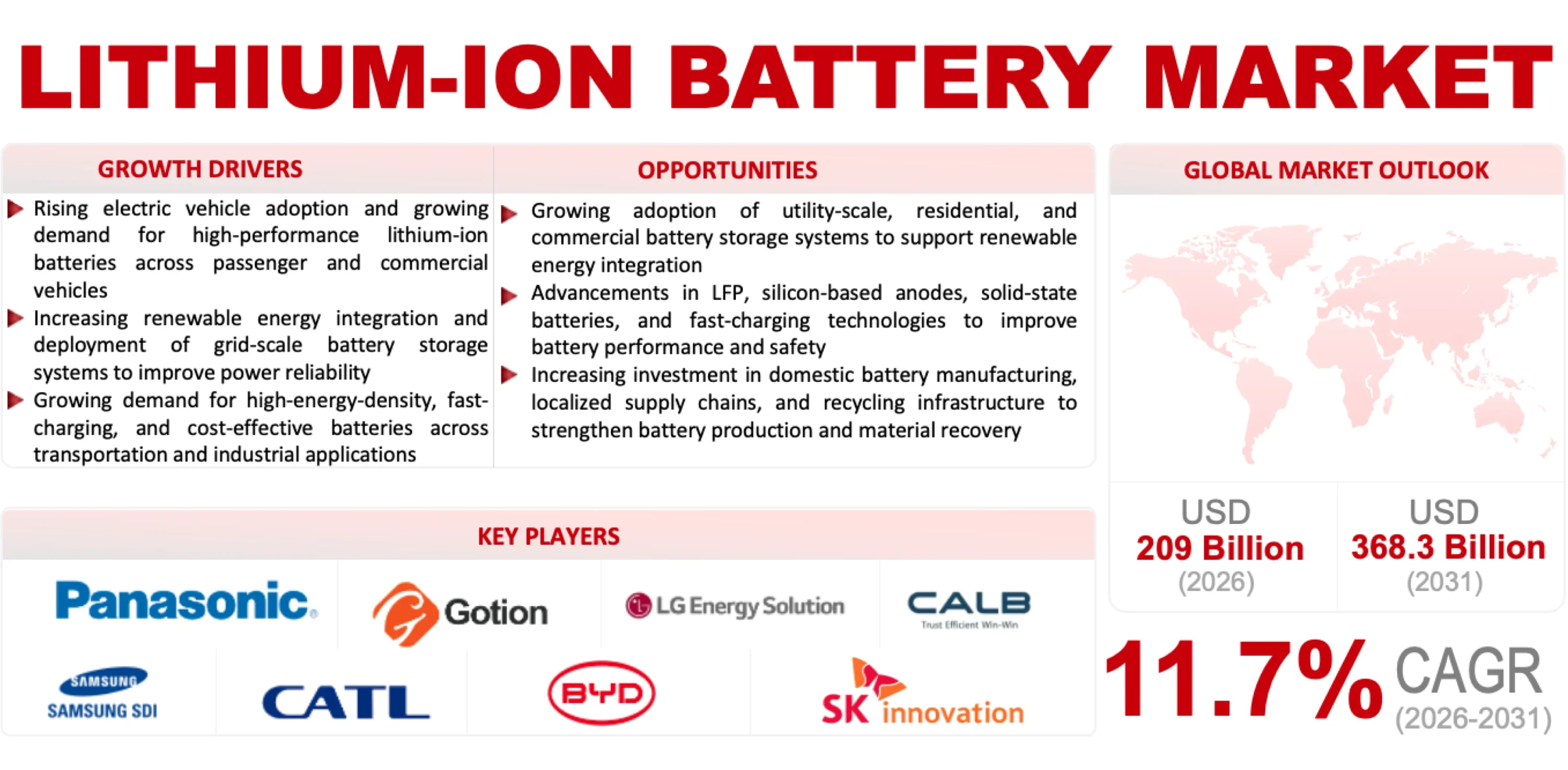
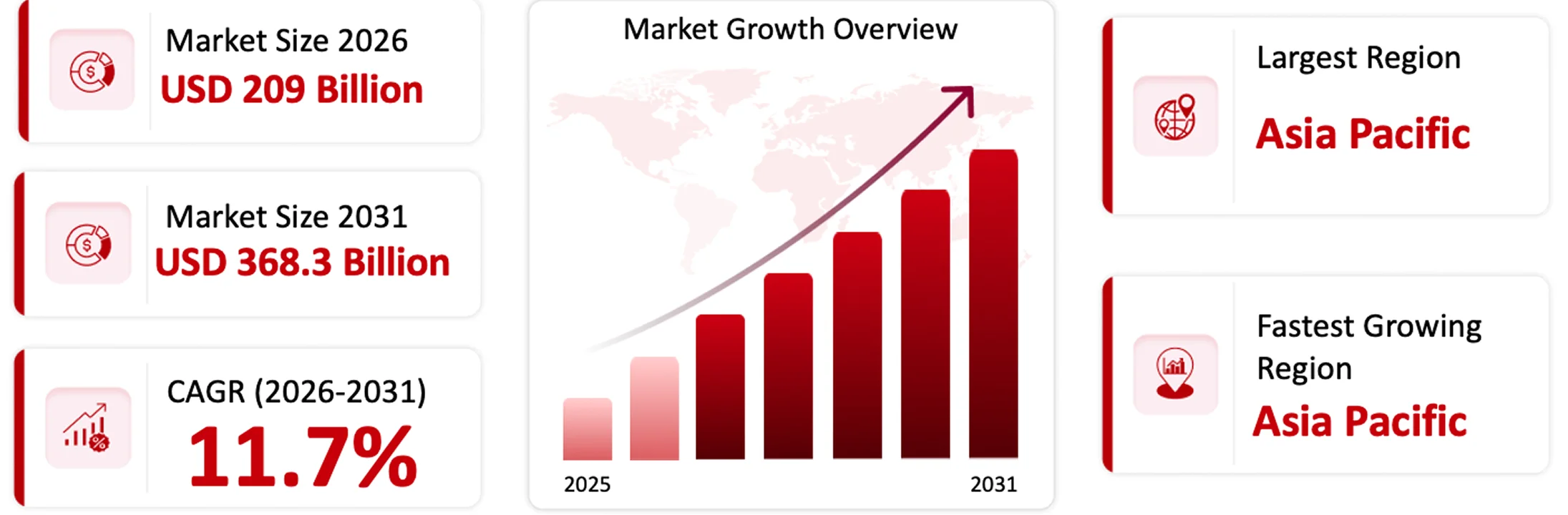
The global lithium-ion battery market is projected to reach USD 368.3 billion by 2031, growing at a CAGR of 11.7 % during the forecast period.
| Market Size (2026): | Forecast (2031): | CAGR (2026–2031): | Leading Region: | Fastest Growing Region: |
|---|---|---|---|---|
| $ 209 Billion | $ 368.3 Billion | 11.7 % | Asia Pacific | Asia Pacific |
Summarize this report with:



Market Overview
“In my view, the global lithium-ion battery market is propelled by the growing electric vehicle sector, renewable energy deployment, and rising demand for energy storage across consumer electronics and industrial applications. Data from the International Energy Agency (IEA) indicates that global battery demand across electric vehicles and energy storage exceeded 1 TWh in 2024, representing a 30% year-on-year increase. Lithium iron phosphate (LFP) batteries accounted for nearly 50% of the electric car battery market in 2024, reflecting a clear shift toward more cost-effective chemistries. While declining battery pack prices continue to improve affordability, challenges such as supply chain concentration, raw material price volatility, recyclability requirements, and manufacturing localization remain critical to the industry’s long-term development.”
– Mayur Jain, Research Consultant, Wissen Research
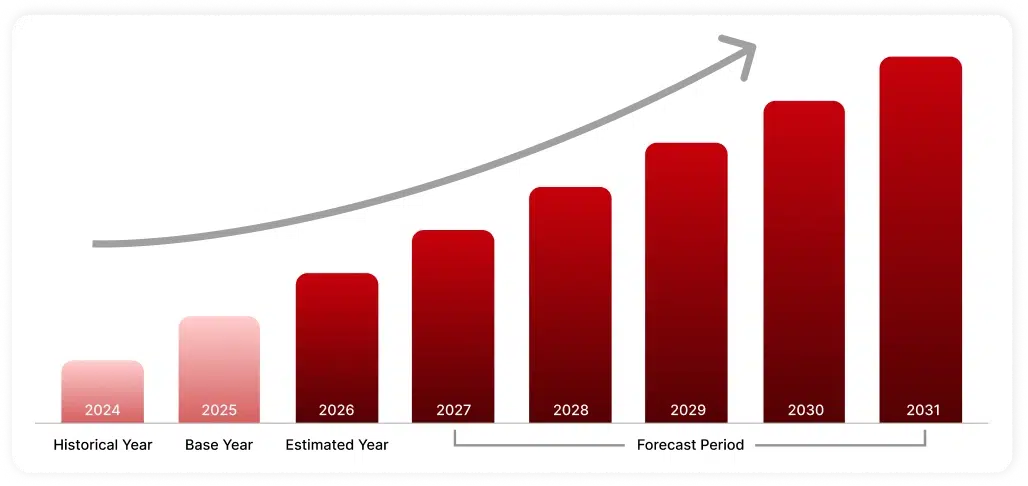
The market is estimated to be USD 209 billion in 2026 and is projected to reach USD 368.3 billion by 2031, growing at a CAGR of 11.7 % during the forecast period (2026-2031).
Technology Overview
Lithium-ion battery technology stores energy and uses that energy during the discharging or charging phase of the energy cycle. The factors influencing battery performance include the chemistry of electrodes, the nature of electrolyte, the design of the cell, and the battery management systems. Lithium iron phosphate (LFP) proves to deliver higher thermal stability while reducing the dependence on nickel and cobalt. In addition, nickel manganese cobalt batteries (NMC) offer greater energy density for use in cases that require longer ranges or smaller forms. Usage of nickel cobalt aluminum batteries is also common in electric vehicles. Several new technologies are being developed and commercialized to improve bus charging, the safety of batteries, cost efficiency, energy density, etc.
Key Growth Drivers
- Increased Demand for EV Batteries: Global demand for EV batteries reached around 1.2 TWh in 2025, growing nearly 30% compared to the previous year when the demand for Li-ion cells and batteries skyrocketed.
- Rise of Large-Scale Energy Storage: In 2024, U.S. utility companies added 10.3 GW of new battery storage capacity, sparking demand for Li-ion systems which maintain stability in power networks.
- Electrification of Commercial Transport Vehicles: In 2024, demand for electric trucks surged by over 75% year on year, thereby increasing consumption of Li-ion batteries in freight transport.
- Government Support for Local Battery Manufacturing: India announced an incentive program worth ₹18,100 crores that is aimed at achieving the production of 50 GWh of advanced Li-ion cells and boosting manufacturing investments.
- Investment in Large Scale Battery Production: Panasonic Energy commenced mass production at its factory in Kansas in July 2025 with a vision of achieving around 32 GWh of capacity in North America.
- Growing Need for Renewable Energy Storage: The U.S. Energy Information Administration estimates 18.2 GW of new utility battery installations in 2025.
Lithium-Ion Battery Market Key Highlights
Need deeper insights on this market?
Get full report access with detailed forecasts, competitive analysis, and segmentation.
Lithium-Ion Battery Market Trends
The world lithium-ion battery industry currently sees a transition towards cheap lithium iron phosphate (LFP) chemistry, with the latter accounting for approximately 90% of battery storage solutions in 2025. Besides being used in electric vehicles, battery storage is becoming increasingly used for renewable energy integration and grid flexibility with growing installations. Manufacturers are diversifying their supply chains and investing into local production in order to lessen chances of depending on centralized manufacturing locations. Sodium-ion batteries are moving closer to commercial production as a cost-effective alternative suited for cold-weather applications, while solid-state batteries and battery recycling are attracting strong investor interest to improve safety, boost efficiency, and maximize material recovery.
Shift Toward Lithium Iron Phosphate (LFP) Battery Chemistry
Utilization of lithium iron phosphate (LFP) batteries is increasing due to the focus on decreasing costs, ensuring thermal stability and improving durability for both electric automobiles and stationary energy storage systems. Unlike nickel manganese cobalt (NMC) batteries, LFP chemistry does not require nickel and cobalt for the cathode, hence eliminating vulnerability to price fluctuations. According to IEA, LFP batteries constituted more than 55% of the global market share of batteries used in electric automobiles in 2025, compared to nearly half in 2024. Furthermore, it is estimated that the costs of LFP battery packs were constantly 40% lower than the prices of battery packs based on NMC technology in 2025. Cost advantage is important for entry-level electric vehicles since the cost of batteries defines the affordability of the vehicles. The same holds true for stationary storage projects because the total installed costs affect project economics. LFP concept is used in emerging markets, as the manufacturing processes and material supply chains are mainly concentrated in China.
Expansion of Battery Energy Storage Beyond Electric Vehicles
Lithium-ion batteries are widely utilized in big electricity storage projects, commercial buildings, and renewable energy schemes, creating a demand that extends beyond electric cars. In accordance with IEA’s Global Energy Review 2026, 108 GW of battery storage capacity was added globally in 2025, which is roughly 40% higher than in 2024. Utility-scale systems were responsible for approximately 87 GW of that capacity, while the capacity of battery-based uninterruptible power supply systems is estimated to have increased by 30% to 45 GW, mainly because of the increased use of data centers. The price of battery storage has decreased by over 90% between 2010 and 2025, therefore, increasing the viability of electricity storage. Batteries are increasingly used for energy shifting, with roughly 90% of new battery storage projects in 2025 serving this purpose compared with about 40% in 2015. This shift reflects greater reliance on storing electricity when power is inexpensive and discharging it during peak demand. The trend creates opportunities for lithium-ion battery manufacturers, battery energy storage system integrators, and large-format cell suppliers. However, project economics still depend on grid interconnection, electricity market rules, installation costs, and site availability.
Key Players in the Lithium-Ion Battery Market
Leading companies in the global lithium-ion battery market are focusing on advanced battery chemistries, high-capacity cell manufacturing, electric vehicle battery supply, energy storage systems, fast-changing technologies, and expansion of production facilities across Asia, Europe, and North America. Competition is shaped by manufacturing scale, cost efficiency, technology development, automaker partnerships, and supply-chain integration.






Strategic Activities Within the Lithium-Ion Battery Market
Gotion High-tech Co., Ltd. (China) agreed to invest €1.1 billion for a 49% stake in Volkswagen’s Valencia battery plant in Spain. Volkswagen’s PowerCo also planned to invest €470 million in Gotion’s facilities in Slovakia and Morocco, strengthening European lithium iron phosphate (LFP) battery manufacturing and supply-chain capabilities.
LG Energy Solution, Ltd. (South Korea) signed a master supply agreement with Canadian energy storage integrator Eneon to supply North America-manufactured, lithium iron phosphate (LFP)-based energy storage systems. The agreement supported regional battery supply chains, as the company planned to expand its global energy storage production capacity to more than 60 GWh.
Contemporary Amperex Technology Co., Limited (CATL) (China) launched its TECTRANS II commercial-vehicle battery at IAA Transportation 2026. The battery supported a maximum driving range of up to 1,000 km and megawatt-level fast charging, strengthening CATL’s portfolio for electric heavy-duty trucks and long-distance commercial transportation.
Samsung SDI Co., Ltd. (South Korea) signed an agreement with General Motors to jointly develop next-generation prismatic battery cells for future electric vehicles. The company also acquired GM’s stake in their Indiana joint venture, making the facility its first wholly owned plant in North America and preparing it for energy storage battery production.
Lithium-Ion Battery Market Insights
In 2025, the global lithium-ion battery market rose to over USD 150 billion, a growth of over 20% from 2024, as reported by The International Energy Agency (IEA). Global demand came to more than 1.5 TWh in 2025. Growth of battery demand was supported by the electric vehicle and stationary energy storage sectors. The electric vehicles continue to be the leading application, with a share of over 70%, while battery storage accounted for over 15%. Despite an 8% fall in average battery prices in 2025, making batteries more affordable and promoting their use, higher lithium prices in early 2026 are expected to impact production costs, investment decisions, and competitiveness across regions due to limited manufacturing capacity.
Lithium-ion batteries are applied across a multitude of industries, electric mobility and stationary energy storage being the biggest segments in terms of demand. The transportation industry makes use of batteries in electric vehicles, starting from cars and ending with buses and motor scooters. For stationary applications, lithium-ion batteries are deployed in grid-scale storage, residential solar batteries, and at commercial energy facilities as backup power sources. In addition to this, consumer electronics (like smartphones and laptops) also use lithium-ion batteries, provided their small size and capability to recharge. In addition to those, lithium-ion batteries are widely used for industrial purposes (like production of cordless tools) or in electrical supply systems for data centres. Different applications have different requirements with respect to energy density, cycle life, charging speed, safety, and cost of the batteries.
The emergence of battery recycling, second-life applications, and alternative battery chemistries benefits entities within the lithium-ion market. According to the IEA, end-of-life EV batteries will become a notable source of recoverable material as the plethora of cars introduced in the last couple of years reaches their end of life. Manufacturers and recyclers can get involved in the collection, battery diagnostics, material recovery stations, and battery reuse processes for those batteries that are able to hold enough capacity for stationary applications. The option of using sodium-ion technology arises for certain areas of application, where its lower cost and better performance in cold climates prevail over its lower energy density. Battery suppliers could also work on specific offerings that fit the renewable energy ventures, commercial buildings, and data centers, where reliability and lifecycle economics are the key impact factors for purchasing decisions.
Manufacturing concentration, regional cost disadvantages, raw material volatility, and problems in achieving commercially viable large-scale production are the difficulties faced in the lithium-ion battery industry. As reported by IEA, battery pack prices in China in 2025 were 30% lower than in North America and 35% lower than in Europe, which affected the manufacturers in those countries negatively. The rise of prices for lithium and cobalt also brings uncertainty in the areas of procurement and production planning. Also, the establishment of new facilities requires massive investments, qualified labor, stable supply of raw materials, and time for reaching a sufficient level of production efficiency.
The Asia Pacific region continues to be at the forefront of manufacturing and deploying lithium-ion batteries, aided by developed supply chains, increased production of electric vehicles, and heightened investments in energy storage technology. However, significant addition trends within stationary storage indicate the major upward trend in Australia and Middle Eastern countries. As reported by the International Energy Agency, the volume of Australian electricity storage facilities increased almost ninefold in 2025 compared to what it was in 2024, alongside over 3 GW of installed battery capacity in the Middle East, which has more than tripled since the previous year. Almost the whole volume of installations in this region came from Saudi Arabia. This indicates the emergence of potentially fast-growing market opportunities in various regions, although deployment trends alone do not define the fastest-growing region in the overall battery segment.
Lithium-Ion Battery Market Dynamics
Drivers: Accelerating Electrification of Commercial Transportation
- Electric truck sales reached a new milestone: The International Energy Agency (IEA) reported that global electric truck sales exceeded 400,000 units in 2025, doubling year-on-year and expanding battery demand in freight transportation.
- Heavy-duty electric trucks gained momentum: Global sales of electric heavy freight trucks increased from approximately 84,000 in 2024 to 230,000 in 2025, creating demand for high-capacity battery packs.
- Commercial fleet electrification expanded in Europe: Electric truck sales in Europe increased 40% in 2025 to nearly 17,000 units, supported partly by stricter heavy-duty vehicle emissions standards.
- China strengthened the commercial battery demand base: One in four trucks sold in China in 2025 was electric, supported by operating-cost advantages, battery cost reductions, and vehicle replacement incentives.
- Battery swapping created additional deployment opportunities: Battery-swap-capable trucks represented around 15% of China’s electric truck sales in 2025, supporting alternative fleet charging and vehicle-utilization models.
Opportunities: Commercialization of Battery Recycling and Material Recovery
- Rapid expansion in recycled battery-metal value: The IEA reported that the market value of recycled battery metals grew nearly elevenfold between 2015 and 2023, with approximately 40% of that growth occurring during the final three years.
- Increasing recovery of valuable battery materials: In 2023, recycling recovered more than 40% of theoretically available nickel and cobalt feedstock and around 20% of lithium feedstock, demonstrating the potential to supplement primary material supplies.
- Growing regulatory support for recycling: More than 30 new policy measures related to critical-mineral recycling were introduced globally from 2022 onward, strengthening the policy foundation for collection, recovery, and recycling infrastructure.
- Increasing availability of end-of-life batteries: The IEA expects end-of-life EV and stationery-storage batteries to account for more than 90% of available battery-recycling feedstock by 2050, creating a longer-term opportunity for recovery businesses.
- Potential to reduce primary mineral demand: Under the IEA’s announced-pledges scenario, battery recycling could supply approximately 20–30% of lithium, nickel, and cobalt demand by 2050, depending substantially on collection rates.
Challenges: High Manufacturing Costs and Uncertain Profitability
- Regional production cost disadvantages: In 2025, battery pack prices in China were 30% lower than in North America and 35% lower than in Europe, creating pricing pressure on manufacturers operating in higher-cost regions.
- Low profitability among battery material suppliers: Cathode active materials account for approximately 40–50% of NMC battery cell production costs and 25–30% for LFP, while many leading material producers have operated at a loss since 2023.
- High production efficiency requirements: Battery manufacturers generally need production yields above 90% to compete effectively, making defect reduction, automation, and process optimization essential for new factories seeking commercial viability.
- Potential lithium supply shortfall: The IEA’s Global Critical Minerals Outlook 2025 projected that announced mining projects could meet only around 60% of lithium requirements in 2035 under its stated-policies scenario, highlighting long-term supply risks.
- Difficulties scaling new manufacturing facilities: The bankruptcy of Northolt in Sweden highlighted the operational challenges of scaling battery-cell production, particularly controlling defects while expanding several supply-chain stages simultaneously.
Technology and Market Insights
The global lithium-ion battery market is evolving toward lower-cost battery chemistries, higher energy density, faster charging, improved thermal safety, and more efficient manufacturing. Lithium iron phosphate (LFP) batteries are gaining adoption in electric vehicles and stationary energy storage because of their cost advantages and thermal stability, while nickel manganese cobalt (NMC) batteries remain relevant for applications requiring higher energy density. Silicon-enhanced anodes, sodium-ion alternatives, and solid-state batteries are advancing to address limitations in charging performance, material availability, and safety. Battery management systems, thermal management technologies, and advanced cell designs are also improving battery performance and operational reliability. For suppliers, competitive differentiation increasingly depends on cost per kilowatt-hour, cycle life, safety performance, charging speed, manufacturing yield, and compatibility with specific vehicle and energy-storage applications.
Technology Scope and Products
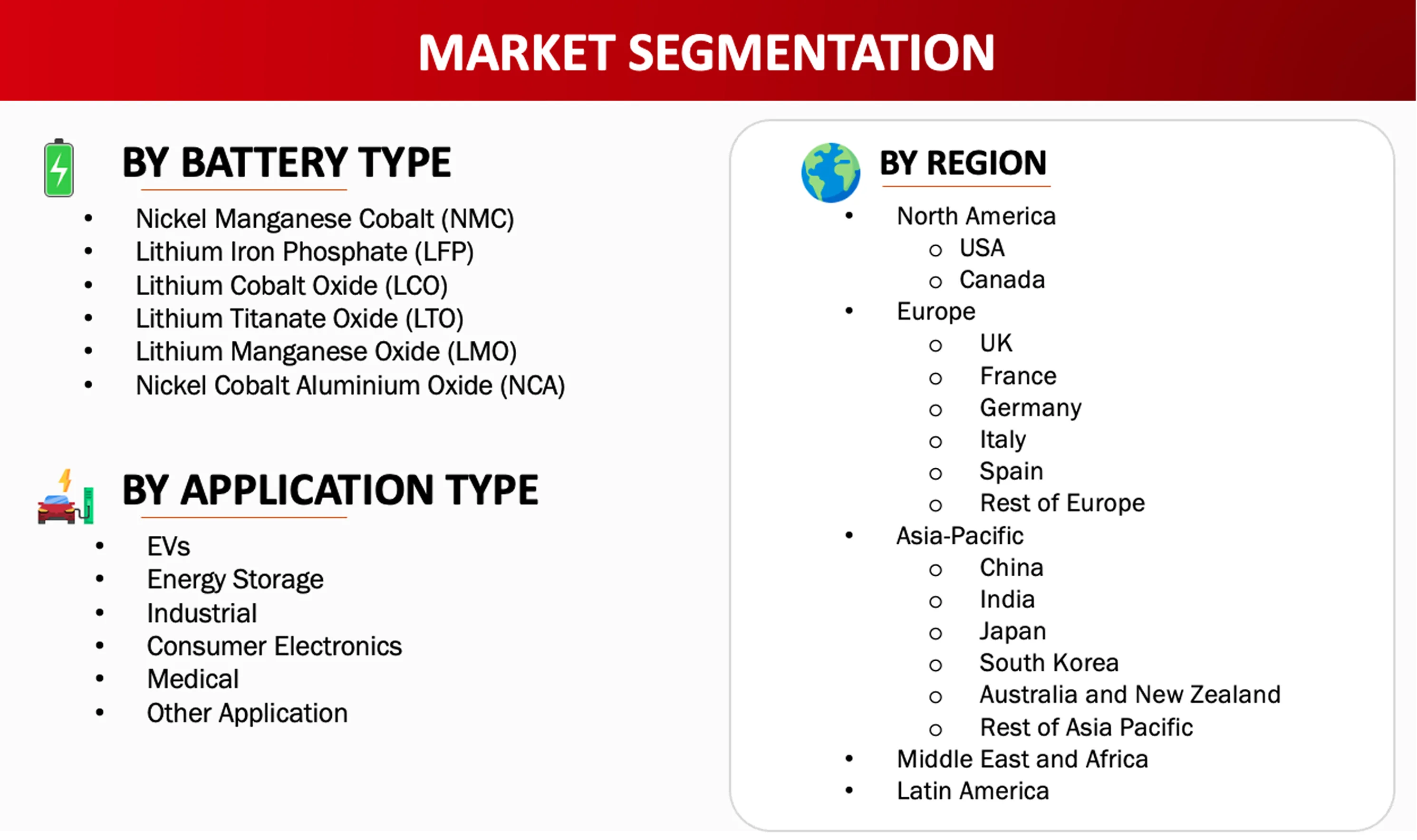
Lithium-Ion Battery Market Segmentation
Want detailed insights from this report?
Competitive Landscape and Market Segments Insights
- Market Concentration Among Chinese Manufacturers: Contemporary Amperex Technology Co., Limited (CATL) and BYD Company Limited together accounted for more than 55% of global electric vehicle battery installations in 2025, strengthening their influence over pricing, technology adoption, and automaker supply agreements.
- Manufacturing Scale and Capacity Utilization: Global lithium-ion battery manufacturing capacity exceeded 4 TWh at the end of 2025, intensifying competition and increasing the importance of factory utilization, production efficiency, and cost control.
- Competition Between Battery Chemistries: Lithium iron phosphate (LFP) batteries accounted for more than 55% of global electric vehicle battery deployment in 2025, increasing competitive pressure on manufacturers focused primarily on nickel-rich chemistries.
- Regional Manufacturing Localization: China accounted for more than 80% of global battery cell manufacturing capacity in 2025, encouraging competitors to expand production in North America and Europe to improve regional supply access and meet local manufacturing requirements.
- Profitability and Financial Resilience: CATL reported RMB 72.2 billion in net profit for 2025, up 42% year-on-year, highlighting the competitive advantages associated with manufacturing scale, operational efficiency, and strong financial performance.
- Expansion into Stationary Energy Storage: CATL reported a 30.4% share of global energy-storage battery shipments in 2025, demonstrating how leading EV battery manufacturers are diversifying into grid-scale storage and expanding their customer base beyond automotive applications.
LFP batteries held the leading position among lithium-ion battery chemistries in 2025, supported by their cost advantages, growing electric vehicle adoption, and extensive use in stationary energy storage. The IEA reported that LFP accounted for more than half of global EV battery deployment and over 90% of stationary battery storage installations in 2025.
-
Growing adoption in electric vehicles: LFP batteries accounted for over 55% of global EV battery deployment in 2025, compared with nearly 50% in 2024, demonstrating increasing adoption relative to nickel-based chemistries.
-
Dominance in stationary storage: LFP chemistry represented more than 90% of global battery energy storage installations in 2025, reflecting its suitability for applications prioritizing cost, durability, and frequent cycling.
-
Lower battery pack prices: Average LFP battery prices declined by more than 15% in 2025, compared with a decline of less than 5% for NMC batteries, strengthening LFP’s cost competitiveness.
-
Cost advantage over nickel-based batteries: LFP battery packs were, on average, more than 40% cheaper per kilowatt-hour than NMC alternatives in 2025, supporting their use in cost-sensitive vehicles and storage systems.
-
Established manufacturing ecosystem: China continued to dominate LFP cathode material production and associated technical expertise in 2025, supporting large-scale supply and reinforcing the chemistry’s competitive position across global battery markets.
Electric vehicles represented the largest application segment of the global lithium-ion battery market in 2025, supported by rising vehicle electrification and increasing battery capacity requirements. The IEA reported that EVs accounted for more than 70% of total global lithium-ion battery deployment in 2025, maintaining their position as the principal source of demand.
-
Increasing battery deployment: Global EV battery deployment reached 1.2 TWh in 2025, increasing almost 30% year-on-year and demonstrating substantial demand for battery cells and packs.
-
Dominance of light-duty vehicles: Passenger cars and other light-duty vehicles represented more than 85% of EV battery deployment in 2025, establishing road passenger transportation as the principal source of automotive battery demand.
-
Expansion of electric freight transportation: Battery demand for electric trucks more than doubled in 2025, while trucks accounted for approximately 8% of global EV battery deployment, up from less than 5% in 2024.
-
Increasing electrification of global vehicle sales: Approximately one in four cars sold worldwide in 2025 was electric, expanding the addressable market for automotive lithium-ion batteries.
-
Growing demand beyond passenger cars: Electric buses, commercial vans, and heavy-duty vehicles are broadening the range of automotive battery applications, creating additional demand for high-capacity battery packs and vehicle-specific battery systems. The IEA identified electric trucks as the fastest-growing major vehicle category for battery demand in 2025.
Asia Pacific held the leading regional position in the global lithium-ion battery market in 2025, supported by China’s large-scale battery manufacturing, established component supply chains, and substantial electric vehicle production and deployment. The IEA reported that China remained the dominant global battery production hub, while manufacturers headquartered in China, South Korea, and Japan supplied nearly all battery cells used worldwide.
-
Concentration of battery cell manufacturing: China accounted for more than 80% of global lithium-ion battery cell production in 2025, reflecting its extensive manufacturing infrastructure and established supplier ecosystem.
-
Leadership in electric vehicle production: China produced nearly 75% of global electric cars in 2025, supporting substantial demand for domestically manufactured battery cells and integrated battery packs.
-
Dominance in cathode material manufacturing: China accounted for approximately 85% of global production of cathode active materials in 2025, strengthening its position across a critical stage of the battery supply chain.
-
Concentration in anode material production: China supplied more than 90% of global anode active material production for electric car batteries in 2025, reinforcing the region’s influence over battery component availability and manufacturing costs.
-
Strong position of Asian battery manufacturers: Companies headquartered in China, South Korea, and Japan continued to dominate global battery cell supply in 2025, supported by established production expertise, integrated supply chains, and relationships with international automakers.
What This Report Covers-
This report provides a comprehensive analysis of the lithium-ion battery market, offering insights into key trends, growth drivers, challenges, and future opportunities. It is designed to support strategic decision-making through a combination of quantitative data and qualitative analysis.
Specifically, the report covers:

Market Overview & Definition:
Overview of the market scope, structure, and key terminology

Market Size & Forecast:
Historical data and future projections across key segments and regions

Key Market Trends:
Insights into emerging trends, technological advancements, and evolving demand patterns

Drivers, Restraints & Opportunities:
Analysis of key factors influencing lithium-ion battery market growth

Competitive Landscape:
Overview of major players, their strategies, and recent developments

Detailed Patent Analysis:
This includes, top assignees, geography focus of top assignees, legal status, technology evolution, key patents and patent trends and innovations

Segmentation Analysis:
Breakdown by battery type, by application type, and region

Regional Insights:
Key regional trends and growth opportunities

Future Outlook:
Strategic insights and future market direction
Research Methodology
The study of the lithium-ion battery market is based on a combination of primary and secondary research methodologies, supported by data validation, battery chemistry and technology mapping, cell and pack manufacturing analysis, raw material and component supply-chain assessment, battery capacity and energy-density analysis, application-wise demand assessment, electric vehicle and energy storage deployment analysis, company revenue and product-portfolio analysis, regulatory and policy assessment, manufacturing capacity evaluation, end-user adoption analysis, competitive benchmarking, and analytical modelling to ensure accuracy and reliability.
Market Definition: Lithium-Ion Battery Market
The lithium-ion battery market comprises rechargeable battery products and associated components used to store and deliver electrical energy across transportation, energy storage, consumer electronics, industrial equipment, medical devices, and other applications. These batteries operate through the movement of lithium ions between the cathode and anode during charging and discharging. The market covers lithium-ion battery cells, modules, and packs based on different chemistries, including Nickel Manganese Cobalt (NMC), Lithium Iron Phosphate (LFP), Lithium Cobalt Oxide (LCO), Lithium Titanate Oxide (LTO), Lithium Manganese Oxide (LMO), and Nickel Cobalt Aluminum Oxide (NCA).
The market includes batteries used in electric vehicles, such as passenger cars, buses, commercial vehicles, and off-highway vehicles; energy storage systems, including residential, commercial and industrial, and utility-scale installations; consumer electronics, such as smartphones, laptops, tablets, and wearable devices; industrial applications, including material-handling equipment, mining equipment, and industrial tools; and medical and other applications, including portable medical equipment, telecommunications, marine, and aerospace systems. The market also encompasses battery components and technologies integrated into cells and packs, including cathode and anode materials, electrolytes, separators, battery management systems, thermal management systems, and associated packaging. Where applicable, the study considers battery manufacturing, deployment, and recycling developments to assess market dynamics and competitive positioning.
Key Stakeholders
The lithium-ion battery market involves a broad ecosystem of stakeholders:
- Lithium-Ion Battery Cell Manufacturers
- Battery Module and Pack Manufacturers
- Cathode Active Material Manufacturers
- Anode Material Manufacturers
- Electrolyte Manufacturers
- Battery Separator Manufacturers
- Battery Management System (BMS) Manufacturers
- Battery Thermal Management and Safety Solution Providers
- Electric Vehicle Manufacturers
- Energy Storage System Integrators
- Renewable Energy Project Developers and Utility Companies
- Consumer Electronics Manufacturers
- Industrial Equipment and Material-Handling Equipment Manufacturers
- Medical Device Manufacturers
- Battery Recycling and Materials Recovery Companies
- Lithium, Nickel, Cobalt, Manganese, Iron, and Phosphate Suppliers
- Battery Manufacturing Equipment and Automation Providers
- Battery Testing, Certification, and Quality Assurance Organizations
- Automotive and Energy Storage Distributors
- Government Agencies and Regulatory Organizations
- Research Institutions and Battery Technology Developers
- Fleet Operators and Commercial Vehicle Buyers
- Industrial, Commercial, and Residential Battery End Users
Key Objectives of the Study
- To define, describe, analyze, segment, and forecast the lithium-ion battery market by battery type, by application type.
- To describe and forecast the market for four key regions: North America, Europe, Asia Pacific, and Rest of the World
- To provide detailed information regarding key drivers, restraints, opportunities, and challenges influencing market growth
- To strategically analyze the micro indicators with respect to individual growth trends, prospects, and contributions to the overall market size
- To analyze opportunities for stakeholders in the lithium-ion battery industry and emphasize on competitive landscape of the market
- To develop competitive benchmarking of the key market players based on technology specifications and end user
- To strategically profile key players and comprehensively analyze their product portfolio offerings, and core competencies
- To analyze competitive developments, such as launches and approvals, agreements, mergers and acquisitions, partnerships, joint ventures, investments and expansions, and collaborations, lithium-ion battery domain
Need deeper insights on this market?
Get full report access with detailed forecasts, competitive analysis, and segmentation.
Research Approach
This research employs a systematic approach by using primary research along with secondary research to achieve full coverage and accuracy of information about the lithium-ion battery sector. Through this approach, the current market trends in terms of consumer behaviour, technological developments, and competitive environment can be analysed thoroughly.
Secondary Research
Secondary research involves the collection of data from reliable sources such as industry databases, company annual reports, investor presentations, and regulatory filings. This process helps in understanding market trends, identifying key players, and gathering technical and commercial insights.
A comprehensive database of leading companies and market participants is developed through secondary research to support further analysis.
Primary Research
Primary research is conducted to validate findings from secondary research and to gain deeper insights into market dynamics. Interviews are carried out with industry stakeholders across both demand and supply sides, including executives such as CXOs, Vice Presidents, and Directors from business development, marketing, and product teams.
Data is collected through structured questionnaires, email interactions, and telephonic interviews across key regions including North America, Europe, Asia-Pacific, and Rest of the World.
Market Size Estimation
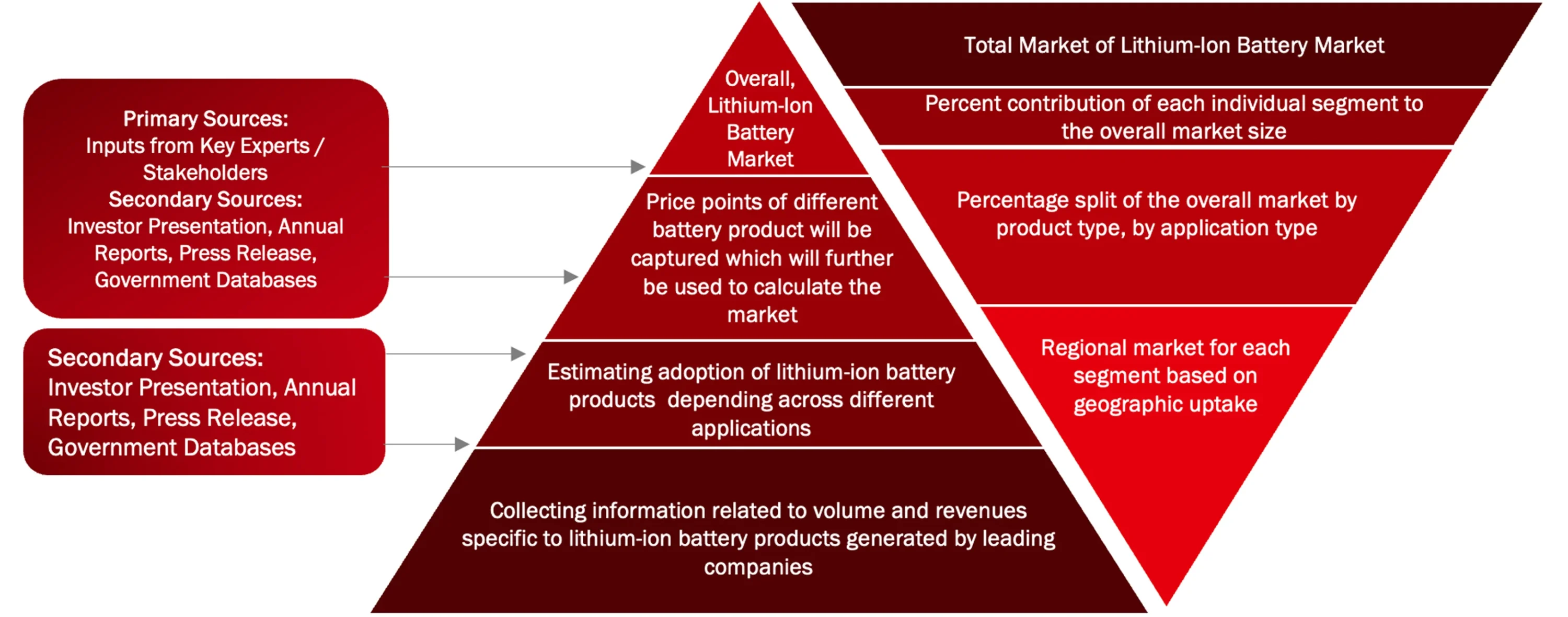
Market size estimation is performed using both top-down and bottom-up approaches. Key market players are identified, and their revenues are analysed to estimate the overall market size.
The market is further segmented based on:
- Product and service mapping across regions
- Adoption patterns across key application segments
- Insights gathered through primary and secondary research
Data Validation and Research Design
After estimating the overall market size, the data is validated using triangulation methods and market breakdown techniques to ensure accuracy and consistency. Both demand-side and supply-side factors are considered to refine the analysis.
The final data is validated through multiple sources to ensure reliability and to provide accurate insights across all market segments and regions.
Assumptions of the Study
The analysis of the lithium-ion battery market is based on the following key assumptions:
- Trends in the industry are drawn from historical data and current information within the sector
- The future outlook is underpinned by constant economic conditions in the absence of shocks to the market
- The rate of adoption for lithium-ion battery will rise steadily in all important regions
- The income statement and market share figures are estimated using available information from the industry and publicly available data
- The exchange rate and price trends will not be greatly affected during the forecast period
Scope and Limitations
Scope of the Study
This report offers an exhaustive overview of the global lithium-ion battery market and includes the following components:
- Summary of market size, growth trends, and projections
- Carefully segmented market based on by battery type, by application type. and by geography
- Discussion of primary factors influencing the market
- Competitor analysis
- Insights into regional and national market performance
Limitations of the Study
Despite the best efforts being made to keep the results accurate, the study does suffer from some limitations:
- It has been done using both primary and secondary data that come with their own constraints
- Rapid developments in technology might affect the future course of market dynamics
- Some figures are only approximations due to lack of public disclosure
- The report is not an insurance against any disruptions in macroeconomics and geopolitics
- Future forecasts are indicative and subject to change due to altered industry dynamics
Data Triangulation and Market Breakdown
Data triangulation involved the combination of primary research, secondary research, and the Wissen Research analysis. Once the data points were sourced from the secondary market research, we sanitized the data points to make the market sizing and growth forecast more accurate by developing our own assumptions based on the inputs and insights we gather through the primary interviews with the industry experts. Once the data was thoroughly validated through primary interviews from both, demand and supply side of the market, our team of analyst and other team members involved finalized the market sizing and growth forecast.
Data Triangulation Methodology
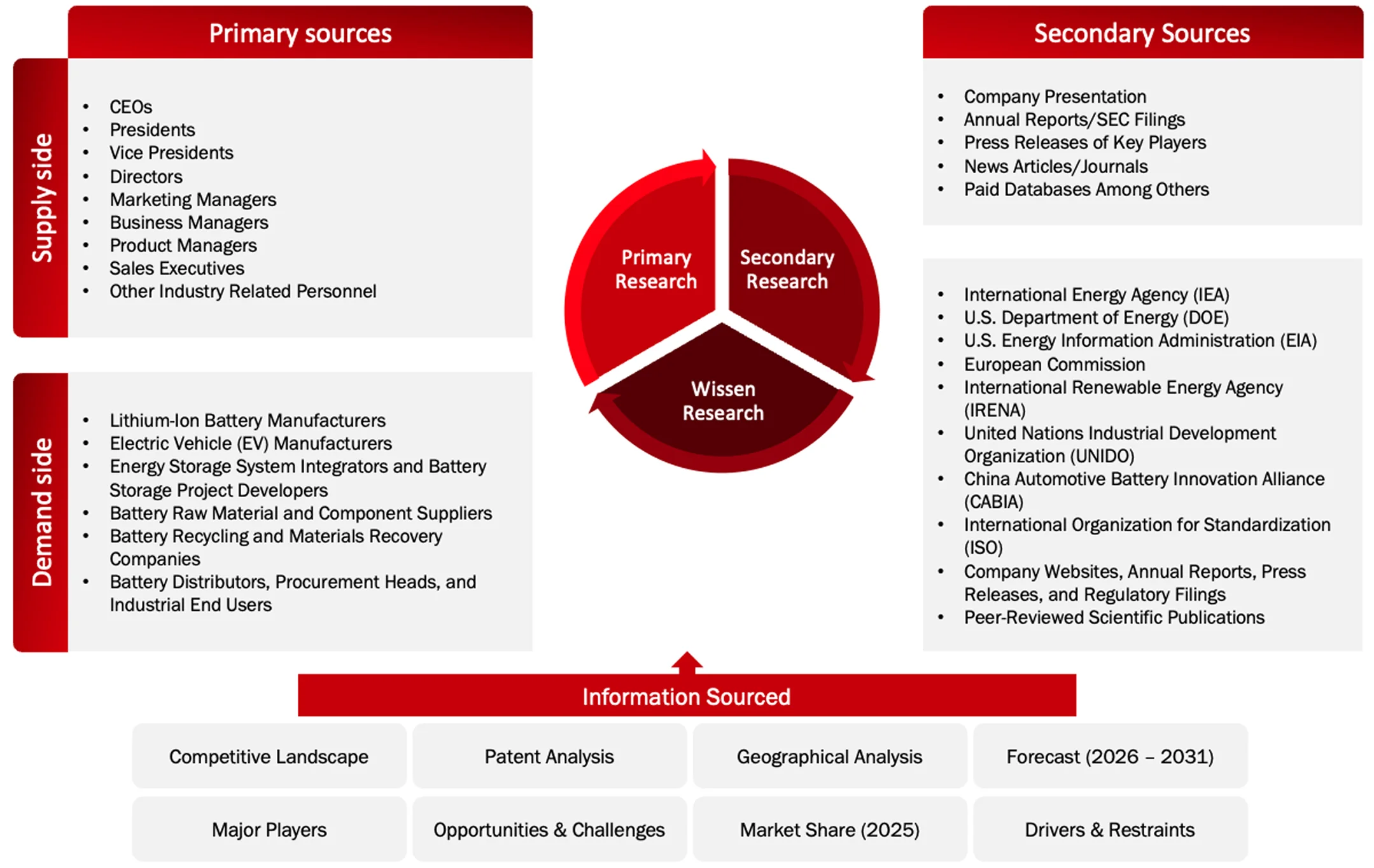
International Energy Agency, U.S. Department of Energy, U.S. Energy Information Administration, European Commission, International Renewable Energy Agency, United Nations Industrial Development Organization, International Organization for Standardization, Society of Automotive Engineers International, International Council on Clean Transportation, China Automotive Battery Innovation Alliance, Benchmark Mineral Intelligence, International Battery Materials Association, Company Websites, Press Releases, Annual Reports, Sustainability Reports, Regulatory Filings, Peer-Reviewed Scientific Publications, Paid Data Sources, and Wissen Research Analysis.
Years Framework
Bottom-Up Approach (Demand Side) And Top-Down Approach (Supply Side)
Bottom-Up Approach (Demand-Side Approach):
Determining the market size through the consolidation of demand among end-users, sectors, and geographic areas, which are calculated according to real-world demand conditions.
Top-Down Approach (Supply-Side Approach):
Calculating the market size through revenue and performance of the industry and its important companies, allocating the market size among various sectors.
Want detailed insights from this report?
Buy this Report
Choose the option that best fits your needs