
Pressure Sensor Market
Global Industry analysis, Size, Share, Growth, Trends, and Forecast 2026-2031
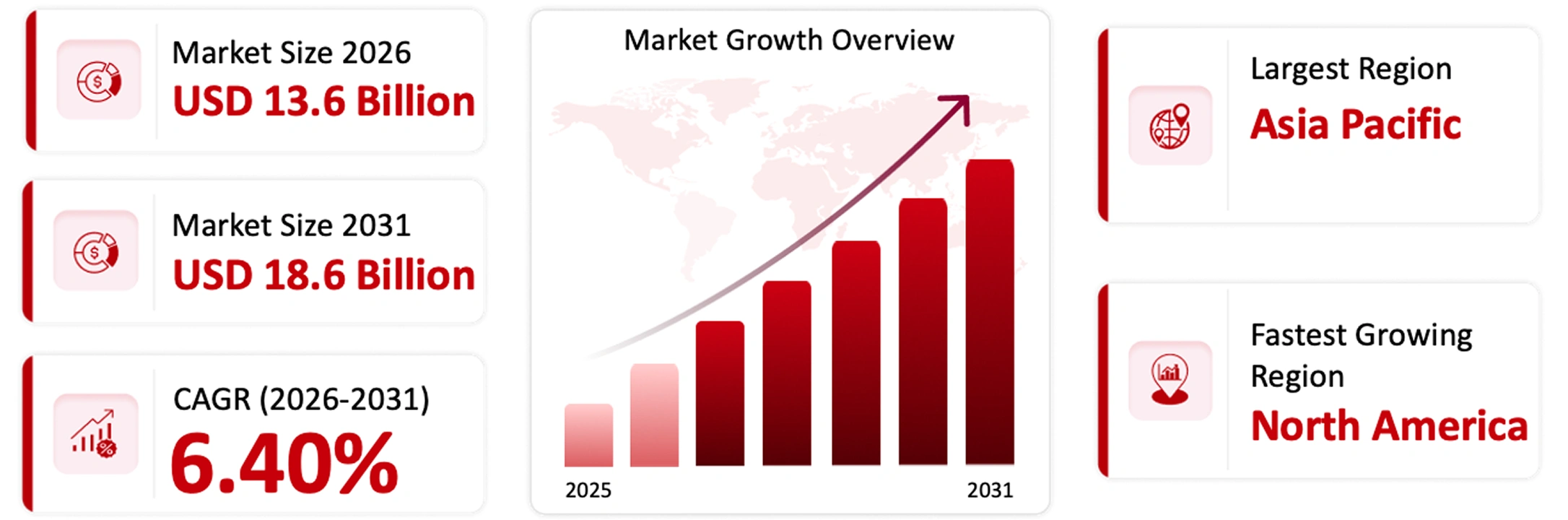
The global pressure sensor market is projected to reach USD 18.6 billion by 2031, growing at a CAGR of 6.4% during the forecast period.
| Estimated Market Size (2026): | Forecast (2031): | CAGR (2026–2031): | Largest Region: | Fastest Growing Region: |
|---|---|---|---|---|
| $ 13.62 Billion | $ 18.6 Billion | 6.4 % | Asia-Pacific | North America |
Summarize this report with:



Market Overview
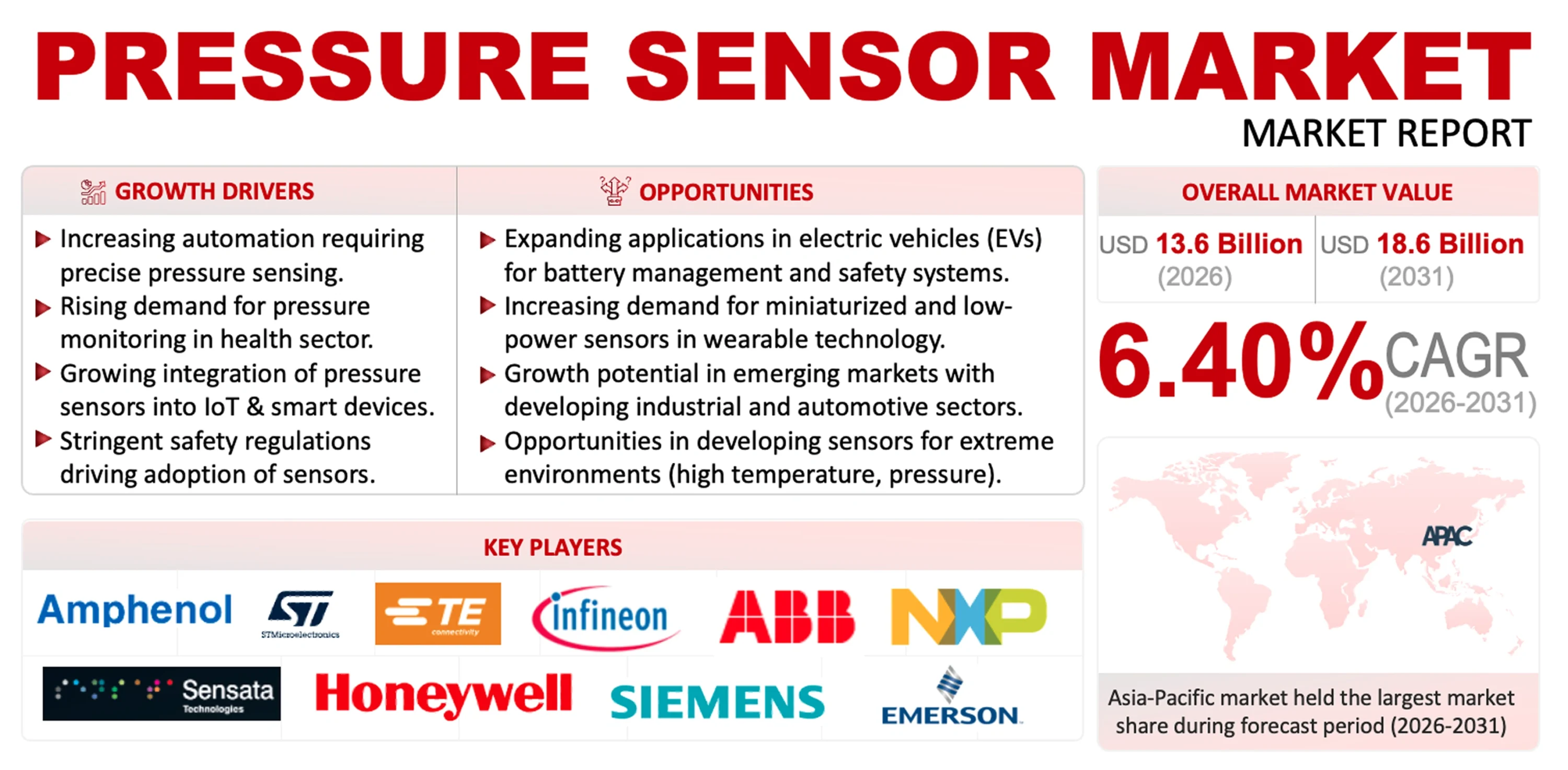
The global pressure sensor market is expanding as pressure measurement becomes increasingly important across automotive, industrial automation, healthcare, aerospace, semiconductor manufacturing, and consumer electronics applications. Increasing adoption of electric vehicles, advanced driver-assistance systems (ADAS), connected industrial equipment, medical monitoring systems, and automated manufacturing systems is driving the need for compact, reliable, and accurate pressure sensors. Some of the applications in which pressure sensors are being used include monitoring of engines, tires, batteries (thermal management), pneumatics, hydraulics, medical equipment, and semiconductors. In addition, improvements in MEMS technology, wafer-level packaging, digital interfaces, and sensor integration are helping manufacturers to make more compact and intelligent sensing products. Increased need for connected sensors, which are able to transmit measurement data to control systems and cloud-based platforms for real-time monitoring and predictive maintenance, is expected to be another factor contributing to the growth of the market. According to the market valuation approach adopted for this report, the global pressure sensor market is estimated at USD 13.62 billion in 2026 and is expected to grow to USD 18.6 billion by 2031, registering a CAGR of 6.4% during 2026–2031.
Technology Overview
Pressure sensors measure the pressure exerted by a liquid or gas and convert it into an electrical signal that can be analyzed and used by an electronic control system. Pressure sensors can use a variety of sensing mechanisms, such as piezoresistive, capacitive, resonant, electromagnetic, optical, and other technologies, to detect changes in pressure. MEMS-based pressure sensors have gained particular importance because their compact size, low power consumption, scalability, and compatibility with semiconductor manufacturing processes enable their integration across a wide range of applications. Modern pressure sensing solutions increasingly combine signal conditioning, digital interfaces, temperature compensation, diagnostics, and wireless communication capabilities to enhance measurement precision and simplify integration. Automotive applications of pressure sensors include engine management, tire pressure monitoring, braking systems, climate control, airbags, and electric vehicle battery and thermal-management systems. Pressure sensors are used in industry for process control, hydraulic/pneumatic systems, compressors, pumps and for the purposes of predictive maintenance. The applications in healthcare involve blood pressure monitors, ventilators, infusion pumps, respiratory monitoring equipment, and other medical equipment requiring precise pressure measurement.
Key Growth Drivers
- Growing adoption of electric vehicles and advanced automotive systems is increasing demand for pressure sensors used in battery thermal management, tire-pressure monitoring, braking, hydrogen systems, and other vehicle applications.
- Increasing adoption of industrial automation and Industry 4.0 technologies is driving demand for pressure sensors used in process monitoring, hydraulic and pneumatic control, equipment diagnostics, and predictive maintenance.
- Rising demand for medical and healthcare equipment is supporting pressure sensor adoption in blood pressure monitors, ventilators, infusion systems, and respiratory equipment.
- Advances in MEMS and miniaturization technologies are enabling the production of compact, energy-efficient, and accurate pressure sensors for automotive, industrial, wearable, and consumer electronics applications.
- Increasing semiconductor manufacturing and advanced manufacturing activities are driving demand for pressure sensors that operate in high-purity, high-pressure, vacuum, and high-temperature environments.
- Adoption of smart and connected sensors encourages adding diagnostic, digital interface, temperature compensation, and connectivity features to pressure sensors.
Pressure Sensor Market Key Highlights
Need deeper insights on this market?
Get full report access with detailed forecasts, competitive analysis, and segmentation.
Pressure Sensor Market Trends
The pressure sensor market is transforming as companies start paying more attention to miniaturization, high measurement precision, digital interface features, and sensors that can be tailored for specific applications. The increasing incorporation of pressure sensors into electric vehicles, industrial automation and manufacturing systems, medical equipment, and semiconductor manufacturing equipment is driving demand for sensors that can operate reliably under increasingly complex conditions. Meanwhile, advancements in MEMS production, wafer-level packaging, digital signal processing, and sensor integration allow manufacturers to enhance the performance of pressure sensors by minimizing their size and lowering production costs.
The increasing integration of pressure sensors into electric vehicle systems is one of the major trends shaping the industry. Pressure sensors are used in battery thermal management systems, cooling systems, hydrogen fuel systems, braking systems, tire monitoring systems, and climate control systems of the passenger compartment. Another major trend is the development of intelligent pressure sensors with digital interfaces, diagnostic capabilities, and temperature compensation.
Demand for specialized pressure sensors designed for high-purity semiconductor manufacturing, harsh industrial environments, medical applications, and other demanding operating conditions is also increasing.
Increasing Adoption of Pressure Sensors in Electric Vehicles
The development of electric mobility is creating new pressure sensor application areas that extend beyond conventional engine and fuel-system applications. Pressure sensors are utilized in battery thermal management, cooling and air-conditioning systems, braking systems, tire-pressure monitoring, and other vehicle subsystems. Hydrogen fuel cell vehicles need pressure sensors for monitoring of hydrogen storage, supply, and fuel cell systems.
As a result, the trend of electrification of vehicles is leading to changes in the application profile of pressure sensors as the latter are needed not for the engine but for the thermal management, safety of batteries, fluid management, and different powertrain systems.
Increasing Integration of MEMS and Intelligent Sensing Technologies
MEMS technology continues to influence pressure sensor development by enabling smaller sensing structures, scalable manufacturing, lower power consumption, and integration with electronic signal-processing components. Advanced MEMS platforms now provide diagnostics and temperature compensation, making better pressure sensors possible.
Current industry trends also reflect continued investment in MEMS pressure sensor technologies. In July 2025, STMicroelectronics announced an agreement to acquire NXP Semiconductors’ MEMS sensors business for up to USD 950 million. The acquisition was completed on February 2, 2026, following regulatory approval, strengthening STMicroelectronics’ position in automotive safety and industrial sensors.
Key Players in the Pressure Sensor Market
Leading companies in the pressure sensor market are focusing on MEMS innovation, automotive sensing, industrial automation, digital connectivity, application-specific products, and strategic acquisitions to strengthen their market position.








Strategic Activities Within the Pressure Sensor Market
STMicroelectronics (Switzerland) completed its acquisition of NXP Semiconductors’ MEMS sensors business, including pressure and accelerometer sensors, for up to US$950 million. The acquisition was completed on February 2, 2026, strengthening STMicroelectronics’ position in automotive safety and expanding its sensor portfolio across automotive and industrial applications. NXP’s MEMS business generated approximately US$300 million in revenue in 2024.
Honeywell International Inc. (US) launched its 13MM Pressure Sensor for cleanroom and high-purity applications, including semiconductor manufacturing. The sensor offers precise measurement under high-pressure and high-temperature conditions with minimal offset drift and is designed to comply with SEMI F20 requirements.
Infineon Technologies AG (Germany) formed a new business unit called SURF (Sensor Units & Radio Frequency). Effective January 1, 2025, the unit combined the company’s existing Sensor and RF businesses to strengthen its sensor portfolio and leverage cost and R&D synergies.
Pressure Sensor Market Insights
The global pressure sensor market is continuing to expand as pressure measurement becomes increasingly important across automotive, industrial, healthcare, aerospace, semiconductor, and consumer applications. The shift towards electric cars is leading to an increased demand for pressure sensors in battery thermal management, cooling systems, braking, tire-pressure monitoring, and hydrogen systems. Meanwhile, industries are using connected sensors in order to track equipment status, improve process control, and conduct preventive maintenance. The need for pressure sensors in healthcare is seen in blood pressure monitoring, respiratory equipment, ventilators, and infusion systems. Innovations in MEMS technology, digital interfaces, and miniaturization are also helping in the creation of smaller and application-based pressure sensors. According to the market estimate used in the report, the global pressure sensor market is estimated at USD 13.62 billion in 2026 and is expected to grow to USD 18.6 billion by 2031, registering a CAGR of 6.4% during 2026–2031.
Piezoresistive pressure sensors continue to represent a significant technology segment because they are reliable, cost-efficient, sensitive, and suitable for integrating into high-volume automotive and industrial applications. Absolute pressure sensors are widely used in applications where pressure is measured relative to a vacuum, including automotive systems and engine management, while differential pressure sensors are used to measure pressure differences in industrial processes, HVAC systems, filtration systems, and medical devices.
In automotive applications, pressure sensors are in high demand due to their use in engine management systems, tire-pressure monitoring, braking systems, climate control, safety systems, and electric vehicle thermal-management systems. In industrial applications, piezoresistive pressure sensors are used in process control, hydraulic and pneumatic control systems, compressors, pumps, and automation devices. In medical applications, blood pressure monitors, ventilators, infusion pumps, and respiratory equipment use pressure sensors as well.
The growth of the electric vehicle (EV) market is generating significant opportunities for pressure sensors used in battery cooling, cabin air conditioning, thermal management, and hydrogen fuel systems. In parallel, the expansion of autonomous driving technologies is increasing demand for environmental pressure sensors used in applications such as barometric altitude measurement and vehicle monitoring, as well as for advanced driver-assistance systems (ADAS).
Pressure sensor manufacturers face challenges associated with measurement accuracy, long-term stability, temperature compensation, miniaturization, and operating reliability in harsh environments. Issues such as changes in temperature, mechanical strain, chemicals, pressure variation, and production tolerances may affect sensor performance. More complexities in design and calibration arise as a result of the above issues, especially for applications such as automotive, aircraft, biomedical, and semiconductors.
Pressure sensor manufacturers also face supply-chain risks associated with semiconductor availability, specialized materials, and manufacturing capacity. Reliable sources of materials and manufacturing capabilities are also required. The use of wireless technology may bring in an additional issue of cybersecurity for sensors that connect via wireless technology.
The North American region is anticipated to experience the highest growth in the global pressure sensor market due to growing usage of electric vehicles, advanced driver assistance systems, industrial automation, connected manufacturing, and advancements in healthcare technologies. The United States accounts for a significant part of the growth of the region owing to the presence of an already developed automotive and aerospace industry, semiconductor ecosystem, medical technology sector, and digitalization of industries. Pressure sensors are used in the automotive industry for electric vehicle battery and thermal management system, hydrogen-based technologies, autonomous and connected vehicles, industrial process control machinery, medical devices, and aerospace applications. Also, there has been a growing investment in the semiconductor and advanced manufacturing facilities in the region that requires specific pressure sensors for high purity applications, vacuum, gases, and process control applications. Additionally, connected equipment and the use of predictive maintenance has increased the demand for intelligent pressure sensors having digital interface and real-time monitoring capability.
Pressure Sensor Market Dynamics
Drivers: Stricter automotive emissions and safety standards.
Global government regulations mandating stricter automotive emissions and safety features are a fundamental driver for the pressure sensor market. A key example is the adoption of Real Driving Emissions (RDE) testing in India, which became applicable from April 1, 2023, for applicable new vehicle categories up to 3.5 tonnes. RDE regulations require sensors to monitor emissions under real-world conditions, rather than just in controlled laboratory settings, which increases the demand for more advanced, durable, and accurate pressure sensors. Furthermore, India’s transition from Bharat Stage IV directly to Bharat Stage VI emission standards in 2020 saw the mandatory installation of on-board diagnostics (OBD) systems in all vehicles. These OBD systems require pressure sensors to monitor potential malfunctions in the emissions-related components. As demonstrated by the automotive industry’s need to adapt to these changes, government-led mandates create a consistent, non-cyclical demand that pushes manufacturers to invest and innovate in pressure sensor technology.
Opportunities: Accelerated investment in industrial automation
The ongoing shift towards smart manufacturing and Industry 4.0, fueled by real-world investments from major industrial companies, represents a major opportunity for the pressure sensor market. Large enterprises are dedicating significant capital to automate their operations to improve efficiency and reduce costs. For instance, in December 2024, ABB India announced a strategic alliance with PwC India focused on digital transformation and real-time process monitoring in manufacturing. Real-time monitoring and advanced process control heavily rely on smart pressure sensors with IoT capabilities, creating direct demand for these products. Beyond a single company, the push toward industrial IoT is a trend acknowledged by numerous manufacturers, including ABB, Siemens, and Honeywell, who are actively expanding their sensor offerings to capture this market. As manufacturing and industrial sectors continue their digital transformation, the need for intelligent, connected pressure sensors will grow, supported by verifiable corporate investments.
Challenges: Semiconductor supply chain disruptions
The pressure sensor market faces a significant challenge from the ongoing fragility of the global semiconductor supply chain, which is susceptible to geopolitical tensions, natural disasters, and component obsolescence. A report by Z2Data published in July 2024 detailed major disruptions, citing geopolitical factors like the US-China trade war and the Houthi rebel attacks on shipping in the Red Sea, which caused increased costs and shipping delays for semiconductor components. Furthermore, the report notes that natural disasters, including earthquakes in Taiwan in early 2024, have impacted semiconductor fabrication sites, affecting global production. For pressure sensor manufacturers, this means navigating unpredictable costs for materials like silicon and dealing with extended lead times for critical electronic components. As a result, companies must increasingly pivot their strategies from “just-in-time” to “just-in-case,” managing higher inventory buffers and seeking supply chain diversification to mitigate risk. These real-world disruptions demonstrate that semiconductor supply chain fragility is an ongoing and verifiable challenge for the pressure sensor market.
Technology and Market Insights
Pressure sensing technology is increasingly converging with MEMS fabrication, signal processing, digital interfaces, and communication technologies. Modern sensors are being designed to provide higher accuracy in smaller form factors while reducing power consumption. These developments are particularly important in automotive electronics, wearable healthcare devices, industrial automation, and consumer electronics.
MEMS-based pressure sensing is becoming increasingly integrated with signal-conditioning circuits and electronic components, while advanced packaging technologies such as wafer-level packaging are supporting sensor miniaturization and high-volume manufacturing. Manufacturers are also developing specialized sensors for high-purity semiconductor production, high-temperature and vacuum environments, and demanding industrial processes. In parallel, connected pressure sensors are enabling real-time equipment monitoring, anomaly detection, and predictive maintenance across industrial applications.
Technology Scope and Products
Pressure Sensor Market Segmentation
Want detailed insights from this report?
Industry Developments and Competitive Landscape
The pressure sensor market is evolving through the convergence of MEMS technology, automotive electrification, industrial automation, semiconductor manufacturing, and intelligent sensing. Established sensor manufacturers are expanding their product portfolios through research and development, strategic acquisitions, and integration of pressure sensing with other sensor technologies. Automotive applications continue to be an area of competition as manufacturers develop sensors for electric cars, safety devices, thermal management, and vehicle control.
The competitive landscape is gradually becoming more application-oriented. Both semiconductor companies and sensor companies are designing sensors that will operate in high-purity, high-temperature, vacuum, and other challenging conditions. On the other hand, industrial buyers are increasingly looking for intelligent sensors that offer diagnostics and communication capabilities in addition to pressure measurement.
Piezoresistive pressure sensors were sensors held the largest market share by sensing method type in 2025, supported by their broad adoption in the automotive, industrial, and healthcare fields. The piezoresistive pressure sensors combine such qualities as sensitivity, durability, small size, and scalability of production that make them useful in large-scale applications.
Among automotive applications are manifold pressure sensing, tire pressure sensing, thermal management systems, and many others. Piezoresistive sensors are used in industrial processes for hydraulic and pneumatic pressure sensing, equipment maintenance, and process control. The piezoresistive pressure sensors can be used in healthcare applications, where precise pressure measurement is needed. Such applications include blood pressure monitoring and respirators.
-
Piezoresistive sensing technology enables MEMS-based sensors that can be manufactured in large volumes.
-
In automobile manufacturing, both affordable and dependable pressure measuring devices are very essential in a number of vehicle applications.
-
Industrial automation leads to the continued need for durable pressure sensing in hydraulics, pneumatics, and process control systems.
-
Medical equipment needs compact pressure measuring devices that provide the accurate reading of pressure for monitoring or treatment devices.
Absolute pressure sensors held the largest market share by sensor type in 2025 since they give pressure readings based on a vacuum, which makes them suitable for applications where variations in atmospheric pressure need to be excluded from the measurement. An application where this kind of sensors can be useful is the automotive engine management system.
Altitude measurement, industrial machinery, heating ventilation and air conditioning (HVAC) applications are some more of the applications where absolute pressure sensors could be used. Growing importance of engine management and vehicle performance monitoring is expected to drive the use of absolute pressure sensors.
-
Absolute pressure sensors deliver readings independently regardless of changes in the atmospheric pressure.
-
In automotive applications, engine-management systems rely on manifold absolute pressure data to control engine operations.
-
Suitable for altitude, vacuum, and atmospheric pressure measurement applications.
-
There is growing need for precise vehicle and industrial monitoring, which fuels demand for absolute pressure sensing.
North America is projected to be the fastest-growing region in the global pressure sensor market during 2026–2031. The region is expected to benefit from increasing applications of pressure sensors in electric vehicles, connected and autonomous vehicles, industrial automation, aerospace, healthcare, semiconductor manufacturing, and energy systems. The region’s well-established technology ecosystem, combined with the presence of sensor and semiconductor manufacturers, automakers, and industrial automation firms, provides a strong foundation for the adoption of pressure sensing technologies. Increasing EV production and expansion of associated battery and thermal-management infrastructure are contributing to the use of pressure sensors in battery temperature regulation, cooling systems, braking systems, and other vehicle applications. Additionally, the expansion of semiconductor manufacturing and advanced manufacturing facilities is leading to higher demand for pressure sensors that are of high purity. Furthermore, connected equipment and the increasing adoption of predictive maintenance are driving demand for intelligent pressure sensors with digital interfaces and real-time monitoring capabilities.
What This Report Covers-
This report provides a comprehensive analysis of the pressure sensor market, offering insights into key trends, growth drivers, challenges, and future opportunities. It is designed to support strategic decision-making through a combination of quantitative data and qualitative analysis.
Specifically, the report covers:

Market Overview & Definition:
Overview of the market scope, structure, and key terminology

Market Size & Forecast:
Historical data and future projections across key segments and regions

Key Market Trends:
Insights into emerging trends, technological advancements, and evolving demand patterns

Drivers, Restraints & Opportunities:
Analysis of key factors influencing pressure sensor market growth

Competitive Landscape: Overview of major players, their strategies, and recent developments

Detailed Patent Analysis: This includes, top assignees, geography focus of top assignees, legal status, technology evolution, key patents and patent trends and innovations

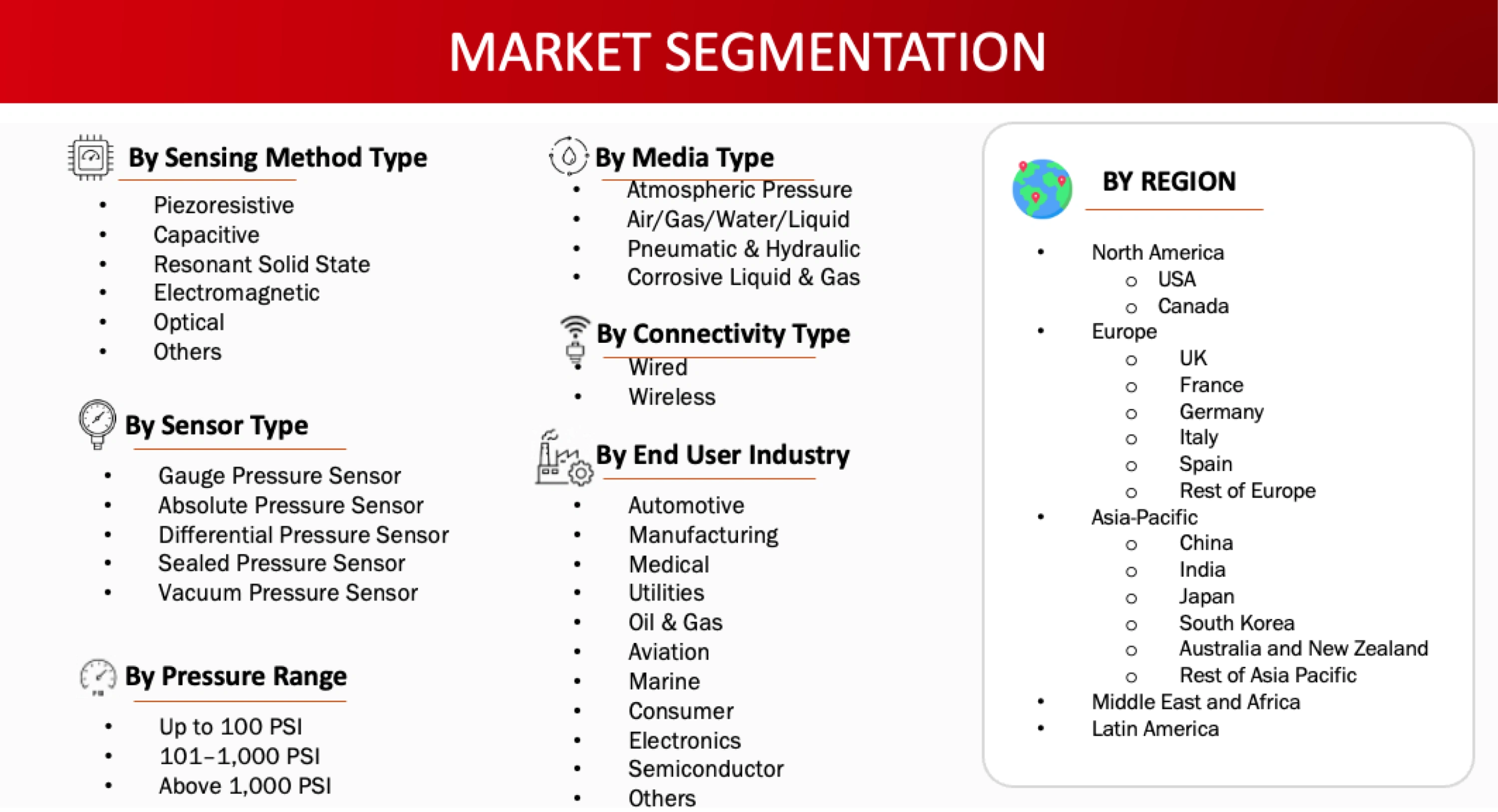
Segmentation Analysis: Breakdown of the market by sensing method type, by sensor type, by pressure range, by connectivity type, by different media, by end user industry, and region

Regional Insights:
Key regional trends and growth opportunities

Future Outlook:
Strategic insights and future market direction
Research Methodology
The study of the pressure sensor market is based on a combination of primary and secondary research methodologies, supported by data validation and analytical modeling to ensure accuracy and reliability.
Market Definition: Pressure Sensor Market
The pressure sensor market represents a vital and rapidly evolving segment within the broader sensors and instrumentation industry. It focuses on the design, manufacturing, and supply of devices that measure and often transmit information about pressure, which can be absolute, gauge, or differential pressure relative to a reference. Pressure sensors convert a physical pressure change into an electrical signal (analog or digital) that can be interpreted by other systems, controllers, or end-users. They act as critical sensory inputs for countless applications, providing essential data about physical processes and environmental conditions. These devices are essential components in virtually all modern industrial, automotive, medical, and consumer manufactured goods, providing critical functions such as level measurement (in tanks or pipes), flow monitoring, altitude determination, tire pressure monitoring, medical diagnostics (blood pressure, respiratory flow), process control in manufacturing, and engine management. Pressure sensors facilitate the monitoring and control of complex physical parameters within systems, enabling efficient operation, safety, and reliability while often enabling automation and data-driven decision-making. They are typically designed to meet specific application requirements regarding pressure range, accuracy, response time, operating temperature, pressure media compatibility, output signal type, size, and environmental robustness (e.g., vibration, humidity, EMI).
Key Stakeholders
The pressure sensor market involves a diverse ecosystem of stakeholders:
- Pressure Sensor Manufacturers
- MEMS & Semiconductor Technology Providers
- OEMs & Tier-1 Suppliers
- Industrial Automation & Equipment Manufacturers
- Medical Device Manufacturers
- Aerospace, Defense & Aviation Companies
- Semiconductor & Electronics Manufacturers
- Oil & Gas, Utilities & Energy Companies
- Distributors and System Integrators
- Material and Component Suppliers
- Research Institutions and Academic Organizations
- Government and Regulatory Bodies
- Standards Organizations
- Maintenance and Service Providers
- Investors (venture capital, semiconductor investors, industrial technology funds, and strategic technology stakeholders)
Key Objectives of the Study
- To define, describe, analyze, segment, and forecast the pressure sensor market by sensing method type, by sensor type, by pressure range, by connectivity type, by different media, by end user industry.
- To describe and forecast the market for four key regions: North America, Europe, Asia Pacific, and Rest of the World.
- To provide detailed information regarding key drivers, restraints, opportunities, and challenges influencing market growth
- To strategically analyze the micro indicators with respect to individual growth trends, prospects, and contributions to the overall market size
- To analyze opportunities for stakeholders in the pressure sensor industry and emphasize on competitive landscape of the market.
- To develop competitive benchmarking of the key market players based on technology specifications and end users.
- To strategically profile key players and comprehensively analyze their product portfolio offerings, and core competencies
- To analyze competitive developments, such as launches and approvals, agreements, mergers and acquisitions, partnerships, joint ventures, investments and expansions, and collaborations, pressure sensor domain.
Need deeper insights on this market?
Get full report access with detailed forecasts, competitive analysis, and segmentation.
Research Approach
This research employs a systematic approach by using primary research along with secondary research to achieve full coverage and accuracy of information about the pressure sensor sector. Through this approach, the current market trends in terms of technology development, end-user adoption, application requirements, manufacturing activities, and competitive environment can be analyzed thoroughly.
Secondary Research
Secondary research involves the collection of data from reliable sources such as industry databases, company annual reports, investor presentations, and regulatory filings. This process helps in understanding market trends, identifying key players, and gathering technical and commercial insights.
A comprehensive database of leading companies and market participants is developed through secondary research to support further analysis.
Primary Research
Primary research is conducted to validate findings from secondary research and to gain deeper insights into market dynamics. Interviews are carried out with industry stakeholders across both demand and supply sides, including executives such as CXOs, Vice Presidents, and Directors from business development, product manufacturers marketing, and product teams.
Data is collected through structured questionnaires, email interactions, and telephonic interviews across key regions including North America, Europe, Asia-Pacific, and Rest of the World.
Market Size Estimation
Market size estimation is performed using both top-down and bottom-up approaches. Key market players are identified, and their revenues are analyzed to estimate the overall market size.
The market is further segmented based on:
- Product and services mapping of various players in deployment type of pressure sensor at the regional-level
- Adoption patterns across key application segments
- Insights gathered through primary and secondary research
Data Validation and Research Design
After estimating the overall market size, the data is validated using triangulation methods and market breakdown techniques to ensure accuracy and consistency. Both demand-side and supply-side factors are considered to refine the analysis.
The final data is validated through multiple sources to ensure reliability and to provide accurate insights across all market segments and regions.
Assumptions of the Study
The analysis of the pressure sensors market is based on the following key assumptions:
- Trends in the industry are drawn from historical data and current information within the sector
- The future outlook is underpinned by constant economic conditions in the absence of shocks to the market
- The rate of adoption for pressure sensing technologies will rise steadily in all important regions
- Advancements in MEMS, wafer-level packaging, miniaturization, digital interfaces, temperature compensation, and sensor integration will continue to support growth in the pressure sensor market.
- The income statement and market share figures are estimated using available information from the industry and publicly available data
- The exchange rate and price trends will not be greatly affected during the forecast period
Scope and Limitations
Scope of the Study
This report offers an exhaustive overview of the global pressure sensor market and includes the following components:
- Summary of market size, growth trends, and projections
- Carefully segmented market based on sensing method type, sensor type, pressure range, connectivity type, media type, end-user industry, and geography
- Discussion of primary factors influencing the market
- Competitor analysis
- Insights into regional and national market performance
Limitations of the Study
Despite the best efforts being made to keep the results accurate, the study does suffer from some limitations:
- It has been done using both primary and secondary data that come with their own constraints
- Rapid developments in technology might affect the future course of market dynamics
- Some figures are only approximations due to lack of public disclosure
- The report is not an insurance against any disruptions in macroeconomics and geopolitics
- Future forecasts are indicative and subject to change due to altered industry dynamics
Data Triangulation and Market Breakdown
Data triangulation involved the combination of primary research, secondary research, and the Wissen Research analysis. Once the data points were sourced from the secondary market research, we sanitized the data points to make the market sizing and growth forecast more accurate by developing our own assumptions based on the inputs and insights we gather through the primary interviews with the industry experts. Once the data was thoroughly validated through primary interviews from both, demand and supply side of the market, our team of analyst and other team members involved finalized the market sizing and growth forecast.
Data Triangulation Methodology
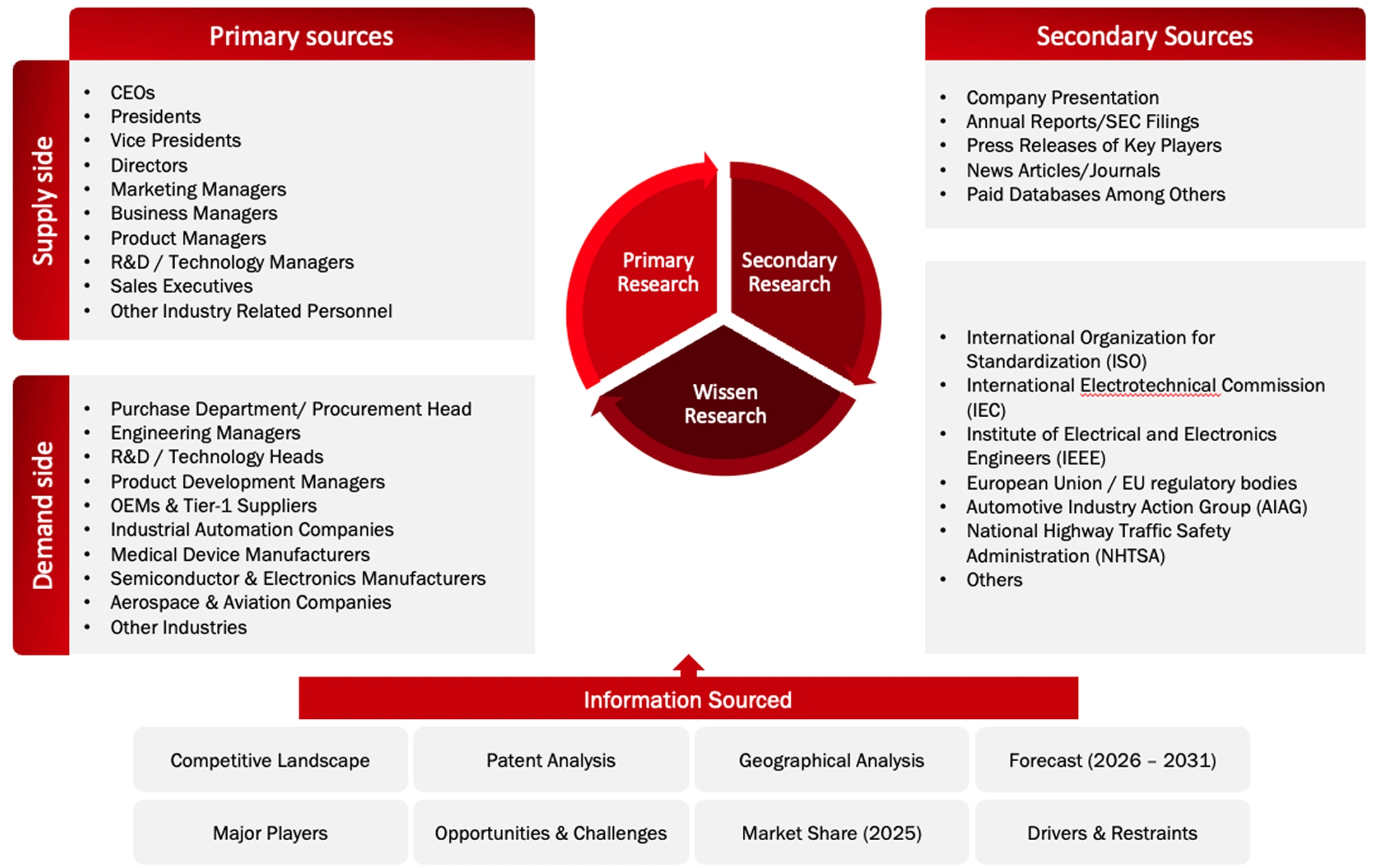
Sources: Government Databases, Regulatory Bodies, Standards Organizations, Industry Associations, Company Websites, Press Releases, Annual Reports, Investor Presentations, Technical Publications, Paid Data Sources, Primary Research, and Wissen Research Analysis.
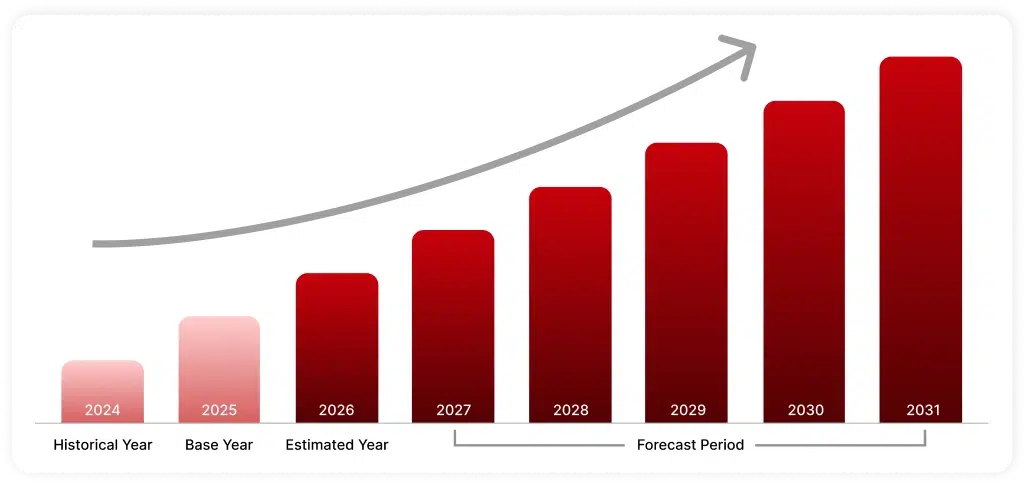
Year Framework
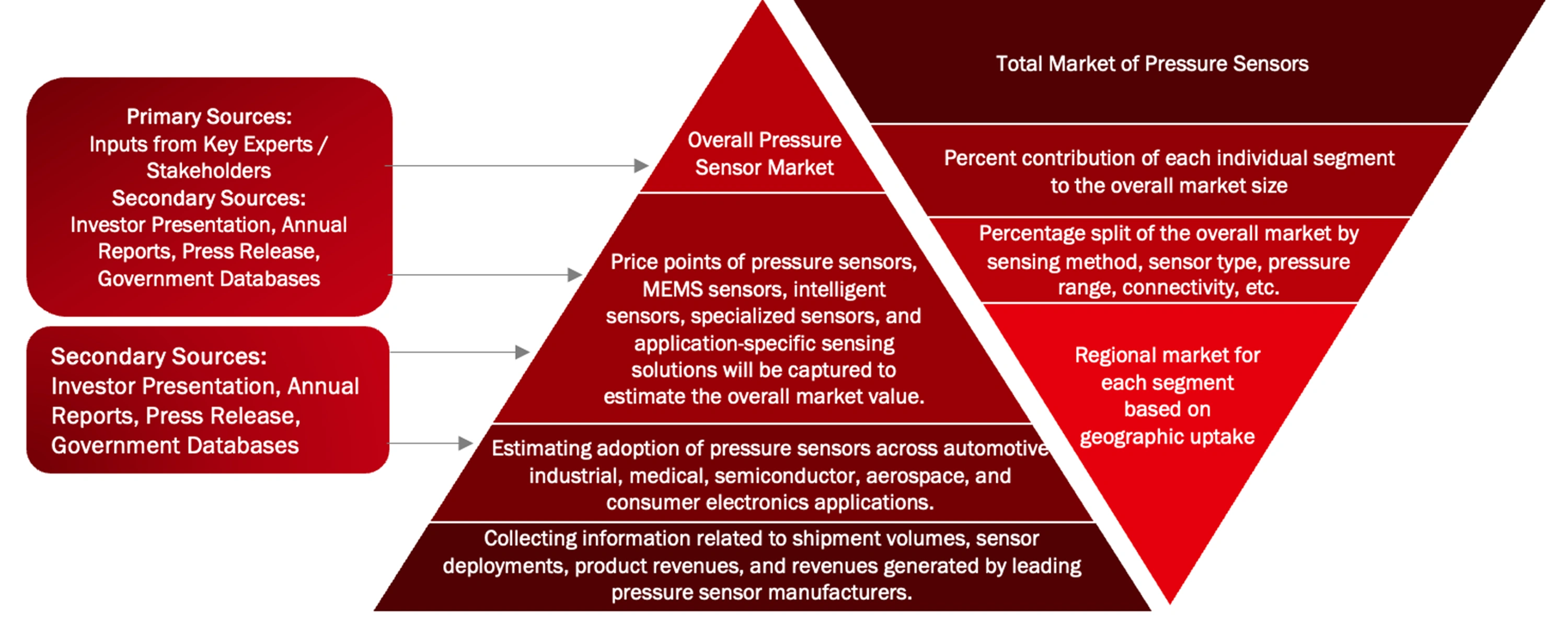
Bottom-Up Approach (Demand Side) And Top-Down Approach Supply Side)
Bottom-Up Approach (Demand-Side Approach):
Determining the market size through the consolidation of demand among end-users, sectors, and geographic areas, which are calculated according to real-world demand conditions.
Top-Down Approach (Supply-Side Approach):
Calculating the market size through revenue and performance of the industry and its important companies, allocating the market size among various sectors.
Want detailed insights from this report?
Buy this Report
Choose the option that best fits your needs


