
Global Rehabilitation Equipment Market
Global Industry analysis, Size, Share, Growth, Trends, and Forecast 2026-2031
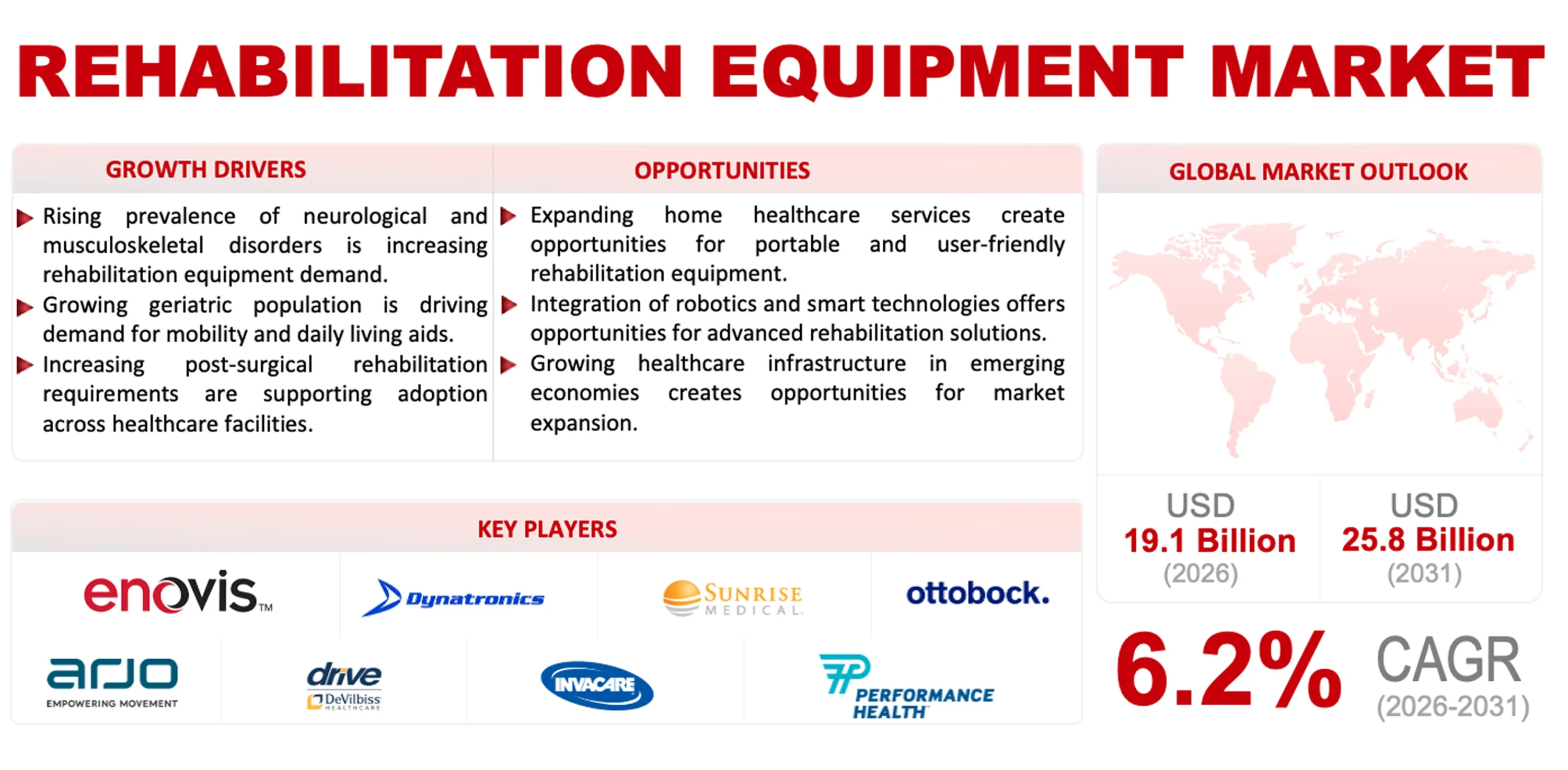
The market is projected to reach USD 25.8 billion by 2031, growing at a CAGR of 6.2% during the forecast period (2026–2031).
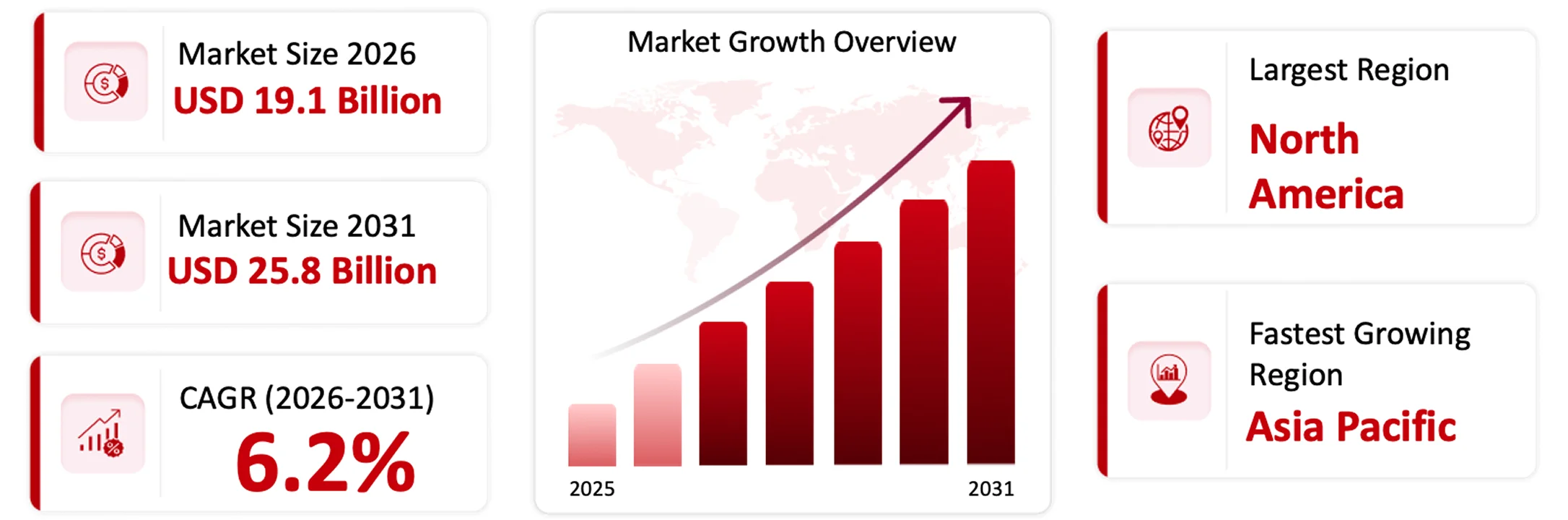
| Market Size (2026) | Forecast (2031) | CAGR (2026–2031): | Leading Region | Fastest Growing Region |
|---|---|---|---|---|
| USD 19.1 Billion | USD 25.8 Billion | 6.2 % | North America | Asia Pacific |
Summarize this report with:



Global Rehabilitation Equipment Market Overview
“In my review the global rehabilitation equipment market is evolving toward more comprehensive, patient-centered rehabilitation approaches, supported by the growing need to restore physical functioning, improve mobility, and maintain independence among individuals recovering from injuries, surgeries, neurological conditions, and chronic diseases. Increasing emphasis on early rehabilitation, functional recovery, and long-term disability management is strengthening the demand for specialized equipment across hospitals, rehabilitation centers, outpatient clinics, and home-care settings. Purchasing priorities are increasingly influenced by treatment effectiveness, patient safety, equipment adaptability, ease of use, and suitability for different rehabilitation requirements. This is encouraging manufacturers to develop advanced therapy equipment, technologically enhanced exercise systems, ergonomic mobility solutions, and adjustable body support devices. Daily living aids are also gaining importance as healthcare providers and caregivers focus on improving patients’ ability to perform routine activities independently. Additionally, growing attention to healthy ageing, accessible healthcare, and the integration of rehabilitation into broader healthcare delivery is influencing equipment adoption across institutional and home-based care environments.”
– Mayur Jain, Research Consultant, Wissen Research
The market is estimated to be USD 19.1 billion in 2026 and is projected to reach USD 25.8 billion by 2031, growing at a CAGR of 6.2% during the forecast period (2026–2031).
Technology Overview
Rehabilitation equipment technologies encompass a range of therapeutic, mobility, exercise, and supportive devices designed to restore or improve physical functioning, movement, strength, coordination, balance, and independence. Therapy equipment includes electrotherapy, ultrasound therapy, traction, and other physical therapy systems used in the management of pain, muscle dysfunction, and movement limitations. Exercise equipment incorporates resistance training systems, stationary cycles, balance trainers, and gait training devices to support strength development, endurance, flexibility, and functional recovery. Mobility equipment includes manual and powered wheelchairs, walkers, crutches, and canes, while daily living aids support routine activities such as dressing, bathing, eating, and personal care. Body support devices, including braces, orthoses, and orthopedic supports, help stabilize or support affected body regions during rehabilitation and functional activities. Technology development increasingly focuses on adjustable equipment, ergonomic designs, powered mobility, robotic-assisted rehabilitation, sensor-enabled movement assessment, and digital monitoring capabilities. Equipment selection is influenced by patient-specific functional requirements, clinical suitability, safety, ease of operation, durability, and compatibility with rehabilitation protocols. Emerging development priorities include personalized rehabilitation systems, improved accessibility, assistive technologies, and equipment designed to support rehabilitation across clinical and home-care environments.
Key Growth Drivers
- Increasing Prevalence of Conditions Requiring Rehabilitation: The World Health Organization (WHO) estimates that approximately 2.4 billion people globally live with health conditions that may benefit from rehabilitation, supporting the need for equipment used in physical recovery and functional improvement.
- Growing Ageing Population and Mobility Limitations: Increasing longevity and age-related functional limitations are strengthening the need for mobility equipment, exercise systems, and daily living aids that help older individuals maintain independence and physical functioning.
- Rising Incidence of Chronic Diseases and Disabilities: The growing burden of chronic conditions, including cardiovascular diseases, cancer, diabetes, and neurological disorders, is increasing the need for rehabilitation equipment to manage functional limitations and support long-term recovery.
- Increasing Focus on Early and Post-Acute Rehabilitation: Rehabilitation is an important component of recovery following injuries, surgeries, strokes, and other medical conditions, supporting the utilization of therapy equipment, exercise systems, and mobility aids across healthcare facilities.
- Growing Demand for Assistive and Daily Living Devices: WHO identifies assistive products such as wheelchairs, walking aids, orthoses, and self-care equipment as important tools for maintaining individual functioning and independence, supporting demand across institutional and home-care settings.
- Expansion of Rehabilitation Services Across Healthcare Settings: The integration of rehabilitation into universal health coverage and broader healthcare delivery is increasing the importance of equipment availability across hospitals, specialty rehabilitation centers, outpatient facilities, and community-based care environments.
Rehabilitation Equipment Market Key Highlights
Need deeper insights on this market?
Get full report access with detailed forecasts, competitive analysis, and segmentation.
Rehabilitation Equipment Market Trends
The rehabilitation equipment market is evolving through the growing integration of rehabilitation services into mainstream healthcare, increasing adoption of technology-enabled therapeutic solutions, and rising emphasis on patient independence and functional recovery. Key trends include the development of robotic-assisted rehabilitation systems, AI-enabled therapy devices, sensor-based monitoring technologies, and virtual rehabilitation platforms that support personalized treatment and remote patient monitoring. Manufacturers are increasingly focusing on ergonomic designs, lightweight materials, powered mobility devices, smart wheelchairs, and advanced walking aids to improve patient comfort, accessibility, and mobility. The growing shift toward home-based rehabilitation is encouraging demand for compact, portable, and easy-to-operate equipment that enables patients to continue therapy outside clinical settings. Additionally, the adoption of exoskeletons, virtual reality-based rehabilitation, and gamified therapy solutions is transforming conventional rehabilitation practices. Increasing emphasis on fall prevention, injury recovery, age-friendly assistive devices, and integrated rehabilitation solutions is further shaping product innovation and market development.
Increasing Demand for Comprehensive Rehabilitation and Assistive Equipment
Growing Need for Rehabilitation Services: WHO’s February 2025 policy brief estimated that 2.6 billion people worldwide experience health conditions that could benefit from rehabilitation. The growing need for functional recovery across chronic diseases, injuries, and disabilities is increasing the importance of therapy equipment, exercise systems, and mobility aids.
Integration of Rehabilitation into Healthcare Systems: WHO’s Rehabilitation 2030 initiative emphasizes integrating rehabilitation into all levels of healthcare, including primary healthcare and community-based services. This approach is encouraging the availability of rehabilitation equipment beyond specialized hospitals, particularly across outpatient clinics, community facilities, and home-care environments.
Increasing Demand for Mobility and Daily Living Aids: WHO estimates that more than 2.5 billion people require one or more assistive products, including wheelchairs and other mobility-related solutions. Increasing attention to independent living and functional accessibility is supporting demand for wheelchairs, walking aids, self-care devices, and other daily living equipment.
Growing Focus on Rehabilitation for Age-Related and Chronic Conditions: WHO identifies ageing populations and increasing noncommunicable diseases as important contributors to rehabilitation requirements. Conditions such as stroke, cardiovascular diseases, diabetes, and cancer can create functional limitations, increasing the need for equipment supporting strength, mobility, balance, and physical recovery.
Technological Advancements and Increasing Adoption of Specialized Rehabilitation Equipment
Growing Adoption of Robotic-Assisted Rehabilitation: Ekso Bionics’ EksoNR robotic exoskeleton is FDA-cleared for rehabilitation applications involving stroke, acquired brain injury, multiple sclerosis, and spinal cord injury. The system incorporates powered hip and knee movement assistance and gait-training capabilities, demonstrating the development of specialized technologies for neurological rehabilitation.
Integration of Sensors and Digital Performance Monitoring: Advanced rehabilitation systems are increasingly incorporating movement monitoring, performance analytics, and digital feedback. Ekso Bionics’ EksoNR integrates session-specific data, including walking time, distance, and speed, through its connected EksoPulse platform, supporting the monitoring of patient progress during rehabilitation sessions.
Development of Ergonomic and Patient-Handling Equipment: Manufacturers are emphasizing equipment designs that improve patient mobility while reducing the physical demands placed on caregivers. Arjo’s 2025 Annual and Sustainability Report highlighted the launch of its Maxi Move 5 patient lift, designed to support patient transfers across different care situations and improve caregiver handling efficiency.
Expansion of Specialized Therapy and Recovery Products: Manufacturers are expanding portfolios across physical therapy, bracing, recovery, and exercise-related equipment. Enovis showcases products under its DonJoy, Aircast, Chattanooga, and Compex brands, covering orthopedic supports, rehabilitation modalities, and recovery technologies for different treatment and functional recovery requirements.
Key Players in the Rehabilitation Equipment Market
Leading companies in the rehabilitation equipment market are focusing on expanding portfolios of mobility solutions, therapeutic devices, exercise equipment, orthopedic supports, patient-handling systems, and assistive products. Product development is increasingly centered on improving patient mobility, functional recovery, treatment effectiveness, and independent living across institutional and home-care environments.








Strategic Activities Within the Rehabilitation Equipment Market
Sunrise Medical (Germany) introduced the QUICKIE® QS7 R, an ultra-lightweight adjustable rigid wheelchair featuring its new FrontFold folding mechanism. The technology enables the wheelchair to fold into a compact configuration for easier transportation while retaining rigid-frame performance and propulsion efficiency. The product also incorporates customizable seating configurations, adjustable caster positioning, and additional positioning options, strengthening Sunrise Medical’s portfolio of active manual wheelchairs and personalized mobility solutions.
Permobil AB (Sweden) launched the M4 Nexa, a compact mid-wheel-drive power wheelchair designed to accommodate users requiring smaller seating configurations without compromising powered positioning capabilities. The wheelchair incorporates the Nexa Seating System, powered tilt, recline, anterior tilt, elevating leg rests, and seat elevation. It also integrates Permobil Connect for remote diagnostics, battery monitoring, and personalized mobility management, expanding the company’s technologically advanced powered mobility portfolio.
Invacare Corporation (USA), through its DHCare business, introduced the AVIVA RX10 rear-wheel-drive power wheelchair. The compact wheelchair features a narrow wheelbase for improved indoor and outdoor maneuverability, Invacare Action seating components for easier setup and adjustment, and LiNX technology for precise driving control. The launch expands the company’s powered mobility portfolio and strengthens its offering of accessible mobility solutions for individuals with less complex mobility requirements.
Arjo AB (Sweden) announced a new corporate strategy focused on strengthening its core business, increasing penetration in underdeveloped market segments, and sharpening product portfolio priorities. The strategy includes a more customer-centric operating model across five regions and initiatives to improve commercial execution and operational efficiency. The company’s portfolio includes patient transfer and handling equipment, medical beds, and solutions supporting patient mobility, making the strategic realignment relevant to its rehabilitation-related and patient mobility equipment business.
Rehabilitation Equipment Market Insights
The rehabilitation equipment market comprises medical devices, therapeutic systems, mobility solutions, and supportive products designed to restore or improve physical functioning, movement, strength, coordination, and independence among individuals experiencing injuries, disabilities, chronic conditions, or post-surgical limitations. Major product categories include therapy equipment, daily living aids, mobility equipment, exercise equipment, and body support devices. These products are utilized across hospitals, specialty rehabilitation centers, outpatient clinics, and home-care settings. Market growth is supported by increasing global rehabilitation requirements, ageing populations, rising prevalence of chronic diseases, growing disability burden, and greater emphasis on post-acute recovery and functional independence.
The major application areas of rehabilitation equipment include physical rehabilitation and training, strength, endurance, and pain reduction, occupational rehabilitation, and other rehabilitation applications. Physical rehabilitation utilizes therapy equipment, gait-training systems, and exercise devices to restore movement and coordination. Strength, endurance, and pain reduction applications involve resistance-training equipment, electrotherapy devices, and therapeutic ultrasound systems. Occupational rehabilitation focuses on improving daily functional activities through adaptive equipment and assistive devices. Other applications include neurological, cardiopulmonary, and specialized rehabilitation. Equipment selection depends on patient requirements, functional limitations, treatment objectives, clinical suitability, and accessibility across institutional and home-care environments.
The rehabilitation equipment market presents significant opportunities through expanding access to assistive technologies, increasing adoption of home-based rehabilitation, and growing integration of rehabilitation services into primary healthcare. Rising demand for independent living is creating opportunities in powered wheelchairs, walking aids, orthotic products, and daily living devices. Additionally, advancements in robotic-assisted rehabilitation, sensor-enabled exercise systems, AI-integrated therapy equipment, and digitally connected mobility solutions are creating opportunities for technologically advanced products. The growing adoption of remote rehabilitation and tele-rehabilitation is further encouraging manufacturers to develop portable, connected, and user-friendly equipment. Furthermore, WHO’s Rehabilitation 2030 initiative emphasizes strengthening rehabilitation services across healthcare delivery levels, supporting opportunities for equipment suppliers to expand into community-based care, primary healthcare facilities, and home-care settings.
The rehabilitation equipment market faces challenges related to affordability, limited access to rehabilitation services, shortages of trained rehabilitation professionals, and inadequate healthcare infrastructure. WHO identifies substantial inequalities in access to assistive products, with availability reaching as low as 3% of estimated need in some settings. Advanced rehabilitation technologies, including robotic-assisted systems and powered mobility devices, can also involve higher acquisition and maintenance costs. Additionally, limited reimbursement coverage, inconsistent healthcare procurement budgets, and insufficient rehabilitation facilities can restrict equipment adoption, particularly across low- and middle-income countries. Equipment customization, maintenance, and patient-specific requirements further influence purchasing decisions.
The rehabilitation equipment market across Asia Pacific is supported by ageing populations, increasing chronic disease burden, expanding healthcare infrastructure, and growing demand for assistive products. Key countries include China, Japan, India, South Korea, and Australia. In October 2025, WHO published its Framework on Provision of Rehabilitation Services in the South-East Asia Region, outlining approaches to strengthen rehabilitation services and integrate them into healthcare systems. Additionally, WHO’s July 2026 policy document on rehabilitation in primary care emphasizes improving service accessibility and integrating rehabilitation into primary healthcare. These developments create opportunities for equipment suppliers across hospitals, rehabilitation centers, and community-based care facilities.
Rehabilitation Equipment Market Dynamics
Drivers: Increasing Rehabilitation Requirements and Demand for Functional Recovery
- Growing Global Need for Rehabilitation Services: Increasing demand for rehabilitation equipment is supported by the rising prevalence of health conditions requiring functional recovery and physical rehabilitation. WHO estimated in February 2025 that approximately 2.6 billion people worldwide experience health conditions that could benefit from rehabilitation, strengthening the need for therapy equipment, exercise systems, and mobility solutions.
- Increasing Demand for Mobility and Assistive Equipment: Growing requirements for independent mobility and daily functioning are supporting demand for wheelchairs, walking aids, and other assistive products. WHO estimates that more than 2.5 billion people globally require one or more assistive products, with demand projected to exceed 3.5 billion by 2050 due to population ageing and increasing noncommunicable diseases.
- Rising Burden of Chronic Diseases and Age-Related Conditions: Increasing prevalence of noncommunicable diseases, neurological disorders, and age-related functional limitations is strengthening demand for rehabilitation solutions. WHO identifies stroke, diabetes, cancer, and other chronic conditions as important contributors to rehabilitation requirements, supporting the utilization of therapy equipment, exercise systems, and body support devices.
- Increasing Integration of Rehabilitation into Healthcare Systems: Greater emphasis on incorporating rehabilitation into primary and community healthcare is supporting equipment requirements beyond specialized hospitals. WHO’s South-East Asia Regional Rehabilitation Framework, published on 14 October 2025, outlines measures to strengthen rehabilitation service delivery and improve access across different healthcare levels.
Opportunities: Technological Advancements and Expanding Access to Rehabilitation Equipment
- Development of Robotic-Assisted Rehabilitation Systems: Opportunities exist for manufacturers to develop advanced robotic technologies supporting gait training and neurological rehabilitation. The US FDA’s 510(k) documentation for EksoNR identifies its use in rehabilitation institutions for individuals with multiple sclerosis, acquired brain injury, and spinal cord injuries, demonstrating the clinical application of robotic-assisted rehabilitation equipment.
- Expansion of Home-Based Rehabilitation and Mobility Solutions: Increasing demand for independent living creates opportunities for manufacturers to expand portable therapy equipment, powered wheelchairs, walkers, and daily living aids. WHO estimates that assistive technology requirements will exceed 3.5 billion people by 2050, highlighting opportunities to improve product availability and accessibility across home-care environments.
- Integration of Rehabilitation into Primary Healthcare: Opportunities exist for suppliers to provide compact, affordable, and adaptable rehabilitation equipment to primary healthcare facilities and community-based centers. WHO’s South-East Asia Regional Rehabilitation Framework, published in October 2025, emphasizes integrating rehabilitation into healthcare systems and improving service availability across different levels of care.
- Development of Personalized Mobility and Support Equipment: Increasing variation in patient mobility limitations and functional requirements creates opportunities for customized wheelchairs, adjustable seating systems, orthopedic supports, and assistive devices. CMS Medicare coverage provisions recognize specialized power wheelchair seating systems and accessories, including tilt and recline features, subject to medical necessity and applicable coverage criteria.
- Expansion of Assistive Product Availability in Emerging Markets: Significant unmet requirements for mobility and self-care products create opportunities for manufacturers to expand distribution and develop affordable rehabilitation solutions. WHO identifies substantial inequalities in assistive technology access, with availability reaching as low as 3% of estimated need in some settings, highlighting opportunities to improve product accessibility and supply
Challenges: Affordability, Accessibility, and Rehabilitation Equipment Adoption Constraints
- High Acquisition Costs and Limited Affordability: The cost of advanced rehabilitation equipment, including powered wheelchairs, robotic-assisted systems, and specialized therapy devices, can restrict adoption among patients and healthcare providers. WHO identifies high product costs and out-of-pocket expenditure as major barriers to assistive technology access, particularly in low- and middle-income countries.
- Shortage of Trained Rehabilitation Professionals: Limited availability of physiotherapists, occupational therapists, prosthetists, and other rehabilitation specialists can restrict the utilization of specialized equipment. WHO reports that many low- and middle-income settings have fewer than 10 skilled rehabilitation practitioners per million population, creating challenges for equipment deployment and effective rehabilitation service delivery.
- Limited Reimbursement Coverage and Medical Necessity Requirements: Equipment purchasing and reimbursement can be affected by eligibility criteria, documentation requirements, and medical necessity assessments. In the US, Medicare coverage of power mobility devices requires practitioner evaluations, written orders, and evidence of qualifying mobility limitations, potentially creating additional administrative requirements for patients and equipment suppliers.
- Product Quality, Safety, and Customization Requirements: Manufacturers face challenges in maintaining product quality, durability, safety, and suitability for patients with different functional requirements. WHO identifies inadequate product standards, limited testing, and insufficient availability of appropriate sizes and product configurations as barriers affecting the accessibility and effective use of assistive equipment.
- Inadequate Healthcare Infrastructure and Equipment Availability: Limited rehabilitation facilities, insufficient healthcare funding, and inadequate access to equipment can restrict market penetration, particularly in developing economies and rural areas. WHO reports that more than half of people requiring rehabilitation in some low- and middle-income countries do not receive the services they need, highlighting infrastructure and service-delivery constraints.
Technology and Market Insights
Rehabilitation equipment technology has progressed through improvements in therapeutic systems, mobility solutions, assistive devices, ergonomic designs, and technology-enabled rehabilitation approaches. Major products include therapy equipment, daily living aids, mobility equipment, exercise equipment, and body support devices. Conventional rehabilitation technologies include electrotherapy systems, therapeutic ultrasound equipment, traction devices, resistance-training systems, manual and powered wheelchairs, walking aids, and orthopedic supports. Advanced developments include robotic-assisted rehabilitation systems, sensor-enabled movement monitoring, powered mobility solutions, and digitally connected exercise equipment. Applications include physical rehabilitation and training, strength, endurance, and pain reduction, occupational rehabilitation, neurological rehabilitation, and other functional recovery requirements. Technology selection depends on clinical suitability, patient mobility, functional limitations, treatment objectives, equipment safety, adjustability, durability, and ease of operation. Purchasing decisions ultimately consider therapeutic effectiveness, patient requirements, equipment affordability, maintenance needs, and compatibility with rehabilitation protocols across hospitals, specialty clinics, rehabilitation centers, and home-care environments.
Technology Scope and Products
Rehabilitation Equipment Market Segmentation
Want detailed insights from this report?
Competitive Landscape and Market Segments Insights
- Market consolidation is reshaping mobility competition: DHCare’s proposed acquisition of Ottobock’s Human Mobility business in June 2026 could strengthen its wheelchair portfolio, expand its complex mobility capabilities, and intensify competition among established mobility equipment manufacturers.
- Component acquisitions strengthen product differentiation: Sunrise Medical acquired Spinergy in November 2026, adding specialized wheelchair wheel technology and strengthening its capabilities in premium manual wheelchair components, performance-oriented products, and differentiated mobility solutions.
- Product customization drives wheelchair differentiation: Sunrise Medical’s QUICKIE QS7 R combines a folding front-frame design, lightweight construction, configuration options, and digital visualization, addressing user requirements for portability, personalization, and everyday mobility.
- Portfolio diversification expands competitive reach: Sunrise Medical’s acquisition of Made for Movement in July 2025 expanded its presence in neurorehabilitation and therapeutic movement solutions, extending its portfolio beyond conventional wheelchairs and mobility equipment.
- Rehabilitation robotics is attracting strategic consolidation: Wandercraft’s acquisition of Ekso Bionics in October 2026 combines expertise in robotic exoskeletons, rehabilitation applications, and advanced mobility technologies, potentially strengthening competition in technology-intensive rehabilitation solutions.
- Manufacturing scale supports cost and distribution advantages: Jin Medical International planned annual production capacity of 200,000 electric wheelchairs and senior mobility scooters at its Chuzhou facility, supporting its strategy to expand manufacturing scale and international market access.
Therapy Equipment Accounted for the Largest Product Segment: Therapy equipment supports clinical interventions for pain management, muscle strengthening, mobility restoration, and functional recovery, making it essential across physical therapy, post-surgical rehabilitation, neurological rehabilitation, and musculoskeletal treatment.
-
Growing Rehabilitation Requirements Support Therapeutic Equipment Demand: WHO identifies rehabilitation as an essential health service for addressing functional limitations associated with neurological, musculoskeletal, cardiovascular, and other health conditions, supporting demand for therapeutic interventions and associated equipment.
-
WHO Identifies Multiple Equipment Categories for Therapeutic Interventions: WHO’s Package of Interventions for Rehabilitation identifies electrical stimulation systems, exercise mats, resistance bands, weights, and upper-limb workstations as resources supporting therapeutic rehabilitation.
-
Neurological Rehabilitation Requires Specialized Therapy Equipment: WHO identifies electrical stimulation, repetitive task training, treadmill training, gait training, and electromechanically assisted training among interventions used to address movement and functional limitations.
-
Musculoskeletal Rehabilitation Supports Demand for Therapeutic Systems: WHO’s rehabilitation package covers osteoarthritis, rheumatoid arthritis, low back pain, fractures, and amputation, identifying therapeutic interventions and associated equipment as important resources for managing these conditions.
Physical Rehabilitation & Training Accounted for the Largest Application Segment: Physical rehabilitation and training address recovery of movement, strength, coordination, and functional capacity through structured physiotherapy and exercise interventions, supporting equipment utilization across institutional rehabilitation settings.
-
Physiotherapy Utilization Reached 7,023 Treatments in 2025: KGMU recorded 7,023 physiotherapy treatments during 2025, demonstrating the continued requirement for physical rehabilitation interventions in a tertiary-care setting.
-
Occupational Rehabilitation Recorded 8,272 Treatments in 2025: KGMU reported 8,272 occupational therapy treatments, highlighting the importance of functional training and activity-based rehabilitation alongside conventional physical therapy.
-
Rehabilitation Services Were Delivered Across Multiple Clinical Conditions: WHO’s 2025 report on financing rehabilitation, using Ukrainian National Health Service data, identifies musculoskeletal and neurological conditions as major contributors to outpatient rehabilitation activity, illustrating the clinical breadth of physical rehabilitation applications.
-
Physical Therapy Providers Recorded USD 650.43 Million in Patient Revenue: U.S. Physical Therapy, Inc. reported USD 650.43 million in net patient revenue for 2025, compared with USD 560.55 million in 2024, reflecting the scale of demand for physical therapy services across its provider network.
North America Accounted for the Largest Regional Market: The region’s established healthcare infrastructure, substantial hospital and outpatient rehabilitation networks, structured medical reimbursement systems, and strong adoption of assistive technologies support its leading position in the global rehabilitation equipment market.
-
Extensive US Hospital Infrastructure Supports Equipment Demand: The American Hospital Association (AHA) reported 6,093 hospitals in the US in its 2025 edition of Fast Facts on U.S. Hospitals, providing an extensive institutional base for rehabilitation equipment procurement across hospitals and specialized healthcare facilities.
-
Medicare Coverage Supports Mobility and Rehabilitation Equipment Utilization: The Centers for Medicare & Medicaid Services (CMS) includes hospital beds, wheelchairs, power mobility devices, prosthetics, and orthotics under its Durable Medical Equipment, Prosthetics, Orthotics and Supplies (DMEPOS) coverage framework, supporting access to rehabilitation-related equipment through established reimbursement mechanisms.
-
Expansion of Outpatient Physical Therapy Networks Strengthens Demand: The American Physical Therapy Association’s 2024 benchmarking report found that the total number of clinics operated by surveyed outpatient physical therapy practices increased by 4.4% between 2023 and 2024, indicating continued expansion of outpatient rehabilitation infrastructure.
-
Canadian Government Investment Supports Assistive Equipment Adoption: The Government of Ontario invested more than CAD 650 million in its Assistive Devices Program during FY 2024–2025, supporting more than 475,000 residents annually through access to wheelchairs and other assistive products, demonstrating institutional support for rehabilitation-related equipment adoption.
What This Report Covers-
This report provides a comprehensive analysis of the rehabilitation equipment market, offering insights into key trends, growth drivers, challenges, and future opportunities. It is designed to support strategic decision-making through a combination of quantitative data and qualitative analysis.
Specifically, the report covers:

Market Overview & Definition:
Overview of the market scope, structure, and key terminology

Market Size & Forecast
Historical data and future projections across key segments and regions

Key Market Trends:
Insights into emerging trends, technological advancements, and evolving demand patterns

Drivers, Restraints & Opportunities:
Analysis of key factors influencing rehabilitation equipment market growth

Competitive Landscape:
Overview of major players, their strategies, and recent developments

Detailed Patent Analysis:
This includes, top assignees, geography focus of top assignees, legal status, technology evolution, key patents and patent trends and innovations

Segmentation Analysis:
Breakdown by product type, by application type, by end users type, by region.

Regional Insights:
Key regional trends and growth opportunities

Future Outlook:
Strategic insights and future market direction
Research Methodology
The study of the Rehabilitation Equipment Market is based on primary and secondary research, supported by data validation, product and technology mapping, equipment portfolio assessment, raw material and component sourcing analysis, supply and demand assessment, company revenue and product portfolio analysis, regulatory and product certification assessment, end-use demand analysis, trade-flow analysis, competitive landscape evaluation, and regional market assessment to ensure accuracy and reliability.
Market Definition: Rehabilitation Equipment Market
The Rehabilitation Equipment Market covers medical devices, therapeutic systems, assistive products, and supportive equipment designed to restore, improve, or maintain physical functioning, mobility, strength, coordination, independence, and daily living capabilities among individuals with injuries, disabilities, chronic conditions, or post-surgical limitations. The market includes therapy equipment, daily living aids, mobility equipment, exercise equipment, and body support devices designed for different rehabilitation requirements.
The market encompasses physical rehabilitation and training, strength, endurance, and pain reduction, and occupational rehabilitation and training applications across hospitals and clinics, rehabilitation centers, home-care settings, physiotherapy centers, and other end users. The study considers equipment used for therapeutic interventions, functional recovery, mobility assistance, physical conditioning, and activities of daily living. General fitness equipment not specifically designed for rehabilitation, pharmaceuticals, standalone rehabilitation services, surgical instruments, prosthetic devices, and diagnostic equipment not directly used for rehabilitation purposes are excluded from the market scope
Key Stakeholders
The Rehabilitation Equipment Market involves stakeholders across the medical-device supply chain, component manufacturing, equipment development, distribution, regulatory ecosystem, and healthcare delivery sectors.
- Rehabilitation Equipment Manufacturers
- Therapy Equipment Manufacturers
- Mobility Equipment Manufacturers
- Daily Living Aid Manufacturers
- Exercise Equipment Manufacturers
- Orthopedic and Body Support Device Manufacturers
- Home Healthcare Providers
- Rehabilitation and Physiotherapy Centers
- Hospital and Clinic Procurement Departments
- Medical Equipment Distributors and Dealers
- Regulatory and Medical Device Authorities
- Product Testing and Certification Laboratories
Key Objectives of the Study
- To define, describe, analyze, segment, and forecast the rehabilitation equipment market by product type, by application type, by end users’ type,
- To describe and forecast the market for five key regions: North America, Europe, Asia Pacific, Latin America, Middle-East & Africa
- To provide detailed information regarding key drivers, restraints, opportunities, and challenges influencing market growth
- To strategically analyze the micro indicators with respect to individual growth trends, prospects, and contributions to the overall market size
- To analyze opportunities for stakeholders in the rehabilitation equipment industry and emphasize on competitive landscape of the market
- To develop competitive benchmarking of the key market players based on technology specifications and end user
- To strategically profile key players and comprehensively analyze their product portfolio offerings, and core competencies
- To analyze competitive developments, such as launches and approvals, agreements, mergers and acquisitions, partnerships, joint ventures, investments and expansions, and collaborations, rehabilitation equipment domain
Need deeper insights on this market?
Get full report access with detailed forecasts, competitive analysis, and segmentation.
Research Approach
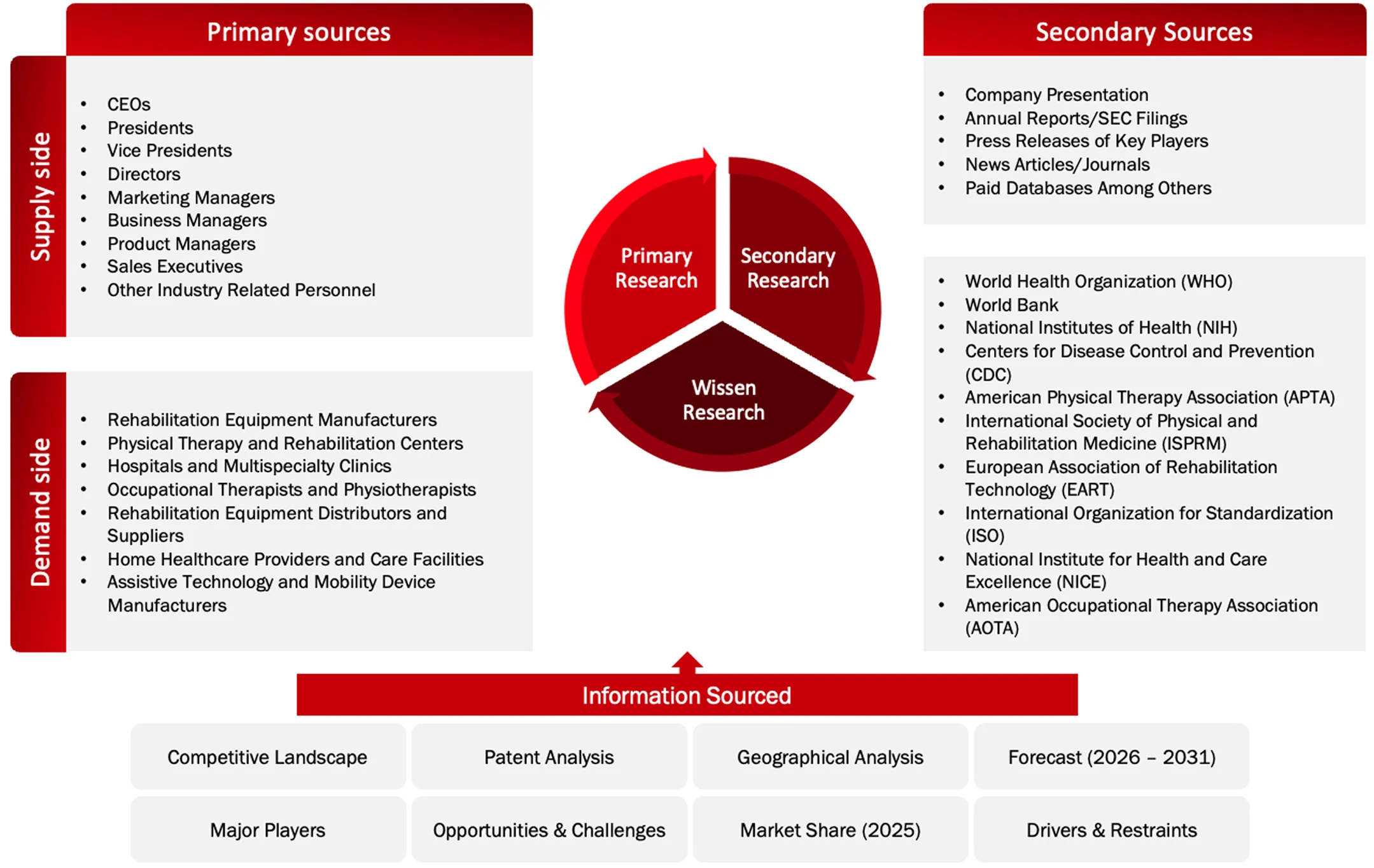
This research employs a systematic approach by using primary research along with secondary research to achieve full coverage and accuracy of information about the rehabilitation equipment sector. Through this approach, the current market trends in terms of consumer behaviour, technological developments, and competitive environment can be analysed thoroughly.
Secondary Research
Secondary research involves the collection of data from reliable sources such as industry databases, company annual reports, investor presentations, and regulatory filings. This process helps in understanding market trends, identifying key players, and gathering technical and commercial insights.
A comprehensive database of leading companies and market participants is developed through secondary research to support further analysis.
Primary Research
Primary research is conducted to validate findings from secondary research and to gain deeper insights into market dynamics. Interviews are carried out with industry stakeholders across both demand and supply sides, including executives such as CXOs, Vice Presidents, and Directors from business development, marketing, and product teams.
Data is collected through structured questionnaires, email interactions, and telephonic interviews across key regions including North America, Europe, Asia-Pacific, and Rest of the World
Market Size Estimation
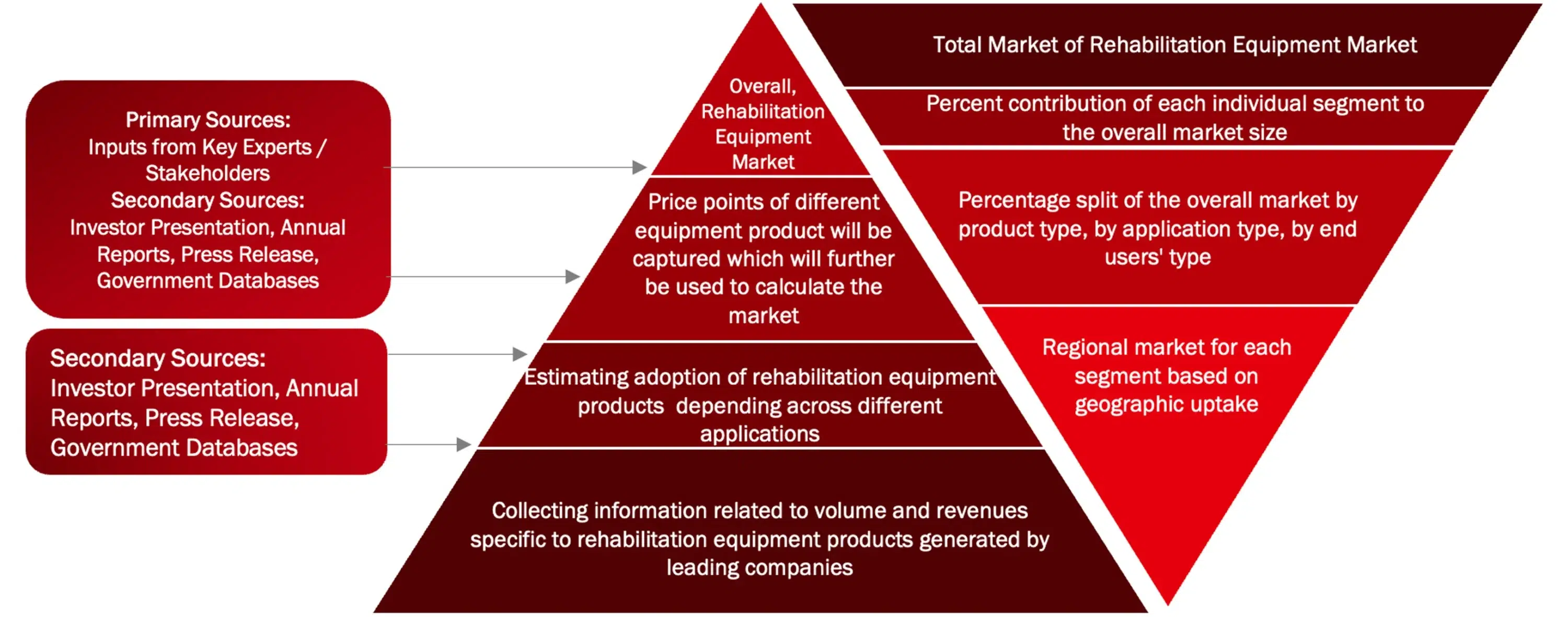
Market size estimation is performed using both top-down and bottom-up approaches. Key market players are identified, and their revenues are analysed to estimate the overall market size.
The market is further segmented based on:
- Product and service mapping across regions
- Adoption patterns across key application segments
- Insights gathered through primary and secondary research
Data Validation and Research Design
After estimating the overall market size, the data is validated using triangulation methods and market breakdown techniques to ensure accuracy and consistency. Both demand-side and supply-side factors are considered to refine the analysis.
The final data is validated through multiple sources to ensure reliability and to provide accurate insights across all market segments and regions.
Assumptions of the Study
The analysis of the rehabilitation equipment market is based on the following key assumptions
- Trends in the industry are drawn from historical data and current information within the sector
- The future outlook is underpinned by constant economic conditions in the absence of shocks to the market
- The rate of adoption for rehabilitation equipment will rise steadily in all important regions
- The income statement and market share figures are estimated using available information from the industry and publicly available data
- The exchange rate and price trends will not be greatly affected during the forecast period
Scope and Limitations
Scope of the Study
This report offers an exhaustive overview of the international rehabilitation equipment market and includes the following components:
- Summary of market size, growth trends, and projections
- Carefully segmented market based on market by product type, by application type, by end users type,
- Discussion of primary factors influencing the market
- Competitor analysis
- Insights into regional and national market performance
Limitations of the Study
Despite the best efforts being made to keep the results accurate, the study does suffer from some limitations:
- It has been done using both primary and secondary data that come with their own constraints
- Rapid developments in technology might affect the future course of market dynamics
- Some figures are only approximations due to lack of public disclosure
- The report is not an insurance against any disruptions in macroeconomics and geopolitics
- Future forecasts are indicative and subject to change due to altered industry dynamics
Data Triangulation and Market Breakdown
Data triangulation involved the combination of primary research, secondary research, and the Wissen Research analysis. Once the data points were sourced from the secondary market research, we sanitized the data points to make the market sizing and growth forecast more accurate by developing our own assumptions based on the inputs and insights we gather through the primary interviews with the industry experts. Once the data was thoroughly validated through primary interviews from both, demand and supply side of the market, our team of analyst and other team members involved finalized the market sizing and growth forecast.
Data Triangulation Methodology
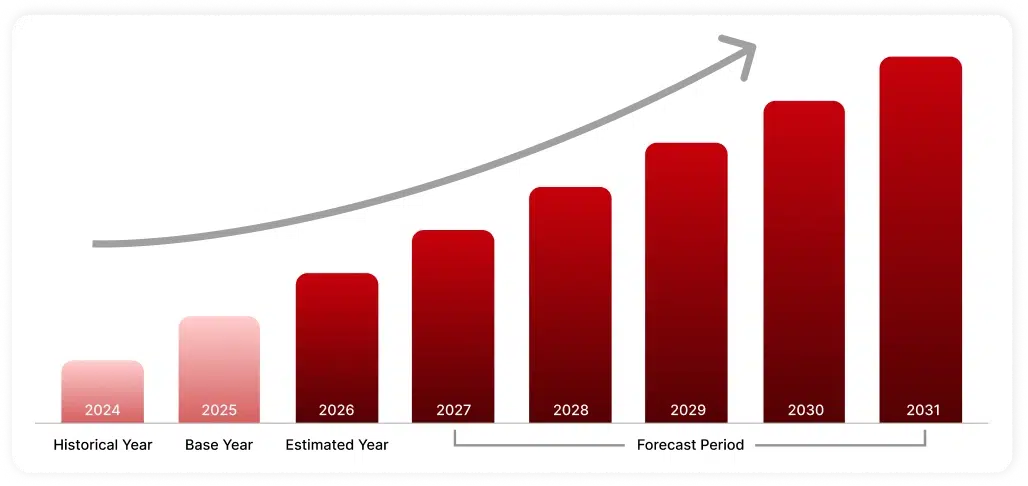
Year Framework
Bottom-Up Approach (Demand Side) And Top-Down Approach (Supply Side)
Bottom-Up Approach (Demand-Side Approach)
Determining the market size through the consolidation of demand among end-users, sectors, and geographic areas, which are calculated according to real-world demand conditions.
Top-Down Approach (Supply-Side Approach)
Calculating the market size through revenue and performance of the industry and its important companies, allocating the market size among various sectors.
Want detailed insights from this report?
Buy this Report
Choose the option that best fits your needs