
Specialty Chemicals Market
Global Industry analysis, Size, Share, Growth, Trends, and Forecast 2026-2031
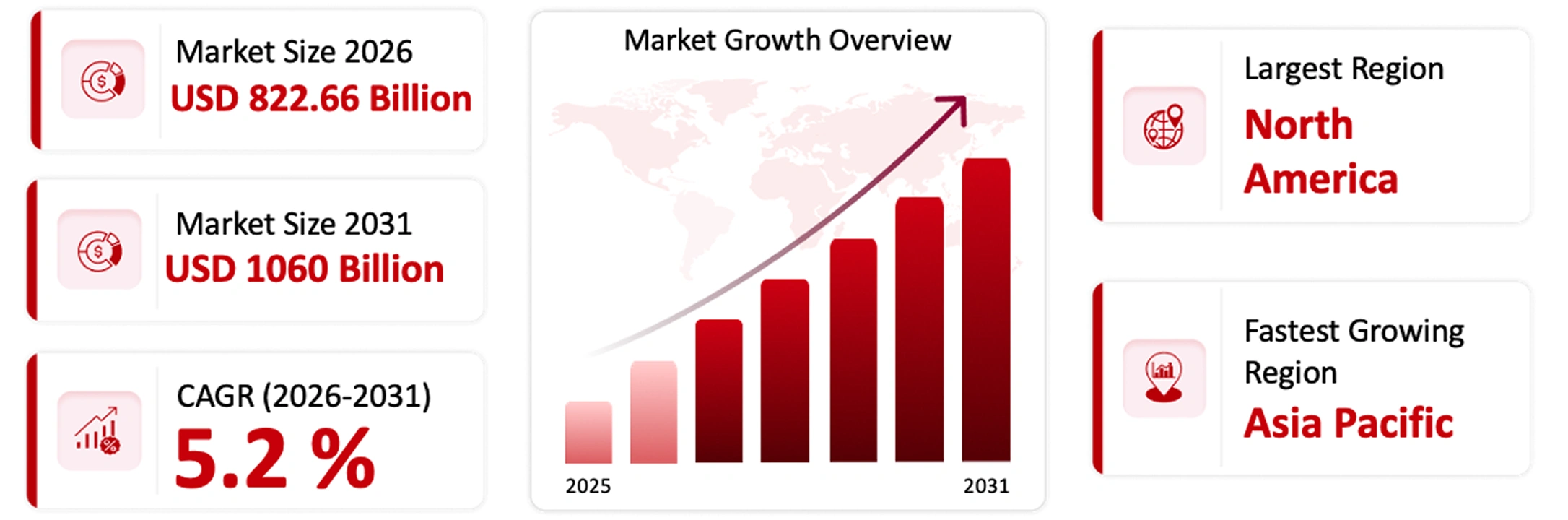
The global specialty chemicals market is projected to reach USD 1060 billion by 2031, growing at a CAGR of 5.2% during the forecast period.
| Market Size (2026): | Forecast (2031): | CAGR (2026–2031): | Leading Region: | Fastest Growing Region: |
|---|---|---|---|---|
| $ 822.66 Billion | $ 1060 Billion | 5.2 % | North America | Asia Pacific |
Summarize this report with:



Market Overview
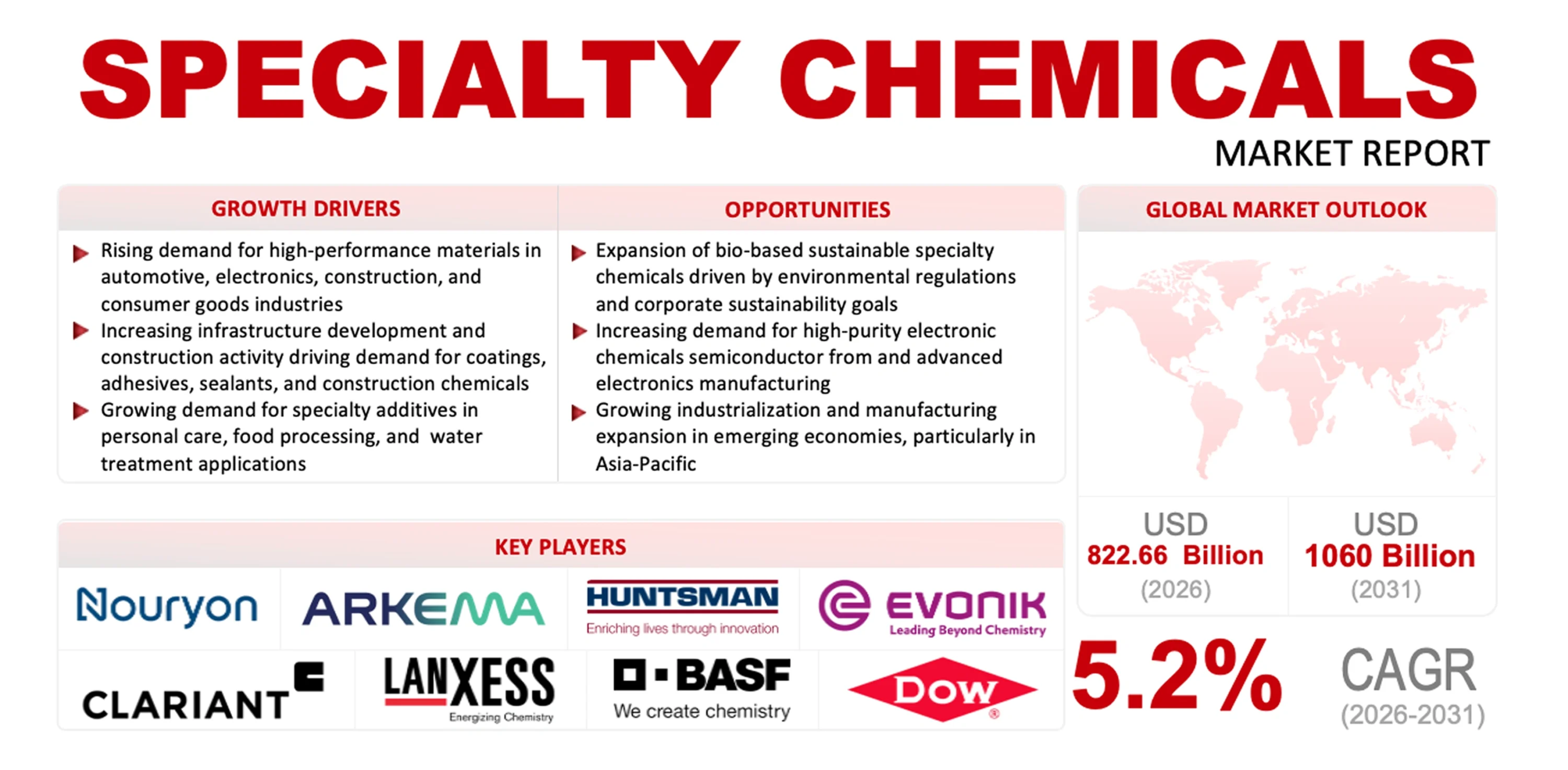
The specialty chemicals market is experiencing steady growth, driven by the increasing demand for high-performance and application-specific chemical solutions across diverse industries. Rising demand for specialty chemicals in institutional and industrial cleaning, rubber processing, food and feed additives, cosmetics, oilfield operations, pulp and paper, textiles, water treatment, and construction is supporting market expansion. In addition, advancements in chemical formulations, sustainable production technologies, high-performance additives, and specialty applications are improving product efficiency, functionality, and environmental performance. The growing emphasis on sustainability, resource efficiency, and environmentally friendly chemical solutions is further strengthening the adoption of specialty chemicals across a wide range of end-use industries. The market is estimated to be USD 822.66 billion in 2026 and is projected to reach USD 1060 billion by 2031, growing at a CAGR of 5.2 % during the forecast period (2026-2031).
Technology Overview
Specialty chemicals are a broad range of high-value, application-specific chemical products designed to deliver targeted performance, functionality, and efficiency across diverse end-use industries. These chemicals include formulated products and performance-enhancing additives used in institutional and industrial cleaning, rubber processing, food and feed, cosmetics, oilfield operations, pulp and paper, textiles, water treatment, construction, electronics, mining, pharmaceuticals, coatings, adhesives, sealants, and elastomers. Modern specialty chemical manufacturing incorporates advanced formulation technologies, process optimization, automation, quality-control systems, and sustainable production practices to improve product performance, consistency, and efficiency. Developments in bio-based ingredients, low-VOC formulations, environmentally friendly additives, and high-performance chemical solutions are further enhancing the functionality, safety, and sustainability of specialty chemicals. These technological and formulation advancements are supporting the wider adoption of specialty chemical products across a broad range of industrial and commercial applications.
Key Growth Drivers
- Increasing demand for high-performance and application-specific chemicals across industrial and commercial applications
- Rising use of specialty chemicals in cleaning, rubber processing, food and feed, and cosmetic applications
- Growing oilfield, water treatment, construction, pulp and paper industries driving demand for specialty chemical solutions
- Increasing adoption of advanced chemical formulations in electronics, mining, pharmaceuticals, coatings, adhesives, sealants, and elastomers
- Rising preference for sustainable, environmentally friendly, and bio-based specialty chemical solutions
Specialty Chemicals Market Key Highlights
Need deeper insights on this market?
Get full report access with detailed forecasts, competitive analysis, and segmentation.
Specialty Chemicals Market Trends
The specialty chemicals market is witnessing steady growth due to increasing demand for high-performance, application-specific, and functional chemical solutions across industrial and commercial applications. The growing use of specialty chemicals in cleaning, rubber processing, food and feed, cosmetics, oilfield operations, water treatment, construction, pulp and paper, and textile applications is supporting market expansion. Key trends include increasing adoption of sustainable formulations, advanced chemical technologies, bio-based ingredients, process automation, and the development of high-performance specialty chemical products.
The rising adoption of specialty chemicals across emerging industrial sectors and the growing demand for efficient and environmentally responsible chemical solutions are creating new opportunities for manufacturers. In addition, increasing demand for customized and application-specific formulations is encouraging investments in advanced manufacturing technologies, research and development, and sustainable production capabilities.
Increasing Demand for High-Performance and Sustainable Specialty Chemicals
The growing focus on operational efficiency, environmental sustainability, resource conservation, and high-performance products is increasing demand for specialty chemicals. Their ability to provide targeted functionality, improve process efficiency, enhance product performance, and support sustainable manufacturing makes them suitable for a wide range of applications. Advancements in chemical formulation, bio-based ingredients, low-VOC solutions, and environmentally friendly technologies are further enabling manufacturers to develop efficient, durable, and application-specific chemical products.
Growing Adoption of Advanced Chemical Formulation and Manufacturing Technologies
Automation and advanced manufacturing technologies are improving specialty chemical production by enhancing process control, product consistency, quality monitoring, and manufacturing efficiency. Advanced formulation techniques, automated production systems, process optimization, digital monitoring, and improved quality-control technologies are helping manufacturers reduce production time, material waste, energy consumption, and operational costs.
Key Players in the Specialty Chemicals Market
Leading companies in the specialty chemicals market are focusing on capacity expansion, advanced extrusion technologies, product development, strategic partnerships, and geographic expansion to strengthen their market presence.







Strategic Activities Within the Specialty Chemicals Market
Tanfac Industries (India) approved a preferential equity issue to raise approximately ₹173.5 crore, primarily backed by Anupam Rasayan, to fund capacity expansion in specialty fluorinated chemicals and strengthen its position in the specialty chemicals market.
Dow Inc. (US) entered into a long-term agreement with Univar Solutions to distribute its Decarbia™ low-carbon product portfolio with Product Carbon Footprint certificates across key markets, including beauty and personal care, home care, food, pharmaceutical, and industrial applications.
Evonik Industries AG (Germany) entered into a strategic partnership with the University of Guanajuato (Mexico) to develop next-generation, sustainable, and lower-toxicity chemical solutions for mining applications, including biosurfactant-based technologies aimed at improving efficiency and reducing environmental impact.
Specialty Chemicals Market Insights
The specialty chemicals market is experiencing steady growth due to increasing demand for high-performance, application-specific, and functional chemical solutions across industrial and commercial applications. Growing demand from cleaning, rubber processing, food and feed, cosmetics, oilfield, water treatment, construction, pulp and paper, textile, electronics, mining, pharmaceutical, coatings, adhesives, sealants, and elastomer industries is supporting market expansion. Advancements in chemical formulation, sustainable manufacturing, automation, and product development are further creating growth opportunities for specialty chemical manufacturers worldwide.
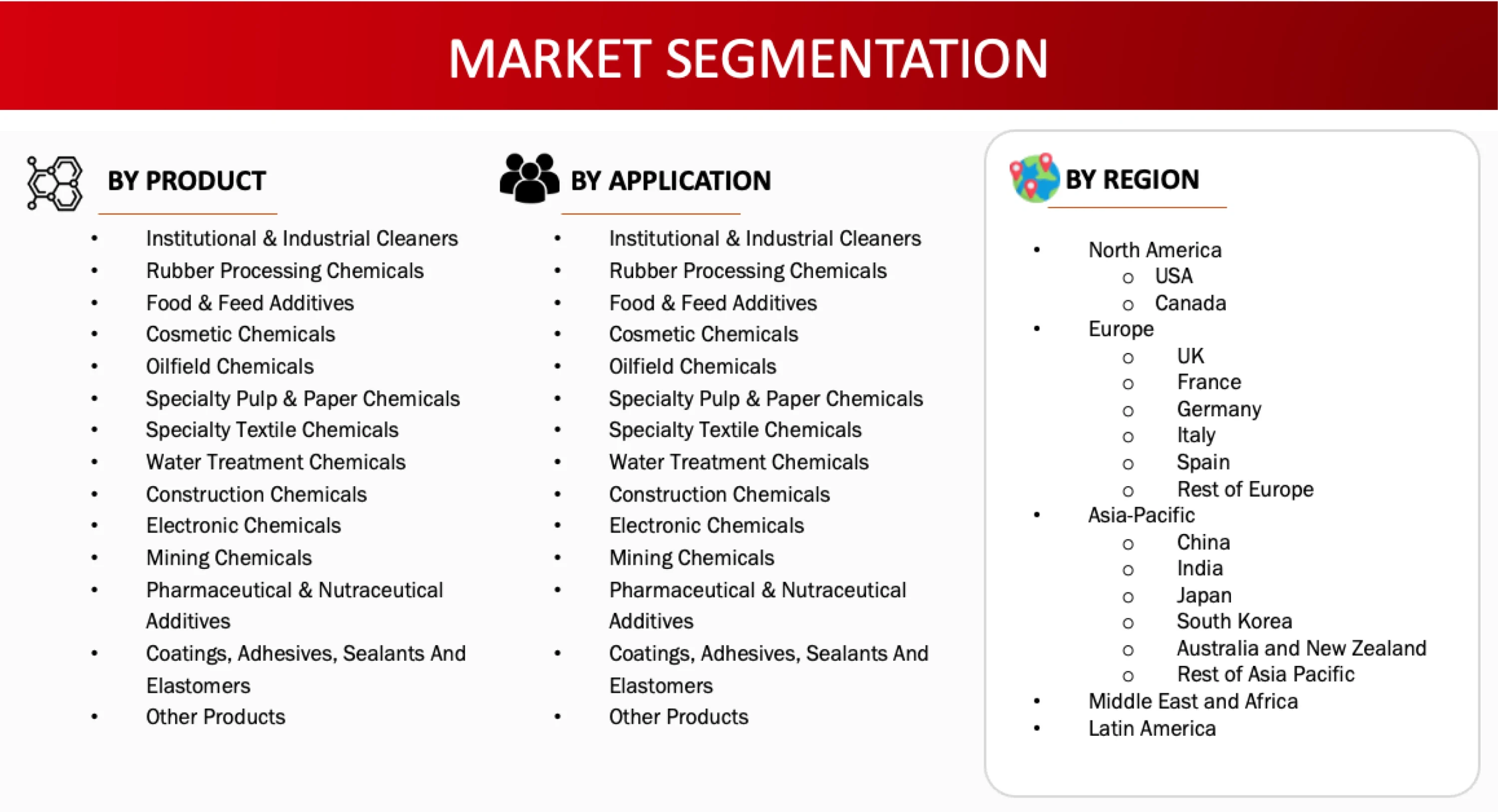
Specialty chemicals are widely used across institutional and industrial cleaners, rubber processing, food and feed additives, cosmetic chemicals, oilfield chemicals, specialty pulp and paper chemicals, specialty textile chemicals, water treatment, construction, electronic chemicals, mining, pharmaceutical and nutraceutical additives, coatings, adhesives, sealants, and elastomers. These products provide targeted functionality such as cleaning, preservation, lubrication, corrosion protection, performance enhancement, stabilization, water purification, and improved material durability across diverse applications.
The increasing demand for high-performance and application-specific chemical solutions is a major factor driving the specialty chemicals market. Rising industrialization, expanding manufacturing activities, growing demand for water treatment, increasing use of advanced materials, and the need for efficient and sustainable production processes are accelerating market growth. Technological advancements in chemical formulations, bio-based ingredients, process automation, and environmentally friendly product development are further improving product performance, efficiency, and sustainability.
Key trends in the specialty chemicals market include increasing adoption of sustainable and bio-based formulations, advanced chemical technologies, customized product development, automation, and environmentally friendly manufacturing processes. Growing demand for high-performance additives and application-specific chemical solutions is creating new opportunities across end-use industries. However, the market faces challenges such as fluctuating raw material prices, stringent environmental regulations, high manufacturing costs, supply chain disruptions, and increasing pressure to reduce the environmental impact of chemical production. Maintaining product quality, regulatory compliance, and cost efficiency also remains important for manufacturers.
The Asia Pacific region is expected to witness strong growth in the specialty chemicals market due to rapid industrialization, urbanization, expanding manufacturing activities, and increasing infrastructure development. China, India, Japan, South Korea, and other regional economies are contributing to market growth through investments in construction, automotive, electronics, pharmaceuticals, water treatment, food processing, and industrial production. Rising demand for high-performance chemical solutions, sustainable products, and advanced materials is expected to further strengthen the adoption of specialty chemicals across the region.
Specialty Chemicals Market Dynamics
Drivers: Rising Demand for High-Performance Materials Across Industrial Applications
One of the primary drivers of the specialty chemicals market is the increasing demand for high-performance materials that enhance product functionality, durability, and efficiency across industries such as automotive, electronics, construction, and consumer goods. Specialty chemicals such as advanced coatings, functional additives, catalysts, and performance polymers play a critical role in improving manufacturing processes and enabling innovative product designs. Industries are increasingly relying on specialized chemical formulations to meet stringent performance and regulatory requirements, particularly in areas such as lightweight automotive materials, semiconductor manufacturing, and high-performance coatings. Leading chemical producers including BASF SE, Dow Inc., and Evonik Industries AG are investing heavily in R&D and advanced formulation technologies to develop application-specific chemicals that support industrial innovation and product differentiation.
Opportunities: Expansion of Sustainable and Bio-Based Specialty Chemicals
A major opportunity in the specialty chemicals market lies in the rapid development and commercialization of sustainable and bio-based chemical solutions. Increasing environmental regulations and corporate sustainability commitments are encouraging manufacturers to shift toward greener formulations, renewable feedstocks, and low-emission production processes. Specialty chemicals derived from bio-based raw materials, recyclable polymers, and environmentally friendly additives are gaining traction across industries such as packaging, personal care, agriculture, and coatings. Companies such as Arkema SA and Solvay SA are expanding investments in green chemistry, circular material technologies, and sustainable product portfolios to meet growing demand for eco-friendly chemical solutions while aligning with global decarbonization and environmental compliance goals.
Challenges: Volatility in Raw Material Prices and Complex Regulatory Compliance
One of the key challenges facing the specialty chemicals market is the volatility in raw material prices combined with increasingly complex regulatory requirements governing chemical production and usage. Many specialty chemicals rely on petrochemical intermediates and specialty raw materials whose prices fluctuate due to energy market dynamics, supply chain disruptions, and geopolitical factors. At the same time, stringent environmental and safety regulations particularly in regions such as Europe and North America require manufacturers to comply with strict chemical safety, emissions, and product registration standards. These regulatory and cost pressures can increase production complexity and operational costs, prompting chemical producers to invest in process optimization, alternative feedstocks, and sustainable manufacturing technologies to maintain competitiveness while ensuring regulatory compliance.
Technology and Market Insights
From a market perspective, the specialty chemicals market is witnessing steady growth due to increasing demand for high-performance, application-specific, and sustainable chemical solutions. The growing adoption of specialty chemicals across institutional and industrial cleaning, rubber processing, food and feed, cosmetics, oilfield, water treatment, construction, pulp and paper, textile, electronics, mining, pharmaceutical, coatings, adhesives, sealants, and elastomer applications is driving investments in advanced chemical formulations and manufacturing capabilities.
Continuous developments in chemical formulation technologies, sustainable ingredients, automated production systems, process optimization, and quality-control technologies are improving product performance, production efficiency, consistency, and environmental sustainability. These innovations are enabling manufacturers to develop customized and high-performance chemical solutions while supporting wider adoption across diverse end-use industries.
Technology Scope and Products
Specialty Chemicals Market Segmentation
Want detailed insights from this report?
Industry Developments and Competitive Landscape
The specialty chemicals market is witnessing continuous technological advancements driven by growing demand for high-performance, customized, and application-specific chemical solutions across construction, automotive, electronics, agriculture, healthcare, energy, and industrial applications. Specialty chemical manufacturers are investing in advanced production processes, innovative formulations, automation, and digital process controls to improve manufacturing efficiency, product consistency, and quality. The integration of smart manufacturing, sustainable production practices, bio-based and environmentally friendly formulations, and advanced performance-enhancing technologies is further supporting market growth by reducing production costs, improving resource efficiency, enhancing sustainability, and meeting the evolving requirements of end-use industries.
The coatings, adhesives, sealants & elastomers (CASE) segment dominated the specialty chemicals market by product type in 2025, accounting for approximately 18% of the global market. The segment is supported by strong demand from construction, automotive, transportation, electronics, packaging, and industrial manufacturing applications, where CASE products provide essential properties such as adhesion, protection, durability, corrosion resistance, flexibility, and enhanced surface performance.
Within the CASE segment, coatings represent a major share of demand, driven by their extensive use in architectural, automotive, industrial, and protective applications, while adhesives and sealants are increasingly adopted across construction, packaging, automotive, and electronics industries. Elastomers also play an important role in automotive, industrial, and consumer applications. Growing infrastructure development, increasing vehicle production, expansion of electronics manufacturing, and rising demand for high-performance and sustainable formulations are expected to support continued growth of the CASE segment, reinforcing its leading position in the specialty chemicals market.
North America accounted for the largest share of the specialty chemicals market in 2025, supported by strong demand from key end-use industries such as automotive, construction, electronics, healthcare, agriculture, and industrial manufacturing. The region benefits from the presence of established specialty chemical manufacturers, advanced production capabilities, significant investments in research and development, and growing adoption of high-performance and sustainable chemical solutions. In addition, increasing demand for customized formulations, environmentally friendly products, and advanced materials across various industries is further contributing to the region’s leading market position.
Asia Pacific is estimated to register the highest CAGR in the specialty chemicals market during the forecast period due to rapid industrialization, expanding manufacturing capacity, and strong demand from downstream sectors such as construction, electronics, automotive, and consumer goods. The region accounts for over 45–50% of global specialty chemical consumption, supported by large manufacturing hubs in China, India, Japan, and South Korea.
China alone represents more than 35% of global chemical production, driven by its extensive industrial base and strong demand for coatings, electronic chemicals, and construction additives. Meanwhile, India’s specialty chemicals sector is projected to grow at around 10–12% CAGR through 2030, fueled by increasing domestic manufacturing, rising exports, and government initiatives supporting chemical production and infrastructure development.
In addition, Asia–Pacific hosts some of the largest electronics and semiconductor manufacturing ecosystems globally, particularly in China, South Korea, Taiwan, and Japan, which significantly drives demand for high-purity electronic chemicals, specialty polymers, and performance materials. Strong growth in infrastructure development, EV manufacturing, and consumer goods production continues to position Asia–Pacific as the fastest-growing regional market for specialty chemicals during the forecast period.
What This Report Covers-
This report provides a comprehensive analysis of the specialty chemicals market, offering insights into key trends, growth drivers, challenges, and future opportunities. It is designed to support strategic decision-making through a combination of quantitative data and qualitative analysis.
Specifically, the report covers:

Market Overview & Definition:
Overview of the market scope, structure, and key terminology

Market Size & Forecast:
Historical data and future projections across key segments and regions

Key Market Trends:
Insights into emerging trends, technological advancements, and evolving demand patterns

Drivers, Restraints & Opportunities:
Analysis of key factors influencing specialty chemicals market growth

Competitive Landscape:
Overview of major players, their strategies, and recent developments

Detailed Patent Analysis:
This includes, top assignees, geography focus of top assignees, legal status, technology evolution, key patents and patent trends and innovations

Segmentation Analysis:
Breakdown by product type, application, and region

Regional Insights:
Key regional trends and growth opportunities

Future Outlook:
Strategic insights and future market direction
Research Methodology
The analysis of the specialty chemicals market is based on a combination of primary and secondary research approaches, complemented by data validation and analytical assessment to ensure the accuracy, consistency, and reliability of market findings.
Market Definition: Specialty Chemicals Market
The specialty chemicals market refers to the production and supply of high-value, application-specific chemical products designed to provide enhanced performance, functionality, and specialized properties across a wide range of end-use industries. Specialty chemicals are used in applications such as construction, automotive, agriculture, electronics, healthcare, personal care, energy, and industrial manufacturing, where they serve as performance-enhancing additives, intermediates, coatings, adhesives, catalysts, and other functional chemical solutions.
Modern specialty chemicals manufacturing incorporates advanced formulation technologies, automated production systems, process monitoring, quality-control systems, and sustainable manufacturing practices to improve production efficiency, product consistency, and performance. Key product categories include adhesives and sealants, specialty polymers, coatings, surfactants, additives, catalysts, specialty pigments, and performance chemicals. Manufacturers are also increasingly developing bio-based, low-VOC, energy-efficient, and environmentally friendly formulations to meet evolving regulatory requirements and growing demand for sustainable chemical solutions.
Key Stakeholders
The specialty chemicals market involves a diverse ecosystem of stakeholders:
- Specialty Chemical Manufacturers
- Raw Material and Chemical Feedstock Suppliers
- Specialty Chemical Formulators and Compounders
- Construction and Infrastructure Companies
- Automotive and Transportation Manufacturers
- Electronics and Semiconductor Manufacturers
- Agriculture and Agrochemical Companies
- Healthcare and Pharmaceutical Companies
- Personal Care and Consumer Goods Manufacturers
- Paints, Coatings, Adhesives, and Sealants Manufacturers
- Industrial and Energy Companies
- Distributors and Channel Partners
- Technology and Process Automation Solution Providers
- Research Institutions and Chemical Engineering Organizations
- Regulatory and Industry Standards Organizations
- Investors and Industry Associations
Key Objectives of the Study
- To define, describe, analyze, segment, and forecast the specialty chemicals market by product, application
- To describe and forecast the market for four key regions: North America, Europe, Asia Pacific, and Rest of the World
- To provide detailed information regarding key drivers, restraints, opportunities, and challenges influencing market growth
- To strategically analyze the micro indicators with respect to individual growth trends, prospects, and contributions to the overall market size
- To analyze opportunities for stakeholders in the specialty chemicals industry and emphasize the competitive landscape of the market
- To develop competitive benchmarking of the key market players based on technology specifications and end user
- To strategically profile key players and comprehensively analyze their product portfolio offerings, and core competencies
- To analyze competitive developments, such as launches and approvals, agreements, mergers and acquisitions, partnerships, joint ventures, investments and expansions, and collaborations, specialty chemicals domain
Need deeper insights on this market?
Get full report access with detailed forecasts, competitive analysis, and segmentation.
Research Approach
This research employs a systematic approach by using primary research along with secondary research to achieve full coverage and accuracy of information about the specialty chemicals sector. Through this approach, the current market trends in terms of consumer behavior, technological developments, and competitive environment can be analyzed thoroughly.
Secondary Research
Secondary research involves the collection of data from reliable sources such as industry databases, company annual reports, investor presentations, and regulatory filings. This process helps in understanding market trends, identifying key players, and gathering technical and commercial insights.
A comprehensive database of leading companies and market participants is developed through secondary research to support further analysis.
Primary Research
Primary research is conducted to validate findings from secondary research and to gain deeper insights into market dynamics. Interviews are carried out with industry stakeholders across both demand and supply sides, including executives such as CXOs, Vice Presidents, and Directors from business development, marketing, and product teams.
Data is collected through structured questionnaires, email interactions, and telephonic interviews across key regions including North America, Europe, Asia-Pacific, and Rest of the World.
Market Size Estimation
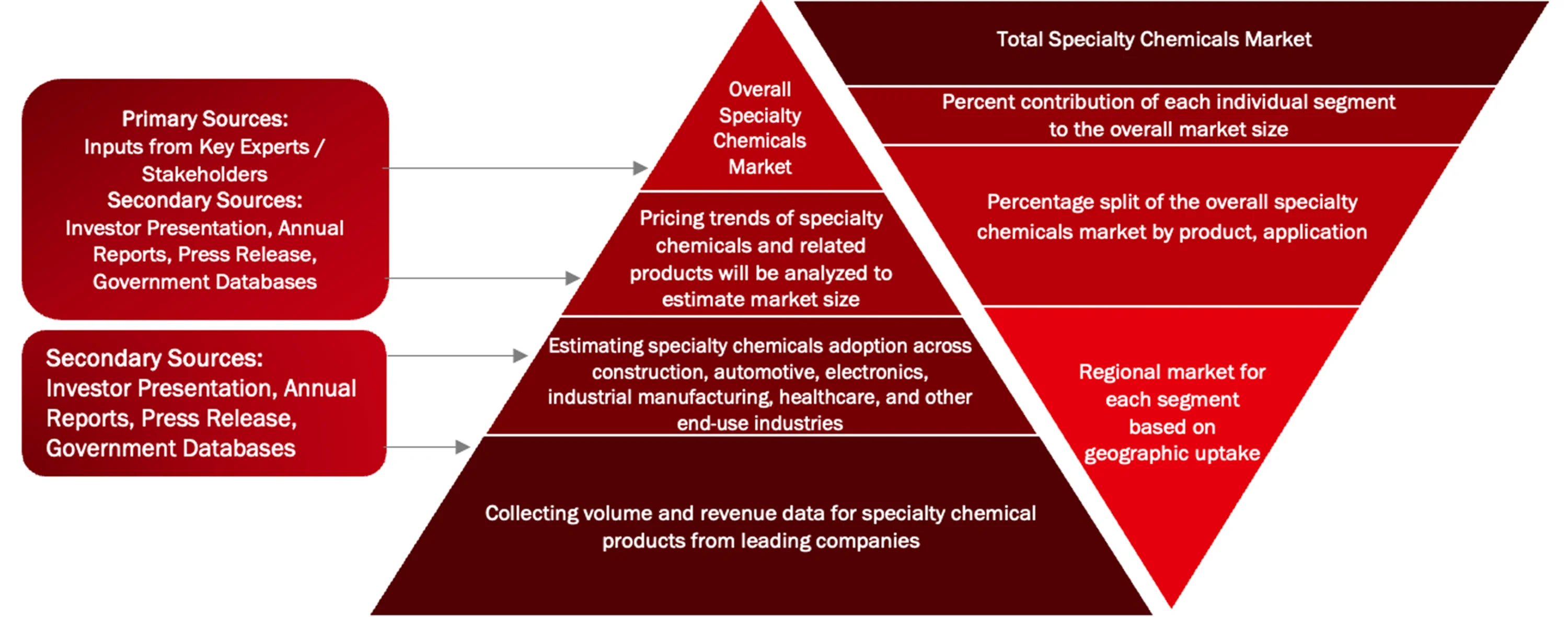
Market size estimation is performed using both top-down and bottom-up approaches. Key market players are identified, and their revenues are analyzed to estimate the overall market size.
The market is further segmented based on:
- Product and service mapping across regions
- Adoption patterns across key application segments
- Insights gathered through primary and secondary research
Data Validation and Research Design
After estimating the overall market size, the data is validated using triangulation methods and market breakdown techniques to ensure accuracy and consistency. Both demand-side and supply-side factors are considered to refine the analysis.
The final data is validated through multiple sources to ensure reliability and to provide accurate insights across all market segments and regions.
Assumptions of the Study
The analysis of the specialty chemicals market is based on the following key assumptions:
- Trends in the industry are drawn from historical data and current information within the sector
- The future outlook is underpinned by constant economic conditions in the absence of shocks to the market
- The adoption of specialty chemicals will increase steadily across major regions and key end-use industries
- Advancements in sustainable formulations, advanced manufacturing processes, automation, and smart production technologies will continue to drive growth in the specialty chemicals market
- The income statement and market share figures are estimated using available information from the industry and publicly available data
- The exchange rate and price trends will not be greatly affected during the forecast period
Scope and Limitations
Scope of the Study
This report offers an exhaustive overview of the international specialty chemicals market and includes the following components:
- Summary of market size, growth trends, and projections
- Carefully segmented market based on product, application, and geography
- Discussion of primary factors influencing the market
- Competitor analysis
- Insights into regional and national market performance
Limitations of the Study
Despite the best efforts being made to keep the results accurate, the study does suffer from some limitations:
- It has been done using both primary and secondary data that come with their own constraints
- Rapid developments in technology might affect the future course of market dynamics
- Some figures are only approximations due to lack of public disclosure
- The report is not an insurance against any disruptions in macroeconomics and geopolitics
- Future forecasts are indicative and subject to change due to altered industry dynamics
Data Triangulation and Market Breakdown
Data triangulation involved the combination of primary research, secondary research, and the Wissen Research analysis. Once the data points were sourced from the secondary market research, we sanitized the data points to make the market sizing and growth forecast more accurate by developing our own assumptions based on the inputs and insights we gather through the primary interviews with the industry experts. Once the data was thoroughly validated through primary interviews from both, demand and supply side of the market, our team of analyst and other team members involved finalized the market sizing and growth forecast.
Data Triangulation Methodology
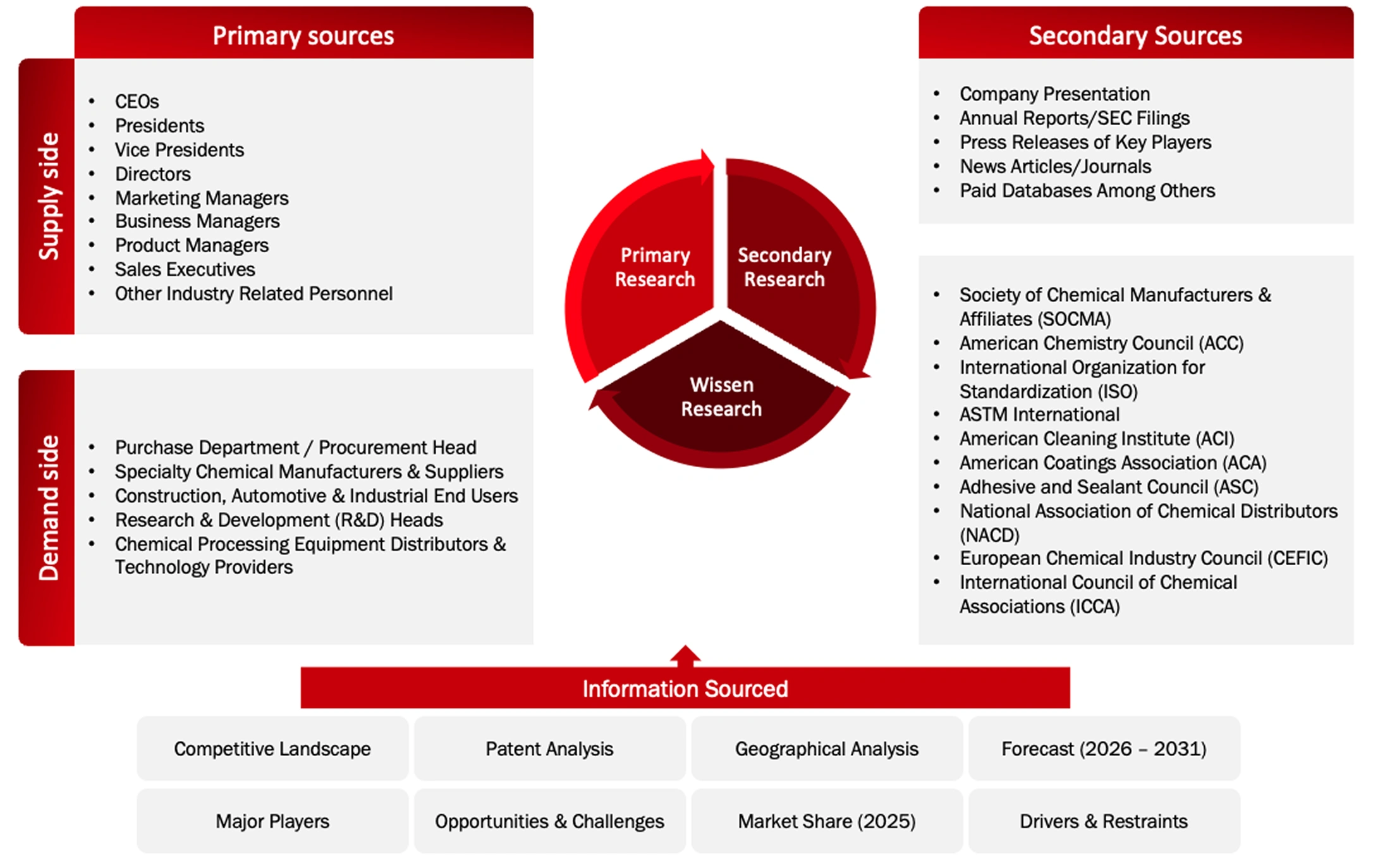
Sources: U.S. Food and Drug Administration, European Medicines Agency, National Institute of Standards and Technology, International Organization for Standardization, International Electrotechnical Commission, Federal Communications Commission, Occupational Safety and Health Administration, American National Standards Institute, Device Coordination Group, Company Website, Press Releases, Annual Reports, Paid Data Sources, and Wissen Research Analysis.
Year Framework
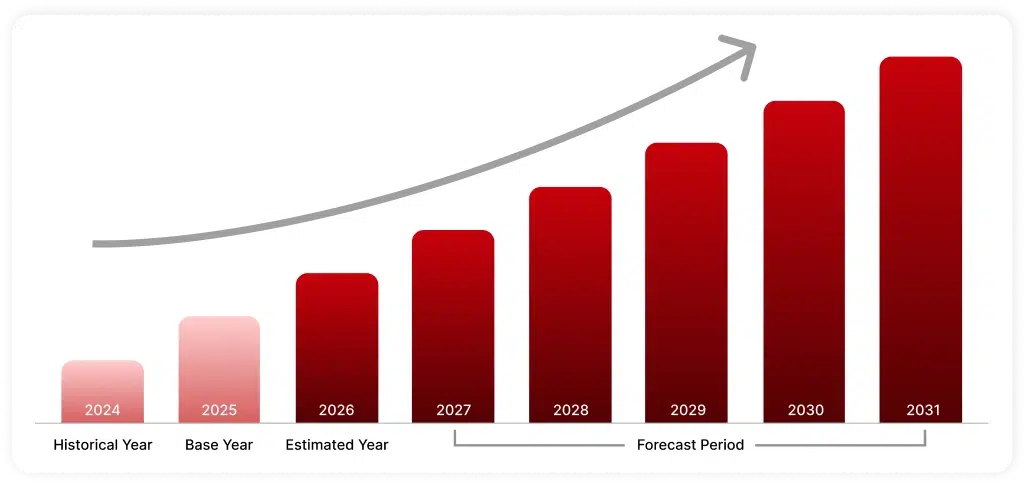
Bottom-Up Approach (Demand-Side Approach) and Top-Down Approach (Supply-Side Approach)
Bottom-Up Approach (Demand-Side Approach):
Determining the market size through the consolidation of demand among end-users, sectors, and geographic areas, which are calculated according to real-world demand conditions.
Top-Down Approach (Supply-Side Approach):
Calculating the market size through revenue and performance of the industry and its important companies, allocating the market size among various sectors.
Want detailed insights from this report?
Buy this Report
Choose the option that best fits your needs