Global Surface Disinfectant Market
Global Industry analysis, Size, Share, Growth, Trends, and Forecast 2026-2031
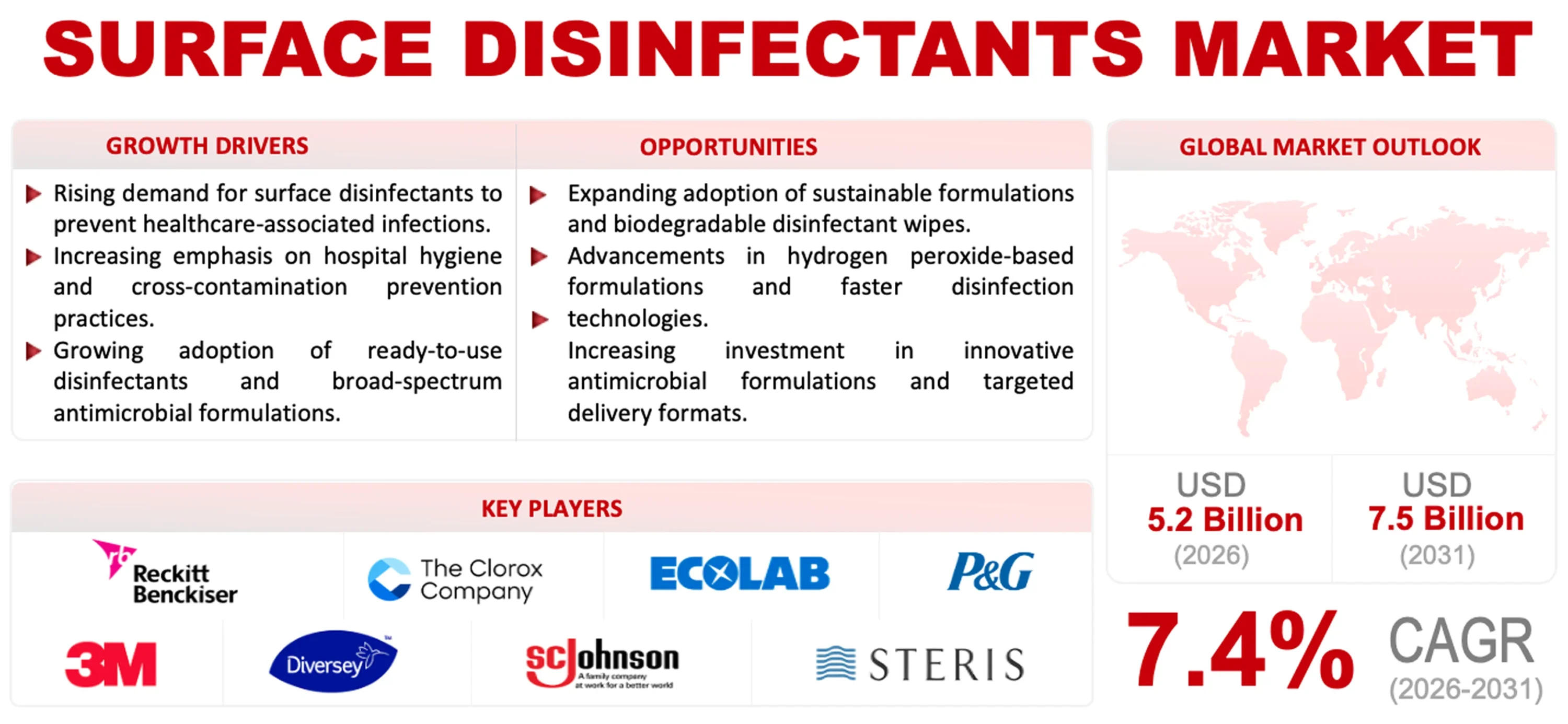
The market is projected to reach USD 7.5 billion by 2031, growing at a CAGR of 7.4 % during the forecast period (2026-2031).
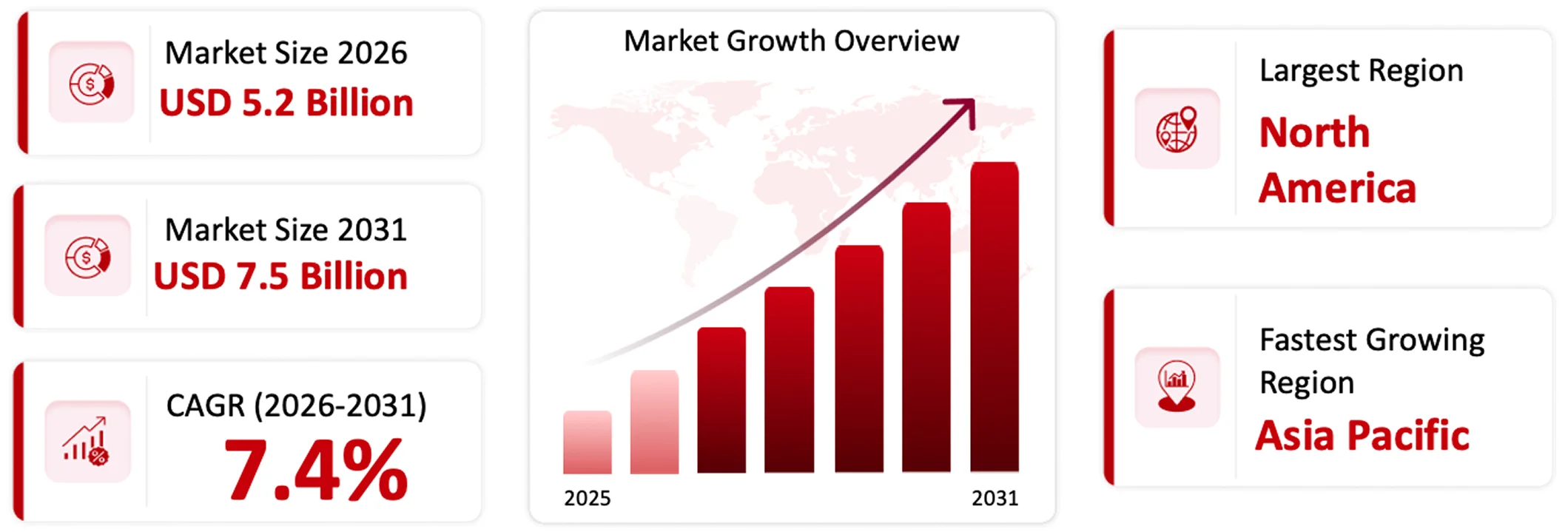
| Market Size (2026) | Forecast (2031) | CAGR (2026–2031) | Leading Region | Fastest Growing Region |
|---|---|---|---|---|
| USD 5.2 Billion | USD 7.5 Billion | 7.4% | North America | Asia Pacific |
Summarize this report with:



Global Surface Disinfectant Market Overview
“In my view the global surface disinfectant market is evolving beyond conventional infection-control products toward advanced formulations that combine broad-spectrum antimicrobial efficacy, shorter contact times, improved surface compatibility, and reduced chemical exposure. Increasing emphasis on preventing healthcare-associated infections (HAIs), particularly in hospitals, surgical facilities, and diagnostic laboratories, is driving the adoption of ready-to-use disinfectants and pre-saturated wipes that simplify routine cleaning and improve operational efficiency. Product innovation is also shifting toward hydrogen peroxide-based and non-bleach formulations that provide effective pathogen control while reducing concerns associated with repeated chemical exposure and surface deterioration. In parallel, sustainability considerations are encouraging manufacturers to develop plastic-free, biodegradable wipe substrates and environmentally preferable formulations. These developments are expanding product differentiation and strengthening demand for high-performance surface disinfection solutions across healthcare and institutional environments.”
– Mayur Jain, Research Consultant, Wissen Research
The market is estimated to be USD 5.2 Billion in 2026 and is projected to reach USD 7.5 billion by 2031, growing at a CAGR of 7.4 % during the forecast period (2026-2031).
Technology Overview
Surface disinfectant technologies encompass a range of chemical formulations and delivery systems developed to control microbial contamination across healthcare, laboratory, pharmaceutical, and institutional environments. Common active ingredients include alcohols, chlorine compounds, quaternary ammonium compounds (QACs), hydrogen peroxide, peracetic acid, and phenolic compounds, each offering different antimicrobial properties, contact times, material compatibility, and application requirements. Product formulations are available as ready-to-use liquids, concentrated solutions, pre-moistened wipes, and spray-based preparations, allowing application across different surface materials and operational settings. Technology development increasingly focuses on improving broad-spectrum antimicrobial efficacy, reducing required contact times, maintaining formulation stability, and addressing compatibility with sensitive medical equipment and frequently cleaned surfaces. Formulation approaches also incorporate combinations of active ingredients, surfactants, stabilizers, and other excipients to improve cleaning performance and application characteristics. In healthcare settings, product selection is influenced by validated efficacy against bacteria, viruses, fungi, and spores, alongside regulatory registration and specified usage instructions. Emerging development priorities include lower-residue formulations, material-compatible disinfectants, sustainable packaging, and improved application consistency.
Key Growth Drivers
- Increasing Regulatory Requirements: The implementation of Canada's Biocides Regulations on 31 May 2025 establishes formal authorization requirements for covered disinfectants, reinforcing regulatory compliance and supporting demand for authorized surface disinfection products.
- Infection Prevention and Control: The implementation of China's GB 19193-2025 infectious-disease disinfection specification on 1 November 2026 strengthens the regulatory emphasis on disinfection practices, supporting the need for surface disinfectants across healthcare and institutional environments.
- Growing Demand for Ready-to-Use Formulations: EPA's List Q includes registered liquid, spray, and wipe-format disinfectants, demonstrating the availability of multiple application formats that address different surface-cleaning and disinfection requirements.
- Expansion of Healthcare Applications: Canada's authorization framework covers surface disinfectants and sanitizers used in healthcare and institutional settings, reinforcing the importance of compliant disinfection products across hospitals, clinics, and other healthcare facilities.
- Broad-Spectrum Antimicrobial Requirements: EPA's List Q identifies disinfectants with approved claims against emerging viral pathogens, supporting demand for formulations with validated efficacy against specified microorganisms and pathogen categories.
- Increasing Product Formulation Diversity: Government product registrations document formulations based on quaternary ammonium compounds, lactic acid, alcohols, hydrogen peroxide, and peracetic acid, reflecting diverse chemical approaches to surface disinfection across end-use environments.
Surface Disinfectant Market Key Highlights
Need deeper insights on this market?
Get full report access with detailed forecasts, competitive analysis, and segmentation.
Surface Disinfectant Market Trends
The surface disinfectant market is evolving through regulatory changes, broader product formulation availability, and increasing emphasis on validated antimicrobial efficacy. Canada’s Biocides Regulations, effective 31 May 2025, introduced formal authorization requirements for covered disinfectants and sanitizers, while China’s GB 19193-2025 established updated infectious-disease disinfection specifications effective November 2026. In the United States, EPA’s List Q continues to provide product-level information on disinfectants with approved emerging viral pathogen claims. Product offerings span alcohols, chlorine compounds, quaternary ammonium compounds, hydrogen peroxide, and peracetic acid formulations, delivered through liquids, wipes, and sprays. These developments indicate a market increasingly shaped by regulatory compliance, formulation diversity, application requirements, and the need for documented antimicrobial performance across healthcare and institutional environments.
Increasing Regulatory Oversight and Disinfectant Authorization Requirements
Formalization of Product Authorization: Canada’s Biocides Regulations came into force on 31 May 2025, replacing the previous hard-surface disinfectant monograph framework and introducing market authorization requirements for covered biocides. This regulatory transition increases the importance of product registration and compliance documentation, influencing how manufacturers maintain existing product portfolios and introduce new disinfectant formulations into the Canadian market.
Expansion of Infectious Disease Disinfection Standards: China published GB 19193-2025 on 5 October 2025, with the standard becoming effective on 1 November 2026. The specification establishes national requirements for disinfection practices related to infectious diseases, reinforcing the importance of standardized disinfection procedures and supporting the role of surface disinfectants in healthcare and institutional infection-control environments.
Greater Emphasis on Validated Antimicrobial Claims: The US EPA’s List Q identifies registered disinfectants with approved claims against emerging viral pathogens, including formulations containing quaternary ammonium compounds, hydrogen peroxide, sodium hypochlorite, peracetic acid, and alcohol-based ingredients. This framework makes documented antimicrobial efficacy, specified contact times, and approved product applications important considerations for manufacturers and institutional buyers.
Regulatory Transition and Compliance Challenges: Canada’s transition framework extends from 31 May 2025 to 31 May 2031, with 31 May 2029 identified as a deadline for applications under the specified transition pathway. Manufacturers must manage authorization requirements, product documentation, and transition timelines while maintaining market access, creating additional compliance responsibilities for existing and prospective suppliers.
Diversification of Disinfectant Formulations and Application Formats
Broader Active Ingredient Selection: Government product databases and EPA registrations document disinfectant formulations containing alcohols, chlorine compounds, quaternary ammonium compounds, hydrogen peroxide, and peracetic acid. Canada’s Health Canada database also records a formulation containing lactic acid at 0.161% w/w and linear dodecyl benzene sulfonic acid at 0.0606% w/w. This diversity reflects the availability of different chemical approaches to antimicrobial surface treatment.
Increasing Availability of Wipe-Based Products: Health Canada records POW Disinfectant Wipes containing alkyl dimethyl ethylbenzyl ammonium chloride and benzalkonium chloride, each at 0.14% w/w, with a record dated 20 January 2025. Ecolab’s Surface Cleaner Sanitizer Wipes were recorded on 9 June 2025. These registrations demonstrate continued availability of pre-moistened formats for institutional and food-premises applications.
Multiple Delivery Formats Across Applications: EPA’s List Q includes wipe-format products such as Super Sani-Cloth Germicidal Disposable Wipe, spray products such as Lysol Disinfectant Spray, and ready-to-use or dilutable liquid formulations. The availability of these formats supports different operational requirements involving surface coverage, application convenience, cleaning procedures, and disinfection of hard, nonporous surfaces.
Formulation Performance and Material Compatibility Constraints: Disinfectant selection remains dependent on antimicrobial efficacy, specified contact times, surface compatibility, and approved usage instructions. EPA’s List Q provides product-specific information on these requirements, while Canada’s authorization framework introduces additional compliance considerations. Manufacturers therefore face the challenge of balancing formulation performance, equipment compatibility, product stability, and regulatory requirements across different applications.
Key Players in the Surface Disinfectant Market
Leading companies are focusing on regulatory compliance, diversified disinfectant formulations, validated antimicrobial efficacy, multiple product delivery formats, and expanding applicability across healthcare, institutional, laboratory, and pharmaceutical environments.







Strategic Activities Within the Surface Disinfectant Market
The Clorox Company (U.S.) announced the official launch of Clorox Purell ProCare™, a new business platform formed by combining CloroxPro and GOJO, the maker of Purell. The platform brings together sales, service and distribution capabilities to provide professional and healthcare customers with a broader portfolio of hygiene solutions, including skin and surface hygiene products. The launch strengthens Clorox’s professional hygiene presence and its ability to serve institutional and healthcare customers.
Ecolab Inc. (U.S.) announced plans to transition selected Life Sciences product lines in Italy to a direct-market model, effective December 1, 2026. The transition includes its Klercide™ and Klerwipe™ contamination-control portfolios and is intended to strengthen customer access to technical expertise, service resources and product availability for pharmaceutical manufacturers. The move supports Ecolab’s presence in cleanroom contamination control and disinfectant-related solutions.
STERIS plc (Ireland) announced an investment of USD 600 million to establish a formulated chemistries manufacturing and distribution centre of excellence in North Carolina, U.S. The planned facility will support the production and distribution of formulated chemistries for healthcare and pharmaceutical applications, while expanding the company’s manufacturing, research and development capabilities. The investment supports STERIS’s broader infection-prevention and disinfection-related product portfolio.
Reckitt Benckiser Group plc (UK), through its Lysol brand, partnered with the National PTA to launch the HERE for Healthy Schools: Quality Time Off Grant. The initiative includes funding and product donations, such as Lysol Disinfecting Wipes and Lysol Disinfectant Spray, to support hygiene in high-need elementary schools across the U.S. The collaboration also includes a product-donation programme aimed at increasing access to surface-disinfection products in school environments.
Surface Disinfectant Market Insights
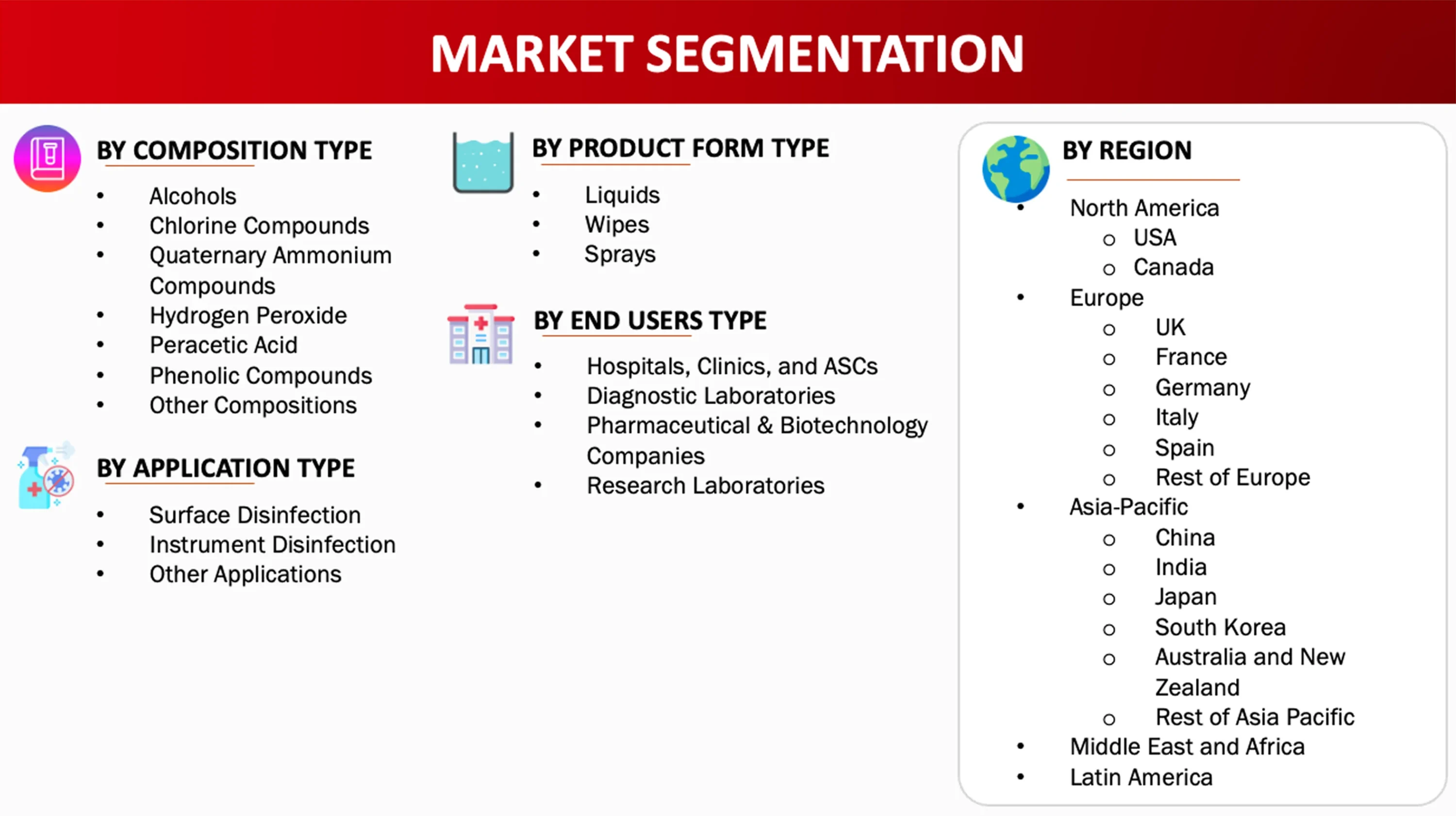
The surface disinfectant market comprises chemical products formulated to eliminate or inactivate microorganisms on environmental surfaces, medical equipment, and other frequently contacted areas across healthcare, laboratory, pharmaceutical, and institutional settings. These products are manufactured using chemical active ingredients and formulation components sourced from chemical manufacturers and specialty chemical suppliers. The main composition groups include alcohols, chlorine compounds, quaternary ammonium compounds, hydrogen peroxide, peracetic acid, phenolic compounds, and other compositions. Products are supplied in liquid, wipe, and spray formats for surface disinfection, instrument disinfection, and other applications. Market growth is supported by increasing infection prevention requirements, regulatory authorization frameworks, demand for validated antimicrobial efficacy, expanding healthcare and laboratory activities, and the availability of diverse formulations addressing different disinfection requirements and surface compatibility needs.
The major end uses of surface disinfectants include hospitals, clinics, and ambulatory surgical centers (ASCs), diagnostic laboratories, pharmaceutical and biotechnology companies, and research laboratories. These environments require disinfectant formulations to maintain hygiene, control microbial contamination, and support infection prevention across frequently contacted surfaces, medical equipment, and operational areas. Hospitals, clinics, and ASCs represent important application environments where surface disinfection supports routine cleaning and infection-control procedures. Diagnostic laboratories use disinfectants to maintain controlled working environments and reduce the potential for cross-contamination during testing activities. Pharmaceutical and biotechnology companies require surface disinfection as part of facility hygiene and contamination-control practices, particularly across production and laboratory environments. Research laboratories also depend on appropriate disinfectant formulations to maintain clean working surfaces and support laboratory procedures. Product selection across these end users is influenced by antimicrobial efficacy, approved usage claims, contact times, formulation characteristics, and compatibility with different surfaces and equipment. Available formulations include alcohols, chlorine compounds, quaternary ammonium compounds, hydrogen peroxide, peracetic acid, phenolic compounds, and other compositions, supplied as liquids, wipes, and sprays. Regulatory frameworks, including the US EPA’s disinfectant registration system and Canada’s Biocides Regulations, further influence product authorization and selection. These requirements support demand for documented antimicrobial performance and application-specific disinfectant solutions across healthcare, pharmaceutical, and laboratory environments.
The surface disinfectant market is supported by increasing regulatory requirements, growing emphasis on infection prevention, expanding healthcare applications, demand for ready-to-use formulations, and the need for validated antimicrobial efficacy. Canada’s Biocides Regulations, effective 31 May 2025, introduced formal authorization requirements for covered disinfectants, strengthening compliance considerations for manufacturers. China’s GB 19193-2025, effective 1 November 2026, reinforces standardized disinfection practices for infectious diseases. Increasing attention to infection control across healthcare and institutional environments supports the use of approved surface disinfectants. The availability of liquids, wipes, and sprays addresses different application requirements, while EPA’s List Q identifies registered products with approved emerging viral pathogen claims. Additionally, diverse formulations containing quaternary ammonium compounds, hydrogen peroxide, alcohols, chlorine compounds, and peracetic acid support application-specific disinfection requirements.
The surface disinfectant market is witnessing increasing diversification of chemical formulations, wider availability of application formats, and stronger emphasis on regulatory compliance and validated antimicrobial efficacy. Products containing alcohols, chlorine compounds, quaternary ammonium compounds, hydrogen peroxide, peracetic acid, and phenolic compounds are available in liquid, wipe, and spray formats. Regulatory developments, including Canada’s Biocides Regulations effective 31 May 2025 and China’s GB 19193-2025 effective 1 November 2026, are reinforcing standardized product authorization and disinfection practices. EPA’s List Q further supports the importance of documented efficacy against specified emerging viral pathogens. However, the market faces challenges related to regulatory compliance, product authorization timelines, and formulation performance requirements. Manufacturers must demonstrate antimicrobial effectiveness while meeting specified contact times, surface compatibility, and approved usage conditions. Transition requirements in Canada, including the 31 May 2029 application deadline and transition period extending to 31 May 2031, also create administrative and compliance responsibilities for existing product suppliers.
Asia-Pacific is expected to register the fastest growth in the global surface disinfectant market, driven by expanding healthcare infrastructure, rising hospital admissions, increasing awareness of healthcare-associated infections (HAIs), and strengthening infection-prevention standards across emerging economies. Countries such as China, India, Japan, and South Korea are witnessing growing demand for effective surface disinfection solutions as hospitals, diagnostic laboratories, pharmaceutical manufacturing facilities, and other healthcare institutions expand their operations. Investments in healthcare infrastructure, increasing adoption of standardized hospital hygiene protocols, and stricter regulatory requirements for disinfectant efficacy are further supporting market expansion. Additionally, rising demand for ready-to-use disinfectants, pre-saturated wipes, and advanced antimicrobial formulations is creating opportunities for manufacturers to expand their regional presence.
Surface Disinfectant Market Dynamics
Drivers: Regulatory Compliance and Healthcare Disinfection Demand
- Strengthening Product Authorization Requirements: Increasing regulatory oversight supports demand for compliant surface disinfectant formulations across healthcare and institutional environments. Canada’s Biocides Regulations came into force on 31 May 2025, introducing formal market authorization requirements for covered biocides and establishing additional compliance considerations for disinfectant manufacturers.
- Standardization of Infectious Disease Disinfection: Greater emphasis on standardized disinfection practices supports the adoption of approved antimicrobial products across healthcare and institutional facilities. China published GB 19193-2025 on 5 October 2025, and the standard became effective on 1 November 2026, establishing national specifications for infectious-disease disinfection.
- Growing Need for Validated Antimicrobial Efficacy: The need for disinfectants with documented efficacy against specified pathogens supports demand for registered formulations across healthcare environments. The US EPA’s List Q identifies products with approved emerging viral pathogen claims, including formulations containing quaternary ammonium compounds, hydrogen peroxide, sodium hypochlorite, peracetic acid, and alcohol-based ingredients.
- Diversification of Disinfectant Formulations: Demand for products suited to different surface-treatment requirements supports the availability of multiple chemical compositions and application formats. Health Canada’s product database recorded Ecolab’s Surface Cleaner Sanitizer Wipes on 9 June 2025, containing lactic acid at 0.161% w/w and linear dodecyl benzene sulfonic acid at 0.0606% w/w.
Opportunities: Expanding Formulations and Regulatory Market Access
- Development of Diverse Chemical Formulations: Opportunities exist for manufacturers to develop disinfectants using different active ingredients to address varied antimicrobial and surface compatibility requirements. Health Canada’s product database recorded Ecolab’s Surface Cleaner Sanitizer Wipes on 9 June 2025, containing lactic acid at 0.161% w/w and linear dodecyl benzene sulfonic acid at 0.0606% w/w, demonstrating formulation diversity.
- Expansion of Ready-to-Use Disinfection Products: Wipe-based formulations offer opportunities to address application requirements across healthcare, institutional, and food-premises environments. Health Canada recorded POW Disinfectant Wipes on 20 January 2025, containing alkyl dimethyl ethylbenzyl ammonium chloride and benzalkonium chloride, each at 0.14% w/w, supporting the availability of pre-moistened disinfection products.
- Development of Products Targeting Emerging Pathogens: Manufacturers can explore formulations addressing specific pathogen categories through validated antimicrobial efficacy and approved product claims. The US EPA’s List Q identifies disinfectants with approved emerging viral pathogen claims, providing a regulatory reference for product development and selection based on specified efficacy and application requirements.
- Expansion Through Regulatory Transition Frameworks: Regulatory transitions create opportunities for manufacturers to secure authorization for existing and new disinfectant formulations in regulated markets. Canada’s transition framework extends from 31 May 2025 to 31 May 2031, with 31 May 2029 identified as an application deadline under the specified transition pathway, supporting structured product authorization.
- Standardized Disinfection Solutions Across Asian Markets: China’s updated disinfection requirements provide opportunities for suppliers to address standardized infectious-disease control applications through suitable formulations. GB 19193-2025 was published on 5 October 2025 and became effective on 1 November 2026, establishing a national specification that can guide product selection and application practices.
Challenges: Regulatory Compliance and Formulation Performance Constraints
- Increasing Regulatory Authorization Requirements: Manufacturers face additional compliance responsibilities when introducing or maintaining disinfectant products in regulated markets. Canada’s Biocides Regulations came into force on 31 May 2025, establishing formal authorization requirements for covered biocides and requiring suppliers to address product documentation and market authorization processes.
- Managing Regulatory Transition Deadlines: Manufacturers must manage transition timelines to maintain access to existing disinfectant markets while meeting updated authorization requirements. Canada’s transition framework extends from 31 May 2025 to 31 May 2031, with 31 May 2029 identified as an application deadline under the specified transition pathway, creating administrative and regulatory planning requirements.
- Demonstrating Pathogen-Specific Antimicrobial Efficacy: Disinfectant manufacturers face the challenge of substantiating product performance against specified microorganisms and emerging viral pathogens. The US EPA’s List Q identifies registered products with approved emerging viral pathogen claims, making documented efficacy, specified contact times, and approved usage conditions important considerations for product authorization and selection.
- Balancing Formulation Performance and Surface Compatibility: Manufacturers must develop formulations that meet antimicrobial performance requirements while remaining suitable for different surfaces and equipment. EPA’s List Q provides product-specific information on surface types and contact times, highlighting the need to balance disinfection effectiveness with material compatibility and application requirements.
- Managing Diverse Regulatory and Product Requirements: Manufacturers operating across international markets face different product authorization frameworks and disinfection specifications. China’s GB 19193-2025 became effective on 1 November 2026, while Australia’s TGA requires specific-claim hard-surface disinfectants to be included in the ARTG before supply, increasing the complexity of regulatory compliance across markets.
Technology and Market Insights
Surface disinfectant technology has progressed through diversification of active ingredients, improvements in formulation characteristics, emphasis on validated antimicrobial efficacy, and the availability of different delivery formats. Main products include alcohol-based disinfectants, chlorine compounds, quaternary ammonium compounds, hydrogen peroxide, peracetic acid, phenolic compounds, and other compositions, supplied as liquids, pre-moistened wipes, and sprays. Conventional chemical disinfection relies on these active ingredients to inactivate microorganisms on treated surfaces, with performance depending on concentration, contact time, and approved usage conditions. The supplied inputs do not identify specific alternative or non-chemical disinfection technologies. Applications include surface disinfection and instrument disinfection across hospitals, clinics, ASCs, diagnostic laboratories, pharmaceutical and biotechnology companies, and research laboratories. Technology selection depends on antimicrobial efficacy, pathogen-specific claims, contact time, surface and equipment compatibility, formulation characteristics, and regulatory authorization. Purchasing decisions ultimately consider documented efficacy, applicable regulatory compliance, and the suitability of products for operational and cost requirements.
Technology Scope and Products
Surface Disinfectant Market Segmentation
Want detailed insights from this report?
Competitive Landscape and Market Segments Insights
- Market participants serve distinct customer groups: Consumer-oriented players include Reckitt Benckiser, Procter & Gamble, The Clorox Company, SC Johnson, and Unilever, while institutional and healthcare-focused suppliers include Ecolab, STERIS plc, Diversey, GOJO Industries, Metrex Research, and Paul Hartmann AG.
- Market retreat and geographic pullbacks remain unverified: The supplied inputs do not identify companies withdrawing from surface disinfectant markets or reducing operations in specific regions. No retreating activity can therefore be attributed to 3M, Reckitt Benckiser, Ecolab, STERIS plc, or other listed companies.
- Competitive positioning depends on formulation breadth and regulatory compliance: Ecolab’s Surface Cleaner Sanitizer Wipes were recorded by Health Canada on 9 June 2025, with lactic acid at 0.161% w/w and linear dodecyl benzene sulfonic acid at 0.0606% w/w, demonstrating its presence in registered institutional cleaning formulations; comparative capacity figures are unavailable.
- Scaling and production pauses lack verified evidence: The supplied inputs document Ecolab’s registered wipe formulation dated 9 June 2025 and Teamworks Manufacturing’s POW Disinfectant Wipes record dated 20 January 2025, but do not establish capacity expansions, plant investments, production increases, or manufacturing pauses by the listed players.
- Regional opportunities are supported by regulatory developments: North America, Europe, and Asia Pacific have distinct regulatory frameworks, with Ecolab, 3M, STERIS plc, Reckitt Benckiser, and Henkel among the listed market participants; Canada’s Biocides Regulations became effective on 31 May 2025, while China’s GB 19193-2025 became effective on 1 November 2026.
Liquid surface disinfectants maintained a leading position in 2025 owing to their widespread use across hospitals, clinics, laboratories, and institutional facilities, supported by ready-to-use solutions, concentrated formulations, and compatibility with multiple surface-cleaning procedures.
-
New Product Launches Strengthened the Liquid Disinfectant Portfolio: Metrex launched CaviCide HP on 17 October 2025, a ready-to-use hydrogen peroxide-based liquid surface disinfectant providing a one-minute contact time against 70 labelled pathogens, targeting medical, dental, and laboratory environments.
-
Regulatory Approvals Demonstrated Commercial Demand for Liquid Solutions: Health Canada approved QUATULTRA on 11 July 2025, a liquid solution containing benzalkonium chloride and didecyl dimethyl ammonium chloride, with approved applications spanning hospital, institutional, industrial, domestic, and food-premises disinfection.
-
Established Manufacturers Continued Expanding Liquid Disinfectant Offerings: Procter & Gamble’s Mr. Clean Platinum Antibac received Health Canada approval on 16 April 2025 as a disinfectant solution containing benzalkonium chloride and dioctyl dimethyl ammonium chloride, with applications covering hospitals and institutional facilities.
-
Hydrogen Peroxide-Based Solutions Expanded Healthcare Applications: Virox Technologies’ Criterion Surface Disinfectant Hydrogen Peroxide entered the Canadian market on 17 August 2025 as a solution and spray containing 0.5% hydrogen peroxide, approved for hospital and institutional or industrial disinfection.
Hospitals, clinics, and ambulatory surgical centers accounted for the largest market share in 2025 because of their continuous requirement for environmental surface decontamination, patient-care area cleaning, operating-room hygiene, and infection-prevention protocols. High patient throughput and frequent contact with medical equipment and high-touch surfaces sustain recurring consumption of surface disinfectants across these facilities.
-
Extensive Hospital Infrastructure Sustained Institutional Consumption: The American Hospital Association’s 2025 edition of Fast Facts on U.S. Hospitals reported 6,093 hospitals in the United States, including 5,112 community hospitals, representing a substantial institutional customer base requiring regular surface disinfection across patient rooms, operating theatres, emergency departments, and clinical areas.
-
Expansion of Ambulatory Surgical Centers Increased Disinfection Requirements: According to the Ambulatory Surgery Center Association, CMS data showed 6,468 Medicare-certified ASCs in the United States as of March 2025, reflecting the extensive outpatient surgical infrastructure requiring routine disinfection of operating rooms, procedure areas, and patient-care surfaces.
-
Healthcare Expenditure Growth Supported Institutional Procurement Capacity: The Centers for Medicare & Medicaid Services reported in December 2025 that U.S. hospital expenditures reached USD 1.63 trillion in 2024, increasing 8.9% year over year, while physician and clinical services expenditure reached USD 1.11 trillion, increasing 8.1%, reflecting expanding healthcare activity across major institutional end users.
-
Advanced Hospital-Grade Disinfectant Registrations Reinforced Healthcare-Specific Demand: Arxada received U.S. EPA registration for Quanticare on 5 February 2025, introducing a hard-surface disinfectant designed for everyday hospital use and effective against C. difficile and C. auris, supporting the availability of specialized formulations for healthcare-associated infection prevention.
What This Report Covers-
This report provides a comprehensive analysis of the surface disinfectant market, offering insights into key trends, growth drivers, challenges, and future opportunities. It is designed to support strategic decision-making through a combination of quantitative data and qualitative analysis.
Specifically, the report covers:

Market Overview & Definition:
Overview of the market scope, structure, and key terminology

Market Size & Forecast:
Historical data and future projections across key segments and regions

Key Market Trends:
Insights into emerging trends, technological advancements, and evolving demand patterns

Drivers, Restraints & Opportunities
Analysis of key factors influencing surface disinfectant market growth

Competitive Landscape:
Overview of major players, their strategies, and recent developments

Detailed Patent Analysis:
This includes, top assignees, geography focus of top assignees, legal status, technology evolution, key patents and patent trends and innovations
Segmentation Analysis:
Breakdown by composition type, by product form type, by end users type, by application type, by region.

Regional Insights:
Key regional trends and growth opportunities

Future Outlook:
Strategic insights and future market direction
Research Methodology
The study of the Surface Disinfectant Market is based on primary and secondary research, supported by data validation, product and formulation mapping, active ingredient assessment, raw material sourcing analysis, supply and demand assessment, company revenue and product portfolio analysis, regulatory and product registration assessment, end-use demand analysis, trade-flow analysis, competitive landscape evaluation, and regional market assessment to ensure accuracy and reliability.
Market Definition: Surface Disinfectant Market
The surface disinfectant market covers chemical formulations designed to eliminate, inactivate, or reduce microorganisms on environmental surfaces, medical equipment, and other frequently contacted surfaces. The market includes products formulated using alcohols, chlorine compounds, quaternary ammonium compounds, hydrogen peroxide, peracetic acid, phenolic compounds, and other compositions. These products are commercially available in different formulations and delivery formats, including liquids, pre-moistened wipes, and sprays, designed to address varying disinfection requirements.
The market encompasses surface disinfection, instrument disinfection, and other applications across hospitals, clinics, ambulatory surgical centers (ASCs), diagnostic laboratories, pharmaceutical and biotechnology companies, and research laboratories. The study considers products intended for disinfection of relevant surfaces and instruments across these end-use environments. Hand sanitizers, air and water disinfection products, application equipment, standalone cleaning and disinfection services, and alternative technologies or substitutes that do not constitute surface disinfectant formulations are excluded from the market scope.
Key Stakeholders
The surface disinfectant market involves stakeholders across the chemical supply chain, formulation development, manufacturing, distribution, regulatory ecosystem, and end-use industries.
- Active Ingredient Manufacturers
- Specialty Chemical Suppliers
- Raw Material Suppliers
- Chemical Formulation Developers
- Disinfectant Manufacturers
- Contract Manufacturing Organizations
- Product Testing Laboratories
- Regulatory and Registration Authorities
- Healthcare Procurement Departments
- Disinfectant Distributors and Wholesalers
- Pharmaceutical and Biotechnology Companies
- Diagnostic and Research Laboratories
Key Objectives of the Study
- To define, describe, analyze, segment, and forecast the surface disinfectant market by product composition, delivery formats, applications, and end-use industries.
- To describe and forecast the market for five key regions: North America, Europe, Asia Pacific, Latin America, Middle-East & Africa
- To provide detailed information regarding key drivers, restraints, opportunities, and challenges influencing market growth
- To strategically analyze the micro indicators with respect to individual growth trends, prospects, and contributions to the overall market size
- To analyze opportunities for stakeholders in the surface disinfectant industry and emphasize on competitive landscape of the market
- To develop competitive benchmarking of the key market players based on technology specifications and end user
- To strategically profile key players and comprehensively analyze their product portfolio offerings, and core competencies
- To analyze competitive developments, such as launches and approvals, agreements, mergers and acquisitions, partnerships, joint ventures, investments and expansions, and collaborations, surface disinfectant domain
Need deeper insights on this market?
Get full report access with detailed forecasts, competitive analysis, and segmentation.
Research Approach
This research employs a systematic approach by using primary research along with secondary research to achieve full coverage and accuracy of information about the surface disinfectant sector. Through this approach, the current market trends in terms of consumer behaviour, technological developments, and competitive environment can be analysed thoroughly.
Secondary Research
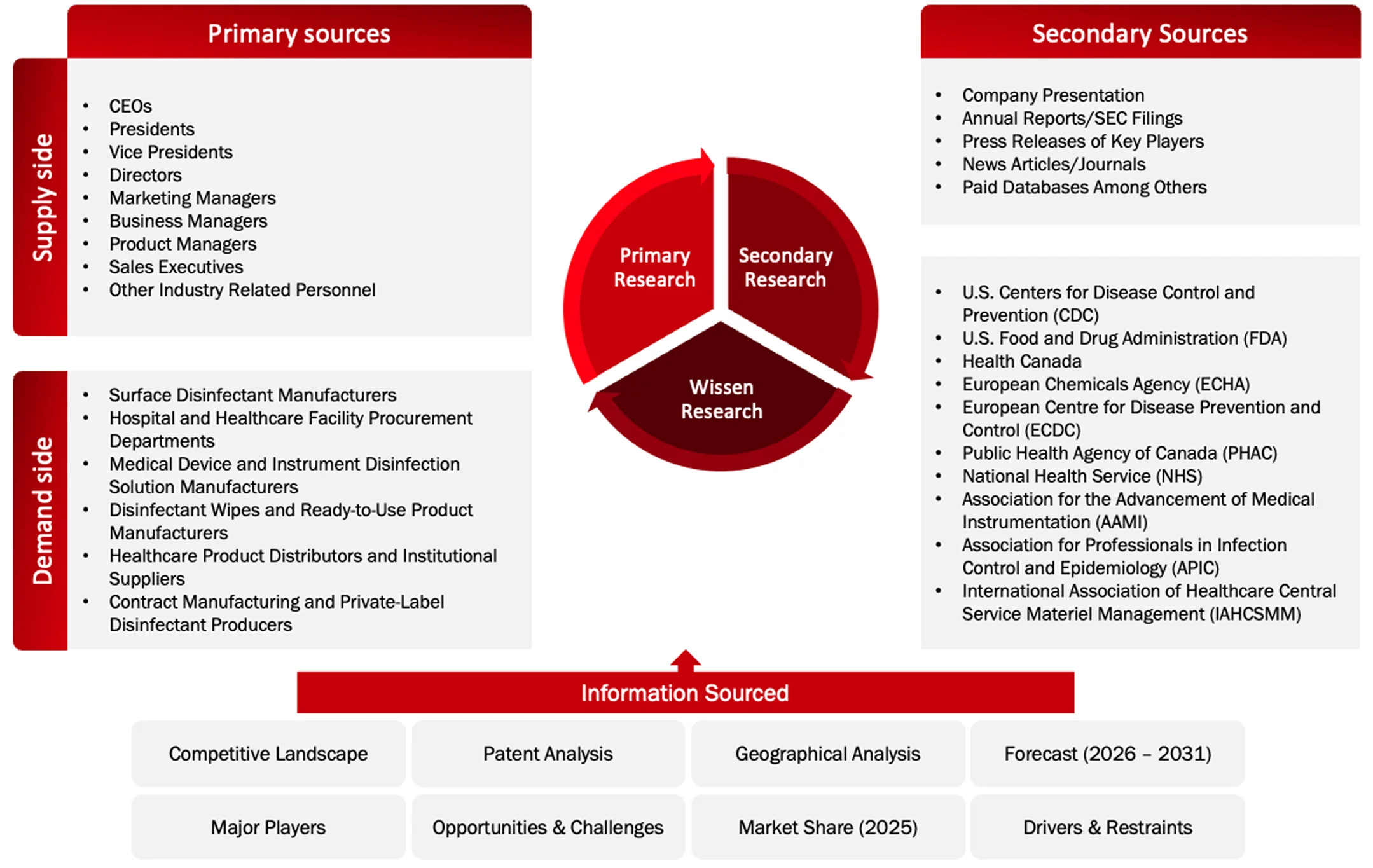
Secondary research involves the collection of data from reliable sources such as industry databases, company annual reports, investor presentations, and regulatory filings. This process helps in understanding market trends, identifying key players, and gathering technical and commercial insights.
A comprehensive database of leading companies and market participants is developed through secondary research to support further analysis.
Primary Research
Primary research is conducted to validate findings from secondary research and to gain deeper insights into market dynamics. Interviews are carried out with industry stakeholders across both demand and supply sides, including executives such as CXOs, Vice Presidents, and Directors from business development, marketing, and product teams.
Data is collected through structured questionnaires, email interactions, and telephonic interviews across key regions including North America, Europe, Asia-Pacific, and Rest of the World.
Market Size Estimation
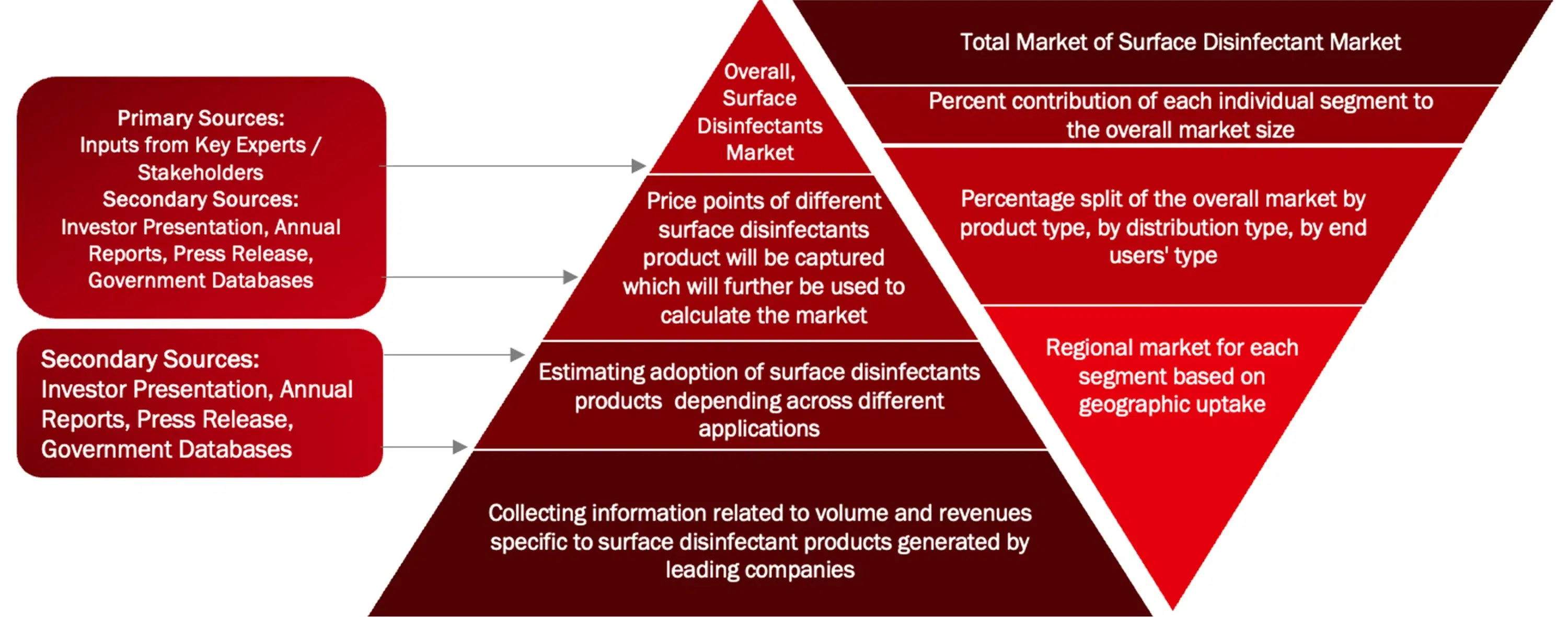
Market size estimation is performed using both top-down and bottom-up approaches. Key market players are identified, and their revenues are analysed to estimate the overall market size.
The market is further segmented based on:
- Product and service mapping across regions
- Adoption patterns across key application segments
- Insights gathered through primary and secondary research
Data Validation and Research Design
After estimating the overall market size, the data is validated using triangulation methods and market breakdown techniques to ensure accuracy and consistency. Both demand-side and supply-side factors are considered to refine the analysis.
The final data is validated through multiple sources to ensure reliability and to provide accurate insights across all market segments and regions.
Assumptions of the Study
The analysis of the surface disinfectant market is based on the following key assumptions:
- Trends in the industry are drawn from historical data and current information within the sector
- The future outlook is underpinned by constant economic conditions in the absence of shocks to the market
- The rate of adoption for surface disinfectant will rise steadily in all important regions
- The income statement and market share figures are estimated using available information from the industry and publicly available data
- The exchange rate and price trends will not be greatly affected during the forecast period
Scope and Limitations
Scope of the Study
This report offers an exhaustive overview of the international surface disinfectant market and includes the following components:
- Summary of market size, growth trends, and projections
- Carefully segmented market based on by product composition, delivery formats, applications, and end-use industries.
- Discussion of primary factors influencing the market
- Competitor analysis
- Insights into regional and national market performance
Limitations of the Study
Despite the best efforts being made to keep the results accurate, the study does suffer from some limitations:
- It has been done using both primary and secondary data that come with their own constraints
- Rapid developments in technology might affect the future course of market dynamics
- Some figures are only approximations due to lack of public disclosure
- The report is not an insurance against any disruptions in macroeconomics and geopolitics
- Future forecasts are indicative and subject to change due to altered industry dynamics
Data Triangulation and Market Breakdown
Data triangulation involved the combination of primary research, secondary research, and the Wissen Research analysis. Once the data points were sourced from the secondary market research, we sanitized the data points to make the market sizing and growth forecast more accurate by developing our own assumptions based on the inputs and insights we gather through the primary interviews with the industry experts. Once the data was thoroughly validated through primary interviews from both, demand and supply side of the market, our team of analyst and other team members involved finalized the market sizing and growth forecast.
Data Triangulation Methodology
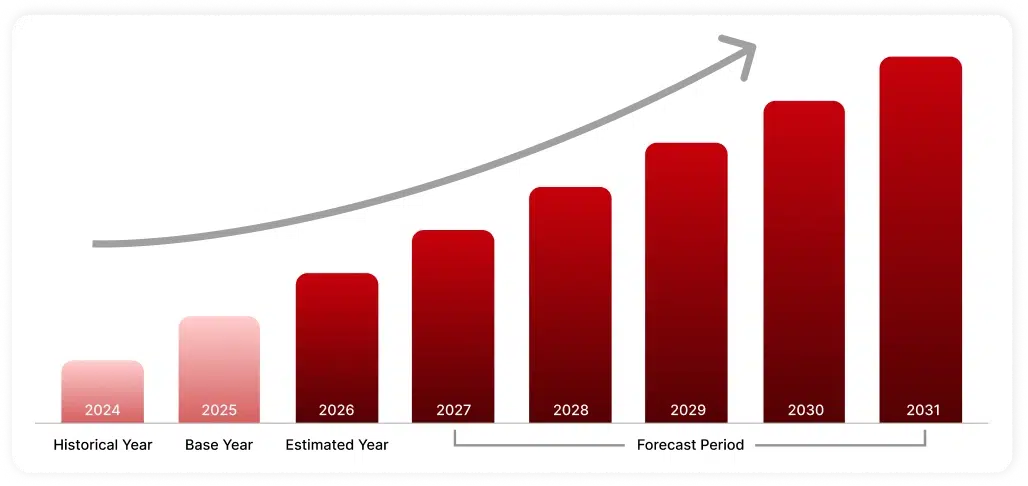
Year Framework
Bottom-Up Approach (Demand Side) And Top-Down Approach (Supply Side)
Bottom-Up Approach (Demand-Side Approach)
Determining the market size through the consolidation of demand among end-users, sectors, and geographic areas, which are calculated according to real-world demand conditions.
Top-Down Approach (Supply-Side Approach)
Calculating the market size through revenue and performance of the industry and its important companies, allocating the market size among various sectors.
Want detailed insights from this report?
Buy this Report
Choose the option that best fits your needs