
Summarize this report with:



Executive Summary
Wearable hormone monitoring is having its “Breakthrough Moment“. For the first time, a company — Adaptyx Biosciences has produced continuous, multi-day cortisol data that matches lab-grade blood tests, proving what the field has chased for a decade: hormones can be tracked in real time, on the body, without a needle.
The timing is striking. Consumer search interest in cortisol tracking has spiked ~330x in just 11 months, yet not a single hormone-sensing wearable has FDA clearance. Demand is sprinting ahead of supply and ahead of regulation. The market is still small ($325.7M in 2025, projected to hit $716.2M by 2035) but it sits inside a much bigger prize: a $600B+ hormonal-health opportunity, with the menopause segment alone projected to affect 1.2 billion women and reach $600B by 2030, a space just ~7% of femtech startups are currently building for.
Three things make this moment worth watching:
IP is up for grabs. No major wearable incumbent (Apple, Oura, WHOOP, Garmin, Samsung) owns validated hormone-sensing technology. It sits with a small, named cluster of startups: Adaptyx, Level Zero Health, EnLiSense, Pheal — making this a rare, clearly-mapped acquisition or licensing window.
Proof just arrived, but scale hasn’t. Adaptyx’s breakthrough data is real, but the entire category remains pre-commercial, nobody has cleared FDA yet, and sweat/ISF-to-blood correlation still needs validation at population scale.
The clock is regulatory, not technical. With Dexcom/Stelo/Lingo having already carved a De Novo pathway, the real race now is who files for FDA Class II clearance first, that moment will re-rate the entire category’s credibility and valuation.
-
Adaptyx’s June 2026 ADA data is a genuine, independently-corroborated technical milestone in continuous ISF cortisol sensing, but it is a first-in-human feasibility result, not clinical validation, regulatory clearance, or commercial availability.
-
Consumer search interest in cortisol monitoring grew ~330x in 11 months against a hormone-monitoring device market forecast to grow from $325.7M (2025) to $716.2M (2035), nested in a $600B hormonal-health opportunity — with zero FDA-cleared products yet on the market.
-
Nobody owns the technology yet. No major wearable incumbent owns validated hormone-sensing IP; The IP landscape is fragmented and dominated by startups and university spinouts (Adaptyx/Stanford, Level Zero Health, EnLiSense/UT Dallas.
-
Level Zero Health (UK/US, founded 2024) has raised a $6.9M (£5.5M) pre-seed round (February 2025, Redalpine-led) and reports $3M in IVF-clinic letters of intent; its DNA/aptamer microneedle patch is at the human-feasibility stage, not commercially deployed.
-
Biolinq is a credible adjacent player (San Diego, $100M Series C, April 2025) granted FDA approval for an intradermal glucose biosensor; cortisol is explicitly discussed by the company as a future direction but is not yet demonstrated in a public dataset.
-
McKinsey estimates that the menopause market is projected to impact 1.2 billion women and reach $600 billion by 2030, yet only ~7% of Femtech startups currently focus on menopause-related solutions, highlighting a significant unmet opportunity.
-
Cortisol leads wearable hormone sensing due to its relatively higher concentration, well-characterized diurnal pattern, and broad stress, metabolic, and clinical applications. Reproductive hormones have strong commercial potential but less mature human validation, while peptide hormones such as LH, FSH, and insulin remain technically challenging for continuous wearable sensing.
TECHNOLOGY LANDSCAPE
What Hormones are & why continuous monitoring matters?
Hormones are chemical messengers secreted by endocrine glands (adrenal, gonadal, pituitary, pancreatic, thyroid) into the bloodstream, where they regulate metabolism, stress response, reproduction, growth, and circadian rhythm. Clinically and commercially, continuous monitoring is valuable because most hormones are secreted in pulsatile, diurnal, or cyclical patterns (e.g., the cortisol awakening response and overnight nadir; the luteinizing-hormone surge that triggers ovulation) that a single blood draw, saliva swab, or 24-hour urine collection cannot resolve. A single measurement captures one point on a curve whose shape often carries more clinical information than the point itself.
Key Characteristics of Hormones Targeted for Electrochemical Detection
Hormone | Hormone Type | Physiological Functions | Disorders Associated | Electrochemically detectable groups. |
|---|---|---|---|---|
Cortisol | Steroid hormone | Glucose metabolism, immune regulation, blood pressure, and stress response. | hypercortisolism, adrenal insufficiency, metabolic syndrome. | single-bonded keto group becomes oxidized during electrochemical detection. |
17β-Estradiol (Estrogen) | Steroid hormones | Reproductive regulation, endometrial growth, secondary sexual development, bone health, and cardiovascular protection | Hypogonadism, infertility, osteoporosis, estrogen-dependent cancers (breast and endometrial) | Electrochemical detection involves the irreversible oxidation of its aromatic hydroxyl group to a ketone, governed by an electron transfer–controlled mechanism at the electrode surface. |
Progesterone | Steroid hormone | Endometrial preparation, pregnancy maintenance, menstrual regulation, and uterine relaxation | Luteal phase deficiency, infertility, menstrual disorders, recurrent pregnancy loss | The molecule undergoes a single electron reaction that reduces the C-3 keto group and has a larger positive electron density than the C-20 ketone group, making it simpler to acquire electrons for reduction. |
Thyroxine (T4) | Iodinated thyroid hormone | Precursor of T3; regulation of metabolism, growth, and development | Hyperthyroidism, hypothyroidism | During electrochemical detection, T4 undergoes oxidation of its phenolic hydroxyl group and reduction of its iodine atoms, followed by further oxidation and reduction reactions. |
Insulin | Polypeptide hormone | Regulation of Glc homeostasis by promoting Glc uptake and anabolic metabolism; inhibition of hepatic Glc production | Diabetes mellitus, insulin resistance, metabolic syndrome, obesity, insulinoma | Oxidation of amino acids in insulin |
Oxytocin | Protein / Peptide hormone | regulating vital reproductive functions like childbirth and lactation, while also governing emotional behaviours such as trust, empathy, and social bonding | Autism Spectrum Disorder, Dispression, Schizophrenia, Lactation Failure, Benign Prostatic Hypertrophy, Metabolic & Musculoskeletal Defects | The redox reaction attributed to the reaction involving a quinoic structure, which is one of the products resulting from the oxidation of phenolic OH of oxytocin |
Direct Measurement vs Inferred/Predicted Hormone
A true hormone biosensor performs direct molecular recognition and quantification of the hormone itself (via antibody, aptamer, MIP, or enzymatic binding). By contrast, several consumer wearables (Oura, WHOOP, Garmin) infer hormonal state indirectly from downstream physiological signals — skin temperature, heart-rate variability, resting heart rate, sleep architecture using algorithms trained to correlate these signals with hormonal phases (e.g., ovulation-window prediction from temperature trends). This is legitimate and clinically useful for some purposes (e.g., Oura’s temperature-based ovulation signal has been the subject of peer-reviewed validation studies), but it is estimation/prediction, not molecular hormone measurement, and should not be described in the same category as direct biosensing.
Direct hormone biosensing using molecular detection remains largely pre-commercial, while physiological-proxy approaches based on signals such as HRV and temperature are already commercially deployed. Distinguishing the two is essential for accurately assessing technology maturity.
Biosensor Architecture
A wearable hormone biosensor follows a general signal chain: Biorecognition element → Interface/immobilization layer → Transducer → Signal conditioning → Wireless electronics → Data processing/analytics → User or clinical output.
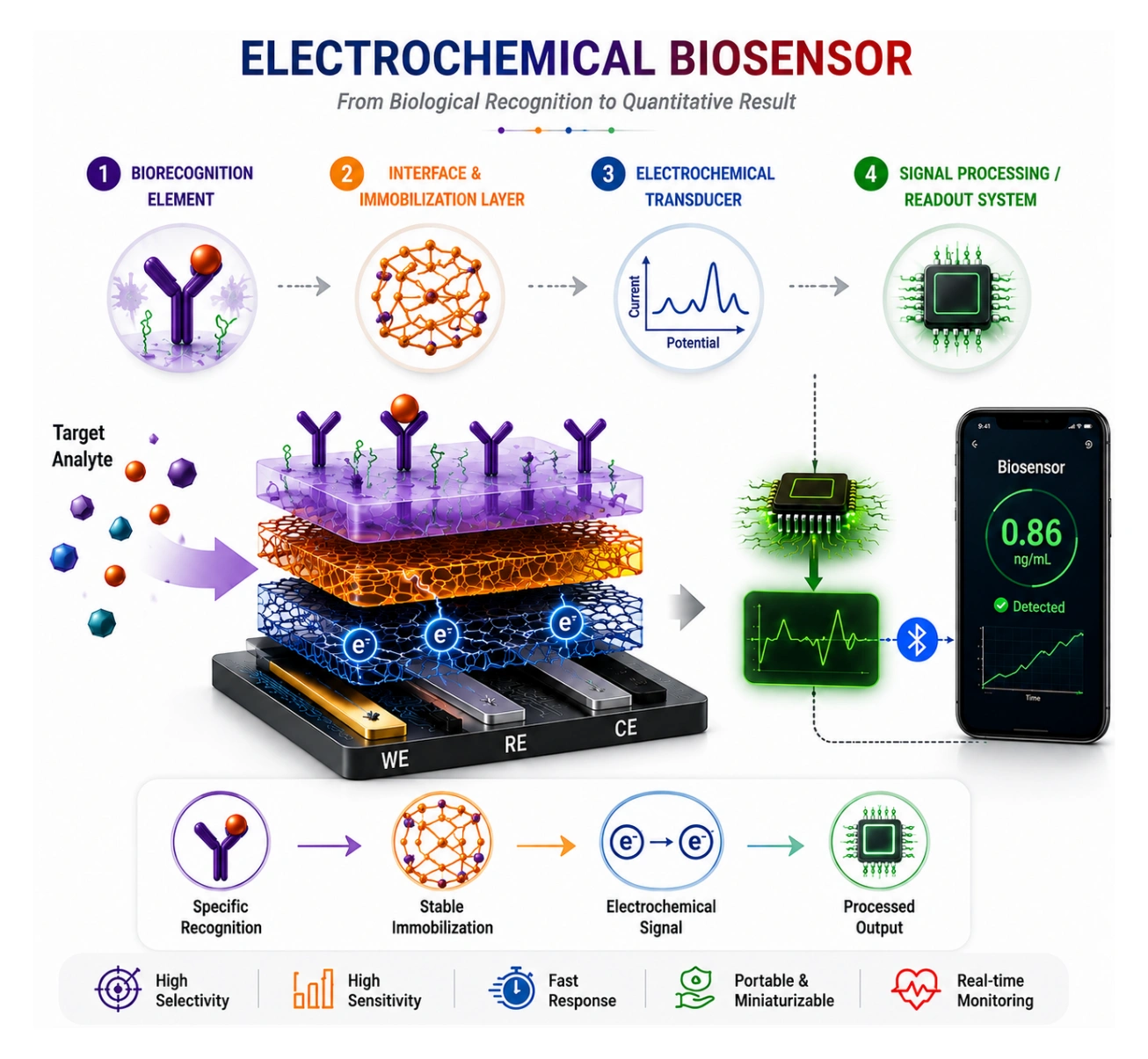
Electrochemical biosensors operate on the principle that specific biomolecular interactions or reactions with target analytes generate electroactive species, which undergo oxidation or reduction at the electrode surface to produce measurable electrical signals that correlate with the concentration of target analyte.
Biorecognition type | Sensing principle | Target hormones (examples) | Advantages | Limitations | Wearable suitability / maturity |
|---|---|---|---|---|---|
Antibodies (immunosensors) | High-affinity antigen-antibody binding, often sandwich or competitive format | Cortisol, progesterone, estradiol, testosterone | Very high specificity; decades of assay-development precedent | Batch variability; limited reusability/regeneration; can denature with heat/motion | Lab-validated; limited continuous-wear durability; moderate maturity |
Aptamers | Short DNA/RNA oligonucleotides that fold around target and change conformation on binding | Cortisol, progesterone, testosterone (Level Zero) | Synthetic, reproducible, regenerable, smaller than antibodies, tunable affinity | Aptamer selection/optimization is still analyte-specific R&D; nuclease degradation in vivo | High wearable suitability in principle; several groups pursuing optimization — early-to-mid maturity |
DNA/molecular switches | Engineered nucleic-acid “switches” that undergo a measurable conformational or optical change upon analyte binding | Cortisol (Adaptyx), broader small-molecule/hormone panel | Demonstrated in first-in-human continuous use (Adaptyx); reprogrammable across analytes per company claims | Proprietary and largely unpublished in peer-reviewed literature to date; independent replication not yet available | Human-feasibility stage (Adaptyx) , advanced human-validated approach identified for cortisol |
Molecularly imprinted polymers (MIPs) | Synthetic polymer scaffolds imprinted with analyte-shaped cavities for affinity capture | Cortisol | Chemically robust, low cost, reusable, no biological reagent degradation | Lower specificity than antibodies/aptamers in complex matrices; imprinting reproducibility varies by lab | not yet in a marketed continuous wearable |
Enzymatic | Enzyme-catalyzed reaction generating an electrochemically or optically detectable product (as in glucose CGMs) | no established mainstream enzyme-based platform for direct continuous steroid-hormone sensing.used for adjacent metabolic markers | Proven manufacturability and stability (CGM precedent) | No established enzymatic pathway for most target hormones | Mature for glucose/lactate |
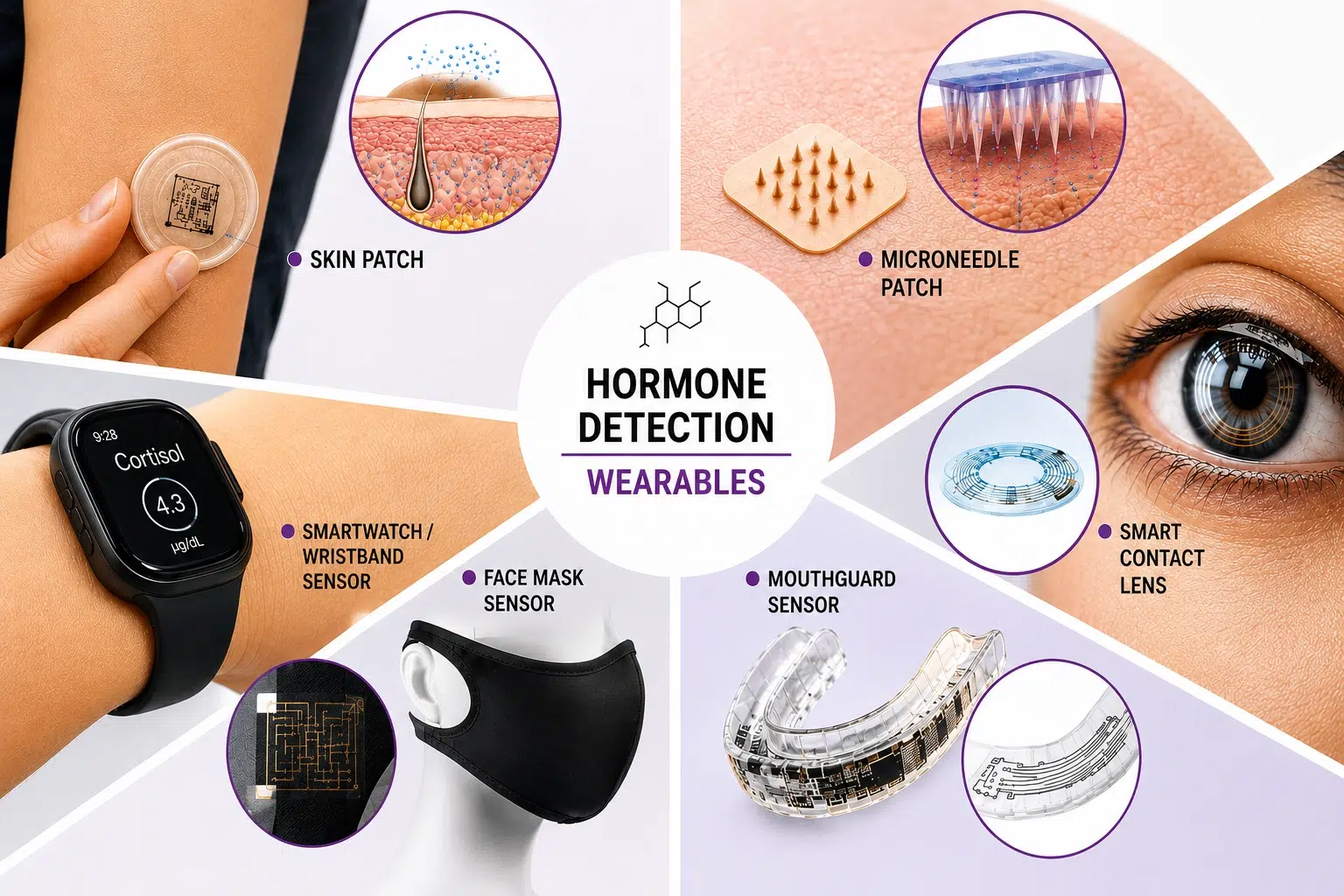
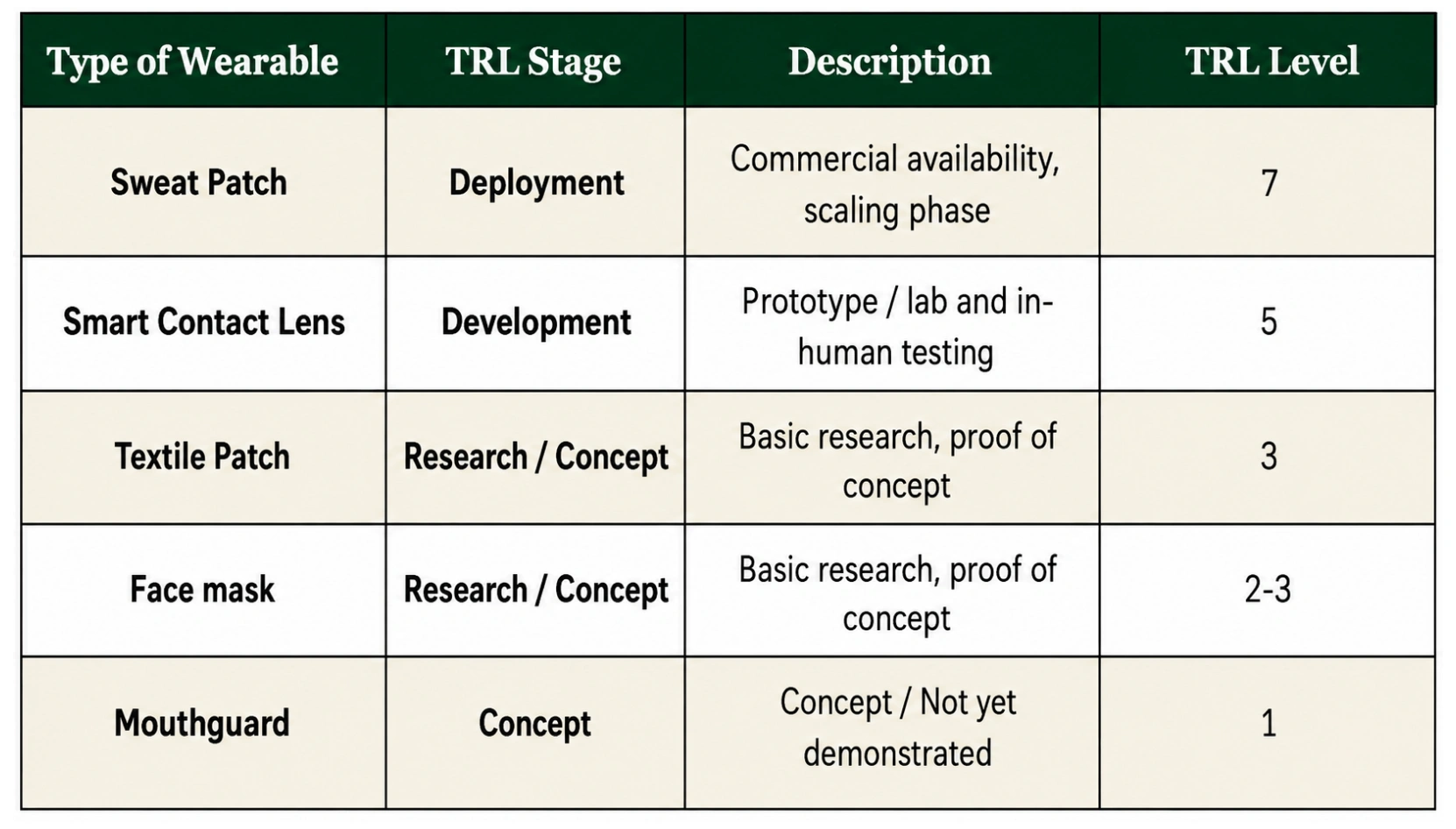
Recent advancements in wearable electrochemical biosensing have enabled the development of compact, non-invasive platforms for continuous hormone monitoring. These devices integrate flexible electrodes, advanced bio-interfaces, selective recognition elements, and miniaturized electronics to detect hormones from easily accessible biological fluids such as sweat, interstitial fluid, saliva, and tears. The table summarizes the key wearable platforms developed for hormone detection, highlighting their technology descriptions and corresponding Technology Readiness Levels (TRLs).
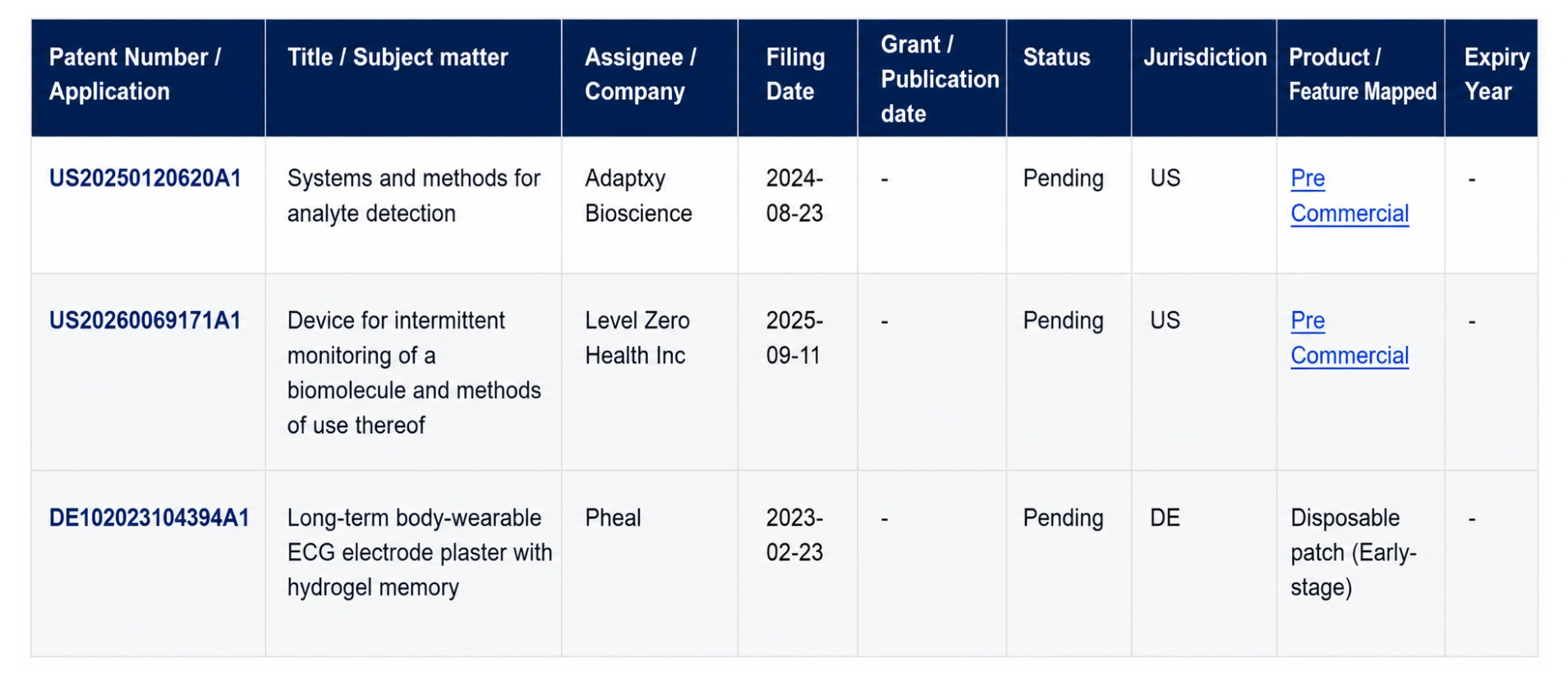
Patent to Product Feature Mapping
Patent-to-product mapping provides insights into the translation of technological innovations into commercially available solutions. The table highlights key patented technologies and their corresponding products, illustrating the progression from intellectual property development to real-world applications in wearable hormone biosensing.
Recent Developments
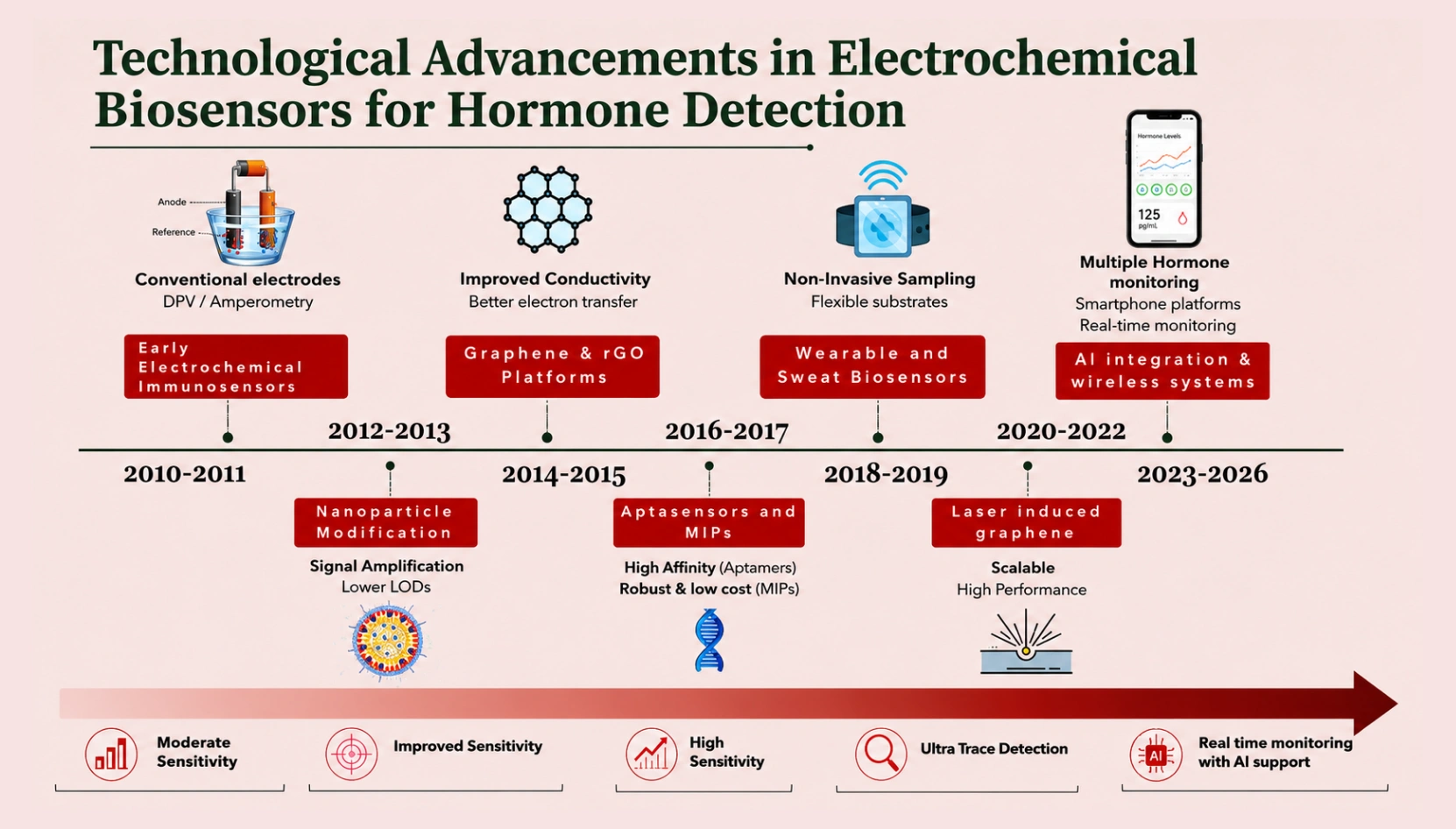
Since 2010, numerous electrochemical biosensors have been developed for laboratory-based hormone analysis and potential clinical applications. Their high sensitivity, operational simplicity, portability, and ease of use have positioned them as promising alternatives to conventional hormone detection methods. The Figure 2 highlights key technological advancements and major milestones in the evolution of electrochemical hormone biosensors since 2010.
Emerging Innovations in Wearable Hormone Biosensing Technologies
- Jun 2026 — Adaptyx Biosciences presents first-in-human continuous multi-day free-cortisol data at ADA’s (American Diabetes Association) 86th Scientific Sessions; wins 2026 ADA Innovation Challenge; sensor shows concordance with LC-MS/MS blood measurements and captures the cortisol awakening response overnight.
- Jun 2026 — Adaptyx reports limit of detection below 1 nM in artificial interstitial fluid and over 400 hours of IRB-approved in-body monitoring data supporting an FDA Class II submission pathway.
- 2026 (ongoing) — Biolinq (known for a color-coded glucose patch) begins exploring multi-analyte monitoring with cortisol as a leading candidate, a new entrant signal from outside the hormone-specialist startup cluster.
- Feb 2026 — Trade press (Forbes) frames 2026 as the year saliva cartridges, DNA-based patches, earring-back wearables, and sweat sensors are converging to make hormone tracking as routine as heart-rate tracking.
- Feb 2025–ongoing — Level Zero Health deploys its $6.9M pre-seed round (closed Feb 2025) toward FDA/CE-mark approval for an intermittent monitoring device; reports 98% accuracy across four hormones in validation testing; $3M in signed IVF-clinic letters of intent.
- May 2025 — US Patent Application US20250147052A1 (aptamer optimization for cortisol/hormone sensing) published, broadening the publicly available IP base other developers can potentially license or design around.
COMPETITIVE LANDSCAPE
The competitive landscape of wearable hormone biosensors comprises a mix of emerging startups, technology innovators, and established wearable device companies working toward continuous and personalized hormone monitoring. While startups are advancing direct hormone sensing through novel biosensing platforms and clinical validation efforts, major consumer wearable companies are leveraging their existing ecosystems and data analytics capabilities to explore future integration. The table highlights key players, their technological strengths, and current limitations shaping the evolution of wearable hormone monitoring technologies
Company / Product | Type | Key Strengths | Notable Weaknesses / Gaps |
|---|---|---|---|
Adaptyx Biosciences | Startup | First continuous multi-day cortisol data with blood-verified concordance; clear FDA Class II pathway underway | Pre-commercial; ISF sampling requires a minimally invasive sensor (not fully non-invasive like sweat) |
Level Zero Health | Startup | 98% claimed accuracy across 4 hormones; $3M in signed IVF-clinic LOIs; broad patent filed 2024 | Smaller raise ($6.9M pre-seed); consumer wearable not targeted until ~2028 |
EnLiSense (Corti) | Startup / small commercial player | Already has a commercial cortisol-tracking wearable on the market today | Sweat-based only — weaker correlation to blood than ISF approaches; positioned as general wellness device, not clinically validated |
Pheal (Germany) | Startup | Horizontal multi-analyte platform (cortisol, glucose, lactate, sodium, troponin) on reusable reader + disposable patch | Early-stage, founder-led; less clinical validation data publicly available than Adaptyx |
Biolinq | Startup | FDA De Novo-classified intradermal glucose platform. proprietary microneedle-based multi-analyte electrochemical sensing platform; active IP specifically covering continuous cortisol monitoring with an aptamer-based microneedle array. | Cortisol remains investigational; Biolinq’s FDA authorization currently covers glucose monitoring, not hormone sensing. |
Whoop / Oura / Garmin / Apple / Samsung | Consumer wearable incumbents | Massive existing user base and distribution; building AI/software layers (Whoop Advanced Labs, Oura Cumulative Stress) around hormone data | None currently own validated direct hormone-sensing hardware |
Macro Trends
- Convergence of consumer wellness demand (cortisol/stress-tracking culture) with clinical-grade sensing ambition — multiple companies (Adaptyx, EnLiSense) explicitly bridge wellness and clinical positioning, though only Adaptyx has stated an explicit Class II/diagnostic regulatory target to date.
- Shift within femtech from period-tracking/fertility-app software toward hardware-enabled, “clinical-grade” diagnostics and a broadening focus toward menopause and midlife women’s health, corroborated across multiple independent 2025–2026 market reports even though their dollar figures diverge
Emerging Sub-Trends
- Computational correction models could significantly improve the accuracy of sweat-based cortisol sensing without changing the sensor chemistry, making software-based correction an important opportunity for improving performance.
- Multi-analyte platforms are emerging as a potentially stronger long-term model than single-hormone devices, with companies such as Adaptyx, Biolinq, and Pheal exploring broader biomarker monitoring.
- AI-assisted signal processing and calibration may help address sensor variability, biological differences, and matrix effects. This could improve measurement reliability but may also introduce additional regulatory requirements for AI-enabled medical-device software.
Technology | Category | Status |
|---|---|---|
Electrochemical sweat cortisol sensing (MIP, aptamer, FET) | Growing | Human-tested in commercial form (EnLiSense Corti); numerous pre-commercial academic variants |
ISF DNA-molecular-switch sensing | Emerging → Growing | Human-tested (Adaptyx first-in-human data, June 2026); pre-commercial |
ISF aptamer/microneedle multi-hormone sensing | Emerging | Pre-human (simulated-sample stage per public evidence, Level Zero Health) |
Molecularly imprinted polymers (MIPs) for cortisol | Established (research) / Growing (commercial potential) | Extensively bench/lab-validated (2022–2025 peer-reviewed literature); not yet in a marketed continuous wearable |
FET-based cortisol sensors (e.g., graphene EG-FET) | Emerging | Lab-validated with strong sensitivity metrics; no wearable commercial translation identified |
Kinetic/computational sweat-to-blood correction modeling | Emerging | Single strong peer-reviewed proof-of-concept (2025); not yet integrated into a commercial product per evidence reviewed |
Multiplexed hormone sensing (multi-channel arrays) | Emerging → Growing | Demonstrated in-human at small scale (Adaptyx’s 16-channel array, though largely replicate/control channels for one hormone, not yet multiple distinct hormones simultaneously) |
Smart contact lenses / facial masks / mouthguards / earrings for hormone sensing | Research-stage / speculative | No credible hormone-specific evidence identified; excluded from near-term commercialization assessment |
Continuous microfluidic sampling, anti-fouling interfaces, self-calibrating sensors | Research-stage | Active academic research themes across the biosensing literature broadly; no hormone-specific commercial translation identified |
SWOT & RISK ANALYSIS
First-mover clinical proof: Adaptyx’s Jun 2026 data is LC-MS/MS-verified, solving a decade-long open problem.
Multiple viable sensing chemistries (DNA molecular switches, aptamer-FET, MIP) reduce single-point-of-failure technology risk.
CGM category provides a proven regulatory and manufacturing template.
No FDA-cleared consumer or clinical device exists yet entire category pre-commercial.
Sweat-to-serum and ISF-to-serum correlation not yet validated across diverse populations at scale.
Fragmented technical field — no dominant architecture, unlike CGM’s enzymatic glucose oxidase standard.
Consumer demand (~330x search growth) far outpaces supply — wide open window before a dominant brand emerges.
Large, well-documented clinical pain points (IVF blood-draw burden, menopause care gap, psychiatric/critical-care applications of cortisol rhythm data) provide multiple high-potential initial applications that can provide an entry point into a larger market.
CGM-style OTC clearance precedent lowers perceived regulatory risk for investors
No major wearable incumbent owns hormone-sensing IP — clear acquisition/licensing
platform/multi-analyte business models could improve unit economics beyond a single hormone.
A major incumbent could bypass acquisition entirely with an in-house breakthrough.
Incumbent wearable makers could enter rapidly via acquisition once a validated sensing chemistry exists, compressing startups’ window to build a defensible position.
Regulatory timelines for a genuinely novel analyte/chemistry combination are inherently uncertain (first-in-category De Novo submissions can take years)
Search-trend demand signal could prove a temporary spike rather than durable demand.
STRATEGIC RECOMMENDATIONS
- Big Players (Garmin, Samsung, and similar): conduct a build-vs.-buy-vs.-partner assessment of leading direct hormone-sensing platforms, focusing on Adaptyx, Level Zero Health, and EnLiSense, before the technology landscape consolidates.
- Startups: prioritize analytical and human-validation data, IP strengthening, and regulatory planning to establish technical credibility and improve partnership and funding prospects.
- Others (Femtech, Pharma, IVF/clinical networks, CPG): assess which sensing architecture and biofluid, particularly ISF versus sweat— best fits the intended clinical, research, or consumer application.
- Big Players: pursue pilot or technology-evaluation partnerships with leading hormone-sensing developers to assess real-world accuracy, wearability, reliability, and compatibility with existing device ecosystems.
- Startups: engage regulators early, including FDA pre-submission interactions where applicable, while expanding validation studies across larger and more diverse populations and advancing toward scalable manufacturing.
- Others (Femtech, Pharma, IVF/clinical networks, CPG): explore clinical-trial, fertility-monitoring, menopause, stress-management, and data-integration partnerships once technical and regulatory confidence improves.
- Big Players: consider acquisition or licensing of validated hormone-sensing IP once clinical performance, regulatory pathway, and manufacturing scalability are sufficiently demonstrated.
- Startups: evolve from single-hormone products toward multiplexed hormone and biomarker platforms, combining sensing, analytics, and personalized-health applications to expand addressable markets.
- Others (Femtech, Pharma, IVF/clinical networks, CPG): build integrated ecosystem partnerships linking validated hormone sensors with therapeutics, fertility services, menopause platforms, clinical workflows, and personalized-health software.
APPENDIX
https://www.mdpi.com/2227-9040/14/6/132
https://www.mdpi.com/2079-6412/13/12/2040
https://www.intechopen.com/online-first/1241611#B22
https://www.mdpi.com/2079-6374/16/6/336
https://www.science.org/doi/full/10.1126/sciadv.adx6491
https://advanced.onlinelibrary.wiley.com/doi/full/10.1002/advs.202411433
https://link.springer.com/article/10.1007/s44397-026-00036-2
https://www.forbes.com/sites/josipamajic/2026/02/27/who-is-winning-continuous-hormone-monitoring–and-what-comes-next/
https://www.mckinsey.com/mhi/our-insights/blueprint-to-close-the-womens-health-gap-how-to-improve-lives-and-economies-for-all/
https://www.businesswire.com/news/home/20260608862701/en/Adaptyx-Biosciences-Presents-First-In-Human-Continuous-Multi-Day-Free-Cortisol-Data-From-a-Wearable-Sensor-at-ADA-Providing-a-Time-resolved-View-of-the-Hormone-Signal-Driving-Glucose-Control-Cardiovascular-Health-Stress-Response-and-Sleep/