
AI in Virtual Medical Assistant Market
Global Industry analysis, Size, Share, Growth, Trends, and Forecast 2026-2031
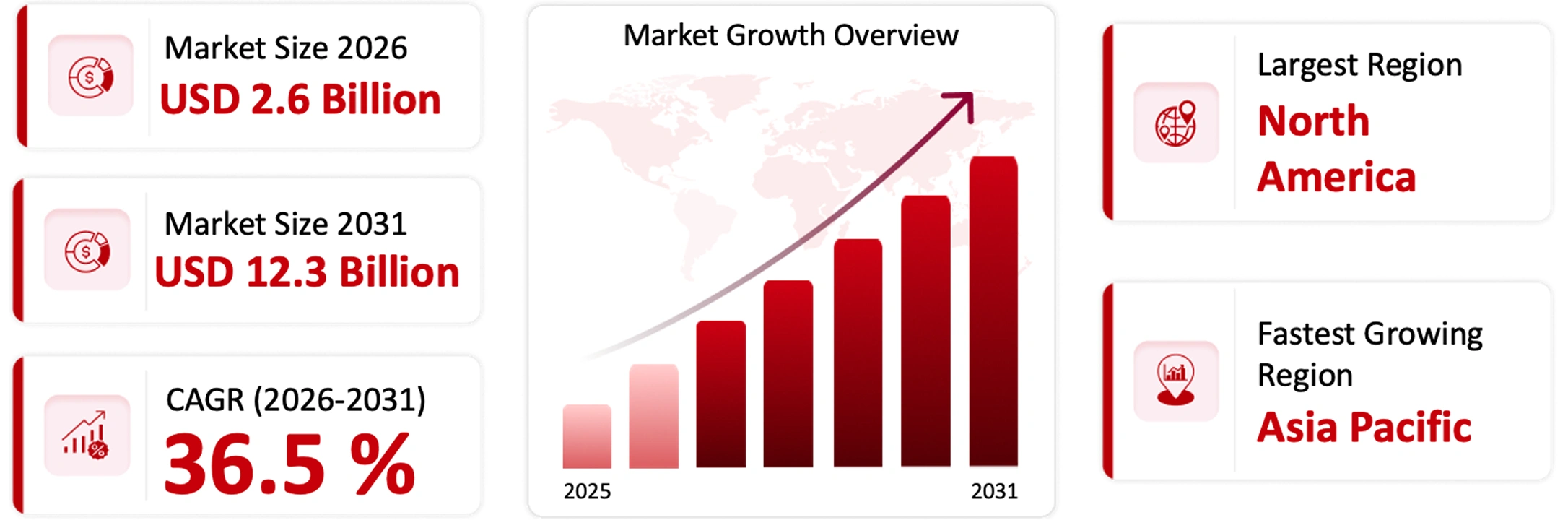
The global AI in virtual medical assistant market is projected to reach USD 12.3 billion by 2031, growing at a CAGR of 36.5% during the forecast period.
| Market Size (2026): | Forecast (2031): | CAGR (2026–2031): | Leading Region: | Fastest Growing Region: |
|---|---|---|---|---|
| $ 2.6 Billion | $ 12.3 Billion | 36.5 % | North America | Asia Pacific |
Market Overview
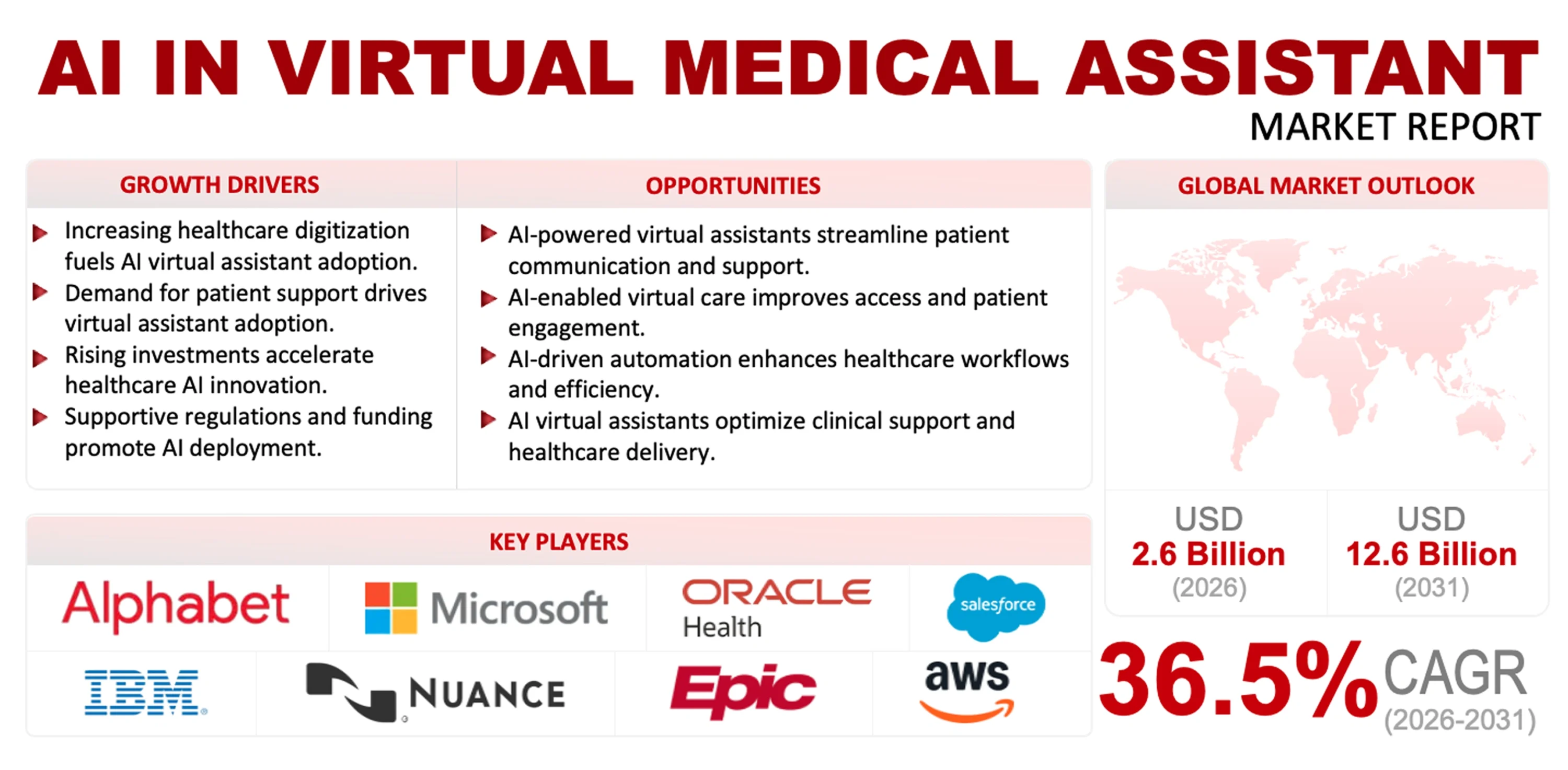
There is a lot of growth in the market for AI in virtual medical assistant solutions because of the need for more personalized health care support, remote engagement of patients, and automation of the health care process. AI powered virtual assistants will assist with assessing symptoms; scheduling appointments; sending out reminders for taking medications, and giving access to health-related information by using a conversational interface. Health care providers are adopting this technology to reduce the amount of time spent on administrative duties, improve communication with their patients, and improve coordination of care. The advancements made with generative AI and natural language processing have helped with increased use of telehealth, and this too has driven demand for use. In addition, virtual medical assistants can assist with managing chronic conditions; comply with medications; and provide preventative care for patients, and each of these contribute to a positive outcome of health care and improving operational efficiencies. The market is estimated to be USD 2.6 billion in 2026 and is projected to reach USD 12.3 billion by 2031, growing at a CAGR of 36.5 % during the forecast period (2026-2031).
Technology Overview
AI-powered virtual medical assistants are digital tools used as healthcare solutions that utilize AI, natural language processing (NLP), machine learning, and generative AI technologies to interact with patients and caregivers in a conversational manner on a variety of platforms, including mobile applications, websites, smart devices, and telehealth services. Examples of capabilities of virtual medical assistants include analyzing patient inputs and answering health-related queries; identifying symptoms; assisting patients with scheduling appointments; sending reminders for medication dosages; and coordinating care among numerous locations.
With the usage of sophisticated LLMs, predictive analytics, and speech recognition, modern virtual medical assistants enhance the accuracy of their responses; automate routine clinical interactions; and generate personalized recommendations by providing integration between EHRs, remote monitoring, telehealth, and other systems for the timely exchange of data, allowing real-time monitoring of the patient’s clinical conditions, and providing proactive management of a patient’s health status. Advances in technology create better care for patients, greater efficiency in delivering clinical services, and improve the ability of healthcare organizations to make data-driven decisions.
Key Growth Drivers
- Due to increasing clinician burnout, there has been rapid adoption of workflow automation and documentation powered by AI.
- As value-based care continues to grow in popularity, there is also a growing need for accurate coding that uses AI-assisted technology.
- With the integration of EHR through FHIR APIs, the deployment of virtual assistants can occur seamlessly across all platforms.
- The nursing shortage has contributed to an increased adoption of AI-enabled documentation and support for handoff care processes.
- Automating prior authorization reduces the administrative burden associated with prior authorization processing and decreases delays in providing patient care.
- Growing demand for 24/7 availability of patient support is driving the adoption of conversational AI assistants.
AI in Virtual Medical Assistant Market Key Highlights
Need deeper insights on this market?
Get full report access with detailed forecasts, competitive analysis, and segmentation.
AI in Virtual Medical Assistant Market Trends
The Virtual Medical Assistant (VMA) industry is rapidly changing as healthcare organizations are implementing AI-enabled technologies to both enhance patient engagement, lessen the administrative workload, and improve quality of care. The new trends that are emerging in this industry include incorporating generative AI & large language models (LLM’s) into Virtual Medical Assistants; utilizing voice commands to facilitate healthcare activities; facilitating chronic disease management and remotely monitoring patients; integrating with electronic health records (EHR’s); and using predictive analytics to provide the best personalized healthcare recommendations. Healthcare organizations are taking advantage of AI-enabled Virtual Medical Assistant (VMA) technology to make appointment scheduling, patient triage, medication adherence, and follow-up care easier and less time-consuming; and to assist with addressing workforce shortages and increased healthcare costs. Additionally, by way of advances in NLP, cloud-based solutions, and establishing interoperability standards, VMAs can provide more accurate, context-appropriate, and personalized healthcare support which is being embraced by healthcare systems (hospitals, clinics, payers, etc.) and telehealth programs alike.
Integration of Generative AI and Large Language Models (LLMs)
The integration of generative artificial intelligence (AI) and large language models (LLMs) to increase conversational capabilities of virtual medical assistants and support clinical functions is one major trend. A LLM based virtual medical assistant has more ability to process complex queries from patients and generate contextually appropriate responses, summarize medical records and deliver a more natural interaction than traditional rule-based chatbots that do not use LLM technology. Virtual medical assistants that utilize LLM technology are rapidly being used for various reasons including assessing symptoms, educating patients about their conditions and providing post-discharge follow up as well as helping patients navigate through the healthcare system. Many healthcare organizations are utilizing generative AI to help improve patient satisfaction metrics, reduce call center workloads and enhance operational efficiencies which in turn has resulted in greater accuracy of models trained for the healthcare domain leading to virtual medical assistants that now support multilingual communications, personalized recommendations about health-related matters and assisting clinicians with completing documentation. The growth of this trend will drive tremendous growth in both the breadth and depth of value proposition of virtual medical assistants throughout the entire healthcare ecosystem.
Expansion of Remote Patient Monitoring and Chronic Disease Management
The increasing focus on managing chronic illnesses and remote monitoring of patients has led to a growing use of AI-based virtual medical assistants. These automated platforms allow healthcare providers to engage with their patients continuously and outside of the clinic by providing; assisting them in scheduling appointments; sending pre-recorded messages for health coaching; tracking symptoms; and reminding them to take medications to help with compliance. AI-powered virtual assistants also connect with wearable devices, connected medical devices and remote monitoring to obtain data about patients in real-time and analyze it. Through AI-powered virtual assistants, healthcare providers are equipped with the ability to identify possible health problems and offer timely intervention. This capability can be especially valuable in the management of chronic disease such as diabetes, heart disease, COPD and high blood pressure as it requires constant evaluation of the patient’s health through ongoing monitoring in order to achieve optimal health. Furthermore, because of the shift to value-based care systems and the growing need for home-based service options, there is a growing utilization of AI solutions by health care providers to deliver complete care and minimize the number of patients who are readmitted to the hospital as well as improve their long-term health.
Key Players in the AI in Virtual Medical Assistant Market
Leading companies in the AI in virtual medical assistant market are focusing on innovation, strategic partnerships, and expansion of health-centric features to strengthen their market position.








Strategic Activities Within the AI in Virtual Medical Assistant Market
Amazon.com, Inc. (United States) launched Health AI, an AI-powered virtual medical assistant that provided personalized health guidance, explained medical records, managed prescriptions, booked appointments, and connected users with healthcare providers, expanding access to virtual care and strengthening its digital health ecosystem.
Oracle Corporation (United States) expanded Oracle Health Clinical AI Agent with automated clinical order creation capabilities that used ambient listening and AI reasoning to draft prescriptions, laboratory tests, imaging orders, and follow-up appointments, reducing administrative workload and enhancing clinician productivity and patient care.
Epic Systems Corporation (United States) launched AI Charting and expanded its AI portfolio, enabling automated clinical documentation, order suggestions, patient scheduling, billing assistance, and conversational support through MyChart, enhancing clinician efficiency, patient engagement, and healthcare workflow automation.
AI in Virtual Medical Assistant Market Insights
The AI-powered Virtual Medical Assistant market is expanding very rapidly as the demand for digital healthcare services, patient engagement, and workflow automation continues to grow. Relying on machine learning, natural language processing and artificial intelligence (AI), Virtual Medical Assistants can help with symptom assessment, appointment booking, reminders and patient communication. As a result of these capabilities, more healthcare providers are utilizing these technologies to help decrease administrative burdens, enhance operational efficiencies, and alleviate workforce shortages. The expansion of telehealth, the growth of generative AI technology, and the increased funding for digital health solutions are driving the adoption of Virtual Medical Assistant technologies. Furthermore, there is an increasing level of integration with life sciences (LS) electronic health records (EHR) and remote monitoring (RM) platforms; this is allowing for better accessibility and utilization of Virtual Medical Assistant technologies.
With the use of AI in healthcare, hospitals and clinics have found many applications for its use, such as helping with appointment scheduling, patient triage, clinical documentation and coordinating care. They can also be used to triage patients and provide remote consultation support in telehealth situations, perform symptom assessments of patients, and engage them in remote consultations. In addition to these examples, AI assistants are also being used in many chronic disease management applications by allowing healthcare providers to monitor their patients’ conditions, provide medication reminders, and encourage treatment compliance. Other ways that AI assistants are used by healthcare payers is by providing support to members during their inquiries about benefits, assisting with care navigation, and providing assistance with member engagement. In addition to this, there are many other ways that AI-powered virtual assistants can be used for mental health-related support, post-discharge follow-up, preventive care education, and automating customer service functions; therefore, enhancing patient outcomes and making healthcare more accessible to all.
The AI in the Virtual Medical Assistant market has major potential for growth due to the rise of telehealth services, growth of remote patient monitoring and desires for a more personalized healthcare experience by patients. Many healthcare providers are placing significant investments in AI assistants to help provide greater engagement with patients; automate repetitive/fixed workflows; and to manage chronic illnesses more effectively. New technologies such as generative AI; voice recognition; and predictive analytics will lead to an increase in more advanced and personalized experiences between patients and the Healthcare System. Further adding to this is the emergence of healthcare markets with developing infrastructure to support the use of digital health represents substantial opportunity for new market entrants to reach this segment. New opportunities are also provided to the market through the expanding integration of Electronic Health Records (EHR), and via integration with other tools such as Wearable Devices or Mobile Health Applications to enhance the capabilities of the Virtual Medical Assistant. As well, 24/7 access to healthcare and providing a multicultural patient support will provide new avenues to generate additional revenues for all market participants.
Although the market for AI in Virtual Medical Assistants is booming, it still faces challenges. There are concerns around data privacy and cybersecurity in healthcare systems due to the sensitive nature of medical records as well as strict regulations on this type of data. There are critical requirements for the quality, dependability, and safety of AI-generated responses—especially when the patient is the intended audience. Healthcare organizations will also need to address issues associated with interoperability of their virtual medical assistants and their legacy systems and multiple healthcare providers. Other regulatory uncertainties related to AI governance and reimbursement policies also may impede the adoption of this technology. Healthcare providers may be resistant to adopting new technologies and may have concerns about being too dependent on the use of AI to make clinical decisions, all of which create significant barriers to the full adoption of AI in virtual medical assistant solutions.
With growing access to healthcare services, a rapid increase in the use of smartphones and the rapid evolution of digital technologies, Asia Pacific is becoming the fastest growing region in the virtual medical assistant market (AI), leveraging a lot of healthcare modes of access, such as telemedicine, that rely on AI technologies. This includes numerous countries in the region including China; India; Japan; South Korea; and Australia, which have all been investing significantly in both artificial intelligence and ICT infrastructure (telemedicine), and digital health opportunities at an increasing level. Adoption of AI based virtual care solutions is being driven by several factors including rising health care spending; the size of patient populations; and the current number of healthcare professionals who can treat patients. Government programs that support the modernization of health care, and the establishment of smart health ecosystems are helping to accelerate the expansion of this industry. Additionally, the rising level of awareness and growing adoption of preventive health care services and mobile health applications, are creating a significant number of opportunities for growth throughout the region.
AI in Virtual Medical Assistant Market Dynamics
Drivers: Clinician Burnout and Workforce Shortages
Key drivers of the growth of the infrared thermal imaging sector include a rise in the use of advanced technologies, particularly automation, AI, and rapid-response thermal analytic capabilities. The current generation of infrared cameras supports high levels of automation for anomaly detection, continuous monitoring, and real-time decision-making, thereby enhancing operational performance across multiple industries. Key applications of infrared systems, for example, for predictive maintenance, industrial safety, and surveillance, require non-contact temperature measurement and real-time thermal analysis. In addition, integration capabilities with IoT platforms and cloud-based systems provide seamless data transfer and enable remote monitoring and improved workflow management. Infrared capabilities to operate in low-light conditions and under harsh operating conditions provide unmatched functionality for use in many applications across the automotive, energy, and manufacturing sectors, thereby increasing demand for infrared thermal imaging solutions on a global basis.
Opportunities: Home-Based and Preventive Care Expansion
The shift towards home-based, preventive and continuous care delivery systems represents a significant opportunity for AI virtual medical assistants to grow exponentially; as an increasing number of healthcare organizations and professionals are adopting AI-based virtual assistants to facilitate the delivery of care outside of traditional clinic settings, including through remote patient monitoring and chronic disease management to support medication adherence, wellness coaching and follow-up care for discharged patients. The incorporation of wearable devices, connected health technology, and mobile application technology into this model allows for continuous engagement between patients and clinicians outside of traditional clinical environments. In addition, through their ability to identify health risks, offer personalized recommendations and motivate individuals to engage in preventive measures prior to becoming hospitalized/ill, AI virtual assistants can greatly reduce hospitalizations and total healthcare costs associated with healthcare delivery. Given the growth of aging populations, the increase in chronic diseases and the growing desire of consumers for convenient access to healthcare services, AI virtual assistants are expected to play an increasingly important role in the decentralized delivery of healthcare.
Challenges: AI Governance and Trust Concerns
Despite rapid advancement, Artificial Intelligence (AI), is a technology in which many organization within the Healthcare sector have expressed concerns. AI governance, transparency, and trust are problematic areas still requiring consideration and discussion in the previous four key areas including patient data privacy, algorithmic bias, explainability and bias through AI-generated recommendations and decisions. The development of AI that produces inaccurate or misleading recommendations and decisions will have a negative impact on both the outcome of patient care and the level of confidence the provider has in AI-generated recommendations. The evolution of regulatory frameworks for AI created uncertainty with respect to compliance, validation, and liability associated with AI technology. In order to realise the potential benefits of AI virtual medical assistants, trust will need to be built between clinicians, patients, and healthcare institutions.
Technology and Market Insights
The shift from traditional chatbot systems to more advanced forms of AI and ambient intelligence is significantly changing how healthcare tasks can be completed autonomously. Today’s virtual medical assistants use large language models, advanced reasoning engines, ambient listening technology, and multi-agent systems to understand the clinical context of a conversation, automate workflow processes, support clinical decision-making, capture dialogue/notes from a conversation, recommend follow-up actions to patients, and coordinate other types of care activities for patients with minimal involvement by the patient. Ambient intelligence allows virtual assistants to do this without needing direct input from a patient or an active participant in the conversation. At the same time, agentic AI systems are being built that can proactively manage patient interactions, schedule appointments, monitor a patient’s health condition, and initiate the appropriate healthcare delivery process. This technology is expanding the role of virtual assistants beyond simply providing information (e.g., referrals) to being active participants in providing healthcare.
Technology Scope and Products
AI in Virtual Medical Assistant Market Segmentation
Want detailed insights from this report?
Industry Developments and Competitive Landscape
The infrared imaging market is experiencing an explosion of innovation as well. Sensor engineering and artificial intelligence have witnessed significant advancements which are fuelling growth of the infrared imaging market. Increasing detector sensitivity, image resolution as well as real-time processing ability of infrared imaging systems are allowing for faster and more precise temperature analysis in critical applications. In addition, the incorporation of AI-based image recognition into infrared cameras through automation enables faster detection of temperature deviations, equipment failures, and threats to security.
EHR/EMR integrated Systems accounted for the majority of the AI virtual medical assistant market at over 42-48% of global revenue generating from these systems. The designs of these systems allow for a seamless workflow Integration into current existing clinical settings, thus driving Health Care Professionals to prefer the integration of the solution into their daily EHR workflow versus using two different applications. By having an Integrated Virtual Assistant, the Healthcare Provider can retrieve patient history, lab tests, medication history, and clinical notes automatically which provides for a more accurate documentation and support for decision making and more efficient patient management.
An additional factor supporting adoption of Integrated Systems is that they can utilize Pre-existing Health Care IT Infrastructure and enterprise-level deployment models. Major EHR vendors continue to move the development of AI Powered Assistants directly into their Platforms which allows Health Care Organizations to quickly expand usage of AI Virtual will Assistants among hospitals, clinics, and networks of Physicians as AI Powered Automation becomes part of their workflow process. Additionally, Integrated Solutions will provide stronger interoperability which means there will be more seamless Coordination between Clinical Documentation, Appointment Management, Care Pathways, and Administrative Workflow Processes. Providers of Health Care are focused on enhancing their operational efficiently and productivity of Clinicians, so the Preference for Integrated Platforms continues to grow compared to stand-alone solutions.
Moreover, as a result of the strict regulations governing data privacy and security in Health Care, EHR/EMR integrated deployments are the most favorable. Because they operate within existing Health Care IT Environments, there are significant risks associated with having to integrate two separate platforms without first requiring time or costs for integration which would put Health Care Provider’s data at risk.
Due to its complete and high-value system, the camera segment dominated the infrared imaging market in 2025. Thermal cameras are very versatile by integrating sensors, optics, processors, and software into one solution. Therefore, in addition to being widely used in many different markets, including Defense, industrial, and commercial use. The large government contract, security infrastructure, and predictive maintenance markets (Module & Scope) are the primary reasons for the thermal camera market to lead in revenues over the module or scope business.
-
The revenue reported by Teledyne Technologies was around 6.12 billion US dollars, with imaging systems responsible for approximately 7.9% of segment growth.
-
L3Harris Technologies was awarded a $263 million US Army contract to produce new ENVG-B systems that will use advanced thermal camera technology.
-
Leonardo DRS received a $117 million order from the US Army to produce thermal weapon sight systems (camera-based platforms).
-
The US Department of Defense has budgeted approximately 310.7 billion US dollars for procurement and R&D in 2025 to support EO/IR camera-based systems.
-
Thermal cameras represented nearly 50% of the total share of defense infrared systems in 2025 and demonstrated dominance over modules and scopes.
The North American market for virtual medical assistants powered by Artificial Intelligence (AI) continues to be the dominant force within the Healthcare Industry due to a high degree of digitization throughout the Healthcare System (HS) and the extensive adoption of Electronic Health Records (EHR). Decades of investment into Healthcare Information Technology (HIT) and government-mandated digitization programs have produced an ecosystem that is very conducive to the deployment of AI within hospitals, doctors’ offices, and Integrated Delivery Networks (IDN). Because there is an abundant supply of structured patient information, Virtual Medical Assistants (VMA) can enable a broad range of applications in healthcare which include clinical documentation, patient engagement, workflow automation, and care coordination at scale resulting in accelerated deployment of VMAs among HC organizations.
The other major contributor to the growth of the Virtual Medical Assistant market is the highly complex reimbursement landscape and constant focus on documentation accuracy. HC providers are constantly being pressed to provide higher quality coding to receive adequate reimbursement as well as modify their documentation in order to comply with changes to existing value-based programs. More frequently, HC providers are deploying VMAs to enable the automation of documentation, assist with coding adjustments related to risk adjustment, and improve administrative processes such as claims management and prior authorizations. The implementation of these functions provides HC organizations with increased operational efficiencies resulting in decreased revenue loss as well as fulfilling the need to contain rising administrative expenses.
The presence of leading-edge Healthcare Technology Vendors (HTV), Cloud Service Providers (CSP) and healthcare interoperability frameworks will only continue to enhance the North American market position. Due to the seamless integration of AI based solutions with HIT systems, providers (HC organizations) can now easily implement VMAs.
What This Report Covers-
This report provides a comprehensive analysis of the AI in virtual medical assistant market, offering insights into key trends, growth drivers, challenges, and future opportunities. It is designed to support strategic decision-making through a combination of quantitative data and qualitative analysis.
Specifically, the report covers:

Market Overview & Definition:
Overview of the market scope, structure, and key terminology

Market Size & Forecast:
Historical data and future projections across key segments and regions.

Key Market Trends:
Insights into emerging trends, technological advancements, and evolving demand patterns

Drivers, Restraints & Opportunities:
Analysis of key factors influencing AI in virtual medical assistant market growth

Competitive Landscape:
Overview of major players, their strategies, and recent developments

Detailed Patent Analysis:
This includes, top assignees, geography focus of top assignees, legal status, technology evolution, key patents and patent trends and innovations

Segmentation Analysis:
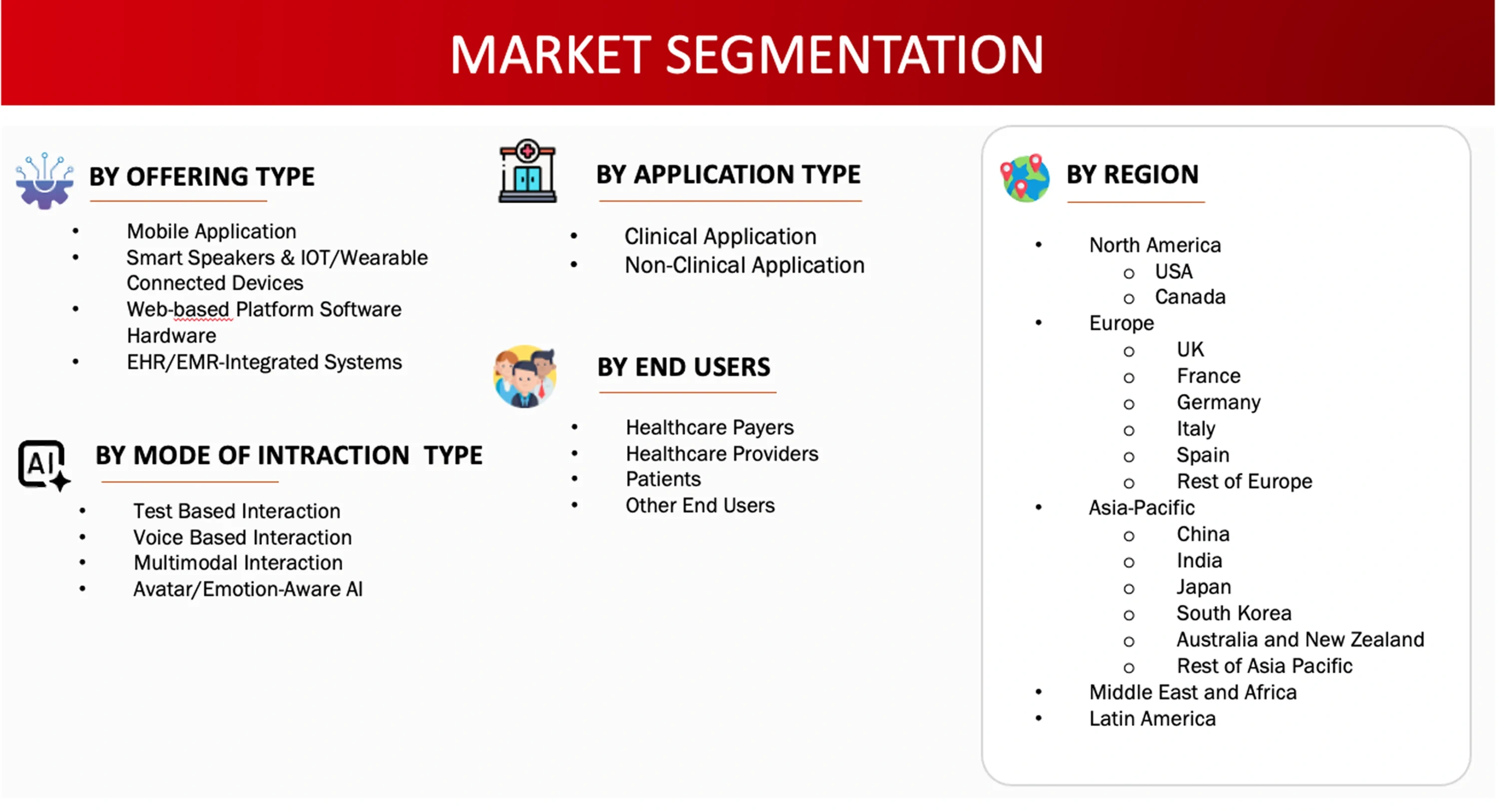
Breakdown by offering type, by mode of interaction type, by application type, by end user, and region

Regional Insights:
Key regional trends and growth opportunities

Future Outlook:
Strategic insights and future market direction
Research Methodology
The study of the AI in virtual medical assistant market is based on a combination of primary and secondary research methodologies, supported by data validation and analytical modeling to ensure accuracy and reliability.
Market Definition: AI in Virtual Medical Assistant Market
Advanced infrared imaging systems (or IR imaging systems) have been developed to detect the heat radiated by objects; they convert this thermal radiation into thermal images so users can analyze this heat radiated by those objects. IR imaging systems incorporate technologies like uncooled microbolometers, cooled detectors, and advanced optics to provide accurate, non-intrusive measurement of temperatures and real-time monitoring of thermal performance. Users can use IR imaging to identify faults, detect abnormalities, and assess operating conditions for multiple applications including industrial inspection, surveillance, health diagnostics, and automotive safety systems.
Key product examples of infrared imaging technology include: handheld thermal cameras; fixed-mounted surveillance cameras; drone-mounted infrared image systems; smartphone thermal imaging modules. In addition, cooled and uncooled IR detectors, lenses, and software platforms for processing and reporting images are also included in some product categories. Across most industries including manufacturing, energy, military, and healthcare, infrared imaging technology is used to improve safety, reduce downtime, and enhance operational efficiency.
Key Stakeholders
The AI in virtual medical assistant market involves a diverse ecosystem of stakeholders:
- AI Virtual Medical Assistant Solution Providers (conversational AI platforms, ambient clinical intelligence providers, digital health assistant developers)
- Healthcare IT and EHR/EMR Vendors (electronic health record providers, healthcare workflow software companies, interoperability solution providers)
- Generative AI and Cloud Infrastructure Providers (AI model developers, cloud computing providers, healthcare AI platform vendors)
- Telehealth and Virtual Care Providers (telemedicine platforms, virtual care networks, remote consultation service providers)
- Hospitals and Health Systems (acute care hospitals, integrated delivery networks, specialty care providers)
- Physician Practices and Ambulatory Care Centers (primary care clinics, outpatient facilities, group practices)
- Health Insurance and Payer Organizations (private insurers, managed care organizations, government healthcare payers)
- Regulatory and Standards Organizations (healthcare regulatory agencies, privacy and interoperability standards bodies)
- Research Institutions and Academic Medical Centers (healthcare AI research organizations, clinical innovation centers)
- System Integrators and Technology Consultants (healthcare digital transformation and implementation service providers)
- Patients and Caregivers (end users utilizing virtual assistants for healthcare access, engagement, and care management)
- Investors (venture capital firms, private equity investors, strategic healthcare and technology investors)
Key Objectives of the Study
- To define, describe, analyze, segment, and forecast the AI in virtual medical assistant by offering type, by mode of interaction type, by application type, by end user.
- To define, describe, analyze, segment, and forecast the AI in virtual medical assistant by offering type, by mode of interaction type, by application type, by end user.
- To provide detailed information regarding key drivers, restraints, opportunities, and challenges influencing market growth
- To strategically analyze the micro indicators with respect to individual growth trends, prospects, and contributions to the overall market size
- To analyze opportunities for stakeholders in the AI in virtual medical assistant industry and emphasize on competitive landscape of the market.
- To develop competitive benchmarking of the key market players based on technology specifications and end users.
- To strategically profile key players and comprehensively analyze their product portfolio offerings, and core competencies
- To analyze competitive developments, such as launches and approvals, agreements, mergers and acquisitions, partnerships, joint ventures, investments and expansions, and collaborations, AI in virtual medical assistant domain.
Need deeper insights on this market?
Get full report access with detailed forecasts, competitive analysis, and segmentation.
Research Approach
This research employs a systematic approach by using primary research along with secondary research to achieve full coverage and accuracy of information about the AI in virtual medical assistant sector. Through this approach, the current market trends in terms of consumer behavior, technological developments, and competitive environment can be analyzed thoroughly.
Secondary Research
Secondary research involves the collection of data from reliable sources such as industry databases, company annual reports, investor presentations, and regulatory filings. This process helps in understanding market trends, identifying key players, and gathering technical and commercial insights.
A comprehensive database of leading companies and market participants is developed through secondary research to support further analysis.
Primary Research
Primary research is conducted to validate findings from secondary research and to gain deeper insights into market dynamics. Interviews are carried out with industry stakeholders across both demand and supply sides, including executives such as CXOs, Vice Presidents, and Directors from business development, marketing, and product teams.
Data is collected through structured questionnaires, email interactions, and telephonic interviews across key regions including North America, Europe, Asia-Pacific, and Rest of the World.
Market Size Estimation
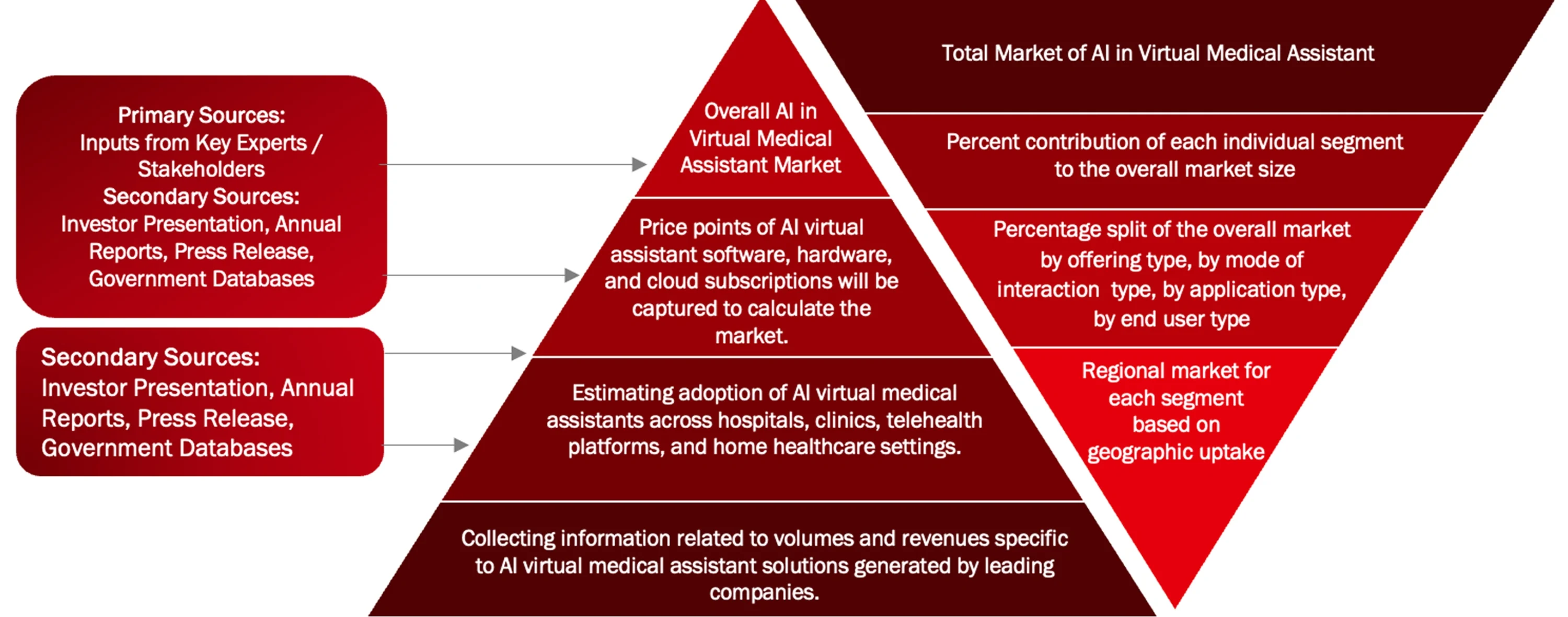
Market size estimation is performed using both top-down and bottom-up approaches. Key market players are identified, and their revenues are analyzed to estimate the overall market size.
The market is further segmented based on:
- Product and service mapping across regions
- Adoption patterns across key application segments
- Insights gathered through primary and secondary research
Data Validation and Research Design
After estimating the overall market size, the data is validated using triangulation methods and market breakdown techniques to ensure accuracy and consistency. Both demand-side and supply-side factors are considered to refine the analysis.
The final data is validated through multiple sources to ensure reliability and to provide accurate insights across all market segments and regions.
Assumptions of the Study
The analysis of the AI in virtual medical assistant market is based on the following key assumptions:
- Trends in the industry are drawn from historical data and current information within the sector
- The future outlook is underpinned by constant economic conditions in the absence of shocks to the market
- The rate of adoption for AI in virtual medical assistant will rise steadily in all important regions
- The income statement and market share figures are estimated using available information from the industry and publicly available data
- The exchange rate and price trends will not be greatly affected during the forecast period
Scope and Limitations
Scope of the Study
This report offers an exhaustive overview of the international AI in virtual medical assistant market and includes the following components:
- Summary of market size, growth trends, and projections
- Carefully segmented market based on products, platform, sample, end users, by mode of acquiring and geography
- Discussion of primary factors influencing the market
- Competitor analysis
- Insights into regional and national market performance
Limitations of the Study
Despite the best efforts being made to keep the results accurate, the study does suffer from some limitations:
- It has been done using both primary and secondary data that come with their own constraints
- Rapid developments in technology might affect the future course of market dynamics
- Some figures are only approximations due to lack of public disclosure
- The report is not an insurance against any disruptions in macroeconomics and geopolitics
- Future forecasts are indicative and subject to change due to altered industry dynamics
Data Triangulation and Market Breakdown
Data triangulation involved the combination of primary research, secondary research, and the Wissen Research analysis. Once the data points were sourced from the secondary market research, we sanitized the data points to make the market sizing and growth forecast more accurate by developing our own assumptions based on the inputs and insights we gather through the primary interviews with the industry experts. Once the data was thoroughly validated through primary interviews from both, demand and supply side of the market, our team of analyst and other team members involved finalized the market sizing and growth forecast.
Data Triangulation Methodology
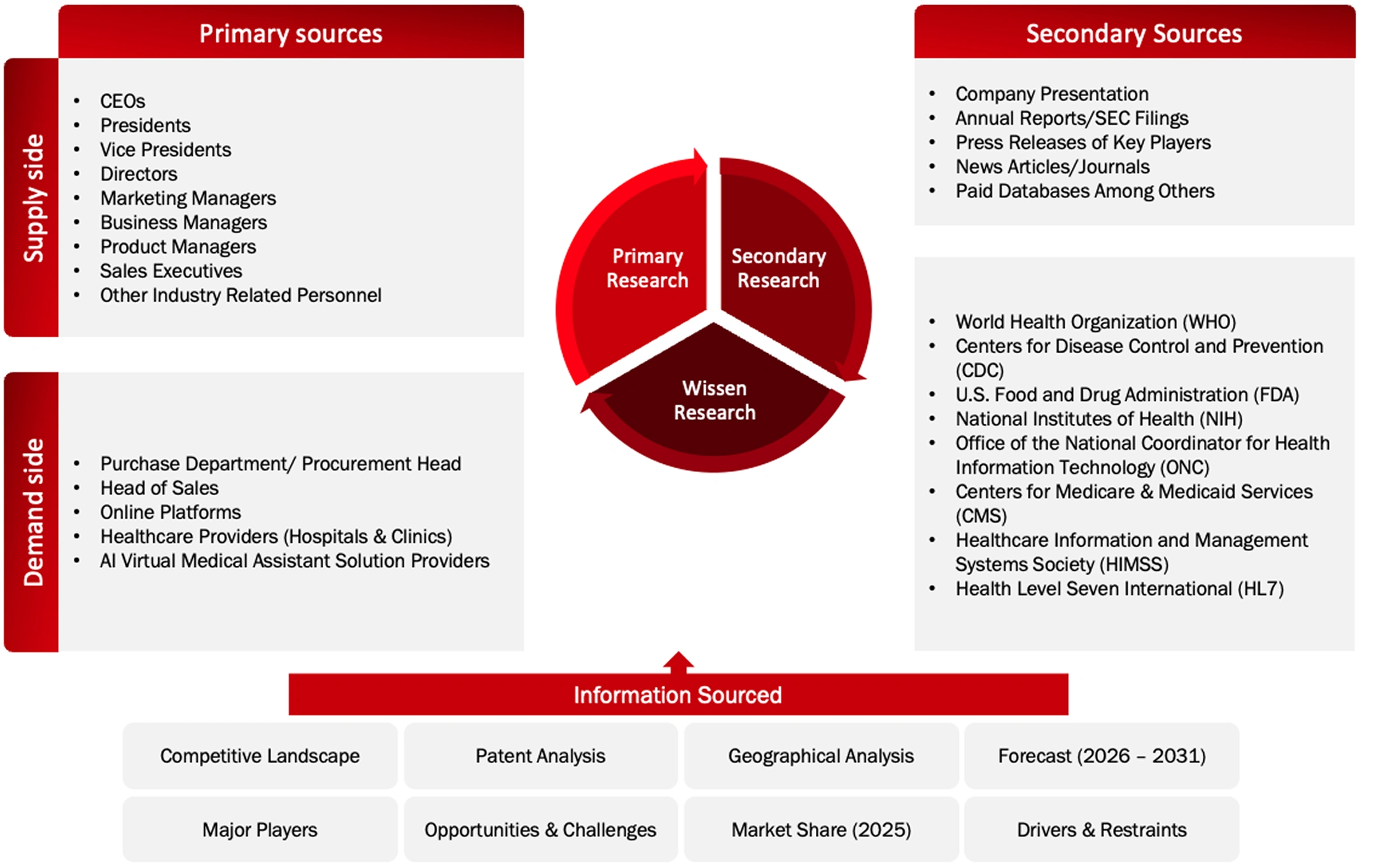
Sources: U.S. Food and Drug Administration, European Medicines Agency, National Institute of Standards and Technology, International Organization for Standardization, International Electrotechnical Commission, Federal Communications Commission, Occupational Safety and Health Administration, American National Standards Institute, Device Coordination Group, Company Website, Press Releases, Annual Reports, Paid Data Sources, and Wissen Research Analysis.
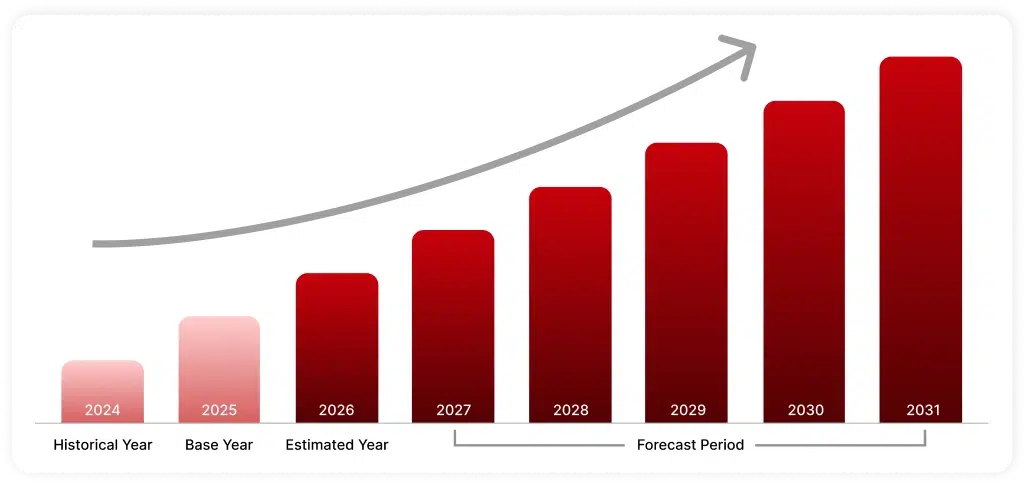
Year Framework
Bottom-Up Approach (Demand Side) And Top-Down Approach (Supply Side)
Bottom-Up Approach (Demand-Side Approach):
Determining the market size through the consolidation of demand among end-users, sectors, and geographic areas, which are calculated according to real-world demand conditions.
Top-Down Approach (Supply-Side Approach):
Calculating the market size through revenue and performance of the industry and its important companies, allocating the market size among various sectors.
Want detailed insights from this report?
Buy this Report
Choose the option that best fits your needs


