
Infrared Imaging Market
Global Industry analysis, Size, Share, Growth, Trends, and Forecast 2026-2031
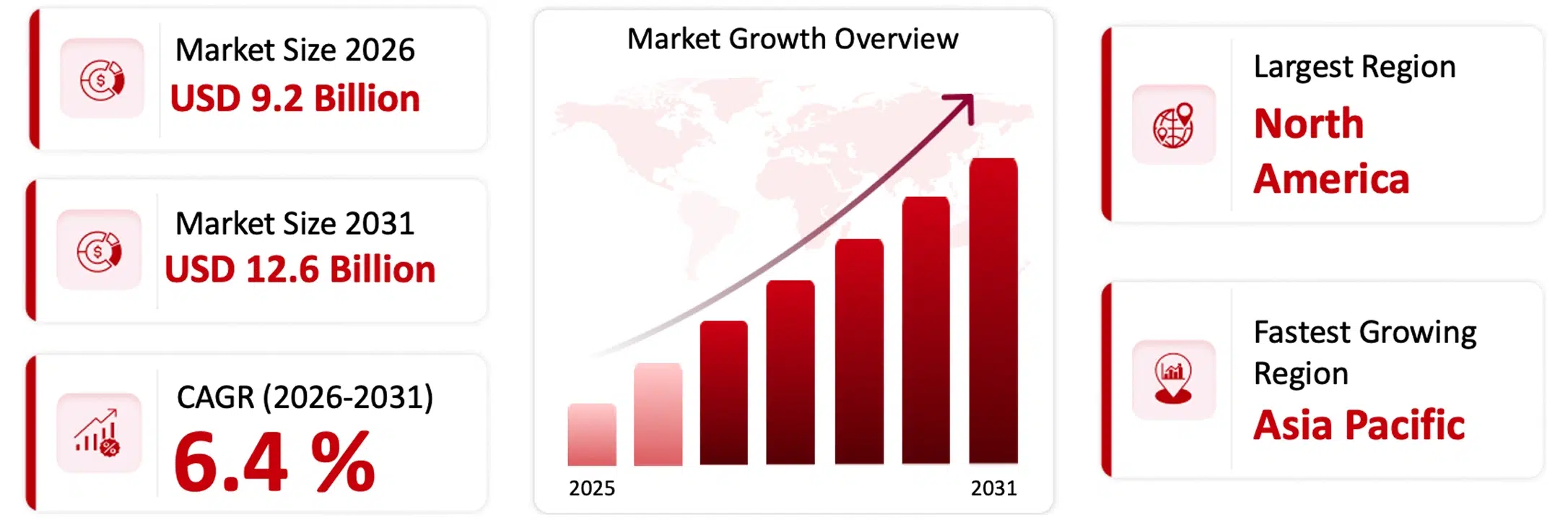
The global infrared imaging market is projected to reach USD 12.6 billion by 2031, growing at a CAGR of 6.4% during the forecast period.
| Market Size (2026): | Forecast (2031): | CAGR (2026–2031): | Leading Region: | Fastest Growing Region: |
|---|---|---|---|---|
| $ 9.2 Billion | $ 12.6 Billion | 6.4 % | North America | Asia Pacific |
Summarize this report with:



Market Overview
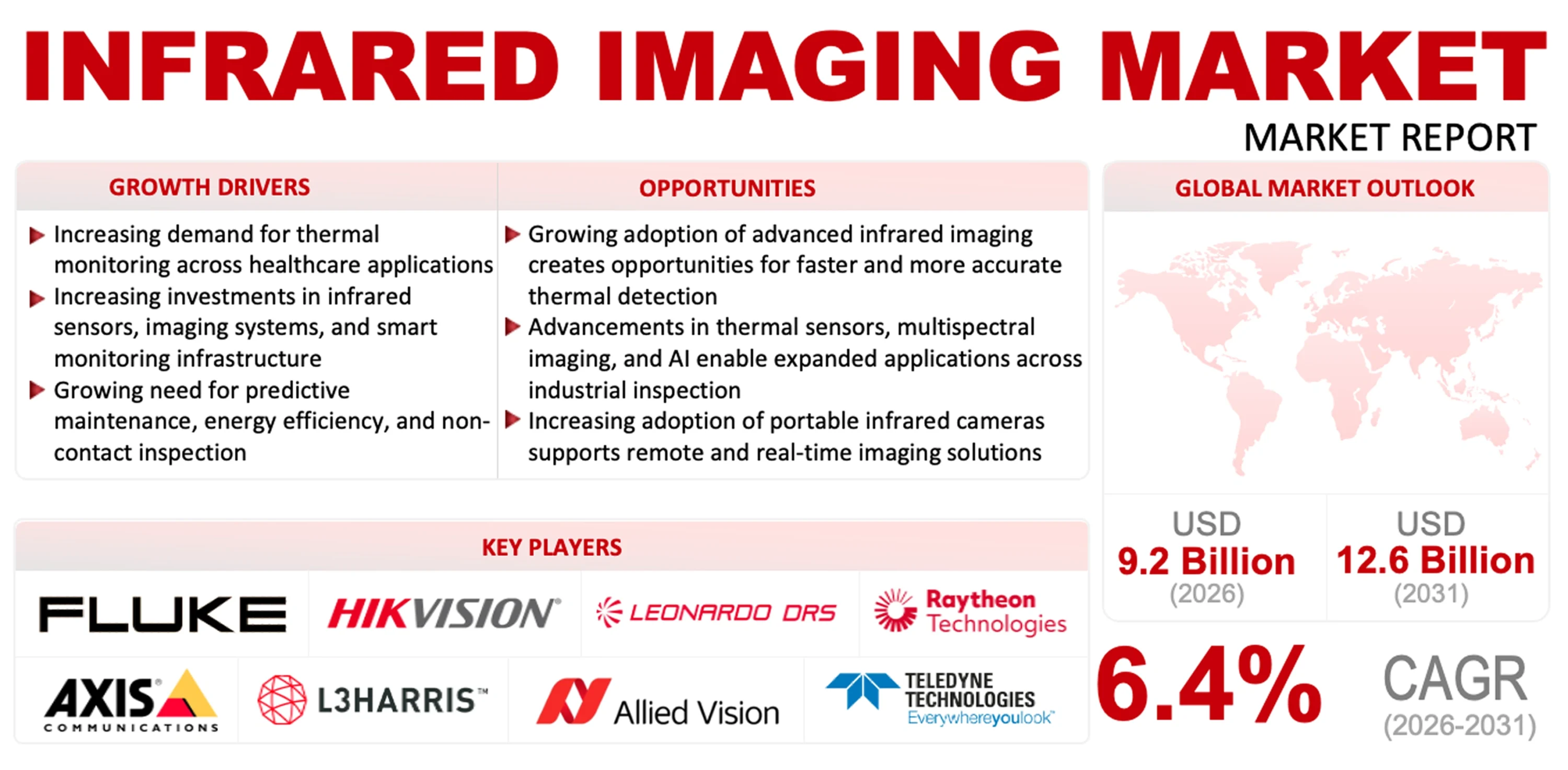
The infrared imaging industry’s continuous growth is characterized by an increase in demand for contactless temperature measurement and real-time thermal measurement across medical, industrial, and security applications. This technology has been instrumental in fever screening, early detection of disease, and monitoring of inflammation during outbreaks of infectious disease. In the industrial environment, infrared imaging plays a valuable role in predictive maintenance by allowing the identification of faults in equipment before they lead to a failure, which helps to minimize both the time an operation is down and the expense of that operation. The market is estimated to be USD 9.2 billion in 2026 and is projected to reach USD 12.6 billion by 2031, growing at a CAGR of 6.4% during the forecast period (2026-2031).
Technology Overview
Infrared imaging systems, commonly referred to as thermal imaging systems, provide a means of detecting and visualizing objects’ heat emissions via their continual radiating thermal patterns so that this information can be analyzed by converting the thermal data into thermal images. These systems can operate at three different wave length ranges of infrared radiation: near wave, midwave and longwave. Typical uses for thermal imaging systems include measuring temperature, surveillance and fault detection. Compared to traditional image forming or monitoring systems, infrared imaging systems have the ability to provide real-time, non-contact continuous monitoring capabilities in areas where there is low-light or where visibility is obscured.
Modern infrared imaging systems employ advanced technology, including artificial intelligence, machine learning and edge computing, to provide better accuracy and automate the detection of anomalies and enable predictive analytics for future events. In addition, sensor technology has improved dramatically; therefore, the use of compact, micro bolometric, uncooled thermal image sensors has resulted in the design of higher-performance, lower-cost, smaller size and less energy-consuming systems. Integration with digital platforms, IoT systems and cloud-based analytics enables the sharing of thermal image data, the remote monitoring of systems, and the ability to make better decisions across various industries.
Key Growth Drivers
- Enforcement of obligatory nighttime Advanced Emergency Brakes (AEB) is hastening acceptance of thermal imaging technology in automotive safety systems.
- The swift growth of SWIR imaging has provided the opportunity for advanced industrial inspection and quality control.
- The overwhelming demand for miniaturization will drive the integration of infrared sensing devices within consumer electronics, wearables and other personal feature devices.
- The movement toward predictive maintenance is resulting in a greater demand for continuous thermal monitoring solutions.
- The increasing implementation of Near Infrared (NIR) imaging technology in the field of healthcare for improved surgical performance and advanced diagnostic procedures.
Infrared imaging Market Key Highlights
Need deeper insights on this market?
Get full report access with detailed forecasts, competitive analysis, and segmentation.
Infrared imaging Market Trends
The infrared imaging industry is going through very dynamic changes with the growth of this technology into numerous industries that were previously outside of infrared technology’s scope. The growth is due to the demand for non-contact monitoring, safety, and real-time diagnostics are helping to push forward the growth of industries like industrial manufacturing, automotive, healthcare, and security. One major trend within the infrared imaging industry is the use of intelligent technologies such as artificial intelligence (AI) and the Internet of Things (IoT), which are now moving infrared cameras from basic imagery-based devices and towards becoming smart analytical tools. Predictive maintenance and condition monitoring are also becoming more prominent with most industries aiming to decrease downtime and improve efficiency through the implementation of these technologies.
Sensor technology advancements are also making infrared devices smaller, cheaper, and more energy efficient so that they can be commercially available to a wider audience. Key infrared wavelength developments will lead to the creation of new applications for both SWIR (Short Wave Infrared) and NIR (Near Infrared) and will provide new opportunities for precise inspections and medical applications. In conclusion, there is a transition taking place in the infrared imaging market which is being driven by rapid technology adoption and increasing numbers of users.
Integration of AI-Based Technology and Edge Computing into Infrared Imaging Systems
The integration of AI-based technology and Edge computing into infrared imaging Systems is a large trend that will affect how consumers use infrared cameras within various industries. Historically, thermal imaging data has been interpreted and made sense of by professionals who have experience using these cameras. This means most organizations can only use thermal imaging if they have experienced staff members who can interpret the data gathered by the camera and perform the necessary follow-up actions, which typically are labor-intensive and take a long time to produce results. As a result, there is limited capacity for companies to use thermal imaging for broad-scale applications.
Modern infrared imaging systems (cameras) now have AI algorithms that provide real-time capabilities for detecting patterns, identifying anomalies, and classifying objects. The use of these algorithms in a thermal imaging camera eliminates the need for manual interpretation of the thermal image created by the camera, which allows general users to make quick and informed decisions without needing to rely on someone with expertise in thermal imaging.
The Edge computing element of this trend allows for data processing at the edge of the infrared imaging camera, reduced latency of data while processing the data directly at the infrared imaging camera, and ultimately reduced reliance on central systems or Cloud-based infrastructure (the Internet). Using Edge processing in this way is particularly important for time-sensitive industries, such as industrial automation, surveillance, and smart city operations.
Expansion of SWIR Imaging in Industrial Inspection and Quality Control
The trend towards increased use of Short-Wave Infrared (SWIR) imaging is also a major factor behind the growth of the infrared imaging industry, particularly in advanced manufacturing fields. SWIR provides advantages over traditional imaging techniques, such as penetrating some materials including silicon and certain plastics. As a result, manufacturers are able to detect internal defects, inconsistencies in the material and various other structural problems that would not be found using conventional methods of visible light or thermal imaging with an equivalent level of ability to see the defect through an industrial endoscope. With the continual improvement of the manufacturing process through automation and precision driven production, the need for dependable non-destructive inspection technologies will continue to grow. A key driver of SWIR adoption in the semiconductor manufacturing, electronic and battery sectors is the importance of quality control. In addition, progress in sensor materials and SWIR system techniques are allowing for lower SWIR system costs, enabling larger-scale deployment. These trends have led to the broader use of SWIR in production lines, assisting in the improvement of product quality, reduction of waste, and maintenance of product consistency in high-volume manufacturing environments.
Key Players in the Infrared Imaging Market
Leading companies in the infrared imaging market are focusing on innovation, strategic partnerships, and expansion of health-centric features to strengthen their market position.


Strategic Activities Within the Infrared Imaging Market
Axis Communications AB (Sweden) introduced advanced thermal and bispectral imaging solutions, including the AXIS Q2802-E and F2180-TE, enhancing proactive monitoring, perimeter security, and edge-based analytics while expanding adoption of infrared imaging within integrated AI-driven security and surveillance infrastructures.
Teledyne Technologies Incorporated (U.S) launched the ASIL-B compliant Tura thermal LWIR camera for ADAS and autonomous vehicles, enhancing pedestrian detection, night vision, and all-weather perception capabilities while supporting automotive safety regulations and expanding adoption of infrared imaging in next-generation mobility applications.
Lynred (France) unveiled the YOCTO1024 ultra-compact 8.5µm microbolometer, delivering higher-resolution XGA thermal imaging in a smaller footprint, improving detection performance and enabling lightweight infrared solutions for defense, surveillance, hunting, and commercial thermal imaging applications.
Infrared Imaging Market Insights
The infrared imaging market is growing steadily because of the expanding use of infrared imaging in more areas including industry, healthcare, automotive, and security applications. Infrared imaging is different from traditional imaging technology in that it can detect temperature without having to touch the object being measured; therefore, infrared imaging provides real-time thermal measurements. Infrared imaging is important for monitoring safety and for detecting faults in equipment. The increase in infrared imaging’s use for predictive maintenance, surveillance, and advanced driver assistance systems (ADAS) has created significant demand for this type of imaging. Technological advancements in sensor technology (e.g., uncooled microbolometers), have created lower-cost sensors that improve the accessibility of infrared imaging.
Infrared imaging has different uses in many industries. For example, in industry, infrared imaging is used for predictive maintenance, monitoring equipment, and quality control through abnormal heat detection. In the health industry, infrared imaging helps to screen for fevers, detect inflammation, and create images for diagnosis. Automobile makers use IR (infrared) cameras in the automotive industry to provide Night Vision (NV) capabilities and Pedestrian Detection (PD) systems for ADAS (Advanced Driver Assistance Systems). In addition, infrared imaging provides an effective security/surveillance solution for monitoring and detection activities under low light or extreme environmental conditions. Additionally, flashlight/torch applications are found in the firefighting, aerospace, and energy audit markets, providing enhanced safety and operational efficiency through thermal analysis.
The increase in requirement for both real time and non-contact monitoring solutions in different sectors of the market is the main force behind the growth of the market. The increasing use of infrared imaging in manufacturing and energy sectors for predictive maintenance is one of the areas driving growth in this market by providing a means to pinpoint faults before they result in failure of a system. The adoption of non-contact monitoring solutions has also increased as a result of increased safety standards in the automotive as well as industrial sectors. In addition to this, the combination of artificial intelligence and IoT technologies with infrared systems is improving automation to provide faster, more accurate decision making from the monitoring process. Furthermore, the reduction in the cost of sensors and the development of small portable devices are providing increasing accessibility to non-contact monitoring solutions. In addition to this, additional global market growth is anticipated as a result of continued investment in ‘smart’ infrastructure and security applications.
Key trends in the infrared imaging field are AI analytics, growth of SWIR and NIR technology, and increasing use of consumer electronics with smaller sensors. The use of edge computing is allowing for real-time processing of data on devices which will improve productivity for applications that require immediate results. The infrared imaging industry is also dealing with challenges such as the high cost of the latest generation of systems, more complicated means of interpreting data, and some limitations of sensitivity when measuring in certain environments. Additionally, some industries are highly regulated (e.g., healthcare) which means that additional regulation may exist regarding the deployment of products used in these industries and standard for calibrating the systems.
Rapid industrialization, growing manufacturing activity, and an increase in security and surveillance investments are propelling the rapid development of the infrared imaging market in the Asia Pacific region. Fastest growing countries are China, India and Japan due to strong government support to create smart cities, build infrastructure and automate industries. Increased use of infrared imaging by automotive manufacturers and electronics manufacturers. Furthermore, access to infrared camera technology will improve with the increase in local and global manufacturers, which will further lead to more rapid growth of the infrared imaging market in Asia-Pacific.
Infrared Imaging Market Dynamics
Drivers: Increasing adoption of intelligent, automated, and high-performance infrared imaging systems.
Key drivers of the growth of the infrared thermal imaging sector include a rise in the use of advanced technologies, particularly automation, AI, and rapid-response thermal analytic capabilities. The current generation of infrared cameras supports high levels of automation for anomaly detection, continuous monitoring, and real-time decision-making, thereby enhancing operational performance across multiple industries. Key applications of infrared systems, for example, for predictive maintenance, industrial safety, and surveillance, require non-contact temperature measurement and real-time thermal analysis. In addition, integration capabilities with IoT platforms and cloud-based systems provide seamless data transfer and enable remote monitoring and improved workflow management. Infrared capabilities to operate in low-light conditions and under harsh operating conditions provide unmatched functionality for use in many applications across the automotive, energy, and manufacturing sectors, thereby increasing demand for infrared thermal imaging solutions on a global basis.
Opportunities: Expansion into decentralized applications and integration across multi-functional platforms
Infrared imaging has many opportunities due to the increased number of portable and compact thermal imaging devices being used in decentralized applications. Handheld and smartphone compatible infrared cameras are being used to quickly diagnose problems and perform inspections in remote areas, in the field, or in response to emergency situations. Multi-functional platforms combine the capabilities of Thermal Imaging and Visible Imaging, LiDAR and AI analytic technologies to allow users more options when utilizing these technologies for different industries (i.e. Smart Infrastructure, Autonomous Vehicles and Advanced Manufacturing). As demand for preventive maintenance, energy efficiency and safety compliance continues to grow, new opportunities for wider acceptance of these technologies will become available; the emergence of new markets will create opportunities due to increased levels of investment into Industrial Automation, Infrastructure Development and Security Systems, and access will continue to improve as new technology makes it easier to use.
Challenges: High system costs, technical complexity, and regulatory limitations
The infrared imaging industry is seeing tremendous advances from its current high growth rate. But the infrared imaging market has many obstacles in front of it that may keep widespread adoption of infrared imaging devices to a minimum.
The high initial cost of advanced infrared systems, such as those with high-resolution sensors or SWIR sensors, and the cost of on-going maintenance, limit their use by small and medium-sized companies. The requirement of having to have similar expertise in interpreting thermal data is currently another barrier to widespread adoption, although the continued integration of AI will greatly reduce this barrier over time.
Environmental conditions such as temperature changes, humidity, and emissivity variations can affect a measurement’s accuracy; as a result, these factors may present operational difficulties. Regulatory guidelines and export limitations, particularly for high performance thermal imaging sensors that are utilized in defense and surveillance applications, have the ability to delay the introduction of new products into the market and limit the potential growth of the infrared imaging marketplace.
Two other issues that manufacturers of infrared imaging devices must contend with are the integration of their products with existing digital infrastructure, and the standardization of data across platforms to allow for greater opportunity for mainstream adoption
Technology and Market Insights
From a market perspective, infrared imaging is experiencing rapid development as many sectors continue to emphasize safety, automation, and data-based operations. The capability of infrared imaging to produce reliable thermal imaging without contact in real time is driving more businesses in manufacturing, automotive, healthcare, and security to integrate infrared solutions.
The relatively low investment by business in predictive maintenance, energy efficiency, and high-tech surveillance has translated into increased long-term revenue for businesses in this market. With improvements in sensor technology, including uncooled microbolometers and new types of detectors, the cost of infrared systems is continuing to decrease, and they can be produced on a larger scale. As a result, infrared systems have become much easier and more affordable for many types of customers.
Technology Scope and Products
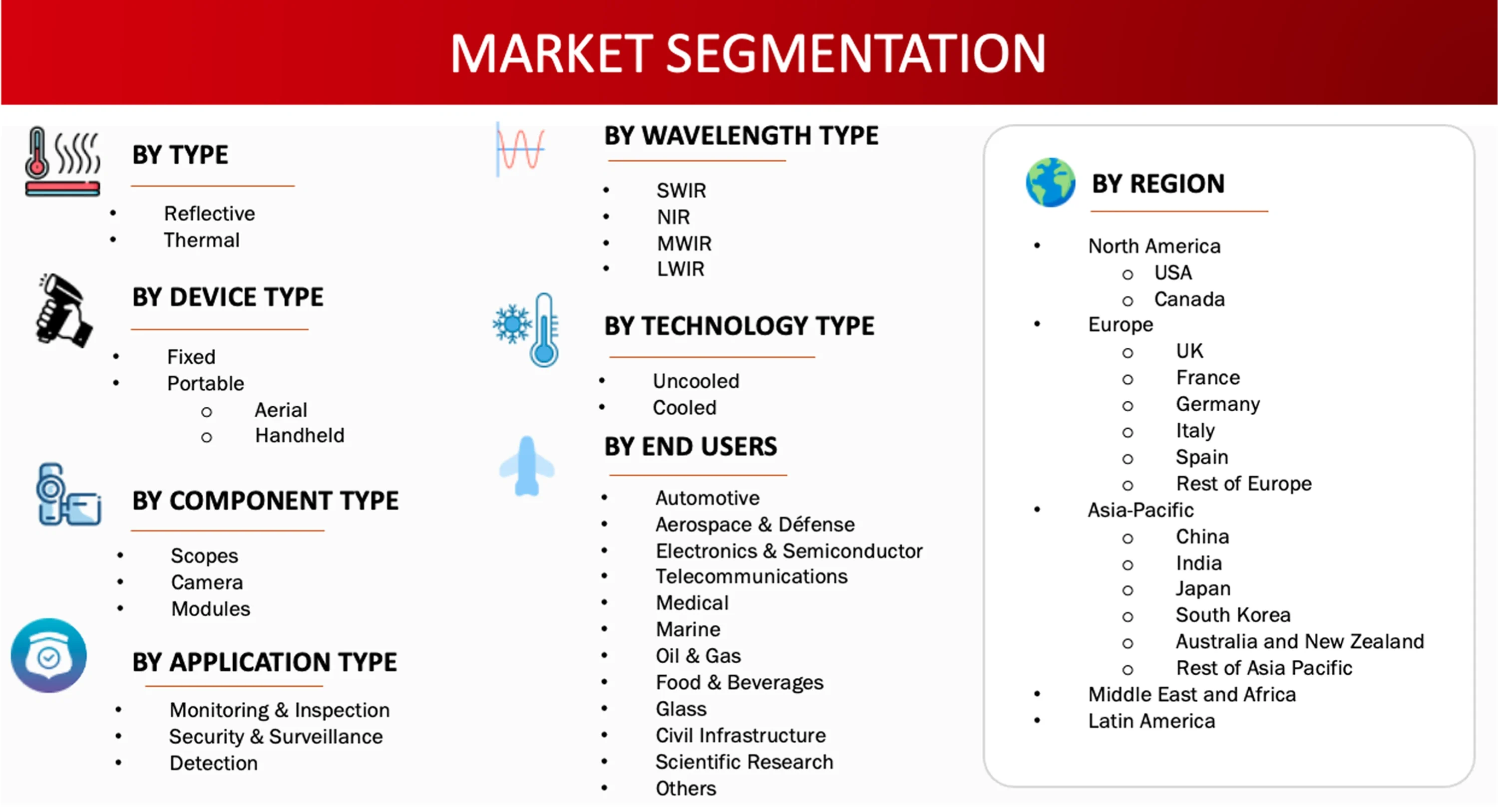
Infrared Imaging Market Segmentation
Want detailed insights from this report?
Industry Developments and Competitive Landscape
The infrared imaging market is experiencing an explosion of innovation as well. Sensor engineering and artificial intelligence have witnessed significant advancements which are fuelling growth of the infrared imaging market. Increasing detector sensitivity, image resolution as well as real-time processing ability of infrared imaging systems are allowing for faster and more precise temperature analysis in critical applications. In addition, the incorporation of AI-based image recognition into infrared cameras through automation enables faster detection of temperature deviations, equipment failures, and threats to security.
According to financial information from 2025, as well as information about defense procurement, the infrared imaging market has been led by demand for portable (field-use) options. As such, there has been a surge in handheld device use, specifically in both military and industrial applications.
-
Teledyne Technologies (USA) reported a record $6.115 billion revenue in 2025, with significant growth in portable systems and components related to infrared imaging.
-
L3Harris Technologies (USA) was awarded a $263 million contract for the production of handheld night vision systems, and over 18,000 units were released worldwide.
-
The U.S. Army started using the BiNOD program in 2025 and awarded contracts as much as $465 million focusing on infrared imaging devices that could be used by soldiers and carried in their equipment.
-
Handheld infrared systems utilize uncooled microbolometer sensors, which accounted for approximately 75% of revenue for those systems.
-
Many industrial companies have adopted the use of handheld thermal cameras to assist employees in the maintenance, inspection, and real-time detection of problems while they are working in field environments.
Due to its complete and high-value system, the camera segment dominated the infrared imaging market in 2025. Thermal cameras are very versatile by integrating sensors, optics, processors, and software into one solution. Therefore, in addition to being widely used in many different markets, including Defense, industrial, and commercial use. The large government contract, security infrastructure, and predictive maintenance markets (Module & Scope) are the primary reasons for the thermal camera market to lead in revenues over the module or scope business.
-
The revenue reported by Teledyne Technologies was around 6.12 billion US dollars, with imaging systems responsible for approximately 7.9% of segment growth.
-
L3Harris Technologies was awarded a $263 million US Army contract to produce new ENVG-B systems that will use advanced thermal camera technology.
-
Leonardo DRS received a $117 million order from the US Army to produce thermal weapon sight systems (camera-based platforms).
-
The US Department of Defense has budgeted approximately 310.7 billion US dollars for procurement and R&D in 2025 to support EO/IR camera-based systems.
-
Thermal cameras represented nearly 50% of the total share of defense infrared systems in 2025 and demonstrated dominance over modules and scopes.
In 2025, the infrared imaging market was primarily driven by the United States as the dominant supplier/business leader, thanks to the success of the major players in the industry and large amounts of funding available for defense-related systems.
-
North America was the largest market for infrared imaging products because several major companies had very successful revenues. Companies like Teledyne Technologies (USA) and RTX Corporation (USA) reported record revenues resulting from a high level of demand for infrared imaging products/services.
-
Large-scale shelf-market expansion in the U.S. economy due to large government investments into infrared-based systems (i.e., satellite-based IR surveillance systems/night-vision systems, etc.) contributed significantly to the growth of the overall infrared imaging market.
-
Additionally, the award of government contracts (EO/IR) to suppliers for portables imaging devices and space-based infrared systems continued to increase and enhance the overall market for infrared image-related devices.
-
The consolidation of global manufacturers utilizing strategic acquisitions (example: Teledyne’s acquisition of FLIR Systems) of infrared imaging manufacturer capabilities within North America.
-
Lastly, Canada also contributed to market expansion through modernization projects with several Canadian Armed Forces requiring that they procure, operate, and maintain infrared-integrated systems for airborne air defense and search and rescue operations.
What This Report Covers-
This report provides a comprehensive analysis of the infrared imaging market, offering insights into key trends, growth drivers, challenges, and future opportunities. It is designed to support strategic decision-making through a combination of quantitative data and qualitative analysis.
Specifically, the report covers:

Market Overview & Definition:
Overview of the market scope, structure, and key terminology

Market Size & Forecast:
Historical data and future projections across key segments and regions

Key Market Trends:
Insights into emerging trends, technological advancements, and evolving demand patterns

Drivers, Restraints & Opportunities:
Analysis of key factors influencing infrared imaging market growth

Competitive Landscape:
Overview of major players, their strategies, and recent developments

Detailed Patent Analysis:
This includes, top assignees, geography focus of top assignees, legal status, technology evolution, key patents and patent trends and innovations

Segmentation Analysis:
Breakdown by type, by device type, by component type, by technology type, by wavelength type, by application type, by end user, and region

Regional Insights:
Key regional trends and growth opportunities

Future Outlook:
Strategic insights and future market direction
Research Methodology
The study of the infrared imaging market is based on a combination of primary and secondary research methodologies, supported by data validation and analytical modeling to ensure accuracy and reliability.
Market Definition: Infrared Imaging Market
Advanced infrared imaging systems (or IR imaging systems) have been developed to detect the heat radiated by objects; they convert this thermal radiation into thermal images so users can analyze this heat radiated by those objects. IR imaging systems incorporate technologies like uncooled microbolometers, cooled detectors, and advanced optics to provide accurate, non-intrusive measurement of temperatures and real-time monitoring of thermal performance. Users can use IR imaging to identify faults, detect abnormalities, and assess operating conditions for multiple applications including industrial inspection, surveillance, health diagnostics, and automotive safety systems.
Key product examples of infrared imaging technology include: handheld thermal cameras; fixed-mounted surveillance cameras; drone-mounted infrared image systems; smartphone thermal imaging modules. In addition, cooled and uncooled IR detectors, lenses, and software platforms for processing and reporting images are also included in some product categories. Across most industries including manufacturing, energy, military, and healthcare, infrared imaging technology is used to improve safety, reduce downtime, and enhance operational efficiency.
Key Stakeholders
The infrared imaging market involves a diverse ecosystem of stakeholders:
- Device Manufacturers (thermal cameras, handheld imagers, fixed surveillance systems, drone-mounted infrared systems)
- Sensor & Component Providers (uncooled microbolometers, cooled detectors, infrared lenses, optics, semiconductor materials)
- Software & Analytics Providers (thermal imaging software, AI-based analytics platforms, image processing and reporting tools)
- System Integrators (security and surveillance system providers, industrial automation companies, smart infrastructure integrators)
- End-Use Industries (manufacturing, energy & utilities, automotive, aerospace & defense, healthcare, construction)
- Defence & Government Agencies (military organizations, border security, law enforcement agencies)
- Testing, Inspection & Certification (TIC) Companies (industrial inspection, predictive maintenance service providers)
- Research Institutions and Academic Organizations (R&D in sensor technologies, materials, and imaging applications)
- Distributors and Channel Partners (industrial equipment distributors, electronics suppliers, solution providers)
- Regulatory & Standards Organizations (safety, calibration, and imaging standards authorities)
- Technology Partners (AI, IoT, cloud computing, and edge computing solution providers)
- Investors (venture capital firms, private equity investors, and strategic industrial stakeholders)
Key Objectives of the Study
- To define, describe, analyze, segment, and forecast the infrared imaging by type, by device type, by component type, by technology type, by wavelength type, by application type, by end user
- To describe and forecast the market for four key regions: North America, Europe, Asia Pacific, and Rest of the World
- To provide detailed information regarding key drivers, restraints, opportunities, and challenges influencing market growth
- To strategically analyze the micro indicators with respect to individual growth trends, prospects, and contributions to the overall market size
- To analyze opportunities for stakeholders in the infrared imaging industry and emphasize on competitive landscape of the market
- To develop competitive benchmarking of the key market players based on technology specifications and end user
- To strategically profile key players and comprehensively analyze their product portfolio offerings, and core competencies
- To analyze competitive developments, such as launches and approvals, agreements, mergers and acquisitions, partnerships, joint ventures, investments and expansions, and collaborations, infrared imaging domain
Need deeper insights on this market?
Get full report access with detailed forecasts, competitive analysis, and segmentation.
Research Approach
This research employs a systematic approach by using primary research along with secondary research to achieve full coverage and accuracy of information about the infrared imaging sector. Through this approach, the current market trends in terms of consumer behavior, technological developments, and competitive environment can be analyzed thoroughly.
Secondary Research
Secondary research involves the collection of data from reliable sources such as industry databases, company annual reports, investor presentations, and regulatory filings. This process helps in understanding market trends, identifying key players, and gathering technical and commercial insights.
A comprehensive database of leading companies and market participants is developed through secondary research to support further analysis.
Primary Research
Primary research is conducted to validate findings from secondary research and to gain deeper insights into market dynamics. Interviews are carried out with industry stakeholders across both demand and supply sides, including executives such as CXOs, Vice Presidents, and Directors from business development, marketing, and product teams.
Data is collected through structured questionnaires, email interactions, and telephonic interviews across key regions including North America, Europe, Asia-Pacific, and Rest of the World.
Market Size Estimation
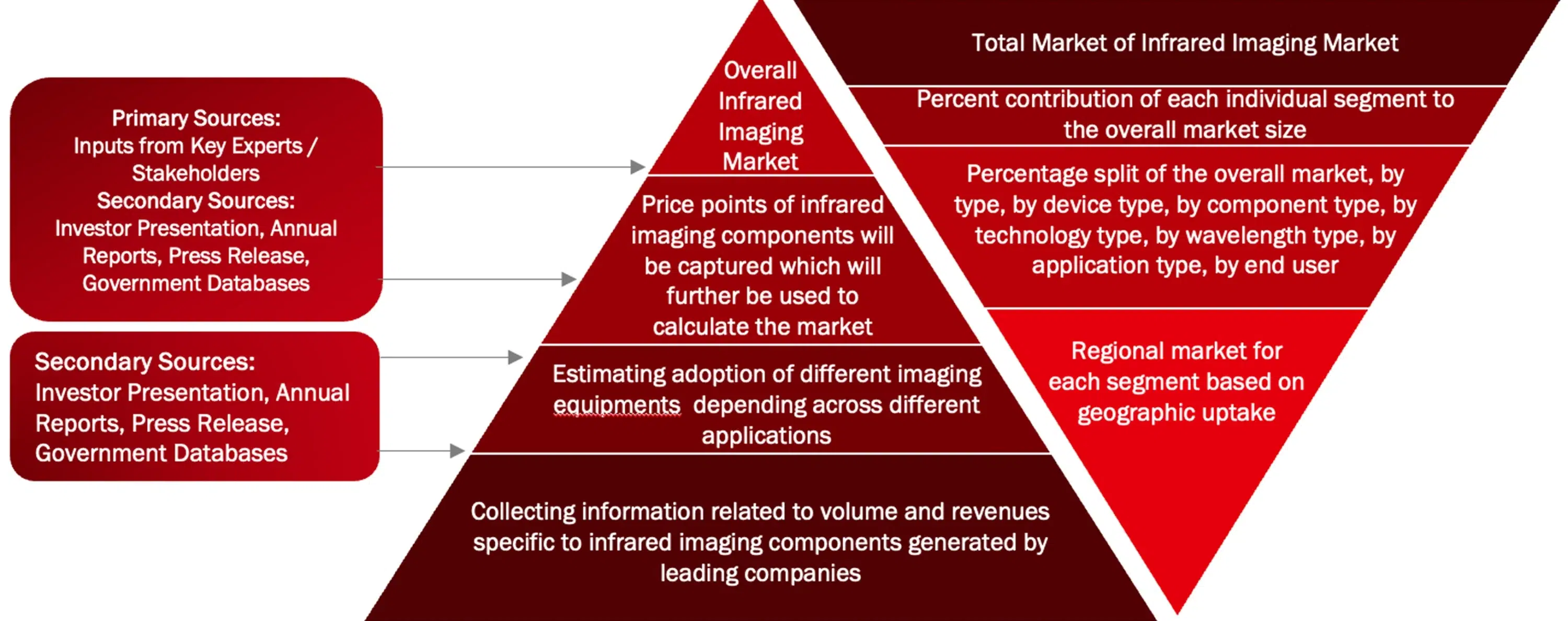
Market size estimation is performed using both top-down and bottom-up approaches. Key market players are identified, and their revenues are analyzed to estimate the overall market size.
The market is further segmented based on:
- Product and service mapping across regions
- Adoption patterns across key application segments
- Insights gathered through primary and secondary research
Data Validation and Research Design
After estimating the overall market size, the data is validated using triangulation methods and market breakdown techniques to ensure accuracy and consistency. Both demand-side and supply-side factors are considered to refine the analysis.
The final data is validated through multiple sources to ensure reliability and to provide accurate insights across all market segments and regions.
Assumptions of the Study
The analysis of the infrared imaging market is based on the following key assumptions:
- Trends in the industry are drawn from historical data and current information within the sector
- The future outlook is underpinned by constant economic conditions in the absence of shocks to the market
- The rate of adoption for infrared imaging will rise steadily in all important regions
- Advancements in AI, connectivity, and lab-on-chip will continue to drive growth in the Infrared imaging market
- The income statement and market share figures are estimated using available information from the industry and publicly available data
- The exchange rate and price trends will not be greatly affected during the forecast period
Scope and Limitations
Scope of the Study
This report offers an exhaustive overview of the international infrared imaging market and includes the following components:
- Summary of market size, growth trends, and projections
- Carefully segmented market based on products, platform, sample, end users, by mode of acquiring and geography
- Discussion of primary factors influencing the market
- Competitor analysis
- Insights into regional and national market performance
Limitations of the Study
Despite the best efforts being made to keep the results accurate, the study does suffer from some limitations:
- It has been done using both primary and secondary data that come with their own constraints
- Rapid developments in technology might affect the future course of market dynamics
- Some figures are only approximations due to lack of public disclosure
- The report is not an insurance against any disruptions in macroeconomics and geopolitics
- Future forecasts are indicative and subject to change due to altered industry dynamics
Data Triangulation and Market Breakdown
Data triangulation involved the combination of primary research, secondary research, and the Wissen Research analysis. Once the data points were sourced from the secondary market research, we sanitized the data points to make the market sizing and growth forecast more accurate by developing our own assumptions based on the inputs and insights we gather through the primary interviews with the industry experts. Once the data was thoroughly validated through primary interviews from both, demand and supply side of the market, our team of analyst and other team members involved finalized the market sizing and growth forecast.
Data Triangulation Methodology
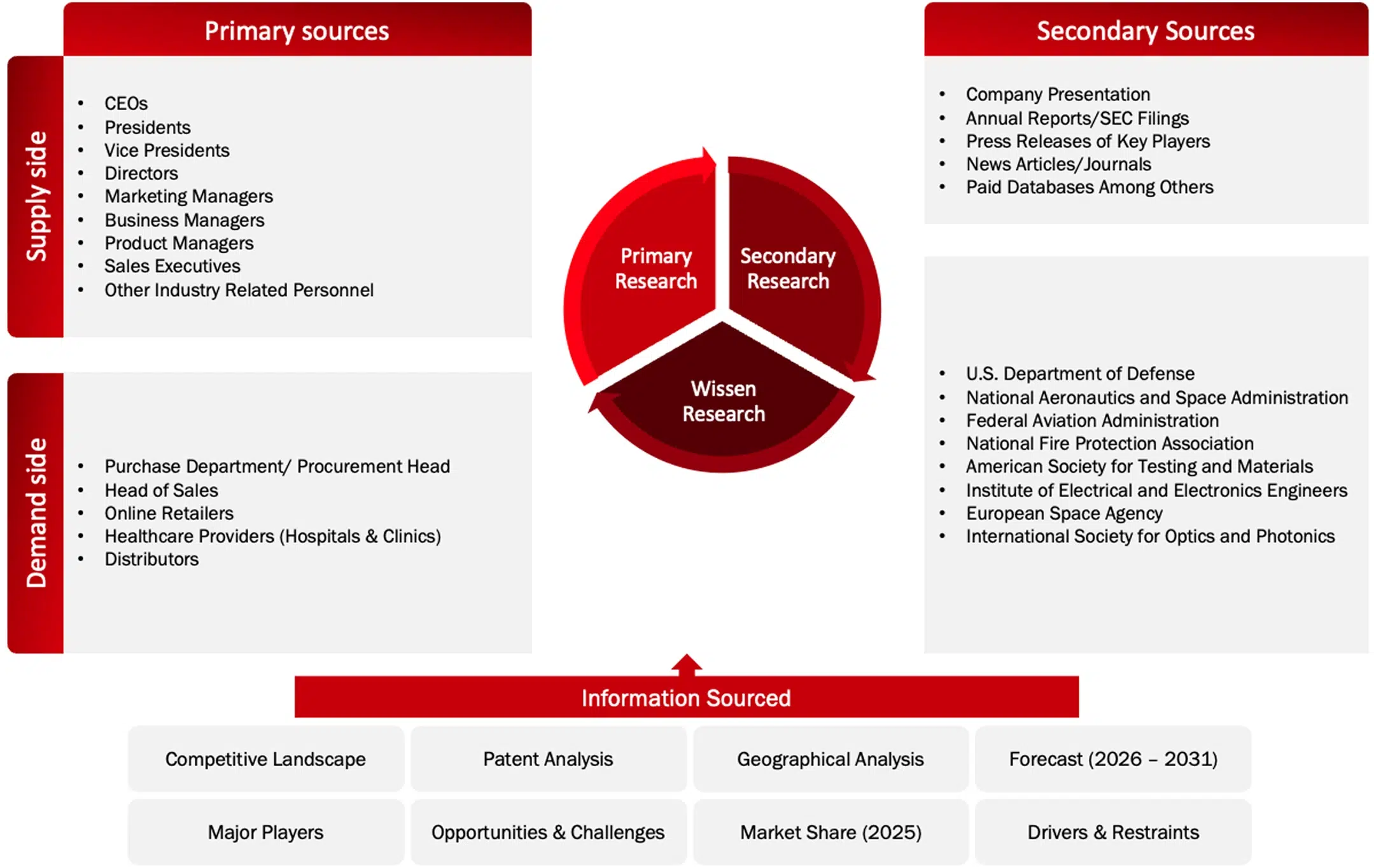
Sources: U.S. Food and Drug Administration, European Medicines Agency, National Institute of Standards and Technology, International Organization for Standardization, International Electrotechnical Commission, Federal Communications Commission, Occupational Safety and Health Administration, American National Standards Institute, Device Coordination Group, Company Website, Press Releases, Annual Reports, Paid Data Sources, and Wissen Research Analysis.
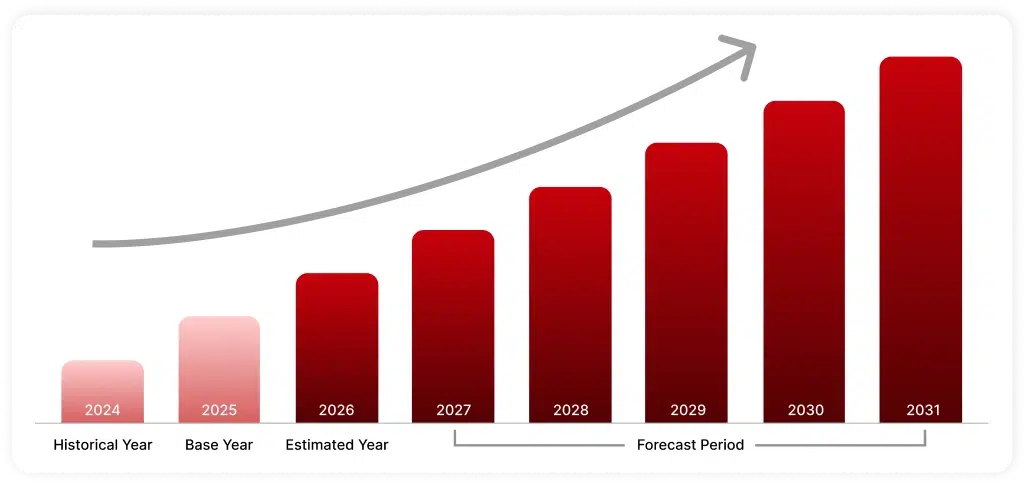
Year Framework
Bottom-Up Approach (Demand Side) And Top-Down Approach (Supply Side)
Bottom-Up Approach (Demand-Side Approach):
Determining the market size through the consolidation of demand among end-users, sectors, and geographic areas, which are calculated according to real-world demand conditions.
Top-Down Approach (Supply-Side Approach):
Calculating the market size through revenue and performance of the industry and its important companies, allocating the market size among various sectors.
Want detailed insights from this report?
Buy this Report
Choose the option that best fits your needs