
System Prior Art Search: Vehicle Hacking Demo Case Study
Case Study

Could a Real-World Vehicle Hacking Demo Strengthen a Patent Invalidation Search?

By expanding an automotive cybersecurity invalidation search to pre-priority-date demonstrations, real-vehicle testing footage and public technical evidence, the investigation uncovered potentially relevant system prior art.

Case Study Type Invalidation Search
Industry Cybersecurity
Publication Date October 26, 2026
Vehicle hacking image

The Client's Challenge

The assignment concerned a patent relating to cybersecurity testing of vehicle systems. As connected vehicles incorporate increasingly sophisticated electronic and software-based functions, their communication networks become important targets for security assessment.

Automotive cybersecurity testing seeks to identify whether vehicle systems can be manipulated through unauthorized messages, malicious traffic or other attack techniques. A penetration test may involve specialized equipment that communicates with a vehicle’s CAN bus, collects test data and supports the assessment of the vehicle’s response to defined test scenarios.
car hacking image

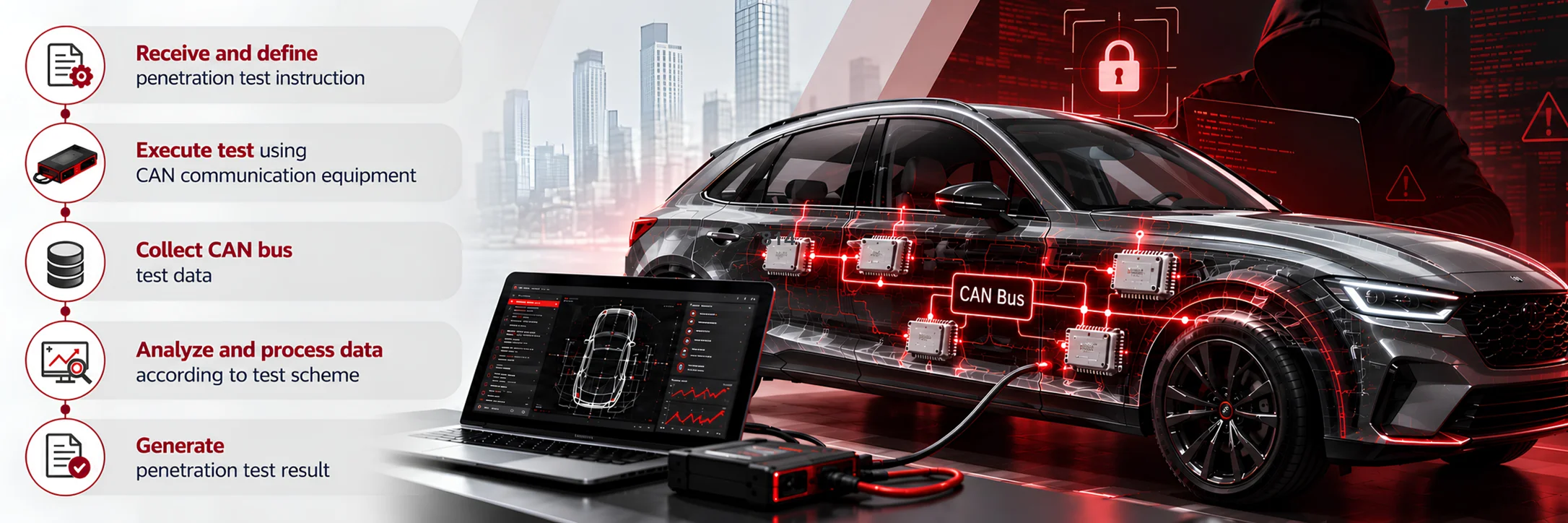
The subject patent described a testing workflow involving several connected operations:

    • Receiving and defining a penetration-testing instruction for a target vehicle.
    • Executing the test using specialized CAN communication equipment.
    • Collecting CAN bus test data during the investigation.
    • Processing and analyzing the collected data according to a test scheme.
    • Generating a penetration-testing result from the analysis.
Objective icon
CLIENT’S OBJECTIVE

To investigate whether the claimed workflow or its relevant technical features had been disclosed before the applicable patent priority date.

The investigation sought relevant prior art capable of supporting a patent invalidation assessment.

Clients come to us for answers.
They leave with opportunities they didn’t know existed.

Our experts help organizations uncover insights, opportunities and strategic directions that traditional approaches often miss.

Wissen’s Out-of-the-Box Approach:

System Prior Art Through Real-World Cybersecurity Demonstrations

  • Recognizing the limitations of conventional patent literature searching, the investigation expanded beyond published documents to explore real-world demonstrations of vehicle cybersecurity testing.
  • To identify potentially relevant system prior art, the investigation focused on publicly demonstrated technologies and cybersecurity testing activities that may have existed before the patent’s priority date, including:
  • Historical demonstrations and consumer exhibitions
  • Vehicle hacking videos
  • CAN bus penetration-testing videos
  • Cybersecurity testing tools & software

Identifying Relevant System Prior Art

  • A focused investigation was conducted across historical technology exhibitions, online video platforms and automotive cybersecurity-related sources.

  • The search identified a CES 2017 video featuring connected-vehicle technology and a demonstration described as remote cyber-hacking of a real vehicle.

  • The investigation subsequently expanded to YouTube and other industry-related leads, uncovering additional cybersecurity testing footage and a video depicting a vehicle hacking competition.

  • These demonstrations provided potentially relevant leads for examining the practical implementation of automotive cybersecurity testing beyond what had emerged from conventional documentary searches.

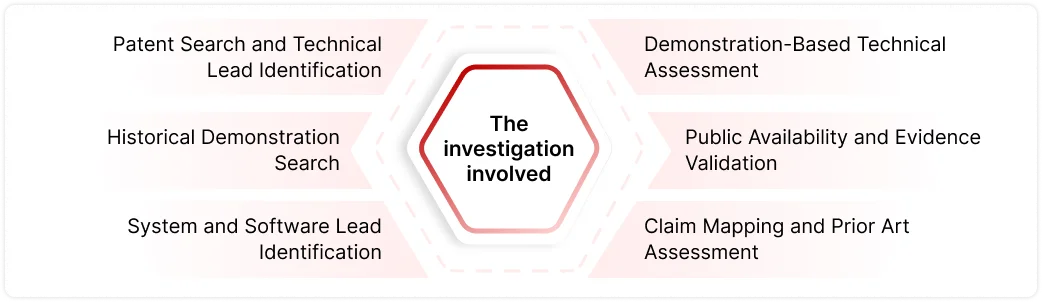
Our Methodology

Traditional Search Limitations
Identification of System Prior Art
Video Search and Discovery
Technology Provider Research
Technical Evaluation and Claim Mapping
Independent Evidence Corroboration
System Prior Art Assessment
Traditional Search Limitations
  • Identify gaps in conventional patent disclosures.
  • Assess limitations in documented testing workflows.
  • Explore alternative evidence sources.
Identification of System Prior Art
  • Identify pre-priority-date vehicle cybersecurity demonstrations.
  • Explore historical CES exhibitions and cybersecurity events.
  • Focus on real-world vehicle hacking and CAN bus testing.
Video Search and Discovery
  • Search YouTube using targeted cybersecurity keywords.
  • Identify CES 2017 vehicle hacking footage.
  • Explore hacking competitions and testing demonstrations.
Technology Provider Research
  • Investigate automotive cybersecurity companies.
  • Explore dSPACE, Argus Cyber Security and Continental Automotive.
  • Identify additional technical evidence sources.
Technical Evaluation and Claim Mapping
  • Examine demonstrated penetration-testing workflows.
  • Assess CAN bus testing and data analysis features.
  • Map identified disclosures against patent claims.
Independent Evidence Corroboration
  • Verify original video sources and publication dates.
  • Establish pre-priority-date public availability.
  • Cross-check findings with independent technical evidence.
System Prior Art Assessment
  • Evaluate technical relevance to patent claims.
  • Identify disclosed and unsupported claim elements.
  • Assess potential invalidation relevance.
Outcome:

Identification of potentially relevant system prior art through historical vehicle cybersecurity demonstrations expanding the search beyond conventional patent literature.

System Prior Art Investigation Methodology

The investigation expanded beyond conventional patent databases and technical publications to identify publicly demonstrated vehicle cybersecurity testing systems that may have disclosed relevant functionality before the subject patent’s priority date.

Vehicle hacking methodolgy

The investigation identified historical vehicle cybersecurity demonstrations, including footage showing a real-vehicle hacking demonstration associated with CES 2017 and a separate vehicle hacking competition.

The identified demonstrations provided additional leads for evaluating the historical implementation of vehicle cybersecurity testing.

Technical Challenges Addressed Through System Prior Art Analysis

Challenge 1: Identifying Vehicle Cybersecurity Testing in Real-World Demonstrations

One of the key challenges was determining whether vehicle cybersecurity testing techniques relevant to the subject patent had been publicly demonstrated before the applicable priority date. Conventional patent searches provided useful technical leads but identifying evidence of practical implementation required exploring sources beyond published patent documents.

Solution

The investigation expanded to historical technology exhibitions, YouTube demonstrations and automotive cybersecurity events. A CES 2017 video reportedly showing a connected vehicle being subjected to a remote cyber-hacking demonstration was identified as a potentially relevant lead. Additional searches uncovered footage of vehicle cybersecurity testing and a separate hacking competition.

The investigation identified the following:
  • Historical demonstrations of vehicle cyberattacks and cybersecurity testing.
  • Publicly available footage of real-vehicle testing activities.
  • Automotive security demonstrations and hacking competitions.
  • Potential industry and software-provider sources for corroborating technical details.

These findings broadened the investigation beyond conventional patent literature and provided additional leads for evaluating the public demonstration of vehicle cybersecurity techniques before the relevant cut-off date.

vehicle hacking solution
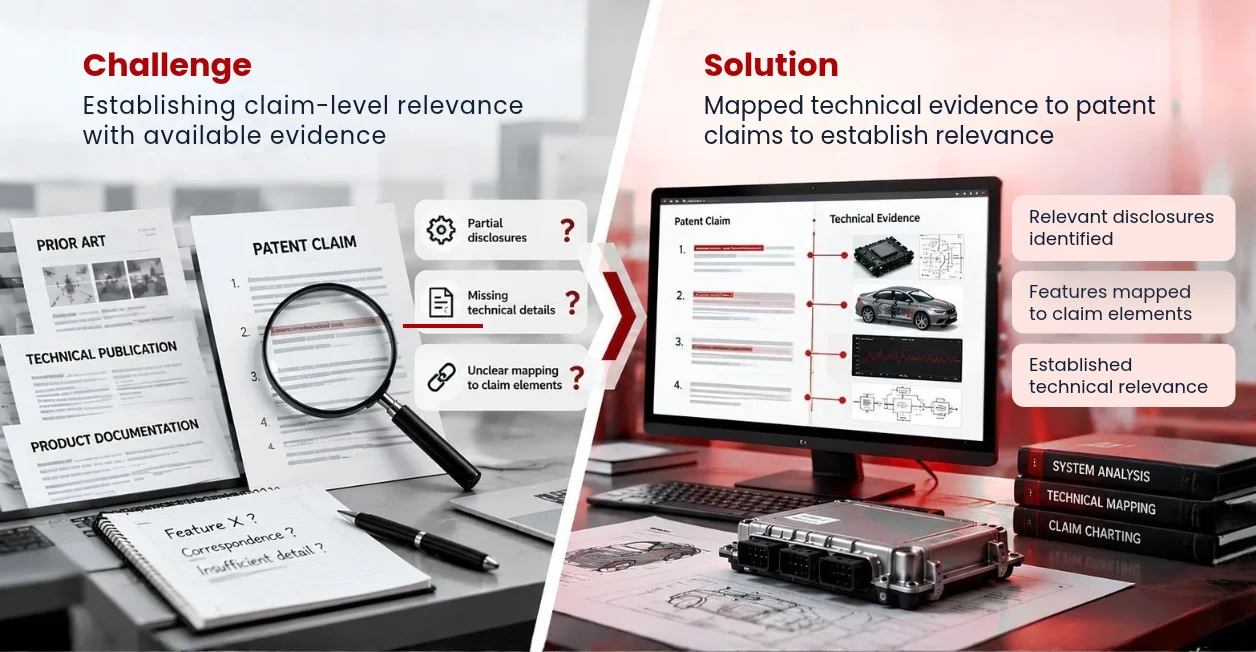
Challenge 2: Establishing the Relevance of Demonstrated Testing Workflows to Patent Claims

Another important challenge involved determining whether the identified demonstrations disclosed the specific operations described in the subject patent, rather than merely showing that a vehicle could be hacked. The claimed workflow involved defining penetration-testing instructions, using specialized CAN communication equipment, collecting CAN bus test data, analyzing the data according to a test scheme and generating a test result.

Solution

The investigation considered the identified demonstrations against the principal technical stages of the claimed penetration-testing workflow. This provided a framework for distinguishing observable cybersecurity activities from the more specific implementation details required for claim-level analysis.

The assessment focused on:
  • Identification of the target vehicle and testing environment.
  • Evidence of vehicle communication through CAN bus interfaces.
  • Demonstration of penetration-testing operations and test execution.
  • Availability of evidence concerning test-data collection and analysis.
  • Verification of publication dates and correlation with the patent’s priority date.

These assessment criteria established a structured basis for evaluating the technical and historical relevance of the identified system prior art. The extent to which individual demonstrations addressed the patent claims would depend on verification of the original footage and supporting evidence, followed by detailed claim mapping.

vehicle Hacking challenge and solution image

Results & Business Impact

The investigation successfully expanded the prior art search beyond conventional patent literature, identifying potentially relevant system prior art through historical vehicle cybersecurity demonstrations and publicly available technical videos. This broader approach provided additional evidence leads for evaluating the claimed vehicle penetration-testing workflow.

Key Outcomes

  • Key outcome Icon

    Identification of relevant vehicle cybersecurity demonstrations.

  • Key outcome Icon

    Discovery of historical vehicle hacking footage.

  • Key outcome Icon

    Expanded prior art coverage beyond conventional patent literature.

  • Key outcome Icon

    Identification of additional technical sources and industry leads.

  • Key outcome Icon

    New evidence pathways for evaluating patent claims.

Strategic Business Impact

By extending the investigation into system prior art, the project demonstrated how a broader evidence-discovery strategy can support patent invalidation research when conventional searches yield incomplete technical disclosures. The approach provided:

  • Broader coverage of potentially relevant prior art sources.
  • Improved visibility into real-world automotive cybersecurity testing practices.
  • Additional technical leads for patent claim mapping and evidence validation.
  • Greater flexibility in investigating complex software-driven technologies.
  • A structured basis for evaluating evidence beyond conventional documentary literature.

The investigation highlighted the value of combining traditional patent searching with demonstration-based research to uncover potentially relevant technical disclosures that might otherwise remain undiscovered.

Could Relevant Prior Art Be Hiding in Plain Sight?

From patent literature to system-level evidence, our team investigates technical disclosures, evaluates historical evidence and maps relevant findings against patent claims.