Patent Clearance Search: Finding Hidden FTO Risks
Case Study

Could Assignee-Focused Searching Reveal Hidden FTO Risks in a Power Module?

A multi-stage FTO investigation combined product-feature analysis, assignee-focused searching and CAN-interface research to uncover eight technically relevant patent references across the US, China and Europe.

Case Study Type Freedom to Operate (FTO) Search
Industry Industrial Electronics
Publication Date October 19, 2026
wired module image

The Client's Challenge

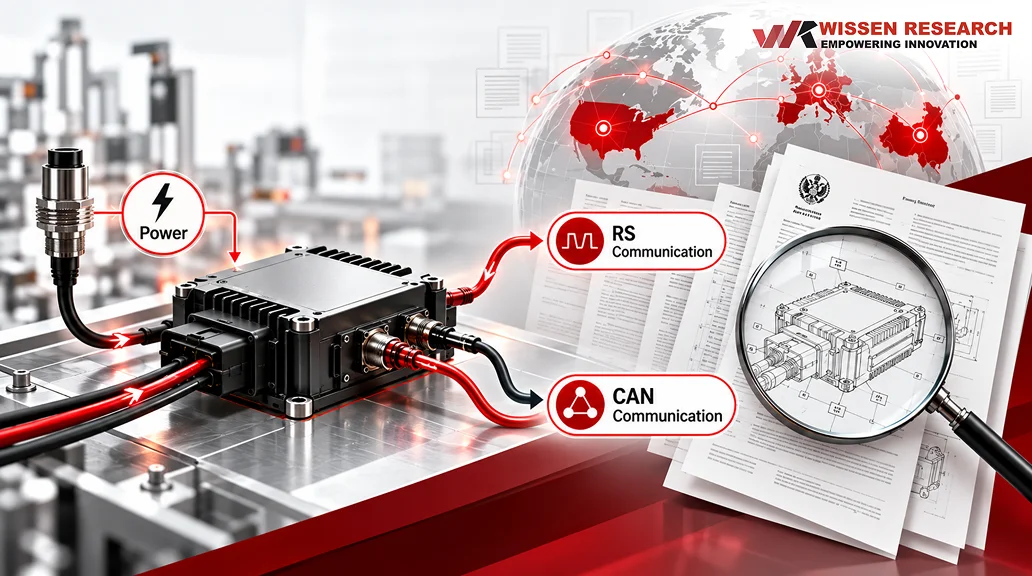
A wired power module may appear straightforward from a product perspective: it powers a connected sensor and provides communication through interfaces such as RS and CAN. From an intellectual property perspective, however, the combination of these functions can create a more complex search problem.

A client developing or evaluating such a module approached Wissen Research for a Freedom to Operate (FTO) search covering the United States, China and Europe. The objective was to identify patent and patent application references whose claims could be technically relevant to the product architecture and to provide a structured view of the surrounding patent landscape.
Wired Module challenge image

The search focused on the following principal product characteristics:

    • Wired power delivery to the connected sensor
    • Sensor integration with the power module
    • RS communication interface
    • CAN communication interface
    • Communication functionality associated with the connected sensor
Objective icon
CLIENT’S OBJECTIVE

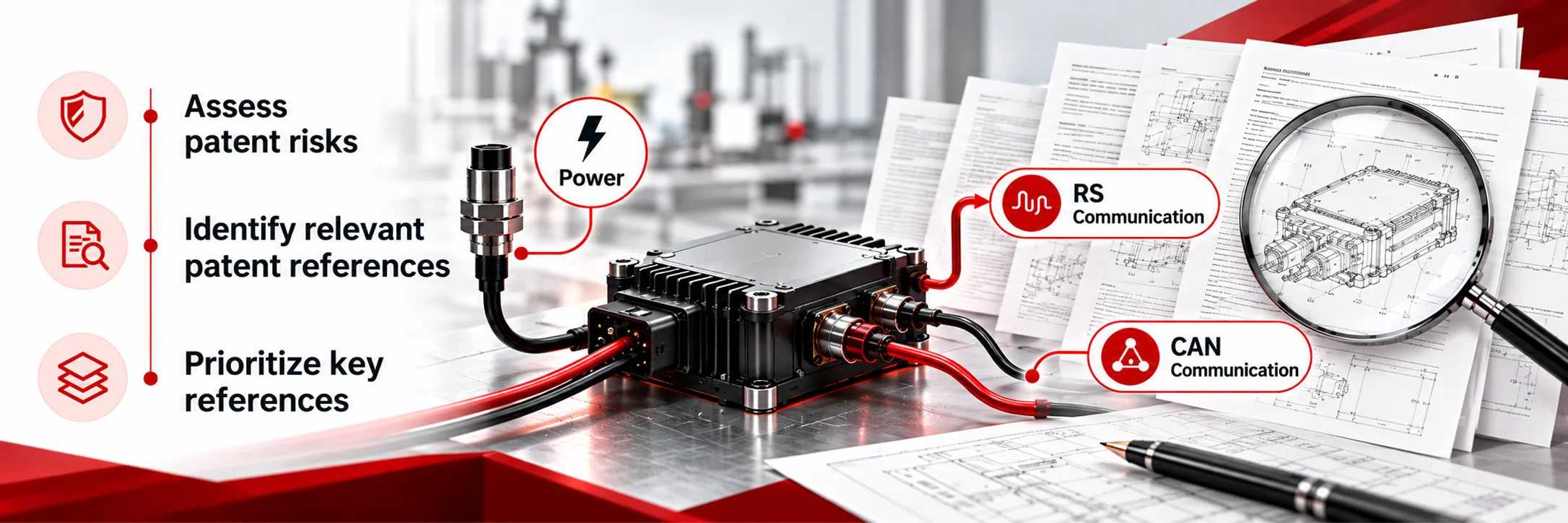
Assess potential patent risks associated with the wired power module across the United States, China and Europe.

Identify patent references whose claims align with the key product features, including wired power delivery, sensor connectivity, RS interface and CAN interface.

Prioritize references covering the complete evaluated feature set while distinguishing closely related patents that contain additional claim elements.

Clients come to us for answers.
They leave with opportunities they didn’t know existed.

Our experts help organizations uncover insights, opportunities and strategic directions that traditional approaches often miss.

Wissen's Out-of-the-Box Approach

From Broad Product Searching to Feature- and Assignee-Driven FTO Analysis

  • Recognizing that conventional searching was producing numerous technically similar references with additional claim elements, the investigation evolved beyond a single broad search strategy.
  • To obtain a more focused view of the patent landscape, the product was decomposed into its individual technical features and separate search strategies were developed around the elements most relevant to the product's architecture.

Identifying Relevant Technology and Patent Owners

  • A focused analysis was conducted to identify the technical features and assignees most closely associated with wired power module technologies.

  • The investigation combined the most relevant assignees with the identified IPC/CPC classifications to uncover patent assets that were less apparent through conventional keyword searching alone.

Our Methodology

Traditional Search Limitations
Product Feature Decomposition
CAN Interface-Focused Investigation
Assignee & Classification-Based Searching
Claim-Level Feature Mapping
Focused FTO Evidence Set
Traditional Search Limitations
  • Broad searches produced numerous near-matching references
  • Several references contained additional claim elements
  • Known references lacked disclosure of the CAN interface
  • Generic product-level searching was insufficient for complete feature alignment
Product Feature Decomposition
  • Break down the wired power module into key technical features
  • Analyze sensor, power, RS, and CAN functionality independently
  • Develop feature-specific keywords and synonyms
  • Identify relevant IPC/CPC classifications
CAN Interface-Focused Investigation
  • Develop a dedicated search strategy for CAN functionality
  • Identify patents covering CAN-enabled sensor and power-module architectures
  • Cross-reference CAN-related findings with the overall product configuration
Assignee & Classification-Based Searching
  • Identify assignees actively developing relevant technologies
  • Analyze their patent portfolios
  • Combine assignee searches with relevant IPC/CPC classes
  • Screen resulting patent and patent application references
Claim-Level Feature Mapping
  • Compare identified claims against the product’s key features
  • Distinguish complete-feature references from partial matches
  • Separate relevant results from related references containing additional elements
Focused FTO Evidence Set
  • Shortlist eight relevant patent/patent application references
  • Identify four references encompassing the complete evaluated feature set
  • Provide structured claim-to-feature mapping and searcher observations
Outcome:

A targeted, multi-dimensional FTO investigation that moved beyond broad technical similarity and identified a focused set of patent references relevant to the complete evaluated feature combination.

FTO Search Methodology

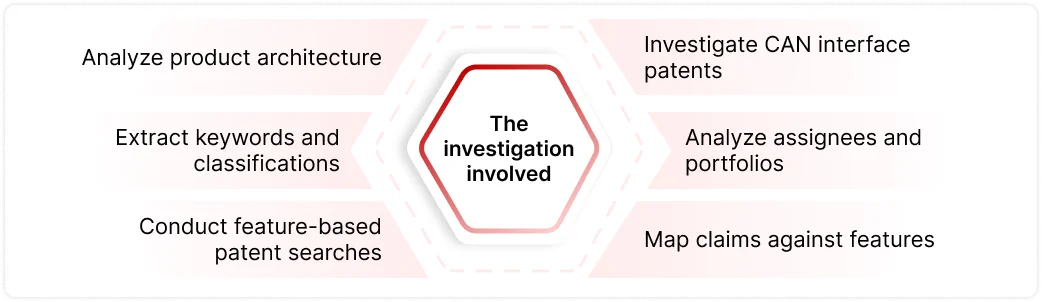
The investigation involved a structured, multi-stage patent search focused on the wired power module and its key technical features across the United States, China and Europe.

Wired power methodology image

The investigation initially identified numerous technically similar references, many of which contained additional claim elements. The search strategy was subsequently refined by focusing on the most relevant assignees and combining their patent activity with relevant IPC/CPC classes.

This targeted approach resulted in the identification of eight relevant patent or patent application references, including four references that disclosed the complete set of evaluated product features.

Technical Challenges Addressed Through Targeted FTO Analysis

Challenge 1: Distinguishing Complete Feature Alignment from Similar References

A key challenge was determining whether identified patents actually covered the complete combination of features implemented in the wired power module, rather than merely describing technically similar systems.

Solution

The identified patent claims were systematically reviewed against the product’s key features, including wired sensor powering, RS interface and CAN interface. The analysis separated references covering the complete evaluated feature set from technically related references containing additional claim elements.

The analysis revealed:
  • Wired power and sensor functionality
    • RS communication interface
    • CAN communication interface
    • Additional claimed technical elements
    • Complete-feature references requiring closer FTO review

This claim-level differentiation enabled the search report to distinguish potentially relevant references from broader technical matches.

Challenge 2: Identifying Relevant Patent Portfolios Through Assignee Analysis

A further challenge was narrowing a broad patent landscape where multiple companies were actively developing technologies related to wired power modules.

Solution

The most relevant assignees identified during the initial search were analyzed and used to develop targeted searches in combination with relevant IPC/CPC classifications. This portfolio-focused approach was then combined with feature-level claim analysis to identify stronger references.

The investigation revealed:
  • Multiple active technology assignees
    • Relevant patent portfolios
    • Classification-specific patent activity
    • Additional technically relevant references

This approach contributed to the identification of eight shortlisted patent references, including four references encompassing the complete evaluated product feature set.

Results & Business Impact

The investigation ultimately produced eight patent or patent application references that were shortlisted based on their relevance to the evaluated product features.

Key Outcomes

  • Key outcome Icon

    The investigation moved beyond generic wired-power-module terminology and incorporated feature-specific and assignee-driven searches.

  • Key outcome Icon

    Four references were identified as encompassing the complete set of evaluated product features.

  • Key outcome Icon

    References containing additional elements were retained as related results, providing broader context around the technology.

  • Key outcome Icon

    The CAN interface was separately investigated, addressing an important gap observed during the initial search.

  • Key outcome Icon

    Relevant claims were mapped against the product’s identified features within the search report.

Strategic Business Impact

The investigation provided the client with a more structured understanding of the patent environment surrounding the wired power module. The approach can help organizations:

  • Identify potentially relevant patent assets earlier
  • Understand which product features attract the greatest patent activity
  • Prioritize patents for subsequent legal review
  • Identify technology areas requiring additional investigation

Actual FTO risk depends on factors including claim construction, jurisdiction, legal status, enforceability, expiration, prosecution history and the specific implementation of the product. The search therefore serves as an evidence base for subsequent legal and strategic assessment.

Need clarity on the Patent Risks surrounding Your Product?

Our team combines targeted patent searching, classification analysis, assignee intelligence and claim mapping to support informed product and IP decisions.