Wearables Are Moving Beyond Tracking. The Real Opportunity Lies in Health Intelligence
The wearable industry’s next phase of growth may be driven less by improvements in tracking capabilities and more by the ability to generate actionable health intelligence. Recent investments in predictive analytics, clinical validation and healthcare integration suggest that the market is gradually moving in that direction.
For years, the wearable technology market has been defined by a familiar promise: helping people track their activity, monitor their sleep and better understand their daily habits. That promise hasn’t disappeared. But it is no longer where the most interesting developments are happening.
Over the past year, a series of announcements from companies such as Samsung, Huawei, and Xiaomi have pointed to a broader shift underway. At first glance, these developments appear unrelated: a diabetes risk assessment feature here, a hospital collaboration there, an AI-powered health assistant elsewhere.
Taken together, however, they reveal something larger. Wearable companies are increasingly focused on helping users understand and anticipate health outcomes, not simply measure health metrics. It is a subtle shift, but one that could reshape how value is created across the wearable technology ecosystem.
The Industry Is Starting to Ask Different Questions
A decade ago, most wearable devices were designed to answer relatively simple questions:
Those capabilities helped drive widespread consumer adoption and remain an important part of the market today. Though the recent innovations suggest that manufacturers are beginning to pursue a different objective.
Increasingly, wearable devices are being developed to answer questions such as:
The distinction matters because it changes the role of wearables entirely.
The Signals Are Emerging Across the Market
Several developments during the first half of 2026 illustrate this transition.
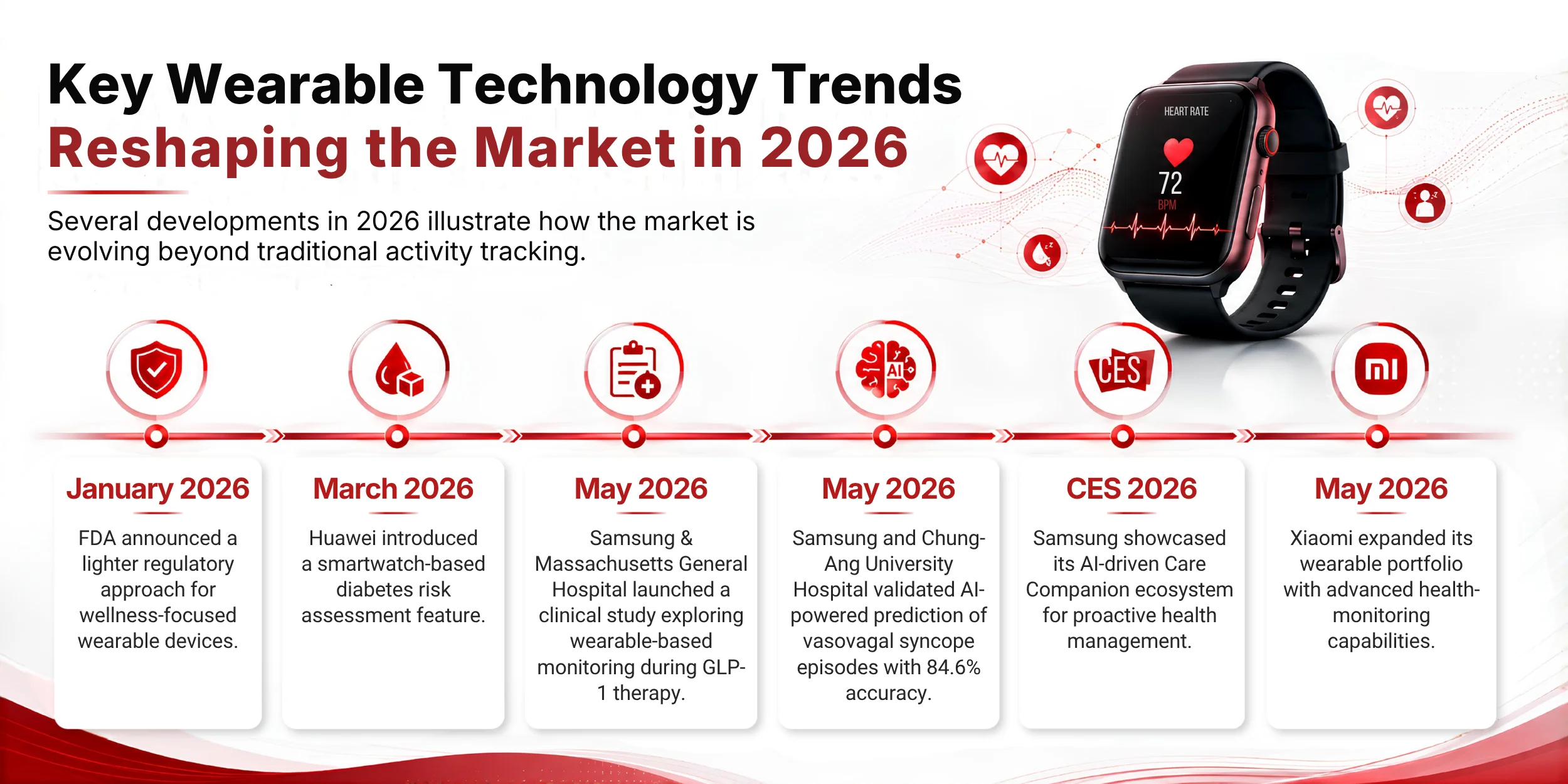
None of these developments alone defines the future of the market. What makes them noteworthy is their consistency. Different companies, pursuing different strategies, are investing toward a similar outcome: transforming wearable devices from monitoring tools into platforms capable of generating meaningful health insights.
That consistency is often worth paying attention to. In rapidly evolving markets, major shifts rarely emerge through a single breakthrough. More often, they become visible when multiple participants begin moving in the same direction.
Why Healthcare Is Becoming Central to the Wearable Market?
One of the clearest indicators of this shift is the growing number of collaborations between wearable manufacturers and healthcare institutions. Five years ago, it would have been unusual to see consumer technology companies working closely with hospitals to validate wearable-generated insights.
Today, such partnerships are becoming increasingly common. That tells us something important. Consumer adoption trends also support this evolution.
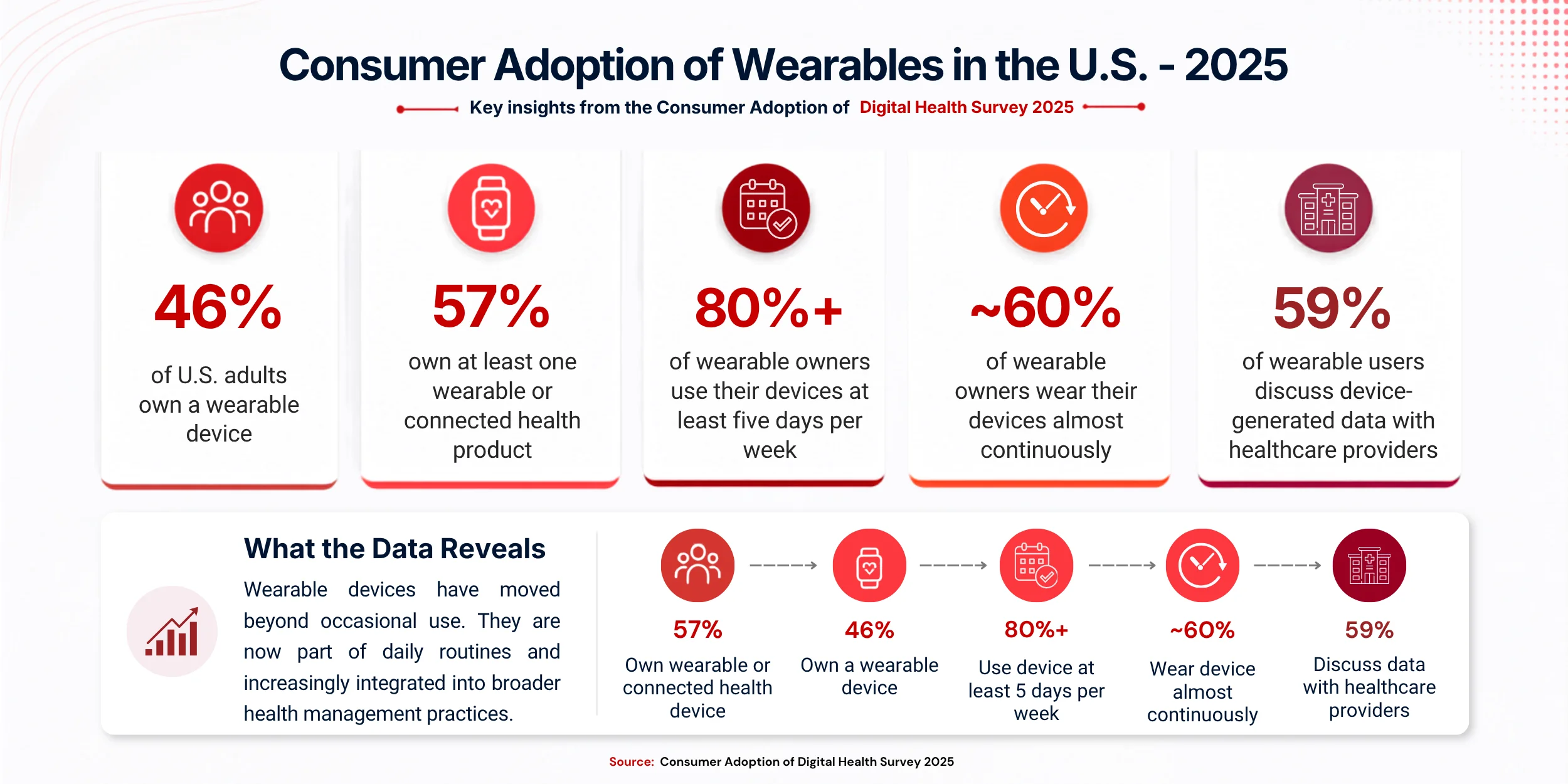
That may seem like a small detail, but it highlights an important change in perception. Wearables are no longer viewed solely as fitness accessories. Increasingly, they are becoming part of broader health management conversations.
The Next Competitive Battleground may not be Hardware
The wearable industry often focuses on hardware improvements: better sensors, longer battery life, lighter devices and improved form factors. Those advancements remain important.
Yet many of the recent developments attracting attention have relatively little to do with hardware. Instead, they focus on analytics.
This raises an interesting question.
As wearable hardware becomes increasingly sophisticated across the industry, where will future differentiation come from?
One possibility is that competition gradually shifts from device capabilities to intelligence capabilities.
After all, hardware features can be replicated. AI models can be improved. But building trusted health intelligence systems requires a combination of data, validation, healthcare partnerships and user trust, the assets that are significantly harder to develop.
What This Means for Industry Stakeholders?
For companies operating in digital health, connected care and wearable technology, the significance of recent developments extends beyond individual product launches. Organizations evaluating opportunities within the wearable ecosystem should pay close attention to three areas:
These developments are likely to influence not only product strategies, but also future competitive dynamics across the broader digital health landscape.
A Broader Lesson for Innovation Leaders
The wearable technology market offers an interesting example of how industries evolve.
The most important market transitions are rarely obvious at the outset. They emerge gradually through a combination of technology advances, strategic partnerships, regulatory developments and changing customer expectations.
By the time a trend becomes widely recognized, the foundations have often been laid years earlier.
For organizations seeking to identify emerging opportunities, monitoring product launches alone is rarely sufficient. Understanding where markets are heading increasingly requires visibility into technology developments, competitive activity, research initiatives and innovation ecosystems as a whole.
What Happens Next?
The shift from tracking to health intelligence is only one part of the story. Explore the trends, technologies and competitive landscape shaping the wearable market.
Frequently Asked Questions: The Wearable Technology Market
Wearable technologies are electronic devices worn on the body that collect, process, and transmit data related to health, fitness, activity or environmental conditions.
Popular examples of wearable technology include smartwatches such as the Apple Watch and Samsung Galaxy Watch, fitness trackers, smart rings like Oura Ring, wearable ECG devices, glucose monitoring systems, smart glasses, and connected health monitoring devices used in healthcare settings.
The future of wearable technology is expected to focus on preventive healthcare, continuous health monitoring, AI-powered insights and deeper integration with healthcare systems.
AI-powered wearables in 2026 include smartwatches, smart rings, and connected health devices that use artificial intelligence to analyze health data, identify patterns, assess risks, and provide personalized recommendations.
Major growth drivers include increasing consumer adoption, rising health awareness, advances in biosensors and AI technologies, expanding healthcare applications, growth in connected health ecosystems, and demand for preventive and personalized healthcare solutions.
The Best Decisions Start With Better Intelligence.
Connect the dots across technology, markets, competition and innovation with research designed to support strategic decision-making.