The Cancer Diagnostics Market Is Growing. But Where Is the Industry Heading?
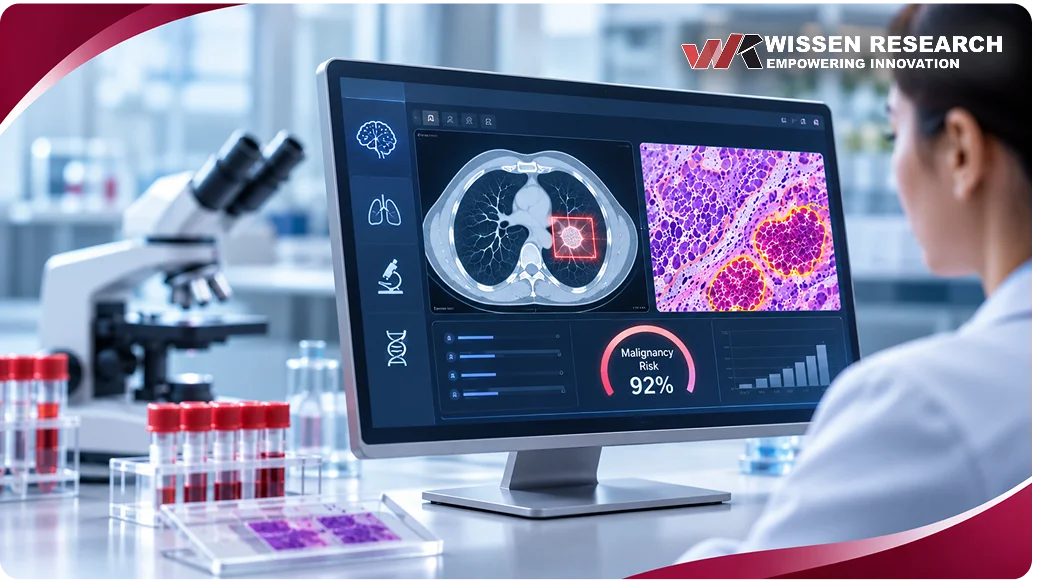
The cancer diagnostics market is expanding, but the opportunity is not limited to finding cancer earlier. As molecular testing, digital pathology and AI-enabled analysis become more integrated into diagnostic workflows, the ability to connect findings across detection, disease characterization and monitoring is becoming increasingly important.
For a long time, cancer diagnostics was largely associated with imaging, tissue biopsies and laboratory tests used to establish whether a tumor was present and determine its characteristics. Those methods remain central to cancer care. What is changing is the amount of information clinicians increasingly need from the diagnostic process.
A diagnosis may now need to establish more than the presence of a tumor. Depending on the cancer and clinical context, physicians may also need to identify specific biomarkers, determine whether a targeted treatment could be appropriate or assess how the disease responds to therapy.
That is bringing established diagnostic methods into closer contact with molecular testing, genomic analysis and computational tools.
The market opportunity is substantial. Wissen Research estimates that the global cancer diagnostics market will grow from USD 29.3 billion in 2026 to USD 41.5 billion by 2031, representing a compound annual growth rate (CAGR) of 7.2%.
The important question is what sits behind that growth. Rising cancer incidence and the need for screening remain fundamental drivers, but advances in precision oncology and diagnostic technology are also changing the requirements placed on tests, laboratories and healthcare providers.
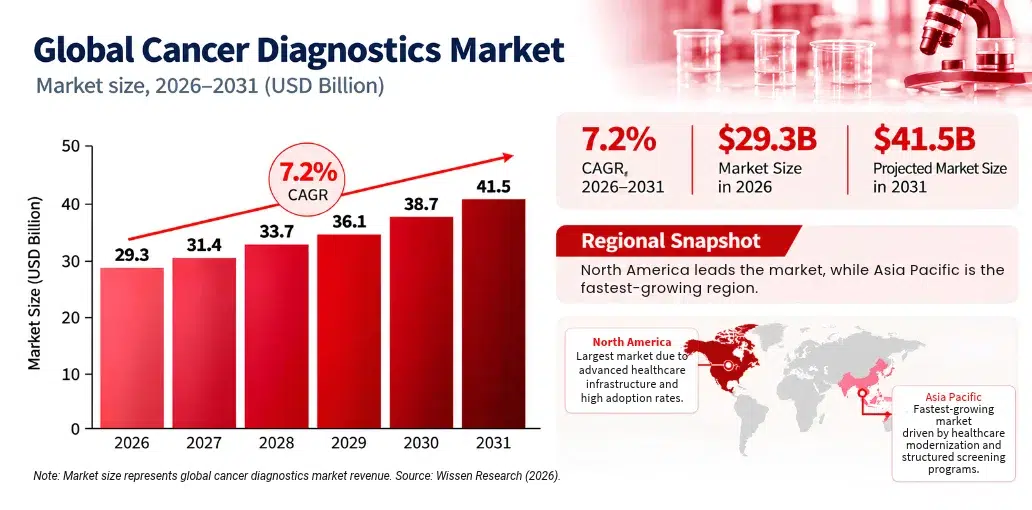
The global cancer diagnostics market is projected to grow by USD 12.2 billion between 2026 and 2031, according to Wissen Research. This represents an expansion of approximately 41.6% over the five-year forecast period.
The underlying demand is closely linked to the global cancer burden. The International Agency for Research on Cancer estimated that approximately 20 million new cancer cases and 9.7 million cancer deaths occurred worldwide in 2022. Its projections indicate that annual new cases could reach 35 million by 2050.
More patients require diagnostic evaluation, disease classification and follow-up. At the same time, diagnostic pathways are becoming more specialized as treatment decisions increasingly depend on information about tumor biology.
Regional dynamics add another dimension to the market.
North America remains the leading regional market, supported by advanced healthcare infrastructure, established diagnostic laboratories, high healthcare expenditure and the adoption of advanced testing technologies. Asia Pacific is expected to expand rapidly as healthcare infrastructure develops, diagnostic capacity increases and access to screening and molecular testing improves.
The opportunity, however, is not uniform across regions. Infrastructure, affordability, access to specialized laboratories and the availability of trained professionals will influence how quickly advanced diagnostic technologies are adopted.
The Industry Is Investing in More Connected Diagnostics
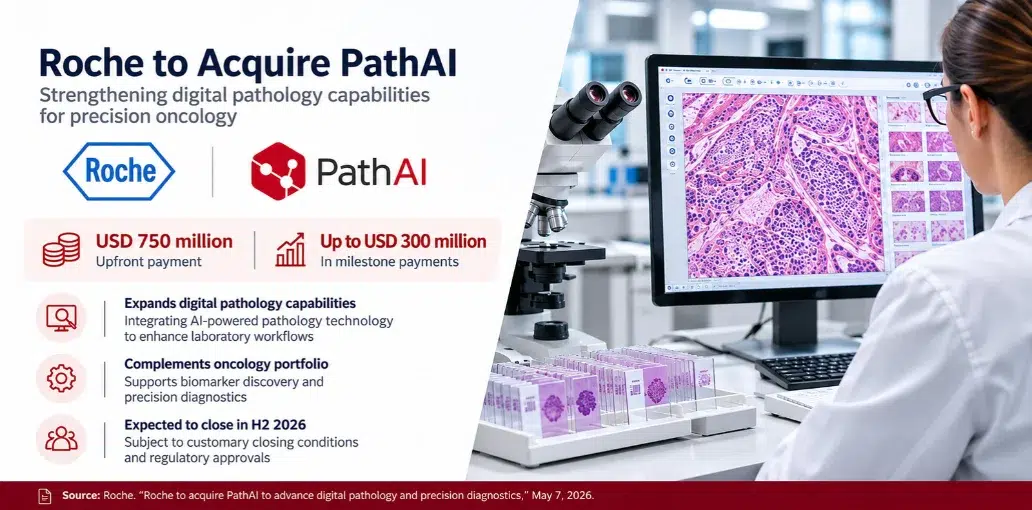
One of the clearest signals of the industry’s direction came in May 2026, when Roche announced a definitive agreement to acquire PathAI, a company specializing in AI-powered pathology technology.
The agreement was valued at USD 750 million upfront, with additional milestone payments of up to USD 300 million. Roche said the acquisition would complement its digital pathology portfolio, strengthen laboratory workflows and support the development of biomarkers and diagnostic tools. The transaction was expected to close in the second half of 2026, subject to customary closing conditions and regulatory approvals.
The strategic logic is worth examining.
Pathology remains central to confirming cancer diagnoses and characterizing tumors. Digital pathology converts tissue-slide images into high-resolution digital files that can be reviewed and analyzed using specialized software. AI tools can then assist with selected tasks, including image analysis, workflow prioritization and the assessment of tissue features.
For Roche, combining these capabilities with its existing diagnostics and companion diagnostics business creates an opportunity to connect pathology analysis more closely with precision medicine.
The announcement does not mean that AI will replace pathologists or independently determine treatment. Rather, it illustrates why established diagnostics companies are investing in software, image analysis and integrated laboratory platforms alongside their traditional testing portfolios.
Different Technologies, Different Roles in Cancer Diagnostics
Cancer diagnostics is not a single technology market. It is an ecosystem of complementary methods, each addressing a different clinical question.
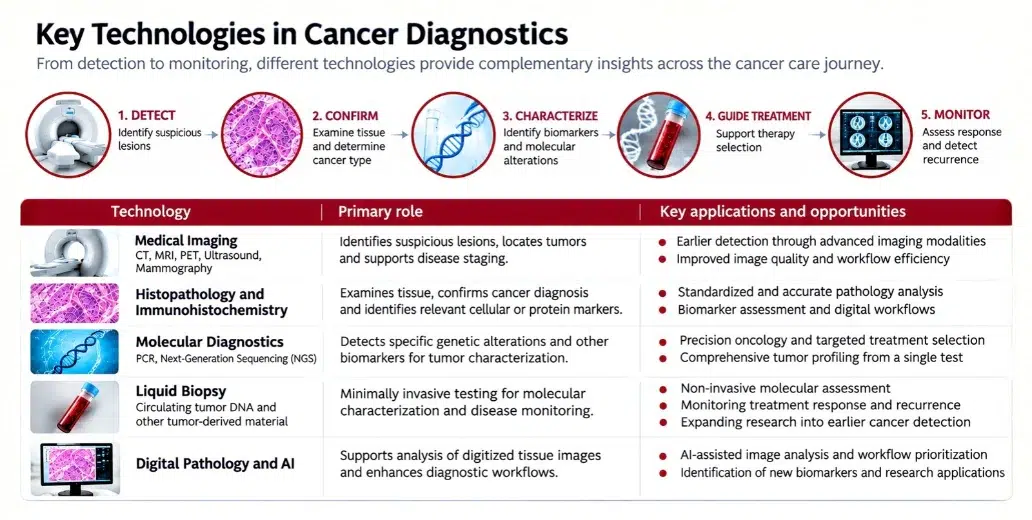
These technologies should not be viewed as direct substitutes for one another. Imaging, pathology and molecular testing provide different forms of evidence and the appropriate combination depends on the cancer type, clinical question and intended use.
The more significant development is the potential to bring these capabilities together within a diagnostic pathway.
For example, imaging may identify a suspicious lesion, tissue pathology may confirm the diagnosis and molecular testing may identify biomarkers relevant to treatment. Subsequent testing may then help clinicians assess disease status or treatment response.
The commercial opportunity is therefore not simply about developing another test. It also lies in making diagnostic information reliable, clinically useful and practical to integrate into care.
Early Detection Remains the Foundation
Advanced molecular testing and AI are attracting investment, but early detection remains an important part of the market’s growth story.
Screening and early diagnosis serve different purposes. Screening seeks to identify disease in people without symptoms who meet the relevant eligibility criteria. Early diagnosis focuses on recognizing and evaluating disease in people who already have symptoms.
Established screening programs for breast, cervical and colorectal cancers as well as lung cancer screening for eligible high-risk populations support demand for imaging and laboratory-based diagnostic technologies.
The challenge is extending the benefits of early detection while maintaining appropriate accuracy, follow-up and access to care.
This is particularly relevant to emerging blood-based tests designed to detect cancer signals before symptoms develop. Liquid biopsy is already used in selected clinical settings, including certain molecular profiling and monitoring applications. However, the use of multi-cancer blood tests for population-wide screening remains a developing area, with clinical utility, false-positive results, follow-up procedures and patient outcomes among the important considerations.
A promising test does not automatically translate into a successful screening program. Its value depends on whether it can be used reliably and whether the results lead to appropriate clinical action.
Precision Oncology Is Changing What Diagnostic Tests Need to Deliver
The expansion of targeted therapies has increased the importance of understanding the molecular characteristics of cancer.
Two tumors that appear similar under a microscope may have different molecular alterations and may not respond to the same treatment. Biomarker testing and genomic profiling help clinicians identify relevant differences where testing is indicated.
Next-generation sequencing has particular value in this context because it can assess multiple genomic regions in a single test. Depending on the panel and clinical setting, this may help identify alterations associated with approved therapies, clinical trials or other treatment decisions.
This also creates a closer relationship between diagnostic developers and pharmaceutical companies. Companion diagnostics can help identify patients who are suitable for particular therapies while biomarker research may support the development of new diagnostic tests alongside drug development.
The opportunity comes with practical constraints. Test selection, sample quality, turnaround time, cost, clinical validity and access to appropriate therapies all influence the usefulness of a result.
For diagnostics companies, technical capability alone is not enough. The test must provide information that can be interpreted and acted upon within a real clinical pathway.
AI Is Moving Into the Diagnostic Workflow
AI is another important area of development, particularly in radiology and digital pathology.
Medical imaging generates large volumes of data, while pathology workflows require specialists to examine tissue samples and interpret complex cellular features. AI-based tools can assist with selected image-analysis tasks, identify patterns for further review and help organize laboratory workflows.
In pathology, the combination of digitized slides and image-analysis software also creates opportunities to study tissue characteristics at scale. These capabilities may support biomarker research and the development of diagnostic tools for specific clinical applications.
However, the commercial and clinical value of AI depends on more than model performance in a research setting. Systems need appropriate validation, reliable performance across relevant patient populations, compatibility with clinical workflows and compliance with applicable regulatory requirements.
The Roche–PathAI agreement illustrates the strategic interest in integrating AI into established diagnostic operations. It also highlights a broader competitive question: as diagnostic platforms become more connected, will differentiation increasingly depend on the ability to combine testing, software, analysis and clinical evidence?
That is a possibility worth monitoring, particularly as established diagnostic companies and specialized technology developers pursue different approaches to the same market.
Where the Market Goes From Here
Cancer diagnostics is unlikely to move toward a single dominant technology. Imaging, pathology and laboratory testing will remain essential, while molecular diagnostics, liquid biopsy and AI-enabled analysis continue to expand selected applications.
The pace of change will differ by technology and region. Established diagnostic methods benefit from existing clinical workflows, while emerging technologies must demonstrate their value and overcome barriers related to validation, affordability, regulation and implementation.
For industry participants, the more useful question is where new capabilities solve a meaningful diagnostic problem, how they fit into existing care pathways and which companies are best positioned to bring them into routine use.
The next phase of market development will be shaped by the interaction between clinical need, technological progress and commercial execution.
The market’s evolution spans established diagnostic technologies, emerging molecular approaches, AI-enabled workflows and changing competitive strategies. Understanding how these developments intersect can help organizations evaluate opportunities across the cancer diagnostics ecosystem.
Frequently Asked Questions About the Cancer Diagnostics Market
Cancer Diagnostics includes the tests and technologies used to detect, confirm, characterize and monitor cancer. These include medical imaging, tissue pathology, molecular diagnostics, genomic testing and selected liquid biopsy applications.
Key drivers include the rising global cancer burden, demand for earlier diagnosis, screening programs, advances in precision oncology, increasing use of molecular testing and developments in digital pathology and AI-enabled diagnostics.
Major technologies include CT, MRI, PET, ultrasound, mammography, histopathology, immunohistochemistry, PCR, next-generation sequencing, biomarker testing and liquid biopsy. Digital pathology and AI-based analysis are also expanding the range of available capabilities.
AI is being developed and deployed for selected applications in medical image analysis, digital pathology, lesion detection, tissue characterization and diagnostic workflow support. Its role depends on the intended use and the supporting clinical evidence.
Not universally. Liquid biopsy can provide useful molecular information in selected clinical settings, but its suitability depends on the cancer type, the test and the clinical question. Tissue-based diagnosis remains essential in many situations.
Wissen Research estimates that the market will grow from USD 29.3 billion in 2026 to USD 41.5 billion by 2031, at a CAGR of 7.2%.