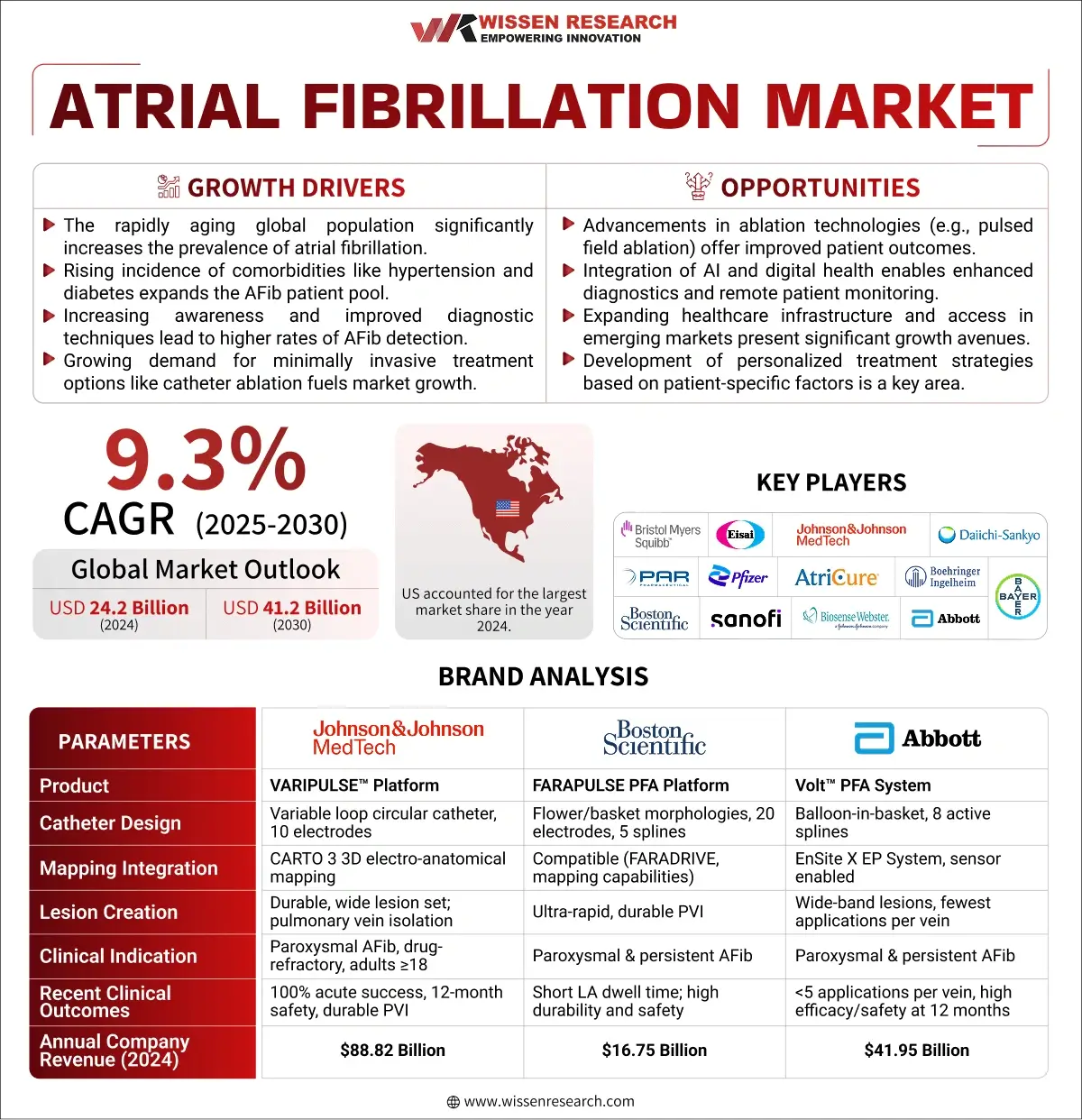
Wissen Research analyzed that the global atrial fibrillation market was valued at USD 24.2 billion in 2024 and is projected to reach USD 41.2 billion by 2030, expected to grow at a CAGR of 9.3 % during the forecast period, 2025-2030.
Lucrative Opportunities: Atrial Fibrillation Market
Global atrial fibrillation market is anticipated to reach USD 41.2 billion by 2030 from USD 24.2 billion in 2024, growing at an annualized rate of 9.3% during the forecast period, 2025-2030 | Europe’s AFib market is experiencing steady growth, driven by the increasing prevalence of AFib associated with aging populations and rising comorbidities like hypertension and diabetes. The region benefits from advanced healthcare systems, significant investments in electrophysiology, and a strong presence of key pharmaceutical and medical device companies, particularly in countries like Germany, France, and the UK, fostering the adoption of novel therapies like catheter ablation and Left Atrial Appendage Closure (LAAC) devices. | Asia-Pacific The Asia-Pacific AFib market is expanding rapidly, fueled by demographic shifts towards aging populations, increasing urbanization contributing to higher rates of AFib risk factors, and growing awareness of cardiovascular health. This growth is further propelled by substantial investments in healthcare infrastructure, expanding access to specialized cardiac care, and a burgeoning middle class demanding advanced treatments. Countries like China, India, and Japan are key contributors to this dynamic market expansion. |
The Atrial Fibrillation (AFib) market is undergoing significant transformation, propelled by a growing demand for diagnostics, effective stroke prevention strategies, and innovative rhythm/rate control therapies essential for managing this prevalent arrhythmia, which poses a substantial global health burden due to its link to stroke and heart failure. | Global investment in the AFib sector is heavily focused on developing more effective and durable catheter ablation technologies, advancing minimally invasive surgical options, enhancing the sensitivity and usability of diagnostic monitors (including wearables and implantable loop recorders) for earlier detection, improving anticoagulant therapies, and refining patient selection algorithms for different treatment pathways. |
Strategic Activities
Drivers: Aging Population and Disease Burden
The escalating prevalence of atrial fibrillation (AFib), primarily driven by the global aging population, represents the most significant market driver. The World Health Organization projects that the number of people aged 60 and above will surge from 1 billion in 2020 to 1.4 billion by 2030, with the 80+ age group increasing by 426 million by 2050. Older adults are disproportionately affected by AFib, often due to associated conditions like hypertension, diabetes, and heart failure. AFib is the most common cardiac arrhythmia, impacting an estimated 33.5 million people worldwide in 2019, a number expected to rise dramatically, potentially reaching over 60 million by 2030. Its strong association with stroke (contributing to nearly 20-30% of all strokes) and heart failure necessitates robust diagnostic and therapeutic interventions. This growing patient pool, coupled with increased awareness and improved diagnostics, compels healthcare systems to invest in managing AFib, thereby stimulating market expansion. The global AFib market size was valued at approximately USD 26.89 billion in 2024 and is projected to grow at a CAGR exceeding 10% from 2024 to 2033, largely fueled by this demographic shift.
Opportunities: Technological Advancements and Individualized Care
A significant opportunity within the AFib market lies in the rapid evolution of innovative technologies and the shift towards personalized medicine. The increasing adoption of minimally invasive procedures, such as advanced catheter ablation techniques and novel modalities like pulsed field ablation (PFA), is revolutionizing treatment, offering improved efficacy and safety profiles for patients with drug-refractory AFib. Recent advancements include the launch of devices like the VARIPULSE system by Biosense Webster (a Johnson & Johnson MedTech company) in October 2024, which utilizes PFA technology. Furthermore, the integration of artificial intelligence (AI), digital health platforms, wearable monitors, and remote patient monitoring tools facilitates earlier detection, continuous management, and more personalized treatment plans. The development of sophisticated mapping systems and ablation catheters, along with growing investments in research and development, continues to enhance therapeutic options. This technological progress, coupled with increasing regulatory approvals and improving reimbursement landscapes in developed and emerging markets, presents a substantial opportunity for market players to capture growth through innovation and tailored care solutions.
Challenges: High Treatment Costs and Healthcare Access
A major challenge confronting the AFib market is the high cost associated with diagnosis, monitoring, and advanced treatments, which significantly limits patient access and imposes a heavy burden on healthcare systems. The financial burden stems from multiple factors, including the expense of specialized diagnostic tests (like advanced ECG monitoring), frequent physician consultations, hospitalizations for complications (such as stroke or heart failure), and the cost of sophisticated therapeutic interventions like catheter ablation procedures and newer anticoagulants. Data indicates substantial healthcare expenditures; for instance, the incremental annualized cost for AFib patients was estimated at around $12,789 ± $161,749 per patient due to increased healthcare encounters and adverse events. While technological advancements offer better outcomes, the high upfront costs of innovative devices and digital health solutions create barriers, particularly in low- and middle-income countries and underserved regions. Additionally, reimbursement policies often lag behind technological developments, further hindering widespread adoption. This disparity in access, driven by economic constraints and infrastructural limitations, poses a significant challenge to equitable care and market growth potential.
The global Atrial Fibrillation (AFib) market represents a critical and rapidly expanding sector within global healthcare, focused on the diagnosis, treatment, and management of this prevalent cardiac arrhythmia. As AFib is a major contributor to stroke risk, heart failure, and significant healthcare costs worldwide, effective solutions are essential. The market is valued at USD 24.2 billion in 2024 and is projected to grow at a CAGR of around 9.3%, potentially reaching over USD 41.2 billion by 2030. Driven primarily by the accelerating aging population, increasing prevalence of comorbidities like hypertension and diabetes, and heightened disease awareness, the AFib market is experiencing robust growth. It is further propelled by technological advancements, such as minimally invasive ablation techniques, AI-powered diagnostics, and remote monitoring solutions, which offer improved efficacy, safety, and patient convenience. The market size is substantial, valued in the tens of billions of USD, and is projected to expand significantly at a strong CAGR over the coming decade, reflecting the growing patient burden and the continuous evolution towards more effective and personalized management strategies to address stroke risk and symptom control.
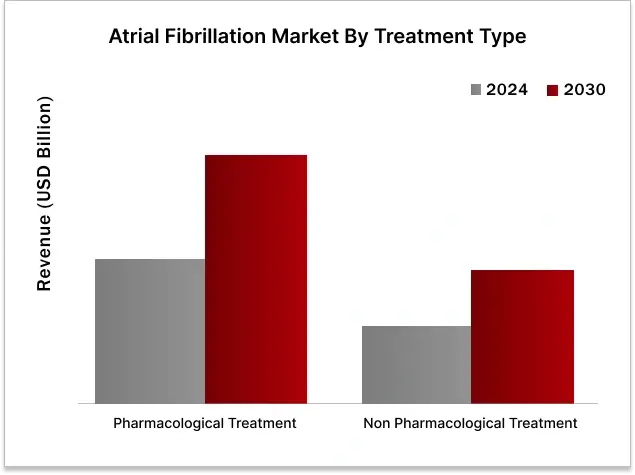
Pharmacological treatment by treatment type dominated the market in the atrial fibrillation market in the year 2024.
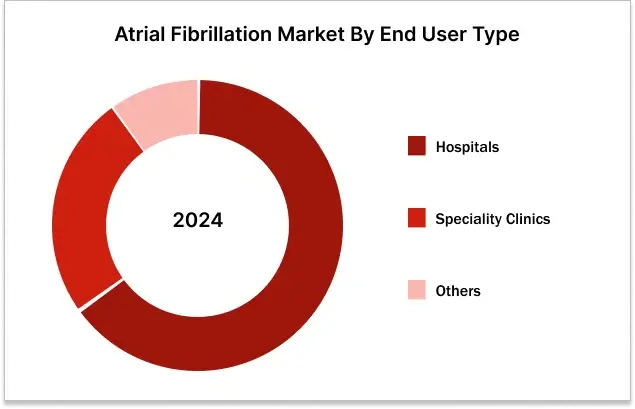
Hospitals held the largest market share by end user type in the atrial fibrillation market in the year 2024.
Asia Pacific will show the highest growth rate in the atrial fibrillation market in the forecast period. (2025-2030)
Asia Pacific is projected to show the highest growth rate in the Atrial Fibrillation (AFib) market during the forecast period of 2025-2030. This robust growth trajectory is underpinned by a confluence of demographic, economic, and healthcare-related factors specific to the region. The most significant driver is the rapidly escalating prevalence of AFib and associated risk factors. Like the broader cardiovascular disease burden, AFib cases are increasing sharply due to the region’s large and rapidly aging population, coupled with rising incidences of hypertension, diabetes, and obesity driven by accelerated urbanization and lifestyle westernization. Countries like China and India report staggering numbers of cardiovascular patients; for instance, the China Cardiovascular Disease Report 2023 estimated over 330 million CVD patients, a pool within which AFib is increasingly prevalent. Similarly, India faces a growing AFib burden linked to its vast population and increasing risk factors. Simultaneously, Asia Pacific economies, particularly in these populous nations, are experiencing substantial growth, leading to higher disposable incomes and increased investment in healthcare infrastructure and services. Governments and private sectors are expanding access to specialized cardiac care, including advanced diagnostics and therapeutic interventions for AFib. There is a growing emphasis on early detection and management through improved healthcare coverage and public health initiatives. Furthermore, increasing awareness among both the public and healthcare professionals about AFib risks and treatment options is driving demand for care. The adoption of innovative technologies, including minimally invasive ablation techniques and digital health solutions for monitoring, is also accelerating in the region. This combination of a massive and growing patient pool, improving healthcare access, rising economic development, and increasing awareness positions Asia Pacific as the primary growth engine for the global AFib market in the coming years.
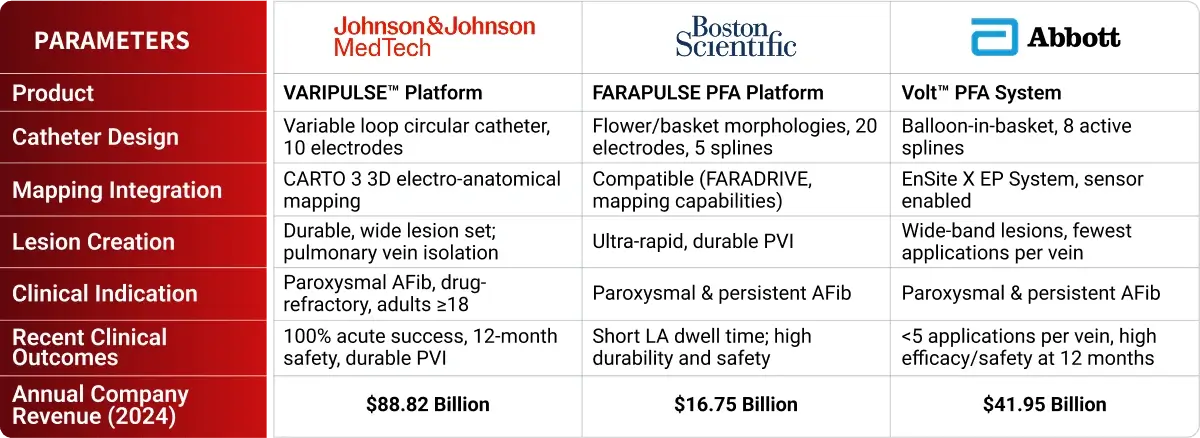
BRAND ANALYSIS: PFA PLATFORM
“The increasing adoption of direct-acting oral anticoagulants (DOACs) over warfarin for stroke prevention in atrial fibrillation patients is significantly impacting clinical workflows, requiring less frequent monitoring but necessitating robust patient education on adherence and bleeding recognition.”Clinical Pharmacist – Hospital System (North America)“Catheter ablation has evolved significantly, becoming a more effective and safer procedure for maintaining sinus rhythm in symptomatic AFib patients, particularly those with paroxysmal AFib, driving substantial demand for advanced ablation technologies and dedicated electrophysiology lab staff.”EP Lab Director – University Medical Center (Europe)“The silent nature of many atrial fibrillation episodes highlights a significant opportunity for wearables and remote monitoring devices to facilitate earlier detection, allowing for timely intervention and potentially reducing the risk of stroke and other complications, especially in asymptomatic patients.”Cardiologist – Private Practice (Asia Pacific)“Despite clear guidelines, significant regional and healthcare setting variability persists in AFib management strategies, particularly regarding rhythm vs. rate control decisions and optimal anticoagulation use, often influenced by local expertise and resource availability.”Hospitalist Medicine Physician – Community Hospital (North America)
Sources: Primary Research and Wissen Research Analysis.
Note: Above mention is non-exhaustive samples of the primary insights.
Particulars | Details |
| Report | Atrial Fibrillation Market |
| Forecast Period | 2025-2030 |
| Base Year | 2024 |
| Format | |
| Market Size (2024) | USD 24.2 Billion |
| CAGR (2025-2030) | 9.3 % |
| Number of Pages | 165 |
| Number of Tables | 159 |
| Number of Figures | 40 |
| Key Segments | Atrial Fibrillation Market by Type. (Paroxysmal Atrial Fibrillation, Persistent Atrial Fibrillation, Permanent Atrial Fibrillation) Atrial Fibrillation Market by Treatment Type. (Pharmacological Treatment, Non-Pharmacological Treatment) Atrial Fibrillation Market by Drug Delivery Methods Method. Atrial Fibrillation Market by End User Type (Hospitals, Specialty Clinics, Others) |
| Regions Covered | § North America: US and Canada § Europe: Germany, UK, France, Italy, Spain, and Rest of the Europe § Asia-Pacific: China, Japan, India, South Korea, Australia and New Zealand, and Rest of the Asia-Pacific § Latin America § Middle East and Africa |
| Key Players Covered (Majority Share Holders) | Bristol-Myers Squibb Company (US), Eisai Co., Ltd. (Japan), Johnson & Johnson (US), Daiichi Sankyo Company, Limited (Japan), Par Pharmaceutical (US), Bayer AG (Germany), Pfizer Inc. (US), Atri Cure Inc. (US), Boehringer Ingelheim GmbH (Germany), Boston Scientific Corporation (US), Cardio Focus Inc. (US), Sanofi Aventis (France), Endoscopic Technologies Inc. (US), Abbott Laboratories (US) |
1. INTRODUCTION
1.1. KEY OBJECTIVES
1.2. DEFINITIONS
1.2.1. IN SCOPE
1.2.2. OUT OF SCOPE
1.3. SCOPE OF THE REPORT
1.4. SCOPE RELATED LIMITATIONS
1.5. KEY STAKEHOLDERS
2. RESEARCH METHODOLOGY
2.1. RESEARCH APPROACH
2.2. RESEARCH METHODOLOGY / DESIGN
2.3. MARKET SIZE ESTIMATION APPROACHES
2.3.1. SECONDARY RESEARCH
2.3.2. PRIMARY RESEARCH
2.3.2.1. KEY INSIGHTS FROM INDUSTRY EXPERTS
2.4. DATA VALIDATION & TRIANGULATION
2.5. ASSUMPTIONS OF THE STUDY
3. EXECUTIVE SUMMARY & PREMIUM CONTENT
3.1. GLOBAL MARKET OUTLOOK
3.2. KEY MARKET FINDINGS
4. MARKET OVERVIEW
4.1. ATRIAL FIBRILLATION MARKET: OVERVIEW
4.1.1. INTRODUCTION
4.2. MARKET DYNAMICS
4.2.1. MARKET DRIVERS
4.2.2. MARKET OPPORTUNITIES
4.2.3. RESTRAINTS/CHALLENGES
4.3. END USER PERCEPTION
4.4. REGULATORY SCENARIO & TRENDS
4.5. NEED GAP ANALYSIS
4.6. SUPPLY CHAIN / VALUE CHAIN ANALYSIS
4.7. CASE STUDY ANALYSIS
4.8. TRADE ANALYSIS
4.9. INDUSTRY TRENDS
4.10. PRICING ANALYSIS
4.11. REIMBURSEMENT SCENARIO
4.12. USE OF AI IN ATRIAL FIBRILLATION MARKET
4.13. PORTER’S FIVE FORCES ANALYSIS
4.14. REGULATORY LANDSCAPE
4.14.1. NORTH AMERICA
4.14.2. EUROPE
4.14.3. ASIA PACIFIC
5. PATENT ANALYSIS
5.1. TOP ASSIGNEES
5.2. GEOGRAPHY FOCUS OF TOP ASSIGNEES
5.3. LEGAL STATUS
5.4. TECHNOLOGY EVOLUTION
5.5. KEY PATENTS
5.6. PATENT TRENDS AND INNOVATIONS
6. GLOBAL ATRIAL FIBRILLATION MARKET, BY TYPE (2024-2030, USD MILLION)
6.1. PAROXYSMAL ATRIAL FIBRILLATION
6.2. PERSISTENT ATRIAL FIBRILLATION
6.3. PERMANENT ATRIAL FIBRILLATION
7. GLOBAL ATRIAL FIBRILLATION MARKET, BY TREATMENT TYPE (2024-2030, USD MILLION)
7.1. PHARMACOLOGICAL TREATMENT
7.1.1.ANTI-ARRHYTHMIC DRUGS
7.1.2.ANTICOAGULANT DRUGS
7.2. NON-PHARMACOLOGICAL TREATMENT
7.2.1.CATHETER ABLATION
7.2.1.1. RADIOFREQUENCY
7.2.1.2. HIFU
7.2.1.3. CRYOABLATION
7.2.1.4. MICROWAVE
7.2.1.5. LASER
7.3. MAZE SURGERY
7.4. ELECTRIC CARDIOVERSION
8. GLOBAL ATRIAL FIBRILLATION MARKET, BY DRUG DELIVERY METHOD (2024-2030, USD MILLION)
8.1. INTRAVENOUS
8.2. ORAL
8.3. OTHERS
9. GLOBAL ATRIAL FIBRILLATION MARKET, BY END USERS (2024-2030, USD MILLION)
9.1. HOSPITALS
9.2. SPECIALTY CLINICS
9.3. OTHERS
10. GLOBAL ATRIAL FIBRILLATION MARKET, BY REGION (2024-2030, USD MILLION)
10.1. NORTH AMERICA
10.1.1. US
10.1.2. CANADA
10.2. EUROPE
10.2.1. GERMANY
10.2.2. FRANCE
10.2.3. SPAIN
10.2.4. ITALY
10.2.5. UK
10.2.6. REST OF THE EUROPE
10.3. ASIA-PACIFIC
10.3.1. CHINA
10.3.2. JAPAN
10.3.3. INDIA
10.3.4. AUSTRALIA AND NEW ZEALAND
10.3.5. SOUTH KOREA
10.3.6. REST OF THE ASIA-PACIFIC
10.4. MIDDLE EAST AND AFRICA
10.5. LATIN AMERICA
11. COMPETITIVE ANALYSIS
11.1. PRODUCT PIPELINE: ATRIAL FIBRILLATION DEVICES
11.2. KEY PLAYERS FOOTPRINT ANALYSIS
11.3. MARKET SHARE ANALYSIS (2023/2024)
11.4. REGIONAL SNAPSHOT OF KEY PLAYERS
11.5. R&D EXPENDITURE OF KEY PLAYERS
12. COMPANY PROFILES
12.1. BRISTOL-MYERS SQUIBB COMPANY (US)
12.1.1. BUSINESS OVERVIEW
12.1.2. PRODUCT PORTFOLIO
12.1.3. FINANCIAL SNAPSHOT
12.1.4. RECENT DEVELOPMENTS
12.1.4.1. MERGER/ACQUISITIONS
12.1.4.2. PRODUCT APPROVAL/LAUNCHES
12.1.4.3. PARTNERSHIP/COLLABORATIONS/AGREEMENTS
12.1.4.4. EXPANSIONS
12.2. EISAI CO., LTD. (JAPAN)
12.3. JOHNSON & JOHNSON (US)
12.4. DAIICHI SANKYO COMPANY, LIMITED (JAPAN)
12.5. PAR PHARMACEUTICAL (US)
12.6. BAYER AG (GERMANY)
12.7. PFIZER INC. (US)
12.8. ATRI CURE INC. (US)
12.9. BOEHRINGER INGELHEIM GMBH (GERMANY)
12.10. BOSTON SCIENTIFIC CORPORATION (US)
12.11. CARDIO FOCUS INC. (US)
12.12. SANOFI AVENTIS (FRANCE)
12.13. ENDOSCOPIC TECHNOLOGIES INC. (US)
12.14. ABBOTT LABORATORIES (US)
13. APPENDIX
13.1. INDUSTRY SPEAK
13.2. QUESTIONNAIRE/DISCUSSION GUIDE
13.3. AVAILABLE CUSTOM WORK
13.4. ADJACENT STUDIES
13.5. AUTHORS.
14. REFERENCES
Market Definition: Atrial Fibrillation
The Atrial Fibrillation (AFib) Market represents a dynamic and crucial segment within the global healthcare industry, driven by the increasing prevalence of this common cardiac arrhythmia and the associated high risk of stroke and other complications. This market encompasses the comprehensive ecosystem of diagnostics, therapeutics, medical devices, and management strategies specifically designed for atrial fibrillation. Key components include a wide range of pharmaceuticals, notably anticoagulants (blood thinners) essential for stroke prevention, and antiarrhythmic drugs used for rhythm control. It also features sophisticated medical devices such as electrophysiology catheters and mapping systems used in catheter ablation procedures, which aim to restore normal heart rhythm by targeting abnormal electrical pathways.
Additionally, the market includes technologies like implantable loop recorders and wearable monitoring devices for detecting and diagnosing AFib, as well as Left Atrial Appendage Occlusion (LAAO) devices offering an alternative to long-term anticoagulation. AFib management also heavily relies on associated software for ECG analysis, often leveraging artificial intelligence to aid in detection and risk stratification, and various patient management services. Addressing AFib is fundamental for reducing stroke incidence, managing symptoms like palpitations and fatigue, controlling heart rate, and improving overall quality of life for patients. By providing critical tools for accurate diagnosis, effective stroke prevention, rhythm and rate control, and procedural interventions, the AFib market plays an indispensable role in enhancing patient outcomes, reducing healthcare system burdens associated with stroke complications, and enabling the effective management of this prevalent and potentially serious cardiac condition across diverse healthcare settings, from electrophysiology labs and hospitals to primary care and home monitoring environments..
FIGURE: ATRIAL FIBRILLATION MARKET SEGMENTS 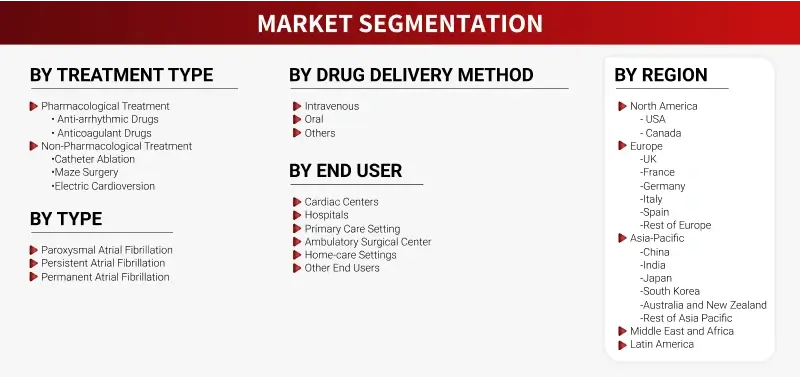
Sources: Company Websites and Wissen Research Analysis
Key Stakeholders
Key Study Objectives
Research Methodology
The objective of the study is to analyze the key market dynamics such as drivers, opportunities, challenges, restraints, and key player strategies. To track company developments such as product launches and approvals, expansions, and collaborations of the leading players, the competitive landscape of the atrial fibrillation market to analyze market players on various parameters within the broad categories of business and product strategy. Top-down and bottom-up approaches will be used to estimate the market size. To estimate the market size of segments and sub segments the market breakdown and data triangulation will be used.
FIGURE: RESEARCH DESIGN

Sources: Wissen Research Analysis
Research Approach
Collecting Secondary Data
The secondary research data collection process involves the usage of secondary sources, directories, databases, annual reports, investor presentations, and SEC filings of companies. Secondary research will be used to identify and collect information useful for the extensive, technical, market-oriented, and commercial study of the atrial fibrillation market. A database of the key industry leaders will also be prepared using secondary research.
Collecting Primary Data
The primary research data will be conducted after acquiring knowledge about the atrial fibrillation market scenario through secondary research. A significant number of primary interviews will be conducted with stakeholders from both the demand side and supply side (including various industry experts, such as Directors, Chief X Officers (CXOs), Vice Presidents (VPs) from business development, marketing and product development teams, product manufacturers) across major countries of North America, Europe, Asia Pacific, and Rest of the World. Primary data for this report was collected through questionnaires, emails, and telephonic interviews.
Market Size Estimation
All major developers offering various atrial fibrillation will be identified at the global/regional level. Revenue mapping will be done for the major players, which will further be extrapolated to arrive at the global market value of each type of segment. The market value of atrial fibrillation market will also split into various segments and sub segments at the region level based on:
Research Design
After arriving at the overall market size-using the market size estimation processes-the market will be split into several segments and sub segment. To complete the overall market engineering process and arrive at the exact statistics of each market segment and sub segment, the data triangulation, and market breakdown procedures will be employed, wherever applicable. The data will be triangulated by studying various factors and trends from both the demand and supply sides in the atrial fibrillation industry.